Introduction
Prompt security and guardrail tools help organizations protect artificial intelligence (AI) applications against malicious inputs, inappropriate outputs, unauthorized information disclosure, and unintended behavior. These solutions establish configurable security boundaries around interactions with Large Language Models (LLMs).
Generative AI applications increasingly support customer service, software development, enterprise research, document processing, and business automation. Their ability to interpret natural language introduces security challenges that conventional application security mechanisms may not fully address.
Prompt security solutions examine incoming requests and identify potentially unsafe or unauthorized interactions. Guardrail frameworks complement these capabilities by validating generated responses, enforcing content requirements, and supporting application-specific behavioral restrictions.
Modern guardrail tools can provide sensitive information detection, structured output validation, content moderation, policy enforcement, and runtime security monitoring. These capabilities help developers establish more predictable and accountable AI application workflows.
Organizations operating in healthcare, financial services, government, education, and technology must consider information sensitivity and application reliability when implementing generative AI. Appropriate guardrails can reduce selected operational risks without unnecessarily restricting legitimate interactions.
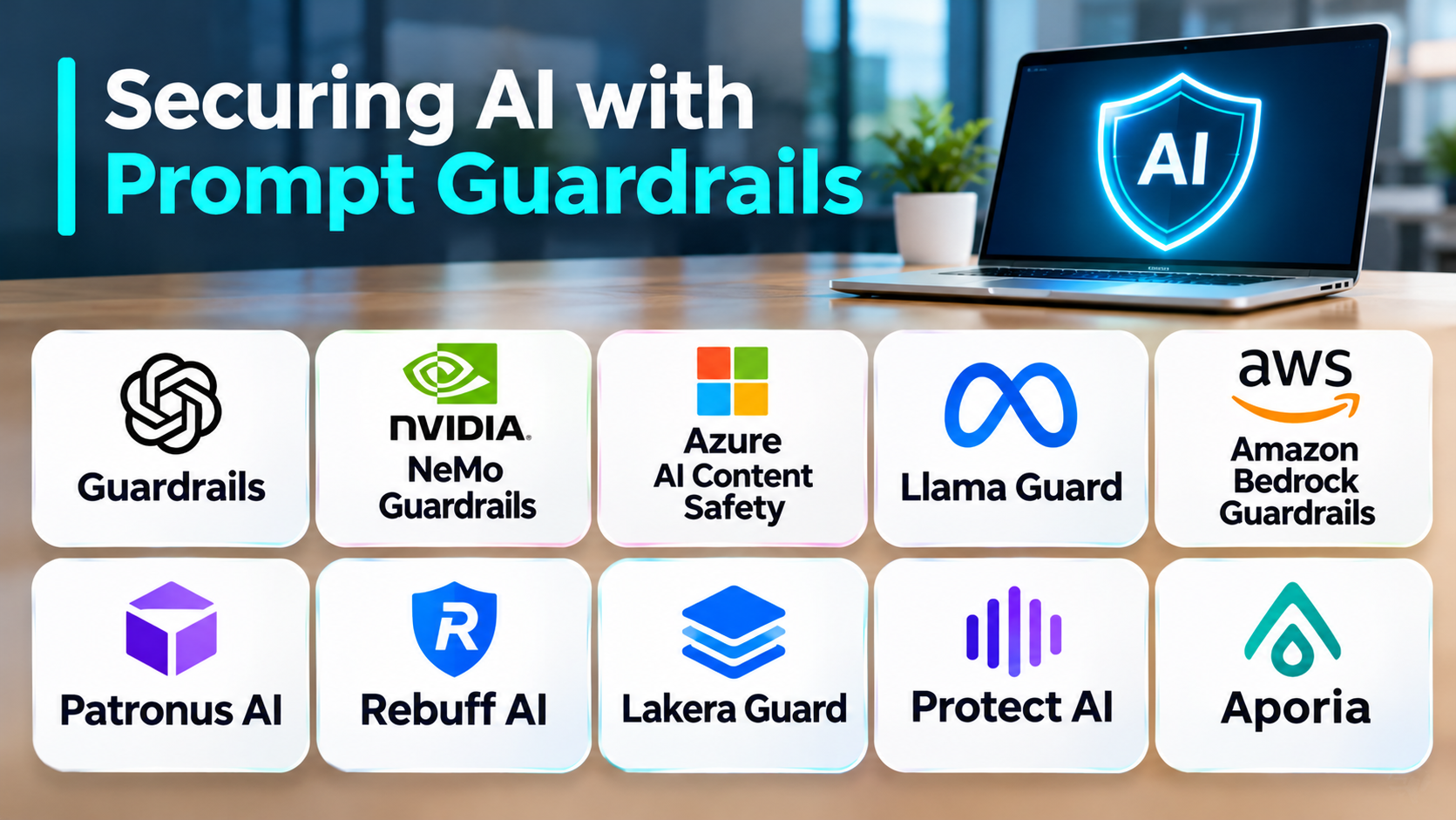
This guide examines ten prompt security and guardrail tools, including their features, benefits, advantages, limitations, and practical applications. It also provides comparison tables, implementation guidance, software selection recommendations, security considerations, and frequently asked questions.
What Are Prompt Security and Guardrail Tools?
Prompt security and guardrail tools are software platforms, frameworks, and libraries designed to evaluate and regulate interactions with generative AI applications. They help developers implement security, safety, privacy, and output quality requirements.
Prompt security primarily focuses on incoming requests and the risks associated with processing untrusted information. These risks include prompt injection, unauthorized information requests, and inappropriate manipulation of application behavior.
AI guardrails establish configurable boundaries around model interactions. They can validate inputs, inspect generated responses, enforce structured output requirements, and initiate predefined actions when violations occur.
Some tools operate as independent security services positioned between applications and model providers. Others integrate directly into application code, orchestration frameworks, or managed cloud AI services.
Guardrails can support responsible AI governance by providing documented policies and relevant enforcement evidence. However, their presence does not establish that an application is completely secure or compliant.
Effective implementations combine guardrails with application authorization, least-privilege permissions, secure data handling, independent testing, and qualified human oversight. Organizations should treat guardrails as one component of a layered security architecture.
How Do Prompt Security and Guardrail Tools Work?
- Receive an application request.
- Identify the relevant user and application context.
- Evaluate incoming content against configured policies.
- Identify potentially sensitive or inappropriate information.
- Apply approved input validation and security controls.
- Forward permitted requests to the language model.
- Collect the generated response.
- Validate output content and structure.
- Apply configured response handling requirements.
- Return an approved response or safe alternative.
- Record relevant security and policy events.
- Review enforcement effectiveness and update policies.
Traditional Application Security vs. AI Guardrails
| Evaluation Area | Traditional Security | AI Guardrails |
|---|---|---|
| Input validation | Structured application inputs | Natural language and supported multimodal inputs |
| Output validation | Conventional response schemas | Generated content and structured responses |
| Security threats | Software vulnerabilities | AI-specific behavioral and information risks |
| Content evaluation | Rule-based inspection | Rules and model-assisted evaluation |
| Information protection | Conventional DLP | AI interaction-specific protection |
| Application behavior | Generally deterministic | Potentially variable |
| Policy enforcement | Application and network rules | Configurable AI interaction policies |
| Testing | Conventional security testing | AI security and behavioral evaluation |
| Monitoring | Application events | Prompt and response events |
| Remediation | Software and configuration changes | Policy, architecture, and application improvements |
Common Applications of Prompt Security Tools
- Enterprise chatbot protection.
- Prompt injection risk detection.
- Sensitive information protection.
- Generative AI content moderation.
- Structured response validation.
- Customer support assistant security.
- AI coding assistant protection.
- Retrieval-Augmented Generation (RAG) security.
- Intelligent agent interaction controls.
- Enterprise AI policy enforcement.
- AI application security monitoring.
- Responsible AI governance.
Key Components of Prompt Security and Guardrail Tools
| Component | Primary Function |
|---|---|
| Input validator | Evaluates incoming requests |
| Prompt security detector | Identifies selected prompt-related risks |
| Output validator | Examines generated responses |
| Content moderation engine | Evaluates configured content categories |
| Sensitive data detector | Identifies protected information |
| Policy engine | Applies organizational requirements |
| Schema validator | Checks structured response formats |
| Response handler | Applies configured remediation actions |
| Model connector | Connects supported AI providers |
| Monitoring interface | Records relevant security events |
| Audit repository | Preserves authorized enforcement evidence |
| Configuration manager | Maintains reusable policies |
| Integration interface | Connects application components |
| Evaluation framework | Supports policy effectiveness testing |
Key Features of Prompt Security and Guardrail Tools
- Prompt injection detection.
- Input content validation.
- Output content moderation.
- Sensitive information identification.
- Configurable security policies.
- Structured response validation.
- Topic restriction capabilities.
- Model provider integration.
- Runtime security monitoring.
- Response handling and remediation.
- Security event reporting.
- Custom validation workflows.
Top 10 Prompt Security & Guardrail Tools
The following selection includes dedicated AI security products, open-source guardrail frameworks, content safety services, and complementary information protection libraries. The numbering organizes the comparison rather than representing an independently benchmarked ranking.
1. NVIDIA NeMo Guardrails
Short Description
NVIDIA NeMo Guardrails is an open-source toolkit designed to implement programmable safeguards around language model applications. It enables developers to define application-specific interaction requirements and behavioral boundaries.
The toolkit supports multiple types of guardrails addressing incoming requests, generated responses, retrieval activities, and supported execution workflows. Developers can configure these controls according to application requirements.
NeMo Guardrails uses configurable conversational flows and integrations to coordinate relevant validation activities. Its architecture supports applications requiring more control than basic content filtering.
The toolkit is particularly relevant to technical teams developing customized generative AI applications. Implementation requires appropriate engineering expertise and independent evaluation of configured safeguards.
How NVIDIA NeMo Guardrails Works
- Define application interaction requirements.
- Configure relevant guardrail types.
- Connect a compatible language model.
- Evaluate incoming application requests.
- Validate generated responses.
- Apply configured interaction handling rules.
Key Features
- Input rails: Evaluate incoming application requests.
- Output rails: Inspect generated responses.
- Dialog rails: Support configured conversational behavior.
- Retrieval rails: Evaluate supported retrieved information.
- Execution rails: Apply controls around compatible actions.
- Colang configuration: Defines programmable interaction flows.
- Model integrations: Connect compatible language model providers.
- Custom actions: Support application-specific validation activities.
- Python integration: Enables programmatic application development.
Benefits
- Supports customizable AI application safeguards.
- Improves consistency of configured interactions.
- Facilitates application-specific policy enforcement.
- Supports multiple validation stages.
- Reduces dependence on manually implemented controls.
- Encourages reusable guardrail configurations.
- Complements enterprise AI security architecture.
Pros
- Open-source availability.
- Flexible configuration.
- Multiple guardrail categories.
- Developer-oriented architecture.
- Customizable application behavior.
- Compatible model integrations.
Cons
- Requires technical expertise.
- Complex policies require maintenance.
- Additional validation may increase latency.
- Detection effectiveness depends on configuration.
- Enterprise governance requires complementary systems.
Use Cases
- Enterprise chatbot safeguards.
- Conversational AI policy enforcement.
- RAG application validation.
- AI assistant behavior management.
- Custom response validation.
- Controlled AI workflow development.
Best For
- Generative AI developers.
- Machine learning engineers.
- Enterprise AI architects.
- Python development teams.
- Conversational AI specialists.
- AI security engineers.
Pricing and Deployment
NeMo Guardrails is available as open-source software for compatible development environments. Organizations should account for infrastructure, model inference, engineering, and maintenance expenses.
2. Guardrails AI
Short Description
Guardrails AI provides a framework for validating and regulating outputs generated by language models. Its capabilities help developers establish structured response requirements and application-specific validation rules.
The framework supports reusable validators that examine generated content against configured expectations. These validators can address formatting, information quality, content requirements, and selected security concerns.
Guardrails AI can be incorporated into Python-based application workflows. Developers can define appropriate handling procedures when generated responses fail validation.
The framework is particularly suitable for applications requiring predictable output structures and customized validation. Its effectiveness depends on the selected validators and application architecture.
How Guardrails AI Works
- Define expected response requirements.
- Select compatible validators.
- Configure the language model integration.
- Generate an application response.
- Evaluate the response against configured rules.
- Apply the selected validation failure action.
Key Features
- Output validation: Evaluates generated responses.
- Structured output: Supports defined response schemas.
- Reusable validators: Provides configurable validation components.
- Custom validators: Enables application-specific requirements.
- Failure handling: Supports configured responses to validation failures.
- Python integration: Connects compatible development workflows.
- Guardrails Hub: Provides access to reusable validators.
- Model compatibility: Supports relevant language model integrations.
- Input validation: Supports configured checks on application inputs.
Benefits
- Improves generated response consistency.
- Supports structured information processing.
- Reduces application integration errors.
- Facilitates reusable validation procedures.
- Supports application-specific quality requirements.
- Encourages predictable failure handling.
- Complements broader AI security controls.
Pros
- Open-source framework availability.
- Flexible validator architecture.
- Strong structured output orientation.
- Developer-friendly integration.
- Custom validation support.
- Reusable validation components.
Cons
- Requires programming knowledge.
- Validator effectiveness varies.
- Additional validation introduces processing overhead.
- Security coverage depends on selected components.
- Not a complete enterprise security gateway.
Use Cases
- Structured AI response generation.
- Automated document processing.
- Customer support response validation.
- Application data extraction.
- Custom content validation.
- Generative AI workflow development.
Best For
- Python developers.
- AI application engineers.
- Data processing teams.
- Software quality assurance specialists.
- Enterprise application developers.
- Generative AI product teams.
Pricing and Deployment
Guardrails AI offers open-source framework functionality and related commercial offerings. Organizations should verify current service availability, validator licensing, and operational costs.
3. Lakera Guard
Short Description
Lakera Guard is a generative AI security solution designed to evaluate interactions with language model applications. Its capabilities focus on identifying selected prompt-related threats and inappropriate information handling.
The platform provides security detection functionality that can be integrated into compatible application workflows. Developers can use detection results to determine whether requests should proceed or receive alternative handling.
Lakera Guard is particularly relevant to customer-facing generative AI applications and enterprise assistants. Its security-oriented approach complements application authorization and information protection mechanisms.
Organizations should independently assess detection performance against representative application workloads. Current commercial packaging, deployment options, and supported security categories should be verified before adoption.
How Lakera Guard Works
- Connect a supported application workflow.
- Configure relevant security requirements.
- Submit approved content for evaluation.
- Identify selected security risks.
- Apply application-specific handling decisions.
- Monitor relevant security findings.
Key Features
- Prompt injection detection: Identifies selected suspicious inputs.
- AI interaction inspection: Evaluates supported application content.
- Security classification: Categorizes relevant detected risks.
- Content safety checks: Supports applicable content requirements.
- Information protection: Addresses selected disclosure-related concerns.
- API integration: Connects compatible applications.
- Runtime evaluation: Supports operational security checks.
- Security reporting: Provides relevant assessment information.
- Configurable controls: Supports application-specific security requirements.
Benefits
- Supports generative AI application protection.
- Improves visibility into prompt-related risks.
- Facilitates runtime security evaluation.
- Reduces custom detector development requirements.
- Supports controlled application interactions.
- Complements existing security architecture.
- Encourages consistent security policies.
Pros
- Dedicated generative AI security orientation.
- Application-level integration.
- Prompt security specialization.
- Relevant runtime protection capabilities.
- Commercial support options.
- Suitable for enterprise AI workflows.
Cons
- Commercial costs require evaluation.
- Detection cannot guarantee complete protection.
- Additional requests may introduce latency.
- Application integration requires engineering.
- Current product packaging requires verification.
Use Cases
- Enterprise chatbot protection.
- Customer-facing AI assistant security.
- Prompt injection risk detection.
- RAG application protection.
- AI application runtime monitoring.
- Generative AI security policy enforcement.
Best For
- AI security engineers.
- Generative AI developers.
- Enterprise security departments.
- Application security teams.
- AI product managers.
- Organizations deploying public-facing AI applications.
Pricing and Deployment
Lakera Guard is associated with commercial AI security offerings. Organizations should confirm current pricing, supported deployment environments, data processing arrangements, and integration requirements.
4. Amazon Bedrock Guardrails
Short Description
Amazon Bedrock Guardrails is a managed capability within Amazon Web Services (AWS) designed to implement configurable safeguards for generative AI applications. It supports relevant content filtering, information protection, and application policy requirements.
Developers can configure guardrails according to selected content categories, denied topics, sensitive information requirements, and supported grounding checks. These capabilities help establish consistent application interaction policies.
The service can be incorporated into compatible Amazon Bedrock workflows and supported independent guardrail evaluation requests. This makes it relevant to organizations developing applications within the AWS ecosystem.
Available features, regional support, and service limitations depend on current AWS offerings. Organizations should validate guardrail behavior against representative application scenarios.
How Amazon Bedrock Guardrails Works
- Create a guardrail configuration.
- Define relevant content and information policies.
- Connect a compatible application.
- Evaluate supported incoming requests.
- Evaluate generated responses.
- Apply configured intervention behavior.
Key Features
- Content filters: Evaluate supported content categories.
- Denied topics: Restrict configured subject areas.
- Word filters: Identify specified terms.
- Sensitive information filters: Detect supported sensitive data categories.
- Contextual grounding checks: Evaluate supported grounding requirements.
- Prompt attack filtering: Addresses selected prompt-related risks.
- ApplyGuardrail API: Supports independent guardrail evaluation.
- Policy versioning: Maintains guardrail configurations.
- AWS integration: Connects compatible cloud AI workflows.
Benefits
- Simplifies managed guardrail deployment.
- Supports centralized application policies.
- Facilitates sensitive information protection.
- Reduces custom infrastructure requirements.
- Supports multiple content evaluation categories.
- Encourages consistent application safeguards.
- Integrates with compatible AWS services.
Pros
- Managed cloud service.
- Multiple configurable safeguards.
- AWS ecosystem integration.
- Independent guardrail evaluation capability.
- Enterprise deployment relevance.
- Configurable policy management.
Cons
- Usage-based expenses can accumulate.
- Regional availability varies.
- Supported features depend on configuration.
- AWS integration knowledge may be required.
- Guardrails do not replace application authorization.
Use Cases
- AWS-based AI assistants.
- Enterprise generative AI applications.
- Content moderation.
- Sensitive information filtering.
- RAG response validation.
- Centralized AI policy enforcement.
Best For
- AWS customers.
- Cloud application developers.
- Enterprise AI teams.
- Cloud security architects.
- Regulated organizations using AWS.
- Managed AI service users.
Pricing and Deployment
Amazon Bedrock Guardrails uses managed cloud service pricing based on applicable evaluation activities. Organizations should verify current regional rates, supported policy categories, and additional model usage expenses.
5. Azure AI Content Safety
Short Description
Azure AI Content Safety is a Microsoft cloud service designed to evaluate potentially harmful content and selected AI application security risks. It provides capabilities relevant to generative AI application moderation and prompt security.
The service supports analysis of text and images within applicable content safety categories. Additional capabilities address selected prompt attack risks and groundedness evaluation.
Developers can integrate compatible content safety functionality into applications through supported interfaces. This approach enables organizations to apply configured safety requirements across relevant AI workflows.
Azure AI Content Safety is particularly suitable for organizations using Microsoft Azure infrastructure. Supported features, languages, regions, and pricing should be verified before implementation.
How Azure AI Content Safety Works
- Establish application safety requirements.
- Configure the relevant Azure service.
- Submit supported content for evaluation.
- Review safety classifications.
- Apply application-specific handling decisions.
- Monitor and refine evaluation policies.
Key Features
- Text moderation: Evaluates supported textual content.
- Image moderation: Examines compatible visual content.
- Prompt Shields: Detects selected prompt attack risks.
- Groundedness detection: Supports applicable response grounding evaluation.
- Severity classification: Provides relevant content risk indicators.
- Blocklists: Supports configured term restrictions.
- API integration: Connects compatible applications.
- Azure integration: Supports relevant Microsoft cloud workflows.
- Configurable thresholds: Enables application-specific handling decisions.
Benefits
- Supports consistent content safety evaluation.
- Facilitates prompt security assessment.
- Reduces custom moderation infrastructure requirements.
- Supports multimodal content workflows.
- Encourages configurable safety policies.
- Integrates with compatible Azure services.
- Complements enterprise AI governance.
Pros
- Managed cloud service.
- Text and image evaluation.
- Prompt security functionality.
- Microsoft cloud integration.
- Configurable content handling.
- Enterprise deployment relevance.
Cons
- Service costs depend on usage.
- Language support varies by feature.
- Detection results require contextual interpretation.
- Additional evaluation may increase latency.
- Not a complete AI application security architecture.
Use Cases
- Customer-facing AI moderation.
- Prompt attack risk detection.
- Enterprise chatbot safety.
- Image and text content evaluation.
- AI response groundedness assessment.
- Microsoft Azure AI application protection.
Best For
- Microsoft Azure customers.
- AI application developers.
- Content moderation teams.
- Enterprise security departments.
- Responsible AI specialists.
- Cloud engineering teams.
Pricing and Deployment
Azure AI Content Safety uses cloud service pricing arrangements based on applicable features and usage. Organizations should confirm current rates, regional availability, and service limits.
6. Google Cloud Model Armor
Short Description
Google Cloud Model Armor is a managed AI security service designed to help protect interactions with generative AI applications. Its capabilities address selected risks involving prompts, generated responses, and sensitive information.
The service enables organizations to configure security templates reflecting relevant application requirements. These templates can be applied to supported input and output evaluation workflows.
Model Armor provides capabilities relevant to prompt injection detection, content safety, and sensitive data protection. Its integration with Google Cloud services makes it suitable for compatible enterprise AI architectures.
Organizations should assess current service availability, supported integrations, and security evaluation performance. Model Armor should complement rather than replace application-level authorization and secure architecture.
How Google Cloud Model Armor Works
- Define application security requirements.
- Configure a security template.
- Connect a supported application.
- Evaluate relevant prompts.
- Evaluate generated responses.
- Apply configured application handling decisions.
Key Features
- Prompt security evaluation: Identifies selected input risks.
- Response inspection: Evaluates generated content.
- Content safety filters: Supports relevant moderation categories.
- Sensitive data protection: Addresses supported information exposure risks.
- Security templates: Maintains reusable policy configurations.
- API integration: Connects compatible AI applications.
- Malicious URL detection: Evaluates supported link-related risks.
- Cloud integration: Connects relevant Google Cloud workflows.
- Security reporting: Supports investigation of relevant evaluation results.
Benefits
- Supports managed AI security evaluation.
- Facilitates consistent application policies.
- Helps identify selected prompt-related threats.
- Supports sensitive information protection.
- Reduces custom security infrastructure requirements.
- Encourages reusable security configurations.
- Complements Google Cloud AI security.
Pros
- Managed cloud architecture.
- Input and output security evaluation.
- Configurable security templates.
- Google Cloud integration.
- Multiple security evaluation categories.
- Enterprise application relevance.
Cons
- Commercial usage costs apply.
- Regional availability requires verification.
- Integration depends on application architecture.
- Detection effectiveness varies by scenario.
- Independent application security testing remains necessary.
Use Cases
- Google Cloud AI application protection.
- Enterprise assistant security.
- Prompt injection risk detection.
- Generated response inspection.
- Sensitive information protection.
- Centralized AI security policies.
Best For
- Google Cloud customers.
- Enterprise AI developers.
- Cloud security teams.
- Application security engineers.
- Organizations using managed AI services.
- Enterprise governance specialists.
Pricing and Deployment
Model Armor is a managed Google Cloud security service. Organizations should verify current evaluation rates, supported regions, integration options, and associated infrastructure costs.
7. Meta Llama Guard
Short Description
Meta Llama Guard is a family of model-based content safety classifiers designed to evaluate interactions with generative AI systems. It supports classification of prompts and generated responses according to defined safety categories.
Unlike conventional keyword-based filters, Llama Guard uses language model-based classification to evaluate relevant content. This approach can help applications interpret selected contextual safety concerns.
Developers can deploy compatible Llama Guard models within their own infrastructure or supported model-serving environments. Deployment requirements vary according to the selected model version.
Llama Guard is particularly relevant to organizations requiring customizable or self-managed content safety evaluation. It should be combined with other security mechanisms when addressing prompt injection, information authorization, and application permissions.
How Meta Llama Guard Works
- Select an appropriate model version.
- Configure the supported inference environment.
- Prepare content for safety evaluation.
- Generate a safety classification.
- Apply application-specific handling rules.
- Monitor classification effectiveness.
Key Features
- Prompt classification: Evaluates supported incoming content.
- Response classification: Examines generated responses.
- Safety categories: Provides defined content risk classifications.
- Model-based evaluation: Supports contextual content assessment.
- Self-managed deployment: Enables compatible infrastructure hosting.
- Model version options: Supports different deployment requirements.
- Application integration: Connects custom AI workflows.
- Configurable handling: Enables application-defined responses.
- Multimodal variants: Support applicable image-related evaluation.
Benefits
- Supports independent content safety evaluation.
- Enables greater deployment flexibility.
- Facilitates contextual content classification.
- Supports reusable moderation workflows.
- Reduces dependence on keyword-only filtering.
- Can support private infrastructure requirements.
- Complements broader AI safety architecture.
Pros
- Available model weights under applicable licenses.
- Self-hosting possibilities.
- Input and output classification.
- Contextual safety evaluation.
- Multiple model variants.
- Flexible application integration.
Cons
- Requires model-serving infrastructure.
- Licensing conditions require review.
- Classification errors remain possible.
- Additional inference introduces costs.
- Not a comprehensive prompt security gateway.
Use Cases
- Self-hosted AI moderation.
- Enterprise chatbot safety.
- Generated response classification.
- Research application evaluation.
- Private AI deployment safeguards.
- Multimodal content moderation where supported.
Best For
- Machine learning engineers.
- AI infrastructure teams.
- Privacy-conscious organizations.
- Research institutions.
- Generative AI developers.
- Technical content safety teams.
Pricing and Deployment
Llama Guard model weights are available under applicable Meta licensing terms. Operational expenses depend on hosting infrastructure, inference resources, integration, and maintenance.
8. LLM Guard
Short Description
LLM Guard is an open-source toolkit designed to support security evaluation and sanitization of language model interactions. It provides configurable scanners for examining supported inputs and outputs.
The toolkit includes components addressing selected prompt injection risks, sensitive information, inappropriate content, and other application security requirements. Developers can select scanners according to their particular use cases.
LLM Guard can be incorporated into Python-based applications and compatible service architectures. Its modular approach allows organizations to combine multiple validation activities.
The toolkit is particularly useful for developers seeking flexible, self-managed prompt security functionality. Scanner performance, model dependencies, and current maintenance status should be evaluated before production deployment.
How LLM Guard Works
- Identify application security requirements.
- Select relevant input scanners.
- Configure output scanners.
- Evaluate incoming application requests.
- Inspect generated responses.
- Apply configured security handling actions.
Key Features
- Input scanners: Evaluate supported incoming prompts.
- Output scanners: Inspect generated content.
- Prompt injection detection: Addresses selected input manipulation risks.
- Sensitive information scanning: Identifies supported protected content.
- Anonymization: Supports applicable information replacement workflows.
- Content classification: Evaluates relevant content categories.
- Configurable thresholds: Supports customized detection requirements.
- Python integration: Enables application-level deployment.
- Modular architecture: Allows selection of relevant scanners.
Benefits
- Supports customizable prompt security workflows.
- Facilitates input and output inspection.
- Reduces custom scanner development.
- Enables self-managed deployment.
- Supports sensitive information protection.
- Encourages reusable security configurations.
- Complements existing application controls.
Pros
- Open-source availability.
- Modular scanner architecture.
- Python-based integration.
- Multiple security evaluation categories.
- Configurable detection thresholds.
- Self-managed deployment flexibility.
Cons
- Requires technical expertise.
- Scanner accuracy varies.
- Multiple scanners can increase latency.
- Maintenance requires engineering resources.
- Enterprise reporting requires complementary tools.
Use Cases
- Custom AI security middleware.
- Prompt security inspection.
- Sensitive information filtering.
- Enterprise chatbot safeguards.
- Generated content validation.
- Self-managed AI application security.
Best For
- Python developers.
- AI security engineers.
- Machine learning teams.
- Security researchers.
- Enterprise application developers.
- Organizations requiring self-managed controls.
Pricing and Deployment
LLM Guard is available as open-source software. Organizations should account for scanner dependencies, computing resources, integration effort, and ongoing maintenance.
9. Microsoft Presidio
Short Description
Microsoft Presidio is an open-source framework designed to identify and anonymize sensitive information within supported content. It provides complementary capabilities for protecting information processed by generative AI applications.
The framework can identify Personally Identifiable Information (PII) through configurable recognizers and relevant natural language processing components. Developers can customize recognition according to organizational information requirements.
Presidio supports anonymization operations such as redaction, masking, and replacement of detected information. These capabilities can be incorporated into prompt preprocessing and response validation workflows.
Presidio is not a comprehensive prompt injection detection or AI content safety platform. It is best used as a specialized information protection component alongside broader guardrail solutions.
How Microsoft Presidio Works
- Identify sensitive information categories.
- Configure compatible recognizers.
- Analyze supported application content.
- Identify potential sensitive information.
- Apply configured anonymization operations.
- Forward appropriately processed content.
Key Features
- PII detection: Identifies supported personal information.
- Custom recognizers: Supports organization-specific information categories.
- Text anonymization: Applies configured information transformations.
- Redaction: Removes selected detected content.
- Masking: Replaces portions of protected information.
- Natural language processing integration: Supports compatible recognition workflows.
- Image redaction: Provides applicable visual information protection.
- Python integration: Enables programmatic deployment.
- Extensible architecture: Supports customized detection components.
Benefits
- Helps protect sensitive personal information.
- Supports AI prompt preprocessing.
- Facilitates generated response sanitization.
- Enables customizable information detection.
- Reduces unnecessary information disclosure.
- Supports self-managed deployment.
- Complements broader AI guardrails.
Pros
- Open-source availability.
- Specialized information protection capabilities.
- Customizable recognizers.
- Multiple anonymization operations.
- Flexible application integration.
- Relevant privacy engineering functionality.
Cons
- Not a dedicated prompt injection detector.
- Detection accuracy varies by language and context.
- Requires configuration and maintenance.
- Anonymization can reduce useful context.
- Does not independently guarantee privacy compliance.
Use Cases
- PII removal from AI prompts.
- Sensitive response sanitization.
- Healthcare document preprocessing.
- Financial information protection.
- Customer support transcript anonymization.
- Privacy-aware AI application development.
Best For
- Privacy engineers.
- Data security teams.
- Python developers.
- Healthcare technology organizations.
- Financial application developers.
- Enterprise AI governance teams.
Pricing and Deployment
Microsoft Presidio is available as open-source software for compatible environments. Costs primarily involve infrastructure, integration, recognition model resources, and technical maintenance.
10. OpenAI Moderation API
Short Description
The OpenAI Moderation API provides model-based classification of supported content according to defined safety categories. Developers can use moderation results to support application-specific content handling decisions.
The service can evaluate supported text and image inputs, depending on the selected moderation model. Its classification results provide information that applications can use when implementing content policies.
The Moderation API can be incorporated into workflows before language model processing or after response generation. This flexibility makes it relevant to customer-facing applications and user-generated content systems.
The service is primarily a content safety classification mechanism rather than a comprehensive prompt injection detection platform. Organizations should combine it with appropriate security, privacy, and authorization controls.
How OpenAI Moderation API Works
- Define application content safety requirements.
- Connect the moderation endpoint.
- Submit supported content for evaluation.
- Review returned category classifications.
- Apply application-specific handling decisions.
- Monitor moderation performance.
Key Features
- Text moderation: Evaluates supported textual content.
- Image moderation: Supports compatible multimodal evaluation.
- Content classification: Identifies defined safety categories.
- Category scores: Provides relevant classification indicators.
- API integration: Connects compatible applications.
- Input moderation: Supports evaluation before model processing.
- Output moderation: Supports generated response evaluation.
- Application-defined handling: Enables customized policy decisions.
- Managed inference: Reduces local model-serving requirements.
Benefits
- Simplifies content safety integration.
- Supports consistent moderation workflows.
- Reduces custom classification infrastructure.
- Facilitates text and image evaluation.
- Supports application-specific handling decisions.
- Complements generative AI safeguards.
- Encourages responsible application development.
Pros
- Managed API architecture.
- Multiple content safety categories.
- Straightforward developer integration.
- Supported multimodal evaluation.
- Flexible placement within application workflows.
- Relevant customer-facing application capabilities.
Cons
- Requires external service connectivity.
- Classification errors remain possible.
- Not a comprehensive prompt security solution.
- Data processing arrangements require review.
- Application developers must implement enforcement decisions.
Use Cases
- AI chatbot content moderation.
- User-generated content evaluation.
- Generated response safety checks.
- Image content classification.
- Customer-facing application safeguards.
- Responsible AI development workflows.
Best For
- AI application developers.
- Content moderation teams.
- Software engineering departments.
- Customer-facing AI product teams.
- Online community platforms.
- Organizations requiring managed content classification.
Pricing and Deployment
The moderation endpoint has historically been offered without direct usage charges. Organizations should verify current pricing, model availability, rate limits, and applicable data processing terms before implementation.
Comparison Table: Top 10 Prompt Security & Guardrail Tools
| Tool | Primary Capability | Best For | Deployment | Pricing Model |
|---|---|---|---|---|
| NVIDIA NeMo Guardrails | Programmable AI safeguards | Custom AI applications | Self-managed | Open source |
| Guardrails AI | Structured response validation | Application developers | Self-managed/hosted | Open source/commercial |
| Lakera Guard | Generative AI security | Enterprise AI security | Offering-dependent | Commercial |
| Amazon Bedrock Guardrails | Managed AI safeguards | AWS applications | Cloud | Usage-based |
| Azure AI Content Safety | Content and prompt safety | Azure applications | Cloud | Service-based |
| Google Cloud Model Armor | Prompt and response security | Google Cloud applications | Cloud | Usage-based |
| Meta Llama Guard | Model-based safety classification | Self-hosted AI | Self-managed/hosted | License-dependent |
| LLM Guard | Input and output security scanning | Technical AI teams | Self-managed | Open source |
| Microsoft Presidio | Sensitive information protection | Privacy engineering | Self-managed | Open source |
| OpenAI Moderation API | Content safety classification | Application developers | Managed API | Verify current terms |
Functional Comparison
| Tool | Prompt Security | Output Validation | Content Safety | Sensitive Data Protection |
|---|---|---|---|---|
| NeMo Guardrails | Configurable | Supported | Configurable | Integration-dependent |
| Guardrails AI | Validator-dependent | Specialized | Validator-dependent | Validator-dependent |
| Lakera Guard | Specialized | Security-oriented | Supported categories | Offering-dependent |
| Bedrock Guardrails | Supported | Supported | Supported | Supported |
| Azure AI Content Safety | Prompt Shields | Safety-oriented | Specialized | Complementary services |
| Model Armor | Specialized | Security-oriented | Supported | Supported |
| Llama Guard | Safety classification | Safety classification | Specialized | Not primary |
| LLM Guard | Supported scanners | Supported scanners | Supported scanners | Supported scanners |
| Presidio | Information protection only | Information protection | Not primary | Specialized |
| OpenAI Moderation API | Content classification | Safety classification | Specialized | Not primary |
Technical Comparison
| Tool | Main Interface | Customization | Infrastructure Management |
|---|---|---|---|
| NeMo Guardrails | Python/Colang | Extensive | Customer-managed |
| Guardrails AI | Python/validators | Extensive | Offering-dependent |
| Lakera Guard | API | Policy-dependent | Offering-dependent |
| Bedrock Guardrails | AWS API/console | Policy-based | AWS-managed |
| Azure AI Content Safety | Azure API | Configuration-based | Microsoft-managed |
| Model Armor | Google Cloud API | Template-based | Google-managed |
| Llama Guard | Model inference | Deployment-dependent | Customer/provider-managed |
| LLM Guard | Python/scanners | Extensive | Customer-managed |
| Presidio | Python/services | Extensive | Customer-managed |
| OpenAI Moderation API | API | Application-level | Provider-managed |
Business Suitability Comparison
| Tool | Startups | Enterprises | Regulated Organizations |
|---|---|---|---|
| NeMo Guardrails | Technical teams | Suitable | Configuration-dependent |
| Guardrails AI | Suitable | Suitable | Configuration-dependent |
| Lakera Guard | Budget-dependent | Suitable | Contract-dependent |
| Bedrock Guardrails | AWS users | Suitable | Configuration-dependent |
| Azure AI Content Safety | Azure users | Suitable | Configuration-dependent |
| Model Armor | Google Cloud users | Suitable | Configuration-dependent |
| Llama Guard | Infrastructure-dependent | Suitable | License and configuration-dependent |
| LLM Guard | Technical teams | Suitable | Configuration-dependent |
| Presidio | Technical teams | Suitable | Complementary privacy controls |
| OpenAI Moderation API | Suitable | Suitable | Contract and configuration-dependent |
These comparisons describe general functional suitability rather than independently measured security effectiveness. Organizations should validate shortlisted tools using representative application scenarios.
How to Choose the Best Prompt Security and Guardrail Tool
1. Identify Application Security Risks
Determine whether the primary concerns involve prompt manipulation, inappropriate content, sensitive information, or unreliable response structures. Select controls that address the actual application risk profile.
2. Evaluate Model Compatibility
Confirm that the guardrail solution supports the organization’s model providers and application interfaces. Applications using multiple models may benefit from provider-independent security components.
3. Define Input and Output Requirements
Establish which requests and generated responses require validation. Different application stages may require specialized evaluation methods.
4. Assess Sensitive Information Protection
Determine whether the application processes confidential business information or personal data. Evaluate whether selected tools support relevant information detection and appropriate handling procedures.
5. Review Customization Capabilities
Generic content categories may not reflect every organizational requirement. Select solutions that support appropriate custom policies, validators, or security configurations.
6. Measure Detection Reliability
Evaluate false positives and false negatives using representative authorized test scenarios. Automated classifications should not be treated as universally accurate security judgments.
7. Consider Application Latency
Additional validation stages can increase response times. Measure end-to-end performance under representative workloads before production deployment.
8. Evaluate Deployment Architecture
Determine whether the organization requires self-hosted infrastructure, managed cloud services, or application-level libraries. Deployment decisions should reflect information sensitivity and operational resources.
9. Review Integration Requirements
Assess compatibility with existing application frameworks, orchestration systems, identity providers, and monitoring tools. Complex integrations can increase implementation and maintenance costs.
10. Assess Privacy and Compliance Requirements
Review how prompts, responses, and security findings are processed and retained. Obtain qualified privacy and legal guidance when applications handle regulated information.
11. Evaluate Reporting Capabilities
Security administrators require relevant evidence about policy decisions and enforcement effectiveness. Reporting should support investigation without unnecessarily retaining confidential content.
12. Compare Total Ownership Costs
Consider software licensing, model inference, infrastructure, integration, and ongoing policy administration. Open-source availability does not eliminate operational expenses.
Best Prompt Security Tools by User Type
| User Type | Recommended Tool | Primary Reason |
|---|---|---|
| Custom AI developers | NeMo Guardrails | Programmable interaction controls |
| Structured output developers | Guardrails AI | Configurable response validation |
| Enterprise AI security teams | Lakera Guard | Dedicated prompt security |
| AWS developers | Bedrock Guardrails | Managed AWS safeguards |
| Azure developers | Azure AI Content Safety | Microsoft cloud integration |
| Google Cloud developers | Model Armor | Managed AI security evaluation |
| Self-hosted AI teams | Llama Guard | Independent safety classification |
| Python security engineers | LLM Guard | Modular security scanners |
| Privacy engineers | Microsoft Presidio | Sensitive information protection |
| Content moderation teams | OpenAI Moderation API | Managed content classification |
Weighted Software Selection Scorecard
| Selection Criterion | Weight |
|---|---|
| Security evaluation coverage | 20% |
| Detection reliability | 15% |
| Application compatibility | 15% |
| Information protection | 10% |
| Policy customization | 10% |
| Performance and latency | 10% |
| Deployment and privacy | 10% |
| Total ownership costs | 5% |
| Maintenance and support | 5% |
| Total | 100% |
Organizations can assign consistent scores to shortlisted tools using representative application requirements. Weighted results should complement independent security testing and architectural review.
Practical Example: Protecting an Enterprise AI Customer Support Assistant
Consider a hypothetical insurance company developing a generative AI assistant that answers general policy questions using approved organizational documents. The company wants to reduce inappropriate information disclosure, unsafe responses, and unauthorized application behavior.
The development team selects NVIDIA NeMo Guardrails for interaction policies, Microsoft Presidio for sensitive information handling, and Lakera Guard for complementary prompt security evaluation. Each component is assigned a distinct responsibility within the application architecture.
Step 1: Establish Security Requirements
Define approved application capabilities, prohibited activities, information protection requirements, and response expectations. Document which security decisions must be enforced independently of the language model.
Step 2: Classify Application Information
Identify public policy documents, confidential business records, and protected customer information. Establish appropriate access permissions and data handling requirements.
Step 3: Configure Application Authorization
Ensure that the application retrieves only information the authenticated user is authorized to access. Guardrails must not replace server-side permission checks.
Step 4: Establish Input Validation
Configure approved input validation policies using compatible guardrail and prompt security components. Evaluate their behavior with representative authorized test scenarios.
Step 5: Protect Sensitive Information
Use Microsoft Presidio where appropriate to identify and process supported sensitive information categories. Validate recognition accuracy and avoid removing information necessary for legitimate authorized workflows.
Step 6: Configure Interaction Guardrails
Define appropriate conversational boundaries and application response requirements using NeMo Guardrails. Ensure that unsupported requests receive suitable alternative handling.
Step 7: Establish Output Validation
Evaluate generated responses for relevant safety, privacy, and application requirements. Provide approved fallback responses when validation fails.
Step 8: Conduct Independent Security Testing
Use authorized assessment procedures to evaluate the combined application architecture. Qualified reviewers should investigate consequential findings and document remaining limitations.
Step 9: Measure Operational Performance
Track response latency, validation accuracy, security findings, and legitimate request completion rates. Refine guardrail configurations when unnecessary restrictions interfere with approved activities.
Step 10: Establish Continuous Review
Repeat relevant evaluations following model updates, application changes, and security policy modifications. Maintain documented ownership of security configurations and remediation activities.
Illustrative Implementation Results
| Performance Indicator | Before | After |
|---|---|---|
| Approved security test pass rate | 65% | 94% |
| Sensitive information handling pass rate | 70% | 97% |
| Structured response validity | 78% | 96% |
| Validated policy violations per 1,000 test requests | 42 | 8 |
| Security regression coverage | 20% | 90% |
| Legitimate request completion rate | 85% | 91% |
| Median response latency | 1.2 seconds | 1.5 seconds |
| Documented security evidence coverage | 30% | 95% |
These figures are hypothetical and do not represent verified vendor performance. Actual outcomes depend on application architecture, evaluation methodology, configuration quality, and operational conditions.
The illustrative results show a reduction in validated policy violations alongside a 25% increase in median response latency. Organizations should evaluate both security improvements and operational trade-offs when selecting guardrail configurations.
Important Prompt Security Performance Metrics
| Metric | Purpose |
|---|---|
| Security detection rate | Measures identified relevant risks |
| False-positive rate | Tracks incorrect security classifications |
| False-negative rate | Tracks missed risks within evaluated scenarios |
| Input validation pass rate | Measures approved request handling |
| Output validation pass rate | Measures response policy adherence |
| Sensitive data detection rate | Evaluates information protection |
| Structured output validity | Measures response format consistency |
| Median response latency | Tracks typical processing performance |
| Tail latency | Identifies slower application interactions |
| Legitimate request completion rate | Measures usability |
| Security regression coverage | Tracks repeatable assessment coverage |
| Evaluation cost per request | Measures operational expenditure |
Industry Applications of Prompt Security Tools
Financial Services
Financial institutions can use guardrails to support appropriate information handling within customer assistants and internal research applications. Independent authorization and regulatory oversight remain essential for consequential financial workflows.
Healthcare
Healthcare organizations can implement sensitive information protection and response validation for approved AI applications. Clinical decisions require appropriate professional oversight and cannot rely exclusively on automated guardrails.
Retail and E-commerce
Retailers can use content moderation and response validation to improve customer-facing AI interactions. Application safeguards can help reduce inappropriate content and unauthorized information disclosure.
Education
Educational institutions can establish age-appropriate content requirements and protect student information within AI-assisted learning environments. Policies should preserve legitimate educational inquiry and appropriate privacy protections.
Government
Government organizations can use configurable guardrails to support approved information access and public-facing AI services. Security controls should reflect accountability requirements and the sensitivity of government information.
Software Development
Technology companies can integrate prompt security and output validation into coding assistants and development workflows. Additional controls should protect source code, credentials, and access to development infrastructure.
Implementation Roadmap
| Stage | Implementation Activity | Expected Deliverable |
|---|---|---|
| 1 | Identify application risks | Risk assessment |
| 2 | Document application architecture | System inventory |
| 3 | Classify sensitive information | Information protection requirements |
| 4 | Define security policies | Approved policy framework |
| 5 | Select suitable tools | Software shortlist |
| 6 | Establish test environment | Controlled evaluation environment |
| 7 | Configure input validation | Input security controls |
| 8 | Configure output validation | Response handling controls |
| 9 | Integrate information protection | Privacy safeguards |
| 10 | Conduct independent testing | Validated security findings |
| 11 | Establish monitoring | Operational security reporting |
| 12 | Review and optimize | Continuous improvement process |
Security and Governance Considerations
Prompt security tools may process confidential requests, generated responses, and sensitive application context. Organizations should establish appropriate access restrictions, encryption, data retention policies, and approved processing arrangements.
Guardrails should not be responsible for enforcing critical application permissions independently. Server-side authorization, secure retrieval, restricted tool access, and least-privilege architecture remain necessary.
Security and Governance Checklist
- Define approved application behavior.
- Establish independent authorization controls.
- Protect sensitive prompt and response information.
- Restrict access to security configurations.
- Document guardrail policies and versions.
- Validate detection accuracy independently.
- Establish appropriate fallback responses.
- Minimize unnecessary security log retention.
- Review third-party processing arrangements.
- Maintain security regression tests.
- Assign remediation responsibilities.
- Reassess safeguards after application changes.
Understanding the Total Cost of Ownership
Prompt security and guardrail implementation costs depend on software licensing, evaluation frequency, computing resources, and integration complexity. Organizations should assess expenses across the entire application lifecycle.
Managed services can reduce infrastructure administration while introducing usage-based charges. Self-managed frameworks may provide greater flexibility but require engineering and operational resources.
| Cost Category | Main Consideration |
|---|---|
| Software licensing | Commercial subscriptions |
| Security API usage | Evaluation request volumes |
| Model inference | Additional classification workloads |
| Computing infrastructure | Self-hosted security components |
| Application integration | Development and configuration |
| Policy management | Ongoing policy maintenance |
| Security testing | Independent assessment |
| Monitoring | Operational visibility |
| Employee training | Technical and governance skills |
| Maintenance | Updates and compatibility management |
Common Challenges in Prompt Security
- Variable language model behavior.
- Context-dependent content classification.
- Incomplete threat detection.
- False-positive security decisions.
- Additional application latency.
- Multilingual evaluation limitations.
- Sensitive information recognition errors.
- Complex application integrations.
- Changing model and provider capabilities.
- Maintaining consistent security policies.
Common Mistakes to Avoid
1. Treating Guardrails as Complete Security
Guardrails address selected application risks but cannot guarantee complete protection. Organizations should implement independent authorization, secure architecture, and ongoing security evaluation.
2. Ignoring Generated Responses
Input validation alone cannot ensure that generated content meets application requirements. Appropriate output validation should address relevant safety, privacy, and formatting concerns.
3. Using Only Keyword Filters
Keyword-based filters may overlook contextual risks or incorrectly restrict legitimate requests. Combine suitable evaluation techniques with application-specific testing.
4. Neglecting Sensitive Information Protection
Prompts and generated responses may contain confidential information. Establish appropriate data handling controls and evaluate whether specialized information detection is required.
5. Ignoring Application Latency
Multiple validation stages can increase processing times and operational expenses. Measure end-to-end performance under representative application workloads.
6. Applying Excessively Restrictive Policies
Overly broad restrictions can interfere with legitimate application usage. Evaluate false-positive rates and establish appropriate fallback or review procedures.
7. Failing to Test Guardrail Updates
Changes to models, validators, and security policies can affect application behavior. Maintain repeatable regression assessments and review consequential configuration changes.
8. Confusing Content Moderation With Authorization
Content safety classifiers cannot determine every user’s legitimate access permissions. Application authorization must be enforced independently using appropriate security mechanisms.
Best Practices for Prompt Security and Guardrails
- Establish application-specific security requirements.
- Implement independent access authorization.
- Validate relevant incoming requests.
- Inspect generated responses where appropriate.
- Protect sensitive organizational information.
- Select proportionate content safety policies.
- Maintain configurable validation rules.
- Evaluate detection accuracy independently.
- Monitor false-positive and false-negative rates.
- Measure application latency and operating costs.
- Establish safe response handling procedures.
- Maintain versioned security configurations.
- Integrate security regression testing.
- Review third-party data processing arrangements.
- Reassess safeguards following significant changes.
Future Trends in Prompt Security and Guardrail Tools
Multimodal Security Evaluation
AI applications increasingly process text, images, audio, and video. Guardrail solutions may expand their ability to evaluate risks across these different content formats.
AI Agent Security Controls
Intelligent agents introduce additional risks involving external tools, delegated permissions, and automated actions. Future guardrail systems may provide more specialized support for evaluating agent interactions.
Context-Aware Security Policies
Guardrail tools may increasingly incorporate application context into security decisions. Contextual evaluation could improve policy precision when combined with independent authorization mechanisms.
Privacy-Preserving Guardrails
Organizations may adopt self-managed and privacy-preserving validation architectures to reduce unnecessary information exposure. These approaches must balance detection quality with operational and privacy requirements.
Unified AI Security Gateways
Enterprise platforms may increasingly combine prompt inspection, content moderation, information protection, and runtime monitoring. Organizations should evaluate whether integrated solutions provide adequate specialized functionality.
Automated Security Regression Testing
Guardrail evaluation may become more closely integrated with software release management. Automated testing can help identify changes in security behavior before production deployment.
Improved Performance Optimization
Developers may adopt more efficient evaluation models and selective validation workflows. These improvements could reduce application latency while preserving relevant security coverage.
Standardized AI Security Evaluation
More consistent testing methodologies may improve comparisons between guardrail solutions. Application-specific risk assessment and independent validation will remain necessary.
Frequently Asked Questions (FAQs)
1. What are prompt security tools?
Prompt security tools evaluate interactions with generative AI applications to identify selected security risks. They can support input inspection, information protection, and application policy enforcement.
2. What are AI guardrails?
AI guardrails are configurable controls that regulate interactions with artificial intelligence applications. They can evaluate inputs, validate outputs, and support predefined response handling procedures.
3. Why is prompt security important?
Generative AI applications process untrusted information that may influence application behavior. Prompt security helps organizations investigate and reduce selected risks associated with these interactions.
4. What is NVIDIA NeMo Guardrails?
NeMo Guardrails is an open-source toolkit for implementing programmable safeguards around language model applications. It supports configurable interaction flows and multiple guardrail categories.
5. What is Guardrails AI?
Guardrails AI provides configurable validation functionality for language model applications. It is particularly relevant to structured response requirements and reusable output validators.
6. What is Lakera Guard?
Lakera Guard provides security evaluation capabilities for generative AI application interactions. Its functionality focuses on selected prompt-related threats and application security risks.
7. What is Amazon Bedrock Guardrails?
Amazon Bedrock Guardrails is a managed AWS capability for implementing configurable generative AI safeguards. It supports relevant content filtering, information protection, and application policy requirements.
8. What is Azure AI Content Safety?
Azure AI Content Safety is a Microsoft cloud service providing content moderation and selected prompt security capabilities. It supports compatible text, image, and generative AI application workflows.
9. What is Google Cloud Model Armor?
Model Armor is a managed Google Cloud service designed to evaluate selected security risks involving AI prompts and generated responses. It supports configurable security templates and compatible application integrations.
10. What is Meta Llama Guard?
Llama Guard is a family of model-based content safety classifiers. Developers can use compatible models to evaluate prompts and generated responses against defined safety categories.
11. What is LLM Guard?
LLM Guard is an open-source toolkit providing configurable input and output security scanners. It supports selected prompt security, content evaluation, and information protection workflows.
12. What is Microsoft Presidio?
Microsoft Presidio is an open-source framework for detecting and anonymizing sensitive information. It can complement broader AI guardrails by processing supported confidential and personal information categories.
13. What is the OpenAI Moderation API?
The OpenAI Moderation API provides model-based classification of supported content according to defined safety categories. Developers can use its results to implement application-specific moderation decisions.
14. What is prompt injection?
Prompt injection involves untrusted information attempting to influence an AI application’s intended behavior. Security controls should address this risk through layered application architecture and appropriate validation.
15. Can guardrails prevent every prompt injection attempt?
No guardrail solution can guarantee detection of every possible prompt injection attempt. Independent authorization, restricted application permissions, and continuous security testing remain necessary.
16. What is the difference between input and output guardrails?
Input guardrails evaluate information before it is processed by the language model. Output guardrails examine generated responses before they are returned or used by downstream applications.
17. Can guardrails protect personal information?
Some guardrail solutions include sensitive information detection and configurable handling capabilities. Their effectiveness depends on supported information categories, recognition accuracy, and application architecture.
18. Can guardrails reduce hallucinations?
Selected grounding and response validation mechanisms can help identify certain unsupported or unreliable responses. They cannot guarantee that every generated statement is factually correct.
19. Are open-source guardrail tools free?
Many open-source frameworks are available without direct software licensing charges. Infrastructure, inference, integration, and maintenance expenses may still apply.
20. Do guardrails increase application latency?
Additional validation activities can increase processing times. Organizations should measure performance under representative workloads and evaluate appropriate security trade-offs.
21. Can guardrails protect RAG applications?
Compatible guardrails can evaluate selected retrieval-related content and generated responses. Secure document permissions and independent retrieval authorization remain essential.
22. Can guardrails protect AI agents?
Guardrails can support selected interaction and response controls within intelligent agent workflows. Comprehensive agent security also requires restricted permissions, approved tool access, and independent execution controls.
23. Which guardrail tools are suitable for self-hosted AI?
NeMo Guardrails, LLM Guard, Microsoft Presidio, and compatible Llama Guard models can support self-managed deployment. Suitability depends on infrastructure resources, licensing, and application requirements.
24. Can guardrails guarantee regulatory compliance?
No guardrail solution can independently guarantee regulatory compliance. Organizations must maintain appropriate governance, information protection, qualified oversight, and applicable legal reviews.
25. Which prompt security and guardrail tool is best?
The most suitable solution depends on application architecture, security requirements, model providers, and operational resources. Organizations should conduct representative pilots and independent security evaluations before selection.
Conclusion
Prompt security and guardrail tools help organizations establish configurable safeguards around generative AI applications. Their capabilities support input validation, output evaluation, sensitive information protection, and application-specific security policies.
NVIDIA NeMo Guardrails and Guardrails AI provide flexible frameworks for implementing customized application safeguards. LLM Guard offers complementary security scanning capabilities for technical development teams.
Lakera Guard, Amazon Bedrock Guardrails, Azure AI Content Safety, and Google Cloud Model Armor provide managed or commercial approaches to AI interaction security. Their suitability depends on supported integrations, application requirements, and deployment arrangements.
Meta Llama Guard and the OpenAI Moderation API provide model-based content safety classification capabilities. Microsoft Presidio complements these solutions through specialized sensitive information detection and anonymization functionality.
Organizations should select guardrail tools according to security coverage, information sensitivity, evaluation reliability, deployment architecture, and total ownership costs. Independent security testing remains necessary to understand the effectiveness and limitations of configured safeguards.
By combining suitable prompt security tools with secure application architecture, appropriate authorization, continuous monitoring, and responsible governance, organizations can improve the resilience of generative AI applications. Ongoing evaluation remains essential as artificial intelligence technologies and associated security risks evolve.
