Introduction
Risk-based authentication tools help organizations protect digital accounts by adjusting authentication requirements according to assessed security risks. These solutions evaluate contextual information to determine whether additional identity verification is necessary.
Traditional authentication systems frequently apply identical security requirements to every login attempt. Although this approach provides consistent controls, it may introduce unnecessary inconvenience for legitimate users.
Risk-based authentication uses contextual intelligence, behavioral analysis, configurable policies, and machine learning to support authentication decisions. These capabilities help organizations respond more effectively to suspicious access attempts.
Financial institutions, healthcare organizations, government agencies, and technology businesses use adaptive authentication to protect sensitive information. These solutions are particularly relevant to distributed workforces and customer-facing digital applications.
Selecting an appropriate authentication platform requires evaluating detection capabilities, identity infrastructure compatibility, deployment requirements, privacy controls, and operational costs. Organizations must also consider accessibility and account recovery procedures.
This guide examines ten established risk-based authentication tools, their features, advantages, limitations, and practical applications. It includes comparison tables, implementation guidance, security recommendations, and frequently asked questions.
What Are Risk-Based Authentication Tools?
Risk-based authentication (RBA) tools are security solutions that evaluate contextual information associated with authentication requests. They use this information to determine whether existing authentication evidence is sufficient or additional verification is required.
These tools may evaluate device characteristics, network information, previous authentication activity, application sensitivity, and user behavior. Available risk signals vary according to the selected platform and integration architecture.
Risk-based authentication frequently operates alongside Multi-Factor Authentication (MFA), which requires evidence from multiple authentication factor categories. Adaptive policies determine when additional authentication requirements should apply.
Low-risk authentication requests may proceed according to standard security policies. Requests presenting elevated risks may require stronger verification, restricted access, or further investigation.
Risk-based authentication is closely associated with adaptive access management and zero-trust security architecture. However, implementing adaptive authentication alone does not establish a complete zero-trust environment.
Organizations should continuously evaluate authentication decisions and associated customer or employee experiences. Risk assessments represent estimates and should not automatically be interpreted as proof of malicious activity.
How Does Risk-Based Authentication Work?
- Authentication initiation: A user attempts to access an application or digital account.
- Context collection: The authentication service gathers authorized contextual information.
- Identity evaluation: Available identity information is assessed.
- Device assessment: Relevant device characteristics and security posture are evaluated.
- Behavioral analysis: Supported historical activity and interaction patterns are considered.
- Risk estimation: The platform generates an applicable risk assessment.
- Policy evaluation: Configured authentication policies determine the appropriate response.
- Additional verification: Higher-risk requests may require stronger authentication.
- Access decision: The application grants, restricts, or denies access according to policy.
- Event logging: Relevant authentication information is recorded.
- Security monitoring: Administrators investigate suspicious authentication activity.
- Continuous optimization: Organizations review authentication effectiveness and adjust policies.
Traditional Authentication vs. Risk-Based Authentication
| Comparison Factor | Traditional Authentication | Risk-Based Authentication |
|---|---|---|
| Authentication requirements | Generally fixed | Context-dependent |
| Risk evaluation | Limited | Contextual assessment |
| User experience | Consistent requirements | Adaptive requirements |
| Device intelligence | Basic or unavailable | Platform-dependent |
| Behavioral analysis | Limited | Available in selected solutions |
| Additional verification | Fixed requirements | Risk-triggered requirements |
| Policy management | Static policies | Adaptive policies |
| Threat intelligence | Limited integration | Available contextual intelligence |
| Access decisions | Credential-focused | Multi-signal assessment |
| Monitoring | Standard login records | Contextual authentication analytics |
| Security response | Predetermined | Policy-driven |
| Optimization | Manual policy updates | Continuous assessment and refinement |
Applications of Risk-Based Authentication Tools
- Enterprise workforce authentication.
- Online banking account protection.
- Digital wallet authentication.
- E-commerce customer account security.
- Remote workforce access management.
- Cloud application authentication.
- Privileged account protection.
- Healthcare portal security.
- Financial transaction verification.
- Government digital service authentication.
- Account takeover prevention.
- Risk-based access to sensitive information.
Core Components of Risk-Based Authentication
| Component | Primary Function |
|---|---|
| Identity provider | Establishes and manages user identities |
| Authentication engine | Processes authentication requests |
| Risk assessment engine | Evaluates contextual security risks |
| Device intelligence | Assesses relevant device characteristics |
| Network intelligence | Evaluates applicable connection information |
| Behavioral analytics | Assesses supported activity patterns |
| Policy engine | Applies configured security requirements |
| MFA service | Provides additional authentication factors |
| Session management | Controls authenticated sessions |
| Threat intelligence | Supplies relevant security indicators |
| Access decision engine | Determines appropriate access responses |
| Audit logging | Records authentication events |
| Reporting dashboard | Provides security and operational insights |
| Directory integration | Connects organizational identity records |
| Recovery management | Supports secure account recovery |
| Administrative controls | Manages authentication configurations |
Types of Risk-Based Authentication Tools
Workforce Adaptive Authentication
Workforce authentication platforms protect employee access to enterprise applications and organizational resources. They frequently integrate with corporate directories, endpoint management systems, and Single Sign-On (SSO) infrastructure.
Customer Risk-Based Authentication
Customer authentication solutions protect digital accounts belonging to consumers and business customers. These platforms emphasize scalable authentication and appropriate customer experiences.
Financial Transaction Authentication
Financial authentication platforms evaluate risks associated with banking access and sensitive financial activities. They may support additional verification for transactions requiring stronger security controls.
Device-Based Adaptive Authentication
Device-based authentication tools incorporate endpoint characteristics and security posture into access decisions. These capabilities are particularly relevant to organizations managing distributed workforces.
Behavioral Authentication Platforms
Behavioral authentication solutions evaluate supported interaction patterns and historical activity. Their assessments can complement conventional identity verification mechanisms.
Enterprise Identity Security Platforms
Enterprise identity platforms combine authentication, authorization, federation, policy management, and security monitoring. Risk-based authentication is one component of their broader identity security capabilities.
Key Capabilities of Risk-Based Authentication Tools
- Contextual authentication risk assessment.
- Adaptive Multi-Factor Authentication.
- Configurable access policies.
- Device security evaluation.
- Network risk assessment.
- Behavioral anomaly detection.
- Identity provider integration.
- Passwordless authentication support.
- Risk-based verification workflows.
- Authentication event monitoring.
- Security reporting and auditing.
- Enterprise application integration.
Risk-Based Authentication Architecture
| Architecture Layer | Integration Purpose |
|---|---|
| User application | Initiates authentication requests |
| Identity provider | Establishes user identity |
| Authentication service | Validates authentication evidence |
| Risk assessment engine | Evaluates contextual signals |
| Device management | Supplies relevant endpoint information |
| Threat intelligence | Provides applicable security indicators |
| Policy engine | Determines authentication requirements |
| MFA infrastructure | Provides additional verification |
| Application gateway | Enforces applicable access decisions |
| Directory service | Supplies organizational identity records |
| Security monitoring | Collects authentication events |
| Governance infrastructure | Supports oversight and compliance |
Top 10 Risk-Based Authentication Tools
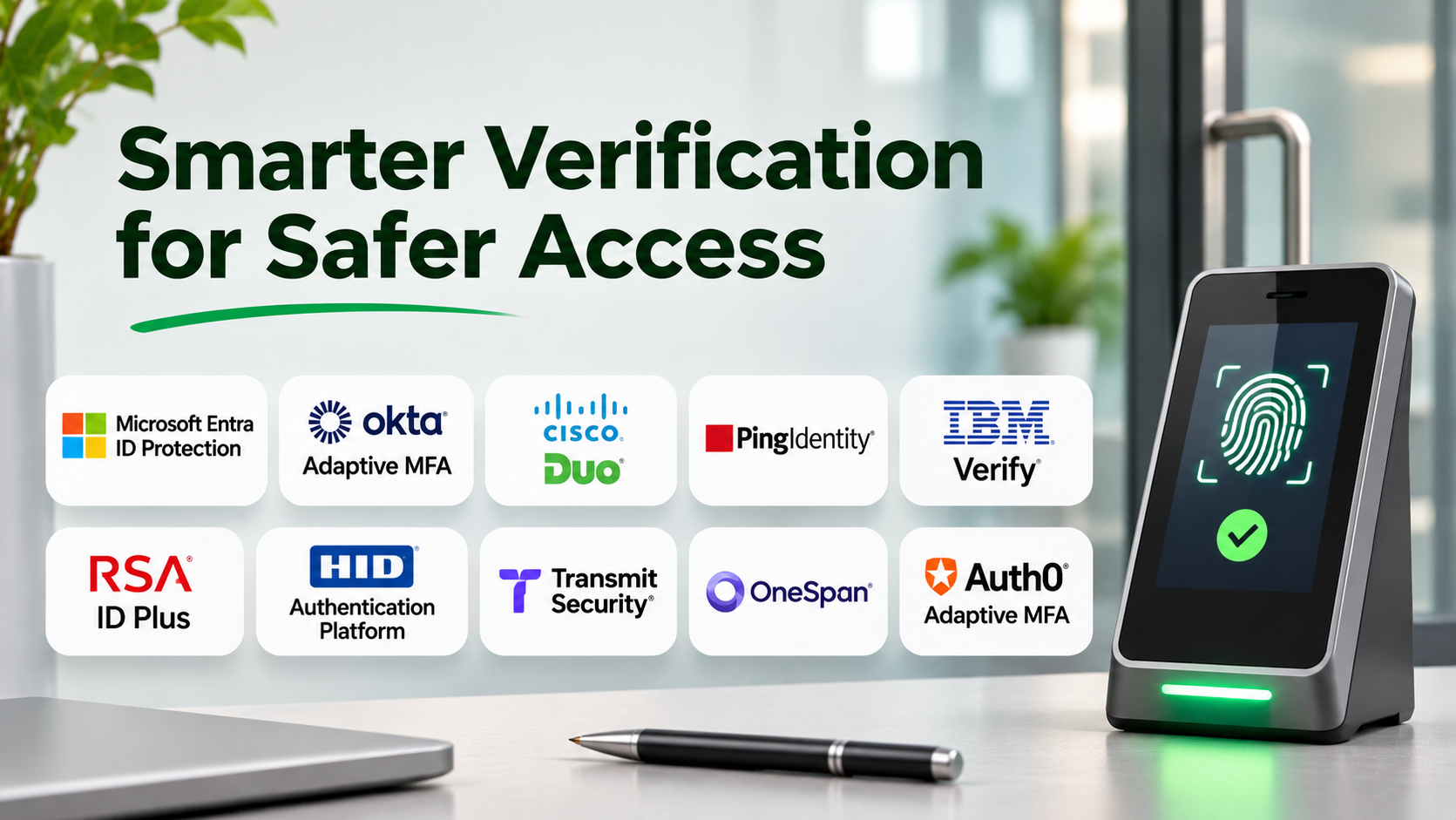
The following platforms represent established adaptive authentication, identity security, and contextual access management solutions. Their capabilities differ according to product editions, deployment configurations, and intended user populations.
1. Microsoft Entra ID Protection
Short Description
Microsoft Entra ID Protection provides identity risk detection and remediation capabilities within the Microsoft Entra ecosystem. It helps organizations identify potentially compromised identities and suspicious authentication activity.
The platform evaluates supported identity and sign-in risk information. These assessments can inform Microsoft Entra Conditional Access policies.
Organizations can configure policies requiring stronger authentication or other appropriate remediation for elevated risks. Available automated responses depend on licensing and configuration.
Microsoft Entra ID Protection is particularly relevant to enterprises using Microsoft cloud identity infrastructure. It can integrate with broader Microsoft security and endpoint management capabilities.
Businesses should evaluate identity risk policies alongside existing access management requirements. Appropriate exclusions, recovery procedures, and emergency access arrangements are essential.
How Microsoft Entra ID Protection Works
- Configure Microsoft Entra identity infrastructure.
- Enable supported identity risk detection capabilities.
- Collect applicable authentication and identity signals.
- Evaluate user and sign-in risk.
- Apply configured Conditional Access policies.
- Require appropriate verification or remediation.
- Monitor identity security events.
Key Features
- User risk detection: Identifies supported indicators of potentially compromised identities.
- Sign-in risk assessment: Evaluates contextual authentication risk.
- Conditional Access integration: Applies configured access requirements.
- Adaptive MFA: Supports additional verification through appropriate policies.
- Identity risk reporting: Provides visibility into detected risks.
- Automated remediation: Supports eligible risk remediation workflows.
- Cloud identity integration: Connects with Microsoft Entra identity services.
- Device context: Incorporates applicable device-related access conditions.
- Threat intelligence: Uses supported Microsoft security intelligence.
- Security monitoring: Supports investigation of suspicious identity activity.
- Administrative controls: Enables management of identity risk policies.
- Security ecosystem integration: Connects with compatible Microsoft security services.
Benefits
- Improved identity risk visibility.
- Automated contextual assessment.
- Integrated enterprise access management.
- Configurable authentication requirements.
- Reduced repetitive security administration.
- Support for compromised identity remediation.
- Centralized authentication monitoring.
- Microsoft ecosystem compatibility.
- Improved workforce security.
- Support for enterprise security governance.
Pros
- Native Microsoft Entra integration.
- Established enterprise identity infrastructure.
- Contextual risk detection.
- Conditional Access compatibility.
- Centralized security reporting.
- Broad Microsoft ecosystem support.
- Configurable remediation policies.
- Suitable for distributed workforces.
Cons
- Advanced capabilities require eligible licensing.
- Primarily centered on Microsoft identity infrastructure.
- Policy configuration can become complex.
- Incorrect policies may interrupt legitimate access.
- Proprietary risk models limit transparency.
- Recovery procedures require careful planning.
- Continuous administration remains necessary.
Use Cases
- Suspicious workforce sign-in detection.
- Compromised account remediation.
- Adaptive employee authentication.
- Cloud application access protection.
- Remote workforce security.
- Identity risk investigation.
- Conditional Access enforcement.
- Enterprise identity governance.
Industry Applications
- Financial services.
- Healthcare.
- Government.
- Education.
- Enterprise technology.
Integration and Deployment
Microsoft Entra ID Protection operates within supported Microsoft Entra environments. Organizations can integrate applicable risk information into Conditional Access policies and broader security workflows.
Deployment should include controlled policy testing and appropriate emergency access arrangements. Administrators must verify licensing requirements and supported remediation methods.
Pricing
Advanced identity risk capabilities generally require eligible Microsoft Entra licensing, including applicable premium subscriptions. Current licensing conditions and commercial prices should be confirmed directly.
Best For
- Microsoft Entra customers.
- Enterprise IT departments.
- Distributed workforces.
- Cloud-first organizations.
- Microsoft security ecosystem users.
- Identity security teams.
- Organizations requiring Conditional Access.
- Enterprises managing compromised identity risks.
Overall Assessment
Microsoft Entra ID Protection provides integrated identity risk assessment for organizations using Microsoft identity infrastructure. Its Conditional Access compatibility makes it relevant to enterprise adaptive authentication.
Organizations should carefully evaluate licensing and policy complexity. Controlled deployment is necessary to avoid unintended access interruptions.
2. Okta Adaptive MFA
Short Description
Okta Adaptive MFA provides contextual authentication capabilities within Okta’s identity management ecosystem. It helps organizations adjust authentication requirements according to supported risk and access conditions.
The platform evaluates contextual information such as device characteristics, network conditions, and authentication behavior. These signals can inform configurable authentication policies.
Okta supports multiple authentication methods and integrations with enterprise applications. Organizations can establish policies appropriate to different applications and user populations.
Adaptive authentication can help reduce unnecessary verification while maintaining required security controls. Actual effectiveness depends on policy design and available risk signals.
Okta Adaptive MFA is particularly relevant to organizations requiring centralized workforce identity management. Businesses should evaluate compatibility with existing identity and endpoint infrastructure.
How Okta Adaptive MFA Works
- Configure Okta identity infrastructure.
- Integrate supported enterprise applications.
- Establish authentication policies.
- Evaluate contextual authentication signals.
- Determine applicable verification requirements.
- Process authentication and access decisions.
- Monitor authentication events.
Key Features
- Adaptive authentication: Adjusts verification requirements according to policy.
- Contextual risk assessment: Evaluates supported authentication signals.
- Multiple authenticators: Supports compatible verification methods.
- Device context: Incorporates available device information.
- Network conditions: Supports applicable network-based policies.
- Behavior detection: Evaluates supported authentication behavior.
- SSO integration: Connects authentication with enterprise applications.
- Passwordless authentication: Supports eligible passwordless methods.
- Policy management: Provides configurable authentication rules.
- Application integration: Connects supported business applications.
- Event logging: Records relevant authentication activity.
- Administrative reporting: Provides identity security visibility.
Benefits
- Flexible authentication requirements.
- Centralized identity management.
- Improved workforce access security.
- Reduced unnecessary authentication friction.
- Support for multiple authenticators.
- Enterprise application compatibility.
- Improved suspicious access visibility.
- Configurable application protection.
- Scalable workforce authentication.
- Streamlined identity administration.
Pros
- Established identity management platform.
- Broad application integration ecosystem.
- Configurable authentication policies.
- Multiple verification methods.
- Contextual access assessment.
- Passwordless authentication capabilities.
- Centralized administration.
- Suitable for heterogeneous enterprise environments.
Cons
- Commercial licensing can be complex.
- Advanced capabilities depend on selected products.
- Policy configuration requires expertise.
- Integration effort varies.
- Incorrect configurations may affect user access.
- External identity service dependency.
- Ongoing security monitoring is required.
Use Cases
- Workforce adaptive authentication.
- Remote employee access.
- Enterprise application protection.
- Suspicious login assessment.
- Passwordless workforce access.
- Risk-triggered MFA.
- Cloud identity management.
- Application-specific authentication policies.
Industry Applications
- Technology.
- Financial services.
- Retail.
- Healthcare.
- Professional services.
Integration and Deployment
Okta supports cloud-based identity management and integrations with compatible enterprise applications and directories. Organizations should review supported authentication methods and contextual policy capabilities.
Implementation should include application integration testing and user enrollment planning. Recovery procedures must be established before enforcing new authentication requirements.
Pricing
Pricing depends on selected Okta products, user populations, and commercial arrangements. Current Adaptive MFA licensing should be verified directly.
Best For
- Enterprise workforce identity teams.
- Multi-cloud organizations.
- Distributed businesses.
- Organizations using numerous SaaS applications.
- Companies requiring centralized MFA.
- Passwordless authentication initiatives.
- Enterprise access management teams.
- Businesses with heterogeneous application environments.
Overall Assessment
Okta Adaptive MFA provides flexible contextual authentication within an established identity management ecosystem. Its application integrations make it relevant to organizations managing diverse enterprise environments.
Businesses should evaluate product licensing and administrative requirements. Authentication policies must be tested against representative user workflows.
3. Cisco Duo
Short Description
Cisco Duo provides authentication and access security capabilities for enterprise environments. Its platform combines MFA with supported device and contextual access assessment.
Duo helps organizations verify users before granting access to protected applications. Configurable policies can incorporate relevant device, network, and authentication conditions.
The platform supports multiple authentication methods and application integrations. Available device trust and risk-based capabilities depend on the selected product edition.
Duo is particularly relevant to organizations protecting remote access and enterprise applications. Its authentication workflows can complement existing identity infrastructure.
Businesses should evaluate authentication method security and endpoint coverage. User enrollment and account recovery procedures remain important deployment considerations.
How Cisco Duo Works
- Integrate Duo with supported applications.
- Enroll authorized users and authenticators.
- Configure applicable access policies.
- Evaluate available authentication context.
- Apply required verification methods.
- Grant or restrict application access.
- Monitor authentication and device events.
Key Features
- Multi-Factor Authentication: Supports multiple verification methods.
- Adaptive access policies: Applies supported contextual requirements.
- Device trust: Evaluates applicable endpoint information.
- Device health assessment: Supports eligible security posture checks.
- Risk-based authentication: Provides applicable risk-driven verification capabilities.
- Application protection: Integrates with supported enterprise applications.
- Passwordless authentication: Supports eligible passwordless workflows.
- Remote access integration: Protects compatible remote access systems.
- Authentication reporting: Provides access event visibility.
- Administrative policies: Enables centralized security configuration.
- User enrollment: Supports authenticator registration workflows.
- Security ecosystem integration: Connects with compatible Cisco infrastructure.
Benefits
- Improved remote access protection.
- Centralized authentication administration.
- Flexible verification requirements.
- Device security visibility.
- Support for enterprise applications.
- Reduced dependence on passwords alone.
- Improved authentication monitoring.
- Scalable user enrollment.
- Contextual access management.
- Support for zero-trust initiatives.
Pros
- Established enterprise MFA solution.
- Multiple authentication methods.
- Broad application integration options.
- Device assessment capabilities.
- Remote access compatibility.
- Centralized administrative interface.
- Configurable access policies.
- Suitable for diverse organization sizes.
Cons
- Advanced features depend on licensing.
- Device assessment coverage varies.
- Authentication service dependency.
- User enrollment requires planning.
- Some verification methods provide weaker phishing resistance.
- Complex environments may require additional configuration.
- Recovery workflows require ongoing management.
Use Cases
- Remote workforce authentication.
- Virtual private network protection.
- Enterprise application MFA.
- Device-aware access control.
- Passwordless employee authentication.
- Risk-based verification.
- Privileged application protection.
- Endpoint security assessment.
Industry Applications
- Healthcare.
- Education.
- Financial services.
- Manufacturing.
- Government.
Integration and Deployment
Cisco Duo supports integrations with compatible applications, identity providers, and remote access infrastructure. Organizations should verify supported device assessment capabilities for their operating environments.
Deployment should include phased user enrollment and authentication policy testing. Stronger phishing-resistant authentication methods should be prioritized where appropriate.
Pricing
Cisco Duo offers different product editions and commercial licensing arrangements. Current pricing and risk-based feature availability require direct verification.
Best For
- Remote workforce security teams.
- Small and medium-sized businesses.
- Enterprise IT departments.
- Organizations protecting remote access.
- Cisco ecosystem customers.
- Healthcare institutions.
- Educational organizations.
- Businesses requiring device-aware MFA.
Overall Assessment
Cisco Duo provides practical authentication and device-aware access security capabilities. Its application integration options make it relevant to organizations strengthening existing authentication infrastructure.
Businesses should compare available editions and authentication methods carefully. Risk-based controls should complement strong authentication and secure recovery procedures.
4. Ping Identity
Short Description
Ping Identity provides enterprise identity and access management technology for workforce and customer environments. Its portfolio includes contextual authentication, risk assessment, and identity orchestration capabilities.
Applicable products such as PingOne Protect can evaluate risk information associated with authentication and digital interactions. These assessments can inform authentication journeys and configured security policies.
Ping Identity supports complex identity architectures involving multiple applications and identity providers. Its orchestration capabilities can help organizations coordinate authentication workflows.
The platform is relevant to enterprises requiring flexible identity integration and adaptive authentication. Available capabilities depend on selected products and deployment arrangements.
Organizations should evaluate identity architecture complexity and operational expertise before implementation. Appropriate governance is necessary when integrating multiple authentication services.
How Ping Identity Works
- Configure supported identity infrastructure.
- Integrate applications and identity providers.
- Establish authentication journeys.
- Collect permitted contextual risk signals.
- Evaluate applicable risk assessments.
- Apply configured authentication responses.
- Monitor identity security outcomes.
Key Features
- Contextual risk assessment: Evaluates supported identity risk signals.
- Adaptive authentication: Supports risk-driven verification workflows.
- Identity orchestration: Coordinates compatible authentication services.
- Federated identity: Connects supported identity environments.
- Multi-Factor Authentication: Provides applicable additional verification.
- Customer identity management: Supports digital customer authentication.
- Workforce identity management: Protects enterprise application access.
- Device intelligence: Incorporates available device context.
- Policy management: Supports configurable authentication requirements.
- Passwordless authentication: Supports eligible authentication methods.
- Application integration: Connects compatible enterprise systems.
- Identity analytics: Provides applicable security monitoring information.
Benefits
- Flexible identity architecture.
- Contextual authentication decisions.
- Support for complex enterprise environments.
- Integrated customer authentication.
- Workforce identity protection.
- Configurable authentication journeys.
- Improved identity risk visibility.
- Support for multiple identity providers.
- Scalable authentication workflows.
- Centralized security governance.
Pros
- Established enterprise identity portfolio.
- Flexible integration architecture.
- Workforce and customer identity capabilities.
- Identity orchestration support.
- Contextual risk assessment.
- Standards-based identity integration.
- Configurable authentication journeys.
- Suitable for complex enterprises.
Cons
- Product portfolio complexity.
- Enterprise implementation requirements.
- Commercial pricing requires consultation.
- Specialized expertise may be necessary.
- Feature availability varies by product.
- Integration maintenance can be substantial.
- Multiple services may increase operational dependencies.
Use Cases
- Enterprise adaptive authentication.
- Customer account protection.
- Financial service authentication.
- Federated workforce access.
- Multi-provider identity orchestration.
- Risk-based customer verification.
- Passwordless identity journeys.
- Complex enterprise access management.
Industry Applications
- Banking.
- Insurance.
- Telecommunications.
- Retail.
- Government.
Integration and Deployment
Ping Identity supports cloud and applicable enterprise deployment architectures across its product portfolio. Organizations should determine which identity, risk assessment, and orchestration products are necessary.
Implementation should include authentication journey validation and interoperability testing. Security teams must establish appropriate monitoring and recovery responsibilities.
Pricing
Pricing depends on selected Ping Identity products, user populations, transaction requirements, and commercial agreements. Businesses should obtain a tailored proposal.
Best For
- Large enterprises.
- Financial institutions.
- Complex identity environments.
- Customer identity teams.
- Multi-provider identity architectures.
- Organizations requiring authentication orchestration.
- Enterprise security architects.
- Businesses managing workforce and customer identities.
Overall Assessment
Ping Identity provides flexible enterprise identity and adaptive authentication capabilities. Its broader portfolio is relevant to organizations requiring sophisticated authentication journeys.
Businesses should evaluate the complete product configuration rather than assuming all capabilities are included in one service. Implementation complexity and operational costs require careful consideration.
5. IBM Verify
Short Description
IBM Verify provides identity and access management capabilities for enterprise authentication environments. Its portfolio supports contextual authentication, identity federation, and configurable access management.
Organizations can use applicable adaptive access capabilities to evaluate authentication context and determine appropriate verification requirements. Available functionality depends on selected products and deployment configurations.
IBM Verify supports enterprise identity integration across compatible cloud and organizational environments. Its authentication capabilities can complement broader identity governance initiatives.
The platform is particularly relevant to organizations with complex security and compliance requirements. Enterprises should evaluate compatibility with existing identity infrastructure.
Risk-based authentication policies must be designed around organizational security objectives. Continuous monitoring is necessary to assess authentication effectiveness and user impact.
How IBM Verify Works
- Configure supported identity services.
- Integrate organizational applications.
- Establish contextual authentication policies.
- Evaluate available authentication signals.
- Determine appropriate verification requirements.
- Apply configured access decisions.
- Monitor authentication activity.
Key Features
- Adaptive access: Supports contextual authentication requirements.
- Risk assessment: Evaluates applicable authentication risk information.
- Multi-Factor Authentication: Provides additional verification options.
- Identity federation: Connects compatible identity environments.
- Single Sign-On: Centralizes supported application authentication.
- Passwordless authentication: Supports eligible verification methods.
- Policy management: Configures access and authentication requirements.
- Directory integration: Connects organizational identity records.
- Customer identity capabilities: Supports applicable customer authentication.
- Workforce identity capabilities: Protects enterprise access.
- Audit reporting: Records relevant authentication events.
- Enterprise integration: Connects supported business infrastructure.
Benefits
- Centralized identity protection.
- Flexible authentication policies.
- Improved contextual access assessment.
- Enterprise application compatibility.
- Support for workforce authentication.
- Customer identity integration.
- Improved audit visibility.
- Configurable verification requirements.
- Support for complex security environments.
- Improved identity administration.
Pros
- Established enterprise security portfolio.
- Contextual authentication capabilities.
- Federation and directory integration.
- Configurable access policies.
- Multiple authentication methods.
- Enterprise deployment options.
- Security reporting capabilities.
- Suitable for regulated organizations.
Cons
- Product configuration complexity.
- Commercial licensing requires evaluation.
- Integration expertise may be necessary.
- Feature availability depends on deployment.
- Enterprise implementations can require substantial resources.
- Ongoing policy maintenance is necessary.
- Proprietary assessment mechanisms may limit transparency.
Use Cases
- Enterprise workforce authentication.
- Customer identity protection.
- Risk-based access verification.
- Federated application authentication.
- Cloud application security.
- Regulated enterprise access management.
- Passwordless authentication.
- Authentication audit reporting.
Industry Applications
- Banking.
- Insurance.
- Healthcare.
- Government.
- Manufacturing.
Integration and Deployment
IBM Verify supports integrations with compatible enterprise identity systems, directories, and applications. Deployment options depend on the specific Verify product selected.
Organizations should evaluate identity federation, policy configuration, and authentication method compatibility. Controlled deployment and security monitoring are recommended.
Pricing
Pricing depends on selected IBM Verify services, licensing arrangements, and deployment requirements. Current commercial conditions should be confirmed directly.
Best For
- Established enterprises.
- Regulated organizations.
- IBM technology customers.
- Financial institutions.
- Enterprise identity architects.
- Organizations requiring identity federation.
- Complex application environments.
- Businesses requiring centralized authentication governance.
Overall Assessment
IBM Verify provides enterprise identity and adaptive access capabilities suitable for complex organizational environments. Its broader identity portfolio can support centralized authentication management.
Businesses should evaluate product-specific features and integration requirements. Appropriate technical expertise and governance are important for successful deployment.
6. RSA ID Plus
Short Description
RSA ID Plus provides identity security and authentication capabilities for enterprise environments. It supports risk-aware authentication and configurable verification requirements.
The platform combines supported authentication methods with contextual access assessment. Organizations can use these capabilities to strengthen access protection for sensitive applications.
RSA has an established background in enterprise authentication technology. Its identity security portfolio is relevant to organizations with complex authentication requirements.
Applicable deployment options support different enterprise infrastructure arrangements. Businesses should verify product-specific capabilities and authentication method compatibility.
RSA ID Plus is particularly relevant to regulated organizations and enterprises requiring flexible authentication infrastructure. Implementation should include appropriate recovery and operational continuity procedures.
How RSA ID Plus Works
- Configure supported identity infrastructure.
- Integrate protected applications.
- Register users and authenticators.
- Evaluate applicable authentication context.
- Apply configured verification requirements.
- Process access decisions.
- Monitor authentication events.
Key Features
- Risk-aware authentication: Supports contextual verification requirements.
- Multi-Factor Authentication: Provides compatible authentication methods.
- Hardware authenticator support: Supports applicable physical authentication devices.
- Software authenticators: Enables supported digital verification methods.
- Passwordless authentication: Supports eligible passwordless capabilities.
- Access policies: Configures authentication requirements.
- Enterprise integration: Connects supported business applications.
- Identity federation: Supports compatible identity workflows.
- Hybrid deployment: Supports applicable infrastructure configurations.
- Authentication monitoring: Provides security event visibility.
- User enrollment: Manages authenticator registration.
- Administrative reporting: Supports authentication governance.
Benefits
- Improved enterprise access protection.
- Flexible authentication options.
- Support for sensitive applications.
- Contextual verification capabilities.
- Centralized authentication administration.
- Support for regulated environments.
- Reduced reliance on passwords alone.
- Improved authentication event visibility.
- Flexible infrastructure integration.
- Support for operational security requirements.
Pros
- Established enterprise authentication technology.
- Multiple authenticator options.
- Applicable hybrid deployment capabilities.
- Configurable authentication policies.
- Suitable for sensitive environments.
- Enterprise application integration.
- Centralized administration.
- Relevant regulated industry applications.
Cons
- Licensing requires commercial evaluation.
- Legacy infrastructure integration may be complex.
- Advanced capabilities depend on product configuration.
- User enrollment requires planning.
- Hardware authenticators may introduce additional costs.
- Recovery procedures require administration.
- Authentication policies need ongoing review.
Use Cases
- Sensitive enterprise application protection.
- Remote workforce authentication.
- Financial service employee access.
- Privileged account authentication.
- Hybrid identity environments.
- Risk-based verification.
- Passwordless enterprise access.
- Authentication infrastructure modernization.
Industry Applications
- Banking.
- Government.
- Healthcare.
- Defense-related organizations.
- Enterprise technology.
Integration and Deployment
RSA ID Plus supports applicable cloud and hybrid authentication arrangements. Organizations should verify compatibility with existing applications, identity providers, and authentication devices.
Implementation should include user enrollment, policy validation, and recovery testing. Sensitive environments may require additional operational resilience measures.
Pricing
Pricing depends on selected products, authentication methods, user populations, and commercial agreements. Businesses should obtain current licensing information directly.
Best For
- Regulated enterprises.
- Financial institutions.
- Government organizations.
- Hybrid identity environments.
- Organizations using hardware authenticators.
- Enterprise authentication teams.
- Businesses protecting sensitive applications.
- Organizations modernizing existing RSA infrastructure.
Overall Assessment
RSA ID Plus provides flexible enterprise authentication capabilities relevant to organizations with established security requirements. Its authentication options can support different infrastructure arrangements.
Businesses should evaluate product-specific risk capabilities and deployment requirements. Authentication resilience and secure recovery must remain priorities.
7. HID Authentication Platform
Short Description
HID provides digital identity and authentication technology for enterprise and financial service environments. Its authentication portfolio includes applicable contextual and risk-based security capabilities.
Organizations can use supported HID authentication services to protect digital access and sensitive transactions. Available functionality depends on the selected authentication products.
HID offers multiple authentication technologies, including supported physical and digital credentials. These capabilities can address organizations with diverse verification requirements.
Financial institutions and regulated businesses may evaluate HID for authentication workflows requiring stronger identity assurance. Appropriate implementation depends on existing infrastructure and security objectives.
The HID Authentication Platform should be assessed as part of the broader HID identity portfolio. Businesses must confirm the exact product components necessary for adaptive authentication.
How HID Authentication Platform Works
- Select appropriate HID authentication services.
- Integrate supported business applications.
- Register authorized users and credentials.
- Evaluate applicable contextual information.
- Apply configured authentication requirements.
- Verify authentication evidence.
- Monitor access and verification events.
Key Features
- Adaptive authentication: Supports applicable contextual verification capabilities.
- Multi-Factor Authentication: Provides supported additional authentication factors.
- Credential management: Manages compatible authentication credentials.
- Hardware authentication: Supports eligible physical authenticators.
- Mobile authentication: Provides supported mobile verification workflows.
- Transaction authentication: Supports applicable financial verification scenarios.
- Identity integration: Connects compatible identity infrastructure.
- Policy management: Configures authentication requirements.
- Passwordless authentication: Supports eligible authentication methods.
- Enterprise integration: Connects supported applications.
- Authentication reporting: Provides operational security information.
- Administrative controls: Manages authentication configurations.
Benefits
- Flexible identity verification.
- Support for sensitive transactions.
- Improved authentication security.
- Multiple credential options.
- Enterprise infrastructure compatibility.
- Financial service authentication support.
- Centralized authentication administration.
- Configurable security requirements.
- Improved operational visibility.
- Support for regulated environments.
Pros
- Established identity technology provider.
- Physical and digital authentication expertise.
- Financial service relevance.
- Multiple verification methods.
- Enterprise integration capabilities.
- Applicable transaction authentication.
- Flexible credential management.
- Suitable for sensitive access environments.
Cons
- Product portfolio requires careful evaluation.
- Risk-based capabilities vary by service.
- Commercial pricing requires consultation.
- Hardware credentials may introduce additional expenses.
- Integration complexity varies.
- User enrollment and recovery require planning.
- Specialized deployment expertise may be necessary.
Use Cases
- Banking customer authentication.
- Sensitive transaction verification.
- Enterprise workforce access.
- Hardware-based authentication.
- Mobile authentication.
- Risk-based identity verification.
- Credential management.
- Regulated application protection.
Industry Applications
- Banking.
- Government.
- Healthcare.
- Manufacturing.
- Financial technology.
Integration and Deployment
HID authentication products support applicable integrations with enterprise and financial service infrastructure. Organizations should identify the exact authentication services and risk assessment components required.
Deployment should include credential enrollment, authentication testing, and recovery validation. Financial institutions should assess applicable transaction security obligations.
Pricing
Pricing depends on selected HID products, authentication methods, credential requirements, and commercial arrangements. Current commercial information requires direct confirmation.
Best For
- Financial institutions.
- Government organizations.
- Regulated enterprises.
- Businesses requiring physical authenticators.
- Mobile authentication initiatives.
- Sensitive transaction environments.
- Enterprise identity teams.
- Organizations requiring flexible credential options.
Overall Assessment
HID provides established authentication and identity technologies suitable for enterprise and financial environments. Its credential options can support organizations with diverse verification requirements.
Businesses should verify which HID products provide the necessary contextual risk capabilities. Product selection and integration planning are important for successful deployment.
8. Transmit Security
Short Description
Transmit Security provides customer identity, authentication, fraud prevention, and identity orchestration technology. Its platform supports contextual risk assessment within digital customer journeys.
Organizations can use applicable Transmit Security services to evaluate authentication and account-related risks. These assessments can inform verification requirements and identity workflows.
The platform supports modern authentication methods and configurable customer identity journeys. Its capabilities are relevant to businesses seeking to combine authentication security with customer experience management.
Transmit Security is particularly relevant to financial institutions, digital commerce organizations, and large customer-facing businesses. Integration requirements depend on selected identity and fraud prevention services.
Businesses should evaluate contextual risk capabilities alongside privacy and accessibility requirements. Customer authentication must include reliable recovery and alternative verification procedures.
How Transmit Security Works
- Integrate supported customer applications.
- Configure identity and authentication journeys.
- Collect permitted contextual information.
- Evaluate applicable identity risk signals.
- Determine required authentication actions.
- Verify users through supported methods.
- Monitor customer identity security outcomes.
Key Features
- Customer identity management: Supports digital customer authentication.
- Risk assessment: Evaluates applicable contextual identity signals.
- Adaptive authentication: Adjusts verification requirements through configured workflows.
- Identity orchestration: Coordinates supported identity services.
- Passwordless authentication: Supports eligible modern authentication methods.
- Passkey support: Enables applicable public-key authentication workflows.
- Fraud prevention: Supports selected account and identity risk assessments.
- Device intelligence: Incorporates available device context.
- Behavioral analysis: Evaluates supported customer activity signals.
- Policy management: Configures authentication journeys.
- API integration: Connects compatible digital applications.
- Security monitoring: Provides applicable identity risk visibility.
Benefits
- Improved customer account protection.
- Flexible authentication journeys.
- Reduced unnecessary verification friction.
- Support for passwordless authentication.
- Integrated identity and fraud assessment.
- Contextual customer risk visibility.
- Scalable customer authentication.
- Configurable verification requirements.
- Flexible application integration.
- Improved digital identity administration.
Pros
- Customer identity specialization.
- Modern authentication capabilities.
- Identity orchestration support.
- Contextual fraud assessment.
- API-oriented integration.
- Passwordless authentication options.
- Relevant financial service applications.
- Suitable for complex customer journeys.
Cons
- Commercial pricing requires consultation.
- Integration complexity varies.
- Multiple product components may be required.
- Behavioral information raises privacy considerations.
- Customer recovery requires careful design.
- Proprietary risk assessments limit transparency.
- Continuous policy monitoring is necessary.
Use Cases
- Digital banking authentication.
- Customer account takeover prevention.
- Passwordless customer login.
- Risk-based identity verification.
- E-commerce account protection.
- Digital wallet authentication.
- Customer identity orchestration.
- Sensitive customer account changes.
Industry Applications
- Banking.
- Financial technology.
- Retail.
- Insurance.
- Telecommunications.
Integration and Deployment
Transmit Security provides applicable APIs and identity orchestration resources for customer-facing applications. Organizations should evaluate required identity, authentication, and fraud prevention components.
Deployment should include customer journey testing and authentication accessibility assessment. Businesses must establish secure account recovery and customer support procedures.
Pricing
Pricing depends on selected services, customer populations, usage requirements, and commercial agreements. Businesses should obtain a tailored commercial proposal.
Best For
- Digital banking organizations.
- Customer identity teams.
- Financial technology businesses.
- Large online retailers.
- Passwordless customer authentication initiatives.
- Digital wallet providers.
- Enterprises requiring identity orchestration.
- Businesses managing complex customer journeys.
Overall Assessment
Transmit Security provides customer-focused authentication and contextual risk management capabilities. Its identity orchestration and modern authentication options are relevant to complex digital applications.
Organizations should evaluate integration scope and privacy requirements carefully. Customer recovery and accessibility should be included in authentication design.
9. OneSpan
Short Description
OneSpan provides digital security, authentication, and transaction protection technology. Its solutions are particularly relevant to financial institutions and regulated digital services.
Applicable OneSpan authentication and risk management products support contextual security assessment and stronger verification workflows. These capabilities can help organizations protect digital accounts and sensitive transactions.
The platform offers supported mobile authentication, transaction verification, and digital security technologies. Available functionality depends on the selected OneSpan products.
OneSpan is relevant to organizations requiring authentication infrastructure that aligns with financial service security objectives. Businesses should evaluate local regulatory requirements and transaction workflows.
Successful implementation requires coordination between authentication engineering, fraud operations, and compliance teams. Risk assessments must be monitored to avoid unnecessary customer disruption.
How OneSpan Works
- Configure supported authentication services.
- Integrate digital banking or business applications.
- Enroll users and authentication credentials.
- Evaluate applicable contextual risk information.
- Apply configured verification requirements.
- Authenticate users or eligible transactions.
- Monitor security and authentication outcomes.
Key Features
- Risk-based authentication: Supports applicable contextual verification.
- Mobile authentication: Provides supported mobile security workflows.
- Transaction verification: Protects eligible sensitive transactions.
- Multi-Factor Authentication: Supports additional authentication factors.
- Device intelligence: Incorporates available device-related information.
- Authentication credentials: Manages compatible verification mechanisms.
- Digital banking integration: Connects supported financial applications.
- Policy management: Configures authentication requirements.
- Application security: Provides applicable mobile application protection.
- Passwordless authentication: Supports eligible modern methods.
- Security monitoring: Provides relevant authentication information.
- Enterprise integration: Connects compatible financial infrastructure.
Benefits
- Improved financial authentication security.
- Contextual transaction protection.
- Support for mobile banking.
- Flexible authentication methods.
- Improved customer account protection.
- Configurable verification requirements.
- Support for regulated environments.
- Centralized security management.
- Reduced dependence on passwords alone.
- Improved authentication monitoring.
Pros
- Established financial security specialization.
- Mobile authentication capabilities.
- Transaction protection options.
- Multiple verification methods.
- Relevant banking applications.
- Configurable authentication requirements.
- Enterprise integration opportunities.
- Suitable for regulated financial environments.
Cons
- Product selection requires careful assessment.
- Commercial pricing requires consultation.
- Financial infrastructure integration can be complex.
- Risk-based capabilities depend on selected products.
- Customer enrollment requires planning.
- Mobile authentication coverage varies.
- Ongoing regulatory and operational assessment is necessary.
Use Cases
- Mobile banking authentication.
- Financial transaction verification.
- Digital account protection.
- Risk-based customer authentication.
- Sensitive payment authorization.
- Mobile application security.
- Financial identity verification.
- Banking authentication modernization.
Industry Applications
- Banking.
- Financial technology.
- Insurance.
- Payment services.
- Financial services.
Integration and Deployment
OneSpan supports applicable integrations with financial applications, mobile banking environments, and enterprise authentication infrastructure. Organizations should confirm which products provide the required contextual risk capabilities.
Deployment should include authentication testing, transaction verification validation, and customer recovery assessment. Regulatory requirements must be reviewed according to the relevant jurisdiction.
Pricing
Pricing depends on selected OneSpan products, authentication volumes, deployment requirements, and commercial agreements. Current commercial terms should be obtained directly.
Best For
- Banks.
- Financial institutions.
- Digital banking providers.
- Payment service organizations.
- Financial technology businesses.
- Mobile banking security teams.
- Regulated authentication environments.
- Organizations requiring transaction verification.
Overall Assessment
OneSpan provides authentication and transaction protection capabilities relevant to financial service organizations. Its mobile security and verification technologies can support sensitive customer workflows.
Businesses should evaluate the exact product configuration and applicable regulatory requirements. Controlled implementation is essential for maintaining reliable customer access.
10. Auth0 Adaptive MFA
Short Description
Auth0 Adaptive MFA provides contextual authentication capabilities within the Auth0 customer identity platform, which is part of Okta. It helps developers apply additional verification according to supported authentication risk assessments.
The platform evaluates applicable contextual information associated with login requests. Authentication policies can use available risk information to determine whether additional verification is appropriate.
Auth0 supports developer-oriented identity integration across web, mobile, and other compatible applications. Its broader platform includes authentication, identity federation, and extensibility capabilities.
Adaptive MFA is particularly relevant to organizations building customer-facing digital applications. Developers should verify product licensing and supported customization mechanisms.
Auth0 can help organizations integrate contextual authentication without developing an entire identity infrastructure internally. Appropriate implementation still requires secure application design and account recovery procedures.
How Auth0 Adaptive MFA Works
- Configure an Auth0 tenant.
- Integrate supported customer applications.
- Establish authentication and MFA requirements.
- Evaluate applicable login risk signals.
- Apply supported adaptive authentication policies.
- Complete required user verification.
- Monitor authentication activity.
Key Features
- Adaptive MFA: Supports contextual additional verification.
- Login risk assessment: Evaluates supported authentication signals.
- Customer identity management: Provides application authentication infrastructure.
- Developer APIs: Supports programmable identity integration.
- Authentication extensibility: Enables applicable customized workflows.
- Identity federation: Connects supported external identity providers.
- Passwordless authentication: Supports eligible passwordless methods.
- Multiple authenticators: Provides compatible MFA options.
- Application integration: Supports web and mobile authentication.
- Attack protection: Provides selected account security capabilities.
- Authentication logging: Records relevant identity events.
- Administrative configuration: Manages tenant authentication settings.
Benefits
- Flexible customer authentication integration.
- Contextual verification requirements.
- Reduced custom identity development.
- Developer-oriented authentication infrastructure.
- Support for multiple applications.
- Improved customer account security.
- Configurable authentication workflows.
- Scalable customer identity management.
- Authentication event visibility.
- Support for modern authentication methods.
Pros
- Developer-focused identity platform.
- Established customer authentication capabilities.
- Broad application integration options.
- Adaptive MFA support.
- Identity federation capabilities.
- Authentication extensibility.
- Multiple verification methods.
- Suitable for custom digital applications.
Cons
- Advanced capabilities depend on eligible plans.
- Usage-based commercial considerations.
- Custom workflows require development expertise.
- Hosted identity service dependency.
- Risk assessment transparency may be limited.
- Customer recovery requires careful implementation.
- Product-specific limits must be evaluated.
Use Cases
- Software application authentication.
- E-commerce customer account protection.
- Mobile application login.
- Risk-based customer MFA.
- Passwordless authentication.
- Customer identity federation.
- Subscription service account protection.
- Custom authentication workflows.
Industry Applications
- Software.
- E-commerce.
- Financial technology.
- Digital services.
- Education technology.
Integration and Deployment
Auth0 provides developer resources and supported integration libraries for customer identity management. Organizations should verify Adaptive MFA availability within their selected commercial plan.
Implementation should include authentication flow testing, secure application configuration, and account recovery validation. Developers must monitor customer authentication outcomes after deployment.
Pricing
Pricing depends on selected Auth0 plans, customer populations, advanced capabilities, and commercial arrangements. Current Adaptive MFA licensing should be confirmed directly.
Best For
- Application developers.
- Software-as-a-Service businesses.
- Customer identity teams.
- Digital startups.
- E-commerce application developers.
- Mobile application providers.
- Organizations building custom authentication.
- Businesses requiring developer-oriented identity infrastructure.
Overall Assessment
Auth0 Adaptive MFA provides developer-oriented contextual authentication within a broader customer identity platform. It is relevant to businesses integrating authentication into custom digital applications.
Organizations should evaluate plan-specific capabilities and long-term identity infrastructure costs. Secure recovery and appropriate authentication policies remain essential.
Top 10 Risk-Based Authentication Tools Comparison Table
| Tool | Primary Function | Best For | Deployment | Standout Capability | Pricing |
|---|---|---|---|---|---|
| Microsoft Entra ID Protection | Identity risk detection | Microsoft enterprises | Cloud | Conditional Access integration | License-based |
| Okta Adaptive MFA | Workforce adaptive authentication | Diverse enterprises | Cloud | Application ecosystem | License-based |
| Cisco Duo | Adaptive access and MFA | Remote workforces | Cloud/integrated | Device-aware access | Edition-based |
| Ping Identity | Enterprise identity security | Complex enterprises | Product-dependent | Identity orchestration | Contract-based |
| IBM Verify | Enterprise adaptive access | Regulated organizations | Product-dependent | Enterprise identity integration | Commercial licensing |
| RSA ID Plus | Enterprise authentication | Sensitive environments | Cloud/hybrid options | Flexible authenticators | Contract-based |
| HID Authentication Platform | Identity and credential security | Financial institutions | Product-dependent | Physical and digital credentials | Contract-based |
| Transmit Security | Customer identity security | Digital banking | Hosted/API | Customer journey orchestration | Contract-based |
| OneSpan | Financial authentication | Banks | Product-dependent | Transaction verification | Contract-based |
| Auth0 Adaptive MFA | Customer adaptive authentication | Application developers | Cloud/API | Developer extensibility | Plan-dependent |
Functional Comparison
| Tool | Contextual Risk Assessment | Adaptive MFA | Workforce Focus | Customer Focus |
|---|---|---|---|---|
| Microsoft Entra ID Protection | Supported | Through policies | Strong | Separate product evaluation |
| Okta Adaptive MFA | Supported | Supported | Strong | Product-dependent |
| Cisco Duo | Edition-dependent | Supported | Strong | Limited primary focus |
| Ping Identity | Product-dependent | Supported | Strong | Strong |
| IBM Verify | Product-dependent | Supported | Strong | Supported |
| RSA ID Plus | Product-dependent | Supported | Strong | Product-dependent |
| HID Authentication Platform | Product-dependent | Supported | Supported | Supported |
| Transmit Security | Supported | Supported | Limited primary focus | Strong |
| OneSpan | Product-dependent | Supported | Product-dependent | Strong |
| Auth0 Adaptive MFA | Supported | Supported | Limited primary focus | Strong |
Technical Comparison
| Tool | Integration Approach | Device Context | Authentication Policy Management |
|---|---|---|---|
| Microsoft Entra ID Protection | Microsoft identity infrastructure | Supported conditions | Conditional Access |
| Okta Adaptive MFA | Identity and application integrations | Supported | Configurable |
| Cisco Duo | Application and access integrations | Edition-dependent | Configurable |
| Ping Identity | Federation and orchestration | Product-dependent | Configurable |
| IBM Verify | Enterprise identity integration | Product-dependent | Configurable |
| RSA ID Plus | Enterprise authentication integration | Product-dependent | Configurable |
| HID Authentication Platform | Credential and identity integration | Product-dependent | Configurable |
| Transmit Security | APIs and orchestration | Supported services | Configurable |
| OneSpan | Financial application integration | Product-dependent | Configurable |
| Auth0 Adaptive MFA | APIs and development libraries | Available risk signals | Plan-dependent |
Business Suitability Comparison
| Tool | Primary Business Profile | Main Consideration |
|---|---|---|
| Microsoft Entra ID Protection | Microsoft-based enterprises | Premium licensing |
| Okta Adaptive MFA | Heterogeneous workforce environments | Product licensing |
| Cisco Duo | Remote access environments | Edition-specific features |
| Ping Identity | Complex identity architectures | Implementation complexity |
| IBM Verify | Regulated enterprises | Product configuration |
| RSA ID Plus | Sensitive enterprise environments | Authentication infrastructure |
| HID Authentication Platform | Credential-intensive organizations | Product selection |
| Transmit Security | Customer-facing enterprises | Integration scope |
| OneSpan | Financial institutions | Financial workflow compatibility |
| Auth0 Adaptive MFA | Application development businesses | Plan and usage requirements |
Pricing and Ownership Comparison
| Tool | Cost Model | Main Implementation Expense | Administration |
|---|---|---|---|
| Microsoft Entra ID Protection | Subscription licensing | Identity policy configuration | Enterprise-led |
| Okta Adaptive MFA | User/product licensing | Application integration | Enterprise-led |
| Cisco Duo | Edition-based licensing | Enrollment and application integration | Shared |
| Ping Identity | Enterprise agreement | Identity architecture integration | Enterprise-led |
| IBM Verify | Commercial licensing | Enterprise integration | Enterprise-led |
| RSA ID Plus | Commercial agreement | Authentication deployment | Enterprise-led |
| HID Authentication Platform | Product and credential costs | Credential infrastructure | Enterprise-led |
| Transmit Security | Commercial agreement | Customer journey integration | Shared |
| OneSpan | Commercial agreement | Financial application integration | Shared |
| Auth0 Adaptive MFA | Plan and usage-based | Application development | Developer-led |
Best Risk-Based Authentication Tools by User Type
| User Type | Recommended Candidates |
|---|---|
| Microsoft enterprise | Microsoft Entra ID Protection |
| Multi-cloud workforce | Okta Adaptive MFA |
| Remote workforce | Cisco Duo |
| Large enterprise | Ping Identity, IBM Verify |
| Financial institution | OneSpan, Transmit Security |
| Government organization | RSA ID Plus, HID |
| Application developer | Auth0 Adaptive MFA |
| Digital banking provider | OneSpan, Transmit Security |
| Healthcare organization | Cisco Duo, Microsoft Entra ID Protection |
| Hardware credential user | HID, RSA ID Plus |
| Customer identity architect | Ping Identity, Auth0 |
| Passwordless customer authentication team | Transmit Security, Auth0 |
These recommendations represent candidates for further evaluation rather than independently measured performance rankings. Organizations should compare supported authentication capabilities against their specific requirements.
How to Choose the Best Risk-Based Authentication Tool
1. Authentication Objectives
Identify the accounts, applications, and transactions requiring protection. Workforce and customer authentication environments frequently have different security and usability requirements.
Organizations should establish measurable authentication objectives before evaluating products. These objectives should include security effectiveness and legitimate user access.
2. Identity Infrastructure Compatibility
Evaluate compatibility with existing identity providers, directories, and applications. Native integration may reduce development and administrative requirements.
Organizations with heterogeneous environments should assess federation and interoperability capabilities. Migration requirements must be included in the evaluation.
3. Risk Assessment Capabilities
Review the contextual information used by each authentication platform. Relevant signals may include device context, identity risk, and authentication history.
Risk signals should be evaluated for accuracy and relevance. Organizations should avoid relying on individual contextual characteristics as definitive evidence of malicious activity.
4. Authentication Method Security
Assess the authentication methods supported by the platform. Phishing-resistant methods such as appropriate passkeys and hardware security keys can provide stronger protection than conventional one-time codes.
Organizations should evaluate authenticator compatibility and user accessibility. Adaptive authentication should not unnecessarily weaken baseline security requirements.
5. User Experience
Determine how additional verification affects legitimate users. Excessive authentication challenges may increase abandonment and support requests.
Controlled testing should measure authentication completion and user satisfaction. Appropriate alternative verification methods can improve accessibility.
6. Policy Flexibility
Evaluate whether authentication requirements can be configured for different applications and user populations. Sensitive resources may require stronger baseline verification.
Policy changes should undergo documented testing. Conflicting authentication requirements can create security gaps or access interruptions.
7. Device Intelligence
Assess supported endpoint information and security posture capabilities. Device-aware policies can help organizations evaluate access requests from managed and unmanaged devices.
Available device signals vary across operating systems and application environments. Organizations should verify actual coverage during technical evaluation.
8. Privacy and Data Governance
Identify the personal information collected during authentication assessment. Data collection should be proportionate to legitimate security objectives.
Review retention policies, processing locations, and third-party information sources. Privacy obligations should be incorporated into authentication architecture.
9. Account Recovery
Evaluate supported recovery methods for users who lose access to authenticators. Weak recovery procedures can undermine otherwise strong authentication controls.
Organizations should establish secure identity verification and escalation processes. Recovery workflows must also remain accessible to legitimate users.
10. Integration Complexity
Review development documentation, integration interfaces, and supported identity standards. Implementation requirements should match available technical resources.
Complex authentication journeys may require substantial development and testing. Long-term integration maintenance should be included in cost estimates.
11. Performance and Reliability
Assess authentication response times and service availability. Slow or unavailable authentication infrastructure can interrupt critical business operations.
Organizations should evaluate resilience arrangements and service commitments. Emergency access procedures must be carefully controlled.
12. Monitoring and Reporting
Review authentication logs, risk reports, and investigation capabilities. Security teams need sufficient visibility to assess suspicious access activity.
Integration with security monitoring infrastructure can improve operational awareness. Appropriate retention and access controls should protect authentication records.
13. Commercial Licensing
Compare user-based licensing, usage charges, premium features, and implementation costs. Different product editions may provide significantly different adaptive authentication capabilities.
Organizations should evaluate complete ownership costs rather than advertised entry-level prices. Commercial proposals must reflect actual user populations and required functionality.
14. Regulatory Requirements
Identify applicable identity assurance, financial security, and privacy requirements. Obligations vary according to industry and jurisdiction.
Authentication technology should support documented organizational compliance controls. Vendor certifications alone do not establish customer compliance.
15. Scalability and Vendor Support
Assess whether the platform can support expected user populations and authentication volumes. Growing organizations may require additional integration and administration capabilities.
Review vendor support arrangements and product development commitments. Long-term authentication infrastructure should include migration and operational continuity planning.
Weighted Vendor Evaluation Scorecard
| Evaluation Criterion | Weight |
|---|---|
| Authentication security | 18% |
| Risk assessment effectiveness | 15% |
| Identity integration | 12% |
| User experience | 10% |
| Privacy and governance | 10% |
| Commercial costs | 8% |
| Policy flexibility | 7% |
| Reliability | 5% |
| Recovery capabilities | 5% |
| Monitoring and reporting | 4% |
| Scalability | 3% |
| Vendor support | 3% |
| Total | 100% |
Organizations can assign each vendor a score from one to five for every evaluation criterion. Weighted results should be supported by technical testing, documented evidence, and commercial proposals.
Questions to Ask Risk-Based Authentication Vendors
- Which contextual risk signals are supported?
- How are authentication risk assessments generated?
- Which phishing-resistant authentication methods are available?
- Can authentication policies vary by application?
- Which identity providers and directories are supported?
- How are legitimate users affected by elevated risk assessments?
- What device security information is available?
- Which capabilities require premium licensing?
- How are account recovery workflows secured?
- What authentication event logs are available?
- How is personal information collected and retained?
- What service availability commitments apply?
- Which deployment configurations are supported?
- How can authentication effectiveness be measured?
- What are the complete implementation and operating costs?
Industry-Specific Applications
Banking and Financial Services
Financial institutions use risk-based authentication to protect customer accounts and sensitive transactions. OneSpan, Transmit Security, Ping Identity, and other enterprise authentication platforms provide relevant capabilities.
Banks must evaluate authentication requirements against applicable financial regulations. Additional verification should reflect transaction sensitivity and validated risk management policies.
Healthcare
Healthcare organizations require secure access to patient information and clinical applications. Microsoft Entra ID Protection, Cisco Duo, and other workforce authentication solutions can support these environments.
Authentication controls should account for clinical workflow requirements and emergency access procedures. Patient information must remain protected through appropriate security and privacy measures.
E-Commerce
Online retailers use adaptive authentication to protect customer accounts and sensitive account changes. Auth0 and Transmit Security provide relevant customer identity capabilities.
Retailers should measure authentication completion and customer abandonment alongside security outcomes. Excessive verification requirements may negatively affect legitimate customer experiences.
Government
Government organizations require reliable authentication for employees and digital public services. RSA ID Plus, HID, and enterprise identity platforms may support applicable security requirements.
Authentication architecture should reflect organizational assurance requirements and accessibility obligations. Appropriate recovery procedures are necessary for maintaining reliable public service access.
Technology and Software
Software businesses use adaptive authentication to protect workforce and customer applications. Okta, Auth0, Microsoft Entra, and other identity platforms provide relevant integration options.
Organizations should evaluate authentication security throughout the application lifecycle. Development and production identity environments require appropriate separation and governance.
Manufacturing
Manufacturing organizations use contextual authentication to protect enterprise systems and remote access infrastructure. Cisco Duo, RSA ID Plus, and enterprise identity platforms can support applicable workforce requirements.
Operational technology environments may have distinct availability and safety considerations. Authentication policies should be tested against operational continuity requirements.
Security, Governance, and Compliance
Risk-based authentication platforms process information associated with identities, devices, and access requests. Organizations must establish appropriate controls governing the collection and use of this information.
Authentication architecture should prioritize strong baseline verification, secure recovery, and proportionate contextual decisions. Adaptive policies must not introduce unjustified exceptions to essential security requirements.
Security and Governance Checklist
- Establish minimum authentication assurance requirements.
- Prioritize phishing-resistant authentication methods.
- Protect privileged administrative accounts.
- Minimize personal information collection.
- Establish secure account recovery procedures.
- Review vendor security documentation.
- Encrypt sensitive authentication information.
- Implement role-based administrative access.
- Document authentication policy changes.
- Monitor suspicious authentication activity.
- Validate risk assessment effectiveness.
- Test emergency access arrangements.
- Review authentication accessibility.
- Establish data retention policies.
- Conduct periodic security assessments.
Risk-Based Authentication Implementation Roadmap
| Stage | Activity | Expected Outcome |
|---|---|---|
| 1 | Identify authentication risks | Defined security objectives |
| 2 | Inventory protected applications | Established deployment scope |
| 3 | Review identity infrastructure | Compatibility assessment |
| 4 | Establish baseline authentication metrics | Performance baseline |
| 5 | Define assurance requirements | Documented security standards |
| 6 | Evaluate privacy obligations | Approved information collection |
| 7 | Shortlist vendors | Relevant candidates |
| 8 | Conduct technical evaluation | Validated capabilities |
| 9 | Configure testing environment | Deployment readiness |
| 10 | Integrate pilot applications | Connected authentication infrastructure |
| 11 | Configure contextual policies | Defined authentication requirements |
| 12 | Test enrollment and recovery | Validated user workflows |
| 13 | Train administrators and users | Operational readiness |
| 14 | Launch controlled pilot | Initial production evidence |
| 15 | Expand and monitor | Continuous security improvement |
Practical Example: Implementing Risk-Based Authentication in a Financial Technology Company
Consider a hypothetical financial technology company with 50,000 active customer accounts and 500 employees. The company uses conventional authentication policies that require frequent verification for legitimate users.
Its security team experiences account compromise incidents, high authentication support costs, and unnecessary customer verification challenges. The company plans to implement contextual authentication while maintaining appropriate baseline security controls.
All figures in this example are illustrative rather than measured vendor performance. Actual outcomes depend on authentication architecture, user behavior, and implementation quality.
Implementation Steps
- Inventory customer and workforce authentication environments.
- Identify sensitive applications and transactions.
- Review historical account security incidents.
- Measure authentication completion rates.
- Establish authentication support cost baselines.
- Define minimum authentication assurance requirements.
- Review applicable privacy and financial regulations.
- Identify required contextual risk signals.
- Shortlist suitable customer and workforce authentication platforms.
- Evaluate identity infrastructure compatibility.
- Review supported phishing-resistant authenticators.
- Conduct vendor security assessments.
- Configure a dedicated testing environment.
- Integrate representative pilot applications.
- Establish contextual authentication policies.
- Validate user enrollment and recovery workflows.
- Test legitimate and suspicious authentication scenarios.
- Launch a limited production pilot.
- Monitor security outcomes and customer experiences.
- Expand deployment after reviewing validated results.
Illustrative Before-and-After Metrics
| Metric | Before | After |
|---|---|---|
| Active customer accounts | 50,000 | 50,000 |
| Monthly authentication attempts | 200,000 | 200,000 |
| Confirmed account compromise incidents | 40 | 15 |
| Additional authentication challenges | 80,000 | 40,000 |
| Authentication completion rate | 91% | 96% |
| Monthly authentication support tickets | 1,200 | 700 |
| Average support cost per ticket | $5 | $5 |
| Monthly support expenses | $6,000 | $3,500 |
| Average authentication completion time | 35 seconds | 22 seconds |
| Monthly confirmed incident losses | $24,000 | $9,000 |
The example assumes that stronger baseline authentication and contextual policies reduce unnecessary additional verification without weakening required security controls. Organizations should validate this assumption during controlled implementation.
Illustrative Return on Investment
Assume the company reduces monthly confirmed incident losses by $15,000 and authentication support expenses by $2,500. The combined monthly direct financial benefit is $17,500.
Assume monthly platform costs of $5,000, additional operating expenses of $1,000, and one-time implementation expenses of $25,000. These values are hypothetical and do not represent actual vendor quotations.
| Financial Metric | Amount |
|---|---|
| Monthly incident loss reduction | $15,000 |
| Monthly support cost reduction | $2,500 |
| Total monthly direct benefit | $17,500 |
| Monthly platform expenses | $5,000 |
| Additional monthly operating expenses | $1,000 |
| Net monthly benefit | $11,500 |
| One-time implementation expenses | $25,000 |
| Estimated payback period | 2.17 months |
| Annual net operating benefit | $138,000 |
| First-year net benefit | $113,000 |
The illustrative first-year return relative to the initial implementation investment is 452%. Using total first-year costs of $97,000 as the investment denominator produces an alternative first-year ROI of approximately 116.5%.
Actual returns depend on validated security outcomes and operating expenses. Organizations should document their calculation methodology and avoid treating projected savings as guaranteed results.
Key Performance Indicators for Risk-Based Authentication
| KPI | Measurement Purpose |
|---|---|
| Authentication success rate | Measures completed authentication requests |
| Account compromise rate | Tracks confirmed account security incidents |
| Risk detection precision | Measures confirmed suspicious activity among flagged requests |
| Risk detection recall | Measures detected incidents relative to known incidents |
| False-positive rate | Tracks legitimate requests incorrectly flagged |
| Additional verification rate | Measures authentication challenge frequency |
| Authentication completion time | Evaluates user experience |
| Authentication abandonment rate | Tracks incomplete authentication workflows |
| MFA enrollment rate | Measures authenticator adoption |
| Phishing-resistant authentication adoption | Tracks stronger authentication usage |
| Account recovery success rate | Evaluates legitimate recovery outcomes |
| Authentication support volume | Measures operational support requirements |
| Service availability | Tracks authentication infrastructure reliability |
| Incident response duration | Measures security investigation efficiency |
| Authentication cost per user | Evaluates operational expenditure |
Total Cost of Ownership
| Cost Category | Description |
|---|---|
| Platform licensing | Subscription or enterprise authentication charges |
| Premium risk capabilities | Additional adaptive authentication expenses |
| Integration development | Application and identity integration |
| Authentication hardware | Applicable security keys or physical credentials |
| Infrastructure | Supporting identity and network resources |
| User enrollment | Registration and migration activities |
| Security assessments | Technical and vendor security reviews |
| Privacy evaluation | Legal and data governance assessments |
| Training | Administrator and user education |
| Customer support | Authentication assistance and recovery |
| Monitoring | Security event collection and analysis |
| Maintenance | Policy and integration updates |
| Migration | Future platform replacement expenses |
Total ownership costs should include operational support, authentication recovery, and security incident management. Organizations should evaluate these expenses alongside validated improvements in authentication security.
Common Challenges of Risk-Based Authentication
- Inaccurate contextual risk assessments.
- Excessive additional authentication challenges.
- Inconsistent device intelligence coverage.
- Complex identity infrastructure integration.
- User enrollment difficulties.
- Weak account recovery procedures.
- Authentication service interruptions.
- Personal information governance requirements.
- Conflicting authentication policies.
- Difficulty measuring security improvements.
Common Mistakes to Avoid
- Treating low-risk assessments as permission to remove essential security controls.
- Relying exclusively on passwords.
- Ignoring phishing-resistant authentication methods.
- Deploying authentication policies without testing.
- Overlooking account recovery security.
- Collecting unnecessary personal information.
- Ignoring authentication accessibility.
- Applying identical policies to every sensitive application.
- Failing to monitor false-positive assessments.
- Neglecting emergency access procedures.
- Selecting products solely on advertised pricing.
- Ignoring premium feature licensing requirements.
- Failing to train users and administrators.
- Overlooking authentication service availability.
- Neglecting periodic policy and security reviews.
Troubleshooting Risk-Based Authentication Problems
| Problem | Possible Cause | Recommended Action |
|---|---|---|
| Excessive authentication challenges | Unsuitable contextual policies | Review validated user outcomes |
| Legitimate users cannot authenticate | Conflicting policies or enrollment issues | Investigate configuration and recovery options |
| Missing device information | Unsupported endpoint integration | Verify supported device capabilities |
| Slow authentication | Integration or service latency | Review performance monitoring |
| Repeated recovery requests | Enrollment or authenticator usability problems | Improve enrollment and recovery workflows |
| Missing authentication logs | Incomplete monitoring integration | Validate event collection |
| Unexpected licensing costs | Premium features or usage growth | Review commercial entitlements |
| Inconsistent application access | Policy configuration differences | Audit application-specific requirements |
| Authentication service interruption | Infrastructure or provider issue | Follow documented continuity procedures |
| Suspicious access remains undetected | Incomplete risk coverage | Review validated incidents and security controls |
Best Practices for Risk-Based Authentication
- Establish strong baseline authentication requirements.
- Prioritize phishing-resistant authentication methods.
- Use contextual assessments as decision-support information.
- Test authentication policies before production enforcement.
- Protect administrative and privileged accounts.
- Maintain secure and accessible account recovery.
- Minimize personal information collection.
- Monitor authentication effectiveness continuously.
- Evaluate legitimate user experiences.
- Document policy changes and approvals.
- Establish controlled emergency access procedures.
- Conduct periodic security and governance assessments.
Future Trends in Risk-Based Authentication
1. Passwordless Authentication
Organizations may increasingly adopt passwordless authentication methods to reduce dependence on conventional credentials. Passkeys and other appropriate public-key authentication technologies can support stronger identity verification.
2. Advanced Behavioral Analytics
Authentication platforms may incorporate more sophisticated contextual and behavioral analysis. Organizations must evaluate accuracy, proportionality, and privacy implications.
3. Continuous Identity Assessment
Security platforms may increasingly evaluate identity risk beyond initial authentication. Continuous assessment requires appropriate session management and access enforcement controls.
4. Device-Aware Authentication
Endpoint security information may become more closely integrated with authentication policies. Organizations should verify device coverage and avoid unnecessary collection of personal information.
5. Identity Security Orchestration
Enterprises may increasingly coordinate authentication, fraud assessment, and identity verification through integrated workflows. Effective orchestration requires reliable governance and interoperability.
6. Phishing-Resistant Authentication Adoption
Organizations may expand the use of authentication methods resistant to conventional credential phishing. Secure enrollment and recovery will remain essential components.
7. Privacy-Preserving Risk Assessment
Authentication vendors may develop approaches that reduce unnecessary exposure of personal information. Businesses should evaluate these capabilities against applicable privacy and security requirements.
8. Explainable Authentication Decisions
Organizations may place greater emphasis on understandable contextual risk assessments. Improved decision transparency can support investigations, governance, and legitimate user assistance.
Frequently Asked Questions
1. What is risk-based authentication?
Risk-based authentication evaluates contextual security information associated with access requests. It uses this information to determine appropriate authentication requirements.
2. What is adaptive authentication?
Adaptive authentication adjusts verification requirements according to contextual information and configured policies. It is closely related to risk-based authentication.
3. How does risk-based authentication work?
The platform evaluates available identity, device, network, and behavioral signals. Configured policies determine whether additional verification or other access controls are necessary.
4. What is Microsoft Entra ID Protection?
Microsoft Entra ID Protection provides identity and sign-in risk detection capabilities. Its assessments can inform supported Conditional Access policies.
5. What is Okta Adaptive MFA?
Okta Adaptive MFA provides contextual authentication within Okta’s identity management ecosystem. It supports configurable verification requirements for compatible applications.
6. What is Cisco Duo used for?
Cisco Duo provides authentication and device-aware access security capabilities. Organizations use it to protect supported applications and remote access environments.
7. What is Ping Identity?
Ping Identity provides enterprise identity management and authentication technology. Its portfolio includes applicable risk assessment and identity orchestration capabilities.
8. What is IBM Verify?
IBM Verify provides identity and access management capabilities for enterprise environments. Selected products support contextual authentication and configurable access policies.
9. What is RSA ID Plus?
RSA ID Plus provides enterprise identity security and authentication capabilities. It supports applicable risk-aware verification and multiple authentication methods.
10. What is HID Authentication Platform?
HID provides authentication and digital credential technology for enterprise and financial environments. Risk-based capabilities depend on the specific products selected.
11. What is Transmit Security?
Transmit Security provides customer identity, authentication, and fraud prevention technology. Its applicable services support contextual customer authentication journeys.
12. What is OneSpan used for?
OneSpan provides authentication and digital transaction protection capabilities. Its products are particularly relevant to financial service organizations.
13. What is Auth0 Adaptive MFA?
Auth0 Adaptive MFA provides contextual additional verification within Auth0’s customer identity platform. Availability depends on eligible products and commercial plans.
14. What is Multi-Factor Authentication?
Multi-Factor Authentication requires authentication evidence from multiple factor categories. These categories commonly include knowledge, possession, and inherence factors.
15. Is risk-based authentication the same as MFA?
No, risk-based authentication determines appropriate verification requirements using contextual information. MFA provides additional authentication evidence and can operate within adaptive policies.
16. What is a risk score?
A risk score represents an estimate of potential security risk. It should not be treated as definitive proof of malicious activity.
17. What is contextual authentication?
Contextual authentication evaluates relevant circumstances surrounding an authentication request. These circumstances can inform configured verification requirements.
18. What is step-up authentication?
Step-up authentication requires additional or stronger verification when appropriate. It may be triggered by elevated risk or access to sensitive resources.
19. What is passwordless authentication?
Passwordless authentication verifies users without requiring conventional passwords for the relevant authentication flow. Supported methods may include passkeys and other suitable authenticators.
20. What is a passkey?
A passkey is a public-key authentication credential associated with a supported service. Properly implemented passkeys provide resistance to conventional credential phishing.
21. What is phishing-resistant authentication?
Phishing-resistant authentication uses mechanisms designed to prevent authentication evidence from being disclosed to fraudulent services. Appropriate public-key authentication methods provide relevant protection.
22. What is device trust?
Device trust evaluates applicable information about an endpoint’s identity or security posture. Organizations can incorporate this information into access policies.
23. What is behavioral authentication?
Behavioral authentication evaluates supported interaction patterns and historical activity. Its assessments can complement other identity verification methods.
24. Can risk-based authentication prevent every account compromise?
No authentication technology guarantees complete protection. Organizations should combine strong authentication with monitoring, secure recovery, and broader security controls.
25. Can adaptive authentication reduce user friction?
Appropriately configured adaptive authentication may reduce unnecessary additional verification. Organizations should validate user experience improvements without weakening essential security requirements.
26. What is a false-positive authentication assessment?
A false positive occurs when legitimate authentication activity is incorrectly classified as suspicious. Excessive false positives can interrupt legitimate user access.
27. What is a false-negative authentication assessment?
A false negative occurs when malicious authentication activity is not identified. Continuous security monitoring helps organizations evaluate this risk.
28. What is Conditional Access?
Conditional Access applies configured access requirements according to supported identity and contextual conditions. Microsoft Entra provides a product implementing this approach.
29. What is Single Sign-On?
Single Sign-On allows users to access multiple compatible applications through centralized authentication. It can simplify identity management and user access.
30. What is identity federation?
Identity federation enables compatible organizations or services to exchange authentication information through established trust arrangements. It supports access across separate identity environments.
31. What is zero-trust authentication?
Zero-trust authentication applies identity verification and contextual access requirements within a broader zero-trust architecture. Authentication alone does not establish complete zero-trust security.
32. Can risk-based authentication protect mobile applications?
Yes, many customer identity and authentication platforms support compatible mobile applications. Developers should verify supported integration methods and authenticators.
33. Can risk-based authentication protect financial transactions?
Selected authentication platforms support additional verification for sensitive financial activities. Applicable regulatory requirements and transaction security controls must also be considered.
34. What is account recovery?
Account recovery enables legitimate users to regain access when conventional authentication becomes unavailable. Recovery procedures must provide appropriate security and accessibility.
35. Why is account recovery security important?
Weak recovery procedures can undermine otherwise strong authentication controls. Organizations should verify recovery identities through appropriate and documented methods.
36. What information do authentication risk engines collect?
Available information may include identity context, device characteristics, network information, and authentication history. Collection requirements vary by platform and should remain proportionate.
37. Are risk-based authentication tools suitable for small businesses?
Some authentication platforms offer capabilities relevant to small and medium-sized organizations. Businesses should evaluate licensing, integration complexity, and administrative requirements.
38. How much does risk-based authentication cost?
Costs vary according to user populations, selected capabilities, deployment architecture, and commercial arrangements. Current vendor pricing should be verified directly.
39. What is the best tool for Microsoft environments?
Microsoft Entra ID Protection is a relevant candidate for organizations using Microsoft identity infrastructure. Applicable licensing and policy requirements should be evaluated.
40. What is the best tool for remote workforce authentication?
Cisco Duo, Okta Adaptive MFA, and Microsoft Entra provide relevant workforce authentication capabilities. Selection depends on existing identity infrastructure and access requirements.
41. What is the best tool for financial institutions?
OneSpan, Transmit Security, Ping Identity, and other enterprise platforms are relevant candidates. Financial institutions should evaluate transaction security and regulatory requirements.
42. What is the best tool for application developers?
Auth0 Adaptive MFA provides developer-oriented customer authentication capabilities. Other identity platforms may also be suitable depending on application architecture.
43. What is the best tool for physical authentication credentials?
HID and RSA provide relevant physical and digital authentication technologies. Organizations should verify compatibility with their required authenticators.
44. Can organizations use multiple authentication platforms?
Yes, compatible identity and authentication services can operate together. Organizations must manage policy consistency, integration dependencies, and recovery responsibilities.
45. How should authentication effectiveness be measured?
Organizations should monitor confirmed security incidents, authentication success rates, false positives, and user experiences. Financial and operational metrics can provide additional evaluation context.
46. How often should authentication policies be reviewed?
Review frequency should reflect organizational risks and observed security outcomes. Significant changes should undergo documented testing before deployment.
47. What happens when an authentication service becomes unavailable?
Organizations should follow established continuity and emergency access procedures. These arrangements must preserve appropriate security controls.
48. Can risk-based authentication support regulatory compliance?
Authentication platforms can support relevant security and identity assurance requirements. Actual compliance depends on implementation, governance, and applicable regulations.
49. Are Okta Adaptive MFA and Auth0 Adaptive MFA the same product?
No, they belong to the broader Okta product ecosystem but address different identity environments. Okta Adaptive MFA is commonly associated with workforce identity, while Auth0 focuses on customer and application identity.
50. How should organizations choose a risk-based authentication tool?
Organizations should compare authentication security, contextual assessment, identity integration, usability, and total ownership costs. Controlled technical testing provides a stronger basis for selection than promotional claims.
Conclusion
Risk-based authentication tools provide contextual security capabilities that help organizations protect digital identities and sensitive applications. Their adaptive policies can support appropriate verification requirements according to assessed authentication risks.
Microsoft Entra ID Protection, Okta Adaptive MFA, Cisco Duo, Ping Identity, IBM Verify, RSA ID Plus, HID Authentication Platform, Transmit Security, OneSpan, and Auth0 Adaptive MFA represent different approaches to identity security. Each platform addresses particular infrastructure requirements, authentication environments, and organizational objectives.
Workforce authentication solutions emphasize enterprise application access and employee identity protection. Customer authentication platforms focus on scalable digital identity journeys and appropriate customer experiences.
Successful implementation requires strong baseline authentication, reliable contextual assessment, and secure account recovery. Risk-based decisions should complement essential security controls rather than unnecessarily replace them.
Organizations must also consider privacy, accessibility, commercial licensing, integration complexity, and operational resilience. Continuous monitoring and documented policy governance are essential for maintaining reliable authentication security.
Ultimately, the best risk-based authentication tool is one that aligns with the organization’s identity infrastructure and validated security requirements. Careful vendor evaluation, controlled deployment, and continuous improvement can strengthen identity protection while maintaining legitimate user access.
