Introduction
Account Takeover (ATO) protection tools help organizations identify and prevent unauthorized access to legitimate digital accounts. These solutions combine identity intelligence, behavioral analysis, device assessment, and configurable security controls to protect sensitive information.
Account takeover can affect financial institutions, online retailers, digital marketplaces, healthcare providers, and enterprise applications. Compromised accounts may expose personal information, financial assets, and confidential organizational resources.
Traditional password-based security provides limited protection against compromised credentials and sophisticated identity threats. Modern account takeover protection platforms evaluate multiple contextual signals to identify potentially suspicious account activity.
Organizations increasingly integrate account protection with fraud prevention, adaptive authentication, and security monitoring infrastructure. These integrations help security teams coordinate prevention, investigation, and remediation activities.
Selecting an appropriate account takeover protection tool requires evaluating detection effectiveness, integration requirements, privacy controls, operational scalability, and commercial costs. Organizations must also consider the impact of security decisions on legitimate users.
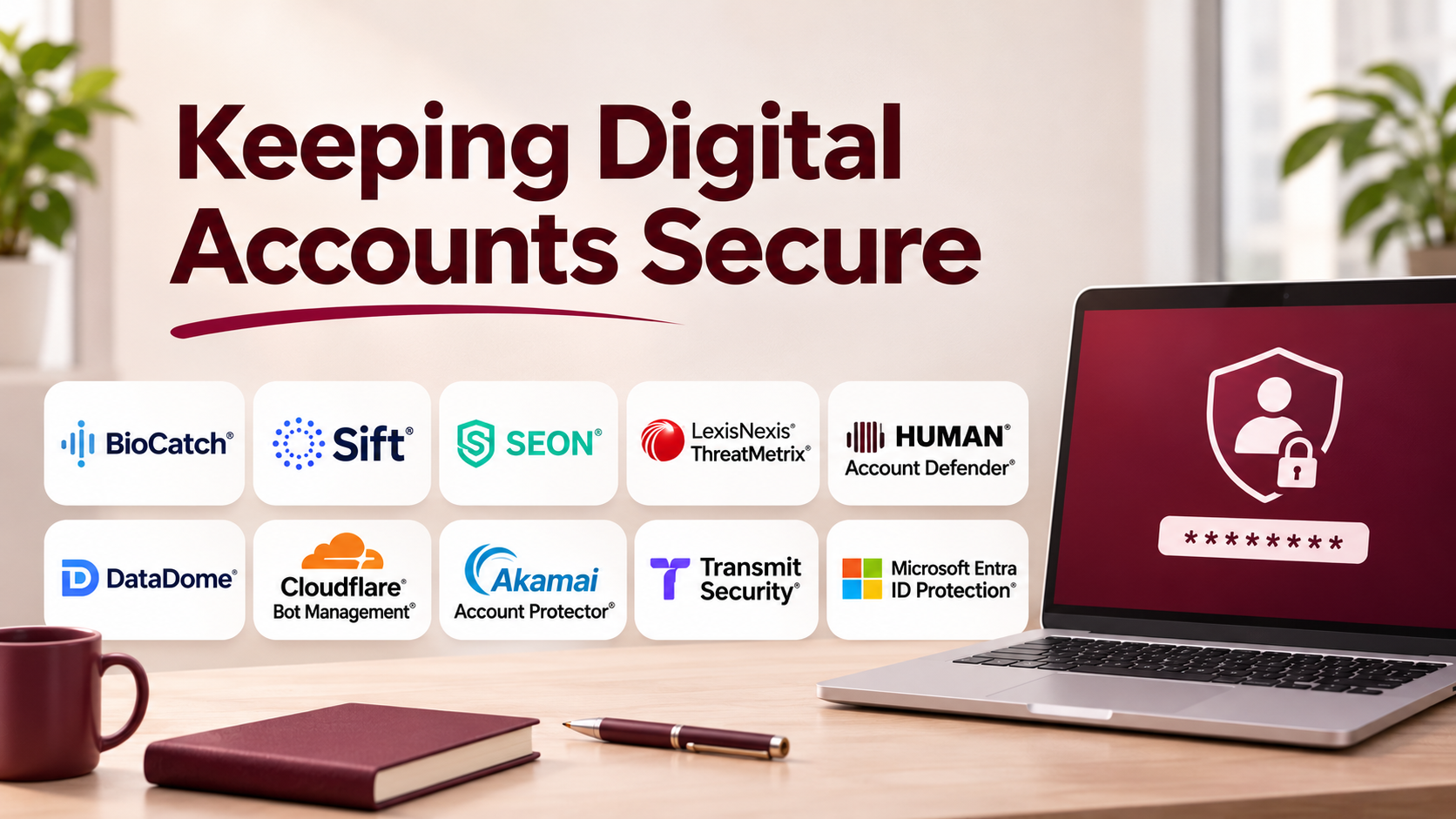
This guide examines ten established account takeover protection solutions, their capabilities, advantages, limitations, and practical applications. It also provides comparison tables, implementation guidance, security recommendations, and frequently asked questions.
What Are Account Takeover Protection Tools?
Account takeover protection tools are security solutions designed to identify, prevent, and respond to unauthorized access to legitimate accounts. They evaluate account activity and associated contextual information to identify potential identity threats.
These platforms may analyze device characteristics, authentication history, network information, behavioral patterns, and known security indicators. Available detection capabilities vary according to the selected product and deployment architecture.
Account takeover protection can operate during registration, authentication, account recovery, and sensitive account activities. Monitoring multiple stages of the account lifecycle helps organizations identify risks that conventional login security may overlook.
Many platforms integrate machine learning with configurable security policies. These capabilities help organizations prioritize suspicious activity and determine appropriate verification or investigation requirements.
Account takeover protection frequently operates alongside Multi-Factor Authentication (MFA), identity management, fraud prevention, and application security systems. These complementary controls provide broader protection than any individual detection mechanism.
Effective account protection requires continuous monitoring and appropriate remediation procedures. Organizations should treat automated risk assessments as decision-support information rather than definitive evidence of malicious activity.
How Do Account Takeover Protection Tools Work?
- Account activity collection: Collect authorized information associated with account interactions.
- Identity assessment: Evaluate available identity and authentication information.
- Device analysis: Assess relevant endpoint characteristics.
- Network assessment: Evaluate applicable connection information.
- Behavioral analysis: Identify unusual activity patterns.
- Threat intelligence: Compare available information with relevant security indicators.
- Risk scoring: Generate contextual account risk assessments.
- Policy evaluation: Determine appropriate security responses.
- Additional verification: Require stronger authentication when necessary.
- Incident investigation: Review suspicious account activity.
- Account remediation: Apply approved protective measures.
- Continuous optimization: Refine detection policies using validated outcomes.
Traditional Account Security vs. Modern ATO Protection
| Comparison Factor | Traditional Account Security | Modern ATO Protection |
|---|---|---|
| Primary protection | Password verification | Multi-signal security assessment |
| Risk evaluation | Limited | Contextual risk assessment |
| Device intelligence | Basic | Platform-dependent device analysis |
| Behavioral monitoring | Limited | Behavioral anomaly detection |
| Automated threat detection | Rule-based | Rules and applicable machine learning |
| Authentication requirements | Generally fixed | Context-dependent |
| Account lifecycle coverage | Primarily login | Multiple account activities |
| Bot detection | Separate or limited | Integrated in selected platforms |
| Threat intelligence | Limited | Applicable external and internal signals |
| Incident investigation | Manual review | Prioritized security workflows |
| Reporting | Basic access logs | Detailed contextual security information |
| Optimization | Periodic updates | Continuous monitoring and refinement |
Applications of Account Takeover Protection Tools
- Online banking account protection.
- E-commerce customer account security.
- Digital wallet protection.
- Enterprise workforce identity security.
- Healthcare patient portal protection.
- Online marketplace fraud prevention.
- Subscription service account security.
- Telecommunications customer protection.
- Digital gaming account security.
- Account recovery risk assessment.
- Sensitive account change monitoring.
- Credential abuse detection.
Core Components of ATO Protection Platforms
| Component | Primary Function |
|---|---|
| Identity intelligence | Evaluates relevant identity information |
| Device intelligence | Assesses device-related characteristics |
| Behavioral analytics | Identifies unusual interaction patterns |
| Network intelligence | Evaluates applicable connection information |
| Risk engine | Generates contextual risk assessments |
| Policy engine | Applies configured security rules |
| Bot detection | Identifies supported automated abuse indicators |
| Threat intelligence | Supplies relevant security indicators |
| Authentication integration | Supports additional verification |
| Session monitoring | Evaluates supported account session activity |
| Alert management | Prioritizes suspicious activity |
| Case management | Supports incident investigation |
| Reporting dashboard | Provides operational security visibility |
| API integration | Connects applications and security services |
| Audit logging | Records relevant security decisions |
| Feedback mechanisms | Supports detection improvement |
Types of Account Takeover Protection Tools
Customer Account Protection Platforms
Customer account protection platforms focus on securing digital accounts belonging to consumers and business customers. They frequently combine fraud detection, device intelligence, and contextual authentication capabilities.
Behavioral Biometrics Platforms
Behavioral biometrics solutions evaluate supported interaction patterns to identify potentially suspicious activity. Their assessments complement conventional identity verification and fraud prevention controls.
Bot Management Platforms
Bot management tools identify automated activity associated with application abuse and unauthorized account access attempts. They provide complementary protection against automated credential abuse.
Identity Threat Detection Platforms
Identity threat detection solutions monitor organizational identities and associated security risks. They are particularly relevant to workforce accounts and enterprise access infrastructure.
Device Intelligence Platforms
Device intelligence tools evaluate endpoint characteristics and associated contextual information. Their assessments can support account protection decisions across multiple digital channels.
Integrated Fraud Prevention Platforms
Integrated fraud prevention platforms combine account risk assessment with payment fraud detection, identity intelligence, and transaction monitoring. These solutions are particularly relevant to financial institutions and digital commerce businesses.
Key Capabilities of Account Takeover Protection Tools
- Contextual account risk assessment.
- Behavioral anomaly detection.
- Device intelligence.
- Automated abuse detection.
- Credential abuse monitoring.
- Adaptive authentication integration.
- Account lifecycle protection.
- Suspicious session assessment.
- Configurable security policies.
- Fraud investigation workflows.
- Real-time security alerts.
- Security analytics and reporting.
Account Takeover Protection Architecture
| Architecture Layer | Integration Purpose |
|---|---|
| Customer application | Captures relevant account interactions |
| Identity provider | Establishes authentication context |
| Device intelligence service | Supplies endpoint information |
| Behavioral analytics engine | Evaluates interaction patterns |
| Network security layer | Supplies connection context |
| Threat intelligence service | Provides relevant security indicators |
| Risk assessment engine | Evaluates potential account threats |
| Policy engine | Determines appropriate security actions |
| Authentication service | Provides additional verification |
| Fraud operations platform | Supports incident investigation |
| Security monitoring system | Collects security events |
| Governance infrastructure | Supports oversight and auditing |
Top 10 Account Takeover Protection Tools
The following solutions represent established account protection, identity security, fraud prevention, and automated abuse detection technologies. Their coverage differs according to product configuration, application architecture, and organizational requirements.
1. BioCatch
Short Description
BioCatch provides behavioral biometric intelligence and digital fraud prevention technology. Its solutions help financial institutions identify potentially suspicious account interactions.
The platform evaluates supported behavioral patterns associated with digital activities. These assessments can help distinguish ordinary customer interactions from potentially fraudulent activity.
BioCatch is particularly relevant to financial institutions requiring contextual account and transaction risk assessment. Its behavioral intelligence can complement existing authentication and fraud prevention systems.
Organizations can integrate applicable BioCatch risk information into fraud investigation and security decision workflows. This approach allows behavioral assessments to operate alongside other identity and transaction signals.
Effective implementation requires appropriate privacy governance and representative performance testing. Organizations should evaluate detection effectiveness across different customer populations and digital channels.
How BioCatch Works
- Integrate supported behavioral intelligence components.
- Collect permitted interaction information.
- Evaluate relevant behavioral patterns.
- Generate contextual risk assessments.
- Combine assessments with existing fraud controls.
- Investigate suspicious account activity.
- Monitor validated fraud outcomes.
Key Features
- Behavioral biometrics: Evaluates supported digital interaction patterns.
- Account takeover detection: Identifies applicable indicators of unauthorized account activity.
- Behavioral anomaly analysis: Highlights unusual customer interactions.
- Digital fraud intelligence: Supplies contextual fraud assessment information.
- Risk scoring: Supports account and transaction risk decisions.
- Session assessment: Evaluates supported interactions within digital sessions.
- Scam detection: Provides applicable indicators of suspicious customer activity.
- Device context: Incorporates available endpoint information.
- Financial fraud monitoring: Supports relevant banking security workflows.
- Application integration: Connects compatible digital banking applications.
- Investigation support: Provides contextual information for fraud teams.
- Security analytics: Supports monitoring of relevant fraud outcomes.
Benefits
- Improved visibility into suspicious account activity.
- Contextual behavioral risk assessment.
- Support for digital banking security.
- Complementary authentication protection.
- Improved fraud investigation context.
- Reduced dependence on static security signals.
- Support for customer experience optimization.
- Improved account lifecycle monitoring.
- Integration with existing fraud infrastructure.
- Support for financial security governance.
Pros
- Established behavioral biometrics specialization.
- Strong financial services relevance.
- Contextual interaction assessment.
- Account and transaction fraud applications.
- Complementary identity security capabilities.
- Applicable digital session monitoring.
- Enterprise integration opportunities.
- Relevant scam detection capabilities.
Cons
- Commercial pricing requires consultation.
- Behavioral information raises privacy considerations.
- Integration complexity varies.
- Detection effectiveness depends on available signals.
- Proprietary models may limit transparency.
- Continuous performance monitoring is necessary.
- Not a complete replacement for strong authentication.
Use Cases
- Online banking account protection.
- Mobile banking fraud detection.
- Suspicious customer session assessment.
- Financial transaction risk monitoring.
- Account takeover investigation.
- Customer scam risk assessment.
- Behavioral fraud detection.
- Digital identity security enhancement.
Industry Applications
- Retail banking.
- Commercial banking.
- Financial technology.
- Payment services.
- Digital lending.
Integration and Deployment
BioCatch supports applicable integrations with financial applications and fraud management infrastructure. Organizations should evaluate supported digital channels and behavioral information requirements.
Deployment should include privacy assessments, controlled testing, and fraud operations integration. Behavioral risk information should complement existing authentication controls.
Pricing
BioCatch generally operates through enterprise commercial arrangements. Pricing depends on selected services, deployment scope, and usage requirements.
Best For
- Retail banks.
- Digital banking providers.
- Financial fraud operations teams.
- Behavioral biometrics initiatives.
- Financial technology companies.
- Organizations protecting sensitive transactions.
- Enterprises requiring contextual fraud intelligence.
- Businesses strengthening existing account protection systems.
Overall Assessment
BioCatch provides specialized behavioral intelligence for financial fraud and account takeover protection. Its contextual assessment capabilities are particularly relevant to digital banking environments.
Organizations should evaluate behavioral information governance and detection performance before deployment. Strong authentication and secure recovery remain necessary complementary controls.
2. Sift
Short Description
Sift provides digital fraud prevention technology for online businesses and customer-facing applications. Its platform includes account protection capabilities designed to identify suspicious digital account activity.
The platform evaluates available identity, device, network, and behavioral information. Applicable machine learning capabilities support contextual fraud risk assessments.
Sift can help organizations coordinate account protection with broader digital fraud prevention activities. Its product portfolio addresses multiple forms of online abuse and financial fraud.
The platform is relevant to digital marketplaces, subscription businesses, online retailers, and financial technology companies. Organizations can integrate supported risk information into existing security decision workflows.
Successful implementation requires reliable event collection and validated fraud feedback. Businesses should monitor the impact of automated decisions on legitimate customers.
How Sift Works
- Integrate supported application events.
- Collect permitted account activity information.
- Evaluate contextual fraud indicators.
- Generate applicable risk assessments.
- Apply configured decision workflows.
- Investigate suspicious accounts.
- Review confirmed fraud outcomes.
Key Features
- Account protection: Identifies supported account takeover indicators.
- Machine learning: Evaluates contextual fraud information.
- Risk scoring: Provides applicable fraud risk assessments.
- Device intelligence: Incorporates available device characteristics.
- Behavioral analysis: Evaluates supported activity patterns.
- Network intelligence: Assesses applicable connection information.
- Digital fraud prevention: Supports broader online fraud workflows.
- Decision management: Configures appropriate fraud responses.
- Investigation tools: Supports review of suspicious activity.
- API integration: Connects compatible applications.
- Event monitoring: Processes supported account events.
- Fraud analytics: Provides operational risk visibility.
Benefits
- Improved account risk visibility.
- Integrated digital fraud prevention.
- Configurable security decisions.
- Support for scalable online businesses.
- Improved investigation efficiency.
- Contextual customer assessment.
- Reduced repetitive manual review.
- Flexible application integration.
- Support for fraud operations.
- Improved security performance monitoring.
Pros
- Established digital fraud prevention platform.
- Broad online business applications.
- Machine learning capabilities.
- Configurable decision workflows.
- Account and payment fraud coverage.
- Developer-oriented integrations.
- Applicable investigation tools.
- Suitable for digital marketplaces.
Cons
- Commercial pricing requires evaluation.
- Integration requires reliable event collection.
- Detection depends on information quality.
- False-positive assessments remain possible.
- Advanced capabilities vary by product.
- Proprietary risk models limit transparency.
- Continuous fraud operations oversight is necessary.
Use Cases
- E-commerce account protection.
- Marketplace account security.
- Subscription service protection.
- Suspicious login assessment.
- Account abuse investigation.
- Digital payment fraud prevention.
- Customer account risk scoring.
- Fraud decision automation.
Industry Applications
- E-commerce.
- Digital marketplaces.
- Financial technology.
- Online travel.
- Subscription services.
Integration and Deployment
Sift provides supported application integration resources and fraud management workflows. Businesses should determine which account and transaction events are necessary for their selected services.
Implementation should include event quality validation and controlled decision testing. Confirmed fraud outcomes should be incorporated into appropriate monitoring processes.
Pricing
Pricing depends on selected products, usage volumes, and commercial arrangements. Organizations should obtain a tailored proposal.
Best For
- Online retailers.
- Digital marketplaces.
- Subscription businesses.
- Financial technology companies.
- Fraud operations teams.
- Digital commerce platforms.
- Businesses requiring integrated fraud prevention.
- Organizations managing large customer populations.
Overall Assessment
Sift provides integrated digital fraud prevention and account protection capabilities. Its configurable workflows make it relevant to organizations managing diverse online fraud risks.
Businesses should evaluate event integration requirements and detection effectiveness using representative customer activity. Commercial costs and ongoing operational requirements also deserve consideration.
3. SEON
Short Description
SEON provides digital fraud prevention and risk intelligence technology. Its capabilities help organizations evaluate potentially suspicious customer accounts and digital transactions.
The platform combines supported device information, digital identity intelligence, and configurable fraud assessment rules. These signals can inform account protection decisions.
SEON provides integration options relevant to online businesses and financial technology applications. Organizations can use applicable risk assessments alongside existing authentication and transaction security systems.
Its configurable fraud rules can support organizations requiring greater control over operational decision policies. Available capabilities depend on selected products and commercial arrangements.
Businesses should evaluate the accuracy and relevance of digital identity signals before applying automated restrictions. Appropriate privacy governance and customer review procedures remain essential.
How SEON Works
- Integrate supported fraud assessment interfaces.
- Collect permitted customer and device information.
- Evaluate applicable digital identity signals.
- Apply configured fraud assessment rules.
- Generate contextual risk assessments.
- Route suspicious activity for appropriate action.
- Monitor validated security outcomes.
Key Features
- Device intelligence: Evaluates supported endpoint characteristics.
- Digital identity intelligence: Assesses applicable digital identity information.
- Email intelligence: Provides supported email-related risk context.
- Phone intelligence: Evaluates available telephone-related signals.
- Network assessment: Supplies applicable connection risk information.
- Risk scoring: Generates contextual fraud assessments.
- Custom rules: Supports configurable decision policies.
- Machine learning: Provides applicable fraud detection capabilities.
- Account monitoring: Supports selected account protection workflows.
- API integration: Connects compatible applications.
- Fraud investigation: Provides relevant risk assessment context.
- Reporting: Supports operational fraud monitoring.
Benefits
- Improved customer risk assessment.
- Flexible fraud decision policies.
- Contextual device intelligence.
- Support for digital account protection.
- Improved fraud investigation context.
- Developer-oriented integration.
- Reduced dependence on individual risk signals.
- Support for online business scalability.
- Configurable security workflows.
- Improved operational visibility.
Pros
- Broad digital risk intelligence capabilities.
- Configurable fraud rules.
- Device and identity assessment.
- API-oriented architecture.
- Relevant financial technology applications.
- Support for account and transaction risk assessment.
- Flexible operational decision management.
- Suitable for digital businesses.
Cons
- Information availability varies by region.
- Digital identity signals require privacy oversight.
- Incorrect rules may affect legitimate users.
- Integration effort depends on application architecture.
- Advanced capabilities may require additional licensing.
- Risk assessments require continuous validation.
- Not a standalone identity authentication replacement.
Use Cases
- Customer account risk assessment.
- Suspicious registration detection.
- Digital lending fraud prevention.
- Account takeover protection.
- Online payment risk assessment.
- Marketplace account monitoring.
- Device risk analysis.
- Fraud investigation prioritization.
Industry Applications
- Financial technology.
- Digital lending.
- E-commerce.
- Online gaming.
- Payment services.
Integration and Deployment
SEON provides supported APIs and application integration resources for digital fraud assessment. Organizations should identify which contextual information is necessary for their security objectives.
Deployment should include configurable rule testing and privacy assessment. Businesses should monitor false positives and maintain appropriate customer review procedures.
Pricing
Pricing depends on selected capabilities, assessment volumes, and commercial plans. Current pricing and usage limits should be verified directly.
Best For
- Financial technology companies.
- Online retailers.
- Digital lending businesses.
- Fraud analysts.
- Online gaming platforms.
- Payment service providers.
- Businesses requiring configurable fraud rules.
- Organizations integrating device intelligence.
Overall Assessment
SEON provides flexible digital risk intelligence and fraud assessment capabilities. Its configurable rules and contextual signals make it relevant to account protection workflows.
Organizations should evaluate information quality and privacy requirements carefully. Automated restrictions should be supported by validated risk policies and appropriate review procedures.
4. LexisNexis ThreatMetrix
Short Description
LexisNexis ThreatMetrix provides digital identity intelligence and fraud risk assessment technology. It helps organizations evaluate contextual information associated with digital interactions.
The platform incorporates supported device, identity, and network information. Its digital identity intelligence can support account protection and transaction risk assessment.
ThreatMetrix is particularly relevant to organizations requiring fraud assessment across large digital customer populations. Its broader risk intelligence ecosystem provides additional contextual information where applicable.
Financial institutions, online retailers, and digital service providers can integrate supported assessments into existing fraud prevention workflows. Implementation requirements depend on selected services and application architecture.
Organizations should evaluate information governance, regional coverage, and decision transparency. Contextual identity assessments must be interpreted alongside other appropriate security evidence.
How ThreatMetrix Works
- Integrate supported digital identity services.
- Collect authorized interaction information.
- Evaluate device and network characteristics.
- Assess applicable digital identity relationships.
- Generate contextual risk assessments.
- Apply configured fraud decision policies.
- Monitor investigation outcomes.
Key Features
- Digital identity intelligence: Evaluates applicable identity-related information.
- Device assessment: Analyzes supported device characteristics.
- Network intelligence: Provides contextual connection information.
- Account takeover assessment: Identifies supported account risk indicators.
- Risk scoring: Supports configurable fraud decisions.
- Digital identity network: Supplies applicable cross-interaction intelligence.
- Behavioral context: Incorporates supported activity information.
- Transaction assessment: Supports digital transaction risk evaluation.
- Policy configuration: Enables applicable decision rules.
- Application integration: Connects supported digital services.
- Investigation support: Provides contextual risk information.
- Security reporting: Supports fraud operations monitoring.
Benefits
- Improved digital identity visibility.
- Contextual account protection.
- Support for large customer populations.
- Integrated transaction risk assessment.
- Improved investigation information.
- Configurable fraud decisions.
- Support for financial security workflows.
- Complementary authentication intelligence.
- Scalable digital fraud assessment.
- Improved operational risk monitoring.
Pros
- Established digital identity intelligence platform.
- Broad enterprise fraud applications.
- Device and network assessment capabilities.
- Relevant financial services experience.
- Contextual identity intelligence.
- Applicable transaction assessment.
- Enterprise integration options.
- Configurable fraud decision support.
Cons
- Enterprise commercial pricing requires consultation.
- Information processing requires privacy governance.
- Integration complexity varies.
- Regional information availability may differ.
- Proprietary assessment models limit transparency.
- False-positive assessments remain possible.
- Continuous fraud policy review is necessary.
Use Cases
- Digital banking account protection.
- Online transaction risk assessment.
- Customer identity intelligence.
- Suspicious account activity detection.
- E-commerce fraud prevention.
- Digital wallet security.
- Account recovery risk assessment.
- Enterprise fraud investigation.
Industry Applications
- Banking.
- Insurance.
- E-commerce.
- Telecommunications.
- Payment services.
Integration and Deployment
ThreatMetrix supports applicable integrations with digital applications and enterprise fraud infrastructure. Organizations should review information collection requirements and supported decision workflows.
Implementation should include controlled assessment of customer activity and fraud outcomes. Privacy obligations and regional information processing requirements must be evaluated.
Pricing
Pricing depends on selected services, assessment volumes, and enterprise agreements. Organizations should request a commercial proposal.
Best For
- Large financial institutions.
- Enterprise fraud operations teams.
- Digital commerce businesses.
- Payment service providers.
- Digital wallet operators.
- Telecommunications companies.
- Organizations requiring identity intelligence.
- Enterprises managing large-scale fraud assessment.
Overall Assessment
ThreatMetrix provides established digital identity intelligence for contextual account and transaction risk assessment. Its enterprise capabilities make it relevant to organizations with complex fraud prevention requirements.
Businesses should evaluate integration costs, information governance, and detection effectiveness. Risk assessments should complement secure authentication and account recovery procedures.
5. HUMAN Account Defender
Short Description
HUMAN Account Defender provides account protection capabilities within HUMAN Security’s broader application security portfolio. It focuses on identifying suspicious account activity and automated or human-driven abuse.
The platform evaluates supported contextual signals associated with account interactions. Its assessments can help organizations identify potential account compromise and suspicious account usage.
HUMAN’s broader security ecosystem addresses automated application abuse and digital threats. Account Defender can complement these capabilities within an integrated protection strategy.
The solution is relevant to online businesses managing customer accounts and digital transactions. Organizations should evaluate coverage across their account lifecycle and application channels.
Successful deployment requires appropriate integration, policy configuration, and operational monitoring. Businesses should maintain secure authentication and account remediation procedures.
How HUMAN Account Defender Works
- Integrate supported application protection components.
- Collect permitted account activity signals.
- Evaluate relevant interaction characteristics.
- Identify potentially suspicious account activity.
- Apply configured protection policies.
- Investigate flagged account events.
- Monitor account protection outcomes.
Key Features
- Account protection: Evaluates supported account compromise indicators.
- Account lifecycle assessment: Supports applicable account interaction monitoring.
- Behavioral intelligence: Evaluates relevant activity patterns.
- Automated abuse detection: Identifies supported automation indicators.
- Device context: Incorporates available endpoint information.
- Risk assessment: Supplies contextual account risk information.
- Application protection: Connects with compatible digital services.
- Policy management: Supports configurable protection requirements.
- Threat intelligence: Incorporates applicable security indicators.
- Security monitoring: Provides visibility into suspicious activity.
- Investigation context: Supports account security reviews.
- Platform integration: Connects with applicable HUMAN security products.
Benefits
- Improved account abuse visibility.
- Contextual account protection.
- Support for automated abuse prevention.
- Complementary application security.
- Improved security investigation context.
- Support for customer-facing applications.
- Configurable protection policies.
- Reduced dependence on static controls.
- Integrated threat monitoring.
- Support for account security operations.
Pros
- Account protection specialization.
- Established application security ecosystem.
- Automated abuse detection capabilities.
- Contextual activity assessment.
- Relevant digital commerce applications.
- Applicable account lifecycle coverage.
- Enterprise integration opportunities.
- Complementary bot management capabilities.
Cons
- Commercial pricing requires consultation.
- Product capabilities depend on configuration.
- Application integration may require engineering resources.
- Detection effectiveness varies by environment.
- Proprietary assessment mechanisms limit transparency.
- Continuous policy monitoring is necessary.
- Additional authentication infrastructure remains important.
Use Cases
- Customer account takeover protection.
- Automated credential abuse detection.
- Suspicious account activity monitoring.
- Online marketplace protection.
- E-commerce account security.
- Digital subscription protection.
- Account abuse investigation.
- Integrated application security.
Industry Applications
- Retail.
- Digital marketplaces.
- Financial services.
- Online travel.
- Digital media.
Integration and Deployment
HUMAN Account Defender supports applicable integrations with customer-facing digital applications and broader HUMAN security infrastructure. Organizations should verify the specific account events and channels covered.
Deployment should include controlled policy testing and monitoring of legitimate user experiences. Account security teams should establish appropriate investigation and remediation workflows.
Pricing
Pricing depends on selected products, application coverage, traffic requirements, and commercial arrangements. Current commercial terms require direct confirmation.
Best For
- Large online retailers.
- Digital marketplaces.
- Application security teams.
- Businesses experiencing automated account abuse.
- Digital subscription services.
- Customer account protection teams.
- Enterprises using HUMAN security products.
- Organizations requiring integrated application protection.
Overall Assessment
HUMAN Account Defender provides account protection capabilities within an established application security ecosystem. Its contextual assessment and automated abuse detection capabilities are relevant to customer-facing businesses.
Organizations should verify application coverage and product integration requirements. Strong authentication and secure account recovery remain essential.
6. DataDome
Short Description
DataDome provides bot management and automated abuse prevention technology for websites, mobile applications, and compatible Application Programming Interfaces (APIs). Its capabilities can help protect digital accounts against automated credential abuse.
The platform evaluates supported request characteristics and automation indicators. Configured protection policies determine appropriate responses to suspicious automated activity.
DataDome is particularly relevant to organizations experiencing malicious automated traffic. Its bot management capabilities provide complementary protection against account takeover attempts involving automation.
Businesses can integrate supported DataDome services with application delivery and security infrastructure. Available integration methods depend on application architecture.
DataDome should not be considered a complete replacement for identity security or post-authentication fraud monitoring. Organizations should combine automated abuse prevention with strong authentication and account lifecycle protection.
How DataDome Works
- Integrate supported application protection services.
- Evaluate incoming application requests.
- Collect applicable contextual signals.
- Assess potential automated activity.
- Apply configured protection policies.
- Monitor suspicious traffic patterns.
- Review security and legitimate traffic outcomes.
Key Features
- Bot detection: Identifies supported automated traffic indicators.
- Credential abuse protection: Helps mitigate applicable automated account access attempts.
- Real-time assessment: Evaluates supported application requests.
- Machine learning: Supports automated abuse classification.
- Web application protection: Protects compatible websites.
- Mobile application protection: Supports applicable mobile integrations.
- API protection: Evaluates supported API traffic.
- Device intelligence: Incorporates available request context.
- Configurable responses: Supports applicable protection actions.
- Traffic analytics: Provides visibility into application activity.
- Infrastructure integration: Connects compatible delivery environments.
- Security reporting: Supports automated abuse monitoring.
Benefits
- Improved automated abuse protection.
- Reduced exposure to credential abuse.
- Support for multiple application channels.
- Contextual traffic assessment.
- Improved application security visibility.
- Complementary account protection.
- Support for scalable online services.
- Configurable traffic protection.
- Reduced repetitive security administration.
- Improved automated threat monitoring.
Pros
- Specialized bot management capabilities.
- Web, mobile, and API protection options.
- Real-time traffic assessment.
- Established application security integrations.
- Relevant e-commerce applications.
- Configurable protection responses.
- Applicable credential abuse mitigation.
- Centralized traffic visibility.
Cons
- Primarily focused on automated abuse.
- Does not replace identity authentication.
- Commercial pricing depends on deployment.
- Integration requirements vary.
- Legitimate automation requires careful management.
- False-positive traffic decisions remain possible.
- Post-login fraud protection may require additional tools.
Use Cases
- Automated credential abuse mitigation.
- E-commerce login protection.
- API abuse prevention.
- Mobile application traffic protection.
- Marketplace account security.
- Automated registration abuse detection.
- Digital application traffic monitoring.
- Complementary account takeover prevention.
Industry Applications
- E-commerce.
- Online travel.
- Financial technology.
- Digital publishing.
- Online gaming.
Integration and Deployment
DataDome supports applicable integrations with web infrastructure, mobile applications, and API environments. Organizations should verify compatibility with their application delivery architecture.
Deployment should include monitoring legitimate traffic and testing protection policies. Identity security and fraud monitoring systems should address account risks outside automated abuse coverage.
Pricing
Pricing depends on selected services, application coverage, traffic volumes, and commercial plans. Current pricing should be verified directly.
Best For
- Online retailers.
- Application security teams.
- Businesses experiencing malicious automated traffic.
- API service providers.
- Digital marketplaces.
- Mobile application operators.
- Organizations requiring bot management.
- Enterprises strengthening existing account protection.
Overall Assessment
DataDome provides specialized automated abuse prevention that can complement account takeover protection strategies. Its capabilities are particularly relevant to applications experiencing automated credential abuse.
Organizations should evaluate its coverage alongside identity authentication and account monitoring requirements. Broader fraud prevention may require additional services.
7. Cloudflare Bot Management
Short Description
Cloudflare Bot Management provides automated traffic assessment and mitigation capabilities within Cloudflare’s application security ecosystem. It can help organizations identify suspicious automation affecting account-related application endpoints.
The platform evaluates supported traffic characteristics and contextual security signals. Applicable bot scores and configurable security rules can inform protection decisions.
Cloudflare Bot Management can operate alongside Cloudflare’s Web Application Firewall (WAF), rate limiting, and other application security capabilities. These integrations support broader digital application protection.
The solution is relevant to businesses already using Cloudflare infrastructure or evaluating centralized application security. Account takeover protection coverage primarily concerns automated abuse rather than complete identity lifecycle monitoring.
Organizations should evaluate legitimate automated traffic and customer accessibility requirements. Strong authentication and contextual account monitoring should complement bot protection.
How Cloudflare Bot Management Works
- Configure supported Cloudflare application infrastructure.
- Enable applicable bot management capabilities.
- Evaluate incoming request characteristics.
- Generate supported bot assessments.
- Apply configured security policies.
- Monitor traffic and security events.
- Refine protection based on validated outcomes.
Key Features
- Bot scoring: Provides applicable automated traffic assessments.
- Machine learning: Supports traffic classification.
- Credential abuse mitigation: Helps address automated account access threats.
- WAF integration: Connects with applicable application security rules.
- Rate limiting integration: Supports configured request controls.
- Traffic analytics: Provides relevant application traffic visibility.
- Request assessment: Evaluates supported request characteristics.
- Security rules: Enables configurable protection policies.
- API protection integration: Supports applicable API security arrangements.
- Challenge mechanisms: Provides supported verification responses.
- Threat intelligence: Incorporates applicable security indicators.
- Centralized administration: Manages supported application protection settings.
Benefits
- Improved automated traffic visibility.
- Complementary account takeover protection.
- Integrated application security.
- Configurable traffic controls.
- Support for scalable web applications.
- Reduced automated abuse exposure.
- Centralized security administration.
- Improved traffic monitoring.
- Support for existing Cloudflare infrastructure.
- Flexible protection policy management.
Pros
- Established application security ecosystem.
- Integrated WAF capabilities.
- Contextual bot assessment.
- Broad web application relevance.
- Configurable security rules.
- Applicable automated abuse mitigation.
- Centralized traffic analytics.
- Suitable for high-traffic digital services.
Cons
- Advanced capabilities require eligible commercial arrangements.
- Primarily addresses automated application abuse.
- Does not provide complete identity lifecycle protection.
- Incorrect rules may affect legitimate traffic.
- Configuration requires technical expertise.
- Application architecture compatibility must be evaluated.
- Continuous monitoring remains necessary.
Use Cases
- Automated account access abuse mitigation.
- E-commerce login endpoint protection.
- Web application bot management.
- API traffic protection.
- Marketplace security.
- Digital subscription application protection.
- Application traffic monitoring.
- Integrated web security enforcement.
Industry Applications
- E-commerce.
- Financial technology.
- Digital media.
- Software services.
- Telecommunications.
Integration and Deployment
Cloudflare Bot Management operates within supported Cloudflare application security environments. Organizations should verify required plans, traffic routing arrangements, and available security features.
Implementation should include controlled policy testing and monitoring of legitimate automated services. Account protection should also incorporate identity and fraud prevention controls.
Pricing
Advanced Bot Management capabilities generally depend on eligible commercial arrangements. Organizations should confirm current licensing and feature availability directly.
Best For
- Cloudflare customers.
- High-traffic websites.
- Application security teams.
- Online retailers.
- API service providers.
- Businesses requiring integrated web security.
- Digital marketplace operators.
- Organizations mitigating automated account abuse.
Overall Assessment
Cloudflare Bot Management provides contextual automated traffic protection within a broader application security ecosystem. It is particularly relevant to organizations strengthening application-level account protection.
Businesses should recognize its complementary role rather than treating it as a complete account takeover prevention platform. Authentication and account monitoring remain necessary.
8. Akamai Account Protector
Short Description
Akamai Account Protector provides digital account security capabilities within Akamai’s application security portfolio. It helps organizations evaluate potentially suspicious account access activity.
The platform incorporates supported behavioral, device, and contextual information associated with digital interactions. These assessments can inform account protection policies.
Akamai’s broader application security infrastructure provides complementary protection against automated abuse and application threats. Account Protector can operate within an integrated digital security architecture.
The solution is particularly relevant to enterprises managing large customer populations and high-traffic digital services. Organizations should verify application integration and product configuration requirements.
Successful deployment requires monitoring detection effectiveness and legitimate customer experiences. Account protection decisions should complement secure authentication and recovery procedures.
How Akamai Account Protector Works
- Configure supported Akamai application infrastructure.
- Integrate applicable account protection services.
- Collect authorized contextual information.
- Evaluate account access characteristics.
- Generate applicable risk assessments.
- Apply configured protection responses.
- Monitor account security outcomes.
Key Features
- Account risk assessment: Evaluates supported account access risks.
- Behavioral intelligence: Assesses applicable interaction patterns.
- Device context: Incorporates available endpoint characteristics.
- Account takeover detection: Identifies supported account compromise indicators.
- Automated abuse protection: Complements applicable bot security services.
- Contextual analysis: Evaluates relevant access information.
- Risk scoring: Supports configured security decisions.
- Application integration: Connects compatible digital applications.
- Policy configuration: Enables appropriate protection responses.
- Threat intelligence: Incorporates applicable security indicators.
- Security analytics: Provides account protection visibility.
- Platform integration: Connects with compatible Akamai security services.
Benefits
- Improved account access risk visibility.
- Contextual customer protection.
- Support for high-traffic applications.
- Complementary automated abuse mitigation.
- Integrated application security.
- Configurable security responses.
- Improved security investigation context.
- Scalable enterprise protection.
- Support for customer experience monitoring.
- Centralized security operations.
Pros
- Dedicated account protection capabilities.
- Established enterprise security infrastructure.
- Contextual account risk assessment.
- Relevant high-traffic application coverage.
- Complementary bot management options.
- Enterprise integration opportunities.
- Configurable protection policies.
- Suitable for large digital businesses.
Cons
- Commercial pricing requires consultation.
- Integration depends on application architecture.
- Product configuration may require specialist expertise.
- Detection effectiveness varies by environment.
- Proprietary models limit transparency.
- Continuous security monitoring is necessary.
- Additional identity controls remain important.
Use Cases
- Enterprise customer account protection.
- Online retail login security.
- Digital banking account assessment.
- Suspicious account access detection.
- Marketplace account protection.
- Integrated application security.
- Digital subscription account security.
- Account takeover investigation.
Industry Applications
- Retail.
- Banking.
- Telecommunications.
- Digital media.
- Online travel.
Integration and Deployment
Akamai Account Protector supports applicable integrations within Akamai’s application security infrastructure. Organizations should evaluate protected endpoints, supported signals, and complementary product requirements.
Deployment should include representative traffic testing and documented protection policies. Businesses must monitor customer access outcomes and security effectiveness.
Pricing
Pricing depends on selected services, application coverage, traffic requirements, and enterprise agreements. Organizations should request current commercial information.
Best For
- Akamai customers.
- Large online retailers.
- Financial institutions.
- Enterprise application security teams.
- High-traffic digital services.
- Telecommunications providers.
- Businesses requiring contextual account assessment.
- Organizations integrating application and account protection.
Overall Assessment
Akamai Account Protector provides contextual account security within an established enterprise application protection ecosystem. Its capabilities are relevant to organizations managing large digital customer environments.
Businesses should evaluate product integration requirements and validated detection outcomes. Account protection must operate alongside appropriate identity and recovery controls.
9. Transmit Security
Short Description
Transmit Security provides customer identity, authentication, fraud prevention, and identity orchestration technology. Its applicable services help organizations assess suspicious customer account activity.
The platform combines supported contextual identity information with configurable authentication and fraud decision workflows. These capabilities can help businesses coordinate account protection throughout digital customer journeys.
Transmit Security supports modern authentication methods and applicable passwordless verification. Strong authentication can complement contextual account takeover detection.
The solution is particularly relevant to financial institutions, digital wallet providers, and large customer-facing businesses. Integration requirements depend on selected identity and fraud prevention products.
Organizations should evaluate authentication accessibility, privacy governance, and secure recovery requirements. Account risk assessments should be validated using representative customer activity.
How Transmit Security Works
- Integrate supported customer identity services.
- Configure authentication and account journeys.
- Collect permitted contextual information.
- Evaluate applicable account risk indicators.
- Determine appropriate verification requirements.
- Apply configured security responses.
- Monitor identity and fraud outcomes.
Key Features
- Customer identity management: Supports digital customer authentication.
- Account takeover protection: Evaluates applicable account compromise risks.
- Fraud detection: Provides contextual fraud assessment capabilities.
- Device intelligence: Incorporates supported endpoint information.
- Behavioral assessment: Evaluates applicable customer interaction signals.
- Adaptive authentication: Supports risk-driven verification.
- Passwordless authentication: Provides eligible modern authentication methods.
- Passkey support: Enables applicable public-key authentication.
- Identity orchestration: Coordinates supported identity services.
- Policy management: Configures authentication and fraud decisions.
- API integration: Connects compatible digital applications.
- Security monitoring: Provides applicable account risk visibility.
Benefits
- Integrated customer identity protection.
- Contextual account risk assessment.
- Support for stronger authentication.
- Flexible customer security journeys.
- Improved fraud investigation context.
- Reduced dependence on passwords alone.
- Scalable customer authentication.
- Configurable account protection.
- Flexible application integration.
- Support for customer experience management.
Pros
- Integrated identity and fraud capabilities.
- Modern authentication support.
- Customer identity specialization.
- Identity orchestration capabilities.
- Relevant financial services applications.
- Contextual account risk assessment.
- API-oriented integration.
- Suitable for complex customer journeys.
Cons
- Commercial pricing requires consultation.
- Integration scope can become complex.
- Multiple product components may be necessary.
- Contextual information requires privacy governance.
- Account recovery requires careful design.
- Proprietary assessments limit transparency.
- Continuous policy validation remains necessary.
Use Cases
- Digital banking account protection.
- Customer identity fraud prevention.
- Passwordless customer authentication.
- Digital wallet security.
- E-commerce account protection.
- Sensitive account change verification.
- Customer identity orchestration.
- Risk-based account recovery.
Industry Applications
- Banking.
- Financial technology.
- Retail.
- Insurance.
- Telecommunications.
Integration and Deployment
Transmit Security provides applicable APIs and orchestration resources for customer identity and fraud protection. Organizations should determine which authentication and fraud assessment components are required.
Deployment should include customer journey testing and recovery security assessment. Businesses must monitor authentication effectiveness and customer access outcomes.
Pricing
Pricing depends on selected products, customer populations, usage requirements, and commercial arrangements. A tailored proposal is recommended.
Best For
- Digital banking providers.
- Customer identity teams.
- Financial technology companies.
- Large online retailers.
- Digital wallet operators.
- Passwordless authentication initiatives.
- Enterprises requiring identity orchestration.
- Businesses integrating authentication and fraud prevention.
Overall Assessment
Transmit Security provides integrated customer identity and contextual fraud protection capabilities. Its authentication and orchestration options make it relevant to organizations requiring comprehensive customer account security.
Businesses should evaluate the complete integration architecture and operational costs. Appropriate privacy governance and secure recovery procedures remain essential.
10. Microsoft Entra ID Protection
Short Description
Microsoft Entra ID Protection provides identity risk detection and remediation capabilities within Microsoft Entra. It helps organizations identify potentially compromised workforce identities and suspicious sign-in activity.
The platform evaluates supported user and sign-in risk information. These assessments can inform Microsoft Entra Conditional Access policies and applicable remediation workflows.
Microsoft Entra ID Protection is primarily relevant to enterprise identity security rather than general consumer payment fraud prevention. It provides an important approach to protecting organizational accounts.
Businesses can integrate applicable identity risk information with broader Microsoft security infrastructure. Available automated responses depend on licensing and configuration.
Successful implementation requires carefully designed authentication policies and secure recovery procedures. Organizations should monitor identity risk outcomes and maintain controlled emergency access arrangements.
How Microsoft Entra ID Protection Works
- Configure supported Microsoft Entra infrastructure.
- Enable applicable identity risk detection.
- Collect supported identity and sign-in signals.
- Evaluate user and authentication risk.
- Apply configured Conditional Access policies.
- Require appropriate verification or remediation.
- Monitor identity security events.
Key Features
- User risk detection: Identifies supported compromised identity indicators.
- Sign-in risk assessment: Evaluates contextual authentication risks.
- Conditional Access integration: Applies configured access requirements.
- Adaptive MFA: Supports appropriate additional verification.
- Risk remediation: Provides eligible automated remediation workflows.
- Identity security reporting: Provides visibility into detected risks.
- Threat intelligence: Incorporates supported Microsoft security information.
- Cloud identity integration: Connects with Microsoft Entra services.
- Security monitoring: Supports identity incident investigation.
- Administrative controls: Manages applicable identity risk policies.
- Security ecosystem integration: Connects compatible Microsoft security products.
- Authentication event visibility: Supports review of relevant sign-in activity.
Benefits
- Improved workforce identity protection.
- Contextual authentication risk assessment.
- Centralized identity security management.
- Configurable remediation requirements.
- Microsoft ecosystem compatibility.
- Improved compromised account visibility.
- Support for distributed workforces.
- Complementary enterprise access security.
- Reduced repetitive identity administration.
- Support for organizational security governance.
Pros
- Native Microsoft Entra integration.
- Established enterprise identity infrastructure.
- User and sign-in risk assessment.
- Conditional Access compatibility.
- Applicable automated remediation.
- Centralized security reporting.
- Broad Microsoft ecosystem integration.
- Suitable for enterprise workforce protection.
Cons
- Advanced capabilities require eligible licensing.
- Primarily focused on Microsoft identity environments.
- Not a general consumer fraud prevention platform.
- Policy configuration requires expertise.
- Incorrect policies may interrupt legitimate access.
- Proprietary risk models limit transparency.
- Secure recovery and emergency access require planning.
Use Cases
- Compromised employee account detection.
- Suspicious workforce sign-in assessment.
- Enterprise account takeover protection.
- Adaptive employee authentication.
- Cloud application access protection.
- Identity risk investigation.
- Automated identity remediation.
- Enterprise identity security monitoring.
Industry Applications
- Financial services.
- Healthcare.
- Government.
- Education.
- Enterprise technology.
Integration and Deployment
Microsoft Entra ID Protection operates within supported Microsoft Entra environments. Organizations can integrate applicable risk information into Conditional Access and broader security workflows.
Deployment should include controlled policy testing and emergency access arrangements. Administrators should verify licensing and supported remediation capabilities.
Pricing
Advanced identity risk capabilities generally require eligible Microsoft Entra premium licensing. Current subscription requirements and commercial prices should be confirmed directly.
Best For
- Microsoft Entra customers.
- Enterprise workforce security teams.
- Cloud-first organizations.
- Distributed workforces.
- Microsoft security ecosystem users.
- Identity administrators.
- Organizations protecting employee accounts.
- Enterprises requiring contextual identity remediation.
Overall Assessment
Microsoft Entra ID Protection provides integrated account compromise detection for enterprise identity environments. Its Conditional Access compatibility makes it relevant to organizations protecting workforce accounts.
Businesses should distinguish workforce identity protection from consumer fraud prevention when selecting tools. Licensing, recovery procedures, and policy complexity require careful evaluation.
Top 10 Account Takeover Protection Tools Comparison Table
| Tool | Primary Function | Best For | Deployment | Standout Capability | Pricing |
|---|---|---|---|---|---|
| BioCatch | Behavioral fraud intelligence | Financial institutions | Hosted/integrated | Behavioral biometrics | Contract-based |
| Sift | Digital fraud prevention | Digital commerce | Cloud/API | Integrated fraud decisions | Contract-based |
| SEON | Digital risk intelligence | Fintech and online businesses | Cloud/API | Configurable fraud rules | Plan/usage-dependent |
| LexisNexis ThreatMetrix | Digital identity intelligence | Large enterprises | Hosted/integrated | Digital identity network | Contract-based |
| HUMAN Account Defender | Account abuse protection | Customer-facing businesses | Hosted/integrated | Account lifecycle assessment | Contract-based |
| DataDome | Automated abuse prevention | Online applications | Cloud/integrated | Bot detection | Plan-dependent |
| Cloudflare Bot Management | Automated traffic protection | Cloudflare customers | Cloud/edge | Integrated application security | Commercial licensing |
| Akamai Account Protector | Contextual account protection | Large digital enterprises | Edge/integrated | Account risk assessment | Contract-based |
| Transmit Security | Customer identity security | Digital banking | Cloud/API | Identity orchestration | Contract-based |
| Microsoft Entra ID Protection | Workforce identity risk detection | Microsoft enterprises | Cloud | Conditional Access integration | License-based |
Functional Comparison
| Tool | Account Risk Assessment | Behavioral Intelligence | Bot Protection | Authentication Integration |
|---|---|---|---|---|
| BioCatch | Supported | Specialized | Complementary | Through integration |
| Sift | Supported | Supported signals | Applicable abuse capabilities | Through integration |
| SEON | Supported | Applicable signals | Complementary | Through integration |
| ThreatMetrix | Supported | Applicable signals | Product-dependent | Through integration |
| HUMAN Account Defender | Supported | Supported | Broader portfolio | Through integration |
| DataDome | Automated abuse focus | Traffic behavior | Specialized | Complementary |
| Cloudflare Bot Management | Automated abuse focus | Traffic behavior | Specialized | Complementary |
| Akamai Account Protector | Supported | Supported | Broader portfolio | Through integration |
| Transmit Security | Supported | Supported | Product-dependent | Integrated |
| Microsoft Entra ID Protection | Workforce-focused | Supported identity signals | Not primary focus | Integrated |
Technical Comparison
| Tool | Integration Approach | Primary Assessment Context | Decision Management |
|---|---|---|---|
| BioCatch | Application integration | Behavioral interactions | Fraud workflow integration |
| Sift | APIs and events | Digital account activity | Configurable workflows |
| SEON | APIs and supported integrations | Device and identity signals | Configurable rules |
| ThreatMetrix | Digital identity integration | Identity and device context | Configurable policies |
| HUMAN Account Defender | Application integration | Account activity | Configurable protection |
| DataDome | Application infrastructure integration | Automated traffic | Traffic protection policies |
| Cloudflare Bot Management | Cloudflare infrastructure | Request characteristics | Security rules |
| Akamai Account Protector | Akamai security infrastructure | Account access context | Protection policies |
| Transmit Security | APIs and orchestration | Customer identity journeys | Authentication workflows |
| Microsoft Entra ID Protection | Microsoft identity infrastructure | User and sign-in risk | Conditional Access |
Business Suitability Comparison
| Tool | Primary Business Profile | Main Consideration |
|---|---|---|
| BioCatch | Financial institutions | Behavioral data governance |
| Sift | Digital commerce businesses | Event integration quality |
| SEON | Fintech and online businesses | Risk rule validation |
| ThreatMetrix | Large digital enterprises | Enterprise integration |
| HUMAN Account Defender | Customer-facing businesses | Application coverage |
| DataDome | High-traffic applications | Automated abuse focus |
| Cloudflare Bot Management | Cloudflare-based applications | Product licensing |
| Akamai Account Protector | Large digital services | Infrastructure compatibility |
| Transmit Security | Customer identity environments | Integration scope |
| Microsoft Entra ID Protection | Enterprise workforce environments | Premium identity licensing |
Pricing and Ownership Comparison
| Tool | Commercial Model | Main Implementation Expense | Operational Ownership |
|---|---|---|---|
| BioCatch | Enterprise agreement | Behavioral intelligence integration | Fraud operations |
| Sift | Commercial agreement | Event and decision integration | Fraud operations |
| SEON | Plan and usage-based | Risk assessment integration | Fraud analysts |
| ThreatMetrix | Enterprise agreement | Identity intelligence integration | Fraud operations |
| HUMAN Account Defender | Commercial agreement | Application integration | Security teams |
| DataDome | Plan-dependent | Application protection integration | Application security |
| Cloudflare Bot Management | Commercial licensing | Infrastructure configuration | Application security |
| Akamai Account Protector | Enterprise agreement | Account protection integration | Security teams |
| Transmit Security | Commercial agreement | Customer identity integration | Identity and fraud teams |
| Microsoft Entra ID Protection | Subscription licensing | Identity policy configuration | Enterprise IT |
Best Account Takeover Protection Tools by User Type
| User Type | Recommended Candidates |
|---|---|
| Retail banks | BioCatch, ThreatMetrix |
| Digital banking providers | BioCatch, Transmit Security |
| Online retailers | Sift, HUMAN Account Defender |
| Digital marketplaces | Sift, SEON |
| Financial technology startups | SEON, Sift |
| High-traffic web applications | DataDome, Cloudflare Bot Management |
| Akamai enterprise customers | Akamai Account Protector |
| Microsoft enterprise customers | Microsoft Entra ID Protection |
| Behavioral fraud analysts | BioCatch |
| Customer identity architects | Transmit Security |
| Application security teams | HUMAN, DataDome, Cloudflare |
| Enterprise fraud operations | ThreatMetrix, Sift |
These recommendations identify relevant candidates rather than independently measured performance rankings. Organizations should evaluate actual product coverage and effectiveness against their account protection requirements.
How to Choose the Best Account Takeover Protection Tool
1. Account Protection Objectives
Identify the accounts, applications, and activities requiring protection. Customer accounts and workforce identities frequently require different security architectures.
Establish measurable security objectives before selecting vendors. These objectives should include incident reduction, legitimate access, and operational efficiency.
2. Detection Capabilities
Evaluate supported account takeover detection mechanisms and contextual signals. Different platforms emphasize behavioral analysis, digital identity intelligence, or automated abuse prevention.
Detection effectiveness should be assessed using representative organizational data. Vendor claims alone cannot establish actual performance.
3. Account Lifecycle Coverage
Determine whether the platform supports registration, authentication, recovery, and sensitive account changes. Login-only protection may leave other account activities insufficiently monitored.
Organizations should identify coverage gaps across their digital applications. Complementary controls may be required to provide comprehensive protection.
4. Authentication Integration
Evaluate compatibility with existing identity providers and authentication infrastructure. Account risk assessments should inform appropriate verification requirements.
Phishing-resistant authentication methods should be prioritized where suitable. Contextual assessments should not unnecessarily weaken baseline authentication controls.
5. Device Intelligence
Review supported device information and assessment capabilities. Device characteristics can provide useful context for account security decisions.
Organizations should verify coverage across operating systems and digital channels. Device information must be collected proportionately and governed appropriately.
6. Behavioral Analytics
Assess whether behavioral information provides meaningful security value. Behavioral patterns may help identify suspicious activity but are not definitive identity evidence.
Performance testing should include diverse customer populations and accessibility requirements. Organizations must evaluate privacy implications before collecting behavioral information.
7. Bot Management
Determine whether automated account abuse represents a significant organizational risk. Specialized bot management platforms may complement broader account protection systems.
Businesses should distinguish legitimate automation from malicious automated activity. Protection policies must avoid unnecessary disruption to authorized services.
8. Integration Complexity
Evaluate supported APIs, development libraries, and application integration methods. Complex account protection architectures may require substantial engineering resources.
Implementation costs should include ongoing integration maintenance. Organizations should also consider migration and vendor dependency risks.
9. Customer Experience
Measure how protection decisions affect legitimate customer interactions. Excessive verification or inappropriate restrictions may increase abandonment and support requests.
Controlled testing should evaluate both security and usability outcomes. Accessible alternative verification and review procedures are essential.
10. Privacy and Data Governance
Identify personal information collected by each protection platform. Information processing should remain proportionate to legitimate security objectives.
Review retention periods, processing locations, and third-party information sources. Applicable privacy obligations must be incorporated into deployment decisions.
11. Investigation Capabilities
Evaluate the contextual information available to fraud analysts and security investigators. Effective investigation requires understandable and relevant evidence.
Organizations should assess case management and security monitoring integrations. Investigation workflows must support consistent documentation and accountability.
12. Scalability
Determine whether the platform supports expected account populations and application traffic. Growing digital businesses may require substantial assessment capacity.
Evaluate performance under representative operating conditions. Security controls should remain reliable during periods of increased activity.
13. Commercial Costs
Compare subscription charges, usage fees, premium features, and integration expenses. Different commercial models may produce substantially different ownership costs.
Organizations should obtain proposals reflecting actual deployment requirements. Cost evaluations should include ongoing fraud operations and customer support expenses.
14. Regulatory Requirements
Identify applicable financial security, privacy, and identity assurance obligations. Regulatory requirements differ according to jurisdiction and industry.
Vendor certifications may support organizational assessments but do not establish complete compliance. Businesses must document their own security and governance controls.
15. Vendor Support and Reliability
Review service availability commitments, technical support, and incident response arrangements. Account protection infrastructure may become critical to business operations.
Organizations should establish continuity procedures for service interruptions. Long-term vendor evaluation should also consider interoperability and migration requirements.
Weighted Vendor Evaluation Scorecard
| Evaluation Criterion | Weight |
|---|---|
| Account takeover detection | 20% |
| Account lifecycle coverage | 12% |
| Authentication integration | 10% |
| Device and behavioral intelligence | 10% |
| Customer experience | 10% |
| Privacy and governance | 10% |
| Integration complexity | 7% |
| Commercial costs | 7% |
| Reliability and scalability | 5% |
| Investigation capabilities | 4% |
| Bot protection | 3% |
| Vendor support | 2% |
| Total | 100% |
Organizations can assign each candidate a score from one to five for every criterion. Weighted results should reflect validated technical evidence and documented commercial proposals.
Questions to Ask Account Takeover Protection Vendors
- Which account takeover scenarios does the platform address?
- Which account lifecycle stages are supported?
- What contextual information is collected?
- How are account risk assessments generated?
- Which authentication platforms are supported?
- What automated abuse detection capabilities are available?
- How are legitimate users affected by protection decisions?
- Which privacy controls are available?
- How are security incidents investigated?
- What reporting and audit information is available?
- Which capabilities require additional licensing?
- What application integration methods are supported?
- How does the platform handle service interruptions?
- How should detection effectiveness be measured?
- What are the complete implementation and operating costs?
Industry-Specific Applications
Banking and Financial Services
Financial institutions use account takeover protection to safeguard customer accounts and sensitive financial activities. BioCatch, ThreatMetrix, and Transmit Security provide relevant contextual risk assessment capabilities.
Banks should integrate account protection with strong authentication and transaction security. Applicable financial regulations and customer protection obligations must guide deployment.
E-Commerce
Online retailers use account protection platforms to safeguard customer information, stored payment methods, and loyalty balances. Sift, HUMAN Account Defender, and Akamai Account Protector provide relevant capabilities.
Retailers should monitor account security alongside customer access and purchase completion rates. Excessive security friction may negatively affect legitimate customer experiences.
Financial Technology
Financial technology businesses frequently require scalable account protection across mobile and web applications. SEON, Sift, and Transmit Security provide relevant integration options.
Businesses should evaluate contextual risk assessments against applicable financial and privacy requirements. Secure account recovery is particularly important for customer-facing financial services.
Healthcare
Healthcare organizations require protection for patient portals and workforce identities. Enterprise identity security and appropriate customer account protection platforms can support these environments.
Security controls must account for sensitive health information and legitimate access requirements. Authentication accessibility and emergency procedures require careful planning.
Digital Marketplaces
Digital marketplaces manage accounts belonging to buyers, sellers, and service providers. Account protection platforms can help identify suspicious activity affecting these different user populations.
Marketplace operators should evaluate account risks throughout registration, authentication, and sensitive account changes. Fraud prevention policies should support fair and appropriate customer review procedures.
Enterprise Workforce Security
Enterprises use identity risk detection to identify potentially compromised employee accounts. Microsoft Entra ID Protection provides relevant capabilities within Microsoft identity environments.
Workforce protection should include phishing-resistant authentication, privileged access security, and incident response procedures. Identity risk assessments must complement broader organizational security controls.
Security, Governance, and Compliance
Account takeover protection platforms may process sensitive identity, device, and behavioral information. Organizations must establish appropriate governance over information collection, processing, retention, and access.
Automated security decisions should be proportionate to validated account risks. Appropriate customer review, recovery, and escalation procedures are necessary to address inaccurate assessments.
Security and Governance Checklist
- Establish strong baseline authentication.
- Prioritize phishing-resistant authentication methods.
- Protect account recovery workflows.
- Minimize personal information collection.
- Review vendor security documentation.
- Encrypt sensitive information.
- Implement role-based administrative access.
- Monitor account protection effectiveness.
- Document automated decision policies.
- Establish appropriate customer review procedures.
- Validate behavioral assessment accuracy.
- Review accessibility requirements.
- Establish incident response responsibilities.
- Maintain documented continuity procedures.
- Conduct periodic security and privacy assessments.
Account Takeover Protection Implementation Roadmap
| Stage | Activity | Expected Outcome |
|---|---|---|
| 1 | Identify account security risks | Defined protection objectives |
| 2 | Inventory digital accounts | Established deployment scope |
| 3 | Review authentication infrastructure | Integration assessment |
| 4 | Establish incident baselines | Measurable starting point |
| 5 | Define security requirements | Documented protection standards |
| 6 | Review privacy obligations | Approved information processing |
| 7 | Shortlist vendors | Relevant evaluation candidates |
| 8 | Conduct technical assessment | Validated product capabilities |
| 9 | Establish testing environment | Integration readiness |
| 10 | Integrate pilot applications | Connected protection services |
| 11 | Configure security policies | Defined decision workflows |
| 12 | Validate account recovery | Secure recovery arrangements |
| 13 | Train fraud and security teams | Operational readiness |
| 14 | Launch controlled pilot | Initial production evidence |
| 15 | Expand and monitor | Continuous protection improvement |
Practical Example: Protecting Customer Accounts at an Online Marketplace
Consider a hypothetical online marketplace managing 250,000 active customer accounts. The organization experiences account compromise incidents, suspicious automated traffic, and increasing fraud investigation costs.
Its existing security architecture relies on conventional authentication and basic application security controls. The company plans to introduce contextual account protection alongside stronger authentication and secure recovery procedures.
The following figures are illustrative assumptions rather than measured vendor performance. Actual results depend on threat exposure, integration quality, and operational effectiveness.
Implementation Steps
- Inventory customer and seller accounts.
- Identify sensitive account activities.
- Review historical account compromise incidents.
- Measure confirmed financial losses.
- Establish fraud investigation cost baselines.
- Evaluate existing authentication controls.
- Review account recovery security.
- Identify automated abuse exposure.
- Define account protection objectives.
- Review applicable privacy obligations.
- Shortlist suitable account protection vendors.
- Evaluate application integration requirements.
- Establish a dedicated testing environment.
- Integrate representative customer applications.
- Configure contextual risk assessment policies.
- Strengthen applicable authentication requirements.
- Validate legitimate customer access and recovery.
- Launch a limited production pilot.
- Review confirmed incidents and customer experiences.
- Expand deployment following validated results.
Illustrative Before-and-After Metrics
| Metric | Before | After |
|---|---|---|
| Active customer accounts | 250,000 | 250,000 |
| Monthly login attempts | 1,000,000 | 1,000,000 |
| Confirmed monthly account takeover incidents | 200 | 70 |
| Monthly confirmed account takeover losses | $80,000 | $28,000 |
| Monthly manual fraud investigations | 3,000 | 1,800 |
| Average investigation cost | $8 | $8 |
| Monthly investigation expenses | $24,000 | $14,400 |
| Legitimate login completion rate | 93% | 96% |
| Average incident resolution time | 12 hours | 6 hours |
| Monthly account security support requests | 2,500 | 1,600 |
The hypothetical implementation reduces confirmed account takeover incidents by 65%. It also assumes improved legitimate login completion through carefully configured protection and authentication workflows.
Illustrative Return on Investment
Assume monthly account takeover losses decline by $52,000 and investigation expenses decline by $9,600. The combined direct monthly financial benefit is $61,600.
Assume monthly platform expenses of $18,000, additional operating expenses of $6,000, and one-time implementation expenses of $90,000. These figures are hypothetical and do not represent vendor quotations.
| Financial Metric | Amount |
|---|---|
| Monthly account takeover loss reduction | $52,000 |
| Monthly investigation cost reduction | $9,600 |
| Total monthly direct benefit | $61,600 |
| Monthly platform expenses | $18,000 |
| Additional monthly operating expenses | $6,000 |
| Net monthly benefit | $37,600 |
| One-time implementation expenses | $90,000 |
| Estimated payback period | 2.39 months |
| Annual net operating benefit | $451,200 |
| First-year net benefit | $361,200 |
| Total first-year costs | $378,000 |
| First-year ROI | 95.56% |
The illustrative return on investment is calculated by dividing first-year net benefit by total first-year costs. The calculation assumes consistent monthly benefits and expenses throughout the year.
Organizations should validate projected savings against actual incident outcomes. Financial benefits should not be treated as guaranteed results.
Key Performance Indicators for Account Takeover Protection
| KPI | Measurement Purpose |
|---|---|
| Confirmed account takeover rate | Measures verified account compromise incidents |
| Account takeover loss | Tracks confirmed financial impact |
| Detection precision | Measures confirmed threats among flagged activities |
| Detection recall | Measures detected threats among known incidents |
| False-positive rate | Tracks legitimate activity incorrectly flagged |
| Authentication completion rate | Evaluates legitimate account access |
| Additional verification rate | Measures security challenge frequency |
| Account recovery success rate | Evaluates legitimate recovery outcomes |
| Manual investigation volume | Measures fraud operations workload |
| Average investigation cost | Tracks operational efficiency |
| Incident resolution time | Measures remediation efficiency |
| Automated abuse detection rate | Evaluates applicable bot protection |
| Customer support volume | Tracks security-related support requirements |
| Protection service availability | Measures infrastructure reliability |
| Cost per protected account | Evaluates ownership efficiency |
Total Cost of Ownership
| Cost Category | Description |
|---|---|
| Platform licensing | Subscription or enterprise service expenses |
| Usage charges | Applicable account or traffic assessment costs |
| Premium capabilities | Additional protection product expenses |
| Application integration | Development and configuration work |
| Authentication infrastructure | Supporting identity security services |
| Fraud operations | Investigation and monitoring personnel |
| Security assessments | Technical and vendor security reviews |
| Privacy evaluation | Information governance assessments |
| Training | Administrator and investigator education |
| Customer support | Account security and recovery assistance |
| Monitoring infrastructure | Security event collection and analysis |
| Maintenance | Policy and integration updates |
| Migration | Future replacement and transition costs |
Organizations should evaluate complete ownership costs rather than platform licensing alone. Financial assessments should include validated incident reduction and operational efficiency improvements.
Common Challenges of Account Takeover Protection
- Incomplete account lifecycle coverage.
- Inaccurate contextual risk assessments.
- Excessive false-positive security decisions.
- Complex application integration.
- Inconsistent device intelligence coverage.
- Personal information governance requirements.
- Weak account recovery procedures.
- Limited investigation resources.
- Changing fraud and identity threat patterns.
- Difficulty measuring actual financial benefits.
Common Mistakes to Avoid
- Relying exclusively on password-based authentication.
- Treating bot management as complete account takeover protection.
- Ignoring post-authentication account activity.
- Overlooking secure account recovery.
- Applying automated restrictions without appropriate review.
- Collecting unnecessary personal information.
- Ignoring authentication accessibility.
- Deploying untested security policies.
- Selecting tools solely on advertised prices.
- Overlooking premium product licensing.
- Failing to monitor false-positive assessments.
- Neglecting fraud investigator training.
- Ignoring application integration maintenance.
- Treating contextual risk scores as definitive evidence.
- Failing to establish incident response procedures.
Troubleshooting Account Takeover Protection Problems
| Problem | Possible Cause | Recommended Action |
|---|---|---|
| Excessive account restrictions | Unsuitable risk policies | Review validated outcomes and policy thresholds |
| Missing device information | Incomplete integration | Verify supported device coverage |
| Legitimate customer access problems | Inappropriate security decisions | Review verification and recovery workflows |
| Missing account activity events | Event integration issues | Validate application event collection |
| High investigation workload | Poor alert prioritization | Review investigation policies |
| Suspicious activity remains undetected | Incomplete protection coverage | Assess validated incidents and security gaps |
| Unexpected operating costs | Usage growth or premium features | Review commercial entitlements |
| Slow application responses | Integration or service latency | Evaluate performance monitoring |
| Inconsistent risk decisions | Conflicting security policies | Audit policy configurations |
| Service interruption | Infrastructure or provider issue | Follow documented continuity procedures |
Best Practices for Account Takeover Protection
- Implement strong baseline authentication.
- Prioritize appropriate phishing-resistant authenticators.
- Protect the complete account lifecycle.
- Establish secure account recovery procedures.
- Combine multiple relevant contextual signals.
- Use risk assessments as decision-support information.
- Monitor legitimate customer experiences.
- Minimize personal information collection.
- Test security policies before deployment.
- Establish documented incident response workflows.
- Review detection effectiveness continuously.
- Conduct periodic security and privacy assessments.
Future Trends in Account Takeover Protection
1. Advanced Behavioral Intelligence
Account protection platforms may increasingly incorporate sophisticated behavioral assessment capabilities. Organizations must evaluate accuracy, privacy, and accessibility implications.
2. Passwordless Authentication
Greater adoption of passkeys and other appropriate passwordless authentication methods may reduce dependence on conventional passwords. Secure enrollment and recovery will remain important.
3. Continuous Account Risk Assessment
Protection platforms may expand monitoring beyond initial authentication events. Continuous assessment requires appropriate session management and information governance.
4. Integrated Identity and Fraud Management
Organizations may increasingly coordinate authentication, account protection, and transaction fraud prevention through integrated workflows. Effective integration requires reliable interoperability and governance.
5. Improved Automated Abuse Detection
Application security platforms may develop more advanced methods for identifying malicious automation. Organizations must continue distinguishing suspicious activity from legitimate automated services.
6. Privacy-Preserving Risk Intelligence
Vendors may develop assessment techniques that reduce unnecessary exposure of personal information. Businesses should evaluate these capabilities against applicable privacy obligations.
7. Explainable Fraud Decisions
Fraud operations teams may place greater emphasis on understandable account risk assessments. Improved transparency can support investigation quality and customer review procedures.
8. Cross-Channel Account Protection
Organizations may increasingly coordinate protection across web, mobile, and other digital channels. Consistent account security requires reliable identity integration and appropriate information governance.
Frequently Asked Questions
1. What is account takeover?
Account takeover occurs when an unauthorized party gains control of a legitimate digital account. It can expose personal information, financial assets, and organizational resources.
2. What are account takeover protection tools?
These tools identify and help prevent suspicious activity associated with digital accounts. They frequently combine contextual risk assessment, identity intelligence, and configurable security controls.
3. How does account takeover protection work?
Protection platforms evaluate supported identity, device, network, and behavioral information. Configured policies determine appropriate verification, investigation, or protective responses.
4. What is BioCatch?
BioCatch provides behavioral biometric intelligence and digital fraud prevention technology. It is particularly relevant to financial institutions requiring contextual account risk assessment.
5. What is Sift?
Sift provides digital fraud prevention and account protection capabilities. Its platform supports contextual risk assessment and configurable fraud decision workflows.
6. What is SEON?
SEON provides digital fraud prevention and contextual risk intelligence. Its supported device and identity assessments can inform account protection decisions.
7. What is LexisNexis ThreatMetrix?
ThreatMetrix provides digital identity intelligence and fraud risk assessment capabilities. Organizations use applicable assessments to support account and transaction protection.
8. What is HUMAN Account Defender?
HUMAN Account Defender provides contextual account protection within HUMAN’s application security portfolio. It helps organizations identify supported indicators of suspicious account activity.
9. What is DataDome?
DataDome provides bot management and automated abuse prevention technology. It can complement account takeover protection by mitigating applicable automated credential abuse.
10. What is Cloudflare Bot Management?
Cloudflare Bot Management provides contextual automated traffic assessment and mitigation. It supports application-level account protection against applicable automated threats.
11. What is Akamai Account Protector?
Akamai Account Protector provides contextual digital account security capabilities. It operates within Akamai’s broader application security ecosystem.
12. What is Transmit Security?
Transmit Security provides customer identity, authentication, fraud prevention, and orchestration technology. Its applicable services support integrated customer account protection.
13. What is Microsoft Entra ID Protection?
Microsoft Entra ID Protection provides workforce identity risk detection and remediation capabilities. Its assessments can inform supported Conditional Access policies.
14. What causes account takeover?
Account takeover may result from compromised credentials, phishing, insecure recovery processes, or other identity security failures. Organizations should address these risks through layered security controls.
15. What is credential stuffing?
Credential stuffing involves unauthorized attempts to access accounts using previously compromised credentials. Strong authentication and appropriate automated abuse protection can help reduce associated risks.
16. What is behavioral biometrics?
Behavioral biometrics evaluates supported patterns associated with digital interactions. These assessments can provide complementary information for identity and fraud risk decisions.
17. What is device intelligence?
Device intelligence evaluates relevant characteristics associated with an endpoint or digital interaction. It provides contextual information for security assessments.
18. What is bot management?
Bot management identifies and manages automated application traffic. It can help protect account-related services against applicable malicious automation.
19. Is bot management sufficient for account takeover protection?
No, bot management primarily addresses automated abuse. Comprehensive account protection also requires strong authentication, secure recovery, and appropriate account activity monitoring.
20. What is adaptive authentication?
Adaptive authentication adjusts verification requirements according to contextual information and configured policies. It can complement account takeover protection by requiring appropriate additional verification.
21. What is Multi-Factor Authentication?
Multi-Factor Authentication requires authentication evidence from multiple factor categories. Appropriate MFA methods can strengthen account security beyond password-only verification.
22. What are passkeys?
Passkeys are public-key authentication credentials associated with supported services. Properly implemented passkeys provide resistance to conventional credential phishing.
23. Can account takeover protection prevent every attack?
No security technology guarantees complete protection against account compromise. Organizations should combine multiple appropriate controls and continuously evaluate their effectiveness.
24. What is an account risk score?
An account risk score represents an estimate of potential security risk. It should inform appropriate decisions rather than serve as definitive proof of malicious activity.
25. What is a false-positive account risk assessment?
A false positive occurs when legitimate account activity is incorrectly classified as suspicious. Excessive false positives can disrupt customer access and increase operational costs.
26. What is a false-negative account risk assessment?
A false negative occurs when malicious account activity is not identified. Organizations should review confirmed incidents to evaluate detection coverage.
27. Why is account recovery important?
Account recovery allows legitimate users to regain access when ordinary authentication becomes unavailable. Weak recovery procedures can undermine otherwise strong account security.
28. Can account protection tools secure mobile applications?
Many account protection platforms support compatible mobile applications. Organizations should verify available integration methods and device assessment capabilities.
29. Can account protection tools secure APIs?
Selected application security and fraud prevention platforms support applicable API protection. API authorization and identity security controls remain necessary.
30. What is digital identity intelligence?
Digital identity intelligence evaluates relevant contextual information associated with digital identities and interactions. It can support account and transaction risk assessments.
31. How do banks prevent account takeover?
Banks typically combine strong authentication, contextual risk assessment, fraud monitoring, and secure recovery procedures. Applicable financial regulations also influence security requirements.
32. How do online retailers protect customer accounts?
Retailers can integrate account risk assessment, strong authentication, automated abuse protection, and secure account recovery. They should monitor security effectiveness alongside legitimate customer experiences.
33. Are account takeover protection tools suitable for small businesses?
Some platforms provide integration and commercial options relevant to smaller businesses. Organizations should evaluate costs, administrative requirements, and actual account security risks.
34. How much do account takeover protection tools cost?
Costs depend on selected products, account populations, assessment volumes, and deployment requirements. Current commercial proposals should be obtained directly from vendors.
35. What is the best account protection tool for banking?
BioCatch, ThreatMetrix, and Transmit Security are relevant candidates for financial institutions. Selection depends on existing fraud infrastructure and required account protection capabilities.
36. What is the best account protection tool for e-commerce?
Sift, HUMAN Account Defender, and Akamai Account Protector provide relevant customer account protection capabilities. Retailers should evaluate integration requirements and actual fraud exposure.
37. What is the best tool for automated credential abuse?
DataDome, Cloudflare Bot Management, and applicable HUMAN or Akamai bot management services are relevant candidates. These solutions should complement broader identity security controls.
38. What is the best tool for workforce account protection?
Microsoft Entra ID Protection is a relevant candidate for Microsoft-based enterprise identity environments. Other workforce identity platforms may also be appropriate.
39. What is the best tool for behavioral fraud detection?
BioCatch provides specialized behavioral biometric intelligence for digital fraud prevention. Organizations should validate detection effectiveness against representative customer activity.
40. Can organizations combine multiple protection tools?
Yes, complementary identity, fraud prevention, and application security services can operate together. Organizations must manage integration dependencies and consistent decision policies.
41. What information do account protection platforms collect?
Available information may include identity context, device characteristics, network information, and supported behavioral signals. Collection should remain proportionate to legitimate security requirements.
42. Do account protection tools raise privacy concerns?
They may process personal or behavioral information requiring appropriate governance. Organizations should evaluate applicable privacy obligations and minimize unnecessary collection.
43. What is account lifecycle protection?
Account lifecycle protection addresses security risks across registration, authentication, account usage, and recovery. Broader lifecycle coverage can help organizations identify risks outside conventional login workflows.
44. What is fraud investigation management?
Fraud investigation management involves reviewing suspicious activity and documenting validated security outcomes. Appropriate investigation workflows support consistent remediation and accountability.
45. How should account protection effectiveness be measured?
Organizations should monitor confirmed incidents, financial losses, detection accuracy, and legitimate customer access. Operational costs and investigation efficiency provide additional evaluation context.
46. Can account protection tools reduce financial losses?
Effective account protection may reduce losses associated with confirmed account compromise. Actual financial benefits depend on implementation quality and organizational threat exposure.
47. How often should account protection policies be reviewed?
Review frequency should reflect organizational risks and observed security outcomes. Significant policy changes should undergo documented testing before production enforcement.
48. Can account protection tools support regulatory compliance?
These tools can support relevant identity security and fraud prevention controls. Actual compliance depends on organizational implementation, governance, and applicable regulations.
49. What happens when an account protection service becomes unavailable?
Organizations should follow documented continuity procedures that preserve appropriate security requirements. Critical applications should have carefully planned operational resilience arrangements.
50. How should organizations select an account takeover protection platform?
Organizations should compare detection capabilities, account lifecycle coverage, authentication integration, privacy governance, and ownership costs. Controlled technical evaluation provides a stronger selection basis than promotional claims.
Conclusion
Account takeover protection tools help organizations identify suspicious digital account activity and reduce exposure to unauthorized account access. Their contextual assessment capabilities complement conventional authentication and broader security controls.
BioCatch, Sift, SEON, LexisNexis ThreatMetrix, HUMAN Account Defender, DataDome, Cloudflare Bot Management, Akamai Account Protector, Transmit Security, and Microsoft Entra ID Protection represent different approaches to account security. Each solution addresses particular fraud prevention, application protection, or identity management requirements.
Behavioral intelligence platforms provide contextual information about digital interactions, while bot management tools address applicable automated abuse. Integrated fraud prevention and identity security platforms offer complementary protection across different account environments.
Successful implementation requires strong authentication, secure recovery, reliable risk assessment, and appropriate investigation procedures. Organizations should evaluate detection effectiveness without unnecessarily disrupting legitimate customer access.
Privacy governance, integration complexity, commercial licensing, and operational scalability must also guide platform selection. Continuous monitoring and documented security policies help maintain reliable account protection.
Ultimately, the best account takeover protection tool is one that aligns with the organization’s validated security risks and existing infrastructure. Careful vendor evaluation, controlled implementation, and continuous improvement can strengthen account security while supporting legitimate digital interactions.
