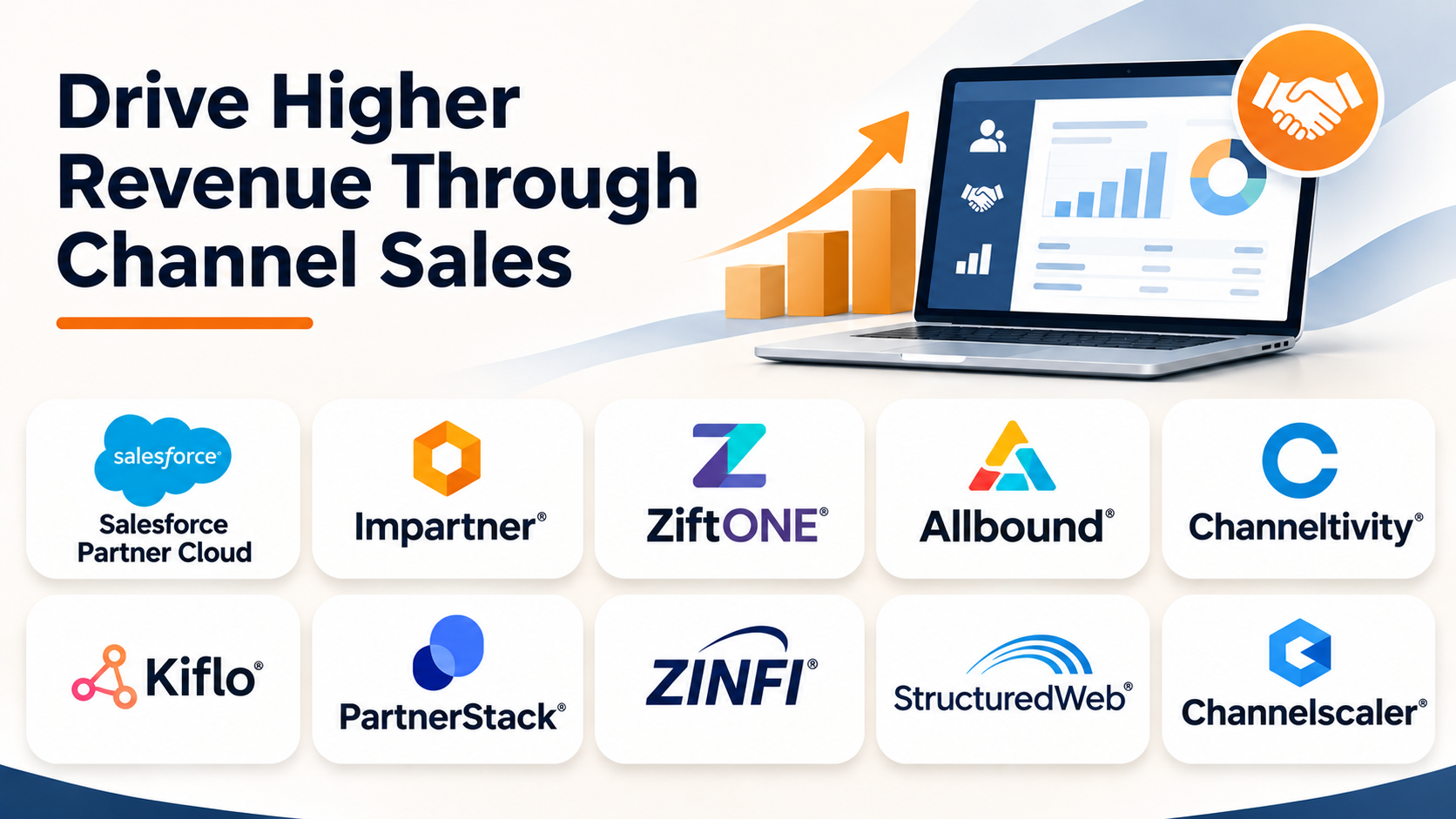
Introduction
Channel sales management tools help businesses coordinate indirect sales activities involving distributors, resellers, dealers, agents, and strategic business partners. These platforms provide centralized capabilities for managing commercial opportunities, partner performance, sales resources, and revenue generation.
Organizations operating through indirect sales channels often encounter difficulties maintaining consistent pricing, tracking sales opportunities, and coordinating partner activities. Traditional spreadsheets and email-based communication can create information gaps, duplicate records, and delays in commercial decision-making.
Modern channel sales management software combines partner portals, deal registration, lead distribution, sales forecasting, and performance analytics. These capabilities help businesses establish standardized commercial processes while improving visibility across distributed sales networks.
Advanced platforms also support partner incentives, sales training, marketing collaboration, and automated approval workflows. Integration with existing business applications helps organizations connect indirect sales activities with broader revenue management strategies.
Different channel sales management platforms address the requirements of manufacturers, technology vendors, wholesalers, telecommunications providers, and subscription-based businesses. Selecting suitable software requires evaluating partner program complexity, integration requirements, commercial objectives, and total ownership costs.
This guide examines ten channel sales management tools, their features, advantages, limitations, and practical applications. It also provides comparison tables, implementation recommendations, industry examples, performance indicators, and frequently asked questions.
What Are Channel Sales Management Tools?
Channel sales management tools are software applications designed to help organizations manage commercial activities conducted through external sales partners. These partners may include independent distributors, authorized resellers, regional dealers, referral partners, and commercial agents.
Unlike direct sales management applications, channel sales platforms focus on relationships involving multiple independent organizations. They help businesses coordinate partner-generated opportunities while maintaining appropriate commercial policies and information access controls.
Channel sales management software frequently overlaps with Partner Relationship Management (PRM), Customer Relationship Management (CRM), and channel marketing automation technology. However, its primary objective is improving the coordination, visibility, and effectiveness of indirect sales operations.
Organizations can use these platforms to establish standardized deal registration procedures, distribute sales leads, monitor partner pipelines, and administer commercial incentives. Effective implementation requires accurate partner records, transparent sales policies, and clearly defined operational responsibilities.
How Channel Sales Management Tools Work
- Partner registration: Establish authorized accounts for distributors, resellers, and other commercial partners.
- Partner classification: Organize partners according to territories, capabilities, certifications, and commercial agreements.
- Lead distribution: Assign qualified sales opportunities to appropriate channel partners.
- Deal registration: Allow partners to submit potential customer opportunities for approval.
- Opportunity management: Monitor sales progress, expected revenue, and commercial activities.
- Sales enablement: Provide product documentation, pricing information, and approved sales resources.
- Approval management: Review special pricing requests, discounts, and commercial exceptions.
- Incentive administration: Track eligible commissions, rebates, and performance rewards.
- Performance reporting: Evaluate partner-generated revenue and sales effectiveness.
- Continuous improvement: Identify underperforming channels and opportunities for commercial expansion.
Common Applications of Channel Sales Management Software
- Distributor sales management.
- Authorized reseller administration.
- Dealer network coordination.
- Indirect sales forecasting.
- Partner-generated opportunity tracking.
- Commercial lead distribution.
- Sales territory management.
- Channel conflict resolution.
- Partner commission tracking.
- Sales training and certification.
- Joint business planning.
- Partner performance evaluation.
- Channel marketing coordination.
- Commercial incentive administration.
Traditional Channel Sales vs Modern Channel Sales Management
| Factor | Traditional Channel Sales | Modern Channel Sales Management |
|---|---|---|
| Partner records | Individual spreadsheets | Centralized partner database |
| Lead distribution | Manual email assignment | Configurable routing |
| Deal registration | Informal communication | Structured approval workflows |
| Sales forecasting | Periodic manual reports | Consolidated pipeline dashboards |
| Partner communication | Disconnected channels | Dedicated partner portals |
| Incentive tracking | Manual calculations | Configurable reward workflows |
| Sales training | Distributed documents | Organized learning resources |
| Performance monitoring | Delayed assessments | Regular performance analytics |
| Channel conflicts | Reactive investigation | Documented registration rules |
| Scalability | Additional administration | Automated commercial processes |
Essential Components of Channel Sales Management Tools
| Component | Purpose |
|---|---|
| Partner portal | Provides authorized access to sales resources |
| Partner directory | Maintains commercial partner records |
| Deal registration | Records partner-generated opportunities |
| Lead management | Coordinates opportunity distribution |
| Sales pipeline | Tracks commercial opportunity progress |
| Sales forecasting | Estimates potential channel revenue |
| Territory management | Organizes geographical sales responsibilities |
| Pricing management | Supports approved commercial pricing |
| Incentive management | Tracks eligible commercial rewards |
| Sales enablement | Provides training and product resources |
| Performance analytics | Measures channel effectiveness |
| CRM integration | Connects direct and indirect sales information |
| Access controls | Protects confidential commercial information |
| Workflow automation | Reduces repetitive administrative activities |
Top 10 Channel Sales Management Tools
The following platforms provide different combinations of channel sales management, partner relationship management, commercial collaboration, and incentive administration. Their numbering represents the order of presentation rather than an independently tested performance ranking.
1. Salesforce Partner Cloud
Short Description
Salesforce Partner Cloud provides partner management and channel sales capabilities within the broader Salesforce ecosystem. Organizations can use its functionality to connect indirect sales opportunities with customer records, commercial workflows, and revenue management activities.
Partner-facing experiences allow authorized resellers and distributors to access sales resources, register deals, and collaborate with internal sales teams. Configurable workflows help businesses establish consistent commercial procedures across different partner classifications.
The platform is particularly relevant to enterprises already using Salesforce CRM because partner-generated opportunities can be coordinated with existing sales processes. Buyers should evaluate the specific products, external user licensing arrangements, and additional modules required for their channel programs.
Key Features
- Partner portals: Provide branded digital environments for commercial partners.
- Deal registration: Capture and review partner-generated sales opportunities.
- Lead distribution: Assign opportunities according to configured business rules.
- Opportunity management: Monitor indirect sales pipeline activities.
- Partner onboarding: Coordinate partner registration and activation.
- Sales collaboration: Connect internal and external sales teams.
- Resource management: Distribute approved commercial documentation.
- Workflow automation: Automate routine approvals and notifications.
- Performance reporting: Evaluate partner-generated commercial contributions.
Benefits
- Improves indirect sales visibility.
- Connects partner and customer information.
- Reduces duplicate commercial records.
- Supports consistent deal registration.
- Facilitates sales forecasting.
- Strengthens channel governance.
- Supports scalable partner programs.
Pros
- Established enterprise CRM ecosystem.
- Extensive customization capabilities.
- Relevant sales automation functionality.
- Broad integration opportunities.
- Supports complex partner relationships.
- Configurable reporting capabilities.
Cons
- Implementation may require specialist resources.
- External user licensing can be complex.
- Custom workflows require ongoing maintenance.
- Advanced capabilities may require additional products.
- Ownership costs can increase with deployment complexity.
Use Cases
- Global reseller sales management.
- Enterprise distributor coordination.
- Partner-generated pipeline monitoring.
- Commercial deal registration.
- Indirect sales forecasting.
- CRM-connected partner collaboration.
Best For
- Large enterprises.
- Salesforce CRM customers.
- Global channel sales teams.
- Technology manufacturers.
- Enterprise revenue operations departments.
- Complex reseller networks.
2. Impartner PRM
Short Description
Impartner PRM provides dedicated partner relationship management technology designed for businesses operating through indirect sales channels. Its capabilities support partner recruitment, onboarding, enablement, opportunity management, and commercial performance monitoring.
Organizations can establish branded partner portals that provide relevant sales resources and structured commercial workflows. Channel managers can use these capabilities to coordinate activities across partner classifications and geographical regions.
The platform is relevant to established channel programs that require greater operational consistency and automation. Implementation planning should account for existing CRM applications, partner data quality, and the modules required for specific commercial processes.
Key Features
- Partner recruitment: Manage prospective partner applications.
- Automated onboarding: Coordinate partner activation workflows.
- Deal registration: Record partner-generated opportunities.
- Lead management: Distribute and monitor commercial leads.
- Partner enablement: Provide sales training and resources.
- Partner segmentation: Organize partners into relevant classifications.
- Marketing resources: Distribute approved campaign materials.
- Performance dashboards: Monitor partner engagement and sales activities.
- CRM integration: Connect channel and internal sales information.
Benefits
- Improves partner program consistency.
- Accelerates structured onboarding.
- Reduces repetitive administration.
- Supports partner sales enablement.
- Improves opportunity visibility.
- Facilitates commercial collaboration.
- Supports growing partner ecosystems.
Pros
- Dedicated channel management orientation.
- Comprehensive partner lifecycle functionality.
- Configurable partner experiences.
- Relevant enterprise automation capabilities.
- Supports complex partner programs.
- Broad channel management coverage.
Cons
- Implementation requires process planning.
- Additional modules may increase costs.
- Commercial pricing requires consultation.
- Integrations depend on existing systems.
- Partner adoption requires continuing engagement.
Use Cases
- Enterprise reseller programs.
- International distributor management.
- Partner onboarding automation.
- Channel sales performance tracking.
- Partner training coordination.
- Commercial lead management.
Best For
- Established channel sales organizations.
- Global technology vendors.
- Industrial manufacturers.
- Partner operations departments.
- Enterprise distributors.
- Multinational partner programs.
3. Channeltivity
Short Description
Channeltivity provides PRM software focused on helping businesses manage channel partners and indirect sales opportunities. Its functionality supports partner portals, deal registration, lead distribution, joint planning, and commercial resource management.
Channel managers can establish standardized workflows for registering opportunities and coordinating sales activities with authorized partners. Integration with compatible CRM systems helps maintain visibility into partner-generated commercial pipelines.
The platform is particularly relevant to growing channel organizations seeking dedicated partner management capabilities without adopting an extensive enterprise application architecture. Buyers should evaluate available modules and integration options against their commercial requirements.
Key Features
- Partner portals: Provide centralized partner access.
- Deal registration: Manage submitted commercial opportunities.
- Lead distribution: Assign sales leads to eligible partners.
- Joint business planning: Coordinate commercial objectives.
- Partner management: Maintain structured partner records.
- Training management: Support partner education.
- Marketing Development Funds (MDF): Administer eligible marketing allocations.
- Resource libraries: Organize sales and marketing materials.
- CRM connectivity: Synchronize relevant commercial information.
Benefits
- Improves channel sales organization.
- Reduces manual deal administration.
- Supports joint commercial planning.
- Facilitates partner communication.
- Improves marketing fund visibility.
- Strengthens opportunity tracking.
- Supports standardized partner workflows.
Pros
- Dedicated PRM functionality.
- Relevant deal registration capabilities.
- Supports joint business planning.
- Accessible partner administration.
- Marketing fund management options.
- Suitable for growing channel programs.
Cons
- Advanced features may require additional modules.
- Complex incentive requirements need evaluation.
- Integration options depend on supported applications.
- Specialized workflows may require configuration.
- International program complexity requires assessment.
Use Cases
- Technology reseller administration.
- Distributor opportunity management.
- Joint sales planning.
- Partner lead distribution.
- Marketing fund administration.
- Channel sales reporting.
Best For
- Mid-sized technology companies.
- Growing reseller programs.
- Channel account managers.
- Partner operations teams.
- Commercial distributors.
- Joint marketing programs.
4. Kiflo
Short Description
Kiflo provides partner management software designed to support growing commercial partnership programs. Its capabilities help organizations coordinate partner onboarding, referral tracking, deal registration, and sales collaboration.
Businesses can use the platform to establish organized partner experiences while maintaining visibility into partner-generated opportunities. Its functionality is particularly relevant to smaller teams developing structured reseller and referral programs.
Kiflo may suit organizations that do not require the extensive customization associated with large enterprise platforms. Businesses with sophisticated international incentives or complex distribution hierarchies should evaluate whether additional systems are necessary.
Key Features
- Partner portals: Provide dedicated partner workspaces.
- Partner onboarding: Coordinate new partner activation.
- Referral tracking: Record partner-generated referrals.
- Deal registration: Capture commercial opportunities.
- Pipeline visibility: Monitor partner sales progress.
- Resource sharing: Distribute relevant sales documentation.
- Reward tracking: Monitor eligible partner rewards.
- Partner communication: Support organized collaboration.
- CRM integrations: Connect partner and customer records.
Benefits
- Simplifies partner administration.
- Improves referral visibility.
- Supports emerging channel programs.
- Reduces fragmented communication.
- Facilitates partner activation.
- Improves commercial opportunity tracking.
- Supports scalable partner operations.
Pros
- Accessible partner management approach.
- Relevant referral tracking capabilities.
- Suitable for smaller partner teams.
- Supports multiple partnership models.
- Configurable partner experiences.
- Focused commercial functionality.
Cons
- Complex enterprise requirements need evaluation.
- Advanced incentive programs may require integrations.
- Specialized reporting requirements require assessment.
- Available capabilities depend on licensing.
- Large international deployments may need additional systems.
Use Cases
- Software reseller programs.
- Startup referral partnerships.
- Partner-generated pipeline tracking.
- Commercial partner onboarding.
- Small distributor networks.
- Emerging channel sales programs.
Best For
- Startups.
- Small businesses.
- Growing software companies.
- Referral program managers.
- Emerging reseller networks.
- Small channel operations teams.
5. ZINFI
Short Description
ZINFI provides Unified Channel Management (UCM) technology covering partner management, channel marketing, sales enablement, and related commercial activities. Its modular approach helps organizations coordinate multiple components of indirect sales operations.
Businesses can configure partner portals, deal registration workflows, marketing programs, and performance dashboards according to channel requirements. Available modules can support complex partner ecosystems operating across different regions and commercial classifications.
ZINFI is particularly relevant to enterprises seeking integrated channel management rather than separate applications for every partner activity. Buyers should evaluate module requirements, implementation responsibilities, and integration costs before selecting the platform.
Key Features
- Partner management: Organize commercial partner relationships.
- Deal registration: Coordinate partner-generated opportunities.
- Lead distribution: Assign qualified sales opportunities.
- Channel marketing: Support distributed marketing activities.
- Partner learning: Provide structured educational resources.
- Incentive management: Support configured commercial rewards.
- Partner portals: Deliver authorized partner experiences.
- Workflow automation: Coordinate repetitive channel processes.
- Performance analytics: Evaluate commercial contributions.
Benefits
- Centralizes channel management activities.
- Improves marketing and sales coordination.
- Supports complex partner ecosystems.
- Facilitates partner enablement.
- Strengthens commercial reporting.
- Reduces fragmented administrative processes.
- Supports multinational channel programs.
Pros
- Broad channel management functionality.
- Modular implementation approach.
- Relevant marketing automation capabilities.
- Supports enterprise partner networks.
- Configurable commercial workflows.
- Integrated partner lifecycle coverage.
Cons
- Comprehensive deployments require planning.
- Module selection affects ownership costs.
- Advanced configuration requires expertise.
- Commercial pricing requires consultation.
- Broad functionality may exceed smaller program requirements.
Use Cases
- Global distributor management.
- Enterprise channel marketing.
- Partner sales enablement.
- Commercial incentive administration.
- Multinational deal registration.
- Partner certification programs.
Best For
- Large manufacturers.
- Global technology vendors.
- Enterprise channel departments.
- Multinational distributors.
- Channel marketing professionals.
- Complex commercial partner ecosystems.
6. ZiftONE
Short Description
ZiftONE provides channel management technology combining partner relationship management, sales enablement, and through-channel marketing automation. Its capabilities help organizations coordinate sales and marketing activities conducted through external commercial partners.
Businesses can provide partners with approved campaign materials, training resources, commercial leads, and deal registration workflows. These capabilities are particularly relevant to organizations seeking stronger connections between marketing investment and indirect sales performance.
The platform has been associated with evolving channel management portfolios and ownership arrangements. Buyers should confirm its current branding, product availability, and commercial packaging before beginning procurement.
Key Features
- Partner portals: Provide centralized partner experiences.
- Deal registration: Record indirect sales opportunities.
- Lead management: Coordinate commercial lead distribution.
- Channel marketing: Support partner-led campaigns.
- Content management: Distribute approved sales materials.
- Partner onboarding: Coordinate activation activities.
- Sales enablement: Provide training and commercial resources.
- Performance reporting: Monitor partner activities.
- CRM integrations: Connect channel and internal sales records.
Benefits
- Connects channel marketing and sales.
- Improves partner resource accessibility.
- Supports consistent commercial communication.
- Facilitates distributed demand generation.
- Reduces manual campaign coordination.
- Improves partner activity visibility.
- Strengthens sales enablement.
Pros
- Relevant channel marketing specialization.
- Integrated partner management capabilities.
- Supports distributed sales networks.
- Configurable partner experiences.
- Broad sales enablement functionality.
- Relevant enterprise reporting capabilities.
Cons
- Current commercial packaging requires verification.
- Broad functionality requires implementation planning.
- Marketing content requires continuing maintenance.
- Commercial pricing requires consultation.
- Partner participation affects campaign effectiveness.
Use Cases
- Reseller marketing programs.
- Partner-generated lead management.
- Channel sales enablement.
- Distributed product promotions.
- Partner deal registration.
- Commercial campaign reporting.
Best For
- Technology vendors.
- Channel marketing departments.
- Enterprise reseller programs.
- Commercial demand generation teams.
- Distributed sales organizations.
- Partner enablement professionals.
7. PartnerStack
Short Description
PartnerStack provides partnership management technology focused on business-to-business software companies and partner-driven customer acquisition. Its capabilities support referral, affiliate, and reseller programs alongside partner recruitment and reward administration.
Organizations can track partner-generated opportunities, monitor commercial contributions, and administer eligible commissions. These capabilities are particularly relevant to Software as a Service (SaaS) companies developing scalable indirect sales programs.
PartnerStack differs from conventional industrial channel management platforms through its emphasis on software partnerships and performance-based rewards. Manufacturers with complex dealer territories or inventory-related distribution requirements may require complementary systems.
Key Features
- Partner recruitment: Support discovery of prospective partners.
- Referral management: Track partner-generated customer referrals.
- Affiliate management: Coordinate performance-based partnerships.
- Partner onboarding: Organize partner activation.
- Opportunity tracking: Monitor commercial contributions.
- Commission management: Calculate eligible partner rewards.
- Payout workflows: Support partner payment administration.
- Performance analytics: Evaluate partnership effectiveness.
- Application integrations: Connect relevant commercial systems.
Benefits
- Supports partner-driven customer acquisition.
- Improves referral attribution.
- Facilitates commission administration.
- Reduces repetitive partner operations.
- Supports multiple partnership models.
- Improves revenue contribution visibility.
- Facilitates scalable SaaS partnerships.
Pros
- Strong software partnership orientation.
- Relevant affiliate and referral functionality.
- Integrated reward administration.
- Partner recruitment opportunities.
- Supports multiple commercial partner models.
- Focused partnership analytics.
Cons
- Industrial distribution requirements may need separate tools.
- Attribution depends on reliable tracking.
- Commercial fees require evaluation.
- Complex deal approval workflows require assessment.
- Reward disputes require appropriate governance.
Use Cases
- SaaS affiliate programs.
- Software reseller management.
- Referral partner coordination.
- Commission administration.
- Partner-led customer acquisition.
- Commercial partnership reporting.
Best For
- SaaS companies.
- Affiliate program managers.
- Referral marketing teams.
- Software vendors.
- Partnership-led growth teams.
- Subscription businesses.
8. Oracle Fusion Cloud Sales
Short Description
Oracle Fusion Cloud Sales provides enterprise sales management technology that can support commercial operations involving direct and indirect sales channels. Relevant partner management capabilities help organizations coordinate partner accounts, opportunities, and sales activities.
The platform connects commercial workflows with compatible Oracle enterprise applications and external business systems. This approach can be useful for large organizations requiring consistent information across sales, finance, and operational departments.
Organizations should evaluate the specific partner management functionality included in their Oracle deployment. Dedicated partner experiences, incentive administration, and specialized distribution workflows may require additional configuration or complementary products.
Key Features
- Partner account management: Maintain commercial partner records.
- Opportunity management: Monitor sales pipeline activities.
- Lead management: Coordinate commercial opportunities.
- Sales forecasting: Estimate potential sales revenue.
- Territory management: Organize commercial responsibilities.
- Sales analytics: Evaluate commercial performance.
- Workflow management: Support structured sales procedures.
- Enterprise connectivity: Integrate compatible business applications.
- Access management: Control authorized commercial activities.
Benefits
- Connects channel and enterprise sales information.
- Improves commercial forecasting.
- Supports complex sales organizations.
- Facilitates territory coordination.
- Strengthens sales performance monitoring.
- Supports enterprise governance.
- Reduces fragmented commercial records.
Pros
- Established enterprise application ecosystem.
- Relevant sales management functionality.
- Supports complex commercial structures.
- Broad enterprise integration opportunities.
- Suitable for multinational organizations.
- Configurable sales workflows.
Cons
- Implementation can require substantial resources.
- Specialist configuration expertise may be necessary.
- Dedicated partner functionality requires verification.
- Commercial licensing can be complex.
- May exceed smaller channel program requirements.
Use Cases
- Enterprise indirect sales management.
- Global sales forecasting.
- Distributor account coordination.
- Commercial territory administration.
- Integrated sales reporting.
- Enterprise partner opportunity management.
Best For
- Oracle enterprise customers.
- Multinational manufacturers.
- Large commercial organizations.
- Enterprise sales operations teams.
- Complex distributor networks.
- Global revenue management departments.
9. SAP Sales Cloud
Short Description
SAP Sales Cloud provides enterprise sales management capabilities supporting customer relationships, commercial opportunities, and sales performance monitoring. Organizations can use its relevant partner and account management capabilities to coordinate indirect sales activities.
Integration with compatible SAP applications can connect sales processes with product, order, and financial information. This approach is particularly relevant to manufacturers and distributors operating within established SAP environments.
SAP Sales Cloud is a broader sales management platform rather than a dedicated PRM application. Buyers should verify whether their selected version and associated applications support required partner portals, deal registration, and incentive workflows.
Key Features
- Account management: Organize commercial customer and partner records.
- Opportunity tracking: Monitor sales activities.
- Sales forecasting: Evaluate expected commercial revenue.
- Territory management: Coordinate sales responsibilities.
- Sales analytics: Measure commercial performance.
- Product information: Connect relevant commercial resources.
- Workflow automation: Support configured sales processes.
- Mobile sales access: Facilitate distributed sales activities.
- SAP integrations: Connect compatible enterprise applications.
Benefits
- Supports enterprise sales coordination.
- Improves commercial information consistency.
- Facilitates sales forecasting.
- Connects sales and operational processes.
- Strengthens territory management.
- Supports distributed commercial teams.
- Improves sales performance visibility.
Pros
- Established SAP ecosystem.
- Relevant enterprise sales functionality.
- Supports complex commercial organizations.
- Strong SAP integration opportunities.
- Suitable for multinational operations.
- Configurable sales processes.
Cons
- Dedicated PRM requirements may need additional software.
- Implementation can be resource-intensive.
- Commercial licensing requires evaluation.
- Integration complexity varies by architecture.
- Specialized partner workflows require assessment.
Use Cases
- Manufacturer channel sales coordination.
- Distributor account management.
- Enterprise opportunity tracking.
- Regional sales forecasting.
- Commercial territory management.
- SAP-connected sales operations.
Best For
- SAP customers.
- Industrial manufacturers.
- Global distributors.
- Enterprise sales managers.
- Multinational commercial organizations.
- Integrated sales operations departments.
10. Channelscaler
Short Description
Channelscaler provides channel and partner ecosystem management technology associated with the combination of Channel Mechanics and WorkSpan capabilities. Its approach addresses commercial collaboration, partner programs, incentives, and ecosystem-driven sales activities.
Organizations can evaluate its functionality for managing sophisticated commercial programs involving multiple partner organizations. Relevant capabilities can help coordinate collaborative selling, promotional offers, and channel performance monitoring.
The combined portfolio may evolve as product integration and commercial packaging develop. Buyers should confirm current modules, deployment requirements, and integration capabilities before selecting the platform.
Key Features
- Channel program management: Coordinate structured commercial programs.
- Ecosystem collaboration: Support relationships across partner organizations.
- Collaborative selling: Coordinate shared commercial opportunities.
- Incentive administration: Support eligible partner rewards.
- Offer management: Organize commercial promotions.
- Partner performance: Monitor relevant commercial contributions.
- Workflow automation: Coordinate channel administration.
- Commercial reporting: Evaluate program activities.
- Enterprise integrations: Connect relevant business applications.
Benefits
- Supports sophisticated partner ecosystems.
- Improves commercial program coordination.
- Facilitates collaborative selling.
- Strengthens incentive administration.
- Reduces fragmented partner activities.
- Improves ecosystem visibility.
- Supports enterprise channel operations.
Pros
- Relevant enterprise channel capabilities.
- Supports complex commercial programs.
- Combines complementary ecosystem approaches.
- Suitable for collaborative sales relationships.
- Relevant incentive management functionality.
- Supports sophisticated partner networks.
Cons
- Current product packaging requires verification.
- Implementation may require specialist expertise.
- Commercial pricing requires consultation.
- Integration requirements depend on selected modules.
- May exceed straightforward reseller program requirements.
Use Cases
- Enterprise channel incentive programs.
- Strategic alliance management.
- Collaborative sales opportunities.
- Commercial offer administration.
- Complex distributor programs.
- Ecosystem-led revenue operations.
Best For
- Global technology vendors.
- Enterprise channel directors.
- Strategic alliance managers.
- Multinational manufacturers.
- Complex partner ecosystems.
- Commercial incentive administrators.
Comparison Table: Top 10 Channel Sales Management Tools
| Software | Primary Strength | Best For | Deployment | Pricing Approach |
|---|---|---|---|---|
| Salesforce Partner Cloud | CRM-connected channel sales | Enterprise Salesforce customers | Cloud | Commercial licensing |
| Impartner PRM | Comprehensive partner management | Established channel programs | Cloud | Vendor quotation |
| Channeltivity | Dedicated channel workflows | Mid-sized reseller networks | Cloud | Plan-dependent |
| Kiflo | Accessible partner administration | Growing businesses | Cloud | Subscription-based |
| ZINFI | Unified channel management | Complex partner ecosystems | Cloud | Modular licensing |
| ZiftONE | Channel marketing and sales | Channel marketing teams | Cloud | Verify current offering |
| PartnerStack | Referral and affiliate sales | SaaS companies | Cloud | Commercial pricing |
| Oracle Fusion Cloud Sales | Enterprise sales coordination | Oracle customers | Cloud | Commercial licensing |
| SAP Sales Cloud | Integrated enterprise sales | SAP customers | Cloud | Commercial licensing |
| Channelscaler | Ecosystem and incentive management | Large partner networks | Cloud | Vendor quotation |
Functional Comparison
| Platform | Deal Registration | Partner Enablement | Incentives | Sales Management |
|---|---|---|---|---|
| Salesforce Partner Cloud | Available | Configurable | Offering-dependent | Strong |
| Impartner PRM | Core focus | Strong | Module-dependent | Partner-focused |
| Channeltivity | Core focus | Available | MDF-oriented | Partner-focused |
| Kiflo | Available | Available | Reward tracking | Partner-focused |
| ZINFI | Available | Available | Module-dependent | Channel-focused |
| ZiftONE | Available | Strong | Configuration-dependent | Channel-focused |
| PartnerStack | Available | Available | Core focus | Partnership-focused |
| Oracle Fusion Cloud Sales | Offering-dependent | Complementary | Integration-dependent | Strong |
| SAP Sales Cloud | Verify configuration | Complementary | Integration-dependent | Strong |
| Channelscaler | Module-dependent | Offering-dependent | Relevant capabilities | Ecosystem-focused |
How to Choose the Best Channel Sales Management Tool
1. Evaluate Partner Network Complexity
Identify the number of commercial partners, geographical territories, partner classifications, and sales arrangements involved. Larger networks may require advanced permissions, configurable workflows, and centralized commercial governance.
2. Review Deal Registration Requirements
Determine how partners submit sales opportunities and how internal teams approve or reject registrations. Transparent registration policies help reduce channel conflicts and duplicate commercial activities.
3. Assess Sales Forecasting Capabilities
Evaluate whether the platform provides visibility into partner pipelines, expected revenue, and opportunity stages. Forecasting should distinguish potential sales from confirmed transactions.
4. Examine CRM Integration
Review compatibility with existing customer management and sales applications. Reliable integration helps prevent duplicate opportunities and inconsistent commercial information.
5. Evaluate Partner Enablement
Assess training management, certification tracking, resource libraries, and commercial documentation capabilities. Partners should have convenient access to accurate information required for their sales responsibilities.
6. Review Incentive Administration
Determine whether the platform supports commissions, rebates, marketing funds, and performance rewards. Financial calculations should remain subject to appropriate verification and approval.
7. Assess Partner Experience
Review portal navigation, mobile accessibility, commercial workflows, and communication features. Representative partner testing can identify usability problems before full deployment.
8. Calculate Total Cost of Ownership
Consider software subscriptions, external user licensing, implementation, integrations, training, and continuing administration. Compare these costs against measurable commercial improvements rather than projected revenue alone.
Best Channel Sales Management Tools by User Type
| User Type | Relevant Platform |
|---|---|
| Enterprise Salesforce channel director | Salesforce Partner Cloud |
| Global partner program manager | Impartner PRM |
| Mid-sized reseller administrator | Channeltivity |
| Startup partnership manager | Kiflo |
| Enterprise channel operations director | ZINFI |
| Channel marketing specialist | ZiftONE |
| SaaS affiliate manager | PartnerStack |
| Oracle enterprise sales manager | Oracle Fusion Cloud Sales |
| SAP-connected distribution manager | SAP Sales Cloud |
| Strategic ecosystem director | Channelscaler |
Industry Applications of Channel Sales Management Tools
Manufacturing
Manufacturers can coordinate distributors, dealers, and authorized resellers through centralized channel management platforms. These systems help organize commercial opportunities, product documentation, sales territories, and incentive programs.
Information Technology
Technology vendors frequently depend on reseller networks and implementation partners to reach commercial customers. Channel sales software helps coordinate technical training, deal registration, and partner-generated opportunities.
Software as a Service
Subscription software businesses can use channel management platforms to administer referral, affiliate, and reseller programs. Accurate attribution and reward tracking help organizations evaluate partner-driven customer acquisition.
Telecommunications
Telecommunications companies can coordinate commercial agents, regional distributors, and service partners through structured sales programs. Centralized opportunity management helps improve visibility into indirect sales performance.
Automotive Distribution
Automotive manufacturers and component suppliers can use channel sales technology to coordinate dealer networks and commercial distributors. Specialized inventory and dealership management requirements may require additional applications.
Professional Services
Consulting and professional service businesses can manage referral relationships, strategic alliances, and collaborative sales opportunities. Channel management software helps maintain consistent commercial communication and shared opportunity records.
Practical Example: Implementing Channel Sales Management Software
Consider a hypothetical industrial technology manufacturer operating through 180 distributors and authorized resellers. Its channel operations team currently uses spreadsheets and email communication to manage commercial opportunities and partner activities.
Management introduces channel sales management software to improve opportunity visibility, reduce administrative workloads, and strengthen partner engagement. The following implementation process and performance figures are illustrative rather than verified software outcomes.
Implementation Process
- Document existing channel sales processes.
- Identify commercial partner classifications.
- Consolidate partner account records.
- Establish geographical sales territories.
- Define partner qualification requirements.
- Configure authorized partner portals.
- Establish deal registration policies.
- Configure commercial approval workflows.
- Define lead distribution procedures.
- Integrate existing CRM applications.
- Organize approved product documentation.
- Configure partner training resources.
- Establish incentive verification procedures.
- Develop sales performance dashboards.
- Conduct security and integration testing.
- Train internal channel management employees.
- Launch a pilot with selected distributors.
- Monitor adoption and improve commercial workflows.
Illustrative Performance Improvements
| Performance Indicator | Before Implementation | After Implementation |
|---|---|---|
| Deal registration processing time | 36 hours | 5 hours |
| Average partner onboarding time | 18 days | 6 days |
| Active partner percentage | 48% | 75% |
| Monthly administrative workload | 420 hours | 190 hours |
| Duplicate opportunity rate | 11% | 3% |
| Partner training completion | 42% | 87% |
| Sales forecast accuracy | 65% | 83% |
| Partner satisfaction | 74% | 89% |
Time Savings and Financial Analysis
Assume monthly channel administration decreases from 420 employee hours to 190 hours following implementation. This improvement releases 230 employee hours monthly, equivalent to 2,760 hours annually.
At an illustrative labor cost of $35 per hour, the released capacity represents $96,600 in annual labor value. This amount does not automatically represent cash savings unless actual expenditure decreases or additional recruitment is avoided.
Suppose separately measured reductions in operating expenditure and additional partner-generated contribution margin produce $165,000 in annual financial benefits. If recurring software and operating costs total $60,000, the annual net financial benefit would be $105,000.
An initial implementation investment of $125,000 would produce a simple payback period of approximately 14.3 months. Actual financial outcomes depend on partner adoption, realized commercial improvements, implementation effectiveness, and continuing operating costs.
Important Channel Sales Management Performance Indicators
| Performance Indicator | Measurement Purpose |
|---|---|
| Channel-generated revenue | Measures indirect sales contributions |
| Partner-generated pipeline | Tracks potential commercial opportunities |
| Active partner percentage | Evaluates continuing partner participation |
| Partner activation rate | Measures successful onboarding |
| Deal registration volume | Tracks partner sales activities |
| Deal conversion rate | Evaluates commercial effectiveness |
| Average deal value | Measures commercial opportunity size |
| Sales forecast accuracy | Evaluates forecasting reliability |
| Partner training completion | Measures sales enablement |
| Lead response time | Evaluates commercial responsiveness |
| Incentive processing accuracy | Measures reward administration quality |
| Partner satisfaction | Evaluates commercial relationships |
| Channel conflict frequency | Tracks overlapping commercial opportunities |
| Cost per active partner | Measures channel operating expenditure |
Security and Governance Considerations
Channel sales management platforms contain confidential customer opportunities, commercial pricing, partner agreements, and financial incentive information. Organizations should implement appropriate authentication, encryption, role-based permissions, and audit logging.
External partner accounts should only provide access to authorized commercial information. Organizations must prevent competing partners from viewing confidential opportunities, customer records, or negotiated pricing belonging to other businesses.
Commercial approvals, incentive calculations, and changes to partner classifications should follow documented governance procedures. Regular security assessments and access reviews help maintain appropriate protection throughout the partner lifecycle.
Security and Governance Checklist
| Control | Recommended Consideration |
|---|---|
| Multi-factor authentication | Protect external partner accounts |
| Role-based permissions | Restrict unauthorized activities |
| Partner data isolation | Separate confidential commercial records |
| Encryption | Protect information during transmission and storage |
| Audit logging | Record important commercial activities |
| Access reviews | Remove outdated partner permissions |
| Approval controls | Prevent unauthorized commercial commitments |
| Incentive verification | Validate eligible commercial rewards |
| Integration monitoring | Identify synchronization problems |
| Backup procedures | Support information recovery |
Total Cost of Ownership
Channel sales management software costs extend beyond recurring platform subscriptions. Organizations should evaluate implementation expenses, integration requirements, external user licensing, and ongoing operational responsibilities.
A comprehensive financial assessment should distinguish initial investments from recurring costs. Expected commercial benefits should be measured using realistic adoption assumptions and verified contribution margins.
| Cost Component | Description |
|---|---|
| Software licensing | Recurring platform access charges |
| Implementation | Configuration and deployment expenses |
| Data migration | Partner and commercial record preparation |
| Integration | Connections with existing business applications |
| Customization | Specialized portal and workflow development |
| Training | Internal employee and partner education |
| Administration | Continuing program management |
| Maintenance | Technical support and configuration updates |
| Additional modules | Optional marketing, learning, or incentive capabilities |
Challenges and Limitations
Channel sales management implementation can become complex when businesses maintain inconsistent partner records, pricing arrangements, and commercial policies. Organizations should establish reliable information governance before automating indirect sales activities.
Partner adoption may remain limited when digital workflows create unnecessary administrative responsibilities. Involving representative partners during design and pilot testing helps identify practical requirements.
Integration difficulties may arise when existing CRM applications use different opportunity identifiers, sales stages, or partner classifications. Representative testing should cover commercial exceptions, duplicate registrations, and information synchronization failures.
Channel conflicts can also occur when direct sales teams and external partners pursue overlapping opportunities. Transparent registration policies and documented conflict resolution procedures remain essential regardless of the selected software.
Common Channel Sales Management Implementation Mistakes
- Selecting software without defining commercial objectives.
- Maintaining inaccurate partner account records.
- Ignoring differences between partner classifications.
- Introducing unnecessarily complicated registration procedures.
- Failing to establish commercial territory rules.
- Overlooking channel conflict management.
- Underestimating CRM integration requirements.
- Neglecting partner training and certification.
- Maintaining outdated commercial documentation.
- Introducing inconsistent incentive policies.
- Failing to involve representative partners.
- Overlooking external user licensing costs.
- Measuring registrations without evaluating active participation.
- Treating potential pipeline revenue as confirmed sales.
- Failing to assign continuing channel program ownership.
Best Practices for Channel Sales Management
- Establish measurable channel sales objectives.
- Define transparent partner classifications.
- Maintain accurate commercial partner records.
- Standardize deal registration procedures.
- Establish consistent lead distribution policies.
- Configure appropriate commercial approval workflows.
- Provide accessible sales enablement resources.
- Maintain current product and pricing documentation.
- Implement reliable CRM integrations.
- Establish appropriate incentive verification controls.
- Monitor partner performance regularly.
- Conduct continuing partner satisfaction assessments.
- Review commercial territory arrangements.
- Maintain appropriate information security controls.
- Improve channel workflows using verified performance data.
Future Trends in Channel Sales Management Tools
Artificial Intelligence in Channel Operations
Artificial Intelligence (AI) may increasingly support partner recommendations, sales opportunity classification, and commercial performance analysis. Organizations should maintain appropriate oversight when using automated commercial recommendations.
Ecosystem-Led Growth
Businesses are increasingly coordinating sales activities through broader networks of technology providers, service partners, and commercial alliances. Channel management platforms may provide stronger support for collaborative selling across these ecosystems.
Predictive Partner Analytics
Advanced analytics may help organizations identify changes in partner engagement, commercial performance, and potential sales opportunities. Predictions should remain subject to validation against actual business outcomes.
Automated Incentive Management
Future platforms may provide stronger integration between commercial performance records, incentive calculations, and financial applications. Appropriate approval procedures will remain necessary to prevent inaccurate or unauthorized payments.
Connected Revenue Operations
Channel sales technology may become more closely integrated with direct sales, marketing, customer success, and financial applications. These connections can help organizations establish more consistent commercial information across revenue-generating activities.
Frequently Asked Questions
1. What are channel sales management tools?
Channel sales management tools help businesses coordinate indirect sales activities conducted through external commercial partners. They support opportunity tracking, partner collaboration, sales enablement, and performance monitoring.
2. What is channel sales management?
Channel sales management involves organizing and supervising commercial activities conducted through distributors, resellers, dealers, and other partners. Its objectives include improving partner effectiveness and increasing profitable indirect sales.
3. What is Salesforce Partner Cloud?
Salesforce Partner Cloud provides partner management capabilities connected to the Salesforce ecosystem. Its functionality supports commercial collaboration, partner experiences, and opportunity management.
4. What is Impartner PRM?
Impartner PRM provides dedicated partner relationship management technology. Its capabilities support partner onboarding, channel sales collaboration, and performance monitoring.
5. What is Channeltivity?
Channeltivity provides software for managing commercial channel partners. Its functionality includes deal registration, partner portals, joint business planning, and marketing fund management.
6. What is Kiflo?
Kiflo provides partner management technology for growing commercial partnership programs. It supports partner onboarding, referral tracking, and sales opportunity management.
7. What is ZINFI?
ZINFI provides unified channel management technology covering partner relationships, channel marketing, and sales activities. Its modular approach supports different commercial program requirements.
8. What is ZiftONE?
ZiftONE provides channel management technology combining partner management and marketing automation capabilities. Buyers should confirm current product branding and commercial availability.
9. What is PartnerStack?
PartnerStack provides partnership management technology focused on software companies. Its capabilities support referral, affiliate, and reseller programs alongside reward administration.
10. What is Oracle Fusion Cloud Sales?
Oracle Fusion Cloud Sales provides enterprise sales management technology. Its relevant capabilities can support commercial partner accounts, opportunities, forecasting, and sales coordination.
11. What is SAP Sales Cloud?
SAP Sales Cloud provides enterprise sales management and customer relationship capabilities. Organizations can evaluate its functionality for coordinating direct and indirect commercial activities.
12. What is Channelscaler?
Channelscaler provides channel and partner ecosystem management technology. Its capabilities address commercial programs, collaborative selling, and incentive-related activities.
13. What is the difference between direct and channel sales?
Direct sales involve businesses selling products or services directly to customers. Channel sales involve external commercial partners participating in the sales process.
14. What is the difference between PRM and channel sales management?
PRM covers the broader lifecycle of commercial partner relationships, including recruitment and enablement. Channel sales management focuses more specifically on indirect sales execution, commercial opportunities, and revenue performance.
15. What is deal registration?
Deal registration allows partners to submit potential commercial opportunities for review and approval. It helps organizations coordinate sales activities and manage overlapping opportunities.
16. What is channel conflict?
Channel conflict occurs when commercial partners or internal sales teams compete over overlapping customers, territories, or opportunities. Transparent policies and registration procedures help organizations manage these conflicts.
17. Can channel sales software manage commissions?
Some channel sales platforms provide commission tracking and incentive administration capabilities. Complex financial arrangements may require complementary accounting or incentive management applications.
18. What is partner sales enablement?
Partner sales enablement provides external commercial partners with training, documentation, and sales resources. It helps partners understand products and perform their commercial responsibilities effectively.
19. Can channel sales tools integrate with CRM software?
Many channel sales platforms provide CRM integrations or application interfaces. Organizations should verify compatibility with their existing customer and sales management systems.
20. Are channel sales tools suitable for small businesses?
Small businesses can use appropriately scoped channel sales software to manage growing partner networks. Simpler platforms may provide sufficient functionality without extensive enterprise implementation requirements.
21. How much does channel sales management software cost?
Costs depend on partner volumes, functionality, licensing arrangements, integrations, and implementation requirements. Organizations should request detailed commercial quotations before purchasing.
22. Can channel sales software improve sales forecasting?
Channel sales software can improve forecasting visibility by consolidating partner-generated opportunity information. Forecast reliability depends on accurate records, consistent sales stages, and regular partner updates.
23. What are channel sales performance indicators?
Channel sales performance indicators measure commercial activities and partner contributions. Examples include partner-generated revenue, deal conversion rates, active partner percentages, and forecast accuracy.
24. Can channel sales software support international partners?
Many enterprise channel platforms support international partner programs and configurable commercial workflows. Organizations should verify language, currency, regional compliance, and geographical management capabilities.
25. Which channel sales management tool is best?
The appropriate platform depends on partner network complexity, commercial objectives, existing business applications, and available resources. Organizations should evaluate representative partner workflows before selecting software.
Conclusion
Channel sales management tools help organizations coordinate indirect commercial activities, manage partner-generated opportunities, and improve sales performance visibility. These capabilities support structured collaboration across distributors, resellers, dealers, and strategic business partners.
Salesforce Partner Cloud and Impartner PRM provide relevant approaches to comprehensive enterprise channel management. Channeltivity and Kiflo offer alternatives for organizations developing structured and scalable partner sales programs.
ZINFI and ZiftONE provide capabilities relevant to integrated channel operations and distributed marketing activities. PartnerStack specializes in software-oriented referral, affiliate, and reseller partnerships.
Oracle Fusion Cloud Sales and SAP Sales Cloud provide broader enterprise sales management capabilities that may support indirect commercial operations. Channelscaler addresses requirements involving complex partner ecosystems, collaborative selling, and commercial incentive programs.
Successful implementation requires accurate partner information, transparent deal registration policies, reliable enterprise integrations, and appropriate commercial controls. Organizations should evaluate total ownership costs and measurable operational objectives before selecting software.
An effective channel sales management strategy combines suitable technology with standardized commercial processes, professional partner management, and continuing performance assessments. These practices help organizations strengthen partner relationships, improve indirect sales coordination, and support sustainable commercial growth.
