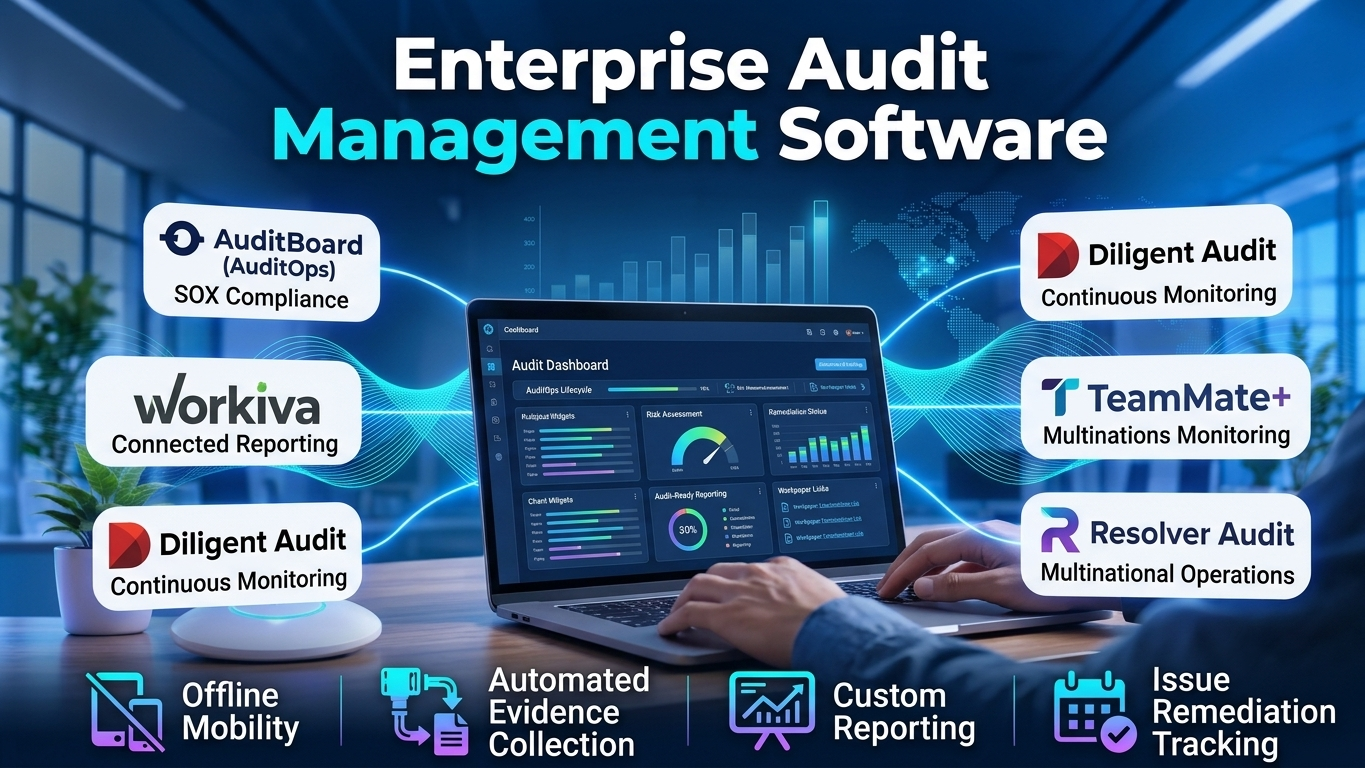
Internal audit teams and compliance officers historically relied on physical binders, fragmented local spreadsheets, and endless email chains to plan, execute, and report on corporate audits. When businesses operated within rigid, static perimeters, managing audit workpapers manually was slow but tolerable. Today, that manual approach creates critical operational vulnerabilities. As enterprises expand across complex cloud infrastructures, navigate global regulatory frameworks, and manage multi-layered supply chains, conducting audits via disconnected spreadsheets guarantees missed findings, unverified evidence, and delayed reporting.
Audit Management Software (AMS) automates the entire audit lifecycle—from risk assessment and workpaper creation to field testing, issue tracking, and executive reporting. Selecting the right audit management tool requires examining workflow automation depth, evidence collection capabilities, and cross-framework integration.
Understanding the Modern Audit Lifecycle
Audit management software encompasses enterprise solutions designed to digitize, streamline, and automate internal and external audit workflows. Unlike broader Governance, Risk, and Compliance (GRC) suites that focus heavily on high-level risk registers and regulatory mapping, dedicated audit management platforms specialize in the tactical execution of the audit process itself.
A professional audit management platform typically streamlines several core operational phases:
- Risk Assessment and Audit Planning: Evaluating organizational risk factors to build data-driven audit universes and prioritize annual audit schedules.
- Workpaper Creation and Fieldwork: Standardizing testing procedures, gathering documentation, and documenting findings in centralized, secure digital workpapers.
- Issue Tracking and Remediation Management: Automatically assigning audit findings to business unit owners, tracking remediation milestones, and verifying corrective actions.
- Automated Report Generation: Compiling verified audit results into professional executive summaries and board-ready compliance reports.
The primary objective is to replace redundant administrative tasks with automated workflows, allowing internal auditors to focus on high-value risk analysis and strategic advisory.
Key Evaluation Criteria for Audit Management Platforms
Selecting an effective audit management solution requires analyzing ease of collaboration, offline work capabilities, and reporting flexibility.
Automated Evidence Collection and Integration
Modern audits require verifying technical controls across cloud environments and IT systems. Leading audit platforms integrate directly with cloud infrastructure and productivity suites to pull compliance evidence automatically, reducing reliance on manual document requests.
Offline Workpapers and Field Mobility
Internal auditors frequently travel to physical facilities, manufacturing plants, or remote offices where internet connectivity may be unreliable. Robust audit software provides offline mobile or desktop synchronization, allowing auditors to complete fieldwork offline and sync data seamlessly upon reconnection.
Custom Workflow and Reporting Customization
Every organization has unique internal auditing standards and reporting requirements. Platforms offering customizable dashboards, flexible workpaper templates, and dynamic report generators prevent audit teams from being forced into rigid, inflexible workflows.
Leading Audit Management Software Platforms
The audit software market features specialized, purpose-built auditing applications alongside broad enterprise risk platforms.
AuditBoard (AuditOps)
AuditBoard is an industry-leading, cloud-based platform designed specifically for internal audit, SOX compliance, and operational risk management, widely praised for its intuitive user experience.
- Primary Focus: Internal audit management, SOX compliance, and collaborative audit workflows.
- Deployment Model: Cloud-native SaaS platform.
- Significant Advantage: Exceptional usability, modern user interface, and seamless collaboration features tailored specifically for internal auditors.
- Important Limitation: Broad enterprise risk features may require higher-tier licensing or supplementary module integration.
Workiva
Workiva provides a powerful, cloud-based connected reporting and compliance platform that unifies audit, SOX, financial reporting, and ESG data into a single source of truth.
- Primary Focus: Connected audit reporting, SOX compliance, and multi-department data linking.
- Deployment Model: Cloud SaaS platform with advanced document linking.
- Significant Advantage: Unmatched data-linking technology where updating a figure in a source spreadsheet automatically updates all linked audit reports and financial statements.
- Important Limitation: Steep learning curve and complex initial configuration require dedicated administrative training.
Diligent Audit (formerly Galvanize / ACL)
Diligent offers a robust, enterprise-grade audit management and governance platform designed to provide boards and audit committees with real-time risk visibility.
- Primary Focus: Enterprise audit management, continuous monitoring, and board-level reporting.
- Deployment Model: Cloud-native SaaS platform.
- Significant Advantage: Powerful continuous auditing capabilities and comprehensive analytics that integrate operational data directly into audit testing.
- Important Limitation: Pricing and platform scale are optimized primarily for large enterprises, making it potentially over-engineered for smaller teams.
Wolters Kluwer TeamMate+
TeamMate+ is a globally recognized, purpose-built audit management solution designed to handle complex, highly regulated internal audit operations across multinational corporations.
- Primary Focus: End-to-end audit management, risk assessment, and resource allocation.
- Deployment Model: Cloud or on-premises deployment options.
- Significant Advantage: Deep domain expertise and rigorous workflow structures tailored for traditional internal audit departments in banking and insurance.
- Important Limitation: User interface and customization flexibility can feel rigid compared to modern cloud-native platforms.
Resolver Audit
Resolver provides agile risk and audit management software focused on streamlining incident workflows, investigations, and internal audit tasks.
- Primary Focus: Agile audit management, incident tracking, and risk intelligence.
- Deployment Model: Cloud SaaS platform.
- Significant Advantage: Rapid deployment timelines and strong integration between corporate security investigations and internal audit findings.
- Important Limitation: Advanced data-linking features and massive enterprise reporting tiers are less extensive than Workiva or Diligent.
Platform Comparison Overview
| Product | Primary Focus | Deployment Model | Significant Advantage | Important Limitation |
| AuditBoard | Internal audit management and SOX compliance | Cloud SaaS | Intuitive user interface and excellent audit team collaboration | Broad enterprise risk features require tier upgrades |
| Workiva | Connected audit reporting and data linking | Cloud SaaS | Superior document linking between source data and final reports | High learning curve and complex initial setup |
| Diligent Audit | Enterprise audit management and continuous monitoring | Cloud SaaS | Robust continuous auditing analytics and board reporting | Tailored primarily for large enterprise budgets and structures |
| TeamMate+ | Traditional multinational internal audit operations | Cloud / On-Prem | Deep industry compliance expertise for regulated sectors | Workflow customization can feel rigid and legacy-bound |
| Resolver Audit | Agile audit management and incident integration | Cloud SaaS | Fast deployment and strong security investigation linking | Advanced reporting scale is lighter than heavy enterprise suites |
Operational Risks and Common Pitfalls
Implementing audit management software without structured internal change management introduces significant risks.
Replicating Bad Excel Habits in New Software
Migrating poorly structured manual spreadsheets directly into a digital platform without redesigning underlying workflows results in “digital clutter” rather than true operational efficiency.
Low Adoption Among Field Auditors
If the software interface is overly complex or requires excessive administrative clicking, internal auditors may resort to shadow IT tools like local Word documents or spreadsheets.
Neglecting Post-Audit Tracking and Remediation
Conducting thorough audits is useless if identified issues are not tracked through to verified remediation. Software that lacks automated issue ownership reminders fails to drive accountability.
Questions to Guide Vendor Selection
Before procuring an audit management platform, chief audit executives (CAEs) and IT leaders should address several critical operational questions:
- How well does the platform support offline fieldwork for auditors traveling to remote facilities without reliable internet access?
- What automated data linking or integration capabilities exist to pull evidence directly from enterprise financial and cloud systems?
- How customizable are the workpaper templates and executive reporting dashboards?
- What is the total cost of ownership, including user licensing tiers, implementation support, and ongoing administrator training?
Making the Final Decision
Choosing audit management software depends heavily on an organization’s audit volume, regulatory environment, and reporting complexity.
Organizations seeking modern, highly collaborative audit workflows and rapid user adoption frequently choose platforms like AuditBoard. Enterprises managing complex financial reporting alongside strict SOX compliance often benefit from Workiva’s advanced document linking, while multinational corporations requiring deep continuous auditing analytics lean toward Diligent or TeamMate+.
Ultimately, modern audit management software transforms internal audit from a retroactive, paper-heavy chore into a proactive, data-driven driver of corporate governance.
