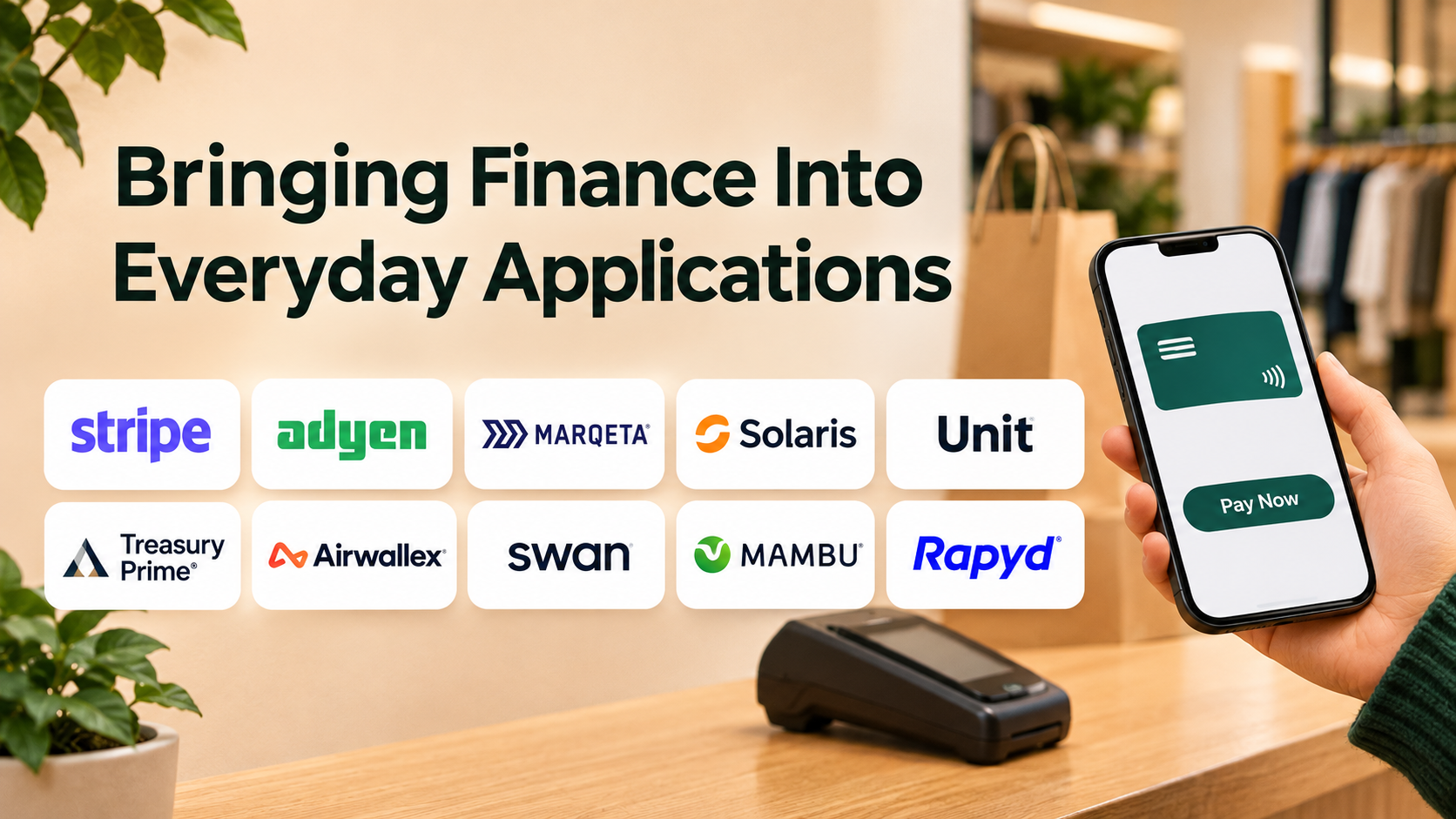
Introduction
Embedded finance platforms enable businesses to incorporate financial products and services directly into non-financial applications. These platforms provide infrastructure for integrating payments, banking, lending, card issuance, and other financial capabilities into existing digital experiences.
Traditional financial services often require customers to interact with separate banks, payment providers, and financial institutions. Embedded finance reduces this separation by allowing eligible financial services to be accessed within familiar applications.
Modern embedded finance platforms provide Application Programming Interfaces (APIs), financial infrastructure, transaction processing capabilities, and integration resources. These capabilities help businesses develop financial products without independently building every underlying financial system.
E-commerce marketplaces, enterprise software companies, retailers, and financial technology businesses increasingly use embedded finance infrastructure. Common applications include integrated payment processing, business accounts, expense management, and merchant financing.
Selecting an embedded finance platform requires evaluating financial product coverage, regulatory responsibilities, geographic availability, security, scalability, and commercial costs. Organizations must also assess the responsibilities of participating financial institutions and technology providers.
This guide examines ten embedded finance platforms, including their features, benefits, advantages, limitations, and practical applications. It also provides comparison tables, implementation strategies, selection guidance, and frequently asked questions.
What Are Embedded Finance Platforms?
Embedded finance platforms are technology solutions that enable businesses to integrate financial services into their applications, websites, and digital products. They connect business applications with financial infrastructure through supported APIs and integration components.
These platforms can support financial capabilities such as payments, accounts, lending, card issuance, and transaction management. Available services depend on the provider, geographic market, regulatory arrangements, and participating financial institutions.
Embedded finance infrastructure helps businesses reduce the complexity of developing financial products. Instead of building every financial capability independently, organizations can integrate supported services from specialized providers.
Banking as a Service (BaaS) represents an important segment of embedded finance. It enables eligible businesses to offer banking-related functionality through technology infrastructure and appropriate regulated financial partners.
Embedded finance also includes payment processing, merchant financing, digital wallets, insurance distribution, and other financial services. Individual platforms may specialize in one category or provide multiple financial capabilities.
Successful embedded finance implementation requires reliable technology, appropriate regulatory arrangements, and effective financial governance. Integrating a financial API does not automatically authorize a business to provide regulated financial services.
How Embedded Finance Platforms Work
Embedded finance platforms connect digital applications with underlying financial infrastructure. Their architecture coordinates customer onboarding, authorized financial operations, transaction processing, and operational monitoring.
A typical embedded finance workflow includes:
- Business registration: Establishes an eligible business relationship with the infrastructure provider.
- Financial product selection: Identifies the financial capabilities required by the application.
- Regulatory assessment: Determines applicable licensing and compliance responsibilities.
- API configuration: Establishes connectivity with supported financial infrastructure.
- Customer onboarding: Collects required customer information.
- Identity verification: Supports applicable identity and business verification procedures.
- Account provisioning: Establishes eligible financial accounts or payment capabilities.
- Transaction initiation: Receives authorized financial operation requests.
- Risk assessment: Applies relevant transaction and customer risk controls.
- Transaction processing: Coordinates financial operations through supported infrastructure.
- Reconciliation: Matches financial transactions with corresponding records.
- Operational monitoring: Tracks transaction outcomes, financial risks, and service performance.
Traditional Financial Services vs Embedded Finance
| Comparison Factor | Traditional Financial Services | Embedded Finance |
|---|---|---|
| Customer experience | Separate financial applications | Integrated application experience |
| Service delivery | Financial institution channels | Business applications and platforms |
| Integration architecture | Independent financial systems | API-enabled financial infrastructure |
| Customer onboarding | Separate onboarding processes | Embedded onboarding workflows |
| Payment processing | External or separate channels | Integrated payment capabilities |
| Product development | Institution-led development | Collaborative financial product development |
| Financial data exchange | Separate systems | Connected financial infrastructure |
| Customer engagement | Financial service channels | Existing business applications |
| Operational monitoring | Institution-specific systems | Shared or integrated monitoring |
| Product customization | Institution-dependent | Platform-dependent configuration |
| Revenue opportunities | Traditional financial products | Embedded financial service opportunities |
| Regulatory responsibilities | Financial institution responsibilities | Distributed according to legal arrangements |
Common Applications of Embedded Finance Platforms
- Embedded payment processing.
- Marketplace payment management.
- Business account provisioning.
- Virtual and physical card issuance.
- Merchant financing.
- Consumer lending integrations.
- Employee expense management.
- Digital wallet infrastructure.
- Cross-border payment processing.
- Supplier payment automation.
- Financial transaction reconciliation.
- Embedded insurance distribution.
Key Components of Embedded Finance Platforms
| Component | Function |
|---|---|
| Financial API | Connects applications with financial services |
| Payment infrastructure | Processes supported payment transactions |
| Account infrastructure | Supports eligible financial accounts |
| Card issuing system | Enables supported payment card issuance |
| Customer onboarding | Collects required customer information |
| Identity verification | Supports applicable identity checks |
| Business verification | Supports eligible business onboarding |
| Transaction ledger | Records financial transaction activity |
| Risk management | Evaluates relevant financial risks |
| Compliance infrastructure | Supports applicable compliance workflows |
| Transaction monitoring | Tracks financial transaction activity |
| Settlement infrastructure | Coordinates eligible fund settlement |
| Reconciliation engine | Matches financial records |
| Reporting infrastructure | Provides financial and operational information |
| Webhook services | Communicates supported transaction events |
| Financial institution connectivity | Connects supported regulated financial partners |
Types of Embedded Finance Platforms
Embedded Payment Platforms
Embedded payment platforms enable businesses to integrate payment acceptance and processing into their applications. These solutions are commonly used by marketplaces, retailers, and software companies.
Embedded Banking Platforms
Embedded banking platforms provide infrastructure for integrating eligible account and banking-related capabilities. These services generally depend on appropriate arrangements with regulated financial institutions.
Embedded Lending Platforms
Embedded lending platforms enable eligible financing products to be offered within existing business applications. Lending decisions and contractual responsibilities depend on the applicable provider and regulatory framework.
Card Issuing Platforms
Card issuing platforms provide infrastructure for creating and managing supported virtual and physical payment cards. Common applications include employee expenses, procurement, and business spending management.
Embedded Insurance Platforms
Embedded insurance platforms support the distribution of eligible insurance products within customer-facing applications. Insurance coverage and distribution responsibilities depend on participating insurers and applicable regulations.
Multi-Product Embedded Finance Platforms
Multi-product platforms combine several financial capabilities within a shared integration environment. These solutions can support businesses developing broader financial service ecosystems.
Essential Embedded Finance Platform Capabilities
- Financial API connectivity.
- Customer onboarding infrastructure.
- Identity verification support.
- Business verification workflows.
- Payment processing.
- Account management.
- Card issuance.
- Financial transaction monitoring.
- Transaction reconciliation.
- Risk management.
- Financial reporting.
- Secure and scalable integration infrastructure.
Embedded Finance Architecture and Integrations
| Architecture Layer | Purpose |
|---|---|
| Customer application | Provides the embedded financial experience |
| Financial product interface | Presents eligible financial services |
| API integration layer | Connects application and financial infrastructure |
| Authentication service | Validates authorized requests |
| Onboarding infrastructure | Supports customer registration |
| Verification infrastructure | Performs applicable verification workflows |
| Financial processing layer | Coordinates supported financial operations |
| Transaction ledger | Maintains financial transaction records |
| Risk management infrastructure | Applies relevant risk controls |
| Financial institution layer | Provides applicable regulated services |
| Settlement infrastructure | Coordinates financial settlement |
| Monitoring and reporting | Provides operational and financial visibility |
Top 10 Embedded Finance Platforms
The following platforms represent different segments of embedded finance, including payments, banking infrastructure, card issuance, financial accounts, and cross-border financial services. Their numbering organizes the comparison rather than representing an independently measured performance ranking.
1. Stripe
Short Description
Stripe provides financial infrastructure that enables businesses to integrate payments and selected financial services into digital applications. Its product ecosystem supports online businesses, marketplaces, and software platforms.
Stripe Connect provides infrastructure for platform and marketplace payment workflows. Businesses can use supported capabilities to onboard connected accounts, process payments, and coordinate eligible payouts.
Stripe Issuing supports eligible virtual and physical card programs. Additional financial infrastructure products can support selected account and financing capabilities in supported markets.
The platform provides developer APIs, integration documentation, testing environments, and transaction monitoring resources. These capabilities help businesses incorporate financial functionality into existing software products.
Stripe is particularly relevant for software platforms and marketplaces requiring integrated payments and complementary financial services. Product availability depends on geographic markets, business eligibility, and commercial arrangements.
How Stripe Works
- Register an eligible business account.
- Select the required financial products.
- Configure API credentials and integration settings.
- Implement applicable customer onboarding.
- Establish supported payment or financial workflows.
- Process authorized transactions.
- Monitor financial activity and reconcile records.
Key Features
- Stripe Payments: Supports online and applicable in-person payment processing.
- Stripe Connect: Enables supported platform and marketplace financial workflows.
- Stripe Issuing: Provides eligible virtual and physical card issuance.
- Financial account infrastructure: Supports eligible account-related capabilities.
- Stripe Capital: Provides applicable business financing arrangements.
- Stripe Radar: Supports payment fraud detection and risk management.
- Stripe Billing: Enables subscription and recurring billing workflows.
- Stripe Invoicing: Supports digital invoice creation and payment collection.
- Payout management: Coordinates eligible fund disbursements.
- Webhooks: Communicates supported financial transaction events.
- Testing infrastructure: Enables integration validation before production deployment.
- Financial reporting: Provides transaction and operational reporting capabilities.
Benefits
- Simplifies financial service integration.
- Supports marketplace payment processing.
- Reduces repetitive payment development.
- Enables eligible card programs.
- Supports recurring revenue workflows.
- Improves transaction visibility.
- Facilitates financial product expansion.
- Supports developer productivity.
- Enables automated payment reconciliation.
- Supports scalable digital commerce operations.
Pros
- Extensive financial infrastructure ecosystem.
- Developer-oriented APIs.
- Established payment processing capabilities.
- Marketplace payment support.
- Integrated fraud management.
- Supported card issuance.
- Comprehensive testing resources.
- Multiple complementary financial products.
Cons
- Product availability varies geographically.
- Commercial costs depend on transaction volumes.
- Financial products require eligibility assessment.
- Complex marketplaces may require additional development.
- Account restrictions can affect business operations.
- Vendor dependency requires consideration.
- Regulatory responsibilities remain applicable.
Use Cases
- Marketplace payment processing.
- Embedded SaaS payments.
- Subscription billing.
- Merchant financing.
- Virtual expense cards.
- Platform payout management.
- E-commerce payment acceptance.
- Embedded financial account experiences.
Industry Applications
- E-commerce.
- Enterprise SaaS.
- Financial technology.
- Online marketplaces.
- Retail.
Integration and Deployment
Stripe provides managed financial infrastructure through APIs, software development resources, and supported application components. Developers can incorporate selected products into web and mobile applications.
Deployment requires appropriate business verification, secure credential management, and financial workflow testing. Regulated products require additional eligibility and compliance assessment.
Pricing
Pricing depends on selected products, transaction volumes, geographic markets, and commercial arrangements. Organizations should evaluate payment fees alongside applicable financial infrastructure charges.
Best For
- SaaS companies.
- Online marketplaces.
- E-commerce businesses.
- Subscription platforms.
- Payment application developers.
- Businesses launching eligible card programs.
- Digital commerce platforms.
- Companies requiring multiple financial capabilities.
Overall Assessment
Stripe provides broad financial infrastructure for businesses developing embedded payment and related financial services. Its ecosystem is particularly relevant for platforms requiring multiple integrated capabilities.
Organizations should verify geographic availability and product eligibility before implementation. Financial responsibilities and commercial costs should be evaluated individually.
2. Adyen
Short Description
Adyen provides financial technology infrastructure for payment processing and selected embedded financial services. Its platform supports enterprise merchants, marketplaces, and software businesses.
Adyen for Platforms enables eligible businesses to incorporate payment acceptance and financial management capabilities into their products. These services can support platform users and participating merchants.
The platform also provides supported account, card issuing, and financing capabilities in eligible markets. Organizations can use these services to develop integrated financial experiences.
Adyen combines payment processing, transaction risk management, and financial reporting within its infrastructure. This approach can help businesses manage payment activity across supported channels.
Adyen is particularly relevant for enterprises requiring integrated commerce and financial capabilities. Organizations should evaluate geographic coverage, product eligibility, and implementation complexity.
How Adyen Works
- Establish an eligible commercial relationship.
- Select supported financial capabilities.
- Configure payment and platform APIs.
- Implement applicable merchant onboarding.
- Process authorized financial transactions.
- Coordinate supported settlement and payouts.
- Monitor financial activity and transaction performance.
Key Features
- Payment processing: Supports multiple eligible payment methods.
- Adyen for Platforms: Provides embedded financial infrastructure for platforms.
- Merchant onboarding: Supports applicable merchant verification workflows.
- Balance accounts: Enables supported platform financial account structures.
- Card issuing: Provides eligible payment card programs.
- Business financing: Supports applicable merchant financing products.
- Risk management: Provides payment transaction risk controls.
- Omnichannel payments: Connects supported online and physical payment channels.
- Payout infrastructure: Coordinates eligible merchant disbursements.
- Payment optimization: Supports transaction processing improvements.
- Reconciliation: Provides financial transaction reconciliation resources.
- Reporting: Delivers payment and operational information.
Benefits
- Supports integrated payment experiences.
- Simplifies platform payment management.
- Facilitates merchant onboarding.
- Improves transaction visibility.
- Supports eligible financial product expansion.
- Enables coordinated commerce operations.
- Improves payment reconciliation.
- Supports enterprise transaction volumes.
- Facilitates risk management.
- Reduces fragmented payment infrastructure.
Pros
- Enterprise-oriented financial infrastructure.
- Omnichannel payment capabilities.
- Platform payment management.
- Integrated risk controls.
- Supported card issuing services.
- Financial reporting infrastructure.
- Multiple payment methods.
- Relevant international commerce applications.
Cons
- Implementation can require substantial resources.
- Financial product availability varies.
- Commercial arrangements require evaluation.
- Smaller businesses may have different suitability requirements.
- Complex platform configurations require expertise.
- Regulated services require eligibility.
- Vendor dependency remains relevant.
Use Cases
- Enterprise payment processing.
- Marketplace financial services.
- Merchant payment acceptance.
- Omnichannel commerce.
- Platform account management.
- Business card programs.
- Merchant financing.
- International payment operations.
Industry Applications
- Retail.
- E-commerce.
- Hospitality.
- Enterprise software.
- Online marketplaces.
Integration and Deployment
Adyen provides managed financial infrastructure through supported APIs and integration components. Enterprise implementations may require coordinated development across commerce and financial systems.
Deployment should include transaction testing, merchant onboarding validation, and reconciliation procedures. Organizations should verify applicable financial product availability.
Pricing
Commercial costs depend on payment methods, transaction volumes, financial products, and contractual arrangements. Businesses should obtain a complete product-specific pricing proposal.
Best For
- Large retailers.
- Enterprise marketplaces.
- Omnichannel commerce businesses.
- International merchants.
- Enterprise SaaS platforms.
- Businesses requiring integrated financial reporting.
- Eligible card issuing programs.
- Organizations managing complex payment operations.
Overall Assessment
Adyen provides integrated financial infrastructure for enterprise commerce and platform businesses. Its combination of payment processing and eligible embedded financial products supports multiple business applications.
Organizations should assess implementation requirements and commercial suitability. Product-specific regulatory arrangements require careful evaluation.
3. Marqeta
Short Description
Marqeta provides modern card issuing and payment processing infrastructure for businesses developing payment card programs. Its platform enables eligible organizations to create and manage customized card experiences.
The software supports virtual and physical card issuance through applicable financial institution and card network arrangements. Developers can use APIs to configure supported card program functionality.
Marqeta provides transaction authorization capabilities that can support configurable spending controls. These features are particularly relevant for expense management and commercial payment applications.
Its infrastructure supports financial transaction processing, card lifecycle management, and operational reporting. Businesses can integrate these capabilities into existing financial applications.
Marqeta is particularly relevant for organizations requiring embedded card issuing infrastructure. Its suitability depends on program eligibility, geographic coverage, and participating financial partners.
How Marqeta Works
- Establish an eligible card program.
- Configure card issuing infrastructure.
- Implement required customer onboarding.
- Create supported cardholder records.
- Issue eligible payment cards.
- Process authorized card transactions.
- Monitor card activity and reconcile transactions.
Key Features
- Virtual card issuance: Creates eligible digital payment cards.
- Physical card issuance: Supports applicable physical card programs.
- Card lifecycle management: Manages supported card activation and status changes.
- Transaction authorization: Processes applicable card authorization requests.
- Just-in-Time Funding: Supports eligible transaction funding arrangements.
- Spending controls: Configures supported card spending restrictions.
- Merchant controls: Supports applicable merchant category restrictions.
- Digital wallet provisioning: Enables eligible wallet-related card capabilities.
- Card program management: Administers supported issuing programs.
- Transaction webhooks: Communicates supported payment events.
- Developer APIs: Enables customized card application integration.
- Transaction reporting: Provides relevant card activity information.
Benefits
- Accelerates card program development.
- Supports customized payment experiences.
- Enables configurable spending controls.
- Facilitates virtual card issuance.
- Improves card transaction visibility.
- Supports expense management applications.
- Enables commercial payment automation.
- Reduces issuing infrastructure development.
- Supports scalable card operations.
- Facilitates card program administration.
Pros
- Specialized card issuing infrastructure.
- Developer-oriented architecture.
- Configurable authorization capabilities.
- Virtual and physical card support.
- Supported spending controls.
- Transaction event notifications.
- Financial reporting capabilities.
- Relevant commercial payment applications.
Cons
- Primarily focused on card infrastructure.
- Program eligibility requirements apply.
- Geographic availability varies.
- Commercial pricing requires assessment.
- Card network and banking dependencies remain.
- Complex programs require technical expertise.
- Financial compliance obligations remain applicable.
Use Cases
- Employee expense cards.
- Procurement payment cards.
- Digital banking card programs.
- Virtual payment cards.
- Commercial spending management.
- Marketplace payment programs.
- On-demand service payment cards.
- Embedded consumer card experiences.
Industry Applications
- Financial technology.
- Banking.
- Corporate expense management.
- E-commerce.
- Commercial payments.
Integration and Deployment
Marqeta provides managed card issuing and processing infrastructure through supported APIs. Businesses must establish applicable program arrangements before launching eligible cards.
Implementation should include authorization testing, transaction reconciliation, and cardholder support procedures. Organizations should assess financial institution and card network requirements.
Pricing
Pricing depends on card program characteristics, transaction volumes, issuing arrangements, and commercial contracts. Current pricing should be obtained directly.
Best For
- Card issuing startups.
- Expense management platforms.
- Digital banking applications.
- Commercial payment providers.
- Procurement software companies.
- Financial technology developers.
- Businesses requiring configurable card controls.
- Organizations launching eligible virtual card programs.
Overall Assessment
Marqeta provides specialized infrastructure for embedded payment card programs. Its authorization and spending control capabilities support customized financial applications.
Organizations requiring broad payment acceptance or banking products may need complementary providers. Card program eligibility and financial responsibilities should be evaluated before deployment.
4. Solaris
Short Description
Solaris provides embedded banking infrastructure designed to support eligible financial products through technology and regulated banking arrangements. Its platform has focused primarily on European embedded financial services.
The software provides APIs for integrating supported banking and financial capabilities into partner applications. Available products can include accounts, payments, cards, and selected financing services.
Solaris combines financial technology infrastructure with applicable regulated banking services. This structure can help eligible partners develop financial products within defined contractual and regulatory arrangements.
Its infrastructure supports customer onboarding, account management, and financial transaction processing. Participating businesses must satisfy relevant operational and compliance requirements.
Solaris is particularly relevant for organizations evaluating European embedded banking infrastructure. Current product availability, licensing arrangements, and partner onboarding conditions require direct verification.
How Solaris Works
- Establish an eligible partnership.
- Evaluate applicable financial product requirements.
- Complete required regulatory and operational assessments.
- Configure supported banking APIs.
- Implement applicable customer onboarding.
- Provide eligible financial services.
- Monitor financial activity and compliance obligations.
Key Features
- Banking APIs: Connect applications with supported banking services.
- Account infrastructure: Supports eligible financial account products.
- Payment services: Enables applicable payment transactions.
- Card infrastructure: Supports eligible payment card programs.
- Customer onboarding: Facilitates required registration workflows.
- Identity verification: Supports applicable customer verification.
- Business verification: Enables eligible business onboarding.
- Transaction management: Processes supported financial activity.
- Financial reporting: Provides relevant account and transaction information.
- Compliance workflows: Supports applicable regulated operational processes.
- Partner integration: Enables financial service connectivity within business applications.
- Financing capabilities: Supports selected eligible financial products where available.
Benefits
- Facilitates embedded banking development.
- Reduces financial infrastructure complexity.
- Supports eligible account products.
- Enables integrated payment services.
- Facilitates customer onboarding.
- Supports financial product customization.
- Improves financial transaction visibility.
- Enables partner-based financial services.
- Supports digital banking applications.
- Reduces independent banking infrastructure development.
Pros
- Embedded banking specialization.
- European financial services orientation.
- API-based infrastructure.
- Supported account capabilities.
- Eligible card and payment products.
- Banking partnership model.
- Customer onboarding infrastructure.
- Relevant digital banking applications.
Cons
- Geographic coverage is limited.
- Partnership eligibility requirements apply.
- Current product availability requires verification.
- Regulatory arrangements may change.
- Commercial pricing is contract-dependent.
- Implementation can require substantial compliance resources.
- Financial institution dependency remains significant.
Use Cases
- Embedded business accounts.
- Digital banking applications.
- Platform payment accounts.
- Eligible payment card programs.
- Embedded consumer banking.
- Financial service marketplaces.
- Business financial management applications.
- Partner-led financial product development.
Industry Applications
- Banking.
- Financial technology.
- Enterprise software.
- E-commerce.
- Digital financial services.
Integration and Deployment
Solaris provides supported banking infrastructure through APIs and applicable financial partnership arrangements. Deployment requires coordination between the business, technology provider, and relevant regulated entities.
Organizations should verify current licensing status, available products, and partnership requirements. Financial product launches require appropriate legal and operational review.
Pricing
Commercial pricing depends on selected financial products, customer volumes, partnership requirements, and contractual arrangements. Current pricing and onboarding conditions should be confirmed directly.
Best For
- European financial technology companies.
- Eligible digital banking businesses.
- Embedded banking developers.
- Enterprise financial service platforms.
- Businesses requiring account infrastructure.
- Eligible card program operators.
- Financial service partnerships.
- Organizations evaluating European banking infrastructure.
Overall Assessment
Solaris represents a specialized embedded banking infrastructure provider for eligible financial products. Its partnership model can support businesses developing banking-related application experiences.
Organizations should independently verify current regulatory and commercial arrangements before making implementation decisions. Financial service availability cannot be assumed across markets.
5. Unit
Short Description
Unit provides embedded financial infrastructure for software companies and financial technology businesses. Its platform supports eligible banking-related services through participating financial institution arrangements.
The software enables businesses to incorporate supported accounts, payments, cards, and selected financial products into their applications. Developers can access these capabilities through APIs and integration components.
Unit provides infrastructure for customer onboarding, transaction processing, and financial account management. These capabilities can reduce the complexity of developing embedded financial applications.
The platform also provides operational tools for monitoring financial activity and managing supported customer relationships. Financial services remain subject to participating bank requirements and applicable regulations.
Unit is particularly relevant for businesses developing embedded financial products in the United States. Organizations should assess current partner arrangements and financial product eligibility.
How Unit Works
- Establish an eligible platform relationship.
- Select supported financial products.
- Configure financial API integration.
- Implement applicable customer verification.
- Establish eligible customer accounts.
- Process authorized financial transactions.
- Monitor account activity and operational performance.
Key Features
- Account infrastructure: Supports eligible deposit account arrangements.
- Payment APIs: Enables supported financial transactions.
- Card issuing: Provides applicable payment card programs.
- Customer onboarding: Supports eligible registration workflows.
- Identity verification: Facilitates required customer verification.
- Business verification: Supports applicable business onboarding.
- ACH connectivity: Enables supported Automated Clearing House payments.
- Wire transfers: Supports eligible wire payment workflows.
- Transaction management: Provides financial activity information.
- Embedded components: Supports selected customer-facing financial interfaces.
- Webhooks: Communicates supported account and transaction events.
- Operational dashboard: Provides relevant financial management visibility.
Benefits
- Simplifies embedded financial development.
- Supports eligible account provisioning.
- Reduces repetitive financial integration work.
- Facilitates payment automation.
- Enables supported card programs.
- Improves financial transaction visibility.
- Supports customer onboarding.
- Facilitates financial product expansion.
- Reduces infrastructure management complexity.
- Supports software-based financial experiences.
Pros
- Embedded finance specialization.
- Developer-oriented financial APIs.
- Supported banking partnership infrastructure.
- Account and payment capabilities.
- Eligible card issuing services.
- Customer onboarding functionality.
- Financial transaction monitoring.
- Relevant SaaS financial applications.
Cons
- Primarily oriented toward the United States.
- Banking partner eligibility requirements apply.
- Product availability can change.
- Commercial pricing requires assessment.
- Regulatory responsibilities remain significant.
- Financial partner dependencies require consideration.
- Complex products may require additional development.
Use Cases
- Embedded business banking.
- Software platform financial accounts.
- Business expense cards.
- Payment automation.
- Customer financial account management.
- Marketplace financial services.
- Financial technology applications.
- Business cash management experiences.
Industry Applications
- Enterprise SaaS.
- Financial technology.
- Small business services.
- Expense management.
- Digital banking.
Integration and Deployment
Unit provides managed financial APIs and supported application components. Organizations must establish appropriate commercial and financial institution arrangements before production deployment.
Implementation should include customer verification, transaction testing, and financial reconciliation. Businesses should review applicable bank program requirements and compliance responsibilities.
Pricing
Commercial pricing depends on selected products, transaction activity, customer volumes, and contractual arrangements. Current fees and financial partner requirements should be confirmed directly.
Best For
- US-based SaaS companies.
- Financial technology startups.
- Business banking applications.
- Expense management platforms.
- Small business software providers.
- Payment automation businesses.
- Embedded account developers.
- Eligible financial service programs.
Overall Assessment
Unit provides embedded financial infrastructure for businesses incorporating eligible account, payment, and card capabilities into their products. Its developer-oriented architecture supports software-based financial experiences.
Organizations should evaluate current banking partner arrangements and regulatory responsibilities. Product availability and commercial suitability depend on individual program requirements.
6. Treasury Prime
Short Description
Treasury Prime provides embedded banking technology that connects eligible businesses with participating financial institutions. Its platform supports financial product development through API-based banking infrastructure.
The software enables businesses to integrate supported accounts, payments, and card-related capabilities. Available functionality depends on the selected bank relationship and financial program.
Treasury Prime provides infrastructure for coordinating financial operations between businesses and participating banks. This approach can help organizations develop banking-related applications within appropriate partnership arrangements.
Its APIs support account management, transaction processing, and financial information exchange. Businesses must establish operational procedures consistent with their financial program requirements.
Treasury Prime is particularly relevant for organizations seeking direct or coordinated bank partnership infrastructure in the United States. Current bank relationships and onboarding requirements should be verified.
How Treasury Prime Works
- Define the required banking program.
- Evaluate participating financial institutions.
- Establish applicable banking relationships.
- Configure supported financial APIs.
- Implement customer onboarding workflows.
- Process eligible financial transactions.
- Monitor financial operations and program requirements.
Key Features
- Bank connectivity: Connects eligible businesses with participating banks.
- Account APIs: Supports applicable financial account management.
- ACH payments: Enables supported electronic bank transfers.
- Wire payments: Supports eligible wire transfer workflows.
- Card integrations: Enables applicable card-related capabilities.
- Customer onboarding: Supports required customer registration.
- Identity verification integrations: Facilitates applicable verification processes.
- Transaction management: Provides financial activity information.
- Ledger infrastructure: Supports applicable financial record management.
- Webhooks: Communicates supported account and transaction events.
- Banking operations tools: Supports financial program administration.
- Developer APIs: Enables customized financial application integration.
Benefits
- Facilitates bank partnership connectivity.
- Supports embedded banking development.
- Reduces repetitive banking integration work.
- Enables eligible account products.
- Supports financial transaction processing.
- Improves financial operational visibility.
- Facilitates customized financial programs.
- Supports customer onboarding.
- Enables payment automation.
- Reduces independent banking infrastructure requirements.
Pros
- Embedded banking specialization.
- Bank connectivity orientation.
- Developer-oriented financial APIs.
- Supported account management.
- Eligible payment infrastructure.
- Financial program flexibility.
- Transaction event notifications.
- Relevant banking partnership applications.
Cons
- Primarily focused on US banking infrastructure.
- Bank program approval is required.
- Financial product availability varies.
- Commercial arrangements require assessment.
- Compliance responsibilities remain substantial.
- Bank partner changes can affect operations.
- Implementation may require considerable coordination.
Use Cases
- Embedded business accounts.
- Digital banking products.
- Financial technology applications.
- Business payment automation.
- Eligible card programs.
- Banking partnership integrations.
- Financial account management.
- Platform financial services.
Industry Applications
- Banking.
- Financial technology.
- Enterprise software.
- Business payments.
- Digital financial services.
Integration and Deployment
Treasury Prime provides managed banking connectivity through supported APIs and participating financial institutions. Deployment requires appropriate financial program arrangements and technical implementation.
Organizations should establish transaction reconciliation, customer support, and compliance procedures. Financial institution responsibilities should be documented contractually.
Pricing
Pricing depends on financial products, banking relationships, transaction volumes, and contractual arrangements. Businesses should request a comprehensive commercial proposal.
Best For
- US financial technology companies.
- Embedded banking developers.
- Businesses seeking bank connectivity.
- Digital banking platforms.
- Payment application providers.
- Enterprise financial software companies.
- Eligible banking partnership programs.
- Organizations requiring configurable banking infrastructure.
Overall Assessment
Treasury Prime provides technology infrastructure for embedded banking and participating financial institution connectivity. Its approach is relevant for businesses developing financial programs through bank partnerships.
Organizations should evaluate current bank coverage and program eligibility. Financial governance and operational coordination remain essential.
7. Airwallex
Short Description
Airwallex provides financial infrastructure for international business payments, financial accounts, and selected embedded financial services. Its platform supports businesses operating across multiple markets.
The software provides APIs for integrating supported payment acceptance, foreign exchange, transfers, and card issuing capabilities. These services can support financial applications requiring international connectivity.
Airwallex Embedded Finance enables eligible platforms to incorporate selected financial capabilities into their products. Available services depend on geographic markets and regulatory arrangements.
The platform also provides financial transaction management and reporting resources. Businesses can use these capabilities to manage supported international financial workflows.
Airwallex is particularly relevant for organizations requiring cross-border financial infrastructure. Its suitability depends on supported currencies, markets, payment methods, and financial product eligibility.
How Airwallex Works
- Register an eligible business relationship.
- Select supported financial products.
- Configure financial API connectivity.
- Implement applicable customer onboarding.
- Establish eligible accounts or payment capabilities.
- Process authorized financial transactions.
- Monitor international financial activity and reconcile records.
Key Features
- Global accounts: Supports eligible local account details in selected markets.
- Cross-border transfers: Enables supported international payments.
- Foreign exchange: Provides applicable currency conversion services.
- Payment acceptance: Supports eligible online payment methods.
- Embedded finance APIs: Enables financial product integration.
- Card issuing: Supports eligible virtual and physical card programs.
- Multi-currency balances: Manages supported currency balances.
- Connected accounts: Supports eligible platform financial arrangements.
- Payout infrastructure: Coordinates supported financial disbursements.
- Expense management: Provides selected business spending capabilities.
- Transaction webhooks: Communicates supported financial events.
- Financial reporting: Provides relevant transaction information.
Benefits
- Simplifies international financial connectivity.
- Supports multi-currency financial operations.
- Facilitates cross-border payment processing.
- Enables eligible embedded accounts.
- Supports card program development.
- Reduces fragmented financial integrations.
- Improves transaction visibility.
- Facilitates international business expansion.
- Supports payment automation.
- Enables integrated financial experiences.
Pros
- International financial infrastructure orientation.
- Multi-currency capabilities.
- Supported cross-border payments.
- Embedded finance APIs.
- Eligible card issuing products.
- Payment acceptance infrastructure.
- Financial reporting resources.
- Relevant global marketplace applications.
Cons
- Geographic product availability varies.
- Currency coverage differs by service.
- Commercial fees require detailed evaluation.
- Customer eligibility requirements apply.
- Cross-border regulatory requirements remain.
- Complex integrations may require development resources.
- Foreign exchange costs can affect total expenses.
Use Cases
- International marketplace payments.
- Cross-border supplier payments.
- Multi-currency business accounts.
- Embedded financial applications.
- International payment acceptance.
- Virtual business cards.
- Global expense management.
- International financial transaction automation.
Industry Applications
- International e-commerce.
- Financial technology.
- Enterprise SaaS.
- Online marketplaces.
- Global business services.
Integration and Deployment
Airwallex provides managed financial infrastructure through APIs and supported application components. Businesses can integrate eligible financial services according to geographic and commercial requirements.
Implementation should include currency handling, transaction reconciliation, and appropriate customer verification. Organizations should validate cross-border payment requirements.
Pricing
Pricing depends on payment methods, transaction volumes, currencies, financial products, and commercial arrangements. Foreign exchange charges and applicable transfer fees should be included in cost evaluations.
Best For
- International SaaS businesses.
- Global marketplaces.
- Cross-border payment providers.
- International e-commerce companies.
- Multi-currency financial applications.
- Global expense management platforms.
- Embedded payment developers.
- Businesses requiring international financial infrastructure.
Overall Assessment
Airwallex provides financial infrastructure for businesses requiring international payments and eligible embedded financial services. Its multi-currency capabilities are relevant for globally distributed commercial operations.
Organizations should verify product availability across required markets. Currency conversion costs and regulatory requirements should form part of implementation planning.
8. Swan
Short Description
Swan provides embedded banking infrastructure that enables eligible businesses to integrate financial accounts, payments, and card capabilities into their applications. Its services focus on supported European markets.
The platform provides APIs and integration components for developing embedded financial experiences. Businesses can use available capabilities to incorporate financial operations into existing software products.
Swan supports eligible account provisioning, payment processing, and card issuing arrangements. These services can assist business software companies developing integrated financial management functionality.
Its infrastructure includes applicable customer onboarding and financial operational capabilities. Organizations must satisfy relevant eligibility and regulatory requirements.
Swan is particularly relevant for European SaaS companies and businesses requiring embedded account and payment functionality. Current geographic coverage and product availability should be confirmed.
How Swan Works
- Establish an eligible commercial relationship.
- Select supported financial products.
- Configure application integration.
- Implement required customer onboarding.
- Provision eligible financial accounts.
- Process supported payments and card transactions.
- Monitor financial activity and operational outcomes.
Key Features
- Embedded account infrastructure: Supports eligible financial account products.
- Payment APIs: Enables supported financial transactions.
- Card issuing: Provides applicable payment card programs.
- Customer onboarding: Facilitates eligible customer registration.
- Identity verification: Supports required verification workflows.
- Business verification: Enables applicable business onboarding.
- Bank transfer capabilities: Supports eligible payment transfers.
- Account information: Provides supported financial account records.
- Transaction monitoring: Tracks relevant financial activity.
- Embedded components: Supports selected customer-facing financial interfaces.
- Webhooks: Communicates supported financial events.
- Developer APIs: Enables customized application integration.
Benefits
- Simplifies European embedded banking development.
- Supports eligible account provisioning.
- Enables integrated payment experiences.
- Facilitates card program development.
- Reduces repetitive financial integration work.
- Supports customer onboarding.
- Improves financial transaction visibility.
- Enables business software financial functionality.
- Facilitates product expansion.
- Supports scalable financial applications.
Pros
- Embedded banking specialization.
- European market orientation.
- Account and payment infrastructure.
- Supported card issuing capabilities.
- Developer-oriented APIs.
- Customer onboarding resources.
- Embedded application components.
- Relevant SaaS financial applications.
Cons
- Geographic coverage is limited.
- Product eligibility requirements apply.
- Commercial pricing requires evaluation.
- Regulatory responsibilities remain applicable.
- Complex financial products may require additional integration.
- External financial infrastructure dependencies remain.
- Current market coverage requires confirmation.
Use Cases
- Embedded business accounts.
- Accounting software financial services.
- Business expense management.
- Integrated payment processing.
- Eligible card programs.
- Business financial management.
- SaaS financial product development.
- Platform-based financial services.
Industry Applications
- Enterprise SaaS.
- Accounting technology.
- Financial technology.
- Business services.
- Expense management.
Integration and Deployment
Swan provides managed embedded financial infrastructure through supported APIs and application components. Organizations can integrate eligible account, payment, and card capabilities into their products.
Deployment requires appropriate onboarding procedures and financial workflow testing. Businesses should confirm regulatory arrangements for their intended markets.
Pricing
Commercial pricing depends on selected products, connected customers, transaction volumes, and contractual arrangements. Current pricing should be obtained directly.
Best For
- European SaaS companies.
- Accounting software providers.
- Business management platforms.
- Embedded banking developers.
- Expense management businesses.
- Eligible card issuing programs.
- Payment automation applications.
- Organizations requiring European financial infrastructure.
Overall Assessment
Swan provides embedded financial infrastructure for eligible European account, payment, and card applications. Its capabilities are relevant for business software companies incorporating financial functionality.
Organizations should evaluate geographic availability and customer eligibility. Financial operational responsibilities must be clearly established before deployment.
9. Mambu
Short Description
Mambu provides cloud-based banking and lending infrastructure for financial institutions and financial technology businesses. Its platform supports the development and administration of financial products.
The software provides core banking and lending capabilities through configurable financial infrastructure. Organizations can use supported APIs to connect these capabilities with external applications and financial service providers.
Mambu supports financial product configuration, account administration, loan management, and transaction processing. These capabilities are relevant for businesses developing financial services through appropriate regulated arrangements.
Unlike turnkey embedded finance providers, Mambu primarily provides underlying financial technology infrastructure. Organizations may require complementary payment services, banking partners, and compliance systems.
Mambu is particularly relevant for institutions and financial technology companies developing customized financial products. Its suitability depends on implementation resources and regulatory arrangements.
How Mambu Works
- Define financial product requirements.
- Configure supported banking or lending products.
- Establish required financial service integrations.
- Implement customer onboarding systems.
- Configure account or loan management workflows.
- Process supported financial transactions.
- Monitor financial records and operational performance.
Key Features
- Core banking infrastructure: Supports configurable banking product administration.
- Lending infrastructure: Enables supported loan management workflows.
- Deposit management: Supports applicable deposit product administration.
- Financial product configuration: Defines supported product characteristics.
- Account management: Administers eligible financial account records.
- Loan servicing: Supports applicable repayment and loan administration.
- Interest configuration: Manages supported financial calculation rules.
- Transaction processing: Records supported financial activity.
- Financial accounting: Provides applicable accounting infrastructure.
- API connectivity: Enables external application integration.
- Composable architecture: Supports integration with complementary financial systems.
- Cloud infrastructure: Provides managed financial technology deployment.
Benefits
- Supports customized financial product development.
- Reduces independent core banking development.
- Facilitates lending application implementation.
- Enables configurable financial products.
- Supports financial account administration.
- Improves financial operational consistency.
- Facilitates integration with external services.
- Supports scalable financial infrastructure.
- Enables financial technology modernization.
- Provides flexible financial product architecture.
Pros
- Specialized banking and lending infrastructure.
- Configurable financial products.
- API-based integration architecture.
- Cloud-based deployment.
- Relevant lending administration capabilities.
- Financial account management.
- Composable financial technology approach.
- Enterprise financial applications.
Cons
- Requires substantial implementation expertise.
- Does not independently provide all regulated financial services.
- Complementary infrastructure may be necessary.
- Commercial pricing requires assessment.
- Integration complexity can be significant.
- Financial governance remains the operator’s responsibility.
- May be unsuitable for simple embedded payment requirements.
Use Cases
- Digital lending infrastructure.
- Core banking modernization.
- Embedded lending product development.
- Financial account administration.
- Business financing applications.
- Consumer credit product infrastructure.
- Configurable deposit products.
- Financial technology platform development.
Industry Applications
- Banking.
- Financial technology.
- Consumer lending.
- Business lending.
- Digital financial services.
Integration and Deployment
Mambu provides cloud-based financial technology infrastructure and supported APIs. Organizations integrate the platform with appropriate payment providers, customer onboarding systems, and financial institutions.
Implementation requires financial product configuration, technical integration, and appropriate regulatory assessment. Mambu’s infrastructure should not be treated as a substitute for required financial authorization.
Pricing
Commercial pricing depends on selected capabilities, financial product requirements, usage, and contractual arrangements. Implementation and complementary infrastructure expenses should also be evaluated.
Best For
- Banks.
- Digital lending providers.
- Financial technology enterprises.
- Core banking modernization teams.
- Financial product developers.
- Embedded lending businesses.
- Organizations requiring configurable financial infrastructure.
- Institutions with dedicated financial technology teams.
Overall Assessment
Mambu provides underlying banking and lending infrastructure for organizations developing customized financial products. Its configurable architecture is relevant to complex embedded finance implementations.
Businesses requiring a simple payment integration may prefer more specialized providers. Financial institution arrangements and complementary systems remain important considerations.
10. Rapyd
Short Description
Rapyd provides financial technology infrastructure for payments and selected embedded financial services. Its platform supports businesses requiring access to multiple payment methods and international financial capabilities.
The software provides APIs for integrating supported payment collection, disbursement, wallet, and card issuing functionality. Available services depend on geographic markets and applicable regulatory arrangements.
Rapyd’s financial infrastructure can help businesses incorporate payment-related functionality into marketplaces and digital applications. Its international orientation supports selected cross-border financial workflows.
The platform provides transaction management, customer onboarding, and financial reporting capabilities for supported products. Organizations can use these services to manage integrated financial operations.
Rapyd is particularly relevant for businesses requiring international payment infrastructure and complementary embedded financial capabilities. Current product availability and geographic coverage should be verified.
How Rapyd Works
- Establish an eligible business relationship.
- Select supported financial services.
- Configure financial API integration.
- Implement applicable customer onboarding.
- Establish eligible payment or wallet functionality.
- Process authorized financial transactions.
- Monitor transaction activity and reconcile financial records.
Key Features
- Payment collection: Supports eligible customer payment methods.
- Disbursement infrastructure: Enables supported financial payouts.
- Digital wallet infrastructure: Provides applicable wallet functionality.
- Card issuing: Supports eligible payment card programs.
- Cross-border payments: Enables supported international transactions.
- Local payment methods: Connects eligible regional payment services.
- Financial APIs: Supports embedded financial application development.
- Customer onboarding: Facilitates applicable registration workflows.
- Currency management: Supports selected multi-currency operations.
- Transaction monitoring: Provides relevant financial activity visibility.
- Webhooks: Communicates supported transaction events.
- Financial reporting: Provides applicable operational information.
Benefits
- Simplifies international payment integration.
- Supports multiple eligible payment methods.
- Enables embedded wallet functionality.
- Facilitates financial disbursements.
- Supports eligible card programs.
- Reduces fragmented payment connectivity.
- Improves transaction visibility.
- Facilitates international business expansion.
- Supports marketplace financial operations.
- Enables integrated financial experiences.
Pros
- International payment infrastructure.
- Multiple financial service categories.
- Supported local payment methods.
- Embedded financial APIs.
- Eligible wallet capabilities.
- Applicable card issuing infrastructure.
- Payment disbursement functionality.
- Relevant marketplace applications.
Cons
- Geographic coverage varies by product.
- Commercial costs require detailed assessment.
- Financial product eligibility requirements apply.
- Cross-border regulatory obligations remain.
- Complex integrations may require additional development.
- Underlying financial partner dependencies remain.
- Current product availability requires verification.
Use Cases
- International marketplace payments.
- Embedded digital wallets.
- Cross-border financial disbursements.
- E-commerce payment acceptance.
- Eligible payment card programs.
- Business payment automation.
- International financial applications.
- Platform financial service development.
Industry Applications
- E-commerce.
- Financial technology.
- Online marketplaces.
- International business services.
- Digital payments.
Integration and Deployment
Rapyd provides managed financial infrastructure through supported APIs and integration components. Businesses can incorporate eligible payment and financial services into existing applications.
Implementation should include transaction testing, customer verification, and reconciliation procedures. Organizations should evaluate country-specific financial product requirements.
Pricing
Pricing depends on payment methods, transaction volumes, geographic markets, selected products, and commercial arrangements. Businesses should request current pricing based on representative transaction scenarios.
Best For
- International marketplaces.
- E-commerce businesses.
- Financial technology companies.
- Embedded wallet developers.
- Cross-border payment applications.
- Eligible card program operators.
- Digital payment platforms.
- Businesses requiring multiple regional payment methods.
Overall Assessment
Rapyd provides international payment infrastructure and selected embedded financial capabilities. Its services are relevant for businesses requiring diverse payment methods and cross-border financial connectivity.
Organizations should verify current market coverage and financial product availability. Commercial fees and regulatory responsibilities require detailed evaluation.
Embedded Finance Platforms Comparison Table
| Platform | Primary Focus | Best For | Deployment | Standout Capability |
|---|---|---|---|---|
| Stripe | Payments and financial infrastructure | SaaS and marketplaces | Managed cloud | Integrated financial product ecosystem |
| Adyen | Enterprise commerce and finance | Large merchants | Managed cloud | Omnichannel financial infrastructure |
| Marqeta | Card issuing | Card program developers | Managed cloud | Configurable card authorization |
| Solaris | Embedded banking | Eligible European businesses | Managed infrastructure | Banking partnership services |
| Unit | Embedded financial products | US SaaS companies | Managed cloud | Account and payment infrastructure |
| Treasury Prime | Bank connectivity | US financial technology | Managed cloud | Participating bank connectivity |
| Airwallex | International finance | Global businesses | Managed cloud | Multi-currency financial capabilities |
| Swan | Embedded banking | European SaaS | Managed cloud | Embedded accounts and cards |
| Mambu | Core banking and lending | Financial institutions | Managed cloud | Configurable financial products |
| Rapyd | International payments | Global marketplaces | Managed cloud | Diverse payment connectivity |
Functional Comparison
| Platform | Payment Processing | Account Infrastructure | Card Issuing | Lending or Financing |
|---|---|---|---|---|
| Stripe | Supported | Eligible products | Supported | Eligible products |
| Adyen | Supported | Eligible products | Supported | Eligible products |
| Marqeta | Card processing | Partner-dependent | Primary focus | Program-dependent |
| Solaris | Supported | Primary focus | Eligible products | Product-dependent |
| Unit | Supported | Primary focus | Eligible products | Product-dependent |
| Treasury Prime | Supported | Bank-dependent | Partner-dependent | Bank-dependent |
| Airwallex | Supported | Supported products | Supported | Product-dependent |
| Swan | Supported | Primary focus | Supported | Product-dependent |
| Mambu | Integration-dependent | Core infrastructure | External integration | Core infrastructure |
| Rapyd | Primary focus | Wallet and eligible products | Eligible products | Product-dependent |
Technical Comparison
| Platform | Integration Method | Implementation Complexity | Geographic Orientation |
|---|---|---|---|
| Stripe | APIs and embedded components | Medium | Multiple supported markets |
| Adyen | Enterprise APIs | Medium–high | Multiple supported markets |
| Marqeta | Card issuing APIs | Medium–high | Supported card markets |
| Solaris | Banking APIs | High | Europe |
| Unit | Financial APIs and components | Medium–high | United States |
| Treasury Prime | Banking APIs | High | United States |
| Airwallex | Financial APIs | Medium–high | International |
| Swan | Banking APIs and components | Medium–high | Europe |
| Mambu | Core financial APIs | High | Multiple supported markets |
| Rapyd | Financial APIs | Medium–high | International |
Business Suitability Comparison
| Platform | SaaS Financial Services | Marketplaces | Banking Products | International Payments |
|---|---|---|---|---|
| Stripe | Strong fit | Strong fit | Product-dependent | Supported |
| Adyen | Strong fit | Strong fit | Product-dependent | Supported |
| Marqeta | Card-focused | Card-focused | Card infrastructure | Program-dependent |
| Solaris | Banking-focused | Eligible programs | Strong fit | Product-dependent |
| Unit | Strong fit | Eligible programs | Strong fit | Limited by program |
| Treasury Prime | Banking-focused | Eligible programs | Strong fit | Bank-dependent |
| Airwallex | Strong fit | Strong fit | Account-focused | Strong fit |
| Swan | Strong fit | Eligible programs | Strong fit | Market-dependent |
| Mambu | Infrastructure-focused | Specialized | Strong fit | Integration-dependent |
| Rapyd | Suitable | Strong fit | Product-dependent | Strong fit |
Pricing and Ownership Comparison
| Platform | Pricing Orientation | Main Cost Drivers |
|---|---|---|
| Stripe | Product-specific fees | Transactions and financial products |
| Adyen | Transaction and commercial pricing | Payment methods and volumes |
| Marqeta | Commercial contracts | Card programs and transaction activity |
| Solaris | Commercial partnership | Financial products and customer volumes |
| Unit | Commercial pricing | Accounts, payments, and selected products |
| Treasury Prime | Commercial partnership | Bank arrangements and transaction volumes |
| Airwallex | Product-specific fees | Payments, currencies, and transfers |
| Swan | Commercial pricing | Accounts, cards, and transactions |
| Mambu | Commercial software arrangements | Financial products and infrastructure usage |
| Rapyd | Commercial and transaction pricing | Payment methods, markets, and volumes |
Best Embedded Finance Platforms by User Type
| User Type | Suggested Platform | Reason |
|---|---|---|
| SaaS startups | Stripe | Integrated payment and financial infrastructure |
| Enterprise retailers | Adyen | Omnichannel commerce capabilities |
| Expense management companies | Marqeta | Configurable card programs |
| European digital banking developers | Solaris | Eligible banking partnership infrastructure |
| US business software companies | Unit | Embedded account and payment capabilities |
| Bank partnership developers | Treasury Prime | Participating bank connectivity |
| International businesses | Airwallex | Multi-currency financial infrastructure |
| European SaaS providers | Swan | Embedded accounts and payment cards |
| Financial institutions | Mambu | Configurable banking and lending infrastructure |
| Global marketplaces | Rapyd | International payment connectivity |
| Subscription businesses | Stripe | Billing and payment capabilities |
| Commercial card program operators | Marqeta | Specialized card issuing infrastructure |
How to Choose the Best Embedded Finance Platform
1. Financial Product Requirements
Identify the financial products required by the application, including payments, accounts, cards, or financing. Different providers specialize in different financial capabilities.
Evaluate whether a single provider can satisfy the required functionality. Some implementations may require multiple complementary financial infrastructure providers.
2. Geographic Coverage
Determine the countries in which customers will access financial services. Financial product availability frequently varies between geographic markets.
Verify supported currencies, payment methods, and customer eligibility requirements. International operations may require separate regional financial arrangements.
3. Regulatory Responsibilities
Identify the legal requirements associated with each financial product. Regulated activities may require authorization, financial institution partnerships, or other formal arrangements.
Determine which responsibilities belong to the business, infrastructure provider, and participating financial institution. Obtain appropriate legal and compliance advice before launching regulated services.
4. Financial Institution Partnerships
Evaluate the financial institutions supporting the proposed financial products. Banking relationships can influence product availability, operational procedures, and customer eligibility.
Review contractual arrangements and continuity planning. Organizations should understand how changes to financial partnerships could affect existing customers.
5. Customer Onboarding
Assess supported customer onboarding and verification workflows. Efficient onboarding must be balanced with applicable identity and business verification requirements.
Evaluate how the platform handles incomplete applications and verification failures. Customer-facing processes should provide clear information about required actions.
6. Payment Capabilities
Identify the payment methods and transaction types required by the application. Different platforms support different payment networks and financial operations.
Validate important payment workflows in a representative testing environment. Consider settlement schedules, transaction limits, and refund procedures.
7. Card Issuing
Determine whether the business requires virtual cards, physical cards, or both. Card issuing programs require appropriate financial institution and network arrangements.
Evaluate spending controls, authorization capabilities, and card lifecycle management. Confirm eligibility for the intended card program.
8. Account Infrastructure
Assess whether the application requires financial accounts, wallet balances, or internal ledger functionality. These structures have different legal and operational implications.
Review account ownership, safeguarding arrangements, and applicable deposit protection disclosures. Organizations should accurately communicate the nature of financial products to customers.
9. Security
Evaluate encryption, authentication, access controls, and transaction security. Financial applications require strong protection against unauthorized access and fraud.
Review security responsibilities across all participating organizations. Establish appropriate monitoring and incident response procedures.
10. Fraud and Risk Management
Assess available transaction risk controls and financial monitoring capabilities. Financial products can expose businesses to fraud, financial losses, and operational risks.
Determine how suspicious activity and transaction disputes are handled. Risk management procedures should reflect the characteristics of the intended financial products.
11. Developer Experience
Evaluate API documentation, testing environments, and integration resources. Clear technical resources can reduce implementation complexity.
Assess available debugging tools and technical support. Developers should be able to investigate failed financial operations efficiently.
12. Scalability
Determine whether the platform can support expected customer and transaction volumes. Financial infrastructure must accommodate operational growth without compromising reliability.
Review transaction limits and applicable commercial thresholds. Representative workload testing should form part of implementation planning.
13. Reconciliation
Evaluate transaction reporting, ledger functionality, and financial reconciliation capabilities. Accurate reconciliation is essential for managing financial operations.
Determine how the platform handles transaction adjustments, reversals, and settlement differences. Financial records should remain traceable across participating systems.
14. Operational Reliability
Review service availability, incident management, and financial continuity arrangements. Financial infrastructure interruptions can affect customer access and business operations.
Evaluate recovery procedures and contractual service commitments. Establish appropriate escalation responsibilities before production deployment.
15. Total Cost of Ownership
Compare transaction charges, account fees, card program costs, foreign exchange expenses, and implementation costs. Different commercial arrangements can produce substantially different long-term expenses.
Include compliance, customer support, reconciliation, and financial partner management costs. Evaluate total ownership costs against realistic transaction volumes.
Weighted Embedded Finance Evaluation Scorecard
| Evaluation Criterion | Weight |
|---|---|
| Financial product coverage | 15% |
| Regulatory suitability | 18% |
| Geographic availability | 10% |
| Security and fraud controls | 12% |
| Financial institution arrangements | 10% |
| Integration capabilities | 8% |
| Operational reliability | 8% |
| Reconciliation and reporting | 7% |
| Scalability | 5% |
| Total ownership cost | 7% |
| Total | 100% |
Questions to Ask Embedded Finance Vendors
- Which financial products are currently available?
- Which geographic markets are supported?
- Which regulated entities provide the underlying financial services?
- What eligibility requirements apply to businesses?
- What customer verification procedures are required?
- How are customer funds held or safeguarded?
- Which payment methods are supported?
- What card issuing capabilities are available?
- How are financial transactions monitored?
- What security controls protect customer information?
- How are transaction disputes handled?
- What reconciliation and reporting capabilities are provided?
- What service availability commitments apply?
- What are the complete commercial costs?
- What happens if a financial partnership or commercial agreement ends?
Industry Applications of Embedded Finance Platforms
E-commerce
E-commerce businesses use embedded finance infrastructure to integrate payment acceptance, customer financing, and selected financial services into shopping experiences. These capabilities can reduce the need for customers to navigate separate financial applications.
Enterprise SaaS
Software companies use embedded finance to incorporate payment processing, business accounts, and financial management capabilities into existing products. These integrations can create additional service opportunities and improve workflow continuity.
Online Marketplaces
Marketplaces use embedded financial infrastructure to coordinate customer payments, seller onboarding, and eligible payouts. More advanced implementations can include merchant financing and financial account capabilities.
Corporate Expense Management
Expense management platforms use embedded card issuing and payment infrastructure to support employee spending. Configurable controls can help businesses manage approved purchasing activity.
Financial Technology
Financial technology companies use embedded finance infrastructure to develop digital banking, lending, and payment applications. These products require appropriate regulated arrangements and financial governance.
International Business Services
International businesses use embedded financial infrastructure for multi-currency payments, supplier transfers, and cross-border financial operations. These capabilities can simplify financial workflows across supported markets.
Security, Compliance, and Financial Governance
Embedded finance platforms operate within financial ecosystems that involve sensitive customer information, transaction processing, and potentially regulated activities. Organizations must establish appropriate security, compliance, and operational governance before launching financial products.
Know Your Customer (KYC), Know Your Business (KYB), and Anti-Money Laundering (AML) requirements may apply depending on the financial service and jurisdiction. Payment Card Industry Data Security Standard (PCI DSS) obligations may also apply to organizations handling payment card information.
Financial technology providers do not automatically transfer their regulatory permissions to every customer or partner. Businesses must understand the legal basis for their financial products and document responsibilities across participating organizations.
Embedded Finance Security and Governance Checklist
- Identify applicable financial regulations.
- Verify regulated financial service providers.
- Establish documented financial responsibilities.
- Implement required customer verification.
- Apply applicable AML controls.
- Protect financial API credentials.
- Encrypt sensitive financial information.
- Implement least-privilege access.
- Establish transaction monitoring.
- Maintain appropriate financial audit records.
- Reconcile financial transactions regularly.
- Establish dispute management procedures.
- Review customer fund protection arrangements.
- Implement incident response procedures.
- Maintain financial service continuity plans.
Embedded Finance Implementation Roadmap
| Stage | Activity | Expected Outcome |
|---|---|---|
| 1 | Define financial product objectives | Documented business requirements |
| 2 | Identify target customers | Defined customer segments |
| 3 | Assess geographic requirements | Market eligibility assessment |
| 4 | Review regulatory obligations | Documented compliance requirements |
| 5 | Evaluate infrastructure providers | Qualified platform shortlist |
| 6 | Assess financial partners | Verified partnership requirements |
| 7 | Review commercial arrangements | Defined implementation budget |
| 8 | Configure testing environment | Technical integration readiness |
| 9 | Implement customer onboarding | Supported registration workflows |
| 10 | Configure verification procedures | Applicable customer eligibility controls |
| 11 | Integrate financial APIs | Connected financial infrastructure |
| 12 | Implement transaction monitoring | Financial operational visibility |
| 13 | Configure reconciliation | Traceable financial records |
| 14 | Conduct security and financial testing | Validated operational controls |
| 15 | Launch controlled pilot | Assessed production readiness |
| 16 | Expand and monitor | Governed financial service operations |
Practical Example: Embedding Financial Services into a Business Marketplace
Consider a hypothetical business marketplace connecting small suppliers with commercial customers. The marketplace currently relies on separate payment systems and manual supplier reconciliation.
The organization selects Stripe as a candidate infrastructure provider for marketplace payment processing and eligible complementary financial products. Its objective is to simplify supplier payments, improve transaction visibility, and reduce manual financial administration.
Implementation Steps
- Define marketplace financial objectives.
- Identify participating supplier requirements.
- Assess customer payment preferences.
- Determine required financial products.
- Review applicable financial regulations.
- Identify financial institution responsibilities.
- Evaluate available infrastructure providers.
- Confirm product and geographic eligibility.
- Establish commercial agreements.
- Configure a financial testing environment.
- Implement supplier onboarding workflows.
- Configure required business verification.
- Integrate supported payment processing.
- Configure eligible marketplace payout workflows.
- Establish transaction monitoring.
- Implement payment dispute procedures.
- Configure financial reconciliation.
- Test representative financial transactions.
- Launch a controlled supplier pilot.
- Monitor transaction outcomes and operational costs.
Illustrative Before-and-After Results
The following figures represent hypothetical implementation planning assumptions rather than independently measured platform performance. Actual results depend on transaction characteristics, customer behavior, financial product availability, and implementation quality.
| Metric | Before | Illustrative After |
|---|---|---|
| Supplier onboarding time | 5 days | 2 days |
| Monthly reconciliation effort | 300 hours | 110 hours |
| Payment investigation effort | 120 hours | 60 hours |
| Payment completion rate | 88% | 95% |
| Supplier payment status inquiries | 500 monthly | 180 monthly |
| Unmatched transaction rate | 4% | 1% |
| Average payout investigation time | 10 hours | 4 hours |
| Monthly financial infrastructure expenses | $5,000 | $11,000 |
Illustrative Return on Investment
Assume the marketplace spends $72,000 implementing embedded financial infrastructure and incurs an additional $6,000 in monthly operating expenses. Saving 250 hours of monthly administrative work at an assumed labor cost of $48 per hour would generate $12,000 in monthly labor savings.
Estimated net monthly operating savings would equal $6,000, resulting in annual operating savings of $72,000. Under these assumptions, the initial investment would be recovered in 12 months, producing a first-year return of 0% after deducting the initial implementation investment and excluding additional revenue or expenses.
Key Performance Indicators for Embedded Finance
| KPI | Measurement |
|---|---|
| Financial product adoption | Active financial users divided by eligible users |
| Customer onboarding completion | Completed applications divided by initiated applications |
| Verification completion rate | Completed verifications divided by submitted verifications |
| Payment success rate | Successful payments divided by attempted payments |
| Transaction failure rate | Failed transactions divided by attempted transactions |
| Transaction processing time | Average time required to process financial operations |
| Settlement timeliness | Settlements completed within applicable targets |
| Reconciliation accuracy | Matched financial records divided by expected records |
| Dispute rate | Disputed transactions divided by completed transactions |
| Fraud loss rate | Confirmed fraud losses relative to relevant transaction value |
| Customer support resolution | Average financial support resolution time |
| Financial service availability | Percentage of operational service availability |
| Cost per transaction | Applicable operating expenses divided by transaction volume |
| Revenue per active financial user | Financial service revenue divided by active users |
| Financial product retention | Customers continuing to use eligible financial products |
Total Cost of Ownership
| Cost Category | Description |
|---|---|
| Platform fees | Financial infrastructure subscription or service charges |
| Payment processing | Transaction-based payment expenses |
| Account fees | Applicable financial account charges |
| Card issuing | Card creation and program administration expenses |
| Card processing | Applicable card transaction charges |
| Foreign exchange | Currency conversion costs |
| Cross-border transfers | International payment expenses |
| Customer verification | Identity and business verification costs |
| Financial integration | Application development and integration expenses |
| Compliance | Legal and regulatory assessment costs |
| Fraud management | Financial risk monitoring expenses |
| Reconciliation | Financial record administration costs |
| Customer support | Financial service support expenses |
| Financial partner management | Banking and financial relationship administration |
| Migration | Financial infrastructure transition expenses |
Common Embedded Finance Challenges
- Complex regulatory responsibilities.
- Geographic product availability restrictions.
- Financial institution dependency.
- Customer verification failures.
- Payment processing interruptions.
- Financial fraud and transaction disputes.
- Inaccurate financial reconciliation.
- Unexpected commercial costs.
- Complex financial product integrations.
- Financial service continuity risks.
Common Mistakes to Avoid
- Assuming a financial API provides regulatory authorization.
- Selecting a platform without assessing geographic availability.
- Ignoring financial institution responsibilities.
- Failing to verify customer eligibility requirements.
- Underestimating compliance implementation costs.
- Collecting unnecessary sensitive customer information.
- Implementing inadequate financial access controls.
- Ignoring transaction reconciliation.
- Failing to establish financial dispute procedures.
- Assuming all financial products are available in every market.
- Selecting providers based only on transaction fees.
- Neglecting customer fund protection disclosures.
- Launching financial products without representative testing.
- Ignoring financial partner continuity risks.
- Failing to establish a financial infrastructure migration strategy.
Embedded Finance Troubleshooting Guide
| Problem | Possible Cause | Recommended Action |
|---|---|---|
| Customer onboarding failure | Incomplete information or eligibility issue | Review applicable onboarding requirements |
| Verification rejection | Missing or inconsistent documentation | Follow approved verification procedures |
| Payment failure | Invalid details or payment restrictions | Review transaction response and payment requirements |
| Delayed payout | Settlement schedule or operational review | Check applicable payout status and procedures |
| Card transaction decline | Spending controls or authorization restrictions | Review authorized transaction information |
| Unmatched financial records | Missing transaction events or timing differences | Reconcile source and platform records |
| Duplicate payment request | Repeated submission or retry behavior | Implement appropriate idempotency controls |
| API authentication failure | Invalid or expired credentials | Review secure credential configuration |
| Unexpected transaction fees | Commercial pricing or currency conversion charges | Review contractual fees and transaction reports |
| Financial service interruption | Provider or financial partner incident | Follow documented continuity and escalation procedures |
Embedded Finance Best Practices
- Define financial product objectives clearly.
- Verify geographic and customer eligibility.
- Establish appropriate regulatory arrangements.
- Document financial institution responsibilities.
- Apply secure financial API authentication.
- Implement required customer verification.
- Monitor financial transactions and risks.
- Reconcile financial records regularly.
- Communicate financial product terms accurately.
- Test representative financial workflows.
- Review commercial costs periodically.
- Maintain financial service continuity plans.
Future Trends in Embedded Finance
1. Expansion of Embedded Business Banking
More business software platforms may incorporate eligible account and financial management capabilities. These developments could enable customers to manage operational and financial workflows within shared applications.
2. Growth of Embedded Lending
Eligible lending products may become increasingly integrated into business and consumer applications. Responsible lending requirements and transparent financial terms will remain important.
3. Real-Time Payment Infrastructure
Embedded finance platforms may expand support for faster payment networks where available. Transaction speed will continue to depend on participating institutions and payment infrastructure.
4. Advanced Financial Risk Management
Artificial Intelligence (AI) may support financial risk analysis, fraud monitoring, and operational decision support. Automated financial decisions require appropriate governance and applicable regulatory controls.
5. Multi-Currency Financial Services
International platforms may expand embedded multi-currency accounts and cross-border payment capabilities. Geographic regulations and currency availability will continue to influence service coverage.
6. Composable Financial Infrastructure
Organizations may increasingly combine specialized financial infrastructure components rather than rely on a single provider. This approach can improve flexibility while introducing additional integration and governance requirements.
7. Embedded Insurance Expansion
Digital businesses may incorporate eligible insurance products into customer experiences. Insurance distribution will remain subject to appropriate provider arrangements and regulatory obligations.
8. Greater Financial Partnership Oversight
Financial institutions and technology providers may strengthen oversight of embedded financial programs. Clear operational responsibilities, customer protections, and financial continuity arrangements will remain essential.
Frequently Asked Questions
1. What is embedded finance?
Embedded finance refers to incorporating financial products or services into applications that may not primarily provide financial services. Examples include marketplace payments, integrated business accounts, and embedded financing.
2. What is an embedded finance platform?
An embedded finance platform provides technology infrastructure for integrating supported financial capabilities into applications. These platforms commonly provide APIs, transaction processing, and financial integration resources.
3. How does embedded finance work?
Embedded finance connects business applications with financial infrastructure and applicable regulated service providers. Customers can access eligible financial products within the business application’s existing experience.
4. What is Banking as a Service?
Banking as a Service provides infrastructure and arrangements through which eligible businesses can integrate banking-related capabilities. Underlying regulated banking services generally depend on participating financial institutions.
5. What is the difference between embedded finance and BaaS?
Embedded finance covers a broad range of integrated financial services, including payments, lending, and insurance. BaaS focuses more specifically on enabling eligible banking-related products.
6. What is embedded banking?
Embedded banking incorporates eligible banking-related functionality into existing applications. Examples can include financial accounts, payment transfers, and card programs.
7. What is embedded lending?
Embedded lending enables eligible financing products to be accessed within existing digital applications. Lending decisions, disclosures, and contractual responsibilities depend on applicable financial providers and regulations.
8. What is embedded insurance?
Embedded insurance integrates eligible insurance products into existing customer experiences. Insurance coverage and distribution must comply with applicable regulatory and provider requirements.
9. What is embedded payment processing?
Embedded payment processing enables businesses to accept or manage payments directly within their applications. It can simplify payment workflows and reduce separate payment system interactions.
10. What is embedded card issuing?
Embedded card issuing enables eligible businesses to incorporate virtual or physical payment card programs into their products. These programs require appropriate financial institution and card network arrangements.
11. What is Stripe used for?
Stripe provides payment processing and complementary financial infrastructure for digital businesses. Its products support eligible marketplace payments, card issuing, billing, and selected financial services.
12. What is Adyen?
Adyen provides financial technology infrastructure for payment processing and eligible embedded financial products. Its services are particularly relevant for enterprise merchants and commerce platforms.
13. What is Marqeta?
Marqeta provides card issuing and payment processing infrastructure. Businesses can use supported capabilities to develop customized payment card programs.
14. What is Solaris?
Solaris provides embedded banking infrastructure for eligible financial products, primarily oriented toward European markets. Current product availability and partnership arrangements should be verified directly.
15. What is Unit?
Unit provides embedded financial infrastructure for software companies and financial technology businesses. Its supported products depend on applicable financial institution arrangements.
16. What is Treasury Prime?
Treasury Prime provides banking connectivity technology for eligible businesses and participating financial institutions. Its infrastructure supports the development of banking-related applications.
17. What is Airwallex?
Airwallex provides international financial infrastructure for payments, currency management, and selected embedded financial services. Its products support eligible businesses operating across multiple markets.
18. What is Swan?
Swan provides embedded banking infrastructure for supported European markets. Its capabilities include eligible financial accounts, payments, and card programs.
19. What is Mambu?
Mambu provides cloud-based banking and lending technology infrastructure. Organizations can use its configurable capabilities to develop financial products alongside appropriate regulated arrangements.
20. What is Rapyd?
Rapyd provides financial infrastructure for international payments and selected embedded financial capabilities. Its services support eligible payment collection, disbursements, wallets, and card programs.
21. Can non-financial businesses offer financial services?
Non-financial businesses can incorporate eligible financial services through appropriate infrastructure and regulated arrangements. Applicable legal requirements depend on the financial product and jurisdiction.
22. Does embedded finance require a banking license?
Licensing requirements depend on the activities performed and applicable jurisdiction. Some businesses operate through regulated financial institution partnerships, while others may require their own authorization.
23. What is KYC in embedded finance?
Know Your Customer refers to applicable processes for verifying customer identity and assessing relevant risks. Requirements depend on the financial product and regulatory framework.
24. What is KYB?
Know Your Business refers to applicable procedures for verifying business customers and relevant ownership information. These processes can support business financial service onboarding.
25. What is AML?
Anti-Money Laundering refers to legal and operational measures intended to prevent and detect money laundering. Embedded financial programs may require applicable AML controls and reporting procedures.
26. Are embedded finance platforms secure?
Embedded finance platforms can provide security controls for financial operations and sensitive information. Overall security depends on provider capabilities, implementation quality, and organizational governance.
27. What is a financial API?
A financial API enables applications to communicate with supported financial infrastructure. It can provide access to eligible payment, account, transaction, and other financial capabilities.
28. What is a financial transaction ledger?
A financial transaction ledger records relevant financial activity and balances. Accurate ledger management supports financial reporting and reconciliation.
29. What is payment reconciliation?
Payment reconciliation matches transaction records with corresponding financial movements and settlement information. It helps organizations identify missing records and financial discrepancies.
30. What is payment settlement?
Payment settlement refers to the completion of applicable financial obligations through the movement of funds. Settlement schedules depend on payment networks, providers, and financial arrangements.
31. What is a virtual payment card?
A virtual payment card provides digital card credentials for eligible payment transactions. Businesses can use virtual cards for supported purchasing and expense management workflows.
32. Can embedded finance platforms support physical cards?
Some platforms support eligible physical card programs through appropriate issuing arrangements. Availability depends on the provider, geographic market, and program requirements.
33. What is a digital wallet?
A digital wallet provides functionality for managing supported payment credentials or financial balances. Its legal and operational characteristics depend on the underlying product.
34. Are embedded financial accounts bank accounts?
Some embedded financial accounts are provided by regulated banks, while others represent electronic money or different financial arrangements. Customers should review the legal nature and protection of their specific account.
35. Are embedded finance balances insured?
Deposit protection or other safeguarding arrangements depend on the underlying financial institution, account structure, jurisdiction, and eligibility requirements. Protection should never be assumed solely because an application offers financial accounts.
36. Can embedded finance support international payments?
Many embedded finance providers support eligible cross-border payment services. Available countries, currencies, and payment methods vary between products.
37. What is foreign exchange in embedded finance?
Foreign exchange involves converting one currency into another through supported financial services. Applicable exchange rates and commercial charges depend on the provider and transaction arrangement.
38. Can embedded finance platforms support marketplaces?
Embedded finance infrastructure can support marketplace payments, seller onboarding, and eligible payouts. Additional financial products may be available depending on the provider and market.
39. Can SaaS companies use embedded finance?
SaaS companies can incorporate eligible financial capabilities into their products. Common applications include integrated payments, business accounts, and expense management.
40. How do embedded finance platforms generate revenue?
Commercial models may include transaction fees, subscription charges, account fees, and eligible revenue-sharing arrangements. Revenue structures depend on contractual and regulatory requirements.
41. How much do embedded finance platforms cost?
Costs depend on financial products, transaction volumes, geographic markets, and commercial arrangements. Businesses should include compliance and operational expenses in their evaluations.
42. Can embedded finance platforms prevent financial fraud?
These platforms can provide risk controls and transaction monitoring capabilities. No financial infrastructure can guarantee the prevention of every fraudulent transaction.
43. What happens when a financial transaction fails?
Failed transactions should be handled according to applicable provider responses and financial procedures. Organizations need appropriate customer communication, reconciliation, and recovery mechanisms.
44. What happens if a banking partner changes?
Changes to financial institution partnerships can affect financial product availability and customer operations. Businesses should establish contractual continuity and migration arrangements.
45. Can businesses use multiple embedded finance providers?
Businesses can combine providers to access specialized financial capabilities and geographic coverage. Multi-provider architectures require additional reconciliation, integration, and governance resources.
46. What is composable banking infrastructure?
Composable banking infrastructure combines configurable financial technology components through supported integrations. It enables organizations to assemble financial systems according to specific product requirements.
47. Is embedded finance suitable for small businesses?
Embedded finance can help eligible small businesses access integrated payment and financial capabilities. Suitability depends on financial requirements, commercial costs, and available products.
48. Can embedded finance support employee expense management?
Embedded card issuing and payment infrastructure can support employee expense management applications. Configurable spending controls can help businesses administer approved purchases.
49. How should businesses evaluate embedded finance platforms?
Businesses should assess financial product coverage, regulatory suitability, security, geographic availability, and total ownership costs. Financial institution arrangements and representative implementation testing are also important.
50. Which embedded finance platform is best overall?
There is no universally best embedded finance platform because financial products and geographic requirements differ. Stripe and Adyen provide broad financial infrastructure, while specialized providers address card issuing, banking, lending, and international payment requirements.
Conclusion
Embedded finance platforms enable businesses to incorporate eligible financial products into existing digital applications. Their infrastructure supports payments, accounts, cards, financing, and other financial capabilities through supported integrations.
Stripe and Adyen provide broad financial infrastructure for software platforms, merchants, and marketplaces. Their payment capabilities and complementary financial products support multiple commercial applications.
Marqeta specializes in card issuing, while Solaris, Unit, Treasury Prime, and Swan provide different approaches to embedded banking infrastructure. Their suitability depends on geographic coverage, financial partnerships, and product eligibility.
Airwallex and Rapyd provide international financial connectivity for businesses requiring cross-border payments and related financial services. Mambu provides underlying configurable banking and lending infrastructure for more complex financial product development.
Selecting an embedded finance platform requires evaluating financial product availability, regulatory responsibilities, security, commercial costs, and operational reliability. Organizations should verify current provider arrangements and validate representative financial workflows before deployment.
Successful embedded finance implementation depends on reliable technology, responsible financial governance, transparent customer communication, and appropriate regulated partnerships. A carefully designed implementation can improve customer experiences and support sustainable financial product development.
