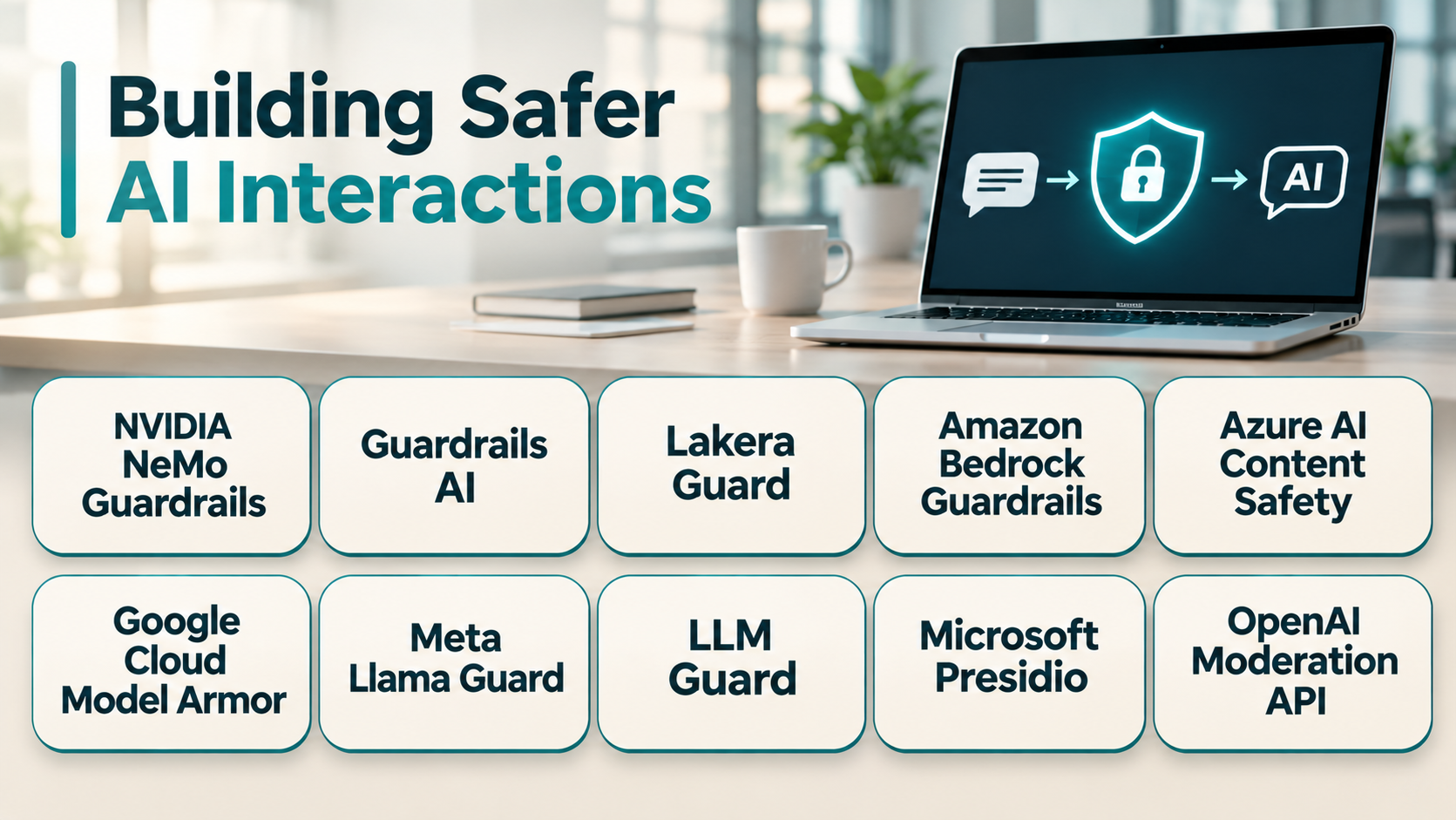
Introduction
AI runtime security platforms help organizations protect artificial intelligence (AI) applications, machine learning models, and intelligent agents during active operation. These solutions provide security monitoring, threat detection, policy enforcement, and information protection capabilities across supported AI environments.
The growing adoption of generative AI has introduced new security challenges involving malicious inputs, sensitive information disclosure, unauthorized application behavior, and compromised model interactions. Traditional cybersecurity solutions may require additional capabilities to address these AI-specific risks.
Runtime security differs from development-stage security testing because it focuses on protecting applications while they are actively processing information. It enables organizations to investigate suspicious activities and apply appropriate security controls during operational workflows.
Modern AI runtime security platforms can combine prompt inspection, response validation, model protection, application monitoring, and configurable security policies. These capabilities help organizations establish layered protection for Large Language Models (LLMs) and other artificial intelligence systems.
Financial institutions, healthcare providers, technology companies, government agencies, and manufacturing organizations can benefit from AI runtime security. Implementation requirements depend on application architecture, information sensitivity, operational complexity, and applicable regulations.
This guide examines ten AI runtime security platforms, including their features, benefits, advantages, limitations, and practical applications. It also provides comparison tables, software selection guidance, implementation recommendations, security considerations, and frequently asked questions.
What Are AI Runtime Security Platforms?
AI runtime security platforms are software solutions designed to monitor and protect artificial intelligence systems during active execution. They help organizations identify potentially unsafe interactions, investigate security threats, and enforce configured operational policies.
These platforms can examine incoming requests, generated responses, application activities, and supported model interactions. Their primary objective is to reduce security risks while maintaining legitimate application functionality.
Runtime security can address selected threats involving prompt injection, inappropriate information disclosure, malicious content, unauthorized actions, and compromised application integrations. Specific protection capabilities vary according to the selected platform.
Some AI runtime security solutions operate through security gateways positioned between applications and model providers. Others integrate directly into application workflows, model-serving infrastructure, or enterprise cybersecurity environments.
Runtime security complements AI red teaming, model vulnerability assessment, and application security testing. Development-stage assessments help identify weaknesses before deployment, while runtime protection addresses selected risks during active operation.
Effective AI runtime security requires appropriate application architecture, independent authorization, secure information handling, and continuous evaluation. Runtime monitoring and automated security controls should support rather than replace broader cybersecurity governance.
How Do AI Runtime Security Platforms Work?
- Identify deployed AI applications and model endpoints.
- Establish application security requirements.
- Connect supported runtime environments.
- Monitor relevant incoming requests.
- Evaluate interactions against configured security policies.
- Identify potentially suspicious or unauthorized activities.
- Apply appropriate security enforcement decisions.
- Inspect generated responses where supported.
- Record relevant security and policy events.
- Notify authorized security administrators.
- Investigate validated security findings.
- Update protection policies according to operational requirements.
Traditional Runtime Security vs. AI Runtime Security
| Evaluation Area | Traditional Runtime Security | AI Runtime Security |
|---|---|---|
| Protected systems | Conventional applications | AI models and intelligent applications |
| Input inspection | Structured application requests | Natural language and supported multimodal inputs |
| Output inspection | Application responses | AI-generated content |
| Threat detection | Conventional cybersecurity threats | AI-specific and conventional threats |
| Information protection | Standard data security | AI interaction-specific controls |
| Behavioral monitoring | Application execution | Model and application interactions |
| Policy enforcement | Network and application rules | AI-aware security policies |
| Security evaluation | Established detection techniques | Rules and model-assisted analysis |
| Incident investigation | Infrastructure and application events | AI interaction and security evidence |
| Operational challenges | Software vulnerabilities | Variable model behavior and AI-specific risks |
Common Applications of AI Runtime Security Platforms
- Enterprise generative AI application protection.
- Customer-facing chatbot security.
- Prompt injection risk detection.
- Sensitive information exposure prevention.
- Machine learning model protection.
- AI agent runtime monitoring.
- Retrieval-Augmented Generation (RAG) security.
- AI application content safety.
- Model-serving infrastructure protection.
- Enterprise AI security policy enforcement.
- AI-related security incident investigation.
- Continuous AI security governance.
Key Components of AI Runtime Security Platforms
| Component | Primary Function |
|---|---|
| AI asset discovery | Identifies supported AI applications |
| Runtime monitoring engine | Observes relevant operational activities |
| Input inspection | Evaluates incoming AI requests |
| Output inspection | Examines generated responses |
| Threat detection engine | Identifies selected suspicious activities |
| Policy engine | Evaluates configured security requirements |
| Information protection | Identifies sensitive content |
| Enforcement mechanism | Applies supported security decisions |
| Model connector | Connects compatible model environments |
| Security gateway | Coordinates supported application traffic |
| Alerting system | Communicates relevant security events |
| Audit repository | Preserves authorized security evidence |
| Analytics dashboard | Summarizes operational security information |
| Integration interface | Connects enterprise security systems |
| Incident management | Supports investigation and remediation |
Key Features of AI Runtime Security Platforms
- Real-time AI interaction monitoring.
- Prompt security inspection.
- Generated response evaluation.
- Sensitive information detection.
- Configurable security policies.
- AI application threat detection.
- Model runtime protection.
- Security event classification.
- Application integration capabilities.
- Centralized security reporting.
- Incident investigation support.
- Enterprise cybersecurity integration.
Top 10 AI Runtime Security Platforms
The following selection includes dedicated AI runtime protection products, enterprise AI security platforms, managed cloud security services, and complementary runtime security frameworks. The numbering organizes the comparison rather than representing an independently benchmarked ranking.
1. Palo Alto Networks Prisma AIRS
Short Description
Palo Alto Networks Prisma AIRS is an enterprise AI security platform designed to address security risks associated with artificial intelligence applications and infrastructure. Its capabilities span multiple aspects of AI security, including runtime protection.
The platform provides functionality relevant to protecting generative AI applications and supported model interactions. Organizations can use compatible security controls to investigate risks involving malicious inputs, sensitive information, and inappropriate application behavior.
Prisma AIRS brings AI security capabilities into a broader enterprise cybersecurity ecosystem. This approach can help organizations coordinate AI security assessment, operational protection, and security management.
The platform is particularly relevant to large organizations deploying AI applications across complex environments. Specific functionality depends on the selected product components, licensing, and deployment architecture.
How Prisma AIRS Works
- Identify relevant enterprise AI assets.
- Connect supported application environments.
- Configure AI security policies.
- Evaluate compatible runtime interactions.
- Apply supported security controls.
- Review security findings and operational reports.
Key Features
- AI runtime protection: Supports security controls for active AI applications.
- AI asset visibility: Identifies supported models and applications.
- Prompt security: Evaluates selected prompt-related risks.
- Response inspection: Examines supported generated content.
- Sensitive information protection: Addresses relevant disclosure risks.
- AI security assessment: Complements runtime controls with security evaluation.
- Policy management: Coordinates configurable protection requirements.
- Security reporting: Communicates relevant operational findings.
- Enterprise integration: Connects compatible cybersecurity infrastructure.
Benefits
- Improves enterprise AI security visibility.
- Supports coordinated runtime protection.
- Helps identify selected AI-specific threats.
- Facilitates centralized security administration.
- Supports information protection requirements.
- Connects AI security assessment with operational protection.
- Complements enterprise cybersecurity programs.
Pros
- Comprehensive enterprise AI security orientation.
- Runtime protection capabilities.
- Broader cybersecurity ecosystem integration.
- Centralized management functionality.
- Commercial enterprise support.
- Suitable for complex AI environments.
Cons
- Commercial pricing requires confirmation.
- Deployment may require specialist resources.
- Product capabilities vary by configuration.
- Integration can introduce architectural complexity.
- Independent security validation remains necessary.
Use Cases
- Enterprise generative AI protection.
- AI application runtime monitoring.
- Sensitive information security.
- AI security policy enforcement.
- Enterprise AI risk management.
- Centralized AI security operations.
Best For
- Large enterprises.
- Enterprise AI security teams.
- Palo Alto Networks customers.
- Security operations departments.
- Regulated organizations.
- Organizations deploying multiple AI applications.
Pricing and Deployment
Prisma AIRS uses commercial enterprise licensing arrangements. Organizations should confirm current product packaging, supported runtime environments, integration requirements, and subscription costs.
2. Cisco AI Defense
Short Description
Cisco AI Defense is an enterprise AI security solution designed to help organizations identify, assess, and protect artificial intelligence applications. Its runtime protection capabilities address selected security risks during active application operation.
The platform provides functionality relevant to AI application discovery, security validation, and operational protection. These capabilities can support organizations managing both internally developed and externally provided AI applications.
Cisco AI Defense can help security teams coordinate AI security requirements across compatible enterprise environments. Its broader cybersecurity ecosystem provides opportunities for integration with existing security operations.
The solution is particularly suitable for organizations requiring centralized AI security oversight. Runtime enforcement coverage depends on supported integrations, deployment configuration, and commercial product availability.
How Cisco AI Defense Works
- Discover supported AI applications.
- Assess relevant application security risks.
- Establish runtime security requirements.
- Connect compatible application traffic.
- Apply configured protection policies.
- Investigate relevant security findings.
Key Features
- AI application discovery: Identifies supported enterprise AI assets.
- Runtime protection: Supports operational AI security controls.
- Security validation: Evaluates selected application vulnerabilities.
- Prompt security: Addresses relevant input-related threats.
- Information protection: Supports selected sensitive data controls.
- Policy enforcement: Applies configured security requirements.
- Application monitoring: Provides relevant operational visibility.
- Security reporting: Summarizes identified risks.
- Enterprise integration: Connects compatible security systems.
Benefits
- Improves visibility into enterprise AI applications.
- Supports continuous AI security protection.
- Facilitates centralized policy management.
- Helps identify selected runtime security threats.
- Connects assessment with operational controls.
- Supports enterprise security investigations.
- Encourages consistent AI security governance.
Pros
- Enterprise-focused security capabilities.
- Combined validation and runtime protection.
- Centralized administration.
- Cisco security ecosystem relevance.
- Commercial support options.
- Suitable for distributed enterprise environments.
Cons
- Commercial costs require evaluation.
- Deployment can require technical coordination.
- Supported integrations vary.
- Security effectiveness depends on configuration.
- Specialized administration may be necessary.
Use Cases
- Enterprise AI application protection.
- Generative AI runtime security.
- Third-party AI risk management.
- AI security policy enforcement.
- Operational threat monitoring.
- Enterprise security architecture modernization.
Best For
- Large organizations.
- Cisco enterprise customers.
- Cybersecurity departments.
- AI security architects.
- Security operations teams.
- Organizations requiring integrated AI protection.
Pricing and Deployment
Cisco AI Defense is a commercial enterprise security offering. Organizations should obtain current pricing and verify supported application architectures, runtime protection capabilities, and deployment requirements.
3. HiddenLayer
Short Description
HiddenLayer provides AI security solutions focused on protecting machine learning models and generative AI applications. Its capabilities address multiple stages of the AI lifecycle, including operational threat detection and model protection.
The platform can help organizations investigate selected threats affecting supported AI systems during active execution. Its model-oriented security approach is relevant to enterprises operating proprietary machine learning infrastructure.
HiddenLayer provides functionality that can complement conventional application and infrastructure security. Organizations can incorporate relevant AI security findings into broader cybersecurity operations.
The platform is particularly suitable for organizations managing diverse machine learning assets. Supported model architectures, runtime protection mechanisms, and current commercial offerings should be evaluated before procurement.
How HiddenLayer Works
- Identify supported AI model assets.
- Connect compatible runtime environments.
- Establish relevant security requirements.
- Monitor supported model activities.
- Identify selected security threats.
- Investigate findings and apply appropriate remediation.
Key Features
- AI threat detection: Identifies selected threats affecting AI systems.
- Model runtime monitoring: Observes supported operational model activities.
- Model protection: Addresses relevant model security risks.
- AI asset visibility: Provides information about compatible AI assets.
- Security assessment: Supports evaluation of relevant vulnerabilities.
- Threat intelligence: Provides AI security-related information.
- Security analytics: Summarizes relevant operational findings.
- Enterprise integration: Connects compatible security environments.
- Incident investigation: Supports analysis of identified security concerns.
Benefits
- Improves visibility into AI model security.
- Supports operational threat detection.
- Helps protect proprietary AI assets.
- Facilitates AI security investigations.
- Complements conventional cybersecurity tools.
- Supports enterprise AI risk management.
- Encourages continuous model security oversight.
Pros
- Dedicated AI security specialization.
- Machine learning model protection relevance.
- Runtime security capabilities.
- Enterprise-oriented functionality.
- Commercial support options.
- Suitable for complex AI infrastructure.
Cons
- Commercial pricing requires confirmation.
- Supported model environments vary.
- Deployment may require specialist expertise.
- Integration requires technical resources.
- Independent threat validation remains important.
Use Cases
- Machine learning runtime protection.
- Proprietary AI model security.
- Generative AI threat monitoring.
- AI infrastructure security.
- Enterprise model risk management.
- AI security incident investigation.
Best For
- Machine learning infrastructure teams.
- Enterprise AI security departments.
- Financial institutions.
- Security operations teams.
- Organizations developing proprietary models.
- AI security researchers and engineers.
Pricing and Deployment
HiddenLayer provides commercial enterprise security offerings. Organizations should verify current licensing, supported model environments, deployment options, and runtime protection functionality.
4. Lakera Guard
Short Description
Lakera Guard is a generative AI security solution designed to evaluate interactions with language model applications. Its runtime protection functionality focuses on identifying selected prompt-related threats and inappropriate information handling.
The platform can be integrated into compatible AI application workflows through supported interfaces. Developers can use its security classifications to determine appropriate application handling decisions.
Lakera Guard is relevant to organizations deploying customer-facing assistants, enterprise chatbots, and retrieval-based AI applications. Its dedicated generative AI security approach complements broader application security architecture.
The platform should be independently evaluated using representative application scenarios. Current commercial packaging, supported security categories, and deployment arrangements require verification.
How Lakera Guard Works
- Connect a supported AI application.
- Define relevant security requirements.
- Evaluate incoming application content.
- Identify selected security risks.
- Apply application-specific handling decisions.
- Review relevant runtime security events.
Key Features
- Prompt injection detection: Identifies selected suspicious inputs.
- Runtime security evaluation: Supports operational interaction inspection.
- Content classification: Evaluates relevant security categories.
- Information protection: Addresses selected disclosure risks.
- API integration: Connects compatible AI applications.
- Response security: Supports applicable output evaluation.
- Security policies: Enables configured protection requirements.
- Security reporting: Provides relevant evaluation information.
- Application integration: Supports custom generative AI workflows.
Benefits
- Supports protection of generative AI applications.
- Improves visibility into prompt-related threats.
- Facilitates operational security evaluation.
- Reduces custom security detector development.
- Supports consistent application security decisions.
- Complements independent application authorization.
- Encourages continuous AI security improvement.
Pros
- Dedicated generative AI security orientation.
- Prompt security specialization.
- Runtime protection relevance.
- Application-level integration.
- Commercial support options.
- Suitable for customer-facing AI applications.
Cons
- Commercial usage costs require evaluation.
- Detection errors remain possible.
- Additional inspection may increase latency.
- Integration requires application engineering.
- Current product packaging requires confirmation.
Use Cases
- Enterprise chatbot protection.
- Prompt security monitoring.
- Customer-facing AI application security.
- RAG application protection.
- Sensitive information risk detection.
- Generative AI runtime security.
Best For
- Generative AI developers.
- Application security engineers.
- Enterprise AI security teams.
- AI product managers.
- Customer support technology teams.
- Organizations deploying public-facing AI assistants.
Pricing and Deployment
Lakera Guard is associated with commercial AI security offerings. Organizations should verify current licensing, data processing arrangements, integration options, and supported runtime capabilities.
5. CalypsoAI
Short Description
CalypsoAI provides enterprise AI security capabilities designed to help organizations manage risks associated with generative AI applications. Its offerings include security evaluation and protection functionality relevant to operational AI interactions.
The platform can support configurable security requirements for compatible language model applications. These controls can help organizations investigate selected threats and regulate information handling.
CalypsoAI’s security approach is relevant to enterprises deploying multiple AI services and requiring centralized oversight. Its capabilities can complement application security, information protection, and AI governance programs.
Organizations should confirm current product ownership, commercial packaging, and runtime protection availability before procurement. Specific features and supported integrations may vary as the product portfolio evolves.
How CalypsoAI Works
- Identify supported AI application workflows.
- Establish organizational security requirements.
- Configure relevant protection policies.
- Evaluate compatible AI interactions.
- Apply supported security decisions.
- Review operational findings and policy effectiveness.
Key Features
- AI interaction security: Evaluates supported application requests.
- Runtime protection: Supports selected operational safeguards.
- Security policy management: Coordinates configurable requirements.
- Sensitive information protection: Addresses relevant exposure risks.
- AI security assessment: Complements operational protection.
- Application integration: Connects compatible AI workflows.
- Security monitoring: Provides relevant activity visibility.
- Risk reporting: Communicates identified security concerns.
- Enterprise administration: Supports organizational security management.
Benefits
- Supports controlled enterprise AI adoption.
- Improves visibility into operational AI risks.
- Facilitates consistent security policies.
- Helps protect confidential information.
- Supports centralized security management.
- Complements AI security assessment activities.
- Encourages responsible AI deployment.
Pros
- Enterprise AI security orientation.
- Runtime protection relevance.
- Configurable security requirements.
- Security assessment capabilities.
- Commercial enterprise functionality.
- Suitable for multi-application AI environments.
Cons
- Current product packaging requires verification.
- Commercial pricing may vary.
- Supported integrations require confirmation.
- Deployment may require specialist resources.
- Security effectiveness depends on configuration.
Use Cases
- Enterprise generative AI security.
- AI interaction policy enforcement.
- Sensitive information protection.
- Runtime security monitoring.
- AI application risk assessment.
- Centralized AI security management.
Best For
- Enterprise AI security teams.
- Security architects.
- Regulated organizations.
- AI governance departments.
- Organizations adopting multiple language models.
- Enterprise application developers.
Pricing and Deployment
CalypsoAI is associated with commercial AI security offerings. Organizations should confirm current product availability, licensing arrangements, supported integrations, and deployment requirements.
6. Prompt Security
Short Description
Prompt Security provides generative AI security capabilities addressing employee AI usage and internally developed AI applications. Its application protection functionality is relevant to runtime security requirements.
The platform can help organizations investigate selected prompt-related risks, inappropriate information disclosure, and unauthorized AI interactions. Compatible protection mechanisms can support application-specific security policies.
Prompt Security provides functionality that connects employee AI usage management with generative AI application protection. These capabilities can help organizations coordinate multiple aspects of enterprise AI security.
Prompt Security became part of SentinelOne, making current product packaging an important procurement consideration. Organizations should verify which runtime security capabilities are available through the current commercial portfolio.
How Prompt Security Works
- Connect supported AI application environments.
- Establish relevant security policies.
- Evaluate compatible application interactions.
- Identify selected security concerns.
- Apply configured protection decisions.
- Review operational security findings.
Key Features
- Generative AI runtime protection: Supports application-level safeguards.
- Prompt security: Addresses selected input-related risks.
- Sensitive information protection: Helps identify relevant disclosure concerns.
- AI usage visibility: Provides information about supported activities.
- Application security: Protects compatible internally developed applications.
- Policy enforcement: Applies configured security requirements.
- Security monitoring: Records relevant operational events.
- Enterprise reporting: Communicates identified security risks.
- Security integration: Connects compatible enterprise environments.
Benefits
- Supports secure generative AI adoption.
- Improves operational AI security visibility.
- Helps protect sensitive organizational information.
- Facilitates configurable application safeguards.
- Supports investigation of AI-related security events.
- Connects employee and application security requirements.
- Complements enterprise cybersecurity operations.
Pros
- Dedicated generative AI security orientation.
- Employee and application security relevance.
- Configurable protection capabilities.
- Enterprise security functionality.
- Broader security ecosystem integration potential.
- Suitable for organizations managing multiple AI services.
Cons
- Current commercial packaging requires verification.
- Pricing may vary by offering.
- Integration depends on application architecture.
- Supported runtime environments require confirmation.
- Independent security assessment remains necessary.
Use Cases
- Enterprise AI application protection.
- Prompt security monitoring.
- Employee AI security.
- Sensitive information protection.
- Generative AI policy enforcement.
- Operational AI threat investigation.
Best For
- Enterprise AI security teams.
- SentinelOne customers evaluating AI security.
- Generative AI developers.
- Data protection departments.
- Security operations teams.
- Regulated enterprises.
Pricing and Deployment
Prompt Security is associated with commercial enterprise security offerings. Organizations should confirm current SentinelOne product packaging, deployment options, licensing, and supported runtime protection functionality.
7. Google Cloud Model Armor
Short Description
Google Cloud Model Armor is a managed AI security service designed to evaluate prompts and generated responses within compatible generative AI applications. Its functionality supports operational protection against selected AI-specific security risks.
The service provides configurable security templates that can reflect application-specific protection requirements. These templates support relevant evaluation of incoming and outgoing application content.
Model Armor includes capabilities addressing selected prompt injection risks, inappropriate content, sensitive information, and malicious links. Organizations can incorporate these capabilities into supported application architectures.
The service is particularly suitable for enterprises using Google Cloud infrastructure. Current regional availability, supported features, service limits, and application integration requirements should be verified.
How Google Cloud Model Armor Works
- Define application security requirements.
- Configure relevant security templates.
- Connect a compatible AI application.
- Evaluate supported incoming requests.
- Inspect generated responses.
- Apply application-defined security decisions.
Key Features
- Prompt security inspection: Evaluates selected input-related risks.
- Response inspection: Examines supported generated content.
- Content safety filters: Supports relevant moderation requirements.
- Sensitive data protection: Addresses selected information exposure risks.
- Security templates: Maintains reusable policy configurations.
- Malicious URL detection: Evaluates supported link-related threats.
- API integration: Connects compatible application workflows.
- Google Cloud integration: Supports relevant cloud AI environments.
- Security evaluation reporting: Provides information about detected risks.
Benefits
- Supports managed AI runtime security.
- Facilitates consistent protection policies.
- Helps identify selected prompt-related threats.
- Supports sensitive information protection.
- Reduces custom security infrastructure requirements.
- Encourages reusable security configurations.
- Complements Google Cloud cybersecurity capabilities.
Pros
- Managed cloud service.
- Input and output inspection.
- Configurable security templates.
- Google Cloud ecosystem integration.
- Multiple security evaluation categories.
- Enterprise application relevance.
Cons
- Usage-based expenses may accumulate.
- Regional availability varies.
- Integration requires application configuration.
- Detection effectiveness varies by scenario.
- Independent authorization controls remain necessary.
Use Cases
- Google Cloud AI application security.
- Enterprise chatbot protection.
- Prompt security inspection.
- Generated response validation.
- Sensitive information protection.
- Managed runtime security evaluation.
Best For
- Google Cloud customers.
- Cloud security teams.
- Enterprise AI developers.
- Application security engineers.
- Managed AI service users.
- Organizations requiring configurable security evaluation.
Pricing and Deployment
Model Armor is a managed Google Cloud security service. Organizations should verify current evaluation rates, regional availability, service limits, and associated application costs.
8. Amazon Bedrock Guardrails
Short Description
Amazon Bedrock Guardrails is a managed safeguard capability within Amazon Web Services (AWS). It enables organizations to implement configurable content, information protection, and interaction requirements for supported generative AI applications.
The service provides controls that can evaluate incoming requests and generated responses during application operation. These capabilities support selected runtime security and safety requirements.
Organizations can configure relevant content filters, denied topics, sensitive information filters, and supported grounding checks. The service also provides interfaces for compatible independent guardrail evaluation.
Amazon Bedrock Guardrails is a complementary runtime safeguard rather than a complete AI security operations platform. It is particularly relevant to organizations developing applications within the AWS ecosystem.
How Amazon Bedrock Guardrails Works
- Establish application protection requirements.
- Create a guardrail configuration.
- Define relevant security and safety policies.
- Evaluate supported incoming content.
- Evaluate generated responses.
- Apply configured intervention behavior.
Key Features
- Prompt attack filtering: Addresses selected prompt-related risks.
- Content filtering: Evaluates supported content categories.
- Sensitive information filters: Identifies relevant protected information.
- Denied topics: Restricts configured subject areas.
- Word filters: Identifies specified terms.
- Contextual grounding checks: Evaluates supported grounding requirements.
- ApplyGuardrail API: Supports independent evaluation workflows.
- Policy versioning: Maintains guardrail configurations.
- AWS integration: Connects compatible cloud AI services.
Benefits
- Supports managed application safeguards.
- Facilitates operational policy enforcement.
- Helps protect sensitive information.
- Reduces custom validation infrastructure.
- Supports consistent content requirements.
- Encourages reusable security configurations.
- Integrates with compatible AWS applications.
Pros
- Managed cloud architecture.
- Multiple configurable safeguards.
- AWS ecosystem integration.
- Input and output evaluation.
- Independent evaluation interface.
- Enterprise deployment relevance.
Cons
- Usage-based costs require monitoring.
- Regional availability varies.
- Supported features depend on configuration.
- Not a complete enterprise security platform.
- Independent security testing remains necessary.
Use Cases
- AWS-based enterprise AI assistants.
- Generative AI content filtering.
- Runtime prompt security.
- Sensitive information handling.
- RAG response validation.
- Application-specific policy enforcement.
Best For
- AWS customers.
- Cloud application developers.
- Enterprise AI engineering teams.
- Cloud security architects.
- Organizations using managed language models.
- Teams requiring configurable AI safeguards.
Pricing and Deployment
Amazon Bedrock Guardrails uses managed service pricing based on applicable evaluation activities. Organizations should verify current rates, supported features, regional availability, and additional model usage costs.
9. NVIDIA NeMo Guardrails
Short Description
NVIDIA NeMo Guardrails is an open-source toolkit for implementing programmable safeguards around language model applications. Its configurable interaction controls can support application-level runtime security.
The framework provides multiple guardrail categories covering relevant input, output, retrieval, dialog, and execution workflows. Developers can select appropriate controls according to application requirements.
NeMo Guardrails enables technical teams to implement custom validation activities within compatible AI application architectures. Its programmable approach is particularly relevant to organizations requiring flexible interaction management.
The toolkit is a complementary runtime security framework rather than a complete enterprise threat monitoring platform. Effective deployment requires engineering expertise, independent authorization controls, and representative security testing.
How NVIDIA NeMo Guardrails Works
- Define approved application behavior.
- Configure relevant guardrail categories.
- Connect a compatible language model.
- Evaluate supported application requests.
- Validate generated responses and relevant actions.
- Apply configured interaction handling procedures.
Key Features
- Input rails: Evaluate incoming application content.
- Output rails: Inspect generated responses.
- Dialog rails: Support configured conversational behavior.
- Retrieval rails: Evaluate supported retrieved information.
- Execution rails: Apply controls around compatible actions.
- Colang configuration: Defines programmable interaction flows.
- Custom actions: Supports specialized validation activities.
- Model integrations: Connects compatible language model providers.
- Python integration: Enables application-level development.
Benefits
- Supports customizable runtime safeguards.
- Facilitates application-specific policy enforcement.
- Enables flexible interaction management.
- Supports multiple validation stages.
- Reduces custom guardrail development requirements.
- Encourages reusable security configurations.
- Complements broader AI security architecture.
Pros
- Open-source availability.
- Programmable interaction controls.
- Multiple guardrail categories.
- Flexible model integrations.
- Developer-oriented architecture.
- Self-managed deployment possibilities.
Cons
- Requires programming expertise.
- Complex configurations require maintenance.
- Additional validation can increase latency.
- Enterprise monitoring requires complementary tools.
- Security effectiveness depends on implementation quality.
Use Cases
- Custom AI runtime safeguards.
- Enterprise conversational AI protection.
- AI assistant interaction management.
- RAG application validation.
- Controlled agent workflows.
- Application-specific response validation.
Best For
- Generative AI developers.
- Machine learning engineers.
- Enterprise AI architects.
- Python development teams.
- Conversational AI specialists.
- Organizations requiring self-managed safeguards.
Pricing and Deployment
NeMo Guardrails is available as open-source software. Organizations should account for infrastructure, inference, technical integration, security evaluation, and maintenance expenses.
10. LLM Guard
Short Description
LLM Guard is an open-source toolkit designed to support security inspection and sanitization of language model interactions. Its configurable scanners provide complementary runtime protection for compatible AI applications.
The toolkit includes input and output evaluation components addressing selected prompt security risks, sensitive information, and inappropriate content. Developers can combine relevant scanners according to application requirements.
LLM Guard supports integration into Python-based application workflows and compatible service architectures. Its modular approach enables organizations to implement self-managed security inspection capabilities.
The toolkit does not independently provide every function of a commercial AI runtime security platform. Organizations should evaluate scanner effectiveness, dependency maintenance, and complementary monitoring requirements before production deployment.
How LLM Guard Works
- Identify application runtime security requirements.
- Select appropriate input scanners.
- Configure relevant output scanners.
- Inspect incoming application requests.
- Evaluate generated responses.
- Apply application-defined security handling decisions.
Key Features
- Input scanning: Evaluates supported incoming prompts.
- Output scanning: Inspects generated content.
- Prompt injection detection: Addresses selected manipulation risks.
- Sensitive information scanning: Identifies supported protected content.
- Anonymization: Supports relevant information replacement workflows.
- Content classification: Evaluates applicable content categories.
- Configurable thresholds: Enables customized detection requirements.
- Python integration: Supports application-level deployment.
- Modular architecture: Enables selection of relevant security scanners.
Benefits
- Supports flexible AI runtime inspection.
- Facilitates self-managed security deployment.
- Helps protect sensitive information.
- Reduces custom scanner development.
- Supports configurable application safeguards.
- Encourages reusable security components.
- Complements enterprise monitoring and protection.
Pros
- Open-source availability.
- Modular security scanner architecture.
- Python-based integration.
- Multiple evaluation categories.
- Configurable security thresholds.
- Self-managed deployment flexibility.
Cons
- Requires technical expertise.
- Scanner accuracy varies.
- Additional inspection may increase latency.
- Enterprise reporting requires complementary systems.
- Ongoing dependency maintenance is necessary.
Use Cases
- Custom AI security middleware.
- Runtime prompt inspection.
- Generated response security.
- Sensitive information filtering.
- Self-hosted AI application protection.
- Application-specific security validation.
Best For
- Python developers.
- AI security engineers.
- Machine learning teams.
- Enterprise application developers.
- Security researchers.
- Organizations requiring customizable runtime inspection.
Pricing and Deployment
LLM Guard is available as open-source software. Operational costs depend on scanner dependencies, infrastructure, application integration, and technical maintenance.
Comparison Table: Top 10 AI Runtime Security Platforms
| Platform | Primary Capability | Best For | Deployment | Pricing Model |
|---|---|---|---|---|
| Prisma AIRS | Enterprise AI runtime security | Large enterprises | Offering-dependent | Commercial |
| Cisco AI Defense | AI security validation and protection | Enterprise security teams | Offering-dependent | Commercial |
| HiddenLayer | AI model threat detection | Machine learning security | Offering-dependent | Commercial |
| Lakera Guard | Generative AI interaction security | AI application teams | API/integrated | Commercial |
| CalypsoAI | Enterprise AI security controls | Centralized AI security | Verify current offering | Commercial |
| Prompt Security | Employee and application AI security | Enterprise AI adoption | Offering-dependent | Commercial |
| Google Cloud Model Armor | Managed prompt and response security | Google Cloud users | Cloud | Usage-based |
| Amazon Bedrock Guardrails | Managed AI application safeguards | AWS users | Cloud | Usage-based |
| NVIDIA NeMo Guardrails | Programmable runtime safeguards | Custom AI applications | Self-managed | Open source |
| LLM Guard | Runtime security scanning | Technical AI teams | Self-managed | Open source |
Functional Comparison
| Platform | Prompt Security | Output Inspection | Model Protection | Policy Enforcement |
|---|---|---|---|---|
| Prisma AIRS | Supported | Supported | Portfolio-dependent | Supported |
| Cisco AI Defense | Supported | Supported | Offering-dependent | Supported |
| HiddenLayer | Offering-dependent | Offering-dependent | Specialized | Configuration-dependent |
| Lakera Guard | Specialized | Supported | Not primary | Application-dependent |
| CalypsoAI | Supported | Offering-dependent | Not primary | Supported |
| Prompt Security | Supported | Offering-dependent | Not primary | Supported |
| Model Armor | Specialized | Supported | Not primary | Application-dependent |
| Bedrock Guardrails | Supported | Supported | Not primary | Supported safeguards |
| NeMo Guardrails | Configurable | Supported | Not primary | Programmable |
| LLM Guard | Scanner-based | Scanner-based | Not primary | Application-dependent |
Technical Comparison
| Platform | Main Integration | Customization | Infrastructure Management |
|---|---|---|---|
| Prisma AIRS | Enterprise security integrations | Policy-based | Offering-dependent |
| Cisco AI Defense | Enterprise security interfaces | Policy-based | Offering-dependent |
| HiddenLayer | Model and security integrations | Offering-dependent | Offering-dependent |
| Lakera Guard | API | Application-specific | Offering-dependent |
| CalypsoAI | Application integrations | Policy-based | Verify current offering |
| Prompt Security | Application and enterprise integrations | Policy-based | Offering-dependent |
| Model Armor | Google Cloud API | Template-based | Provider-managed |
| Bedrock Guardrails | AWS API and console | Policy-based | Provider-managed |
| NeMo Guardrails | Python and Colang | Extensive | Customer-managed |
| LLM Guard | Python and scanners | Extensive | Customer-managed |
Business Suitability Comparison
| Platform | Startups | Midmarket | Large Enterprises |
|---|---|---|---|
| Prisma AIRS | Budget-dependent | Evaluate offering | Suitable |
| Cisco AI Defense | Budget-dependent | Evaluate offering | Suitable |
| HiddenLayer | Budget-dependent | Suitable | Suitable |
| Lakera Guard | Potentially suitable | Suitable | Suitable |
| CalypsoAI | Evaluate availability | Suitable | Suitable |
| Prompt Security | Evaluate offering | Suitable | Suitable |
| Model Armor | Google Cloud users | Suitable | Suitable |
| Bedrock Guardrails | AWS users | Suitable | Suitable |
| NeMo Guardrails | Technical teams | Suitable | Suitable |
| LLM Guard | Technical teams | Suitable | Suitable |
These comparisons describe general product positioning rather than independently verified security effectiveness. Organizations should conduct representative evaluations before selecting a runtime security platform.
How to Choose the Best AI Runtime Security Platform
1. Identify AI Application Risks
Determine which AI applications process sensitive information or perform consequential activities. Establish security priorities according to potential business, privacy, and operational impacts.
2. Evaluate Runtime Coverage
Confirm that the platform supports the organization’s deployed models, application interfaces, and communication channels. Runtime protection should address actual application architecture rather than assumed deployment patterns.
3. Assess Threat Detection Capabilities
Evaluate whether the platform addresses relevant prompt security, model security, information exposure, and application behavior risks. Detection capabilities should be validated through authorized testing.
4. Review Enforcement Mechanisms
Determine whether the platform provides monitoring, alerting, blocking, sanitization, or application-defined handling decisions. Select enforcement mechanisms appropriate to the consequences of identified security risks.
5. Evaluate Model Compatibility
Organizations may use multiple language model providers and proprietary machine learning systems. Confirm compatibility with current infrastructure and anticipated future requirements.
6. Consider Application Latency
Runtime inspection can introduce additional processing time. Measure application performance under representative workloads and establish acceptable security-related latency thresholds.
7. Assess Information Protection
Determine how the platform identifies and handles sensitive prompts, generated responses, and operational records. Review information processing, encryption, retention, and access management requirements.
8. Evaluate Enterprise Integration
Runtime security findings should connect with appropriate organizational security operations. Assess compatibility with existing monitoring, incident management, and security analytics systems.
9. Review Customization Capabilities
Different applications require different protection policies and response handling procedures. Select platforms that support appropriate customization without excessive maintenance complexity.
10. Assess Deployment Requirements
Determine whether the organization requires managed cloud services, private deployment, or application-level integration. Deployment decisions should reflect information sensitivity and available technical resources.
11. Compare Total Ownership Costs
Evaluate licensing, inference, infrastructure, integration, and ongoing security administration expenses. Open-source solutions may reduce direct licensing costs while requiring additional engineering resources.
12. Conduct Independent Security Testing
Evaluate shortlisted platforms using representative, authorized security scenarios. Compare detection reliability, enforcement coverage, operational performance, and reporting capabilities.
Best AI Runtime Security Platforms by User Type
| User Type | Recommended Platform | Primary Reason |
|---|---|---|
| Large enterprise security teams | Prisma AIRS | Broad AI security platform |
| Cisco enterprise customers | Cisco AI Defense | Integrated security capabilities |
| Machine learning security specialists | HiddenLayer | Model-oriented security |
| Generative AI developers | Lakera Guard | Dedicated interaction security |
| Centralized AI security teams | CalypsoAI | Enterprise security management |
| Enterprise AI adoption programs | Prompt Security | Employee and application protection |
| Google Cloud developers | Model Armor | Managed AI security evaluation |
| AWS application teams | Bedrock Guardrails | Managed application safeguards |
| Custom AI architects | NeMo Guardrails | Programmable runtime controls |
| Python security engineers | LLM Guard | Modular runtime inspection |
Weighted Software Selection Scorecard
| Selection Criterion | Weight |
|---|---|
| Runtime security coverage | 20% |
| Threat detection reliability | 15% |
| Application compatibility | 15% |
| Enforcement capabilities | 10% |
| Information protection | 10% |
| Performance and latency | 10% |
| Enterprise integration | 8% |
| Total ownership costs | 7% |
| Maintenance and support | 5% |
| Total | 100% |
Organizations can assign consistent scores to shortlisted platforms according to representative application requirements. Weighted results should support procurement decisions rather than replace independent security evaluation.
Practical Example: Protecting an Enterprise AI Banking Assistant
Consider a hypothetical financial institution deploying a generative AI assistant for general banking information and internal employee support. The organization wants to protect confidential information, investigate suspicious interactions, and maintain reliable application performance.
The institution selects Cisco AI Defense for enterprise AI security oversight and NVIDIA NeMo Guardrails for customized application interaction controls. The architecture also includes independent user authorization and secure information retrieval.
Step 1: Establish Security Objectives
Identify approved application capabilities, sensitive information categories, and operational security requirements. Assign responsibilities to application developers, security administrators, and governance stakeholders.
Step 2: Document AI Application Architecture
Identify language models, application interfaces, retrieval systems, and external integrations. Establish which components require runtime security monitoring.
Step 3: Implement Independent Authorization
Configure application permissions to ensure users can access only authorized information and functions. Critical authorization decisions must not depend solely on language model behavior.
Step 4: Establish Runtime Monitoring
Connect supported application environments to appropriate runtime security capabilities. Configure relevant monitoring without unnecessarily collecting confidential user information.
Step 5: Configure Application Guardrails
Use NeMo Guardrails to establish appropriate interaction boundaries and response handling requirements. Validate configured behavior against approved application scenarios.
Step 6: Implement Information Protection
Establish appropriate controls for sensitive information entering or leaving the application. Evaluate whether complementary data protection tools are necessary.
Step 7: Conduct Security Validation
Perform authorized security assessments against the combined application architecture. Qualified reviewers should validate consequential findings and document remaining limitations.
Step 8: Establish Incident Response Procedures
Define how security administrators investigate relevant runtime alerts and respond to confirmed incidents. Establish escalation procedures for significant information exposure or application security concerns.
Step 9: Measure Operational Performance
Monitor security detection quality, legitimate request completion, response latency, and operational costs. Refine security configurations when unnecessary restrictions affect approved workflows.
Step 10: Maintain Continuous Security Review
Repeat relevant assessments following application updates, model changes, and security policy modifications. Maintain documented ownership of runtime protection configurations.
Illustrative Implementation Results
| Performance Indicator | Before Implementation | After Implementation |
|---|---|---|
| Runtime security monitoring coverage | 25% | 95% |
| Approved security test pass rate | 67% | 94% |
| Validated policy violations per 1,000 test requests | 48 | 9 |
| Sensitive information handling pass rate | 72% | 97% |
| Average security incident investigation time | 10 hours | 3 hours |
| Security regression coverage | 20% | 90% |
| Median application response latency | 1.4 seconds | 1.7 seconds |
| Documented security evidence coverage | 35% | 96% |
These figures are hypothetical and do not represent verified results from Cisco, NVIDIA, or any other vendor. Actual outcomes depend on application architecture, security configurations, evaluation methodology, and operational requirements.
The illustrative reduction in validated policy violations is approximately 81.3%, while median response latency increases by approximately 21.4%. Organizations should evaluate security improvements alongside performance trade-offs and remaining risks.
Important AI Runtime Security Performance Metrics
| Metric | Purpose |
|---|---|
| Runtime monitoring coverage | Measures visibility into protected applications |
| Threat detection rate | Evaluates identified risks in tested scenarios |
| False-positive rate | Measures incorrect security alerts |
| False-negative rate | Measures missed risks in evaluated scenarios |
| Policy enforcement success rate | Tracks configured security decisions |
| Validated security incident count | Identifies confirmed operational incidents |
| Mean time to detect | Measures threat identification speed |
| Mean time to respond | Tracks incident response efficiency |
| Sensitive information exposure rate | Evaluates information protection |
| Median response latency | Measures typical application performance |
| Security cost per request | Tracks operational expenditure |
| Legitimate request completion rate | Measures application usability |
Industry Applications of AI Runtime Security Platforms
Financial Services
Financial institutions can use runtime security platforms to protect customer assistants, internal research applications, and intelligent operational workflows. Information protection and independent authorization are particularly important when applications interact with confidential financial records.
Healthcare
Healthcare organizations can implement runtime security controls to protect approved AI applications processing sensitive information. Clinical decisions require appropriate professional oversight and cannot depend exclusively on automated security mechanisms.
Retail and E-commerce
Retailers can protect customer-facing chatbots, recommendation assistants, and automated service applications through appropriate runtime safeguards. These controls can help investigate inappropriate content, information exposure, and unauthorized application behavior.
Government and Public Administration
Public organizations can use AI runtime security platforms to monitor approved citizen service applications and internal information systems. Security policies should reflect information sensitivity, public accountability, and applicable governance requirements.
Manufacturing
Manufacturers can protect intelligent operational assistants and proprietary machine learning applications. Runtime security controls should maintain appropriate separation between AI applications and critical industrial control systems.
Technology and Software Development
Technology companies can integrate runtime security into generative AI products, coding assistants, and model-serving infrastructure. Appropriate safeguards can support protection of proprietary source code, credentials, and confidential application information.
AI Runtime Security Implementation Roadmap
| Stage | Implementation Activity | Expected Deliverable |
|---|---|---|
| 1 | Identify AI applications | AI asset inventory |
| 2 | Assess operational risks | Risk classification |
| 3 | Document application architecture | Security architecture map |
| 4 | Define protection requirements | Approved security policies |
| 5 | Select suitable platforms | Software shortlist |
| 6 | Establish pilot environment | Controlled deployment |
| 7 | Configure runtime monitoring | Operational visibility |
| 8 | Implement enforcement controls | Application protection policies |
| 9 | Configure information protection | Data security safeguards |
| 10 | Conduct independent assessment | Validated security findings |
| 11 | Establish incident response | Operational response procedures |
| 12 | Review and optimize | Continuous improvement program |
Security and Governance Considerations
AI runtime security platforms may process confidential prompts, generated responses, application configurations, and security findings. Organizations should establish appropriate access restrictions, encryption, retention policies, and approved information processing arrangements.
Runtime security should complement independent application authorization, secure retrieval architecture, restricted tool access, and least-privilege permissions. Organizations should not assume that automated detection can prevent every possible AI security incident.
Security and Governance Checklist
- Maintain an accurate AI application inventory.
- Establish approved runtime security requirements.
- Implement independent application authorization.
- Protect sensitive prompt and response information.
- Restrict administrative access.
- Document security policies and configurations.
- Validate detection effectiveness independently.
- Establish appropriate incident response procedures.
- Minimize unnecessary security log retention.
- Review third-party processing arrangements.
- Maintain security regression assessments.
- Reassess protection following significant application changes.
Understanding the Total Cost of Ownership
AI runtime security expenses extend beyond software subscriptions and licensing. Organizations should account for security inspection workloads, additional inference, technical integration, monitoring, and ongoing administration.
Managed platforms can reduce infrastructure maintenance while introducing recurring service charges. Self-managed frameworks may provide greater flexibility but require engineering resources and operational security expertise.
| Cost Category | Main Consideration |
|---|---|
| Software licensing | Enterprise subscriptions |
| Security evaluation usage | Runtime inspection volumes |
| Model inference | Additional security classification workloads |
| Computing infrastructure | Self-hosted protection components |
| Application integration | Development and configuration |
| Security monitoring | Operational administration |
| Incident response | Qualified security personnel |
| Policy maintenance | Configuration updates |
| Security assessment | Independent validation |
| Employee training | Technical and governance skills |
Common Challenges in AI Runtime Security
- Variable language model behavior.
- Incomplete runtime monitoring coverage.
- Complex multi-model environments.
- False-positive security alerts.
- Missed or unidentified security threats.
- Additional application latency.
- Sensitive information handling requirements.
- Integration with existing cybersecurity infrastructure.
- Changing AI application architectures.
- Maintaining consistent security policies.
Common Mistakes to Avoid
1. Treating Runtime Security as Complete Protection
Runtime security platforms address selected threats but cannot eliminate every AI security risk. Organizations should implement layered application security and independent authorization.
2. Ignoring Development-Stage Security Testing
Runtime protection does not replace predeployment vulnerability assessment. Conduct authorized security evaluations before deployment and repeat relevant assessments following significant changes.
3. Monitoring Only Incoming Prompts
Generated responses and supported application actions can introduce additional security risks. Establish appropriate output inspection and independent execution controls.
4. Neglecting Sensitive Information Protection
Security monitoring can itself create information exposure risks if confidential content is unnecessarily retained. Establish appropriate data minimization, access management, and retention requirements.
5. Ignoring Runtime Performance
Additional security inspection can increase application latency and operating costs. Measure performance under representative workloads before implementing extensive protection policies.
6. Applying Excessively Restrictive Controls
Overly broad restrictions may prevent legitimate application activities. Evaluate false-positive rates and establish appropriate handling procedures for approved exceptions.
7. Failing to Establish Incident Response Procedures
Security alerts provide limited value when organizations lack clear investigation and remediation responsibilities. Define operational escalation procedures and assign qualified security personnel.
8. Neglecting Model and Application Updates
Changes to models, prompts, integrations, and application permissions can introduce new security weaknesses. Maintain repeatable assessments and review runtime policies following significant changes.
Best Practices for AI Runtime Security
- Maintain a comprehensive AI application inventory.
- Establish risk-based runtime protection requirements.
- Implement independent application authorization.
- Inspect relevant inputs and outputs.
- Restrict AI agent permissions.
- Protect sensitive organizational information.
- Apply proportionate security policies.
- Validate detection effectiveness independently.
- Monitor false-positive and false-negative rates.
- Measure application latency and operating costs.
- Integrate relevant security findings with incident management.
- Maintain versioned security configurations.
- Conduct authorized security regression assessments.
- Review third-party processing arrangements.
- Reassess safeguards as AI applications evolve.
Future Trends in AI Runtime Security Platforms
AI Agent Runtime Protection
Intelligent agents introduce additional security requirements involving delegated permissions, external tools, and automated actions. Runtime security platforms may increasingly provide specialized capabilities for monitoring these interactions.
Multimodal AI Security
AI applications increasingly process combinations of text, images, audio, and video. Runtime security tools may expand their evaluation capabilities across these content formats.
Integrated AI Security Operations
Enterprise cybersecurity providers are combining AI asset discovery, security assessment, runtime protection, and incident management. Organizations should evaluate whether integrated offerings provide sufficient specialized coverage.
Context-Aware Threat Detection
Runtime security solutions may increasingly incorporate application context into security classifications. Contextual evaluation could improve detection precision when combined with independent authorization and appropriate information protection.
Privacy-Preserving Runtime Inspection
Organizations may adopt self-managed or privacy-preserving security architectures to reduce unnecessary information exposure. These approaches should balance detection quality, performance, and privacy requirements.
Continuous Security Validation
Runtime security monitoring may become more closely connected with automated security regression testing. This integration can help organizations investigate whether application changes affect protection effectiveness.
Performance-Optimized Security Evaluation
More efficient security classification models and selective inspection techniques may reduce runtime processing overhead. Organizations should independently verify that performance improvements do not significantly weaken security coverage.
Standardized AI Security Reporting
Consistent reporting methodologies may improve comparisons between runtime security platforms and organizational security programs. Standardization should preserve flexibility for application-specific risks and operational requirements.
Frequently Asked Questions (FAQs)
1. What are AI runtime security platforms?
AI runtime security platforms help organizations monitor and protect artificial intelligence systems during active operation. Their capabilities include threat detection, interaction inspection, policy enforcement, and security reporting.
2. Why is AI runtime security important?
AI applications can encounter security risks while processing information and interacting with users or external systems. Runtime protection helps organizations investigate and address selected operational threats.
3. What is Palo Alto Networks Prisma AIRS?
Prisma AIRS is an enterprise AI security platform addressing multiple aspects of artificial intelligence protection. Its capabilities include runtime security functionality for supported AI environments.
4. What is Cisco AI Defense?
Cisco AI Defense provides enterprise AI security capabilities involving application visibility, security validation, and runtime protection. Supported functionality depends on the selected product configuration.
5. What is HiddenLayer?
HiddenLayer provides AI security solutions focused on protecting machine learning models and generative AI applications. Its capabilities can support operational threat detection and model security.
6. What is Lakera Guard?
Lakera Guard provides security evaluation functionality for generative AI application interactions. It is particularly relevant to prompt-related threats and operational AI application protection.
7. What is CalypsoAI?
CalypsoAI provides enterprise AI security capabilities relevant to application assessment and operational protection. Organizations should verify current product availability and commercial packaging before procurement.
8. What is Prompt Security?
Prompt Security provides generative AI security capabilities addressing employee AI usage and application protection. Current product packaging should be verified through the SentinelOne portfolio.
9. What is Google Cloud Model Armor?
Model Armor is a managed Google Cloud service that evaluates selected security risks involving AI prompts and generated responses. It supports configurable security templates and compatible application integrations.
10. What is Amazon Bedrock Guardrails?
Amazon Bedrock Guardrails provides managed safeguards for supported generative AI applications. Its capabilities include configurable content filtering, sensitive information protection, and selected prompt security controls.
11. What is NVIDIA NeMo Guardrails?
NeMo Guardrails is an open-source toolkit for implementing programmable safeguards around language model applications. It supports multiple guardrail categories and customized interaction workflows.
12. What is LLM Guard?
LLM Guard is an open-source toolkit providing configurable input and output security scanners. It can support self-managed runtime inspection within compatible AI applications.
13. What is the difference between AI runtime security and AI red teaming?
AI red teaming involves authorized adversarial assessment of artificial intelligence systems. Runtime security focuses on monitoring and protecting applications during active operation.
14. What is the difference between AI guardrails and runtime security platforms?
Guardrails provide configurable controls around AI interactions and application behavior. Runtime security platforms may additionally provide threat monitoring, security analytics, incident management, and enterprise protection capabilities.
15. Can AI runtime security prevent every prompt injection attempt?
No runtime security platform can guarantee detection of every possible prompt injection attempt. Organizations should combine appropriate safeguards with independent authorization and secure application architecture.
16. Can runtime security protect sensitive information?
Some platforms provide sensitive information detection and configurable handling capabilities. Protection effectiveness depends on supported information categories, detection accuracy, and deployment coverage.
17. Can AI runtime security protect intelligent agents?
Selected platforms can support security monitoring and interaction controls for compatible AI agents. Comprehensive agent security also requires restricted permissions, independent execution controls, and approved tool access.
18. Does AI runtime security increase application latency?
Additional security evaluation can increase processing time. Organizations should measure performance under representative workloads and balance security coverage with operational requirements.
19. Are open-source AI runtime security tools free?
Many open-source frameworks are available without direct software licensing charges. Infrastructure, model inference, integration, and ongoing maintenance expenses may still apply.
20. Can AI runtime security protect RAG applications?
Compatible security tools can inspect selected prompts, retrieved content, and generated responses. Independent document authorization and secure retrieval architecture remain essential.
21. Which AI runtime security platforms are suitable for enterprises?
Prisma AIRS, Cisco AI Defense, HiddenLayer, and other commercial AI security offerings may be relevant to enterprise requirements. Suitability depends on application architecture, supported integrations, security coverage, and current product availability.
22. Which tools are suitable for self-managed runtime security?
NVIDIA NeMo Guardrails and LLM Guard provide open-source components suitable for compatible self-managed environments. Organizations should evaluate engineering resources, maintenance requirements, and complementary security capabilities.
23. Can runtime security replace conventional cybersecurity tools?
AI runtime security addresses specialized risks but does not replace conventional network, endpoint, identity, and application security. Organizations should integrate appropriate AI protection into broader cybersecurity programs.
24. Can AI runtime security guarantee regulatory compliance?
No runtime security platform can independently guarantee regulatory compliance. Organizations must maintain appropriate governance, qualified oversight, contractual reviews, and applicable legal assessments.
25. Which AI runtime security platform is best?
The most suitable platform depends on deployed AI applications, security requirements, information sensitivity, existing infrastructure, and operational resources. Representative pilot deployments and independent security assessments can help identify the appropriate solution.
Conclusion
AI runtime security platforms help organizations protect artificial intelligence applications during active operation. Their capabilities support threat detection, interaction inspection, information protection, security policy enforcement, and operational security monitoring.
Palo Alto Networks Prisma AIRS, Cisco AI Defense, and HiddenLayer provide enterprise-oriented approaches to AI security and operational protection. These solutions are particularly relevant to organizations managing complex artificial intelligence environments.
Lakera Guard, CalypsoAI, and Prompt Security provide specialized capabilities relevant to generative AI application security. Current commercial packaging, supported integrations, and protection coverage should be verified before implementation.
Google Cloud Model Armor and Amazon Bedrock Guardrails provide managed approaches to AI interaction security and application safeguards. NVIDIA NeMo Guardrails and LLM Guard offer complementary open-source components for organizations requiring customizable runtime controls.
Successful runtime security requires independent authorization, appropriate application architecture, representative security testing, documented policies, and qualified incident response procedures. Organizations should evaluate protection effectiveness alongside application performance and operational costs.
By combining suitable AI runtime security platforms with layered cybersecurity architecture and responsible AI governance, organizations can improve the resilience of deployed artificial intelligence systems. Continuous evaluation remains essential as models, applications, and associated security threats evolve.
