Introduction
Edge Artificial Intelligence (AI) inference platforms help organizations deploy and execute trained machine learning models directly on local computing devices. These platforms support intelligent applications without requiring every operational decision to depend on centralized cloud infrastructure.
Modern organizations increasingly use intelligent cameras, industrial sensors, autonomous equipment, mobile applications, and connected devices that require rapid data processing. Traditional cloud-based inference architectures may introduce communication delays, bandwidth expenses, and connectivity dependencies.
Edge AI inference platforms combine model optimization, hardware acceleration, local execution, deployment management, and performance monitoring. These capabilities help organizations deliver responsive intelligent applications while managing limited computing resources.
Advanced platforms support specialized processors, model quantization, heterogeneous computing environments, and distributed inference workloads. These technologies enable organizations to implement machine learning applications across industrial, commercial, automotive, healthcare, and consumer environments.
Different edge AI inference platforms address varying hardware architectures, machine learning frameworks, application requirements, and deployment conditions. Selecting appropriate software requires evaluating inference performance, model compatibility, resource consumption, scalability, security, and total ownership expenses.
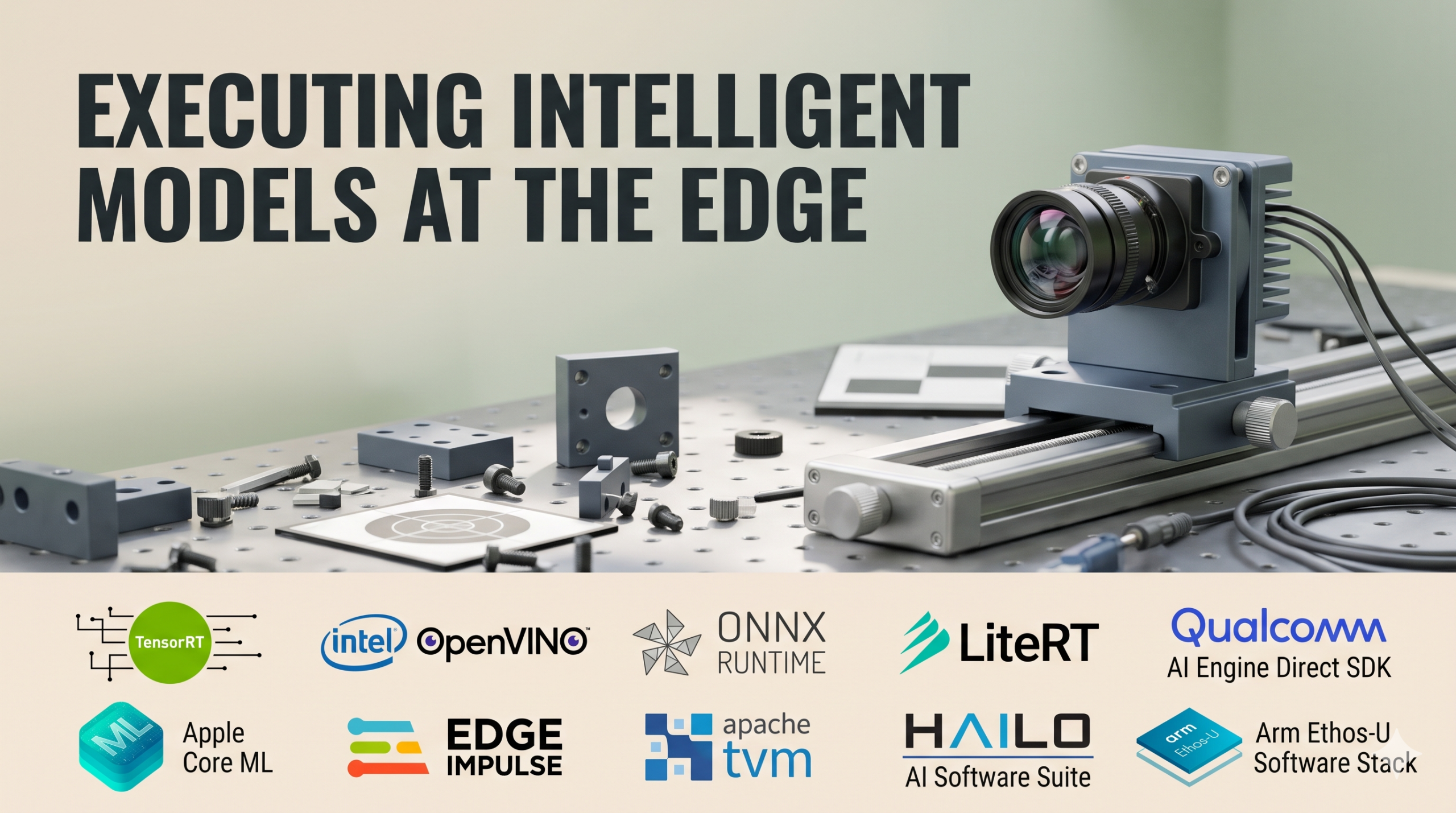
This guide examines ten edge AI inference platforms, including their features, benefits, advantages, limitations, and practical applications. It also provides comparison tables, implementation recommendations, performance indicators, security considerations, and frequently asked questions.
What Are Edge AI Inference Platforms?
Edge AI inference platforms are software systems, runtimes, development frameworks, and deployment environments designed to execute trained artificial intelligence models on local computing infrastructure. They enable devices to generate predictions, classifications, detections, and other analytical outputs near the original data source.
These platforms frequently support Central Processing Units (CPUs), Graphics Processing Units (GPUs), Neural Processing Units (NPUs), and specialized AI accelerators. Hardware compatibility influences inference speed, energy consumption, memory requirements, and application performance.
Edge AI inference technologies can support computer vision, speech recognition, anomaly detection, sensor analytics, natural language processing, and industrial inspection applications. Their capabilities depend on supported model architectures, available hardware resources, and deployment requirements.
Effective edge AI implementation requires appropriate model selection, representative performance testing, secure deployment, and continuing model evaluation. Inference platforms support these requirements through optimization tools, execution runtimes, hardware integrations, and operational management capabilities.
How Edge AI Inference Platforms Work
- Define the intelligent application’s operational requirements.
- Train or obtain a suitable machine learning model.
- Evaluate model accuracy using representative datasets.
- Convert the model into a compatible deployment format.
- Optimize the model for target hardware resources.
- Apply quantization or other supported compression techniques.
- Deploy the optimized model to authorized edge devices.
- Execute inference using locally collected information.
- Monitor inference accuracy, latency, and resource consumption.
- Update models and deployment configurations when necessary.
Common Applications
- Industrial visual quality inspection.
- Real-time object detection.
- Intelligent video analytics.
- Autonomous equipment perception.
- Predictive equipment maintenance.
- Smart retail monitoring.
- Agricultural crop analysis.
- Local speech recognition.
- Connected medical equipment analytics.
- Industrial robotics applications.
- Smart building automation.
- Mobile AI applications.
- Environmental monitoring.
- Offline intelligent applications.
- Local generative AI inference.
- Industrial sensor anomaly detection.
Essential Components of Edge AI Inference Platforms
| Component | Purpose |
|---|---|
| Model conversion engine | Converts trained models into compatible formats |
| Inference runtime | Executes trained machine learning models |
| Hardware acceleration | Uses specialized computing resources |
| Model optimization | Improves execution efficiency |
| Quantization framework | Reduces numerical precision where appropriate |
| Deployment management | Distributes models to target environments |
| Data preprocessing | Prepares incoming information for inference |
| Output postprocessing | Converts model outputs into usable results |
| Performance monitoring | Measures inference speed and resource consumption |
| Security administration | Protects models, devices, and deployment processes |
| Integration framework | Connects inference applications with external systems |
Top 10 Edge AI Inference Platforms
The following platforms include hardware-specific inference engines, cross-platform runtimes, embedded machine learning development environments, and optimized model execution frameworks. Their numbering represents presentation order rather than an independently tested performance ranking.
1. NVIDIA TensorRT
Short Description
NVIDIA TensorRT provides high-performance deep learning inference optimization and execution capabilities for compatible NVIDIA hardware. It helps developers optimize trained machine learning models for accelerated inference across supported GPU environments.
The platform supports model optimization techniques such as layer fusion, precision selection, and optimized execution planning. Developers can integrate TensorRT with NVIDIA Jetson devices and other compatible accelerated computing environments to support edge AI applications.
Key Features
- GPU-accelerated model inference.
- Deep learning model optimization.
- Open Neural Network Exchange (ONNX) model support.
- Mixed-precision inference.
- Supported integer quantization.
- Optimized execution engine generation.
- Dynamic input shape support.
- Custom operation plugin capabilities.
- NVIDIA Jetson ecosystem integration.
Benefits
- Improves inference execution efficiency.
- Supports low-latency intelligent applications.
- Optimizes compatible GPU resource utilization.
- Reduces computational overhead through model optimization.
- Supports demanding computer vision workloads.
- Facilitates accelerated industrial AI applications.
- Enables hardware-specific performance improvements.
Pros
- Strong NVIDIA hardware acceleration.
- Extensive deep learning optimization capabilities.
- Relevant edge computing ecosystem.
- Supports multiple numerical precision formats.
- Flexible integration with compatible AI frameworks.
- Suitable for computationally demanding workloads.
Cons
- Primarily dependent on compatible NVIDIA hardware.
- Model optimization requires technical expertise.
- Unsupported model operations may require modifications.
- Hardware acquisition costs require evaluation.
- Optimized engines may require rebuilding for different environments.
Use Cases: Industrial computer vision, autonomous equipment perception, intelligent cameras, robotics inference, real-time object detection, and accelerated local AI applications.
Best For: NVIDIA Jetson developers, computer vision engineers, robotics manufacturers, industrial AI teams, GPU application developers, and performance-focused organizations.
2. Intel OpenVINO
Short Description
Intel OpenVINO is an open-source toolkit designed to optimize and execute machine learning inference across supported computing hardware. It helps developers deploy trained models on compatible Intel CPUs, integrated GPUs, and supported NPUs.
The toolkit provides model conversion, optimization, inference execution, and hardware selection capabilities. Its architecture supports intelligent applications across industrial computers, edge servers, personal computers, and compatible embedded environments.
Key Features
- Optimized deep learning inference.
- Model conversion capabilities.
- CPU-accelerated inference.
- Supported GPU and NPU acceleration.
- Model quantization integrations.
- Automatic device selection capabilities.
- Asynchronous inference execution.
- Preprocessing and postprocessing support.
- Multiple machine learning framework integrations.
Benefits
- Improves inference performance on compatible hardware.
- Supports efficient industrial AI deployment.
- Reduces dependence on dedicated cloud inference.
- Facilitates model portability.
- Enables optimized local computer vision applications.
- Supports heterogeneous computing resources.
- Reduces model deployment complexity.
Pros
- Open-source toolkit.
- Strong Intel hardware optimization.
- Flexible model conversion capabilities.
- Supports multiple hardware targets.
- Relevant industrial edge applications.
- Extensive developer documentation.
Cons
- Hardware acceleration varies by supported device.
- Some model operations require compatibility assessment.
- Advanced optimization requires technical knowledge.
- Fleet management requires complementary software.
- Performance depends on hardware and model architecture.
Use Cases: Industrial inspection, intelligent retail systems, edge computer vision, local AI assistants, manufacturing automation, and smart camera applications.
Best For: Intel hardware users, industrial computer developers, computer vision engineers, edge application developers, manufacturing teams, and research institutions.
3. ONNX Runtime
Short Description
ONNX Runtime provides cross-platform machine learning model execution capabilities for compatible hardware and operating environments. It supports inference using models represented in the Open Neural Network Exchange format and other supported runtime configurations.
The platform uses execution providers to connect model operations with compatible hardware acceleration technologies. Developers can deploy inference applications across desktop systems, mobile devices, edge servers, and embedded environments.
Key Features
- Cross-platform model inference.
- ONNX model execution.
- Hardware execution provider architecture.
- Graph optimization capabilities.
- Model quantization tools.
- Reduced runtime build options.
- Mobile inference support.
- Multiple programming language interfaces.
- Supported GPU and accelerator integrations.
Benefits
- Improves model portability.
- Supports heterogeneous computing environments.
- Facilitates cross-platform AI development.
- Enables hardware-specific acceleration.
- Reduces dependence on individual training frameworks.
- Supports optimized edge inference applications.
- Simplifies integration with existing software.
Pros
- Open-source runtime.
- Broad hardware integration opportunities.
- Flexible execution provider architecture.
- Supports multiple programming languages.
- Relevant mobile and embedded capabilities.
- Strong interoperability orientation.
Cons
- Model conversion may introduce compatibility issues.
- Acceleration depends on available execution providers.
- Advanced deployment requires technical expertise.
- Device fleet management requires additional systems.
- Performance varies across hardware configurations.
Use Cases: Cross-platform AI applications, mobile inference, industrial computer vision, local natural language processing, embedded analytics, and intelligent desktop software.
Best For: Machine learning engineers, cross-platform developers, software architects, enterprise AI teams, mobile application developers, and research organizations.
4. Google LiteRT
Short Description
Google LiteRT, formerly known as TensorFlow Lite, provides lightweight machine learning inference capabilities for mobile and embedded computing environments. It helps developers execute optimized models on devices with limited processing capacity and memory resources.
The runtime supports model conversion, quantization, and compatible hardware acceleration mechanisms. Developers can integrate LiteRT with supported mobile operating systems, embedded platforms, and specialized edge computing hardware.
Key Features
- Lightweight model inference.
- Compatible model conversion workflows.
- Integer and floating-point model execution.
- Supported hardware acceleration delegates.
- Mobile application integration.
- Embedded inference capabilities.
- Model quantization support.
- Memory-efficient execution.
- Supported on-device AI development interfaces.
Benefits
- Enables local intelligent applications.
- Reduces dependence on network connectivity.
- Supports resource-constrained computing environments.
- Improves mobile inference responsiveness.
- Facilitates privacy-oriented local processing.
- Supports optimized model deployment.
- Enables energy-conscious AI applications.
Pros
- Strong mobile and embedded orientation.
- Lightweight inference architecture.
- Relevant model optimization capabilities.
- Supports compatible hardware acceleration.
- Established machine learning development ecosystem.
- Suitable for offline AI applications.
Cons
- Not all model operations are supported.
- Hardware acceleration varies by platform.
- Model conversion requires representative testing.
- Large models may exceed device resources.
- Enterprise deployment management requires complementary tools.
Use Cases: Mobile image recognition, local speech processing, embedded sensor analytics, smart cameras, offline classification, and connected consumer devices.
Best For: Mobile application developers, embedded engineers, TensorFlow developers, consumer device manufacturers, AI researchers, and resource-constrained application teams.
5. Qualcomm AI Engine Direct SDK
Short Description
Qualcomm AI Engine Direct Software Development Kit (SDK) provides hardware-oriented AI inference capabilities for supported Qualcomm computing platforms. It helps developers access compatible processing resources for efficient machine learning execution.
The SDK, also associated with the Qualcomm Neural Network software architecture, supports optimized model deployment across compatible CPU, GPU, and specialized neural processing resources. Its capabilities are relevant to mobile devices, embedded systems, intelligent cameras, and edge computing products.
Key Features
- Hardware-accelerated AI inference.
- Supported neural processing acceleration.
- Model conversion capabilities.
- Quantized model execution.
- Hardware-specific backend integration.
- Runtime configuration interfaces.
- Inference profiling capabilities.
- Compatible mobile and embedded deployment.
- Qualcomm hardware ecosystem integration.
Benefits
- Improves inference efficiency on compatible devices.
- Supports energy-conscious AI applications.
- Enables responsive local processing.
- Facilitates specialized hardware utilization.
- Supports intelligent mobile applications.
- Reduces dependence on centralized inference.
- Enables hardware-optimized embedded products.
Pros
- Strong Qualcomm hardware optimization.
- Relevant mobile and embedded acceleration.
- Supports specialized AI processing resources.
- Flexible runtime integration interfaces.
- Suitable for power-sensitive applications.
- Relevant consumer and industrial device applications.
Cons
- Primarily dependent on supported Qualcomm hardware.
- Model conversion requires technical expertise.
- Hardware-specific compatibility requires verification.
- Development workflows may require specialized knowledge.
- Device fleet administration requires additional systems.
Use Cases: Mobile computer vision, intelligent cameras, embedded robotics, local speech recognition, smart consumer devices, and accelerated edge analytics.
Best For: Qualcomm hardware developers, mobile device manufacturers, embedded AI engineers, camera manufacturers, consumer electronics developers, and edge computing specialists.
6. Apple Core ML
Short Description
Apple Core ML provides machine learning model execution capabilities for compatible Apple devices and operating systems. It enables developers to integrate trained models into applications using supported local computing resources.
The framework can distribute compatible inference workloads across available CPUs, GPUs, and the Apple Neural Engine. Developers can use Core ML Tools to convert and optimize supported machine learning models for Apple application environments.
Key Features
- On-device machine learning inference.
- Apple Neural Engine integration.
- Supported CPU and GPU execution.
- Machine learning model conversion.
- Model compression capabilities.
- Computer vision framework integration.
- Local natural language processing support.
- Apple application development integration.
- Model performance profiling tools.
Benefits
- Supports responsive Apple device applications.
- Enables offline machine learning functionality.
- Reduces unnecessary data transmission.
- Improves compatible hardware utilization.
- Facilitates privacy-oriented application development.
- Supports optimized model deployment.
- Enables intelligent consumer applications.
Pros
- Strong Apple ecosystem integration.
- Supports specialized neural processing hardware.
- Relevant mobile and desktop AI capabilities.
- Integrated application development workflows.
- Supports local inference execution.
- Suitable for privacy-sensitive applications.
Cons
- Limited to compatible Apple environments.
- Model compatibility requires assessment.
- Hardware acceleration varies by device.
- Not designed for heterogeneous industrial fleets.
- Specialized model conversion may require development.
Use Cases: Mobile image classification, intelligent photo applications, local language processing, speech applications, personal productivity tools, and on-device generative AI.
Best For: Apple application developers, iOS engineers, macOS developers, consumer software companies, mobile AI teams, and privacy-focused application developers.
7. Edge Impulse
Short Description
Edge Impulse provides an embedded machine learning development environment for creating, optimizing, and deploying models on connected devices. It helps organizations develop intelligent applications using sensor information, images, audio recordings, and other supported data types.
The platform combines dataset management, signal processing, model training, optimization, and deployment workflows. Its capabilities are particularly relevant to microcontrollers, embedded processors, and resource-constrained edge devices.
Key Features
- Embedded machine learning development.
- Sensor dataset management.
- Signal processing pipelines.
- Model training workflows.
- Embedded model optimization.
- Hardware performance estimation.
- Supported device deployment packages.
- Computer vision and audio model development.
- Embedded hardware integrations.
Benefits
- Simplifies embedded AI development.
- Reduces repetitive model preparation activities.
- Supports resource-constrained inference.
- Facilitates rapid application prototyping.
- Improves visibility into hardware requirements.
- Enables intelligent sensor applications.
- Supports integrated development workflows.
Pros
- Dedicated embedded AI development orientation.
- Accessible model development environment.
- Supports multiple embedded hardware targets.
- Relevant sensor processing capabilities.
- Integrated optimization and deployment workflows.
- Suitable for small intelligent devices.
Cons
- Commercial functionality depends on licensing.
- Hardware compatibility requires verification.
- Complex applications may require custom development.
- Model accuracy depends on representative training data.
- Specialized enterprise integrations require planning.
Use Cases: Industrial sensor anomaly detection, embedded image classification, predictive maintenance, audio event recognition, agricultural monitoring, and intelligent wearable devices.
Best For: Embedded developers, microcontroller engineers, industrial IoT teams, hardware manufacturers, research institutions, and intelligent device startups.
8. Apache TVM
Short Description
Apache TVM is an open-source machine learning compiler framework designed to optimize model execution across supported hardware architectures. It helps developers transform trained machine learning models into efficient executable representations.
The framework provides compilation, operator optimization, scheduling, and hardware-specific code generation capabilities. Its flexibility makes it relevant to organizations developing specialized AI accelerators and customized edge inference environments.
Key Features
- Machine learning model compilation.
- Hardware-specific code generation.
- Computational graph optimization.
- Operator scheduling.
- Supported model framework integrations.
- Automated performance tuning capabilities.
- Heterogeneous hardware support.
- Embedded deployment workflows.
- Custom backend development capabilities.
Benefits
- Supports customized inference optimization.
- Improves hardware resource utilization.
- Facilitates specialized accelerator integration.
- Reduces dependence on proprietary inference frameworks.
- Enables portable model compilation workflows.
- Supports advanced performance engineering.
- Facilitates hardware and software co-design.
Pros
- Open-source compiler architecture.
- Flexible hardware backend development.
- Strong model optimization capabilities.
- Relevant specialized accelerator support.
- Supports advanced research applications.
- Suitable for customized inference environments.
Cons
- Requires substantial compiler and AI expertise.
- Deployment workflows can be complex.
- Hardware support varies by backend.
- Enterprise fleet management requires additional software.
- Optimization and tuning can require significant development effort.
Use Cases: Custom AI accelerator development, embedded inference optimization, specialized edge computing, machine learning compiler research, hardware performance engineering, and heterogeneous model deployment.
Best For: Compiler engineers, AI hardware manufacturers, advanced machine learning developers, research institutions, semiconductor companies, and performance engineering teams.
9. Hailo AI Software Suite
Short Description
Hailo AI Software Suite provides model optimization, compilation, and inference execution capabilities for compatible Hailo AI accelerators. It helps developers deploy trained machine learning models on specialized edge AI hardware.
The software ecosystem includes tools for preparing supported models and executing them through compatible Hailo runtime components. Its capabilities are particularly relevant to intelligent cameras, industrial computer vision, robotics, and energy-conscious edge computing applications.
Key Features
- Hardware-specific model compilation.
- Neural network optimization.
- Supported model quantization.
- Hailo accelerator integration.
- Runtime inference execution.
- Computer vision model resources.
- Inference performance profiling.
- Supported multimedia pipeline integrations.
- Edge hardware development tools.
Benefits
- Enables specialized AI acceleration.
- Supports energy-efficient inference applications.
- Improves compatible hardware utilization.
- Facilitates real-time computer vision.
- Reduces reliance on centralized processing.
- Supports compact intelligent devices.
- Enables optimized industrial AI deployments.
Pros
- Dedicated edge AI accelerator ecosystem.
- Relevant computer vision performance capabilities.
- Supports power-sensitive applications.
- Integrated compilation and execution tools.
- Useful embedded development resources.
- Suitable for specialized edge AI products.
Cons
- Dependent on compatible Hailo hardware.
- Supported model architectures require verification.
- Compilation requires technical expertise.
- Hardware acquisition costs require evaluation.
- Fleet deployment management requires complementary systems.
Use Cases: Intelligent video analytics, industrial inspection, robotics perception, smart retail applications, embedded computer vision, and multi-camera edge analytics.
Best For: Hailo hardware developers, computer vision engineers, embedded device manufacturers, robotics teams, industrial automation companies, and energy-conscious AI developers.
10. Arm Ethos-U Software Stack
Short Description
Arm Ethos-U software stack provides development and inference capabilities for compatible Arm microcontroller environments incorporating Ethos-U neural processing hardware. It helps developers optimize machine learning applications for resource-constrained embedded systems.
The software ecosystem includes model compilation and runtime integration components such as the Vela compiler and compatible embedded machine learning frameworks. These technologies help developers distribute supported inference operations between microcontroller resources and specialized neural processing units.
Key Features
- Embedded neural network acceleration.
- Ethos-U hardware integration.
- Vela model compilation.
- Quantized model execution.
- Supported microcontroller inference frameworks.
- Memory-conscious model deployment.
- Hardware-specific optimization.
- Embedded development integrations.
- Supported low-power AI execution.
Benefits
- Enables machine learning on constrained devices.
- Supports energy-conscious inference.
- Improves specialized hardware utilization.
- Facilitates intelligent sensor applications.
- Reduces dependence on network connectivity.
- Supports compact embedded product designs.
- Enables localized analytical processing.
Pros
- Strong microcontroller AI orientation.
- Relevant low-power inference capabilities.
- Supports specialized neural processing hardware.
- Integrates with compatible embedded frameworks.
- Suitable for intelligent sensor products.
- Supports hardware-specific model optimization.
Cons
- Requires compatible Arm Ethos-U hardware.
- Supported model operations are limited by target architecture.
- Embedded deployment requires specialist expertise.
- Large models may exceed available resources.
- Complete device management requires additional infrastructure.
Use Cases: Intelligent sensors, embedded audio recognition, industrial anomaly detection, wearable device analytics, compact image classification, and battery-powered AI applications.
Best For: Microcontroller developers, semiconductor companies, embedded AI engineers, intelligent sensor manufacturers, wearable technology developers, and low-power device designers.
Comparison Table: Top 10 Edge AI Inference Platforms
| Platform | Primary Strength | Best For | Pricing Approach |
|---|---|---|---|
| NVIDIA TensorRT | GPU-accelerated inference | NVIDIA edge computing | Software availability and hardware-dependent costs |
| Intel OpenVINO | Optimized Intel hardware inference | Industrial computers | Open-source |
| ONNX Runtime | Cross-platform model execution | Heterogeneous environments | Open-source |
| Google LiteRT | Lightweight local inference | Mobile and embedded devices | Open-source |
| Qualcomm AI Engine Direct SDK | Qualcomm hardware acceleration | Mobile and embedded products | SDK and hardware-dependent terms |
| Apple Core ML | Apple device inference | Apple applications | Framework availability and device costs |
| Edge Impulse | Embedded AI development | Intelligent sensor applications | Free and commercial offerings |
| Apache TVM | Customized model compilation | Specialized AI hardware | Open-source |
| Hailo AI Software Suite | Specialized edge acceleration | Computer vision devices | Hardware and software terms |
| Arm Ethos-U Software Stack | Microcontroller AI acceleration | Low-power embedded products | Component and hardware-dependent terms |
Functional Comparison
| Platform | Primary Hardware Environment | Inference Focus |
|---|---|---|
| NVIDIA TensorRT | Compatible NVIDIA GPUs | High-performance deep learning |
| Intel OpenVINO | Supported Intel CPUs, GPUs, and NPUs | Optimized local inference |
| ONNX Runtime | Multiple supported hardware architectures | Portable model execution |
| Google LiteRT | Mobile and embedded devices | Lightweight inference |
| Qualcomm AI Engine Direct SDK | Compatible Qualcomm processors | Hardware-optimized mobile AI |
| Apple Core ML | Compatible Apple devices | On-device application intelligence |
| Edge Impulse | Microcontrollers and edge processors | Embedded model development |
| Apache TVM | Supported heterogeneous hardware | Customized model compilation |
| Hailo AI Software Suite | Compatible Hailo accelerators | Specialized edge AI execution |
| Arm Ethos-U Software Stack | Compatible Arm microcontroller systems | Low-power embedded inference |
How to Choose the Best Edge AI Inference Platform
Evaluate Hardware Compatibility
Identify the target device’s processor architecture, available accelerators, memory capacity, storage resources, and operating system. The selected inference platform should support the actual hardware environment rather than relying exclusively on theoretical performance specifications.
Assess Model Compatibility
Review supported machine learning frameworks, model formats, computational operations, and numerical precision requirements. Representative model conversion tests help organizations identify unsupported operations and potential accuracy changes before deployment.
Examine Inference Performance
Evaluate inference latency, throughput, initialization time, memory consumption, and processor utilization under realistic operational conditions. Performance measurements should include relevant preprocessing and postprocessing activities when evaluating complete application responsiveness.
Consider Energy Consumption
Battery-powered and thermally constrained devices require careful evaluation of inference energy consumption. Specialized accelerators and model optimization techniques can improve efficiency, although actual results depend on workload characteristics and hardware implementation.
Review Model Optimization Capabilities
Determine whether the platform supports quantization, graph optimization, model compression, and hardware-specific compilation. Optimization should preserve acceptable model accuracy while meeting operational performance requirements.
Evaluate Deployment and Maintenance
Inference runtimes do not necessarily provide complete device fleet administration or remote model update capabilities. Organizations should determine whether complementary deployment management, monitoring, and secure update systems are required.
Assess Total Ownership Costs
Consider hardware acquisition, software licensing, development resources, integration expenses, energy consumption, and continuing maintenance. A lower-cost runtime may still require substantial engineering investment to support production deployments.
Best Edge AI Inference Platforms by User Type
| User Type | Relevant Platform |
|---|---|
| NVIDIA Jetson developer | NVIDIA TensorRT |
| Industrial computer engineer | Intel OpenVINO |
| Cross-platform machine learning engineer | ONNX Runtime |
| Mobile AI application developer | Google LiteRT |
| Qualcomm embedded developer | Qualcomm AI Engine Direct SDK |
| Apple application developer | Apple Core ML |
| Embedded machine learning engineer | Edge Impulse |
| Machine learning compiler engineer | Apache TVM |
| Specialized edge accelerator developer | Hailo AI Software Suite |
| Microcontroller AI developer | Arm Ethos-U Software Stack |
Practical Example: Implementing Edge AI Inference
Consider a hypothetical manufacturing organization operating 150 intelligent inspection cameras across multiple production facilities. Its existing cloud-based inspection system experiences communication delays, substantial network usage, and occasional connectivity-related interruptions.
Management introduces locally executed computer vision models to improve inspection responsiveness and reduce dependence on continuous cloud connectivity. The following outcomes represent illustrative assumptions rather than verified vendor performance.
Implementation Steps
- Establish product inspection requirements and acceptable detection accuracy.
- Collect representative manufacturing images and defect examples.
- Train and validate a suitable computer vision model.
- Select compatible edge computing hardware and inference software.
- Optimize the model and evaluate accuracy after conversion.
- Deploy the validated model through approved device management workflows.
- Monitor inspection performance, hardware conditions, and model reliability.
Illustrative Performance Improvements
| Performance Indicator | Before | After |
|---|---|---|
| Average end-to-end inference latency | 350 ms | 45 ms |
| Monthly external data transmission | 18 TB | 3 TB |
| Inspection throughput per station | 12 items/minute | 20 items/minute |
| Defect detection recall | 92% | 96% |
| False rejection rate | 5.2% | 2.1% |
| Monthly connectivity-related interruptions | 18 | 3 |
| Monthly manual inspection workload | 700 hours | 300 hours |
| Average inspection system availability | 94% | 99.5% |
| Local processing coverage | 15% | 98% |
| Average inference energy consumption | 12 J | 4 J |
Financial Analysis
Reducing monthly external data transmission by 15 terabytes (TB) represents an approximately 83.3% reduction. At an illustrative avoidable transmission cost of $80 per TB, this produces $14,400 in annual network savings.
Reducing monthly manual inspection workloads by 400 hours releases 4,800 employee hours annually. At an illustrative labor cost of $35 per hour, this represents $168,000 in released annual labor capacity rather than guaranteed cash savings.
Suppose additional realized annual operating savings from reduced cloud inference charges and production waste equal $225,600. After recurring edge infrastructure and maintenance expenses of $60,000, annual net cash savings would equal $180,000.
An initial implementation investment of $270,000 would therefore produce a simple payback period of 18 months. This calculation excludes financing costs, taxes, discounting, and the separately estimated value of released employee capacity.
Important Edge AI Inference Performance Indicators
| Indicator | Measurement Purpose |
|---|---|
| Inference latency | Measures the time required to generate model outputs |
| End-to-end application latency | Measures complete input-to-output processing duration |
| Inference throughput | Tracks predictions processed within a defined period |
| Model accuracy | Evaluates correct predictions against representative data |
| Precision | Measures the proportion of positive predictions that are correct |
| Recall | Measures the proportion of actual positive cases detected |
| False-positive rate | Tracks incorrect positive predictions |
| Memory consumption | Evaluates inference runtime memory requirements |
| Processor utilization | Measures computing resource usage |
| Energy per inference | Evaluates energy required for individual predictions |
| Thermal performance | Tracks device temperatures during sustained workloads |
| Model initialization time | Measures runtime startup duration |
| Device availability | Evaluates operational readiness |
| Network data consumption | Tracks external data transmission requirements |
| Model update success rate | Measures successful deployment of approved model versions |
| Model drift | Evaluates changes in input characteristics or predictive performance |
Security and Governance Considerations
Edge AI inference platforms frequently process sensitive information collected from cameras, microphones, industrial sensors, and connected equipment. Organizations should establish appropriate data access controls, encryption policies, retention requirements, and administrative audit procedures.
Local processing can reduce unnecessary external data transmission, but it does not automatically guarantee information privacy. Edge devices may remain vulnerable to unauthorized physical access, insecure software configurations, and compromised administrative credentials.
Organizations should protect trained models against unauthorized modification and distribution. Signed model packages, authenticated deployment mechanisms, secure boot capabilities, and documented software update procedures can strengthen deployment integrity where supported.
Intelligent applications affecting industrial equipment, healthcare workflows, or transportation systems require appropriate validation and operational safeguards. Consequential decisions should remain subject to applicable safety requirements, qualified oversight, and documented recovery procedures.
Challenges and Limitations
Edge computing devices frequently have limited processing capacity, memory resources, and thermal management capabilities. Large machine learning models may require optimization, hardware acceleration, or alternative architectures before they can operate effectively.
Model conversion and quantization can introduce changes in predictive accuracy. Organizations should evaluate optimized models against representative datasets rather than assuming that reduced numerical precision will preserve original performance.
Different hardware architectures support different computational operations and acceleration mechanisms. Developers may need to maintain separate optimized model versions for heterogeneous device populations.
Distributed edge deployments can complicate model monitoring, software updates, and operational troubleshooting. Organizations should establish centralized visibility and secure maintenance workflows through compatible device management infrastructure.
Environmental changes can affect the accuracy of deployed models, particularly in computer vision and industrial sensor applications. Continuous performance evaluation helps organizations identify when models require retraining, recalibration, or replacement.
Best Practices for Edge AI Inference
- Establish measurable application performance requirements.
- Select models appropriate for target device resources.
- Use representative training and validation datasets.
- Evaluate supported model operations before deployment.
- Test model accuracy after optimization.
- Benchmark complete application processing latency.
- Measure sustained inference performance.
- Monitor device memory and processor utilization.
- Evaluate thermal and energy consumption characteristics.
- Use authenticated model deployment mechanisms.
- Protect sensitive local information.
- Maintain approved model version records.
- Establish secure remote update procedures.
- Implement appropriate application fallback mechanisms.
- Monitor model performance and data drift.
- Maintain qualified oversight for consequential applications.
- Evaluate operational and financial outcomes regularly.
Future Trends in Edge AI Inference Platforms
Specialized Neural Processing Hardware
Edge computing devices may increasingly incorporate specialized neural processing units designed to execute machine learning workloads efficiently. These technologies can improve inference performance while addressing power and thermal limitations.
On-Device Generative AI
Smaller and optimized generative AI models may increasingly operate directly on compatible edge devices. Local execution can support responsive applications while reducing certain connectivity dependencies and external data transmission requirements.
Advanced Model Compression
Model compression techniques may increasingly help developers deploy sophisticated machine learning models on resource-constrained hardware. Quantization, pruning, and knowledge distillation can reduce computational requirements when applied and validated appropriately.
Hybrid Edge and Cloud Inference
Organizations may increasingly combine local inference with centralized cloud processing to address varying application requirements. Hybrid architectures can allocate time-sensitive workloads to edge devices while using cloud resources for more computationally demanding activities.
Tiny Machine Learning
Tiny Machine Learning (TinyML) focuses on executing machine learning models within highly resource-constrained embedded environments. Improvements in embedded hardware and optimization techniques may expand intelligent applications across sensors, wearable devices, and battery-powered equipment.
Distributed AI Lifecycle Management
Edge AI deployments may increasingly integrate centralized model governance with distributed execution environments. These capabilities can help organizations manage model versions, performance monitoring, secure updates, and operational accountability across large device populations.
Frequently Asked Questions
1. What are edge AI inference platforms?
Edge AI inference platforms execute trained machine learning models on local computing devices. They support intelligent applications without requiring every prediction to depend on centralized cloud infrastructure.
2. Why are edge AI inference platforms important?
These platforms help organizations reduce communication delays, support offline functionality, and manage external data transmission requirements. They are particularly relevant to applications requiring responsive local processing.
3. What is NVIDIA TensorRT?
NVIDIA TensorRT provides deep learning model optimization and accelerated inference capabilities for compatible NVIDIA hardware. It supports performance-focused AI applications across supported GPU environments.
4. What is Intel OpenVINO?
Intel OpenVINO is an open-source toolkit for optimizing and executing machine learning inference. It supports compatible Intel processors and specialized acceleration hardware.
5. What is ONNX Runtime?
ONNX Runtime provides cross-platform machine learning model execution capabilities. Its execution provider architecture supports integration with compatible hardware acceleration technologies.
6. What is Google LiteRT?
Google LiteRT is a lightweight machine learning inference runtime formerly known as TensorFlow Lite. It supports compatible mobile and embedded intelligent applications.
7. What is Qualcomm AI Engine Direct SDK?
Qualcomm AI Engine Direct SDK provides hardware-oriented inference capabilities for supported Qualcomm computing platforms. It helps developers optimize machine learning execution across compatible processing resources.
8. What is Apple Core ML?
Apple Core ML provides machine learning inference capabilities for compatible Apple devices. It supports local execution using available CPUs, GPUs, and specialized neural processing hardware.
9. What is Edge Impulse?
Edge Impulse provides embedded machine learning development, optimization, and deployment capabilities. It helps developers create intelligent applications for compatible edge devices and microcontrollers.
10. What is Apache TVM?
Apache TVM is an open-source machine learning compiler framework. It supports hardware-specific model optimization and customized inference execution workflows.
11. What is Hailo AI Software Suite?
Hailo AI Software Suite provides model preparation, compilation, and inference execution capabilities for compatible Hailo accelerators. It supports specialized edge AI applications, particularly computer vision workloads.
12. What is Arm Ethos-U software stack?
Arm Ethos-U software stack provides development and inference capabilities for compatible embedded systems incorporating Ethos-U neural processing hardware. It supports resource-constrained machine learning applications.
13. What is the difference between AI training and inference?
AI training adjusts model parameters using training information to learn patterns and relationships. Inference uses a trained model to generate predictions or other outputs from new inputs.
14. What is the difference between edge AI and cloud AI?
Edge AI executes selected artificial intelligence workloads near the original data source. Cloud AI executes workloads using centralized or remotely hosted computing infrastructure.
15. What is model quantization?
Model quantization reduces the numerical precision used to represent selected model parameters or computations. It can improve inference efficiency while potentially affecting predictive accuracy.
16. What is an AI accelerator?
An AI accelerator is specialized computing hardware designed to execute machine learning operations efficiently. Examples include compatible GPUs, NPUs, and dedicated neural network processors.
17. What is inference latency?
Inference latency measures the time required for a model to process an input and generate an output. Complete application latency may also include data collection, preprocessing, and postprocessing.
18. Can edge AI operate without internet connectivity?
Many edge AI applications can execute inference without continuous internet connectivity. Initial installation, model updates, synchronization, or remote monitoring may still require network access.
19. Can edge AI improve data privacy?
Local inference can reduce unnecessary transmission of sensitive raw information to external infrastructure. Overall privacy still depends on device security, information governance, and application design.
20. What is TinyML?
TinyML involves executing machine learning models on highly resource-constrained embedded devices. It supports applications such as intelligent sensors, audio recognition, and low-power anomaly detection.
21. Can edge AI platforms run large language models?
Some edge inference platforms support compatible Large Language Models (LLMs) on sufficiently capable hardware. Model size, memory capacity, numerical precision, and application requirements determine practical feasibility.
22. Are open-source edge AI inference platforms available?
ONNX Runtime, OpenVINO, Apache TVM, and LiteRT provide relevant open-source inference or optimization capabilities. Hardware acquisition, integration development, and continuing maintenance can still introduce expenses.
23. Can edge AI inference platforms support industrial automation?
Edge inference platforms can support industrial inspection, equipment monitoring, robotics perception, and anomaly detection. Applications influencing physical processes require appropriate engineering validation and operational safety controls.
24. How much do edge AI inference platforms cost?
Costs depend on hardware acquisition, software licensing, model development, integration complexity, and continuing operational support. Organizations should evaluate complete deployment expenses rather than runtime licensing alone.
25. Which edge AI inference platform is best?
The appropriate platform depends on target hardware, model architecture, inference performance requirements, available resources, and deployment conditions. Representative benchmarking helps organizations identify suitable inference technologies.
Conclusion
Edge AI inference platforms help organizations execute intelligent applications directly on local computing infrastructure. Their capabilities support responsive machine learning applications, reduced connectivity dependence, optimized hardware utilization, and localized information processing.
NVIDIA TensorRT, Intel OpenVINO, and ONNX Runtime provide capabilities relevant to accelerated and cross-platform inference execution. These technologies address different combinations of hardware optimization, model portability, and computational performance requirements.
Google LiteRT, Qualcomm AI Engine Direct SDK, and Apple Core ML support specialized mobile and on-device AI environments. Edge Impulse, Apache TVM, Hailo AI Software Suite, and Arm Ethos-U software stack address embedded development, customized compilation, and specialized hardware acceleration requirements.
Successful implementation requires compatible hardware, representative model validation, appropriate optimization techniques, secure deployment mechanisms, and continuous performance monitoring. Organizations should evaluate inference accuracy alongside latency, energy consumption, operational reliability, and total ownership expenses.
An effective edge AI inference strategy combines appropriate technology with responsible model governance and continuous improvement. These practices help organizations develop responsive, efficient, and dependable intelligent applications across industrial, commercial, embedded, and consumer computing environments.
