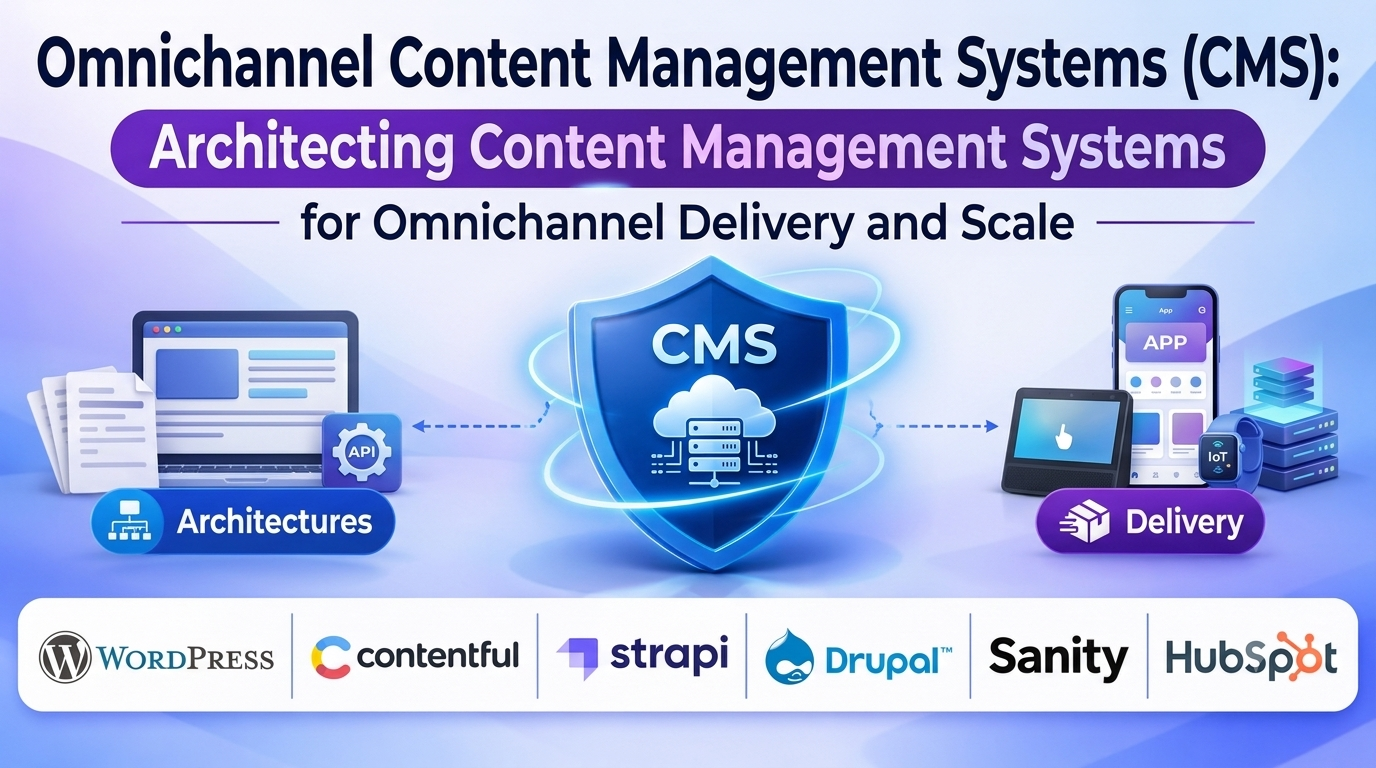
Digital publishing has long outgrown the traditional paradigm of storing web pages in a single database and serving them directly through a tightly coupled theme template. While legacy content management systems (CMS) successfully powered the early web, modern organizations face a complex architectural challenge: delivering consistent, high-performance content simultaneously across websites, mobile applications, smart displays, Internet of Things (IoT) devices, and digital signage networks.
Choosing the right content management platform requires looking past surface-level page builders to evaluate core architectural models, API performance, frontend flexibility, and long-term total cost of ownership.
The Architectural Divide: Monolithic, Headless, and Hybrid CMS
The modern CMS market is defined by a fundamental structural shift in how content is authored, stored, and presented:
- Monolithic (Coupled) CMS: Traditional platforms (such as WordPress or Drupal) tightly integrate the database and backend administration panel with the frontend presentation layer. They excel in rapid out-of-the-box website publishing, drag-and-page building, and extensive plugin ecosystems.
- Headless (API-First) CMS: Platforms designed without a native frontend presentation layer. Content is managed in a centralized repository and delivered purely via REST or GraphQL APIs to any frontend framework or device.
- Hybrid (Composable) CMS: A flexible middle ground that pairs headless API delivery with optional traditional rendering capabilities, allowing marketing teams to manage traditional websites while empowering developers to build omnichannel experiences.
Understanding how your organization’s technical resources and multi-channel distribution requirements intersect with these architectures prevents costly platform migrations later.
Leading Content Management Platforms Compared
1. WordPress (VIP and Open Source)
WordPress remains the world’s most widely adopted CMS, powering a massive share of the global web through its flexible open-source core and enterprise-managed tiers.
- Primary Use Case: Content-heavy publishing, media blogs, corporate marketing websites, and e-commerce storefronts.
- Key Differentiators: Massive plugin and theme ecosystem; intuitive block editor (Gutenberg); robust community support; and scalable managed infrastructure via enterprise hosting solutions.
- Limitations: Monolithic core can suffer from performance bloat when overloaded with plugins; security maintenance requires vigilant patch management.
- Best Suited For: Publishers, marketing teams, and enterprises seeking rapid time-to-market and deep customization options.
2. Contentful
Contentful stands as a leading headless content platform built from the ground up to deliver API-first content infrastructure for modern digital teams.
- Primary Use Case: Omnichannel digital experiences, mobile app content delivery, and decoupled enterprise web applications.
- Key Differentiators: Content-as-a-service architecture; robust GraphQL and REST APIs; powerful content modeling tools; and seamless integration with modern frontend frameworks (React, Next.js, Vue).
- Limitations: Requires dedicated front-end development resources to build and maintain user interfaces; lacks out-of-the-box visual page building for non-technical editors without custom configuration.
- Best Suited For: Engineering-driven enterprises delivering content across multiple digital channels and devices.
3. Strapi
Strapi is the leading open-source headless CMS that allows JavaScript and TypeScript developers to build customizable APIs rapidly while retaining full data sovereignty.
- Primary Use Case: Custom API-driven applications, self-hosted headless projects, and developer-centric content repositories.
- Key Differentiators: 100% open-source and self-hostable; highly customizable admin panel; native support for PostgreSQL, MySQL, and SQLite; and flexible plugin architecture.
- Limitations: Requires server administration expertise for self-hosted deployments; scaling high-traffic instances demands robust cloud infrastructure management.
- Best Suited For: Development teams seeking complete data ownership and deep customization flexibility without proprietary SaaS licensing costs.
4. Drupal
Drupal serves as a robust, open-source enterprise CMS favored by government agencies, higher education institutions, and large media organizations managing complex data relationships.
- Primary Use Case: Large-scale enterprise web portals, highly secure government sites, and complex multi-site architectures.
- Key Differentiators: Exceptional granular permission controls; sophisticated taxonomy and data modeling capabilities; and strong open-source security standards.
- Limitations: Steep learning curve for content editors and administrators; complex module management requires skilled development oversight.
- Best Suited For: Organizations managing massive volumes of structured data, strict security requirements, and intricate user role hierarchies.
5. Sanity.io
Sanity provides a fully customizable, structured content platform that treats content as data, offering a real-time collaborative editing environment for editorial teams.
- Primary Use Case: Real-time collaborative publishing, rich editorial workflows, and custom structured content applications.
- Key Differentiators: Portable Structured Content query language (GROQ); fully customizable open-source editing studio (Sanity Studio); and real-time multi-user editing.
- Limitations: Requires frontend development work to render layouts; content modeling concepts require a shift in thinking for traditional publishers.
- Best Suitor For: Digital product teams and editorial groups demanding real-time collaboration and highly tailored content structures.
6. HubSpot CMS Hub
HubSpot integrates content management seamlessly with inbound marketing, CRM data, and sales pipelines, making it a powerful choice for growth-focused businesses.
- Primary Use Case: B2B marketing websites, lead generation landing pages, and personalized customer web experiences.
- Key Differentiators: Native integration with HubSpot CRM; built-in SEO recommendations; dynamic personalization based on visitor data; and secure, managed cloud hosting.
- Limitations: Less suited for complex, non-marketing web applications or heavy multi-channel API distribution compared to headless platforms.
- Best Suited For: Sales- and marketing-driven organizations prioritizing lead generation, CRM data integration, and ease of editorial management.
Feature Comparison Matrix
| Product | Primary Focus | Deployment Model | Architecture Type | Significant Advantage | Important Limitation |
| WordPress | General Publishing & Marketing Sites | Open-Source / Managed Cloud | Monolithic (Extendable) | Massive plugin ecosystem and intuitive block editor | Potential performance bloat from unmanaged plugins |
| Contentful | Omnichannel Content Delivery | Cloud (SaaS) | Headless (API-First) | Powerful content modeling and developer APIs | Requires engineering resources for frontend rendering |
| Strapi | Self-Hosted API Content Repositories | Self-Hosted / Open-Source | Headless (API-First) | Complete data ownership and customizable Node.js core | Demands server administration and maintenance |
| Drupal | Complex Enterprise Portals | Open-Source / Self-Hosted | Monolithic / Modular | Advanced taxonomy and granular security controls | Steep learning curve for administrators and editors |
| Sanity.io | Structured Content & Real-Time Editing | Cloud / Customizable Studio | Headless (API-First) | Real-time collaboration and GROQ query flexibility | Requires frontend developer setup for user views |
| HubSpot CMS | B2B Marketing & Lead Generation | Cloud (SaaS) | Monolithic (Marketing Focused) | Native CRM integration and audience personalization | Less optimized for complex headless microservices |
Evaluating Technical and Operational Trade-Offs
When selecting a content management system, evaluate these critical operational factors before committing your infrastructure:
- Total Cost of Ownership (TCO): Free open-source software often incurs hidden costs through hosting, security patching, developer maintenance, and plugin subscriptions. Conversely, SaaS headless platforms involve predictable subscription fees but can scale rapidly in cost based on API request volumes and seat licenses.
- Content Editor Experience vs. Developer Agility: Headless systems offer developers absolute freedom using modern JavaScript frameworks, but they can frustrate non-technical content editors if visual preview tools and user-friendly editing interfaces are not custom-built.
- Security and Maintenance Responsibility: Self-hosted open-source platforms place the burden of server security, firewall configuration, and software updates entirely on your internal IT team. Managed cloud platforms shift that operational risk to the vendor.
Making Your Decision
The optimal content management system aligns directly with your distribution channels and team capabilities. If your organization’s primary objective is rapid marketing web publishing with out-of-the-box visual tools and extensive plugin support, a robust monolithic CMS remains unmatched. For digital product teams delivering content across mobile apps, web frameworks, and IoT devices simultaneously, a headless API-first platform provides the necessary structural decoupling. Organizations prioritizing deep CRM integration and lead generation workflows will find maximum value in marketing-focused cloud CMS platforms. Evaluate your multi-channel distribution goals, technical staffing, and editorial workflows before standardizing your digital publishing architecture.
