Introduction
Insurance brokers manage complex relationships between policyholders, insurance carriers, commercial organizations, and financial service providers. Their daily responsibilities include policy administration, customer communication, quotation management, renewals, and commission reconciliation.
Traditional insurance brokerage operations frequently depend on spreadsheets, email correspondence, paper documents, and disconnected administrative applications. These methods can increase administrative workloads, create inconsistent policy records, and contribute to missed renewal opportunities.
Insurance broker management systems provide centralized digital environments for managing customer information, insurance policies, quotations, documents, and brokerage workflows. These platforms help insurance professionals maintain organized records and coordinate business activities.
Modern insurance brokerage software may include Customer Relationship Management (CRM), automated renewal reminders, commission tracking, carrier connectivity, and customer self-service capabilities. These features support operational efficiency and improve visibility into brokerage performance.
Selecting an appropriate insurance broker management system requires consideration of brokerage size, insurance specialties, regulatory requirements, carrier relationships, and existing technology infrastructure. Organizations should also evaluate information security, implementation complexity, and long-term ownership costs.
This guide examines ten insurance broker management systems and related insurance distribution platforms, including their features, benefits, advantages, limitations, and practical applications. It also provides comparison tables, software selection guidance, an implementation example, and frequently asked questions.
What Are Insurance Broker Management Systems?
Insurance broker management systems are specialized software applications designed to support the administrative, commercial, and operational activities of insurance intermediaries. They provide centralized environments for maintaining customer records, policy information, insurance documents, and brokerage transactions.
These platforms help brokers coordinate activities involving insurance quotations, policy placement, endorsements, renewals, and customer service. Depending on the selected software, brokers may also manage carrier communications, commissions, accounting records, and compliance-related documentation.
Advanced insurance brokerage management platforms may provide workflow automation, customer portals, digital document management, business analytics, and integration with compatible insurance carrier applications. These capabilities help organizations reduce repetitive administrative activities and improve information consistency.
Insurance broker management software supports professional insurance administration but does not replace qualified insurance advice or regulatory oversight. Brokers remain responsible for evaluating customer requirements, communicating policy terms accurately, and meeting applicable legal obligations.
Common Applications of Insurance Broker Management Systems
- Customer Relationship Management: Maintain centralized customer profiles, contact information, communication histories, and insurance requirements.
- Insurance Policy Administration: Organize policy records, coverage details, endorsements, and relevant policy documents.
- Quotation Management: Coordinate insurance quotation requests, carrier responses, and customer proposals.
- Renewal Management: Monitor policy expiration dates and coordinate timely renewal activities.
- Commission Management: Record expected commissions, reconcile carrier statements, and investigate payment discrepancies.
- Claims Administration: Maintain relevant claims information and coordinate communication between customers and insurers.
- Compliance Documentation: Organize records supporting applicable regulatory and internal governance requirements.
- Brokerage Performance Analytics: Monitor customer retention, premium volumes, revenue, sales opportunities, and operational performance.
Essential Components of Insurance Broker Management Systems
| Component | Primary Function |
|---|---|
| Customer Database | Maintains centralized policyholder information |
| Policy Administration | Organizes insurance policy records |
| Quotation Management | Coordinates insurance proposals and quotations |
| Carrier Connectivity | Supports compatible insurer communications |
| Renewal Calendar | Tracks policy expiration and renewal deadlines |
| Commission Management | Records and reconciles brokerage commissions |
| Document Management | Organizes insurance-related documents |
| Claims Administration | Maintains relevant claims information |
| Workflow Automation | Coordinates repetitive administrative activities |
| Customer Portal | Provides supported customer self-service capabilities |
| Compliance Records | Maintains relevant governance documentation |
| Financial Reporting | Supports brokerage revenue and expense analysis |
| Access Management | Restricts unauthorized information access |
| Business Analytics | Measures brokerage operational performance |
Top 10 Insurance Broker Management Systems
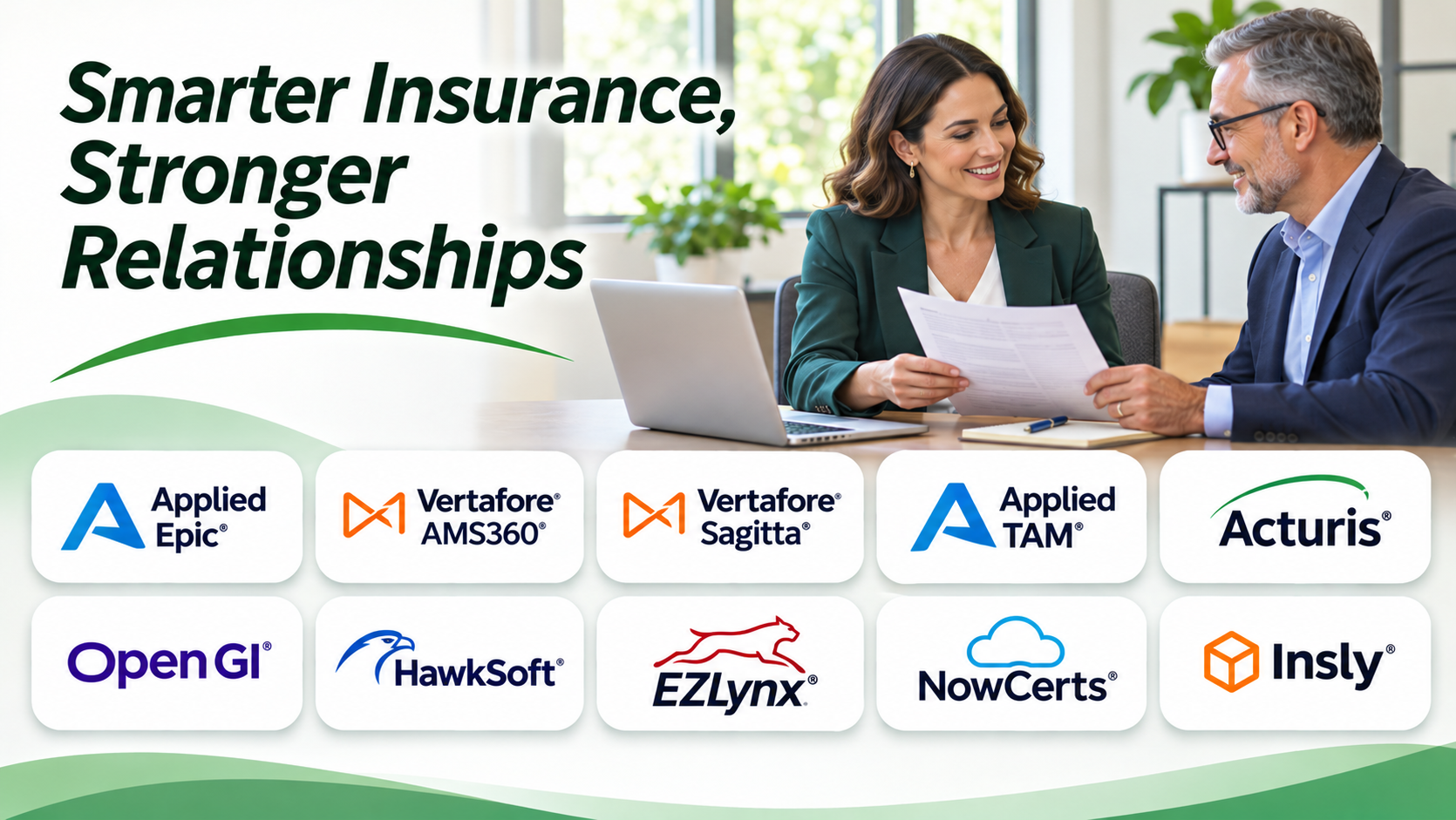
The following comparison includes established brokerage management systems, insurance agency management applications, and specialized insurance distribution platforms. The numbering organizes the comparison and does not represent independently measured performance rankings.
1. Applied Epic
Short Description
Applied Epic is an insurance agency and brokerage management system developed by Applied Systems. Its functionality supports customer management, insurance policy administration, accounting, sales activities, and operational workflows.
The platform provides centralized access to insurance-related records, helping brokerage employees coordinate customer service and administrative responsibilities. Compatible integrations can connect insurance carrier information and complementary insurance applications.
Applied Epic is particularly relevant to established insurance brokerages managing personal insurance, commercial insurance, and multiple business locations. Its configurable workflows can support organizations with complex operational structures.
Implementation requires appropriate information migration, accounting configuration, employee training, and business process planning. Organizations should evaluate available modules and regional carrier connectivity before procurement.
Key Features
- Customer Management: Maintains centralized customer profiles, contact information, and communication histories.
- Policy Administration: Organizes policy details, coverage information, endorsements, and associated documents.
- Insurance Accounting: Supports applicable brokerage financial and accounting workflows.
- Renewal Management: Coordinates policy expiration monitoring and renewal activities.
- Sales Pipeline Management: Tracks insurance opportunities and relevant sales activities.
- Carrier Connectivity: Supports information exchange with compatible insurance carriers.
- Document Management: Maintains organized insurance-related documents and administrative records.
- Workflow Automation: Supports configured task assignments and repetitive administrative activities.
- Business Reporting: Provides relevant brokerage operational and financial performance information.
Benefits
- Improves customer information consistency.
- Reduces fragmented insurance administration.
- Supports timely policy renewal activities.
- Facilitates brokerage accounting coordination.
- Improves visibility into sales opportunities.
- Supports standardized administrative workflows.
- Strengthens enterprise brokerage reporting.
Pros
- Comprehensive brokerage management functionality.
- Established insurance technology ecosystem.
- Suitable for complex insurance operations.
- Supports integrated accounting capabilities.
- Provides configurable business workflows.
- Supports compatible carrier connectivity.
Cons
- Implementation may require substantial resources.
- Commercial pricing requires consultation.
- Employee training can be extensive.
- Carrier connectivity varies by region.
- Smaller brokerages may require simpler alternatives.
Use Cases
- Commercial Insurance Management: Organize complex commercial customer accounts and policy portfolios.
- Personal Insurance Administration: Maintain personal insurance policies and customer information.
- Renewal Coordination: Assign renewal tasks and monitor approaching policy expiration dates.
- Commission Reconciliation: Compare applicable carrier statements with expected brokerage income.
- Multi-Location Brokerage Management: Coordinate administrative activities across participating offices.
- Executive Reporting: Analyze brokerage revenue, customer retention, and operational indicators.
Best For
- Large insurance brokerages.
- Multi-location insurance agencies.
- Commercial insurance brokers.
- Established independent agencies.
- Insurance accounting departments.
- Brokerage operations managers.
2. Vertafore AMS360
Short Description
Vertafore AMS360 is an insurance agency management system designed to support independent insurance agencies and brokerage operations. Its capabilities include customer administration, policy management, accounting, and insurance-related workflows.
The platform helps insurance professionals organize customer records and coordinate activities throughout the policy lifecycle. Compatible carrier downloads and integrations can reduce repetitive information entry within supported insurance environments.
AMS360 is particularly relevant to independent insurance agencies managing personal and commercial insurance portfolios. Its accounting functionality can support organizations requiring centralized financial administration.
Organizations should evaluate available integrations, regional carrier support, migration requirements, and accounting capabilities. Successful implementation depends on accurate source information and appropriate employee training.
Key Features
- Customer Account Management: Maintains customer information and associated insurance records.
- Policy Management: Organizes insurance policies, endorsements, and relevant coverage details.
- Agency Accounting: Supports applicable financial transactions and accounting activities.
- Carrier Downloads: Receives supported insurance information from compatible carriers.
- Renewal Tracking: Monitors expiration dates and coordinates renewal responsibilities.
- Commission Administration: Supports relevant commission records and reconciliation activities.
- Activity Management: Maintains administrative tasks and customer service activities.
- Document Organization: Associates insurance documents with relevant customer and policy records.
- Performance Reporting: Provides relevant agency operational and financial reports.
Benefits
- Improves policy administration efficiency.
- Supports consistent customer records.
- Reduces repetitive information entry.
- Facilitates insurance accounting.
- Improves renewal coordination.
- Supports commission reconciliation.
- Strengthens agency performance visibility.
Pros
- Established insurance agency management system.
- Relevant integrated accounting functionality.
- Supports personal and commercial insurance workflows.
- Compatible carrier connectivity.
- Suitable for independent insurance organizations.
- Broad insurance technology ecosystem.
Cons
- Primarily oriented toward supported insurance markets.
- Commercial pricing requires consultation.
- Migration may require specialized assistance.
- Available integrations depend on configuration.
- Advanced functionality may require complementary products.
Use Cases
- Independent Agency Administration: Coordinate customer service and policy management activities.
- Insurance Accounting: Maintain relevant financial records and transaction information.
- Policy Renewal Management: Organize renewal activities according to policy expiration dates.
- Carrier Information Processing: Receive and review supported carrier downloads.
- Commission Management: Investigate discrepancies between expected and received commissions.
- Agency Performance Analysis: Review revenue, policy volumes, and operational indicators.
Best For
- Independent insurance agencies.
- Personal insurance brokers.
- Commercial insurance intermediaries.
- Insurance accounting teams.
- Established brokerage businesses.
- Agency administrators.
3. Vertafore Sagitta
Short Description
Vertafore Sagitta provides insurance agency management capabilities for larger insurance agencies and brokerage organizations. Its functionality addresses complex customer accounts, insurance policy administration, accounting, and enterprise operational requirements.
The platform supports organizations managing substantial commercial insurance portfolios and multiple administrative teams. Centralized information helps authorized personnel coordinate customer service, policy transactions, and financial activities.
Sagitta is particularly relevant to established insurance brokerages requiring configurable workflows and sophisticated administrative structures. It belongs to the same vendor ecosystem as AMS360 but addresses different organizational requirements.
Implementation requires careful planning involving data migration, accounting structures, access permissions, and operational procedures. Organizations should evaluate current deployment options and compatible Vertafore applications.
Key Features
- Enterprise Customer Management: Maintains complex customer accounts and associated insurance information.
- Commercial Policy Administration: Supports relevant commercial insurance management workflows.
- Insurance Accounting: Coordinates applicable financial and accounting activities.
- Commission Management: Maintains relevant commission information and financial records.
- Multi-Entity Administration: Supports configured organizational and administrative structures.
- Workflow Configuration: Enables applicable business process customization.
- Carrier Integration: Connects compatible insurance carrier information sources.
- Operational Reporting: Provides relevant enterprise brokerage performance information.
- Access Management: Supports configured user permissions and administrative responsibilities.
Benefits
- Supports complex brokerage operations.
- Improves enterprise customer information management.
- Facilitates financial administration.
- Supports standardized commercial insurance workflows.
- Improves organizational reporting.
- Reduces fragmented departmental information.
- Strengthens administrative governance.
Pros
- Suitable for larger insurance organizations.
- Relevant commercial insurance capabilities.
- Supports complex accounting requirements.
- Configurable operational workflows.
- Established insurance technology ecosystem.
- Supports enterprise administrative structures.
Cons
- Implementation can be resource intensive.
- Commercial pricing requires consultation.
- Smaller agencies may find it unnecessarily complex.
- Configuration requires specialized expertise.
- Some integrations require additional applications.
Use Cases
- Large Commercial Account Management: Organize customer accounts containing multiple insurance policies.
- Enterprise Insurance Accounting: Coordinate complex financial administration activities.
- Multi-Office Brokerage Operations: Maintain consistent records across participating locations.
- Commission Administration: Manage applicable brokerage income records.
- Corporate Customer Servicing: Coordinate responsibilities involving complex commercial insurance accounts.
- Management Reporting: Analyze enterprise brokerage performance.
Best For
- Large insurance agencies.
- Enterprise insurance brokerages.
- Commercial insurance specialists.
- Multi-entity insurance organizations.
- Brokerage finance departments.
- Enterprise operations administrators.
4. Applied TAM
Short Description
Applied TAM, historically known as The Agency Manager, provides insurance agency management functionality within the Applied Systems portfolio. Its capabilities support customer administration, insurance policy management, accounting, and administrative workflows.
The system helps insurance professionals maintain organized policy records and coordinate customer service activities. Supported insurance connectivity can assist with information exchange between agencies and compatible carriers.
Applied TAM is particularly relevant to existing customers operating established agency management workflows. Organizations evaluating new deployments should compare its current availability and lifecycle arrangements with newer Applied Systems offerings.
Its inclusion reflects its historical importance and continued relevance to existing installations rather than a recommendation to purchase a legacy product without verification. Migration planning may be particularly important for organizations modernizing their insurance technology infrastructure.
Key Features
- Customer Administration: Maintains relevant customer and contact information.
- Policy Records: Organizes insurance policies and associated administrative details.
- Agency Accounting: Supports applicable insurance accounting activities.
- Renewal Coordination: Maintains policy expiration and renewal information.
- Activity Tracking: Records relevant customer service and administrative activities.
- Document Management: Associates supported documents with insurance records.
- Carrier Connectivity: Supports compatible insurance carrier information exchange.
- Commission Records: Maintains relevant brokerage commission information.
- Agency Reporting: Provides configured operational and financial reports.
Benefits
- Supports established agency workflows.
- Improves centralized policy administration.
- Facilitates customer information management.
- Supports insurance accounting activities.
- Improves renewal visibility.
- Reduces fragmented administrative records.
- Supports continuity for existing customers.
Pros
- Established insurance agency management technology.
- Relevant core brokerage administration functionality.
- Supports existing customer workflows.
- Provides applicable accounting capabilities.
- Familiar to experienced insurance professionals.
- Part of an established insurance software ecosystem.
Cons
- Current sales and support arrangements require verification.
- Legacy architecture may affect modernization plans.
- New integrations may have limitations.
- Migration to newer platforms may become necessary.
- Modern user experience requirements need careful evaluation.
Use Cases
- Existing Agency Operations: Maintain established insurance administration workflows.
- Policy Record Management: Organize customer insurance information.
- Renewal Administration: Monitor relevant policy expiration dates.
- Insurance Accounting: Maintain applicable financial records.
- Technology Migration Planning: Prepare existing agency records for modernization.
- Historical Reporting: Access relevant administrative and financial information.
Best For
- Existing Applied TAM customers.
- Established independent insurance agencies.
- Insurance technology migration teams.
- Agency accounting administrators.
- Brokerage data management specialists.
- Organizations evaluating legacy system modernization.
5. Acturis
Short Description
Acturis provides insurance technology supporting brokers, insurers, and other insurance distribution participants. Its platform addresses insurance administration, electronic trading, customer management, and operational workflows.
Insurance brokers can use Acturis to coordinate quotations, policy transactions, renewals, and customer service activities within supported insurance markets. Electronic trading capabilities can connect participating insurers and intermediaries.
The platform is particularly relevant to insurance brokerages operating in markets where Acturis maintains established insurer connectivity. Its capabilities can support both commercial and personal insurance distribution requirements.
Organizations should assess supported insurance products, geographic availability, carrier relationships, and accounting functionality. Insurance distribution capabilities depend on participating providers and regional arrangements.
Key Features
- Brokerage Management: Supports centralized insurance administration activities.
- Electronic Trading: Connects supported insurance distribution participants.
- Quotation Management: Coordinates relevant insurance quotation workflows.
- Policy Administration: Maintains insurance policy and transaction information.
- Customer Management: Organizes customer records and communication activities.
- Renewal Management: Supports monitoring and coordination of policy renewals.
- Insurance Accounting: Provides applicable brokerage financial functionality.
- Document Management: Organizes insurance-related documents and records.
- Business Analytics: Provides relevant brokerage operational reporting.
Benefits
- Improves insurance distribution coordination.
- Supports electronic insurance transactions.
- Reduces repetitive administrative activities.
- Facilitates quotation management.
- Improves customer information consistency.
- Supports renewal administration.
- Strengthens brokerage performance visibility.
Pros
- Specialized insurance distribution technology.
- Relevant electronic trading capabilities.
- Supports multiple insurance workflows.
- Established insurer connectivity in supported markets.
- Provides centralized brokerage administration.
- Suitable for growing insurance organizations.
Cons
- Carrier connectivity varies geographically.
- Commercial pricing requires consultation.
- Available functionality depends on market arrangements.
- Implementation requires organizational planning.
- Specialized insurance products may require additional configuration.
Use Cases
- Commercial Insurance Placement: Coordinate supported commercial insurance quotations and transactions.
- Electronic Insurance Trading: Exchange relevant information with participating insurers.
- Personal Insurance Administration: Maintain supported customer policy records.
- Renewal Coordination: Organize policy renewal responsibilities.
- Insurance Accounting: Maintain applicable financial administration records.
- Brokerage Performance Monitoring: Analyze operational and commercial indicators.
Best For
- UK insurance brokerages.
- Brokers in other supported Acturis markets.
- Commercial insurance intermediaries.
- Digitally enabled insurance agencies.
- Insurance distribution organizations.
- Multi-location brokerage businesses.
6. Open GI
Short Description
Open GI provides insurance technology for brokers, insurers, and insurance distribution organizations. Its software portfolio supports insurance administration, quotation management, electronic trading, and digital distribution.
The platform helps brokers coordinate customer information, insurance quotations, and policy-related activities. Compatible insurer integrations can support electronic transactions involving participating insurance providers.
Open GI is particularly relevant to insurance intermediaries operating within its supported markets, including the United Kingdom and Ireland. Its portfolio includes solutions addressing different insurance distribution and brokerage requirements.
Organizations should evaluate specific Open GI products rather than assuming that every capability is available within a single application. Commercial arrangements, insurer connectivity, and product availability require confirmation.
Key Features
- Broker Management: Supports relevant insurance brokerage administrative activities.
- Insurance Quotation Workflows: Coordinates supported quotation requests and responses.
- Electronic Trading: Connects participating insurance distribution organizations.
- Customer Administration: Maintains relevant policyholder information.
- Policy Management: Organizes supported insurance policy transactions.
- Renewal Administration: Coordinates applicable policy renewal activities.
- Digital Distribution: Supports relevant online insurance distribution capabilities.
- Document Management: Maintains associated insurance records and documents.
- Operational Reporting: Provides applicable brokerage performance information.
Benefits
- Supports connected insurance distribution.
- Improves quotation administration.
- Facilitates policy management.
- Reduces fragmented customer information.
- Supports digital insurance workflows.
- Improves renewal coordination.
- Strengthens operational visibility.
Pros
- Dedicated insurance technology provider.
- Relevant broker and insurer connectivity.
- Supports digital distribution workflows.
- Suitable for established insurance intermediaries.
- Provides multiple insurance software offerings.
- Supports configurable insurance processes.
Cons
- Geographic availability varies.
- Product selection affects functionality.
- Commercial pricing requires consultation.
- Integration requirements depend on existing infrastructure.
- International brokerages must assess regional compatibility.
Use Cases
- Insurance Quotation Management: Coordinate supported insurance quotations.
- Brokerage Administration: Maintain relevant customer and policy records.
- Electronic Insurance Placement: Connect supported insurers and intermediaries.
- Digital Insurance Sales: Support applicable online distribution workflows.
- Policy Renewal Coordination: Manage relevant renewal activities.
- Brokerage Reporting: Analyze configured operational performance indicators.
Best For
- UK insurance brokers.
- Irish insurance intermediaries.
- Insurance distribution businesses.
- Digital insurance sales teams.
- Established brokerage organizations.
- Insurance technology administrators.
7. HawkSoft
Short Description
HawkSoft provides insurance agency management software designed primarily for independent insurance agencies. Its functionality supports customer management, policy administration, communication tracking, and agency workflows.
The platform helps insurance professionals maintain organized customer records and coordinate daily service responsibilities. Relevant carrier downloads and integrations can support efficient insurance information management.
HawkSoft is particularly relevant to small and medium-sized independent agencies seeking centralized operational administration. Its insurance-focused functionality can reduce reliance on general-purpose spreadsheets and disconnected customer databases.
Organizations should evaluate accounting requirements, carrier compatibility, available integrations, and implementation arrangements. Brokerages with complex financial structures may require complementary accounting applications.
Key Features
- Customer Management: Maintains centralized insurance customer records.
- Policy Administration: Organizes policy information and associated documents.
- Communication Logging: Records relevant customer interactions and service activities.
- Carrier Downloads: Receives supported insurance carrier information.
- Renewal Tracking: Monitors relevant policy expiration dates.
- Task Management: Coordinates administrative responsibilities and follow-up activities.
- Document Organization: Maintains insurance-related files within associated records.
- Agency Reporting: Provides relevant business and operational information.
- Application Integration: Connects compatible insurance and administrative applications.
Benefits
- Improves daily insurance administration.
- Supports consistent customer service records.
- Reduces repetitive information entry.
- Facilitates renewal coordination.
- Improves employee collaboration.
- Supports organized insurance documentation.
- Strengthens agency operational visibility.
Pros
- Independent agency specialization.
- Relevant customer and policy management functionality.
- Supports communication documentation.
- Compatible carrier connectivity.
- Suitable for small and medium-sized agencies.
- Provides insurance-focused workflows.
Cons
- Carrier availability depends on supported markets.
- Enterprise accounting requirements need assessment.
- Advanced capabilities may require integrations.
- Commercial pricing depends on selected arrangements.
- Large brokerages may require more extensive enterprise functionality.
Use Cases
- Independent Agency Management: Coordinate daily insurance administrative activities.
- Customer Service Documentation: Maintain relevant customer communication histories.
- Policy Renewal Tracking: Monitor approaching insurance expiration dates.
- Insurance Document Management: Organize policy documents and customer correspondence.
- Employee Task Coordination: Assign and monitor service responsibilities.
- Agency Performance Reporting: Review relevant operational indicators.
Best For
- Small insurance agencies.
- Medium-sized independent brokerages.
- Personal insurance professionals.
- Customer service representatives.
- Independent agency owners.
- Insurance administration teams.
8. EZLynx
Short Description
EZLynx provides insurance agency technology combining management, comparative rating, and complementary customer engagement capabilities. It operates within the Applied Systems technology ecosystem.
Independent insurance agencies can use compatible EZLynx products to manage customer information, insurance quotations, policy records, and administrative activities. Comparative rating functionality supports participating insurance carriers and eligible insurance products.
The platform is particularly relevant to agencies seeking connected quotation and management workflows. Its suitability depends on the insurance lines handled by the organization and available carrier participation.
Organizations should confirm which rating, management, accounting, and customer engagement capabilities are included in their selected commercial arrangements. Carrier support varies according to geography and insurance product.
Key Features
- Agency Management: Coordinates relevant insurance administrative activities.
- Comparative Rating: Supports quotation comparisons involving participating carriers.
- Customer Relationship Management: Maintains relevant customer profiles and interactions.
- Policy Administration: Organizes supported insurance policy information.
- Renewal Tracking: Monitors relevant policy expiration and renewal activities.
- Carrier Connectivity: Exchanges supported information with participating insurers.
- Workflow Automation: Coordinates configured administrative tasks.
- Customer Engagement: Supports applicable digital communication and self-service capabilities.
- Business Reporting: Provides relevant agency performance information.
Benefits
- Improves insurance quotation efficiency.
- Supports centralized customer management.
- Reduces repetitive administrative work.
- Facilitates insurance policy coordination.
- Improves renewal visibility.
- Supports digital customer engagement.
- Strengthens agency sales reporting.
Pros
- Combines rating and agency management capabilities.
- Relevant independent agency functionality.
- Supports participating carrier connections.
- Provides complementary customer engagement tools.
- Suitable for quotation-intensive insurance workflows.
- Established insurance technology ecosystem.
Cons
- Comparative rating availability varies by carrier.
- Supported insurance products differ by market.
- Some capabilities require additional subscriptions.
- Complex enterprise accounting requires assessment.
- Implementation depends on existing agency infrastructure.
Use Cases
- Insurance Quotation Comparison: Compare supported quotations from participating insurers.
- Personal Insurance Sales: Coordinate eligible personal insurance quotation activities.
- Customer Account Management: Maintain relevant customer and policy records.
- Renewal Administration: Organize insurance renewal responsibilities.
- Digital Customer Service: Support applicable online customer interactions.
- Sales Performance Analysis: Review insurance opportunities and conversion indicators.
Best For
- Independent insurance agencies.
- Personal insurance brokers.
- Quotation-intensive insurance businesses.
- Insurance sales representatives.
- Growing insurance agencies.
- Digital customer service teams.
9. NowCerts
Short Description
NowCerts provides cloud-oriented insurance agency management software supporting customer administration, policy management, certificates, and related insurance workflows. Its functionality is relevant to independent insurance professionals seeking centralized administrative technology.
The platform helps agencies maintain customer and policy information while coordinating insurance documentation and service activities. Compatible integrations can support communication, accounting, and insurance distribution requirements.
NowCerts is particularly relevant to small and medium-sized insurance organizations seeking accessible digital administration. Its certificate management capabilities may be useful for commercial insurance workflows involving evidence of coverage.
Organizations should evaluate current product branding, commercial arrangements, carrier connectivity, and available accounting integrations. Insurance document generation must remain subject to appropriate verification and authorization.
Key Features
- Customer Administration: Maintains centralized customer and contact information.
- Policy Management: Organizes relevant insurance policy records.
- Certificate Management: Supports applicable certificate of insurance workflows.
- Commission Tracking: Maintains relevant brokerage commission information.
- Renewal Monitoring: Tracks insurance policy expiration dates.
- Document Management: Organizes insurance-related documents.
- Task Coordination: Supports administrative assignments and follow-up activities.
- Application Integration: Connects compatible insurance and business applications.
- Operational Reporting: Provides relevant agency performance information.
Benefits
- Improves centralized insurance administration.
- Supports certificate management activities.
- Reduces fragmented policy information.
- Facilitates renewal coordination.
- Improves commission visibility.
- Supports digital document organization.
- Strengthens independent agency workflows.
Pros
- Cloud-oriented insurance management.
- Relevant commercial insurance documentation capabilities.
- Supports customer and policy administration.
- Suitable for smaller insurance organizations.
- Provides compatible application integrations.
- Supports organized administrative workflows.
Cons
- Current product packaging requires confirmation.
- Carrier connectivity varies by market.
- Complex enterprise accounting requires assessment.
- Advanced functionality may depend on integrations.
- Large brokerage requirements need careful evaluation.
Use Cases
- Insurance Agency Administration: Maintain customer and policy information.
- Certificate of Insurance Management: Coordinate authorized certificate preparation and administration.
- Commercial Customer Servicing: Organize relevant insurance documents and requests.
- Commission Monitoring: Track applicable insurance commission records.
- Renewal Management: Coordinate policy renewal activities.
- Administrative Reporting: Review relevant agency performance information.
Best For
- Small insurance brokerages.
- Independent insurance agencies.
- Commercial insurance service teams.
- Certificate administration specialists.
- Growing insurance businesses.
- Cloud-oriented insurance professionals.
10. Insly
Short Description
Insly provides insurance software supporting insurance distribution, policy administration, and operational workflows for brokers and other insurance intermediaries. Its broader portfolio also addresses Managing General Agents (MGAs) and insurance product administration.
Insurance organizations can use applicable Insly products to manage insurance quotations, policy transactions, customer information, and financial activities. Configurable functionality supports different insurance distribution models.
Insly is particularly relevant to digitally oriented insurance intermediaries and organizations seeking configurable insurance workflows. Its capabilities may be suitable for specialized insurance products and delegated underwriting arrangements.
Organizations should confirm which modules are appropriate for brokerage operations because MGA and insurer requirements differ from traditional broker management. Regional insurance requirements and commercial availability also require assessment.
Key Features
- Insurance Distribution Management: Supports applicable insurance intermediary workflows.
- Policy Administration: Coordinates supported insurance policy transactions.
- Quotation Management: Supports relevant insurance quotation activities.
- Customer Administration: Maintains associated customer and policyholder records.
- Insurance Product Configuration: Supports applicable configurable insurance products.
- Financial Administration: Provides relevant insurance transaction and financial functionality.
- Workflow Configuration: Coordinates supported administrative processes.
- Application Integration: Connects compatible insurance technology applications.
- Operational Reporting: Provides relevant insurance business performance information.
Benefits
- Supports configurable insurance operations.
- Improves insurance transaction visibility.
- Facilitates digital insurance distribution.
- Reduces fragmented administrative workflows.
- Supports specialized insurance products.
- Improves customer information organization.
- Strengthens insurance operational reporting.
Pros
- Specialized insurance technology.
- Relevant configurable insurance workflows.
- Supports multiple insurance distribution models.
- Provides complementary MGA functionality.
- Suitable for digitally oriented organizations.
- Supports compatible application integrations.
Cons
- Product selection affects available functionality.
- Traditional brokerage accounting requires assessment.
- Configuration may require specialized resources.
- Commercial pricing requires consultation.
- Regional regulatory and carrier compatibility must be verified.
Use Cases
- Digital Insurance Distribution: Coordinate supported insurance sales and administrative workflows.
- Specialized Insurance Administration: Manage applicable niche insurance products.
- Policy Transaction Management: Organize supported insurance policy activities.
- Insurance Product Configuration: Configure eligible insurance products and associated workflows.
- MGA Operations: Support applicable delegated insurance administration activities.
- Insurance Performance Reporting: Analyze relevant commercial and operational information.
Best For
- Digitally enabled insurance brokers.
- Managing general agents.
- Specialized insurance intermediaries.
- Insurance distribution businesses.
- Insurance technology companies.
- Organizations requiring configurable insurance workflows.
Comparison Table: Top 10 Insurance Broker Management Systems
| Platform | Primary Function | Best For | Standout Capability | Pricing |
|---|---|---|---|---|
| Applied Epic | Enterprise brokerage management | Large insurance brokers | Integrated administration and accounting | Custom quotation |
| Vertafore AMS360 | Insurance agency management | Independent insurance agencies | Agency accounting and carrier connectivity | Custom quotation |
| Vertafore Sagitta | Enterprise insurance management | Large commercial brokerages | Complex administrative structures | Custom quotation |
| Applied TAM | Established agency management | Existing customers | Legacy workflow continuity | Verify current arrangements |
| Acturis | Brokerage management and electronic trading | Brokers in supported markets | Connected insurance distribution | Custom quotation |
| Open GI | Insurance administration and distribution | UK and Irish intermediaries | Electronic trading | Custom quotation |
| HawkSoft | Independent agency management | Small and medium-sized agencies | Customer service administration | Commercial subscription |
| EZLynx | Agency management and comparative rating | Quotation-intensive agencies | Connected rating workflows | Commercial subscription |
| NowCerts | Cloud-oriented agency management | Independent brokers | Certificate management | Commercial subscription |
| Insly | Configurable insurance distribution | Digital brokers and MGAs | Insurance product configuration | Custom quotation |
Commercial pricing, supported insurance products, and integration capabilities vary between providers and geographic markets. Organizations should obtain current demonstrations and written quotations before selecting a platform.
Functional Comparison
| Platform | Policy Administration | Carrier Connectivity | Accounting Orientation |
|---|---|---|---|
| Applied Epic | Core functionality | Supported carriers | Integrated |
| AMS360 | Core functionality | Supported carriers | Integrated |
| Sagitta | Enterprise functionality | Supported integrations | Enterprise accounting |
| Applied TAM | Established functionality | Verify current support | Integrated legacy functionality |
| Acturis | Core functionality | Supported insurance markets | Product dependent |
| Open GI | Product dependent | Supported insurance markets | Product dependent |
| HawkSoft | Core functionality | Supported carriers | Requirements dependent |
| EZLynx | Core functionality | Supported rating and carrier connections | Offering dependent |
| NowCerts | Core functionality | Integration dependent | Offering dependent |
| Insly | Configurable functionality | Integration dependent | Module dependent |
Which Insurance Broker Management System Is Right for You?
For Large Insurance Brokerages
Applied Epic and Vertafore Sagitta provide enterprise-oriented capabilities relevant to organizations managing complex insurance portfolios. Their suitability depends on accounting requirements, organizational structures, and integration capabilities.
For Independent Insurance Agencies
Vertafore AMS360 and HawkSoft provide insurance-focused functionality relevant to independent agency operations. Organizations should compare administrative workflows, accounting requirements, carrier connectivity, and ownership costs.
For Existing Legacy System Customers
Applied TAM remains relevant when evaluating established agency workflows and technology migration requirements. Organizations should confirm current support arrangements before making additional investments.
For UK Insurance Brokerages
Acturis and Open GI provide insurance distribution capabilities relevant to supported UK insurance markets. Brokers should compare participating insurers, available insurance products, and electronic trading workflows.
For Comparative Insurance Rating
EZLynx provides comparative rating capabilities involving participating insurance carriers and eligible products. Its suitability depends on the organization’s insurance specialties and geographic market.
For Small and Growing Insurance Businesses
HawkSoft and NowCerts provide centralized administrative capabilities relevant to smaller independent insurance organizations. Brokerages should evaluate implementation costs and available functionality against their actual operational requirements.
For Commercial Insurance Documentation
NowCerts provides relevant certificate administration capabilities that may support commercial insurance customer service activities. Applied Epic and Sagitta can also support broader commercial insurance management requirements.
For Digital Insurance Distribution
Insly provides configurable insurance technology relevant to digital intermediaries and managing general agents. Organizations should distinguish traditional brokerage requirements from insurance product administration and delegated underwriting workflows.
Best Tools by User Type
| User Type | Recommended Platform | Primary Reason |
|---|---|---|
| Enterprise brokerage director | Applied Epic | Comprehensive brokerage management |
| Independent agency owner | AMS360 | Integrated agency administration |
| Large commercial insurance manager | Sagitta | Complex enterprise workflows |
| Legacy technology administrator | Applied TAM | Existing workflow continuity |
| UK insurance broker | Acturis | Connected electronic trading |
| Insurance distribution manager | Open GI | Digital distribution capabilities |
| Small agency administrator | HawkSoft | Independent agency specialization |
| Insurance sales representative | EZLynx | Comparative rating |
| Commercial certificate administrator | NowCerts | Certificate workflows |
| Digital insurance product manager | Insly | Configurable insurance administration |
How to Choose the Best Insurance Broker Management System
1. Assess Brokerage Size and Operational Complexity
Insurance brokerage requirements differ according to customer volumes, employee numbers, office locations, and insurance specialties. A small independent agency may require straightforward administration, while a large commercial brokerage may require complex accounting and access management.
Document existing workflows and anticipated business growth before evaluating software. Select a platform that supports current requirements without introducing unnecessary administrative complexity.
2. Evaluate Insurance Product Compatibility
Insurance intermediaries may specialize in personal insurance, commercial property, liability, employee benefits, motor insurance, or other insurance categories. Software functionality can vary considerably between these insurance lines.
Evaluate representative customer accounts and policy transactions during product demonstrations. Confirm that the platform supports relevant coverage information, endorsements, renewals, and documentation requirements.
3. Review Carrier Connectivity
Carrier connectivity can reduce repetitive information entry and improve insurance transaction coordination. However, available integrations depend on participating insurers, insurance products, and regional arrangements.
Create a list of important insurance carrier relationships and required transaction types. Verify supported connections directly rather than assuming universal insurer compatibility.
4. Assess Renewal Management Capabilities
Policy renewals represent important customer service and revenue administration activities. Effective renewal management requires accurate expiration dates, assigned responsibilities, and timely customer communication.
Evaluate automated reminders, renewal task assignments, and exception reporting. Establish appropriate procedures for reviewing coverage changes and obtaining customer authorization.
5. Evaluate Commission and Accounting Functionality
Insurance brokers may receive commissions, fees, and other authorized compensation according to contractual and regulatory arrangements. Accurate financial administration requires consistent transaction records and appropriate reconciliation procedures.
Assess commission tracking, carrier statement reconciliation, accounting integrations, and applicable client money requirements. Confirm that the software supports relevant financial controls and local regulatory obligations.
6. Review Document Management
Insurance transactions generate quotations, policy documents, endorsements, certificates, customer correspondence, and claims-related information. Organized document management helps employees access relevant records and maintain appropriate administrative histories.
Evaluate document classification, search functionality, version management, and retention controls. Ensure that generated insurance documents receive appropriate verification before distribution.
7. Assess Information Security and Privacy
Insurance brokerages process sensitive personal, commercial, and financial information. Unauthorized access or information loss can create significant operational and regulatory consequences.
Evaluate authentication, access permissions, encryption, audit logging, backup arrangements, and incident response procedures. Confirm that the selected platform supports applicable privacy and information protection requirements.
8. Evaluate Workflow Automation
Workflow automation can support repetitive administrative activities such as renewal reminders, task assignments, and document processing. Automated activities should follow approved organizational procedures.
Review available configuration controls and exception handling capabilities. Professional insurance recommendations and coverage decisions should remain subject to appropriate human review.
9. Review Migration and Integration Requirements
Insurance brokerage modernization frequently involves transferring historical customer records, policies, documents, and financial information. Incomplete migration can disrupt customer service and create inaccurate administrative records.
Develop a migration plan covering information validation, reconciliation, testing, and employee training. Evaluate compatible integrations with accounting, communication, and insurance carrier applications.
10. Calculate Total Cost of Ownership
Brokerage management expenses may include subscriptions, implementation services, information migration, carrier integrations, employee training, and ongoing support. Additional functionality may require separate commercial arrangements.
Compare realistic deployment scenarios using representative employee numbers and transaction volumes. Financial evaluations should distinguish actual expense reductions from potential improvements in administrative capacity.
Practical Example: Implementing Insurance Broker Management Software Across a Growing Brokerage
Consider a hypothetical independent insurance brokerage operating five offices with 60 employees and 15,000 active insurance policies. Its administrative activities depend on spreadsheets, disconnected customer databases, and manual commission reconciliation.
Management wants to improve customer service, reduce administrative workloads, and strengthen renewal management. All figures in this example are illustrative and do not represent measured results from any software provider.
Step 1: Define Business Objectives
The brokerage establishes objectives covering customer information accuracy, policy renewal coordination, quotation processing, and financial administration. Each objective receives measurable performance indicators and assigned responsibilities.
Regulatory compliance and appropriate customer service remain primary requirements. Operational improvements must not compromise the accuracy of insurance recommendations or policy information.
Step 2: Assess Existing Brokerage Operations
| Operational Indicator | Current Value |
|---|---|
| Brokerage offices | 5 |
| Employees | 60 |
| Active insurance policies | 15,000 |
| Annual insurance quotations | 12,000 |
| Average quotation administration time | 45 minutes |
| Annual renewal opportunities | 15,000 |
| Policy retention rate | 82% |
| Monthly commission reconciliation | 160 hours |
| Customer record accuracy | 90% |
| Annual brokerage revenue | $3,500,000 |
The implementation team documents existing insurance administration workflows, carrier relationships, accounting arrangements, and customer communication procedures. This assessment identifies opportunities for responsible operational improvement.
Step 3: Evaluate Candidate Platforms
Applied Epic and Vertafore AMS360 are evaluated for integrated brokerage administration and accounting. HawkSoft, EZLynx, and NowCerts are considered according to employee requirements, quotation workflows, and implementation costs.
Acturis, Open GI, and Insly may also be considered where regional availability and insurance distribution requirements align. Final selection depends on verified product functionality, carrier connectivity, regulatory requirements, and ownership costs.
Step 4: Standardize Customer and Policy Information
The brokerage establishes consistent customer identifiers, policy references, insurance carrier records, and document classification procedures. Duplicate records and inconsistent information are investigated before migration.
Authorized employees receive responsibilities for maintaining accurate insurance records. Appropriate access permissions protect sensitive customer and financial information.
Step 5: Configure Renewal Workflows
The brokerage establishes renewal tasks beginning at appropriate intervals before policy expiration. Employees receive assigned responsibilities for customer communication, coverage review, and quotation coordination.
Automated reminders support timely follow-up activities without replacing professional insurance assessment. Customers continue receiving appropriate information about coverage changes and renewal terms.
Step 6: Integrate Compatible Insurance Applications
The brokerage connects supported carrier information sources, accounting applications, and communication systems. Relevant information becomes available through coordinated administrative workflows.
Integration testing covers duplicate transactions, delayed information, missing documents, and reconciliation exceptions. Employees receive procedures for investigating and resolving information discrepancies.
Step 7: Improve Quotation Administration Efficiency
Suppose average quotation administration time decreases from 45 minutes to 25 minutes across 12,000 annual quotations. The illustrative reduction equals 20 minutes per quotation.
The annual released administrative capacity equals 12,000 multiplied by 20 and divided by 60, or 4,000 hours. This represents approximately 44.44% less time spent on the measured administrative activity.
Step 8: Improve Policy Retention
Suppose policy retention increases from 82% to 88% across 15,000 comparable annual renewal opportunities. The illustrative improvement equals six percentage points.
The number of retained policies increases from 12,300 to 13,200, representing 900 additional retained policies. Actual retention improvements depend on insurance pricing, customer preferences, coverage suitability, and market conditions.
Step 9: Estimate Additional Commission Contribution
Suppose the 900 additional retained policies generate an average annual brokerage commission of $150 each. The illustrative additional gross commission revenue equals $135,000.
If incremental servicing and other attributable expenses average $50 per retained policy, the illustrative contribution equals $90,000. This amount represents additional contribution rather than guaranteed profit.
Step 10: Reduce Commission Reconciliation Work
Suppose monthly commission reconciliation decreases from 160 hours to 70 hours. The illustrative reduction equals 90 hours per month, or 56.25%.
Across twelve months, this releases 1,080 administrative hours. Financial savings depend on whether the released capacity reduces actual expenses or supports other brokerage activities.
Step 11: Improve Customer Record Accuracy
Suppose customer record accuracy increases from 90% to 98% following information validation and standardized administrative workflows. The illustrative improvement equals eight percentage points.
For a comparable sample of 10,000 customer records, accurate records increase from 9,000 to 9,800. This represents 800 additional accurate customer records.
Step 12: Improve Commission Reconciliation Outcomes
Suppose the brokerage identifies $50,000 in annual recoverable commission discrepancies through improved reconciliation procedures. Management verifies each discrepancy against contractual arrangements and carrier statements.
Recovered commissions should only be included in financial results when appropriately recognized. One-time recoveries should not automatically be treated as recurring annual benefits.
Step 13: Strengthen Regulatory Documentation
The brokerage configures appropriate document retention, communication histories, and access controls. Employees maintain relevant records supporting customer service and applicable insurance regulatory obligations.
Management periodically reviews administrative activities and investigates documentation exceptions. Software supports compliance processes but cannot independently guarantee regulatory compliance.
Step 14: Calculate Annual Financial Benefits
Management identifies measurable and non-overlapping financial improvements associated with the implementation. The following figures represent hypothetical annual assumptions.
| Benefit Category | Illustrative Annual Value |
|---|---|
| Additional retained-policy contribution | $90,000 |
| Reduced administrative overtime | $60,000 |
| Reduced external accounting support expenses | $30,000 |
| Reduced duplicate software expenses | $25,000 |
| Reduced printing and document administration expenses | $15,000 |
| Total gross annual benefits | $220,000 |
Suppose annual software subscriptions, integration maintenance, support, and administration expenses total $80,000. The illustrative annual net operating benefit equals $140,000.
Released administrative capacity and one-time commission recoveries are excluded from recurring financial benefits. This approach helps reduce the risk of double-counting or overstating financial improvements.
Step 15: Calculate Investment Payback
Suppose initial implementation expenses total $280,000, including information migration, configuration, integration, and employee training. Simple investment payback is calculated using annual net operating benefits.
Investment payback: $280,000 ÷ $140,000 = 2 years.
Assuming constant annual net operating benefits, simplified three-year Return on Investment (ROI) equals 50%. These calculations exclude financing expenses, taxes, discount rates, and changing insurance market conditions.
Step 16: Monitor Brokerage Performance
| Performance Indicator | Baseline | Illustrative Updated Result |
|---|---|---|
| Average quotation administration time | 45 minutes | 25 minutes |
| Annual quotation administration hours | 9,000 | 5,000 |
| Policy retention rate | 82% | 88% |
| Annual retained policies | 12,300 | 13,200 |
| Monthly commission reconciliation | 160 hours | 70 hours |
| Customer record accuracy | 90% | 98% |
| Annual net operating benefit | Not applicable | $140,000 |
| Investment payback | Not applicable | 24 months |
| Simplified three-year ROI | Not applicable | 50% |
Management continues monitoring customer satisfaction, information accuracy, financial reconciliation, and regulatory documentation. Continuous performance review helps identify weaknesses and opportunities for responsible brokerage improvement.
Common Mistakes to Avoid
1. Selecting Software Based Only on Brand Recognition
A widely recognized insurance management platform may not support every brokerage requirement. Evaluate actual insurance products, administrative workflows, and regional carrier relationships.
2. Ignoring Carrier Compatibility
Insurance carrier connectivity differs between platforms and geographic markets. Verify important insurer connections and supported transaction types before procurement.
3. Migrating Inaccurate Customer Records
Transferring duplicate or incomplete records can introduce administrative problems into the new system. Validate customer, policy, document, and financial information before migration.
4. Overlooking Accounting Requirements
Insurance brokerage accounting can involve complex commission arrangements and regulated financial responsibilities. Confirm that the selected platform supports applicable accounting and reconciliation requirements.
5. Automating Insurance Advice Without Oversight
Automated workflows can support administrative activities but cannot independently establish suitable insurance coverage. Qualified professionals should review insurance recommendations and customer requirements.
6. Neglecting Renewal Procedures
Renewal reminders provide limited value without clearly assigned responsibilities and appropriate customer communication. Establish standardized renewal workflows and monitor unresolved activities.
7. Ignoring Regional Regulatory Requirements
Insurance distribution requirements differ between jurisdictions. Evaluate software functionality against applicable local insurance, privacy, and financial regulations.
8. Overlooking Employee Training
Employees require appropriate training to maintain accurate insurance information and follow configured workflows. Provide role-specific training and ongoing operational support.
9. Underestimating Implementation Costs
Insurance software implementation may require extensive migration, integration, and configuration activities. Include realistic implementation and ongoing support expenses in financial evaluations.
10. Assuming Software Guarantees Customer Retention
Customer retention depends on coverage suitability, pricing, service quality, and market conditions. Brokerage management technology can support retention activities but cannot guarantee customer renewal decisions.
Frequently Asked Questions (FAQs)
1. What is an insurance broker management system?
An insurance broker management system helps insurance intermediaries coordinate customer information, insurance policies, quotations, renewals, and administrative activities. It provides centralized functionality supporting daily brokerage operations.
2. Why do insurance brokers need management software?
Insurance brokers manage substantial volumes of customer information, policy records, and financial transactions. Management software helps organize these activities and reduce dependence on disconnected administrative processes.
3. What is Applied Epic?
Applied Epic provides comprehensive insurance agency and brokerage management capabilities. Its functionality supports relevant customer administration, policy management, accounting, and operational workflows.
4. What is Vertafore AMS360?
AMS360 is an insurance agency management system designed to support independent insurance organizations. It provides relevant policy administration, customer management, accounting, and carrier connectivity capabilities.
5. What is Vertafore Sagitta?
Sagitta provides insurance management capabilities relevant to larger agencies and brokerage organizations. Its functionality supports complex administrative, commercial insurance, and financial requirements.
6. What is Applied TAM?
Applied TAM is an established insurance agency management application historically known as The Agency Manager. Organizations should verify current sales, support, and product lifecycle arrangements.
7. What is Acturis?
Acturis provides insurance technology supporting brokers, insurers, and other distribution participants. Its capabilities include relevant insurance administration and electronic trading workflows.
8. What is Open GI?
Open GI provides insurance technology for brokers, insurers, and distribution organizations. Its portfolio supports relevant insurance administration, quotation, and electronic trading requirements.
9. What is HawkSoft?
HawkSoft provides insurance agency management software focused on independent insurance organizations. Its functionality supports customer records, policy administration, communication tracking, and administrative workflows.
10. What is EZLynx?
EZLynx provides insurance agency technology combining management, comparative rating, and complementary insurance workflows. Rating availability depends on participating carriers and supported insurance products.
11. What is NowCerts?
NowCerts provides insurance agency management functionality supporting customer administration, policy records, certificates, and related activities. Its capabilities are relevant to independent insurance organizations.
12. What is Insly?
Insly provides configurable insurance technology supporting brokers, managing general agents, and other insurance distribution organizations. Its functionality addresses applicable policy administration and insurance product workflows.
13. What is the difference between an insurance broker and an insurance agent?
Insurance brokers generally assist customers in obtaining insurance from appropriate insurers, while agents commonly represent one or more insurance companies. Legal definitions, responsibilities, and compensation arrangements vary by jurisdiction.
14. What is insurance agency management software?
Insurance agency management software supports administrative activities involving insurance customers, policies, accounting, and service workflows. Many agency management systems also support insurance brokerage operations.
15. What is insurance comparative rating?
Comparative rating involves obtaining and comparing supported insurance quotations from participating insurers. Available quotations depend on insurance products, carrier participation, and customer eligibility.
16. Can insurance broker software automate renewals?
Many platforms support automated renewal reminders, task assignments, and related administrative activities. Coverage evaluation and customer authorization remain subject to appropriate professional procedures.
17. What is insurance commission reconciliation?
Insurance commission reconciliation involves comparing expected brokerage commissions with actual carrier statements and payments. The process helps identify discrepancies requiring investigation.
18. Can insurance management software support claims?
Some platforms provide claims records and communication management capabilities. Comprehensive insurer-side claims adjudication and settlement functionality may require separate applications.
19. What is a certificate of insurance?
A certificate of insurance provides evidence of specified insurance coverage at a particular time. It generally does not independently modify or extend the underlying insurance policy.
20. What is electronic insurance trading?
Electronic insurance trading involves exchanging supported insurance information and transactions through digital connections. It can support quotation requests, policy placement, and related administrative activities.
21. Can insurance broker software integrate with accounting applications?
Yes, many insurance management platforms support compatible accounting integrations or integrated accounting functionality. Organizations should verify specific financial requirements and supported connections.
22. What is a managing general agent?
A managing general agent is an insurance intermediary that may exercise specified authority delegated by an insurer. Its responsibilities depend on contractual arrangements and applicable insurance regulations.
23. Can insurance brokerage software support multiple offices?
Yes, many enterprise insurance management systems support participating offices and organizational structures. Appropriate access permissions, accounting configuration, and operational governance are necessary.
24. Is cloud-based insurance brokerage software secure?
Cloud-based insurance software can support secure operations when appropriate technical and organizational safeguards are implemented. Brokerages should evaluate provider security controls and applicable privacy requirements.
25. Can insurance broker software improve customer retention?
Insurance management software can support timely renewal activities, consistent communication, and organized customer service. Actual retention depends on customer preferences, coverage suitability, pricing, and service quality.
26. How much does insurance broker management software cost?
Costs depend on employee numbers, selected modules, implementation requirements, integrations, and support arrangements. Organizations should obtain current quotations and evaluate total ownership costs.
27. Can small insurance brokerages use enterprise management software?
Small brokerages may use enterprise platforms when their operational requirements justify the investment. Simpler insurance management applications may provide more appropriate functionality and implementation costs.
28. Can artificial intelligence support insurance brokerage operations?
Artificial intelligence can support applicable document processing, information extraction, administrative automation, and analytical activities. Outputs require appropriate validation and professional oversight.
29. What performance indicators should insurance brokers monitor?
Relevant indicators include policy retention, quotation processing time, commission reconciliation accuracy, customer satisfaction, and administrative costs. Regulatory documentation and customer service quality should also remain part of performance evaluation.
30. What makes insurance broker management implementation successful?
Successful implementation requires accurate information, suitable software, reliable integrations, trained employees, and appropriate operational governance. Continuous monitoring helps brokerages maintain efficient and responsible insurance administration.
Conclusion
Insurance broker management systems help insurance intermediaries coordinate customer relationships, policy administration, quotations, renewals, and financial activities. Centralized technology can improve information consistency and reduce repetitive administrative work.
Applied Epic, Vertafore AMS360, and Vertafore Sagitta provide established insurance management capabilities relevant to different organizational requirements. Applied TAM remains relevant primarily when evaluating existing installations and technology modernization arrangements.
Acturis and Open GI provide insurance administration and electronic distribution capabilities within supported insurance markets. Their suitability depends on regional availability, carrier participation, and insurance product requirements.
HawkSoft, EZLynx, and NowCerts provide functionality relevant to independent insurance organizations, while Insly supports configurable insurance distribution and complementary MGA workflows. Each platform addresses different operational and commercial requirements.
The most appropriate insurance broker management system depends on brokerage size, insurance specialties, carrier relationships, accounting requirements, regulatory obligations, and total ownership costs. Successful implementation requires accurate information, qualified insurance professionals, appropriate financial controls, and continuous operational improvement.
