Introduction
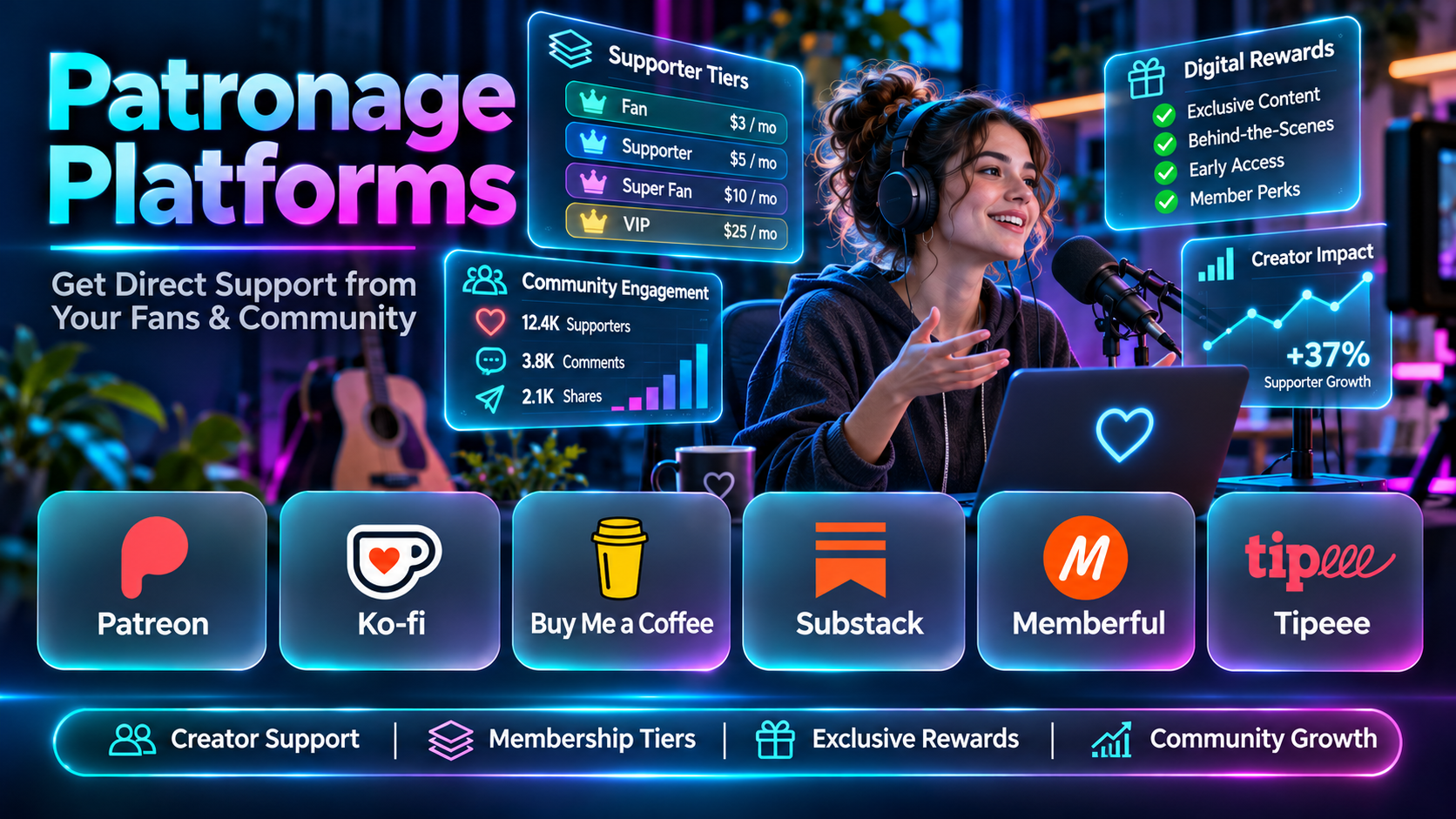
Patronage allows audiences to financially support the creators, artists, journalists, educators, and independent projects they value. Unlike conventional online shopping, patronage often reflects an ongoing relationship rather than the purchase of a specific product.
Supporters may contribute once, make recurring payments, or join membership programs that provide additional benefits.
Patronage platforms make these relationships easier to manage through payment processing, supporter communication, membership tiers, and contribution tracking.
However, patronage models vary. Some services focus on voluntary donations, while others support memberships, fundraising campaigns, or paid content.
Choosing the right platform requires understanding whether supporters expect exclusive benefits, ongoing creative output, or simply an opportunity to help a project continue.
This guide compares ten patronage platforms and explains how creators can develop transparent, sustainable audience-supported funding.
What Are Patronage Platforms?
Patronage platforms are services that enable individuals or organizations to receive financial support from audiences, fans, or communities.
They typically support one-time contributions, recurring payments, memberships, or campaign-based funding.
How Patronage Works
A creator explains the project and the value it provides. Supporters choose an amount or membership level and complete a payment.
The platform records the contribution and processes eligible transactions.
Creators may provide updates, rewards, exclusive content, or other benefits depending on the model.
Patronage vs. Crowdfunding
Patronage usually supports an ongoing person, organization, or creative activity.
Crowdfunding often focuses on raising money for a specific project or campaign.
Some platforms support both approaches, but their payment structures and supporter expectations differ.
Top 10 Patronage Platforms
1. Patreon
Short Description
Patreon is a membership platform designed to help creators receive recurring financial support.
It is widely relevant to creators who maintain ongoing relationships with their audiences through regular content, community interaction, and membership benefits.
Patreon works especially well when supporters value continued creative production and want structured ways to contribute.
Key Features
- Recurring memberships: Supports ongoing patron payments.
- Membership tiers: Organizes different supporter levels.
- Exclusive posts: Provides member-only content.
- Community communication: Supports interaction with patrons.
- Payment processing: Handles eligible membership transactions.
- Supporter management: Maintains member information.
- Membership analytics: Reports subscriber activity.
- Content organization: Supports regular creator updates.
Benefits
Patreon can help creators establish recurring financial support and maintain closer relationships with their audiences.
Pros
- Membership-focused platform.
- Recurring payments.
- Supporter communication.
- Flexible benefit structures.
- Suitable for multiple creator categories.
Cons
- Platform fees.
- Membership cancellations.
- Ongoing benefit expectations.
- Audience growth requires separate effort.
Use Cases
- Supporting independent podcasts.
- Funding recurring artwork.
- Offering exclusive writing.
Best For: Creators seeking structured recurring patronage.
2. Ko-fi
Short Description
Ko-fi provides tools for voluntary support, memberships, digital products, and commissions.
Its flexible model makes it relevant to creators who want to receive occasional contributions without requiring every supporter to subscribe.
Ko-fi is particularly useful for artists, hobbyists, writers, and independent creators who want to combine patronage with small commercial offerings.
Key Features
- One-time contributions: Supports voluntary payments.
- Memberships: Enables recurring support.
- Creator pages: Provides public support destinations.
- Digital shop: Supports relevant product sales.
- Commissions: Helps creators sell custom work.
- Payment integrations: Connects supported providers.
- Supporter interaction: Enables relevant communication.
- Account management: Organizes contributions and offerings.
Benefits
Ko-fi provides a flexible way to combine patronage with creator commerce.
Pros
- One-time and recurring support.
- Accessible setup.
- Digital product capabilities.
- Useful for artists.
Cons
- Payment processing fees.
- Limited advanced business features.
- Requires audience acquisition.
- Some features depend on plan selection.
Use Cases
- Supporting independent illustrations.
- Funding open creative projects.
- Accepting reader contributions.
Best For: Independent creators seeking flexible patronage.
3. Buy Me a Coffee
Short Description
Buy Me a Coffee helps creators receive financial contributions and offer recurring memberships.
Its approach emphasizes a straightforward supporter experience.
The platform is relevant to bloggers, developers, educators, and independent creators who want a simple way for appreciative audiences to contribute.
Key Features
- One-time support: Accepts eligible contributions.
- Memberships: Supports recurring payments.
- Creator profiles: Provides support pages.
- Payment processing: Handles eligible transactions.
- Exclusive content: Supports applicable member benefits.
- Supporter information: Organizes contributions.
- Creator updates: Supports communication.
- Checkout experience: Simplifies supporter payments.
Benefits
Buy Me a Coffee reduces the complexity of introducing voluntary audience funding.
Pros
- Simple contribution workflow.
- Recurring membership support.
- Accessible creator pages.
- Suitable for small audiences.
Cons
- Platform fees.
- Limited advanced customization.
- Not a full fundraising management system.
- Revenue depends on audience engagement.
Use Cases
- Supporting independent blogs.
- Funding free educational resources.
- Accepting contributions for open-source work.
Best For: Creators prioritizing simple voluntary support.
4. Liberapay
Short Description
Liberapay is a recurring donation platform focused on supporting creators and contributors.
Its model emphasizes voluntary financial support rather than traditional commercial subscriptions with extensive exclusive benefits.
Liberapay is particularly relevant to open-source developers, community contributors, and creators who prefer a donation-oriented funding structure.
Key Features
- Recurring donations: Supports ongoing contributions.
- Contributor profiles: Provides public funding pages.
- Payment processing: Connects supported payment methods.
- Donation management: Organizes contributions.
- Team support: Provides relevant group funding options.
- Open-source orientation: Supports community-driven projects.
- Funding transparency: Provides applicable contribution information.
- International support: Enables eligible cross-border contributions.
Benefits
Liberapay can support ongoing community funding without requiring creators to establish elaborate membership rewards.
Pros
- Donation-oriented model.
- Recurring support.
- Relevant to open-source projects.
- Community-focused approach.
Cons
- Limited exclusive-content functionality.
- Not a conventional online store.
- Payment availability varies.
- Requires external audience development.
Use Cases
- Supporting open-source maintainers.
- Funding community software.
- Sustaining independent public resources.
Best For: Open-source and community-funded creators.
5. Open Collective
Short Description
Open Collective provides financial infrastructure for communities, open-source projects, and other collaborative initiatives.
It helps groups receive contributions and manage expenses with an emphasis on financial transparency.
Open Collective differs from conventional creator memberships because its central purpose includes community financial administration.
Key Features
- Collective funding pages: Organizes project contributions.
- Recurring contributions: Supports ongoing funding.
- Expense management: Helps administer eligible spending.
- Financial transparency: Provides visibility into transactions.
- Contributor management: Organizes supporters.
- Fiscal hosting relationships: Supports applicable administrative arrangements.
- Project reporting: Summarizes financial activity.
- Community administration: Supports collaborative funding workflows.
Benefits
Open Collective can help community projects manage shared funding with transparent records.
Pros
- Financial transparency.
- Community funding.
- Expense administration.
- Relevant to open-source organizations.
Cons
- More complex than personal tip platforms.
- Fiscal arrangements require review.
- Not primarily a premium content service.
- Administrative requirements vary.
Use Cases
- Funding open-source projects.
- Managing community initiatives.
- Supporting collaborative development.
Best For: Community and open-source projects.
6. GitHub Sponsors
Short Description
GitHub Sponsors provides funding tools for eligible developers and open-source contributors.
It enables supporters to financially back people and organizations involved in software development.
Its integration with GitHub makes it particularly relevant to maintainers whose work and community already exist within that ecosystem.
Key Features
- Developer sponsorships: Supports eligible financial contributions.
- Recurring sponsorships: Enables ongoing support.
- Sponsor tiers: Supports relevant funding levels.
- GitHub integration: Connects sponsorship with developer profiles.
- Supporter management: Organizes sponsor relationships.
- Sponsorship visibility: Displays applicable support information.
- Payment administration: Handles eligible transactions.
- Developer-focused workflows: Supports open-source communities.
Benefits
GitHub Sponsors can help developers receive financial support for maintaining public software projects.
Pros
- Developer ecosystem integration.
- Open-source relevance.
- Recurring support.
- Familiar community environment.
Cons
- Eligibility restrictions.
- Limited relevance outside software.
- Funding depends on community support.
- Not a general merchandise platform.
Use Cases
- Supporting library maintainers.
- Funding developer tools.
- Sustaining open-source infrastructure.
Best For: Open-source developers.
7. Kickstarter
Short Description
Kickstarter is a crowdfunding platform that helps creators raise funding for specific projects.
Although it is not primarily an ongoing patronage subscription service, its reward-based campaigns provide a relevant form of audience-supported creative financing.
Kickstarter is most suitable when a creator has a defined project, funding target, and delivery plan.
Key Features
- Project campaigns: Supports defined fundraising initiatives.
- Funding goals: Establishes campaign targets.
- Reward tiers: Provides supporter incentives.
- Campaign pages: Presents project information.
- Backer communication: Supports project updates.
- Payment processing: Handles eligible pledges.
- Campaign reporting: Provides funding information.
- Community engagement: Connects creators with backers.
Benefits
Kickstarter can help creators validate demand and finance specific creative projects.
Pros
- Project-focused funding.
- Reward tiers.
- Audience validation.
- Campaign visibility.
Cons
- Not a recurring membership system.
- Campaign preparation workload.
- Funding success is uncertain.
- Reward fulfillment creates obligations.
Use Cases
- Funding independent films.
- Launching illustrated books.
- Financing creative products.
Best For: Creators funding defined projects.
8. Indiegogo
Short Description
Indiegogo provides crowdfunding services for projects and products.
It is relevant to creators and entrepreneurs seeking financial support for specific initiatives rather than ongoing memberships.
Its campaign-based model allows creators to present funding goals and communicate with supporters.
Key Features
- Crowdfunding campaigns: Supports project fundraising.
- Campaign pages: Presents project details.
- Funding options: Provides applicable campaign structures.
- Contribution processing: Handles eligible payments.
- Backer management: Organizes supporter information.
- Project updates: Supports communication.
- Campaign analytics: Reports funding activity.
- Reward management: Supports relevant supporter incentives.
Benefits
Indiegogo can help creators test market interest and raise capital for specific projects.
Pros
- Project funding focus.
- Supporter communication.
- Campaign flexibility.
- Relevant to creative products.
Cons
- Not designed for routine patron subscriptions.
- Fulfillment risks.
- Platform fees.
- Funding outcomes vary.
Use Cases
- Launching creative products.
- Funding independent productions.
- Supporting new inventions.
Best For: Project-based crowdfunding.
9. Tipeee
Short Description
Tipeee is a creator support platform that helps audiences contribute financially to creators.
It has particular relevance to creators seeking ongoing audience patronage through tips and supporter relationships.
Its suitability depends on regional availability, current payment support, and the creator’s audience.
Key Features
- Creator support pages: Presents funding opportunities.
- Audience contributions: Supports eligible payments.
- Recurring support: Provides applicable ongoing funding.
- Supporter rewards: Supports relevant creator benefits.
- Creator updates: Enables communication.
- Contribution tracking: Organizes funding information.
- Profile customization: Supports creator presentation.
- Payment administration: Processes supported transactions.
Benefits
Tipeee provides a patronage-oriented approach to supporting recurring creative work.
Pros
- Creator funding focus.
- Supporter relationships.
- Recurring contributions.
- Relevant to independent content.
Cons
- Regional relevance varies.
- Fees require evaluation.
- Smaller ecosystem than some alternatives.
- Feature availability should be checked.
Use Cases
- Supporting independent video creators.
- Funding creative publications.
- Receiving community contributions.
Best For: Creators with audiences in supported markets.
10. Steady
Short Description
Steady provides membership and subscription tools for publishers and creators.
Its platform helps content businesses develop recurring reader and supporter revenue.
Steady is particularly relevant to editorial creators who want to monetize audience relationships through paid memberships.
Key Features
- Membership subscriptions: Supports recurring payments.
- Publisher integration: Connects with relevant publishing workflows.
- Member management: Organizes subscriber records.
- Payment administration: Handles eligible transactions.
- Membership benefits: Supports applicable access arrangements.
- Audience communication: Helps maintain supporter relationships.
- Revenue reporting: Provides subscription information.
- Publisher tools: Supports membership business operations.
Benefits
Steady can help publishers develop recurring reader-supported revenue.
Pros
- Publishing-oriented memberships.
- Recurring payments.
- Subscriber management.
- Relevant to editorial businesses.
Cons
- Regional and product availability require verification.
- Commercial fees.
- Less relevant to physical products.
- Requires ongoing audience value.
Use Cases
- Independent journalism memberships.
- Reader-supported publications.
- Premium editorial communities.
Best For: Publishers seeking recurring patronage.
Patronage Platforms Comparison Table
| Platform | Funding Model | Main Strength | Main Limitation | Best For |
|---|---|---|---|---|
| Patreon | Memberships | Fan relationships | Ongoing benefits | Creators |
| Ko-fi | Tips and memberships | Flexibility | Limited enterprise tools | Artists |
| Buy Me a Coffee | Contributions | Simplicity | Limited customization | Bloggers |
| Liberapay | Recurring donations | Community funding | Few commerce features | Open source |
| Open Collective | Community contributions | Transparency | Administrative complexity | Communities |
| GitHub Sponsors | Developer sponsorships | GitHub integration | Developer focus | Maintainers |
| Kickstarter | Project crowdfunding | Campaign funding | Not recurring | Creative projects |
| Indiegogo | Crowdfunding | Project financing | Fulfillment risks | Entrepreneurs |
| Tipeee | Creator support | Patron relationships | Regional limitations | Content creators |
| Steady | Publishing memberships | Reader revenue | Market availability | Publishers |
How to Choose the Right Patronage Platform
Identify the Funding Purpose
Determine whether supporters are funding ongoing work, specific projects, or community operations.
Define Supporter Expectations
Clarify whether contributions are voluntary donations, commercial memberships, or reward-based pledges.
Compare Fees
Review platform charges, payment processing, withdrawal costs, and applicable taxes.
Assess Payment Availability
Confirm supported countries, currencies, and payout methods.
Evaluate Transparency
Supporters should understand how contributions are used and what benefits, if any, are promised.
Review Communication Tools
Regular updates help maintain trust and demonstrate progress.
Consider Financial Administration
Community projects may require expense tracking and formal governance.
Test the Contribution Experience
Complete a test payment and review receipts, access permissions, and supporter communication.
Best Patronage Platforms by User Type
| User Type | Recommended Platform | Reason |
|---|---|---|
| Podcaster | Patreon | Recurring memberships |
| Artist | Ko-fi | Flexible contributions |
| Blogger | Buy Me a Coffee | Simple support |
| Open-source contributor | Liberapay | Recurring donations |
| Community project | Open Collective | Financial transparency |
| Software maintainer | GitHub Sponsors | Developer sponsorships |
| Independent filmmaker | Kickstarter | Project campaigns |
| Product creator | Indiegogo | Crowdfunding |
| Independent content creator | Tipeee | Audience support |
| Publisher | Steady | Reader memberships |
Practical Step-by-Step Example: Funding an Open-source Project
A developer maintains a free software library and wants to fund ongoing maintenance.
Step 1: Define the project’s maintenance requirements.
Step 2: Estimate infrastructure, development, and support costs.
Step 3: Choose a platform supporting recurring contributions.
Step 4: Create a transparent funding description.
Step 5: Explain how contributions will be used.
Step 6: Configure eligible payment methods.
Step 7: Publish the funding page.
Step 8: Share it through relevant project documentation.
Step 9: Provide regular progress and financial updates.
Step 10: Review sustainability and supporter feedback.
The goal is to create a dependable funding relationship without promising more work than the available resources can support.
Common Mistakes and How to Avoid Them
- Confusing donations with purchases: Explain what supporters receive.
- Ignoring payment fees: Calculate net contributions.
- Promising excessive rewards: Keep commitments manageable.
- Failing to communicate: Publish meaningful progress updates.
- Choosing the wrong funding model: Match ongoing support with recurring platforms.
- Ignoring tax requirements: Review applicable obligations.
- Depending on one major supporter: Reduce concentration risk where possible.
- Overlooking transparency: Maintain accurate records and clear explanations.
Frequently Asked Questions
1. What is a patronage platform?
It helps audiences financially support creators or projects.
2. How does online patronage work?
Supporters contribute through one-time or recurring payments.
3. Is patronage the same as crowdfunding?
Not always. Patronage often supports ongoing work, while crowdfunding frequently funds specific projects.
4. What is recurring patronage?
It involves ongoing contributions at agreed intervals.
5. Can creators receive one-time tips?
Many patronage platforms support one-time payments.
6. Is Patreon a donation platform?
It primarily supports creator memberships and related fan support.
7. What is Liberapay used for?
It supports recurring contributions, including open-source funding.
8. What is Open Collective?
It provides financial infrastructure for community projects.
9. Can developers receive sponsorships?
Yes, through eligible services such as GitHub Sponsors.
10. Are patronage payments taxable?
Tax treatment depends on jurisdiction and circumstances.
11. Do patronage platforms charge fees?
Many charge platform or payment processing fees.
12. Can supporters cancel recurring contributions?
Cancellation processes depend on the platform and agreement.
13. Are rewards mandatory?
No. Some patronage models involve voluntary support without rewards.
14. Can nonprofit organizations use patronage tools?
Some platforms support eligible organizations and projects.
15. What is fiscal hosting?
It is an arrangement where an eligible organization provides administrative or financial support for a project.
16. Can patrons remain anonymous?
Privacy options vary by service.
17. Can creators accept international contributions?
Many platforms support international payments subject to restrictions.
18. What is a patron membership tier?
It is a defined contribution level with specified benefits.
19. Can creators use patronage alongside product sales?
Yes, where platform capabilities and terms permit.
20. What is a crowdfunding reward?
It is a promised benefit associated with a contribution.
21. Does patronage guarantee income?
No. Funding depends on audience participation.
22. How can creators retain patrons?
Provide consistent value and transparent communication.
23. What metrics matter?
Recurring contributions, active supporters, retention, fees, and net revenue.
24. Should creators disclose how money is spent?
Transparent explanations are beneficial, especially for community projects.
25. Which patronage platform is best?
The right choice depends on funding purpose, audience, fees, and required administration.
Final Thoughts
Patronage platforms provide ways for audiences to support creative and community work directly.
Patreon, Ko-fi, Buy Me a Coffee, Tipeee, and Steady address different creator support models. Liberapay, Open Collective, and GitHub Sponsors are relevant to community and developer funding, while Kickstarter and Indiegogo focus on project-based campaigns.
The strongest patronage model combines a clear purpose, appropriate funding tools, responsible financial management, and consistent communication.
Supporter trust is the foundation of sustainable patronage.
