Introduction
Visitor management begins before a guest arrives at a building. Organizations must coordinate appointments, communicate arrival instructions, collect necessary information, and prepare reception teams for expected visitors.
Traditional visitor registration often starts at the reception desk. Guests complete paper forms, provide identification, contact their hosts, and wait while employees verify their appointments. This process can create queues and unnecessary administrative work.
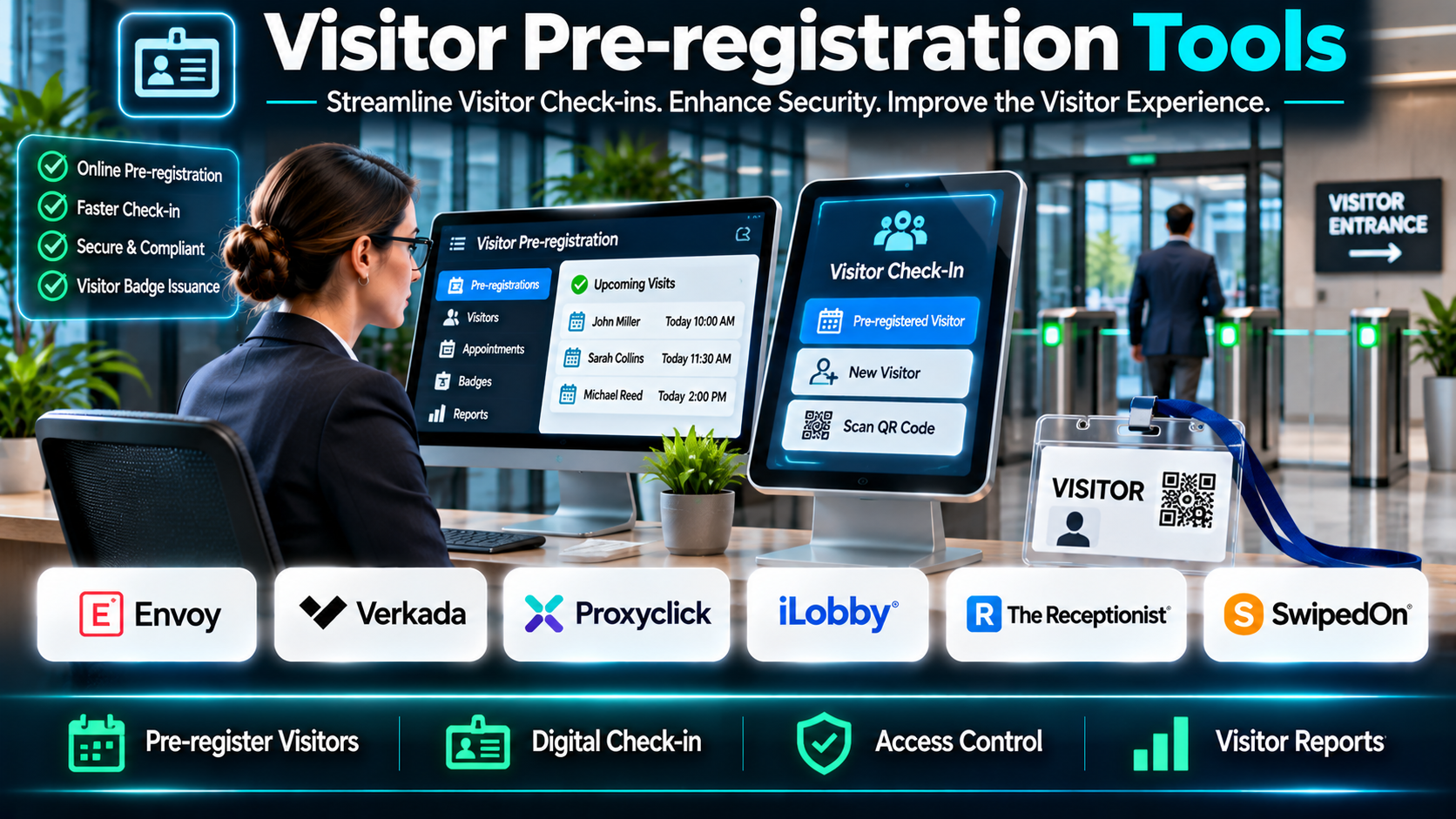
Visitor pre-registration tools improve this experience by allowing hosts to register guests before their scheduled arrival. Visitors may receive invitations, directions, digital forms, and check-in instructions through email or other supported communication channels.
These platforms are particularly valuable for offices that receive frequent customers, contractors, job candidates, delivery personnel, and business partners. They help reception teams anticipate visitor volumes and prepare appropriate access procedures.
For example, a company hosting a client workshop may pre-register twenty participants. Guests receive arrival instructions before the event, while reception staff can review the expected visitor list and prepare badges.
A manufacturing facility may use pre-registration to communicate safety requirements and collect required acknowledgments from contractors. A corporate headquarters may integrate visitor workflows with employee directories, access control systems, and workplace security procedures.
Modern visitor pre-registration software can include digital invitations, QR-code check-in, custom forms, document acknowledgments, visitor notifications, badge printing, and administrative reporting.
Some platforms also support multiple locations, recurring visitors, group registrations, and integrations with physical access control systems. These capabilities can help organizations standardize visitor procedures across different facilities.
However, visitor pre-registration software should not be confused with a complete physical security system. Registering a visitor does not automatically establish identity, authorize access, or guarantee compliance with security requirements.
Organizations must evaluate privacy, consent, accessibility, data retention, and the accuracy of visitor information. These considerations are especially important when collecting identification documents or other personal information.
The best solution depends on the number of visitors, facility type, security requirements, existing workplace systems, and the desired visitor experience.
This guide compares ten visitor pre-registration tools and explains their capabilities, benefits, limitations, selection criteria, and practical applications.
What Are Visitor Pre-registration Tools?
Visitor pre-registration tools are software applications that allow organizations to collect and manage visitor information before guests arrive at a physical location.
They are commonly included in visitor management systems, workplace experience platforms, and facility security solutions.
Instead of waiting until a visitor reaches reception, an authorized host can create a visitor appointment in advance. The platform may then send an invitation containing the meeting location, arrival time, directions, and applicable registration instructions.
Some solutions allow visitors to complete forms, acknowledge policies, or submit required information before arrival. When guests reach the facility, they may use a QR code, kiosk, tablet, or receptionist-assisted workflow to complete check-in.
Pre-registration can reduce repetitive data entry and help organizations maintain more consistent visitor records.
However, the exact capabilities depend on the platform, subscription, hardware configuration, and integrations.
How Visitor Pre-registration Tools Work
1. Host Creates a Visit
An employee or authorized administrator enters the visitor’s name, appointment details, location, and host information.
2. Invitation Generation
The platform creates a visitor invitation containing relevant appointment information.
3. Visitor Notification
The invitation is delivered through supported communication channels.
