Introduction
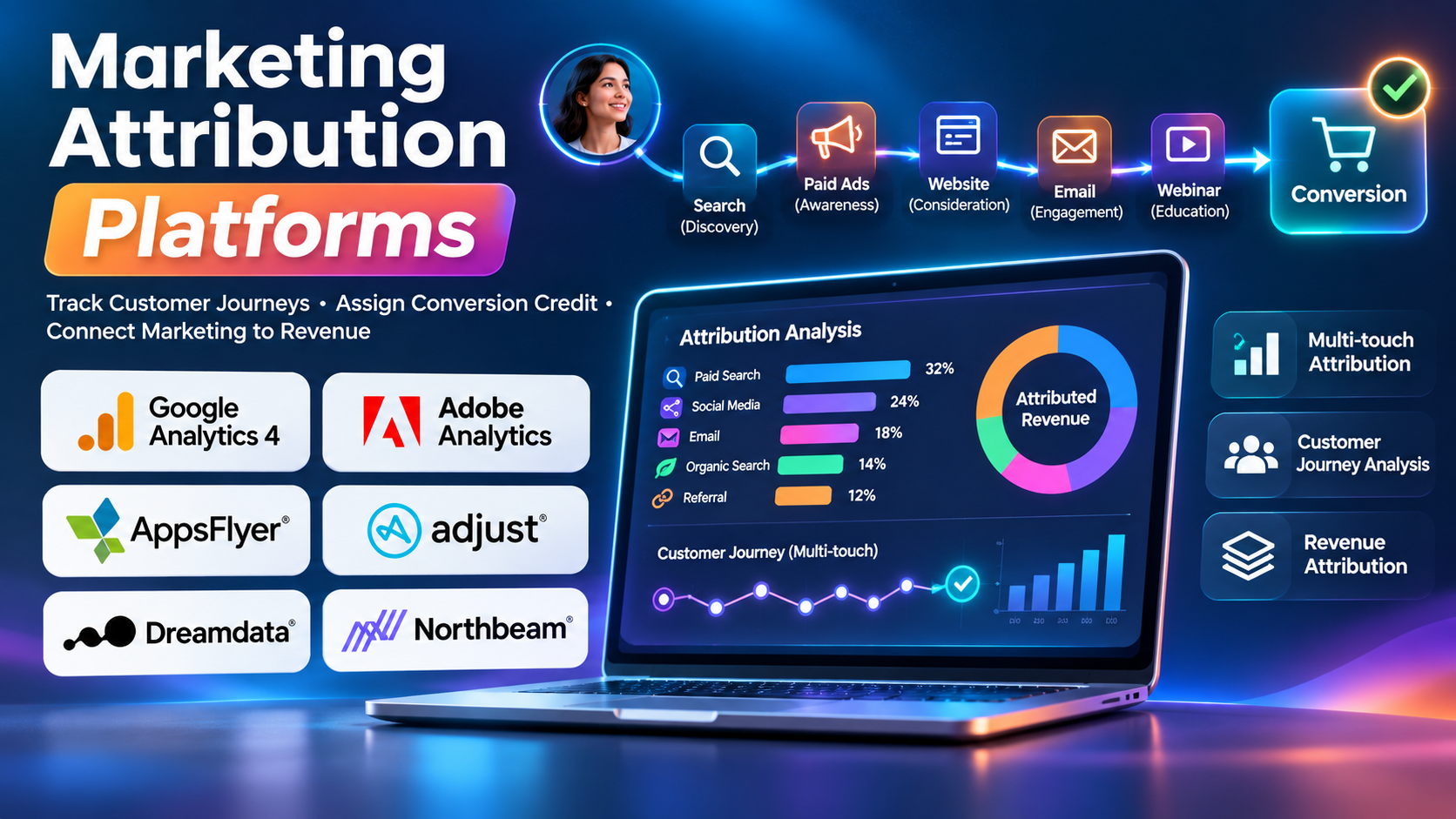
Modern customers rarely discover a business, evaluate its products, and complete a purchase through a single marketing interaction.
A potential customer might first encounter a brand through social media, visit its website through a search engine, read a comparison article, subscribe to an email newsletter, and eventually purchase after clicking a paid advertisement.
For business-to-business companies, the journey can be even more complicated. Several employees may research competing solutions, attend webinars, download resources, and communicate with sales representatives before a purchasing decision is made.
These interactions create an important measurement challenge.
Marketing teams need to understand which campaigns, channels, and activities contribute to business outcomes.
Without reliable measurement, organizations may invest too heavily in channels that appear successful while overlooking activities that help generate demand earlier in the customer journey.
Marketing attribution platforms address this problem by connecting marketing interactions with conversions, revenue, and other business outcomes.
They help organizations investigate how customers arrive, which touchpoints precede important actions, and how different attribution rules distribute conversion credit.
Some platforms specialize in digital advertising and e-commerce measurement. Others focus on B2B revenue attribution, customer journey analytics, mobile application measurement, or privacy-conscious marketing analytics.
However, attribution is not the same as proving incrementality.
A platform may identify that an advertisement appeared before a purchase without establishing that the purchase would not have happened otherwise.
For this reason, attribution should be interpreted alongside experiments, media mix modeling, customer research, and business knowledge.
This guide compares ten marketing attribution platforms, explains their features and limitations, and provides a practical framework for selecting the right solution.
What Are Marketing Attribution Platforms?
Marketing attribution platforms are software solutions that collect, connect, and analyze marketing interactions associated with conversions or other business outcomes.
Their primary purpose is to help organizations understand how marketing touchpoints relate to customer journeys.
A touchpoint may include a paid advertisement, organic search visit, email click, referral, webinar registration, social media interaction, or another measurable engagement.
Attribution platforms use available data and defined rules or models to assign conversion credit to selected interactions.
The resulting reports can help marketers evaluate campaigns, compare channels, and identify potential opportunities for improvement.
How Marketing Attribution Works
A typical marketing attribution process includes several stages.
Data collection: The platform collects available information about marketing interactions, campaigns, and conversions.
Identity and journey association: Where technically and legally appropriate, it connects interactions belonging to the same customer, device, account, or journey.
Conversion definition: The organization identifies important outcomes, such as purchases, leads, subscriptions, or qualified opportunities.
Attribution modeling: The platform applies rules or analytical methods to distribute conversion credit.
Performance analysis: Marketing teams compare attributed outcomes across channels, campaigns, and touchpoints.
Reporting: Dashboards present conversion paths, attributed revenue, and related performance metrics.
Optimization: Teams use the findings to investigate potential changes in marketing investment and campaign strategy.
Common Marketing Attribution Models
First-Touch Attribution
First-touch attribution assigns all conversion credit to the earliest recorded marketing interaction.
It can help organizations understand which measurable channels introduce customers to the business.
However, it ignores later interactions that may influence the decision.
Last-Touch Attribution
Last-touch attribution assigns all conversion credit to the final eligible interaction before conversion.
It is straightforward to understand but may undervalue earlier marketing activities.
Linear Attribution
Linear attribution distributes credit equally across eligible recorded touchpoints.
It acknowledges multiple interactions but assumes each contributes equally.
Time-Decay Attribution
Time-decay attribution gives more credit to interactions closer to the conversion.
This may suit some purchase journeys, but the weighting reflects a modeling assumption rather than demonstrated causal impact.
Position-Based Attribution
Position-based models assign predetermined portions of credit to selected journey positions.
For example, a model may emphasize the first and last interactions while distributing the remaining credit among intermediate touchpoints.
Data-Driven Attribution
Data-driven attribution uses statistical or algorithmic methods to assign credit based on observed patterns.
Its usefulness depends on the data, model design, available signals, and underlying assumptions.
Even sophisticated data-driven attribution does not automatically establish causal incrementality.
Benefits of Marketing Attribution Platforms
Marketing attribution platforms can help organizations:
- Understand recorded customer journeys.
- Compare marketing channels.
- Connect campaigns with conversions.
- Investigate lead generation performance.
- Analyze customer acquisition activity.
- Support revenue reporting.
- Identify measurement gaps.
- Improve campaign organization.
- Inform marketing budget discussions.
- Coordinate marketing and sales analysis.
The most reliable programs recognize that attribution reports describe observed or modeled relationships rather than complete explanations of why customers convert.
Top 10 Marketing Attribution Platforms
1. Google Analytics 4
Short Description
Google Analytics 4, commonly called GA4, is Google’s analytics platform for measuring website and application interactions.
It provides event-based measurement and attribution reporting capabilities relevant to digital marketing.
GA4 is particularly useful for organizations that want to understand how measurable acquisition channels relate to website or app conversions.
Businesses can configure key events, examine acquisition reports, and investigate eligible conversion paths.
For example, an online retailer may want to understand how organic search, paid search, email, and referral traffic contribute to purchases.
GA4 can provide reports that help the marketing team investigate these interactions.
Its integration with Google’s advertising ecosystem makes it relevant to organizations using Google Ads.
However, GA4 attribution is constrained by consent settings, available identifiers, tracking implementation, and the specific reporting methodology.
It should not be treated as a complete record of every customer interaction.
Key Features
- Event-Based Analytics: Measures configured website and application interactions.
- Attribution Reporting: Supports analysis of eligible conversion credit.
- Acquisition Reports: Examines traffic and user acquisition channels.
- Key Event Tracking: Measures important business actions.
- Conversion Path Analysis: Helps investigate recorded interactions before conversions.
- Audience Analysis: Supports relevant user and traffic segmentation.
- Google Ads Integration: Connects supported advertising and analytics workflows.
- Exploration Reports: Provides flexible analytical views.
- Data Export: Supports applicable advanced analysis through connected data environments.
Benefits
- Supports digital marketing measurement.
- Connects acquisition activity with conversions.
- Helps analyze customer journeys.
- Provides flexible event tracking.
- Supports campaign reporting.
- Integrates with relevant Google services.
- Offers an accessible starting point for attribution analysis.
Pros
- Widely used analytics platform.
- Event-based measurement.
- Attribution reporting capabilities.
- Google Ads integration.
- Flexible reporting.
- Suitable for many website and app businesses.
Cons
- Implementation requires careful configuration.
- Consent and identity limitations affect visibility.
- Reporting differences can create confusion.
- Not a complete cross-platform measurement solution.
- Attribution estimates should not be interpreted as causal proof.
Use Cases
E-commerce Attribution: A retailer examines the relationship between acquisition channels and purchases.
Lead Generation: A service company investigates which recorded channels precede form submissions.
Campaign Reporting: A marketing team compares campaign performance.
Website Analytics: An organization connects engagement metrics with configured business outcomes.
Best For
Small and medium-sized businesses, e-commerce teams, digital marketers, and organizations already using Google Analytics.
2. Adobe Analytics
Short Description
Adobe Analytics is an enterprise digital analytics platform that helps organizations measure customer interactions across supported digital properties.
It provides sophisticated reporting and analytical capabilities for businesses with complex digital experiences.
Adobe Analytics can support marketing attribution through configurable reporting and attribution approaches.
For example, a financial services company may want to understand how visitors interact with educational content, product pages, and application forms before submitting an inquiry.
The analytics team can investigate recorded journeys and compare the contribution of different marketing activities.
Adobe Analytics is particularly relevant to organizations requiring extensive customization, detailed segmentation, and enterprise analytics governance.
Its flexibility can support complex measurement programs, but implementation and maintenance require experienced analysts.
Businesses should evaluate the attribution capabilities available within their specific Adobe products and contracts.
Key Features
- Digital Interaction Tracking: Collects configured website and digital experience data.
- Attribution Analysis: Supports selected attribution models and reporting.
- Customer Journey Reporting: Examines recorded digital interactions.
- Advanced Segmentation: Supports detailed audience analysis.
- Custom Metrics: Allows business-specific measurement definitions.
- Conversion Analysis: Investigates important outcomes.
- Reporting Workspaces: Supports flexible analytical exploration.
- Enterprise Governance: Provides relevant administrative controls.
- Adobe Ecosystem Integration: Connects with supported Adobe products.
Benefits
- Supports complex digital analytics.
- Provides flexible attribution reporting.
- Helps analyze customer behavior.
- Supports enterprise segmentation.
- Connects analytics with broader experience workflows.
- Enables customized reporting.
- Supports large analytical teams.
Pros
- Advanced digital analytics.
- Flexible reporting.
- Enterprise customization.
- Detailed segmentation.
- Attribution analysis.
- Relevant to complex organizations.
Cons
- Commercial pricing can be substantial.
- Implementation requires specialist expertise.
- Configuration can become complex.
- Governance requires ongoing attention.
- Measurement remains limited by available data.
Use Cases
Enterprise Website Attribution: A large company analyzes digital conversion paths.
Financial Services Marketing: Researchers investigate interactions preceding application submissions.
Digital Experience Analysis: Teams examine engagement and conversion behavior.
Enterprise Reporting: Analysts develop customized marketing dashboards.
Best For
Large enterprises, digital analytics departments, Adobe ecosystem users, and organizations requiring sophisticated web attribution.
3. AppsFlyer
Short Description
AppsFlyer is a mobile measurement and marketing analytics platform focused on application attribution and related measurement workflows.
It helps mobile marketers understand how eligible advertising interactions relate to app installations and in-app events.
AppsFlyer is particularly relevant to businesses that acquire customers through mobile advertising.
For example, a mobile gaming company may advertise across several networks and want to compare which campaigns are associated with installs, registrations, and purchases.
The platform supports measurement across relevant mobile marketing environments.
AppsFlyer also provides capabilities associated with privacy-aware measurement and fraud-related analysis.
However, mobile attribution is increasingly shaped by operating-system privacy rules, consent requirements, and limited identifiers.
Organizations should understand which reports are deterministic, aggregated, modeled, or subject to platform-specific restrictions.
Key Features
- Mobile Attribution: Measures eligible app acquisition interactions.
- Install Measurement: Associates app installs with supported marketing sources.
- In-App Event Tracking: Supports measurement of configured app actions.
- Campaign Analytics: Compares mobile advertising performance.
- Privacy-Aware Measurement: Supports applicable privacy-constrained workflows.
- Fraud Protection: Provides relevant fraud detection capabilities.
- Deep Linking: Supports applicable app navigation and campaign experiences.
- Marketing Integrations: Connects with supported advertising platforms.
- Performance Reporting: Presents mobile acquisition metrics.
Benefits
- Supports mobile acquisition measurement.
- Connects campaigns with app outcomes.
- Helps compare advertising networks.
- Supports in-app conversion analysis.
- Provides privacy-related measurement capabilities.
- Helps investigate suspicious activity.
- Supports mobile marketing optimization.
Pros
- Mobile attribution specialization.
- Broad mobile marketing applications.
- In-app event measurement.
- Advertising integrations.
- Fraud-related capabilities.
- Relevant to app growth teams.
Cons
- Mobile privacy restrictions limit visibility.
- SDK implementation requires planning.
- Commercial costs depend on usage and services.
- Platform-specific reporting can be complex.
- Attribution does not prove incrementality.
Use Cases
Mobile Gaming: A publisher analyzes advertising-driven installs and purchases.
Subscription Applications: A business examines acquisition and trial conversions.
App Campaign Measurement: A growth team compares advertising networks.
Mobile Fraud Analysis: Marketers investigate suspicious acquisition patterns.
Best For
Mobile app developers, gaming companies, subscription apps, and mobile growth marketing teams.
4. Adjust
Short Description
Adjust is a mobile measurement platform that helps businesses evaluate app marketing performance and user acquisition.
It provides attribution and analytics capabilities relevant to mobile advertising campaigns.
Adjust is particularly useful for companies whose customer acquisition strategy depends heavily on mobile applications.
A subscription app may use Adjust to investigate which campaigns are associated with installations, registrations, trial starts, and subscription events.
The platform can help marketing teams connect acquisition reporting with important in-app outcomes.
Adjust also provides relevant measurement capabilities for privacy-constrained mobile environments.
However, the interpretation of mobile attribution reports requires an understanding of operating-system restrictions and the measurement methods used.
Organizations should evaluate integration requirements, event definitions, fraud controls, and commercial terms before implementation.
Key Features
- App Attribution: Supports mobile marketing measurement.
- Install Tracking: Measures eligible app acquisition activity.
- In-App Event Analytics: Tracks configured user actions.
- Campaign Performance: Compares relevant acquisition sources.
- Privacy-Constrained Measurement: Supports applicable mobile privacy frameworks.
- Fraud Prevention: Provides relevant protective capabilities.
- Deep Linking: Supports selected app engagement workflows.
- Advertising Integrations: Connects with supported networks.
- Reporting Dashboards: Presents mobile performance information.
Benefits
- Improves mobile campaign visibility.
- Supports app acquisition analysis.
- Connects campaigns with in-app events.
- Helps compare advertising sources.
- Supports privacy-aware measurement.
- Provides fraud-related capabilities.
- Helps organize mobile growth reporting.
Pros
- Mobile measurement specialization.
- Attribution reporting.
- In-app event analysis.
- Privacy-related capabilities.
- Advertising integrations.
- Suitable for app businesses.
Cons
- Not primarily a general B2B attribution platform.
- Mobile tracking limitations remain.
- Implementation requires technical coordination.
- Commercial pricing requires evaluation.
- Reported attribution is not necessarily causal.
Use Cases
App User Acquisition: A business compares mobile advertising campaigns.
Subscription Growth: A team examines trial and subscription events.
Gaming Analytics: A publisher investigates acquisition performance.
Mobile Marketing Reporting: An organization consolidates app campaign metrics.
Best For
Mobile marketers, app publishers, gaming businesses, and companies with significant mobile advertising investments.
5. Branch
Short Description
Branch is a mobile linking, measurement, and attribution platform focused on connecting customer experiences across relevant digital environments.
Its capabilities are particularly useful for businesses where customers move between mobile websites, applications, and marketing campaigns.
Branch is known for deep linking and related mobile journey functionality.
For example, a retailer may want a promotional link to open a specific product page inside its mobile application when the app is installed.
The same campaign may also require measurement of eligible downstream activity.
Branch can support these workflows through its linking and measurement capabilities.
Its relevance to marketing attribution is strongest in mobile and cross-platform customer journey scenarios.
Organizations should verify the exact attribution and analytics capabilities included in the current offering.
Key Features
- Deep Linking: Connects users with relevant app content.
- Mobile Attribution: Supports eligible app marketing measurement.
- Cross-Platform Journeys: Helps coordinate mobile web and app experiences.
- Campaign Links: Supports measurable marketing links.
- App Engagement Measurement: Tracks configured interactions.
- Conversion Reporting: Supports relevant downstream event analysis.
- Marketing Integrations: Connects with supported advertising systems.
- Link Management: Organizes campaign linking workflows.
- Journey Analytics: Helps investigate eligible mobile interactions.
Benefits
- Improves mobile journey continuity.
- Supports app campaign measurement.
- Helps connect marketing links with outcomes.
- Reduces friction between web and app experiences.
- Supports mobile engagement strategies.
- Provides relevant campaign analytics.
- Helps organize cross-platform links.
Pros
- Deep linking specialization.
- Mobile journey applications.
- Attribution capabilities.
- Campaign link management.
- Relevant to app engagement.
- Cross-platform use cases.
Cons
- Not a complete enterprise revenue attribution system.
- Mobile privacy restrictions affect measurement.
- Implementation can require engineering work.
- Commercial capabilities vary.
- Cross-device visibility may remain incomplete.
Use Cases
Retail Mobile Journeys: A retailer directs campaign visitors to app product pages.
App Re-engagement: A company measures eligible returning-user campaigns.
Mobile Promotions: A marketing team creates campaign-specific deep links.
Cross-Platform Measurement: A business investigates web-to-app interactions.
Best For
Mobile commerce companies, app marketers, product growth teams, and businesses requiring deep linking with attribution.
6. Ruler Analytics
Short Description
Ruler Analytics is a marketing attribution and revenue tracking platform designed to help businesses connect marketing interactions with leads and sales outcomes.
It is particularly relevant to organizations that generate leads through websites, forms, telephone calls, and other customer inquiries.
Many lead-generation businesses struggle to connect the original marketing source with revenue recorded later in a CRM.
Ruler Analytics focuses on helping bridge this gap through relevant tracking and integration workflows.
For example, a professional services company may receive inquiries through paid search, organic search, and referral campaigns.
Some inquiries become customers weeks or months later.
A revenue attribution platform can help the marketing team investigate which recorded sources are associated with completed sales.
However, accurate reporting depends on CRM data quality, identity association, and the completeness of tracked interactions.
Key Features
- Lead Attribution: Connects recorded marketing interactions with leads.
- Revenue Attribution: Associates eligible marketing activity with sales outcomes.
- Call Tracking: Supports relevant telephone inquiry measurement.
- Form Tracking: Captures configured lead submissions.
- CRM Integration: Connects marketing data with supported CRM workflows.
- Customer Journey Analysis: Examines recorded lead interactions.
- Multi-Touch Reporting: Supports relevant attribution views.
- Campaign Analytics: Compares lead and revenue performance.
- Reporting Dashboards: Presents marketing attribution information.
Benefits
- Connects marketing with revenue.
- Supports lead-generation analysis.
- Improves visibility into offline conversions.
- Helps compare lead sources.
- Supports sales and marketing alignment.
- Reduces reliance on lead counts alone.
- Helps investigate campaign quality.
Pros
- Revenue attribution specialization.
- Lead-generation applications.
- Call and form tracking.
- CRM integration.
- Multi-touch reporting.
- Relevant to service businesses.
Cons
- CRM data quality is critical.
- Tracking implementation requires planning.
- Identity matching may be incomplete.
- Commercial pricing requires evaluation.
- Attribution does not establish causal impact.
Use Cases
Professional Services: A consultancy connects inquiries with closed revenue.
B2B Lead Generation: A company evaluates marketing sources associated with sales.
Call-Driven Marketing: A business investigates telephone inquiries.
CRM Revenue Reporting: A marketing team connects campaign records with sales outcomes.
Best For
B2B companies, professional services firms, lead-generation businesses, and marketers focused on revenue attribution.
7. Dreamdata
Short Description
Dreamdata is a B2B revenue attribution and analytics platform focused on connecting marketing activities with account-level revenue outcomes.
It is particularly relevant to organizations with long sales cycles and multiple stakeholders involved in purchasing decisions.
Traditional website attribution may struggle to explain B2B journeys because several individuals from the same organization can interact with marketing content before a deal closes.
Dreamdata helps businesses analyze relevant account journeys and revenue-related interactions.
For example, a software company may want to understand how paid campaigns, webinars, organic content, and sales activities relate to qualified opportunities.
The platform can help connect marketing data with CRM records and other supported business systems.
Its value is strongest when organizations have structured sales processes and reliable customer data.
However, account-level attribution remains limited by incomplete identities, missing interactions, and the assumptions used to assign credit.
Key Features
- B2B Revenue Attribution: Connects eligible marketing interactions with revenue.
- Account-Based Analytics: Examines relevant account journeys.
- Multi-Touch Attribution: Supports attribution across recorded interactions.
- CRM Integration: Connects with supported sales systems.
- Marketing Data Integration: Combines relevant campaign information.
- Pipeline Reporting: Analyzes marketing relationships with opportunities.
- Customer Journey Analysis: Examines account-level interactions.
- Revenue Dashboards: Presents marketing and sales performance.
- B2B Campaign Analysis: Supports evaluation of demand generation activities.
Benefits
- Connects marketing with pipeline outcomes.
- Supports account-level analysis.
- Helps evaluate long sales cycles.
- Improves marketing and sales reporting.
- Provides multi-touch journey visibility.
- Supports demand generation analysis.
- Helps investigate revenue contribution.
Pros
- B2B attribution specialization.
- Account-level reporting.
- CRM integrations.
- Pipeline analytics.
- Multi-touch attribution.
- Relevant to SaaS companies.
Cons
- Requires reliable CRM data.
- Identity association can be incomplete.
- Implementation may involve multiple systems.
- Commercial costs require evaluation.
- Attribution results depend on model assumptions.
Use Cases
B2B SaaS Attribution: A software company analyzes marketing interactions preceding closed deals.
Account-Based Marketing: A team examines engagement across target accounts.
Pipeline Measurement: Marketing leadership investigates campaigns associated with opportunities.
Demand Generation: A business evaluates content, webinars, and paid advertising.
Best For
B2B SaaS companies, revenue operations teams, account-based marketers, and organizations with complex sales cycles.
8. HockeyStack
Short Description
HockeyStack is a B2B marketing analytics and attribution platform focused on understanding customer journeys and revenue-related marketing performance.
It is relevant to organizations seeking to connect marketing activities with pipeline and sales outcomes.
HockeyStack supports analytical workflows that examine interactions across marketing and revenue systems.
For example, a B2B technology company may want to understand which campaigns appear in the journeys of accounts that become qualified opportunities.
The platform can help marketing teams investigate these relationships.
HockeyStack is particularly relevant when attribution needs to support broader revenue analytics and demand generation decisions.
However, organizations should distinguish observed journey associations from demonstrated incremental marketing impact.
The accuracy of reporting depends on tracking coverage, integrations, CRM records, and identity resolution.
Key Features
- B2B Attribution: Supports marketing contribution reporting.
- Customer Journey Analytics: Examines recorded interactions.
- Revenue Analytics: Connects marketing data with relevant outcomes.
- CRM Integration: Supports eligible sales data workflows.
- Campaign Analysis: Compares marketing activities.
- Pipeline Reporting: Examines opportunity-related metrics.
- Account Analytics: Supports relevant B2B journey analysis.
- Reporting Dashboards: Presents marketing performance.
- Data Integration: Connects supported marketing systems.
Benefits
- Supports B2B marketing visibility.
- Connects campaigns with pipeline.
- Helps analyze customer journeys.
- Improves revenue reporting.
- Supports demand generation decisions.
- Encourages sales and marketing alignment.
- Reduces fragmented reporting.
Pros
- B2B marketing analytics focus.
- Revenue attribution.
- Customer journey reporting.
- CRM integrations.
- Pipeline analysis.
- Relevant to demand generation teams.
Cons
- Requires accurate CRM and marketing data.
- Complex implementations may need technical support.
- Identity matching is imperfect.
- Commercial pricing requires evaluation.
- Modeled credit should not be confused with causality.
Use Cases
Demand Generation Analytics: A technology company evaluates marketing campaigns.
Pipeline Attribution: A business connects interactions with opportunities.
Account Journey Research: Marketers investigate engagement across buying groups.
Revenue Reporting: Leadership examines marketing-associated revenue.
Best For
B2B technology companies, revenue operations teams, demand generation marketers, and SaaS businesses.
9. Triple Whale
Short Description
Triple Whale is an e-commerce analytics platform focused on helping merchants understand marketing performance, customer acquisition, and business metrics.
It is particularly relevant to direct-to-consumer brands operating across multiple advertising platforms.
E-commerce marketers often receive conflicting performance reports from advertising networks, analytics tools, and storefront systems.
Triple Whale aims to help organize relevant commerce and marketing information into a more unified analytical environment.
For example, a consumer brand may want to compare advertising expenditure with store revenue and investigate acquisition performance across channels.
The platform provides marketing measurement and attribution-related capabilities relevant to these workflows.
However, organizations should review how each metric is calculated.
Different platforms may use different attribution windows, identity methods, conversion definitions, and modeled estimates.
Key Features
- E-commerce Analytics: Supports analysis of store performance.
- Marketing Attribution: Provides relevant attribution reporting.
- Advertising Data Integration: Connects with supported marketing platforms.
- Revenue Reporting: Presents commerce outcomes.
- Customer Acquisition Analysis: Examines acquisition performance.
- Marketing Dashboards: Organizes campaign metrics.
- Performance Comparisons: Supports cross-channel analysis.
- Commerce Integrations: Connects with supported storefront systems.
- Marketing Decision Support: Helps teams investigate spending performance.
Benefits
- Consolidates commerce and marketing data.
- Supports advertising performance analysis.
- Helps investigate customer acquisition.
- Improves marketing reporting.
- Reduces dashboard fragmentation.
- Supports e-commerce decisions.
- Connects advertising with store outcomes.
Pros
- E-commerce specialization.
- Marketing analytics.
- Attribution-related reporting.
- Commerce integrations.
- Advertising performance dashboards.
- Relevant to DTC brands.
Cons
- Primarily focused on commerce use cases.
- Attribution methods require careful interpretation.
- Integration coverage varies.
- Commercial pricing depends on the offering.
- Reporting differences may persist across platforms.
Use Cases
DTC Marketing: A brand compares advertising performance across channels.
E-commerce Revenue Analysis: A retailer examines store sales and marketing expenditure.
Customer Acquisition Reporting: A growth team investigates acquisition efficiency.
Marketing Dashboard Consolidation: A business combines relevant performance metrics.
Best For
Shopify-oriented merchants, direct-to-consumer brands, e-commerce growth teams, and performance marketers.
10. Northbeam
Short Description
Northbeam is a marketing measurement and attribution platform focused on helping e-commerce and consumer brands analyze advertising performance.
It provides attribution-related capabilities designed for complex digital marketing environments.
Northbeam is particularly relevant to businesses investing across multiple paid advertising channels.
For example, an online retailer may advertise through search, social media, video, and other digital platforms.
The business wants to understand how these channels relate to revenue and customer acquisition.
Northbeam can support this analysis through relevant measurement and reporting workflows.
Its approach is useful for marketers who need more than individual advertising platform dashboards.
However, organizations should examine the measurement methodology, attribution windows, available identifiers, and assumptions underlying reported results.
Attribution outputs should be compared with other evidence before making major investment decisions.
Key Features
- Marketing Attribution: Supports analysis of eligible marketing interactions.
- Cross-Channel Reporting: Compares relevant advertising sources.
- E-commerce Measurement: Connects marketing with commerce outcomes.
- Campaign Analytics: Supports performance analysis.
- Customer Journey Insights: Examines recorded interactions.
- Revenue Reporting: Presents marketing-related business outcomes.
- Marketing Integrations: Connects with supported advertising systems.
- Performance Dashboards: Organizes marketing metrics.
- Decision Support: Helps marketers investigate allocation choices.
Benefits
- Improves cross-channel visibility.
- Supports e-commerce marketing analysis.
- Helps investigate campaign performance.
- Reduces reliance on isolated platform reports.
- Connects advertising with revenue.
- Supports marketing planning.
- Provides attribution-focused reporting.
Pros
- Marketing measurement specialization.
- E-commerce applications.
- Cross-channel reporting.
- Attribution analytics.
- Relevant to performance marketers.
- Supports complex advertising environments.
Cons
- Commercial pricing requires evaluation.
- Attribution methodology must be understood.
- Data coverage may be incomplete.
- Not primarily designed for complex B2B account attribution.
- Attribution estimates do not establish incrementality.
Use Cases
E-commerce Attribution: A retailer examines marketing interactions associated with purchases.
Paid Media Reporting: A brand compares advertising channels.
Growth Marketing: A team investigates customer acquisition performance.
Marketing Investment Analysis: Leadership evaluates reported channel outcomes.
Best For
E-commerce brands, direct-to-consumer companies, paid media teams, and performance marketing departments.
Comparison Table: Top 10 Marketing Attribution Platforms
| Platform | Best For | Attribution Focus | Standout Capability | Pricing |
|---|---|---|---|---|
| Google Analytics 4 | Website and app marketers | Digital acquisition | Event-based analytics | Free and enterprise offerings |
| Adobe Analytics | Large enterprises | Digital customer journeys | Advanced segmentation | Commercial |
| AppsFlyer | Mobile app businesses | Mobile attribution | App acquisition measurement | Commercial/tiered |
| Adjust | Mobile marketers | App attribution | Mobile campaign analytics | Commercial |
| Branch | Mobile journey teams | Linking and mobile attribution | Deep linking | Commercial/tiered |
| Ruler Analytics | Lead-generation businesses | Lead and revenue attribution | CRM and call tracking | Commercial |
| Dreamdata | B2B SaaS companies | Account-based revenue attribution | Pipeline journey analysis | Commercial |
| HockeyStack | B2B demand generation | Revenue attribution | B2B journey analytics | Commercial |
| Triple Whale | DTC brands | E-commerce attribution | Commerce marketing dashboards | Commercial/tiered |
| Northbeam | E-commerce advertisers | Cross-channel attribution | Paid media measurement | Commercial |
These platforms address different attribution problems. A mobile measurement partner is not a direct replacement for a B2B revenue attribution platform, and a general analytics product may require substantial configuration.
How to Choose the Best Marketing Attribution Platform
1. Define the Primary Business Outcome
Determine whether the organization wants to measure purchases, leads, qualified opportunities, subscriptions, app installs, or revenue.
The attribution platform must support the outcomes that matter to the business.
2. Identify the Customer Journey
Map the typical journey from discovery to conversion.
A mobile application has different measurement requirements from a B2B company with a six-month sales cycle.
3. Evaluate Data Sources
List the systems containing relevant information.
These may include advertising platforms, websites, mobile applications, CRM software, commerce systems, and call tracking tools.
4. Examine Identity and Privacy Requirements
Understand how the platform connects interactions.
Review consent requirements, data retention, privacy controls, and the limits of available identifiers.
5. Compare Attribution Models
Determine which models are available and how credit is assigned.
Avoid assuming that a more complicated model is necessarily more accurate.
6. Assess Integration Quality
Check whether the platform supports required advertising, CRM, analytics, and commerce systems.
Integration quality often determines the completeness of attribution reporting.
7. Review Reporting Capabilities
Consider whether dashboards support campaign analysis, channel comparisons, revenue reporting, and relevant customer journey views.
8. Evaluate Data Governance
Establish consistent definitions for conversions, revenue, campaigns, and attribution windows.
Poor governance can produce contradictory reports.
9. Consider Incrementality Measurement
Determine how attribution will be complemented by experiments, MMM, or other measurement approaches.
This is particularly important when making large budget decisions.
10. Calculate Total Cost
Include licensing, implementation, engineering support, integrations, data processing, and ongoing maintenance.
Best Marketing Attribution Platforms by User Type
| User Type | Recommended Platform | Reason |
|---|---|---|
| Small digital business | Google Analytics 4 | Accessible digital analytics |
| Enterprise analytics team | Adobe Analytics | Advanced reporting and segmentation |
| Mobile gaming publisher | AppsFlyer | Mobile acquisition attribution |
| Mobile subscription app | Adjust | App campaign measurement |
| Mobile commerce team | Branch | Deep linking and journey measurement |
| Lead-generation business | Ruler Analytics | Lead-to-revenue tracking |
| B2B SaaS company | Dreamdata | Account-based revenue attribution |
| Demand generation team | HockeyStack | B2B journey and pipeline analytics |
| DTC e-commerce brand | Triple Whale | Commerce marketing reporting |
| Paid media-focused retailer | Northbeam | Cross-channel advertising attribution |
Practical Example: Implementing Marketing Attribution for a B2B SaaS Company
Consider a software company selling project management solutions to medium-sized businesses.
Its marketing team uses paid search, LinkedIn advertising, webinars, email campaigns, and educational content.
The average sales cycle lasts several months, and multiple employees may influence each purchase.
The company wants to understand how marketing activities relate to qualified opportunities and closed revenue.
Step 1: Define the Measurement Objectives
The team identifies three outcomes: qualified leads, sales opportunities, and closed revenue.
It documents how each outcome is recorded.
Step 2: Map the Buying Journey
Researchers identify important marketing and sales interactions.
These include content visits, webinar registrations, demo requests, and sales meetings.
Step 3: Audit the Data
The company reviews its website analytics, advertising platforms, CRM records, and campaign tracking.
It identifies missing identifiers and inconsistent campaign naming.
Step 4: Select an Attribution Platform
The team evaluates B2B-oriented solutions such as Dreamdata or HockeyStack.
It prioritizes account-level reporting, CRM integration, and pipeline analytics.
Step 5: Configure Tracking and Integrations
Technical teams connect eligible data sources.
They establish consistent campaign parameters and conversion definitions.
Privacy and consent requirements are reviewed.
Step 6: Validate the Data
The company compares reported leads and opportunities with source systems.
It investigates duplicate records, missing conversions, and inconsistent revenue values.
Step 7: Compare Attribution Views
The team examines first-touch, last-touch, and applicable multi-touch reporting.
Suppose webinars frequently appear early in journeys associated with closed deals, while demo requests appear near the end.
The company treats these findings as evidence of observed relationships rather than proof of causal impact.
Step 8: Investigate Incrementality
The marketing team considers a controlled experiment or another suitable method to evaluate whether increasing webinar investment produces additional qualified opportunities.
This provides evidence beyond attribution credit.
Step 9: Adjust Reporting and Planning
Leadership uses attribution insights alongside experimental results, pipeline trends, and business constraints.
Budget decisions reflect multiple sources of evidence.
Step 10: Maintain the Measurement System
The company monitors integration health, campaign naming, CRM data quality, and privacy changes.
Attribution becomes a recurring analytical process.
Common Mistakes to Avoid in Marketing Attribution
1. Treating Attribution as Causal Proof
Attribution credit does not establish that a marketing interaction caused a conversion.
Use incremental measurement where possible.
2. Relying on a Single Attribution Model
Different models emphasize different interactions.
Compare relevant views rather than treating one model as universally correct.
3. Ignoring Offline Conversions
Telephone calls, sales meetings, and offline purchases may be important.
Include eligible offline outcomes when feasible.
4. Using Inconsistent Campaign Naming
Poor naming conventions create fragmented reporting.
Establish clear campaign tracking standards.
5. Overlooking Privacy Requirements
Marketing measurement must respect applicable consent, privacy, and data protection obligations.
6. Assuming Every Customer Interaction Is Observable
Cross-device activity, untracked channels, privacy restrictions, and offline behavior can create missing data.
7. Failing to Validate CRM Data
Incorrect opportunity and revenue records can distort B2B attribution.
8. Comparing Incompatible Reporting Windows
Different attribution windows may produce different conversion totals.
Document and standardize comparisons.
9. Optimizing Only for Last-Click Results
Last-click reporting can undervalue earlier marketing activities.
Consider broader journey evidence.
10. Ignoring Business Context
Attribution should be interpreted alongside pricing, product changes, seasonality, competition, and other relevant factors.
Frequently Asked Questions (FAQs)
1. What is a marketing attribution platform?
A marketing attribution platform helps organizations connect recorded marketing interactions with conversions and other business outcomes.
2. What is marketing attribution?
Marketing attribution is the process of assigning credit to marketing touchpoints associated with conversions.
3. Why is marketing attribution important?
It helps businesses investigate how measurable marketing activities relate to customer acquisition and revenue.
4. What is first-touch attribution?
First-touch attribution assigns all conversion credit to the earliest eligible recorded interaction.
5. What is last-touch attribution?
Last-touch attribution assigns all conversion credit to the final eligible interaction.
6. What is multi-touch attribution?
Multi-touch attribution distributes credit across multiple recorded interactions in a customer journey.
7. What is data-driven attribution?
Data-driven attribution uses statistical or algorithmic methods to assign credit based on observed patterns.
8. Is attribution the same as incrementality?
No. Attribution assigns credit, while incrementality concerns outcomes caused by an activity.
9. Can attribution measure offline conversions?
Some platforms can connect eligible offline outcomes, such as telephone inquiries or CRM-recorded sales.
10. What is mobile attribution?
Mobile attribution connects eligible app acquisition interactions with installs and in-app outcomes.
11. What is a mobile measurement partner?
A mobile measurement partner provides technology for measuring app marketing performance and related acquisition activity.
12. Can attribution platforms integrate with CRM software?
Many B2B and lead-generation attribution platforms support CRM integrations.
13. What is account-based attribution?
Account-based attribution examines marketing interactions associated with business accounts rather than only individual contacts.
14. What is revenue attribution?
Revenue attribution connects eligible marketing interactions with recorded sales or revenue outcomes.
15. Can small businesses use attribution software?
Yes. Small businesses can begin with appropriately configured digital analytics tools.
16. What is an attribution window?
An attribution window defines the period during which eligible interactions may receive conversion credit.
17. Why do attribution platforms report different results?
Differences may arise from tracking methods, attribution rules, reporting windows, identity resolution, and data coverage.
18. Can attribution work without third-party cookies?
Some approaches can use first-party, aggregated, or privacy-constrained data, although measurement capabilities may be limited.
19. What is cross-device attribution?
Cross-device attribution attempts to associate relevant interactions occurring across multiple devices.
20. What is view-through attribution?
View-through attribution assigns eligible credit to advertising impressions that precede a conversion without a recorded click.
21. Can AI improve attribution?
AI can assist with modeling and analysis, but its outputs remain dependent on data and assumptions.
22. Is Google Analytics 4 an attribution platform?
GA4 provides attribution capabilities as part of a broader digital analytics platform.
23. What is the difference between MMM and attribution?
MMM generally analyzes aggregated historical data, while attribution examines recorded interactions associated with conversions.
24. Can attribution measure brand awareness?
Attribution is generally better suited to measurable conversion outcomes. Brand awareness often requires additional research methods.
25. What is attribution bias?
Attribution bias occurs when measurement methods systematically overvalue or undervalue particular interactions.
26. Should businesses use several attribution models?
Comparing models can reveal how conclusions change under different credit allocation rules.
27. What is customer journey attribution?
Customer journey attribution evaluates recorded interactions occurring before defined outcomes.
28. Can attribution platforms prevent advertising fraud?
Some platforms provide fraud-related capabilities, particularly in mobile measurement.
29. How often should attribution data be reviewed?
Review frequency depends on campaign activity, business needs, data quality, and reporting cycles.
30. How should businesses choose an attribution platform?
Evaluate business outcomes, customer journeys, data sources, privacy, integrations, attribution methods, reporting, and total cost.
Final Thoughts
Marketing attribution platforms help organizations understand how recorded marketing interactions relate to conversions, customer acquisition, and revenue.
Google Analytics 4 and Adobe Analytics support digital journey analysis.
AppsFlyer, Adjust, and Branch specialize in mobile marketing measurement and related customer journeys.
Ruler Analytics focuses on lead and revenue tracking, while Dreamdata and HockeyStack support B2B revenue attribution.
Triple Whale and Northbeam provide marketing measurement capabilities relevant to e-commerce brands.
The best platform depends on the organization’s customer journey, data environment, reporting requirements, and business model.
Attribution should not be treated as a complete explanation of marketing effectiveness.
Reliable decisions require careful tracking, consistent definitions, privacy-conscious data practices, and validation through other methods.
When combined with experiments, media mix modeling, and business knowledge, attribution can provide a useful foundation for more informed marketing decisions.
