Introduction
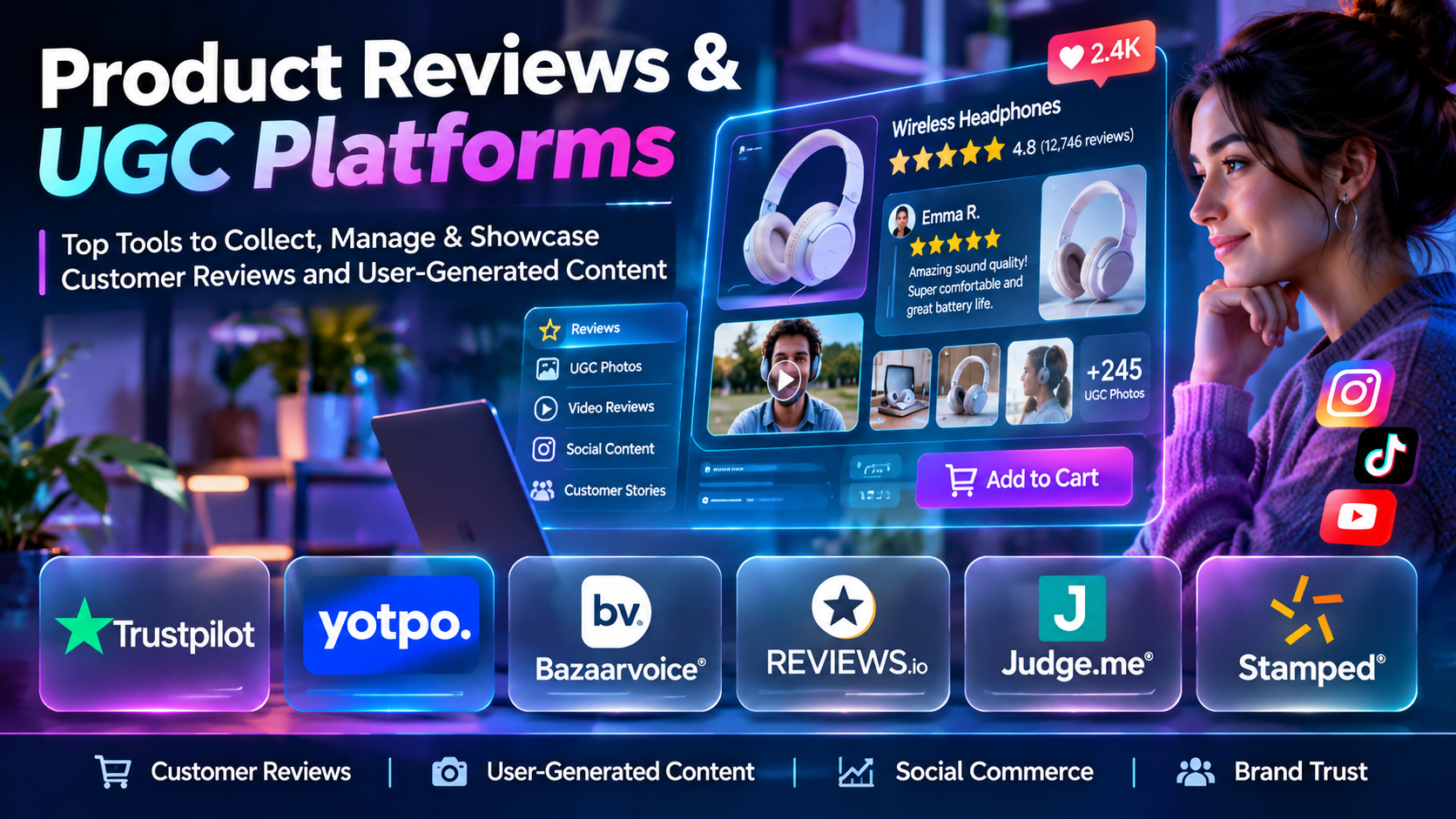
Product reviews and user-generated content (UGC) have become important parts of online shopping. Customers often want to see authentic experiences, product photographs, ratings, and detailed feedback before making a purchase.
For e-commerce businesses, collecting and displaying customer feedback requires more than adding a basic review form to a website. Reviews must be requested at appropriate times, associated with the correct products, moderated consistently, and displayed in ways that help shoppers make informed decisions.
User-generated content adds another dimension to product discovery. Customer photographs, videos, testimonials, and social posts can demonstrate how products look and perform in everyday situations.
Product reviews and UGC platforms help businesses manage these activities through automated review requests, customer content collection, moderation workflows, review widgets, analytics, and integrations with commerce systems.
Some platforms specialize in review collection for direct-to-consumer stores. Others focus on retail syndication, visual UGC, social commerce, or enterprise customer content programs.
This guide compares ten product reviews and UGC platforms, explains their features and limitations, and provides practical recommendations for different business types. It also includes comparison tables, a seven-step implementation example, and detailed answers to common questions.
What Are Product Reviews & UGC Platforms?
Product reviews and UGC platforms are software solutions that help businesses collect, manage, display, analyze, and distribute content created by customers.
Product reviews typically include star ratings, written feedback, photographs, and videos associated with a purchased product. User-generated content can also include social posts, product demonstrations, customer stories, and other material created by users rather than the brand.
These platforms often integrate with e-commerce systems to identify completed orders and send review invitations. They may also provide moderation, verified-buyer indicators, customizable display widgets, and reporting.
More advanced platforms support review syndication, visual galleries, rights management, customer content discovery, and connections with marketing systems.
Common applications include:
- Product Review Collection: Request feedback after customers receive products.
- Photo and Video Reviews: Collect visual content showing real product experiences.
- Review Display: Add ratings and reviews to product pages and other eligible website areas.
- Retail Syndication: Share approved product reviews across supported retail partners.
- UGC Galleries: Display customer photographs and videos in curated website galleries.
- Review Moderation: Evaluate submissions according to transparent content policies.
- Customer Insights: Identify recurring product strengths, complaints, and improvement opportunities.
- Marketing Content Management: Obtain appropriate permissions before reusing customer-created content.
Top 10 Product Reviews & UGC Platforms
1. Yotpo
Short Description
Yotpo is an e-commerce marketing technology provider offering product reviews and related customer engagement solutions. Its reviews capabilities help brands collect, manage, and display customer feedback across supported commerce environments.
The platform is particularly relevant to direct-to-consumer brands and established retailers that want structured review collection integrated with their online shopping experience.
Yotpo supports workflows for collecting written reviews, ratings, and eligible visual content. Businesses can use review displays to provide shoppers with relevant customer experiences and product information.
The platform also offers integrations and capabilities associated with review syndication and commerce marketing. Organizations should verify current product offerings, supported channels, and pricing before adoption.
Key Features
- Automated Review Requests: Sends eligible review invitations after purchase using configured workflows.
- Product Ratings: Collects star ratings associated with product records.
- Written Reviews: Allows customers to provide detailed product feedback.
- Photo and Video Reviews: Supports collection of eligible visual customer content.
- Review Widgets: Displays reviews and ratings on supported commerce pages.
- Moderation Tools: Helps businesses manage submissions according to established policies.
- Review Syndication: Supports selected distribution workflows for eligible retail destinations.
- Commerce Integrations: Connects with supported e-commerce platforms.
- Review Analytics: Provides information about review collection and customer feedback.
Benefits
- Automates review collection.
- Adds customer feedback to product pages.
- Supports visual customer content.
- Reduces manual review administration.
- Provides customer experience insights.
- Supports established commerce workflows.
- Helps maintain consistent review displays.
Pros
- E-commerce specialization.
- Automated review requests.
- Visual review capabilities.
- Customizable review displays.
- Retail syndication opportunities.
- Relevant to growing brands.
Cons
- Advanced functionality may increase costs.
- Feature availability varies by plan.
- Integration requirements need evaluation.
- Review volume depends on customer participation.
- Moderation requires ongoing governance.
Use Cases
- Direct-to-Consumer Reviews: Collect customer feedback after completed purchases.
- Product Page Optimization: Display relevant reviews near product information.
- Visual Customer Feedback: Gather customer photographs and videos.
- Retail Content Distribution: Syndicate eligible reviews through supported arrangements.
- Customer Experience Analysis: Identify recurring complaints and positive product attributes.
- Review Program Automation: Reduce manual review request administration.
Best For
- Direct-to-consumer brands.
- Established e-commerce retailers.
- Customer experience teams.
- Product marketing departments.
- Commerce operations managers.
- Businesses requiring review syndication.
2. Bazaarvoice
Short Description
Bazaarvoice is a ratings, reviews, and user-generated content platform designed for brands and retailers. It provides capabilities for collecting, managing, displaying, and distributing customer-generated product content.
The platform is especially relevant to organizations operating across large retail networks. Brands may need to collect customer feedback and make eligible reviews available through multiple retail destinations.
Bazaarvoice combines review collection with content syndication and related consumer-generated content workflows. This makes it suitable for businesses that want product reviews to support several commercial relationships.
Its enterprise orientation can introduce additional implementation and governance requirements. Buyers should evaluate retailer coverage, content eligibility, integrations, and commercial terms.
Key Features
- Ratings and Reviews: Collects structured customer product feedback.
- Review Syndication: Distributes eligible reviews through supported retail relationships.
- Photo and Video Content: Supports collection of visual customer submissions.
- Content Moderation: Provides processes for managing customer-generated material.
- Review Displays: Integrates ratings and reviews into supported shopping experiences.
- Sampling Programs: Supports selected product sampling and review generation workflows.
- Customer Insights: Helps organizations analyze product feedback.
- Retailer Connections: Supports content exchange across eligible retail partners.
- Enterprise Integrations: Connects with supported commerce and marketing systems.
Benefits
- Supports large-scale review programs.
- Connects brands with retail destinations.
- Improves product content availability.
- Supports visual UGC.
- Helps organize customer feedback.
- Provides enterprise governance capabilities.
- Supports multi-retailer review strategies.
Pros
- Strong retail syndication orientation.
- Relevant to enterprise brands.
- Review and visual UGC capabilities.
- Retailer network relationships.
- Product sampling options.
- Customer feedback analytics.
Cons
- Enterprise pricing requires evaluation.
- Implementation can be complex.
- Syndication depends on eligibility and retailer support.
- Content governance requires resources.
- Smaller merchants may not need its full scope.
Use Cases
- Consumer Brand Reviews: Collect feedback for products sold through several retailers.
- Retail Review Syndication: Share eligible customer reviews across supported destinations.
- Product Sampling: Organize compliant sampling programs to encourage authentic feedback.
- Visual Content Collection: Gather customer photographs and product experiences.
- Customer Insight Analysis: Identify recurring product issues.
- Enterprise Review Governance: Coordinate review policies across multiple teams.
Best For
- Consumer packaged goods brands.
- Enterprise retailers.
- Retail account teams.
- Product experience managers.
- Large consumer brands.
- Organizations requiring review syndication.
3. PowerReviews
Short Description
PowerReviews is a ratings and reviews technology provider focused on helping brands and retailers collect and display customer product feedback.
The platform supports product review programs across digital commerce environments. Businesses can use its capabilities to collect ratings, written reviews, and relevant customer-generated content.
PowerReviews is particularly relevant to organizations that want review collection and distribution capabilities across retail relationships. Its tools can support product content strategies involving several selling destinations.
Businesses should verify current syndication arrangements, integrations, and feature availability. Review distribution depends on supported destinations and applicable program requirements.
Key Features
- Ratings Collection: Captures customer product ratings.
- Written Reviews: Supports detailed customer feedback.
- Review Invitations: Automates eligible post-purchase requests.
- Visual Reviews: Supports customer photographs and related content.
- Review Display: Presents product reviews on supported websites.
- Moderation: Helps manage submitted content.
- Review Syndication: Supports eligible content distribution.
- Review Analytics: Provides feedback and program performance information.
- Commerce Integration: Connects with supported commerce environments.
Benefits
- Centralizes review collection.
- Supports authentic customer feedback.
- Improves review availability.
- Helps manage visual submissions.
- Reduces manual review administration.
- Supports retail review programs.
- Provides customer insight data.
Pros
- Ratings and reviews specialization.
- Retail syndication capabilities.
- Visual review support.
- Automated invitations.
- Enterprise-oriented workflows.
- Product feedback reporting.
Cons
- Pricing requires commercial evaluation.
- Syndication coverage varies.
- Implementation needs coordination.
- Moderation policies must be maintained.
- Not a full social content production platform.
Use Cases
- Retail Product Reviews: Collect feedback for products sold online.
- Post-Purchase Requests: Automate review invitations.
- Retail Syndication: Distribute eligible reviews to supported partners.
- Visual Feedback: Collect customer product photographs.
- Product Improvement: Analyze recurring complaints.
- Review Program Reporting: Monitor submission activity and customer feedback trends.
Best For
- Enterprise retailers.
- Consumer brands.
- Review program managers.
- Product experience teams.
- Retail marketing departments.
- Businesses requiring structured review collection.
4. Okendo
Short Description
Okendo is a customer marketing platform offering product reviews and related customer engagement capabilities for e-commerce businesses.
It is particularly relevant to Shopify-focused brands seeking detailed customer reviews and structured customer attributes. Businesses can use its review tools to collect information beyond basic star ratings.
Okendo supports review requests, product feedback, visual submissions, and customizable review displays. Its capabilities can help merchants gather more informative customer experiences.
The platform also offers related customer engagement products, depending on the selected subscription. Merchants should verify current features and integrations before adoption.
Key Features
- Automated Review Requests: Sends post-purchase invitations.
- Customer Attributes: Collects structured feedback about relevant customer experiences.
- Product Attributes: Supports product-specific review questions.
- Photo and Video Reviews: Collects eligible visual submissions.
- Review Widgets: Displays feedback on supported commerce pages.
- Review Moderation: Supports review management workflows.
- Commerce Integrations: Connects with supported e-commerce systems.
- Review Analytics: Provides program and feedback information.
- Customer Marketing Connections: Supports selected related engagement workflows.
Benefits
- Collects detailed customer feedback.
- Supports visual product reviews.
- Improves review organization.
- Automates invitations.
- Helps customers evaluate product suitability.
- Provides structured product insights.
- Supports e-commerce engagement.
Pros
- Detailed review attributes.
- Shopify-oriented capabilities.
- Visual UGC collection.
- Customizable displays.
- Automated review workflows.
- Relevant to direct-to-consumer brands.
Cons
- Best fit depends on commerce platform.
- Advanced features may require higher plans.
- Integration requirements vary.
- Structured questions require careful design.
- Review quality depends on participation.
Use Cases
- Apparel Reviews: Collect sizing and fit feedback.
- Beauty Product Reviews: Gather structured customer experience information.
- Visual Reviews: Display customer photographs.
- Post-Purchase Engagement: Automate review invitations.
- Product Improvement: Analyze attribute-specific feedback.
- Commerce Personalization: Use relevant customer insights within supported workflows.
Best For
- Shopify brands.
- Apparel retailers.
- Beauty businesses.
- Direct-to-consumer merchants.
- Customer marketing teams.
- Brands needing detailed review attributes.
5. Judge.me
Short Description
Judge.me is a product reviews application designed for e-commerce merchants. It helps businesses collect, manage, and display customer ratings and reviews through supported commerce integrations.
The platform is particularly relevant to smaller retailers and growing direct-to-consumer brands that need practical review collection without a large enterprise implementation.
Judge.me supports automated review requests, review displays, and eligible customer photo and video submissions. Merchants can use these capabilities to add customer experiences to product pages.
Its accessible orientation makes it useful for businesses establishing their first structured review program. Buyers should verify current plan limits, integrations, and feature availability.
Key Features
- Review Requests: Automates eligible customer invitations.
- Star Ratings: Collects product ratings.
- Written Reviews: Supports customer feedback submissions.
- Photo and Video Reviews: Collects eligible visual content.
- Review Widgets: Displays ratings and reviews on product pages.
- Moderation Controls: Supports review management.
- Review Import: Provides supported review migration workflows.
- Commerce Integration: Connects with eligible store platforms.
- Review Reporting: Provides information about review collection.
Benefits
- Simplifies review collection.
- Supports small businesses.
- Adds customer content to product pages.
- Reduces manual review requests.
- Supports visual feedback.
- Provides review management tools.
- Helps establish a repeatable review program.
Pros
- Accessible review workflows.
- Suitable for smaller stores.
- Automated invitations.
- Photo and video reviews.
- Customizable widgets.
- Straightforward commerce integration.
Cons
- Enterprise syndication needs may require alternatives.
- Some features depend on plans.
- Complex integrations need evaluation.
- Review collection still requires customer participation.
- Advanced content governance may require additional tools.
Use Cases
- Small Store Reviews: Establish a structured product review program.
- Post-Purchase Collection: Request feedback after orders.
- Visual Testimonials: Collect product photographs.
- Review Display: Add customer feedback to product pages.
- Review Migration: Import eligible existing reviews.
- Growing DTC Brand: Expand review collection as sales increase.
Best For
- Small online stores.
- Shopify merchants.
- Direct-to-consumer startups.
- E-commerce entrepreneurs.
- Product marketing teams.
- Businesses seeking practical review management.
6. Loox
Short Description
Loox is a product reviews and visual social proof platform designed for e-commerce merchants. It is particularly associated with Shopify-focused commerce workflows.
The platform emphasizes customer photo and video reviews, making it relevant to visually driven product categories. Fashion, accessories, beauty, home decor, and lifestyle brands can use customer content to demonstrate products.
Loox provides review collection and display capabilities that help merchants present customer experiences through visual formats. Its workflows can also support eligible customer referral and engagement features.
Businesses should evaluate current pricing, commerce compatibility, and content display requirements before implementation.
Key Features
- Photo Reviews: Collects customer photographs associated with products.
- Video Reviews: Supports eligible customer video submissions.
- Automated Requests: Sends review invitations after purchases.
- Visual Widgets: Displays customer content in product pages and galleries.
- Star Ratings: Collects structured product ratings.
- Review Moderation: Supports content management workflows.
- Review Incentives: Offers selected incentives or engagement capabilities subject to applicable rules.
- Commerce Integration: Connects with supported store systems.
- Review Analytics: Provides information about collection and display activity.
Benefits
- Emphasizes visual customer experiences.
- Supports product demonstration through UGC.
- Automates review requests.
- Improves review presentation.
- Helps visually driven brands.
- Reduces manual content collection.
- Supports customer engagement.
Pros
- Strong visual review orientation.
- Photo and video capabilities.
- Relevant to Shopify merchants.
- Customizable display widgets.
- Automated collection workflows.
- Suitable for lifestyle brands.
Cons
- Best fit depends on commerce platform.
- Pricing varies by plan.
- Visual content requires moderation.
- Not a complete enterprise syndication solution.
- Customer participation affects content volume.
Use Cases
- Fashion Reviews: Show how products look on customers.
- Beauty Product Content: Collect photographs demonstrating real experiences.
- Home Decor Galleries: Display products in customer environments.
- Post-Purchase Requests: Automate review collection.
- Visual Product Pages: Add relevant photo reviews.
- Customer Content Programs: Encourage voluntary, authentic submissions.
Best For
- Fashion retailers.
- Beauty brands.
- Lifestyle stores.
- Shopify merchants.
- Visual merchandising teams.
- Direct-to-consumer businesses.
7. Stamped
Short Description
Stamped is an e-commerce customer engagement platform offering product reviews and related customer loyalty capabilities. It helps merchants collect feedback and display customer-generated content.
The platform is relevant to online retailers seeking review management within a broader customer engagement strategy. Businesses can coordinate review collection with selected retention and loyalty workflows.
Stamped supports ratings, written reviews, and eligible visual content. Merchants can use these capabilities to improve product information and understand customer experiences.
Its value depends on the business’s need for review functionality and related customer engagement tools. Buyers should verify current product offerings, pricing, and integrations.
Key Features
- Review Collection: Captures customer product feedback.
- Automated Invitations: Sends eligible post-purchase requests.
- Photo and Video Reviews: Supports visual submissions.
- Review Widgets: Displays customer feedback on commerce pages.
- Review Moderation: Helps manage submitted content.
- Review Analytics: Provides program performance information.
- Commerce Integrations: Connects with supported store platforms.
- Customer Engagement Features: Offers related capabilities depending on the selected product.
- Review Management: Organizes review administration workflows.
Benefits
- Centralizes review activity.
- Supports customer engagement.
- Automates feedback requests.
- Provides visual review options.
- Improves product feedback visibility.
- Supports retention-oriented workflows.
- Reduces manual administration.
Pros
- Review and engagement orientation.
- Automated collection.
- Visual content capabilities.
- Commerce integrations.
- Review display customization.
- Relevant to growing brands.
Cons
- Product packages require evaluation.
- Pricing depends on selected features.
- Some advanced workflows need additional configuration.
- Syndication capabilities vary.
- Review authenticity requires governance.
Use Cases
- DTC Review Collection: Request feedback from purchasers.
- Customer Engagement: Connect reviews with relevant retention workflows.
- Product Feedback Analysis: Identify recurring customer concerns.
- Visual Reviews: Collect product photographs.
- Review Display: Present customer experiences on product pages.
- Commerce Reporting: Monitor review program activity.
Best For
- Direct-to-consumer brands.
- E-commerce marketers.
- Customer retention teams.
- Shopify retailers.
- Product experience managers.
- Growing online businesses.
8. Reviews.io
Short Description
Reviews.io is a customer review and reputation management platform that supports company reviews, product reviews, and related customer content workflows.
The platform is relevant to e-commerce businesses that want to collect both product-specific feedback and broader customer service experiences.
Reviews.io provides review invitations, review displays, and selected visual content capabilities. Businesses can use its tools to organize customer feedback across supported commerce environments.
Its combination of product and company review workflows distinguishes it from platforms focused exclusively on individual product ratings. Buyers should verify current integrations, review distribution capabilities, and subscription terms.
Key Features
- Product Reviews: Collects product-specific feedback.
- Company Reviews: Captures broader customer experience reviews.
- Automated Invitations: Sends eligible feedback requests.
- Photo and Video Content: Supports selected visual submissions.
- Review Widgets: Displays reviews on supported websites.
- Review Moderation: Supports content management.
- Review Analytics: Provides feedback and performance information.
- Commerce Integrations: Connects with eligible store systems.
- Reputation Workflows: Helps businesses manage customer review programs.
Benefits
- Combines product and company feedback.
- Automates review invitations.
- Supports visual customer content.
- Provides reputation insights.
- Reduces manual review administration.
- Improves customer feedback organization.
- Supports e-commerce review programs.
Pros
- Product and company reviews.
- Automated collection.
- Visual UGC options.
- Review display capabilities.
- Relevant to online retailers.
- Customer feedback reporting.
Cons
- Advanced functionality may affect pricing.
- Integration coverage varies.
- Reputation programs require consistent moderation.
- Review collection depends on customer response.
- Not a complete social media management system.
Use Cases
- Product Review Collection: Gather item-specific customer experiences.
- Company Reputation: Collect feedback about service and purchasing experiences.
- Customer Experience Analysis: Identify recurring operational problems.
- Visual Reviews: Display customer photographs.
- Review Program Automation: Reduce manual invitations.
- Commerce Website Reviews: Add feedback displays to supported pages.
Best For
- Online retailers.
- Customer experience teams.
- Reputation managers.
- E-commerce brands.
- Service-oriented merchants.
- Businesses collecting product and company reviews.
9. Pixlee TurnTo
Short Description
Pixlee TurnTo, associated with Emplifi, provides capabilities for user-generated content, customer reviews, and related social commerce workflows.
The platform is relevant to consumer brands and retailers that want to collect customer-created visual content and use it across supported digital experiences.
Its UGC capabilities can help businesses discover, organize, and display customer photographs and other eligible content. Related review functionality supports product feedback programs.
The platform is particularly useful for brands combining social content with commerce experiences. Organizations should verify current product packaging, rights management capabilities, and integrations.
Key Features
- UGC Discovery: Helps identify relevant customer-created content.
- Visual Content Management: Organizes eligible customer photographs and videos.
- Rights Management: Supports selected permission and content usage workflows.
- UGC Galleries: Displays approved customer content.
- Ratings and Reviews: Provides related customer feedback capabilities.
- Content Curation: Helps teams select relevant submissions.
- Commerce Integration: Connects with supported commerce experiences.
- Content Analytics: Provides information about relevant UGC activity.
- Marketing Distribution: Supports approved content use through eligible channels.
Benefits
- Centralizes customer-created content.
- Supports visual commerce.
- Helps manage content permissions.
- Reduces manual UGC discovery.
- Connects social content with shopping.
- Supports customer storytelling.
- Provides content performance insights.
Pros
- Strong visual UGC orientation.
- Rights management workflows.
- Commerce content integration.
- Relevant to consumer brands.
- Content curation capabilities.
- Review and social content connections.
Cons
- Enterprise pricing may be substantial.
- Implementation requires planning.
- Content rights need legal review.
- Not all social content is suitable for reuse.
- Smaller brands may prefer simpler solutions.
Use Cases
- Fashion UGC Galleries: Display approved customer styling photographs.
- Lifestyle Marketing: Curate customer product experiences.
- Content Rights Management: Request and record appropriate permissions.
- Social Commerce: Connect customer content with product discovery.
- Brand Campaigns: Organize eligible user submissions.
- Customer Storytelling: Present authentic experiences across supported channels.
Best For
- Consumer brands.
- Social commerce teams.
- Visual content managers.
- Enterprise retailers.
- Fashion and lifestyle companies.
- Marketing departments managing UGC.
10. Nosto
Short Description
Nosto is a commerce experience platform offering personalization, merchandising, search, and related capabilities, including visual user-generated content solutions associated with its broader product portfolio.
The platform is relevant to e-commerce businesses that want to connect customer-created content with personalized shopping experiences.
Its UGC-related capabilities can help brands organize visual content and incorporate approved material into relevant commerce experiences. This supports product discovery and customer engagement.
Nosto is not primarily a standalone product review collection application. Businesses should evaluate whether its visual commerce and personalization capabilities match their specific requirements.
Key Features
- Visual UGC Management: Supports selected customer-created content workflows.
- Content Curation: Helps organize approved visual content.
- Commerce Personalization: Supports personalized shopping experiences.
- Product Recommendations: Provides relevant recommendation capabilities.
- Merchandising Tools: Supports product presentation workflows.
- Content Integration: Connects eligible content with commerce experiences.
- Performance Analytics: Provides relevant engagement information.
- Commerce Integrations: Connects with supported store platforms.
- Customer Experience Optimization: Supports broader commerce experience workflows.
Benefits
- Connects UGC with commerce experiences.
- Supports personalized merchandising.
- Helps organize visual content.
- Improves product discovery workflows.
- Provides commerce analytics.
- Supports established retailers.
- Combines multiple experience capabilities.
Pros
- Commerce personalization capabilities.
- Visual UGC opportunities.
- Merchandising functionality.
- Relevant to growing retailers.
- Integration options.
- Broader customer experience platform.
Cons
- Not a dedicated review collection specialist.
- Commercial costs require evaluation.
- Implementation may involve multiple modules.
- Content rights require governance.
- Smaller stores may not need the full platform.
Use Cases
- Visual Commerce: Add approved customer content to shopping experiences.
- Personalized Merchandising: Present relevant products and content.
- Lifestyle Retail: Use customer imagery to support product discovery.
- Product Recommendations: Connect commerce content with recommendation workflows.
- Content Performance Analysis: Evaluate relevant engagement indicators.
- Customer Experience Improvement: Coordinate content and merchandising strategies.
Best For
- Established e-commerce retailers.
- Commerce personalization teams.
- Visual merchandising specialists.
- Lifestyle brands.
- Digital experience managers.
- Businesses combining UGC and personalization.
Comparison Table: Top 10 Product Reviews & UGC Platforms
| Tool Name | Best For | Platform(s) | Standout Feature | Pricing |
|---|---|---|---|---|
| Yotpo | E-commerce review programs | Web, commerce integrations | Reviews and syndication | Free limited or paid offerings; verify plans |
| Bazaarvoice | Enterprise retail reviews | Web, enterprise integrations | Retail review syndication | Custom pricing |
| PowerReviews | Brand and retailer reviews | Web, commerce integrations | Review collection and distribution | Custom pricing |
| Okendo | Detailed customer reviews | Shopify, web integrations | Structured review attributes | Paid plans |
| Judge.me | Small business reviews | Supported commerce platforms | Accessible review collection | Free and paid plans |
| Loox | Visual product reviews | Shopify, supported integrations | Photo and video reviews | Paid plans |
| Stamped | Reviews and customer engagement | Web, commerce integrations | Review and retention workflows | Paid plans |
| Reviews.io | Product and company reviews | Web, commerce integrations | Combined review types | Paid plans |
| Pixlee TurnTo | Visual UGC programs | Web, enterprise integrations | UGC curation and rights workflows | Custom pricing |
| Nosto | UGC and commerce personalization | Web, commerce integrations | Personalized visual commerce | Custom pricing |
Note: Pricing, supported platforms, product packaging, and available features can change. Confirm current information with each vendor.
Which Product Reviews & UGC Platform Is Right for You?
Selecting a review and UGC platform begins with identifying the type of customer content your business needs.
A small online store may prioritize automated review invitations and simple product page widgets. A consumer brand selling through several retailers may require syndication, while a fashion company may focus on visual customer content.
For Beginners: Judge.me and Loox
Judge.me is relevant to merchants seeking accessible review collection and display workflows. It can help small stores establish a structured program.
Loox emphasizes visual reviews. It is particularly suitable for products that customers want to see in real-life settings.
Choose Judge.me for general review management and Loox for visual customer experiences.
For Enterprise Brands: Bazaarvoice and PowerReviews
Bazaarvoice supports enterprise ratings, reviews, and syndication workflows. It is relevant to brands managing retail relationships.
PowerReviews provides product review collection and distribution capabilities. It can support organizations requiring structured review programs.
Evaluate supported retailers, moderation processes, and commercial arrangements before choosing.
For Shopify Brands: Okendo and Yotpo
Okendo supports detailed customer review attributes and related e-commerce engagement workflows. It is useful for brands that need structured feedback.
Yotpo provides review collection and display capabilities with broader commerce marketing connections.
Choose according to the depth of review information, integration requirements, and total costs.
For Visual UGC: Pixlee TurnTo and Loox
Pixlee TurnTo supports visual UGC discovery, curation, and related rights workflows. It is relevant to brands managing substantial content programs.
Loox focuses on collecting and displaying visual product reviews. It can be more appropriate for smaller stores.
The choice depends on whether the business needs broad UGC operations or primarily product-level visual reviews.
For Customer Reputation: Reviews.io and Stamped
Reviews.io supports both product and company review collection. This can help businesses evaluate merchandise and service experiences.
Stamped provides product reviews alongside related customer engagement capabilities.
Choose Reviews.io for combined reputation and product feedback, or Stamped for review programs connected with customer engagement.
For Personalized Commerce: Nosto and Pixlee TurnTo
Nosto connects commerce personalization with relevant visual content capabilities. It is suitable for businesses optimizing product discovery.
Pixlee TurnTo emphasizes customer-created content management and curation.
Choose Nosto when personalization is central and Pixlee TurnTo when visual UGC operations are the main requirement.
Best Product Reviews & UGC Platforms for Different Users
| User Type | Recommended Software | Why? |
|---|---|---|
| Growing DTC brand | Yotpo | E-commerce review workflows |
| Enterprise consumer brand | Bazaarvoice | Retail syndication |
| Retail review manager | PowerReviews | Structured review programs |
| Shopify apparel brand | Okendo | Detailed review attributes |
| Small online store | Judge.me | Accessible review collection |
| Visual lifestyle retailer | Loox | Photo and video reviews |
| Customer retention team | Stamped | Review and engagement workflows |
| Reputation manager | Reviews.io | Product and company reviews |
| UGC marketing department | Pixlee TurnTo | Content curation and rights |
| Commerce personalization team | Nosto | Visual commerce experiences |
Practical Example: Launching a Customer Review and UGC Program
Consider a skincare brand operating a Shopify store. The company wants to collect authentic product feedback, encourage customer photographs, and improve the information available on product pages.
The business selects a review platform such as Okendo, Judge.me, or Yotpo. Its goal is to establish a repeatable review process while maintaining transparency and customer privacy.
Step 1: Define Review Program Objectives
Identify the products that need additional customer feedback. Establish measurable objectives such as review coverage, response rates, and the percentage of product pages containing useful customer experiences.
Avoid setting targets that encourage fabricated or selectively positive reviews. Focus on authentic participation and informative content.
Step 2: Connect the Commerce Platform
Install or connect the selected review solution through an authorized integration. Verify product identifiers, customer order information, and review request eligibility.
Test the connection with a small number of internal orders. Confirm that reviews are associated with the correct products.
Step 3: Configure Review Invitations
Create a post-purchase review request that gives customers sufficient time to use the product. For skincare products, the appropriate interval may depend on the product and its intended use.
Use neutral language that welcomes honest feedback. Do not condition rewards on positive ratings.
Step 4: Design the Review Form
Include a star rating, optional written feedback, and relevant product experience questions. Allow customers to describe both positive and negative experiences.
Offer optional photo submissions with clear information about how the content may be used.
Avoid collecting unnecessary personal or sensitive information.
Step 5: Establish Moderation and Rights Policies
Create a documented policy for handling spam, offensive material, irrelevant submissions, and potentially unlawful content.
Do not suppress genuine negative reviews merely because they are unfavorable. If incentives are offered, disclose them appropriately.
Obtain necessary permissions before using customer photographs or videos in advertising.
Step 6: Publish Review Displays
Add review widgets to relevant product pages. Ensure ratings and reviews are readable on mobile devices.
Check accessibility, page loading performance, and correct product associations. Review how the widgets behave when a product has no reviews.
Step 7: Measure and Improve
Monitor review invitations, submission rates, review coverage, and recurring customer feedback themes.
Investigate complaints that reveal product quality or service problems. Share relevant findings with product development and customer support teams.
Review the program regularly to maintain accuracy, transparency, and compliance.
A successful review program provides useful information to shoppers while helping the business understand customer experiences.
Frequently Asked Questions (FAQs)
1. What are product reviews and UGC platforms?
They are software solutions that help businesses collect, manage, display, and analyze customer-created content.
Their capabilities may include ratings, written reviews, photographs, videos, moderation, and syndication.
2. What does UGC mean?
UGC means user-generated content. It refers to content created by users or customers rather than directly by a brand.
Examples include product photographs, customer videos, reviews, and social posts.
3. Which review platform is best for small businesses?
Judge.me and Loox are relevant to smaller e-commerce stores. Judge.me emphasizes accessible review collection, while Loox focuses on visual reviews.
The best choice depends on product type, budget, and commerce platform.
4. Can review platforms automatically request feedback?
Yes. Many platforms support automated post-purchase invitations.
Businesses should configure appropriate timing and comply with relevant communication and privacy requirements.
5. Are product reviews important for e-commerce?
Product reviews can provide shoppers with information about real customer experiences. They may help customers evaluate product suitability and identify potential concerns.
Their usefulness depends on authenticity, relevance, and quality.
6. What is a verified purchase review?
A verified purchase review is associated with evidence that the reviewer purchased the product through a supported process.
Verification methods vary by platform and do not guarantee that every statement in a review is accurate.
7. Can businesses remove negative reviews?
Businesses may moderate content according to lawful, transparent, and consistently applied policies.
They should not remove genuine negative reviews solely to create a misleading impression of customer satisfaction.
8. What is review syndication?
Review syndication distributes eligible customer reviews to supported retail or commerce destinations.
It generally depends on vendor relationships, content eligibility, and destination requirements.
9. Can UGC platforms collect customer photographs?
Yes. Many platforms support photo and video submissions.
Businesses should provide clear consent information and obtain appropriate usage rights before repurposing content.
10. What is the difference between reviews and testimonials?
Reviews are customer evaluations that may include ratings and both positive and negative feedback. Testimonials are often selected customer statements used for marketing.
Both should be authentic and presented without misleading context.
11. Can review platforms improve SEO?
Review content can add relevant information to product pages and support customer understanding.
Search visibility also depends on technical SEO, content quality, site architecture, and applicable search engine policies.
12. What are review incentives?
Review incentives are benefits offered to encourage customers to submit feedback.
Incentives should not depend on positive ratings, and businesses must follow applicable disclosure and platform requirements.
13. Which platforms support retail syndication?
Bazaarvoice, PowerReviews, and Yotpo offer relevant review distribution capabilities.
Actual retailer coverage and eligibility must be confirmed.
14. What is visual UGC?
Visual UGC includes customer-created photographs and videos showing products or experiences.
It is particularly useful for visually driven categories such as fashion, beauty, and home decor.
15. How should businesses moderate reviews?
Moderation should follow a documented policy addressing spam, abusive content, privacy violations, and irrelevant submissions.
Genuine criticism should remain visible unless there is a legitimate reason for removal.
16. Can UGC be used in advertisements?
Customer-created content may be used in advertising when appropriate permissions and legal requirements are satisfied.
Businesses should not assume that a public social media post automatically grants unrestricted commercial usage rights.
17. How can businesses measure review program success?
Relevant metrics include review submission rates, product review coverage, moderation time, and customer feedback themes.
Commercial impact should be evaluated carefully rather than assumed from review volume alone.
18. Are photo reviews better than written reviews?
Photo reviews provide visual context, while written reviews can explain product quality, usability, and limitations.
Combining both formats often gives shoppers more complete information.
19. What should businesses consider before migrating reviews?
Review migration requires attention to product identifiers, source authenticity, customer information, and platform import rules.
Test a representative sample before importing a large review database.
20. Which UGC platform is best for enterprise brands?
Bazaarvoice, PowerReviews, and Pixlee TurnTo address different enterprise review and UGC requirements.
The right choice depends on retail syndication, content rights, integration needs, and organizational scale.
Final Thoughts
Product reviews and UGC platforms help businesses organize authentic customer experiences and make relevant feedback available to shoppers.
Yotpo, Bazaarvoice, and PowerReviews support established review programs, while Okendo, Judge.me, Loox, and Stamped address different direct-to-consumer requirements.
Reviews.io combines product and company feedback. Pixlee TurnTo emphasizes visual UGC management, while Nosto connects relevant content with broader commerce personalization.
The right platform depends on review collection requirements, visual content needs, retail relationships, and available resources.
Businesses should prioritize authenticity, transparent moderation, privacy, and appropriate content permissions. A well-managed review program supports informed shopping decisions and provides valuable product feedback.
