Introduction
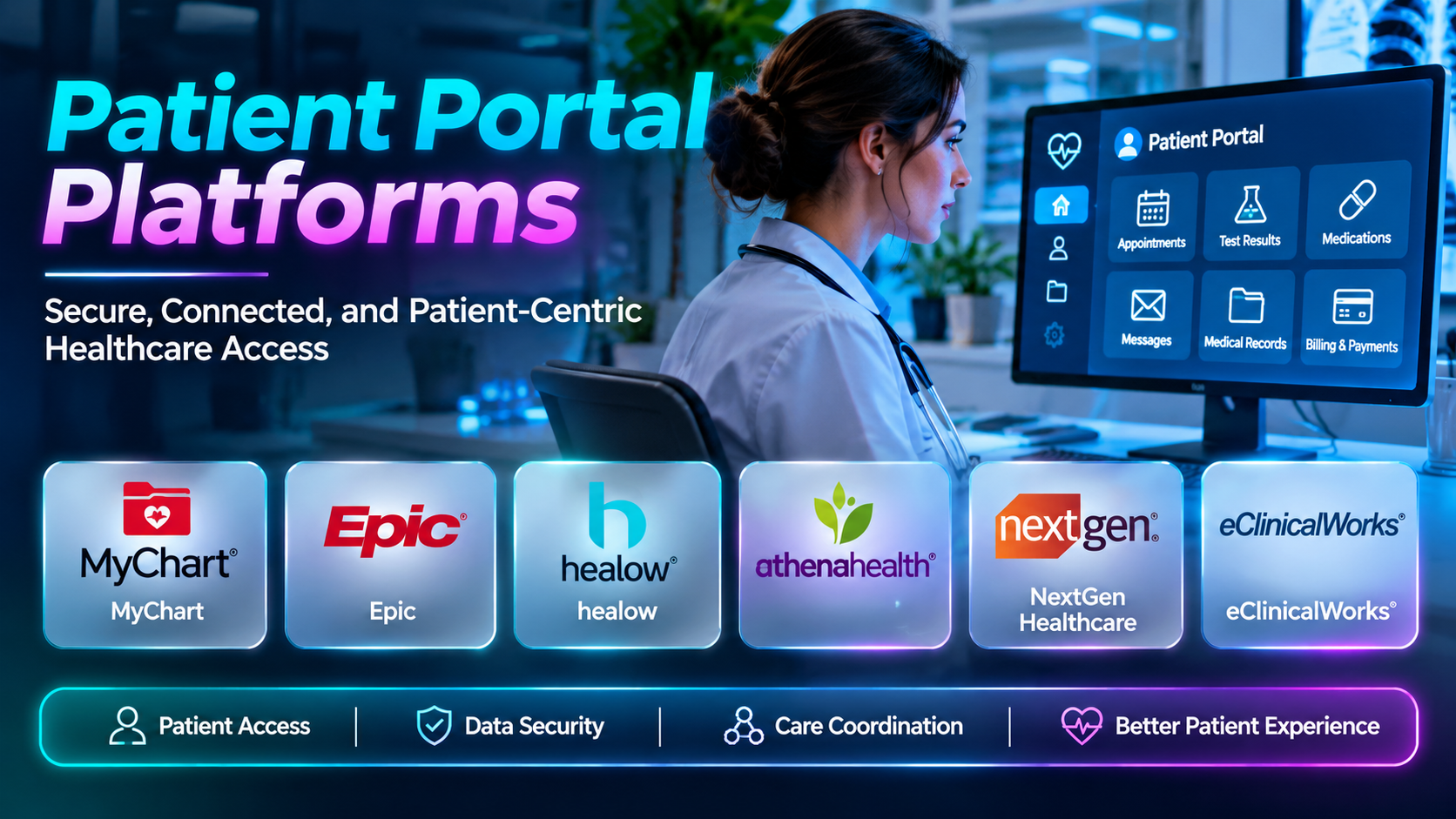
Patients increasingly expect convenient access to their healthcare information and services. Patient portal platforms provide secure digital environments for reviewing records, communicating with providers, and completing selected administrative tasks.
Healthcare organizations use portals to support appointment scheduling, prescription requests, test result access, and patient communication. Available functions depend on the underlying electronic health record (EHR), portal configuration, and healthcare provider.
This guide compares ten patient portal platforms across hospital, ambulatory, and independent healthcare environments. It explains their features, limitations, practical applications, and important implementation considerations.
What Are Patient Portal Platforms?
A patient portal is a secure application that gives patients access to selected healthcare information and services. It commonly connects to an EHR or other clinical information system.
Portals may provide messaging, appointments, billing, educational materials, and digital forms. Some support access for caregivers or authorized representatives under applicable privacy rules.
Why Patient Portals Matter
Patients often need information between clinical visits. A portal can make appropriate records and services available without requiring every interaction to occur by telephone.
Healthcare providers can also use portals to organize routine communication and administrative workflows. However, poor accessibility, confusing navigation, and delayed responses can limit adoption.
Common Features
- Secure patient login
- Medical record access
- Test result viewing
- Appointment scheduling
- Secure messaging
- Medication information
- Prescription refill requests
- Digital intake forms
- Online bill payment
- Proxy and caregiver access
Top 10 Patient Portal Platforms
1. Epic MyChart
Short Description
Epic MyChart is a patient-facing application connected to participating Epic healthcare organizations. It provides access to selected health information and digital care services.
Key Features
- Health record access
- Test result viewing
- Appointment management
- Secure messaging
- Medication information
- Prescription refill requests
- Online billing
- Proxy access
- Virtual care integration
Benefits
- Centralizes patient-facing services.
- Supports communication with care teams.
- Improves access to records.
- Simplifies appointment tasks.
- Supports medication-related requests.
- Connects clinical and administrative information.
- Facilitates ongoing care coordination.
Pros
- Broad patient-facing functionality.
- Integration with Epic systems.
- Mobile access.
- Support for multiple care activities.
- Established healthcare adoption.
- Caregiver access options.
Cons
- Requires participating healthcare organizations.
- Features vary by provider.
- Configuration can be complex.
- Patient adoption requires support.
- Cross-organization access depends on connections.
Use Cases
- Hospital patient access
- Appointment management
- Laboratory result viewing
- Secure provider messaging
- Patient bill payment
- Family care coordination
Best For
- Epic-based hospitals
- Integrated health systems
- Academic medical centers
- Multispecialty networks
- Large outpatient organizations
- Organizations offering connected patient services
2. athenahealth Patient Portal
Short Description
athenahealth provides patient portal functionality within its ambulatory healthcare technology ecosystem. It supports patient communication, records access, and administrative self-service.
Key Features
- Patient account access
- Appointment information
- Secure messaging
- Clinical information viewing
- Payment workflows
- Digital forms
- Medication information
- Patient communication
- Practice management integration
Benefits
- Supports outpatient self-service.
- Connects patient and practice workflows.
- Facilitates secure communication.
- Helps manage appointments.
- Supports digital payments.
- Reduces selected administrative calls.
- Provides accessible patient information.
Pros
- Ambulatory practice integration.
- Patient communication features.
- Billing connections.
- Cloud-oriented ecosystem.
- Relevant to physician groups.
- Connected administrative workflows.
Cons
- Depends on athenahealth deployment.
- Available functions vary.
- Patient onboarding is necessary.
- Integration outside the ecosystem requires evaluation.
- Customization may be constrained.
Use Cases
- Outpatient patient access
- Appointment communication
- Patient payments
- Secure messaging
- Digital intake
- Practice administration
Best For
- athenahealth practices
- Independent physician groups
- Multispecialty clinics
- Outpatient networks
- Practice administrators
- Organizations integrating patient and billing services
3. healow
Short Description
healow provides patient-facing healthcare applications associated with eClinicalWorks and related healthcare technology. It supports digital access, communication, scheduling, and selected remote care services.
Key Features
- Patient health information access
- Appointment scheduling
- Secure communication
- Medication information
- Patient reminders
- Digital check-in
- Televisit connections
- Patient payment options
- Mobile applications
Benefits
- Supports patient self-service.
- Connects digital care activities.
- Facilitates appointment management.
- Enables patient communication.
- Supports remote visits.
- Reduces selected administrative tasks.
- Helps coordinate ongoing care.
Pros
- Broad patient-facing ecosystem.
- Mobile functionality.
- Ambulatory care relevance.
- Scheduling capabilities.
- Virtual care connections.
- Patient communication tools.
Cons
- Features depend on connected services.
- Configuration varies by provider.
- Patient onboarding is required.
- Some capabilities involve separate products.
- Integration scope needs verification.
Use Cases
- Outpatient portals
- Televisit access
- Appointment scheduling
- Patient communication
- Digital check-in
- Medication-related requests
Best For
- eClinicalWorks practices
- Ambulatory networks
- Primary care organizations
- Multispecialty clinics
- Telehealth-enabled providers
- Organizations seeking mobile patient services
4. Oracle Health Patient Portal
Short Description
Oracle Health provides patient-facing applications associated with its clinical information systems. These tools support selected healthcare record access and patient services.
Key Features
- Patient information access
- Clinical record viewing
- Appointment information
- Secure communication
- Test result access
- Medication information
- Patient account functions
- Health system integration
- Digital patient services
Benefits
- Connects patients with hospital information.
- Supports access to clinical records.
- Facilitates digital communication.
- Helps manage care information.
- Supports patient self-service.
- Integrates with enterprise clinical systems.
- Reduces dependence on paper records.
Pros
- Enterprise healthcare relevance.
- Integration with Oracle Health systems.
- Clinical information access.
- Hospital workflow connections.
- Patient communication functions.
- Suitable for large organizations.
Cons
- Product naming and deployment vary.
- Configuration requires planning.
- Functionality depends on the health system.
- Implementation can be complex.
- Patient experience requires testing.
Use Cases
- Hospital patient access
- Clinical result viewing
- Appointment communication
- Enterprise patient services
- Patient information management
- Digital hospital modernization
Best For
- Oracle Health organizations
- Hospitals
- Integrated healthcare networks
- Enterprise clinical IT teams
- Regional health systems
- Organizations modernizing patient access
5. MEDITECH MHealth
Short Description
MEDITECH MHealth provides mobile patient access to selected information and services associated with participating MEDITECH organizations. It supports digital engagement between patients and healthcare providers.
Key Features
- Mobile patient access
- Health information viewing
- Test result access
- Appointment information
- Secure communication
- Medication information
- Patient account access
- Health system integration
- Digital care services
Benefits
- Supports mobile record access.
- Facilitates patient communication.
- Connects patients with hospitals.
- Improves access to selected results.
- Supports appointment coordination.
- Reduces paper-based information requests.
- Complements MEDITECH clinical workflows.
Pros
- MEDITECH integration.
- Mobile access.
- Hospital-oriented functionality.
- Patient communication options.
- Clinical information access.
- Relevant to community hospitals.
Cons
- Requires compatible deployments.
- Features vary by organization.
- Patient training may be necessary.
- External integration needs review.
- Accessibility should be tested.
Use Cases
- Hospital patient portals
- Mobile records access
- Laboratory result viewing
- Patient messaging
- Appointment information
- Community hospital engagement
Best For
- MEDITECH hospitals
- Regional health systems
- Community hospitals
- Hospital patient experience teams
- Clinical IT departments
- Organizations expanding mobile access
6. FollowMyHealth
Short Description
FollowMyHealth is a patient engagement and personal health record platform associated with the Veradigm healthcare technology ecosystem. Organizations should confirm current product availability and commercial arrangements.
Key Features
- Patient record access
- Secure communication
- Appointment information
- Medication information
- Health history viewing
- Patient account management
- Mobile access
- Provider connections
- Patient engagement workflows
Benefits
- Supports access to health information.
- Helps patients review care records.
- Facilitates provider communication.
- Supports ongoing patient engagement.
- Provides digital self-service.
- Helps organize health information.
- Reduces reliance on paper records.
Pros
- Patient-facing record focus.
- Relevant to ambulatory care.
- Digital communication.
- Mobile-oriented access.
- Established healthcare context.
- Supports selected multi-provider workflows.
Cons
- Product lifecycle requires confirmation.
- Functionality depends on deployment.
- Integration scope varies.
- Patient onboarding is necessary.
- Support arrangements need review.
Use Cases
- Patient record viewing
- Physician practice portals
- Secure messaging
- Medication information access
- Digital patient communication
- Healthcare information access
Best For
- Existing FollowMyHealth organizations
- Ambulatory providers
- Physician practices
- Patient engagement teams
- Clinical IT administrators
- Organizations reviewing portal continuity
7. NextGen Patient Portal
Short Description
NextGen Healthcare provides patient portal functionality for ambulatory care organizations. It supports communication, selected records access, and administrative self-service.
Key Features
- Secure patient accounts
- Clinical information access
- Appointment management
- Patient messaging
- Digital forms
- Medication information
- Patient communication
- Practice system integration
- Patient-facing workflows
Benefits
- Supports outpatient engagement.
- Facilitates patient messaging.
- Connects portal and practice workflows.
- Helps manage appointments.
- Supports digital intake.
- Improves information accessibility.
- Reduces selected manual tasks.
Pros
- Ambulatory integration.
- Specialty practice relevance.
- Patient communication functions.
- Connected clinical workflows.
- Administrative self-service.
- Established healthcare software provider.
Cons
- Requires compatible NextGen systems.
- Configuration affects functionality.
- Patient adoption needs support.
- Integration limitations should be reviewed.
- Customization may require expertise.
Use Cases
- Specialty practice portals
- Appointment requests
- Secure messaging
- Digital forms
- Patient information access
- Multispecialty engagement
Best For
- NextGen practices
- Specialty clinics
- Multispecialty groups
- Ambulatory networks
- Practice administrators
- Outpatient patient experience teams
8. Bridge Patient Portal
Short Description
Bridge Patient Portal provides patient-facing technology designed to connect with healthcare systems. It is relevant to organizations seeking portal functionality across selected clinical and administrative applications.
Key Features
- Patient authentication
- Health information access
- Secure messaging
- Appointment functions
- Patient forms
- Payment integration options
- Clinical system connections
- Mobile-friendly access
- Portal configuration
Benefits
- Supports patient self-service.
- Connects selected healthcare systems.
- Facilitates digital communication.
- Helps consolidate patient-facing functions.
- Supports appointment workflows.
- Reduces paper-based processes.
- Provides configurable portal experiences.
Pros
- Patient portal specialization.
- Integration-oriented approach.
- Configurable functionality.
- Relevant to varied organizations.
- Patient communication support.
- Digital self-service capabilities.
Cons
- Integration work may be substantial.
- Capabilities depend on connected systems.
- Implementation costs vary.
- Clinical data accuracy depends on sources.
- Security configuration requires attention.
Use Cases
- Multi-system patient portals
- Specialty practice access
- Patient messaging
- Digital registration
- Appointment workflows
- Portal modernization
Best For
- Healthcare IT teams
- Organizations with multiple systems
- Specialty clinics
- Patient experience departments
- Providers seeking configurable portals
- Healthcare integration projects
9. Greenway Health Patient Portal
Short Description
Greenway Health provides patient-facing functionality connected with its ambulatory healthcare software. It supports communication and selected clinical and administrative activities.
Key Features
- Patient account access
- Clinical information viewing
- Secure messaging
- Appointment functions
- Patient forms
- Medication information
- Practice system integration
- Patient communication
- Administrative self-service
Benefits
- Supports outpatient patient access.
- Facilitates practice communication.
- Helps organize patient information.
- Supports appointment tasks.
- Reduces selected phone interactions.
- Connects clinical and administrative processes.
- Enables digital patient services.
Pros
- Ambulatory care focus.
- Greenway system integration.
- Patient messaging.
- Practice workflow connections.
- Digital self-service.
- Relevant to physician groups.
Cons
- Depends on compatible products.
- Functionality varies by configuration.
- Patient training is necessary.
- Integration needs review.
- Customization may be limited.
Use Cases
- Physician practice portals
- Appointment communication
- Patient record access
- Secure messaging
- Digital forms
- Outpatient engagement
Best For
- Greenway practices
- Independent physician groups
- Ambulatory clinics
- Multispecialty organizations
- Practice administrators
- Patient access teams
10. CareCloud Patient Portal
Short Description
CareCloud provides patient-facing capabilities within its healthcare practice technology ecosystem. It supports selected patient communication, account access, and administrative workflows.
Key Features
- Patient account management
- Appointment information
- Secure communication
- Clinical information access
- Patient billing connections
- Digital forms
- Practice management integration
- Patient engagement functions
- Online self-service
Benefits
- Supports digital patient access.
- Connects administrative services.
- Facilitates communication.
- Helps manage appointment information.
- Supports patient payments.
- Reduces manual administration.
- Complements outpatient workflows.
Pros
- Practice technology integration.
- Patient-facing functions.
- Ambulatory relevance.
- Administrative connections.
- Digital communication.
- Integrated platform approach.
Cons
- Features depend on subscribed products.
- Integration scope varies.
- Configuration requires planning.
- Patient onboarding is necessary.
- Commercial terms need review.
Use Cases
- Outpatient patient access
- Appointment information
- Patient billing
- Secure communication
- Digital intake
- Practice engagement
Best For
- CareCloud practices
- Ambulatory providers
- Independent physician groups
- Practice administrators
- Outpatient networks
- Organizations seeking integrated patient services
Comparison of the Top 10 Patient Portal Platforms
| Platform | Primary Focus | Typical Organization | Main Consideration |
|---|---|---|---|
| Epic MyChart | Enterprise patient access | Epic health systems | Provider participation |
| athenahealth Patient Portal | Ambulatory self-service | Physician practices | Platform dependency |
| healow | Mobile patient engagement | Ambulatory networks | Product configuration |
| Oracle Health Patient Portal | Hospital patient services | Enterprise hospitals | Deployment differences |
| MEDITECH MHealth | Mobile hospital portal | MEDITECH organizations | System compatibility |
| FollowMyHealth | Patient record access | Existing healthcare users | Product lifecycle |
| NextGen Patient Portal | Specialty ambulatory access | Physician groups | NextGen integration |
| Bridge Patient Portal | Configurable patient access | Multi-system organizations | Integration complexity |
| Greenway Patient Portal | Practice patient services | Greenway practices | Feature availability |
| CareCloud Patient Portal | Connected practice access | Ambulatory providers | Package scope |
Which Patient Portal Platform Is Right for You?
| Buyer Persona | Platforms to Evaluate | Primary Reason |
|---|---|---|
| Large Epic hospital | MyChart | Native clinical integration |
| Independent ambulatory practice | athenahealth, healow | Outpatient self-service |
| MEDITECH hospital | MHealth | Existing system integration |
| Oracle Health network | Oracle Health Patient Portal | Enterprise clinical connections |
| Specialty physician group | NextGen, Greenway | Practice-oriented workflows |
| Multi-system healthcare organization | Bridge Patient Portal | Configurable integration |
| Existing FollowMyHealth user | FollowMyHealth | Continuity assessment |
| CareCloud-based practice | CareCloud Patient Portal | Connected administrative functions |
How to Implement a Patient Portal Platform
Step 1: Define Patient Needs
Identify the services patients most frequently request. Prioritize workflows that can safely move to digital self-service.
Action checklist:
- Review patient inquiries.
- Identify appointment needs.
- Assess record access requirements.
- Consider caregiver access.
- Define success measures.
Step 2: Review Clinical Integration
Assess connections with EHR, scheduling, billing, and messaging systems. Determine which information can be shared safely.
Action checklist:
- Inventory clinical systems.
- Map patient identifiers.
- Review data synchronization.
- Test appointment workflows.
- Define information ownership.
Step 3: Evaluate Accessibility and Usability
Test the portal with patients who have different digital abilities. Include mobile devices, assistive technologies, and language requirements.
Action checklist:
- Conduct usability testing.
- Assess accessibility.
- Review language support.
- Test mobile navigation.
- Simplify registration.
Step 4: Configure Security
Implement appropriate identity verification, permissions, and audit controls. Define procedures for proxy access and account recovery.
Action checklist:
- Configure authentication.
- Set access permissions.
- Review privacy settings.
- Test account recovery.
- Document security procedures.
Step 5: Establish Communication Workflows
Define who receives portal messages and how quickly teams should respond. Clarify that routine messaging is not an emergency service.
Action checklist:
- Assign message owners.
- Define response expectations.
- Create escalation procedures.
- Prepare patient guidance.
- Train care teams.
Step 6: Launch and Educate
Introduce the portal with clear instructions and accessible support. Help patients understand which services are available.
Action checklist:
- Prepare registration materials.
- Train reception staff.
- Support account activation.
- Explain available functions.
- Collect early feedback.
Step 7: Measure and Improve
Review adoption, accessibility, message handling, and patient satisfaction. Use feedback to improve digital workflows.
Action checklist:
- Track active accounts.
- Review message response times.
- Monitor failed logins.
- Assess patient feedback.
- Improve usability.
Common Challenges in Patient Portal Adoption
Digital Access Barriers
Some patients have limited internet access, devices, or digital literacy. Organizations should preserve alternative communication options.
Fragmented Health Records
Patients may receive care from multiple organizations using different systems. Portal access does not automatically create a complete longitudinal record.
Message Overload
Secure messaging can increase staff workload when responsibilities are unclear. Appropriate routing and response expectations are essential.
Privacy and Proxy Access
Caregiver access must reflect patient authorization and applicable legal requirements. Sensitive information needs careful handling.
Frequently Asked Questions
1. What is a patient portal?
A patient portal is a secure digital application for accessing selected healthcare information and services. It typically connects with a provider’s clinical systems.
2. What can patients do through a portal?
Common functions include viewing results, managing appointments, and sending messages. Available features vary by organization.
3. Is a patient portal the same as an EHR?
No, a portal provides patient-facing access to selected information. An EHR manages broader clinical records and workflows.
4. Can patients see laboratory results?
Many portals display selected laboratory results. Release timing and interpretation processes depend on the provider.
5. Can patients message doctors?
Some portals provide secure messaging. Messages are generally intended for non-emergency communication.
6. Can patients book appointments?
Many portals support scheduling or appointment requests. Availability depends on clinic configuration.
7. Are patient portals secure?
They can provide authentication, encryption, and access controls. Organizations must still manage privacy and security appropriately.
8. Can caregivers access patient information?
Some portals offer authorized proxy access. Permissions depend on patient circumstances and applicable rules.
9. Can patients pay bills online?
Many portals support digital payment functions. Payment options depend on the provider’s billing integrations.
10. Do portals support mobile devices?
Many provide mobile applications or responsive interfaces. Accessibility should be tested across devices.
11. Can a portal replace phone calls?
It can reduce some routine calls. Telephone and other support channels remain important.
12. What is patient portal interoperability?
It refers to exchanging or accessing information across connected healthcare systems. Actual capabilities depend on integrations and standards.
13. Why do patients avoid portals?
Common barriers include confusing registration, limited digital skills, and accessibility problems. Clear onboarding can improve adoption.
14. How much does a portal cost?
Costs depend on licensing, integration, implementation, and support. Some portals are bundled with larger clinical systems.
15. How should portal success be measured?
Useful measures include activation, usage, message handling, and patient satisfaction. Accessibility and clinical workflow effects also matter.
16. How should an organization choose a portal?
Prioritize EHR compatibility, usability, privacy, and patient needs. Test realistic patient journeys before deployment.
Final Thoughts
Patient portal platforms provide a digital connection between patients and healthcare organizations. They can improve access to information and simplify selected care-related activities.
Epic MyChart, Oracle Health, and MEDITECH MHealth are relevant to hospital environments with established clinical systems. Their value depends on integration and the services each organization enables.
athenahealth, healow, NextGen, Greenway, and CareCloud support different ambulatory workflows. Organizations should evaluate how these tools fit their existing practice operations.
Security, accessibility, caregiver permissions, and message management are central implementation concerns. A portal that patients cannot easily use will deliver limited benefits.
The most suitable patient portal supports meaningful access without creating new barriers to care. Healthcare organizations should improve the experience continuously through patient feedback and operational measurement.
