1. Introduction
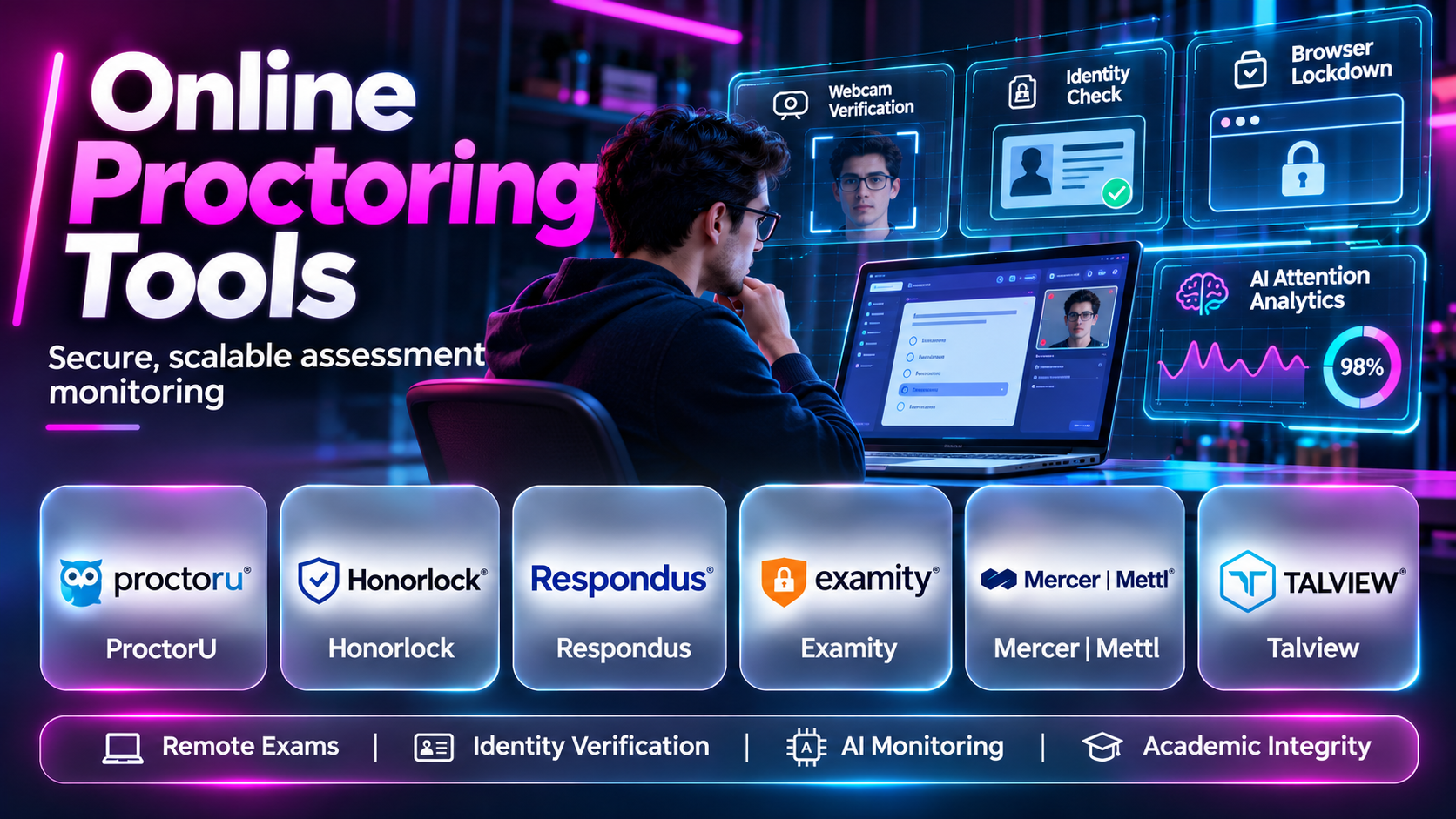
Online proctoring tools help educational institutions and examination providers supervise assessments delivered through digital environments. They support remote testing, identity verification, examination monitoring, and review of potential rule violations.
As online education and professional certification expand, institutions need practical ways to administer assessments outside traditional examination centers. However, remote supervision introduces challenges involving privacy, accessibility, technical reliability, and student fairness.
Online proctoring platforms use different approaches to assessment supervision. Some rely on live human proctors, while others use recorded sessions, automated alerts, or combinations of these methods.
Automated monitoring may identify behaviors that require additional investigation. Such alerts should not automatically be treated as proof of academic misconduct.
Choosing the right platform requires balancing examination security with the rights and needs of test-takers. Institutions should evaluate identity verification, human review, accommodation support, data retention, and technical requirements.
This guide compares ten online proctoring tools, their features, advantages, limitations, and suitable applications. It also provides selection guidance, a seven-step implementation workflow, sixteen FAQs, and SEO metadata.
2. What Are Online Proctoring Tools?
Online proctoring tools are software systems that support supervision of examinations taken through computers or other compatible devices. They help institutions administer assessments while collecting information relevant to examination integrity.
Some platforms connect test-takers with live human proctors who observe examinations remotely. Others record examination sessions for later review or use automated systems to flag selected activities.
Online proctoring is different from ordinary learning management software. A learning platform may deliver examination questions, while a proctoring service provides additional supervision and review capabilities.
These tools cannot guarantee that every examination violation will be detected. Their effectiveness depends on assessment design, technical conditions, review procedures, and institutional policies.
Common Applications of Online Proctoring Tools
- University examinations: Supervise approved remote assessments for enrolled students.
- Professional certifications: Support examinations that lead to recognized qualifications.
- Online degree programs: Coordinate remote testing across geographically distributed learners.
- Corporate assessments: Administer employee qualification and compliance examinations.
- Admissions testing: Support selected entrance and placement assessments.
- Continuing education: Verify examination participation in professional learning programs.
- Licensing programs: Apply appropriate supervision to regulated examinations.
- Training organizations: Manage assessment integrity across online courses.
3. Top 10 Online Proctoring Tools in 2026
1. ProctorU by Meazure Learning
Short Description
ProctorU is an online proctoring service associated with Meazure Learning. It is relevant to educational institutions and examination programs requiring supervised remote assessments.
The service supports human-centered proctoring workflows and examination administration. Available supervision methods depend on the specific service and examination requirements.
Key Features
- Remote proctoring: Support supervised online examinations.
- Identity verification: Apply supported test-taker verification procedures.
- Human supervision: Use proctors for applicable examination sessions.
- Exam scheduling: Coordinate supported assessment appointments.
- Session monitoring: Review relevant examination activity.
- Incident documentation: Record potential examination irregularities.
- Assessment integration: Connect with supported testing environments.
- Test-taker support: Provide assistance through available service channels.
- Administrative reporting: Support institutional examination oversight.
Benefits
- Support remotely supervised examinations.
- Reduce dependence on physical testing locations.
- Provide structured examination procedures.
- Help institutions review potential incidents.
- Support geographically distributed candidates.
- Coordinate examination delivery.
- Improve administrative visibility.
Pros
- Established remote proctoring service.
- Human supervision options.
- Relevant to higher-stakes examinations.
- Identity verification workflows.
- Examination administration experience.
- Institutional service model.
Cons
- Scheduling may be required.
- Human supervision can increase costs.
- Test-taker privacy requires consideration.
- Technical problems can disrupt examinations.
- Service availability depends on agreements.
Use Cases
- University examinations: Supervise remote assessments.
- Professional certification: Support credential examinations.
- Licensing: Administer selected regulated tests.
- Online programs: Serve distributed students.
- Admissions: Support approved remote testing.
- Workforce assessments: Coordinate qualification examinations.
Best For
- Universities.
- Certification organizations.
- Professional examination providers.
- Licensing programs.
- Online education institutions.
- High-stakes assessment administrators.
2. Honorlock
Short Description
Honorlock provides online proctoring technology for educational institutions. It is relevant to universities and colleges administering examinations through supported learning environments.
The platform combines automated monitoring with available human intervention or review workflows. Institutions should confirm the exact supervision model included in their service arrangements.
Key Features
- Remote monitoring: Supervise supported examination sessions.
- Automated alerts: Identify selected activities for review.
- Human support: Provide applicable human assistance or intervention.
- Identity verification: Support test-taker verification.
- Browser-based workflows: Use supported browser technologies.
- Learning integrations: Connect with compatible learning platforms.
- Session review: Examine recorded or flagged activities.
- Incident reporting: Document potential examination concerns.
- Administrative controls: Configure examination policies.
Benefits
- Support online examination delivery.
- Reduce manual supervision requirements.
- Connect with learning platforms.
- Improve incident documentation.
- Support flexible student locations.
- Centralize examination oversight.
- Assist assessment administrators.
Pros
- Higher education focus.
- Automated monitoring capabilities.
- Human support options.
- Learning platform integrations.
- Remote examination workflows.
- Institutional administration.
Cons
- Browser requirements may apply.
- Monitoring can create privacy concerns.
- Automated alerts require human interpretation.
- Licensing varies.
- Accessibility must be evaluated.
Use Cases
- University courses: Supervise online tests.
- Hybrid education: Support remote assessments.
- Learning platform examinations: Add supervision.
- Academic integrity: Review flagged events.
- Distance learning: Coordinate distributed testing.
- Departmental exams: Standardize examination procedures.
Best For
- Universities.
- Colleges.
- Distance learning programs.
- Learning technology teams.
- Academic assessment departments.
- Institutions seeking integrated proctoring.
3. Respondus Monitor
Short Description
Respondus Monitor provides automated examination monitoring associated with Respondus LockDown Browser. It is used in educational settings requiring additional oversight of online assessments.
The system can record examination activity and identify selected events for instructor review. It should be understood as a monitoring aid rather than a final misconduct decision-maker.
Key Features
- Webcam monitoring: Record supported examination sessions.
- Automated flagging: Identify selected events for review.
- LockDown Browser integration: Work with compatible secure testing workflows.
- Instructor review: Provide access to examination recordings.
- Identity-related checks: Support applicable startup procedures.
- Assessment integration: Connect with supported learning systems.
- Session information: Organize examination records.
- Administrative configuration: Apply institutional settings.
- Review prioritization: Help instructors locate potentially relevant events.
Benefits
- Support recorded examination supervision.
- Reduce continuous live monitoring needs.
- Connect with supported learning systems.
- Provide reviewable examination evidence.
- Support instructor oversight.
- Organize remote assessment sessions.
- Complement secure testing controls.
Pros
- Established education technology.
- LockDown Browser integration.
- Automated monitoring.
- Instructor review capabilities.
- Relevant to course examinations.
- Supports institutional deployment.
Cons
- Requires compatible hardware.
- Recording raises privacy concerns.
- Alerts may produce false positives.
- Students may experience technical difficulties.
- Human review remains necessary.
Use Cases
- University quizzes: Monitor remote assessments.
- Course examinations: Record supported sessions.
- Academic review: Investigate selected alerts.
- Hybrid learning: Support off-campus testing.
- Department assessments: Apply common procedures.
- Online programs: Coordinate examination monitoring.
Best For
- Universities.
- Colleges.
- Instructors using compatible learning systems.
- Online course programs.
- Academic integrity teams.
- Institutions using Respondus technologies.
4. Proctorio
Short Description
Proctorio provides online examination proctoring and assessment security technology. It is relevant to institutions seeking automated supervision and examination controls.
The platform offers configurable examination monitoring capabilities. Institutions should assess the impact of configuration choices on student privacy and accessibility.
Key Features
- Automated monitoring: Flag selected examination activities.
- Session recording: Capture supported examination information.
- Identity checks: Apply available verification procedures.
- Assessment controls: Configure supported examination restrictions.
- Learning integrations: Connect with compatible platforms.
- Incident review: Examine flagged sessions.
- Administrative policies: Set institution-specific controls.
- Reporting: Review examination activity information.
- Remote delivery: Support off-campus assessments.
Benefits
- Support flexible online examinations.
- Reduce continuous manual supervision.
- Apply configurable examination controls.
- Improve review documentation.
- Integrate with supported platforms.
- Coordinate assessment oversight.
- Support remote education programs.
Pros
- Automated proctoring focus.
- Configurable examination settings.
- Learning platform compatibility.
- Recorded review workflows.
- Suitable for remote assessments.
- Institutional administration options.
Cons
- Privacy considerations are significant.
- Automated flags can be inaccurate.
- Browser and device requirements apply.
- Accessibility requires testing.
- Technical support is important.
Use Cases
- Online university exams: Monitor sessions.
- Course assessments: Apply testing controls.
- Distance education: Support remote testing.
- Academic review: Examine flagged events.
- Institutional assessments: Standardize policies.
- Hybrid programs: Coordinate off-campus exams.
Best For
- Universities.
- Online learning programs.
- Colleges.
- Assessment administrators.
- Academic technology teams.
- Institutions seeking configurable monitoring.
5. Examity
Short Description
Examity provides online proctoring services for educational and professional assessments. It is relevant to organizations requiring supervised examination workflows.
Its offerings have included live and automated proctoring approaches. Buyers should verify the current service portfolio and delivery arrangements.
Key Features
- Live proctoring: Support human-supervised examinations.
- Automated monitoring: Provide supported automated examination oversight.
- Identity verification: Apply candidate authentication procedures.
- Exam scheduling: Coordinate assessment sessions.
- Session recording: Preserve applicable examination evidence.
- Incident reporting: Document potential rule violations.
- Platform integration: Connect with compatible examination systems.
- Candidate support: Assist with examination setup.
- Administrative review: Provide examination oversight information.
Benefits
- Support remote examination programs.
- Offer supervised testing workflows.
- Improve examination administration.
- Help document potential incidents.
- Serve distributed candidates.
- Support assessment verification.
- Reduce physical testing requirements.
Pros
- Dedicated proctoring services.
- Human supervision experience.
- Remote examination focus.
- Identity verification workflows.
- Institutional use cases.
- Multiple monitoring approaches historically offered.
Cons
- Current offerings require verification.
- Live supervision may cost more.
- Technical requirements vary.
- Privacy obligations remain important.
- Service arrangements depend on contracts.
Use Cases
- Professional examinations: Supervise candidates.
- University tests: Support remote assessments.
- Certification programs: Coordinate testing.
- Training assessments: Monitor examinations.
- Online courses: Support academic integrity.
- Distributed testing: Serve remote participants.
Best For
- Universities.
- Certification providers.
- Professional training organizations.
- Assessment administrators.
- Distance education programs.
- Institutions requiring proctoring services.
6. Talview
Short Description
Talview provides assessment and proctoring technology for organizations conducting remote evaluations. It is relevant to certification, education, and workforce assessment programs.
The platform combines digital assessment workflows with applicable monitoring capabilities. Organizations should evaluate which services are included in their selected offering.
Key Features
- Remote proctoring: Support supervised digital assessments.
- Candidate verification: Apply supported identity checks.
- Assessment delivery: Coordinate selected testing workflows.
- Automated monitoring: Identify activities requiring review.
- Session records: Maintain relevant examination information.
- Incident review: Support investigation of potential irregularities.
- Workflow integration: Connect with supported assessment applications.
- Administrative reporting: Review testing activity.
- Candidate experience: Provide remote assessment interfaces.
Benefits
- Coordinate remote assessments.
- Support examination integrity.
- Reduce location restrictions.
- Organize candidate verification.
- Improve administrative visibility.
- Support digital testing.
- Connect assessment workflows.
Pros
- Assessment technology focus.
- Remote proctoring capabilities.
- Candidate verification options.
- Relevant to workforce testing.
- Digital assessment workflows.
- Enterprise use cases.
Cons
- Product scope varies by offering.
- Implementation may require configuration.
- Automated alerts need review.
- Commercial pricing varies.
- Candidate accessibility must be assessed.
Use Cases
- Certification testing: Supervise examinations.
- Workforce assessment: Evaluate candidates.
- Education programs: Deliver remote tests.
- Professional training: Monitor qualification exams.
- Distributed organizations: Coordinate remote evaluations.
- Enterprise assessments: Standardize testing processes.
Best For
- Certification providers.
- Enterprise assessment teams.
- Professional training organizations.
- Remote examination programs.
- Workforce development institutions.
- Digital testing administrators.
7. Mercer Mettl
Short Description
Mercer Mettl provides online assessment and remote proctoring solutions. It is relevant to educational institutions, employers, and certification programs.
The platform combines assessment delivery with supported supervision methods. Organizations should distinguish examination creation features from proctoring capabilities.
Key Features
- Online assessments: Create and administer supported examinations.
- Remote proctoring: Monitor applicable testing sessions.
- Candidate verification: Apply supported identity checks.
- Automated monitoring: Flag selected activities.
- Human supervision: Use available proctoring services.
- Assessment reporting: Review examination results.
- Incident records: Document potential testing concerns.
- Candidate management: Coordinate assessment participants.
- Integration options: Connect selected external systems.
Benefits
- Combine testing and supervision.
- Support remote candidates.
- Simplify assessment administration.
- Improve examination visibility.
- Organize candidate workflows.
- Support professional testing.
- Reduce physical examination dependence.
Pros
- Assessment and proctoring capabilities.
- Relevant to enterprise testing.
- Supports educational use cases.
- Candidate management features.
- Multiple assessment workflows.
- Reporting capabilities.
Cons
- Pricing depends on arrangements.
- Product scope requires review.
- Automated flags are not definitive.
- Technical compatibility matters.
- Privacy policies must be evaluated.
Use Cases
- University assessments: Deliver online examinations.
- Recruitment testing: Evaluate candidates.
- Certification: Supervise qualification exams.
- Employee training: Assess completed learning.
- Admissions: Conduct selected tests.
- Professional education: Manage examinations.
Best For
- Educational institutions.
- Corporate assessment teams.
- Certification organizations.
- Recruitment departments.
- Professional training providers.
- Remote testing programs.
8. Inspera Assessment
Short Description
Inspera Assessment provides digital assessment technology used by educational institutions. Its ecosystem supports examination delivery and related assessment workflows.
Online proctoring capabilities depend on the selected Inspera products and services. Institutions should verify whether their requirements call for Inspera’s own functionality or supported integrations.
Key Features
- Digital examinations: Deliver supported assessments.
- Assessment authoring: Create examination content.
- Exam administration: Organize assessment sessions.
- Secure testing: Apply supported examination controls.
- Proctoring options: Support applicable remote supervision workflows.
- Candidate access: Provide examination interfaces.
- Assessment reporting: Review results and administrative data.
- Integration options: Connect with supported institutional systems.
- Exam management: Coordinate assessment operations.
Benefits
- Digitize examination delivery.
- Organize assessment workflows.
- Support secure testing.
- Connect assessment administration.
- Reduce paper examinations.
- Improve examination consistency.
- Support institutional testing programs.
Pros
- Comprehensive assessment focus.
- Higher education relevance.
- Digital examination delivery.
- Secure testing capabilities.
- Administrative workflows.
- Integration options.
Cons
- Not exclusively a proctoring service.
- Proctoring capabilities depend on offering.
- Implementation can be substantial.
- Pricing is institution-dependent.
- Training and process redesign may be required.
Use Cases
- University examinations: Deliver digital assessments.
- Campus testing: Replace paper workflows.
- Remote assessments: Apply supported supervision.
- Assessment administration: Organize examinations.
- Academic reporting: Review results.
- Institutional modernization: Digitize testing processes.
Best For
- Universities.
- Higher education assessment offices.
- Digital examination programs.
- Institutional technology teams.
- Large academic departments.
- Assessment modernization projects.
9. ProctorExam
Short Description
ProctorExam is a remote examination proctoring platform associated with online assessment supervision. It is relevant to institutions seeking live or recorded proctoring workflows.
The platform has supported browser-based examination monitoring approaches. Organizations should confirm current commercial availability and supported service models.
Key Features
- Remote examination monitoring: Support online supervision.
- Live proctoring: Enable applicable human observation.
- Recorded sessions: Capture examination information for review.
- Identity verification: Apply supported candidate checks.
- Session administration: Coordinate examination workflows.
- Incident documentation: Record potential irregularities.
- Candidate guidance: Provide examination setup instructions.
- Integration options: Connect compatible testing environments.
- Administrative review: Support examination oversight.
Benefits
- Enable remote examinations.
- Support human review.
- Reduce geographic restrictions.
- Document examination events.
- Improve testing flexibility.
- Coordinate candidate sessions.
- Support assessment administration.
Pros
- Dedicated proctoring focus.
- Live monitoring options.
- Recorded review workflows.
- Relevant to online assessments.
- Remote candidate support.
- Examination administration features.
Cons
- Current service availability needs confirmation.
- Technical setup can affect candidates.
- Human proctoring increases operating costs.
- Privacy obligations require review.
- Integration support varies.
Use Cases
- University testing: Supervise remote exams.
- Certification: Monitor candidates.
- Professional education: Deliver supervised assessments.
- Distance learning: Support remote students.
- Training programs: Coordinate examination sessions.
- Academic integrity: Review incidents.
Best For
- Universities.
- Training providers.
- Certification programs.
- Remote assessment teams.
- Educational technology administrators.
- Organizations needing human-supervised testing.
10. SmarterProctoring
Short Description
SmarterProctoring provides technology for coordinating examination proctoring services. It is relevant to institutions managing different testing arrangements and student needs.
The platform emphasizes proctoring administration and scheduling workflows. Its role differs from products focused exclusively on automated webcam monitoring.
Key Features
- Proctoring coordination: Organize supported examination supervision arrangements.
- Scheduling: Help students arrange testing appointments.
- Proctoring options: Coordinate applicable testing methods.
- Student workflows: Provide examination scheduling experiences.
- Institutional administration: Manage testing requirements.
- Learning integrations: Connect with supported academic systems.
- Approval workflows: Support designated proctoring arrangements.
- Reporting: Review relevant testing information.
- Support processes: Coordinate examination assistance.
Benefits
- Simplify examination scheduling.
- Coordinate different proctoring methods.
- Improve student flexibility.
- Reduce manual administration.
- Organize testing requirements.
- Support institutional oversight.
- Connect examination workflows.
Pros
- Proctoring administration focus.
- Scheduling capabilities.
- Relevant to higher education.
- Supports varied testing arrangements.
- Student-facing workflows.
- Institutional coordination.
Cons
- Not primarily an automated monitoring engine.
- Available options depend on arrangements.
- Integration requires evaluation.
- Scheduling processes may add complexity.
- Pricing is institution-dependent.
Use Cases
- University testing: Coordinate proctoring options.
- Distance education: Arrange supervised exams.
- Testing centers: Manage appointments.
- Approved proctors: Coordinate external arrangements.
- Student services: Support testing logistics.
- Institutional administration: Standardize proctoring processes.
Best For
- Universities.
- Distance education departments.
- Testing centers.
- Student assessment services.
- Institutions coordinating multiple proctoring methods.
- Academic administration teams.
4. Comparison Table: Top 10 Online Proctoring Tools
| Tool | Best For | Main Capability | Supervision Approach | Pricing |
|---|---|---|---|---|
| ProctorU | High-stakes examinations | Remote proctoring services | Human-centered options | Custom |
| Honorlock | Higher education | Integrated online monitoring | Automated and human-supported | Institutional |
| Respondus Monitor | Course examinations | Webcam recording and review | Automated flagging | Institutional |
| Proctorio | Configurable remote exams | Automated examination monitoring | Automated | Institutional |
| Examity | Remote examination services | Supervised assessment sessions | Service-dependent | Custom |
| Talview | Certification and workforce testing | Digital assessment supervision | Mixed options | Custom |
| Mercer Mettl | Assessment programs | Testing and proctoring | Mixed options | Custom |
| Inspera Assessment | Digital examinations | Assessment delivery and security | Product-dependent | Institutional |
| ProctorExam | Remote supervision | Live and recorded proctoring | Service-dependent | Custom |
| SmarterProctoring | Proctoring administration | Scheduling and coordination | Multiple arrangements | Institutional |
Service portfolios, pricing, and supervision methods may change. Institutions should confirm current product availability and contractual requirements.
5. Which Online Proctoring Tool Is Right for You?
The right online proctoring system depends on examination stakes, student circumstances, and institutional policies. Stronger monitoring does not automatically produce fairer or more reliable assessment outcomes.
1. High-Stakes Certification Providers
ProctorU and Talview are relevant options for supervised professional examinations. Compare identity checks, incident handling, and candidate support.
2. Universities Using Learning Platforms
Honorlock and Respondus Monitor can support online examination supervision. Evaluate integration compatibility and student privacy.
3. Institutions Seeking Automated Monitoring
Proctorio and Respondus Monitor offer automated examination monitoring approaches. Human review remains essential when evaluating alerts.
4. Corporate Assessment Teams
Mercer Mettl and Talview combine assessment-related services with proctoring capabilities. Compare candidate management and reporting requirements.
5. Digital Examination Programs
Inspera Assessment is relevant when examination delivery and administration are major priorities. Its proctoring capabilities should be evaluated separately.
6. Institutions Requiring Human Supervision
ProctorU and suitable Examity services may be relevant. Buyers should verify available supervision arrangements.
7. Remote Learning Programs
Honorlock and ProctorExam can be considered for remote examination workflows. Accessibility and technical requirements deserve particular attention.
8. Testing Centers and Student Services
SmarterProctoring focuses on coordinating testing arrangements. It may suit institutions managing several approved supervision methods.
Best Online Proctoring Tools by User Type
| User Type | Recommended Tool | Main Reason |
|---|---|---|
| Certification providers | ProctorU | Supervised examinations |
| Higher education institutions | Honorlock | Integrated remote proctoring |
| Course instructors | Respondus Monitor | Recorded session review |
| Automated monitoring programs | Proctorio | Configurable supervision |
| Professional testing teams | Examity | Proctoring services |
| Workforce assessment programs | Talview | Assessment supervision |
| Corporate testing teams | Mercer Mettl | Testing and proctoring |
| Digital examination offices | Inspera Assessment | Examination delivery |
| Remote examination teams | ProctorExam | Supervised remote testing |
| Testing administration offices | SmarterProctoring | Proctoring coordination |
6. Practical Example: Introducing Remote Examination Proctoring
A university plans to offer remote final examinations for selected online courses. Its existing assessment system delivers questions but provides limited supervision.
The university wants a process that supports academic integrity without unfairly disadvantaging students. It establishes a pilot involving academic staff, technology teams, and student representatives.
Step 1: Define Examination Requirements
The university identifies assessments requiring additional supervision. It distinguishes high-stakes examinations from ordinary quizzes.
The team documents examination rules and acceptable materials. It also defines how potential violations will be reviewed.
Checklist: Examination categories, permitted materials, review policies, assessment objectives, responsible staff.
Step 2: Review Privacy and Accessibility
The university assesses the personal information collected during proctoring. It defines retention periods and access restrictions.
Students receive information about monitoring and available accommodations. Alternative arrangements are considered where appropriate.
Checklist: Privacy assessment, accessibility review, data retention, student notices, alternative testing options.
Step 3: Evaluate Technical Compatibility
The technology team tests supported devices, browsers, webcams, and network conditions. It identifies potential barriers for students.
Shortlisted systems are tested with the university’s examination platform. Integration problems are resolved before the pilot.
Checklist: Devices, operating systems, bandwidth, learning platform integration, technical support.
Step 4: Configure Examination Policies
Administrators establish the monitoring settings for each assessment type. They avoid collecting information unrelated to legitimate examination requirements.
The university defines who may access recordings and incident reports. Academic staff receive clear review procedures.
Checklist: Monitoring settings, authorized reviewers, evidence rules, retention, appeal procedures.
Step 5: Train Staff and Students
Students receive instructions and practice examinations. These sessions help identify technical and accessibility problems.
Faculty learn how to interpret alerts and review incidents. Training emphasizes that automated flags are not misconduct findings.
Checklist: Student orientation, practice tests, faculty training, incident review, support channels.
Step 6: Conduct a Pilot
Selected courses use the platform for limited assessments. The university tracks technical failures, student feedback, and review workload.
Academic staff assess whether the monitoring process is proportionate. They identify false alerts and inconsistent review decisions.
Checklist: Pilot participation, technical incidents, accessibility outcomes, false alerts, student feedback.
Step 7: Evaluate and Improve
The university reviews the pilot against its educational objectives. It compares examination integrity benefits with privacy and administrative costs.
Policies are revised before any broader deployment. The institution continues to offer appropriate support and review mechanisms.
Checklist: Evaluation report, policy changes, accessibility improvements, staff workload, future deployment.
7. Frequently Asked Questions (FAQs)
1. What is online proctoring software?
Online proctoring software supports supervision of examinations conducted remotely. It may use human proctors, recording, or automated monitoring.
2. Can beginners use online proctoring tools?
Many services provide guided examination workflows. Students should receive practice opportunities and clear instructions.
3. Are free online proctoring tools available?
Some assessment systems provide limited testing features without separate proctoring fees. Dedicated proctoring services commonly involve institutional or examination-based charges.
4. Can examinations be conducted without proctoring software?
Yes, institutions can use alternative assessment designs and traditional supervision. The appropriate approach depends on examination objectives.
5. Is online proctoring suitable for professional certification?
Yes, some certification programs use supervised remote examinations. Regulatory and accreditation requirements must be checked.
6. Can universities use these tools?
Yes, universities use online proctoring for selected assessments. Privacy, accessibility, and student fairness should guide implementation.
7. Do proctoring tools integrate with learning management systems?
Many products support selected learning platform integrations. Compatibility and supported examination workflows vary.
8. What do AI and LMS mean in online proctoring?
AI means artificial intelligence and may be used to flag selected examination activities. LMS means Learning Management System and supports digital learning activities.
9. How does remote proctoring work?
The candidate completes identity and technical checks before beginning an examination. Supported monitoring or supervision continues during the session.
10. Can automated monitoring prove cheating?
No, automated alerts alone cannot establish misconduct. Institutions should use contextual human review and fair procedures.
11. Which tools offer human supervision?
ProctorU and certain other proctoring services provide human supervision options. Exact offerings depend on current service arrangements.
12. Can online proctoring support students with disabilities?
Some services support accommodations, but accessibility varies. Institutions must test requirements and provide appropriate alternatives.
13. What technical requirements matter most?
Device compatibility, webcam availability, network reliability, and integration are important. Technical support and recovery procedures also matter.
14. How should institutions choose a platform?
Define examination requirements and review privacy obligations first. Then test shortlisted services with representative students and assessments.
15. Is proctoring software the same as examination software?
No, examination software primarily delivers and grades assessments. Proctoring software adds supervision and related review functions.
16. Can online proctoring support large examination programs?
Many enterprise services support substantial candidate volumes. Institutions should verify capacity, scheduling, support, and service commitments.
8. Final Thoughts
Online proctoring tools can support remote examination delivery and institutional assessment procedures. Their effectiveness depends on sound examination design and responsible implementation.
ProctorU, Honorlock, Respondus Monitor, Proctorio, and Examity offer different approaches to examination supervision. Their monitoring models and institutional requirements should be compared carefully.
Talview and Mercer Mettl connect proctoring with broader assessment workflows. Inspera Assessment emphasizes digital examination administration, while ProctorExam addresses remote supervision.
SmarterProctoring focuses more on coordinating proctoring arrangements than on automated monitoring alone. This distinction matters when institutions compare solutions.
The right choice should balance examination security, accessibility, student privacy, human review, and cost. A transparent pilot can help institutions identify an appropriate and proportionate approach.
