1. Introduction
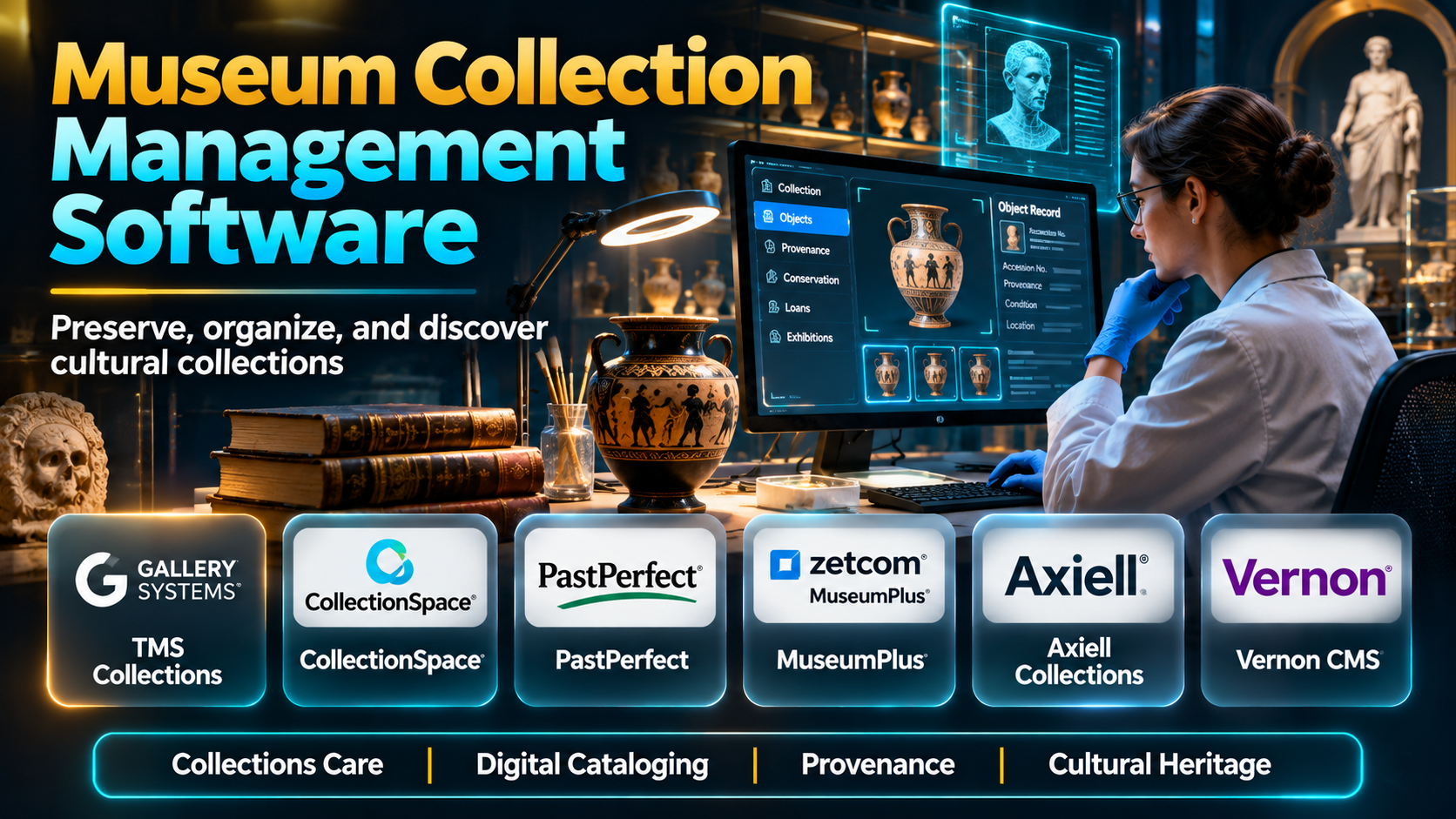
Museum collection management software helps museums, galleries, archives, and cultural institutions document, preserve, and manage collection objects. These platforms support cataloging, provenance research, conservation records, loans, exhibitions, and digital access.
Museum collections often contain objects with complex histories and documentation requirements. A single artifact may have acquisition records, photographs, conservation reports, ownership histories, and exhibition information.
Managing these records through spreadsheets and disconnected databases can create operational problems. Institutions may struggle to locate objects, maintain consistent metadata, or track changes across departments.
Modern collection management systems centralize object records and connect them with related information. Some platforms also provide digital asset management, public collection portals, and workflow automation.
Different museums have different operational requirements. A small local history museum may need simple cataloging, while a national institution may require extensive conservation, provenance, and collections governance capabilities.
Selecting the right platform requires evaluating metadata standards, collection types, data migration, security, integrations, and long-term preservation needs. Institutions should also consider implementation complexity and staff resources.
This guide compares ten museum collection management software tools and their strengths, limitations, and practical applications. It includes comparison tables, user recommendations, an implementation example, sixteen FAQs, and SEO metadata.
2. What Is Museum Collection Management Software?
Museum Collection Management Software is a specialized system for maintaining information about cultural heritage objects and collections. It helps institutions document objects throughout acquisition, storage, conservation, exhibition, loan, and disposal processes.
These platforms maintain structured records for objects, creators, materials, locations, and historical events. They can also connect photographs, documents, and research materials to collection records.
Many systems support collection management standards and controlled vocabularies. These help institutions describe objects consistently and exchange information with other organizations.
Collection management software differs from a general inventory application because museum records require historical context. Provenance, rights, conservation treatments, and object relationships are often essential.
Common Applications of Museum Collection Management Software
- Object cataloging: Document descriptions, materials, dimensions, classifications, and identifiers.
- Provenance research: Record ownership histories and acquisition evidence.
- Conservation management: Track condition assessments, treatments, and preservation requirements.
- Exhibition planning: Coordinate object selections, locations, and exhibition histories.
- Loans management: Document incoming and outgoing loans, agreements, and movements.
- Digital collections: Connect object records with photographs and digitized resources.
- Collection audits: Verify object locations, inventory, and documentation accuracy.
- Public access: Publish selected collection information through supported online portals.
3. Top 10 Museum Collection Management Software Tools in 2026
1. TMS Collections by Gallery Systems
Short Description
TMS Collections is a museum collection management platform developed by Gallery Systems. It is used by institutions requiring detailed object documentation and connected collections workflows.
The platform supports cataloging, provenance, exhibitions, loans, and related museum administration. It is relevant to institutions managing complex collections and extensive historical records.
TMS Collections belongs to a broader museum technology ecosystem. Institutions should evaluate integrations, implementation requirements, and available deployment arrangements.
Key Features
- Object cataloging: Maintain detailed collection records and classifications.
- Provenance: Document ownership and acquisition histories.
- Conservation: Record condition assessments and treatments.
- Exhibition management: Coordinate objects and exhibition records.
- Loans: Track incoming and outgoing object loans.
- Object movement: Maintain location and movement histories.
- Digital assets: Connect supported images and documentation.
- Reporting: Generate collection and operational reports.
- Administrative controls: Manage permissions and workflows.
Benefits
- Centralize complex collection records.
- Improve object documentation.
- Support provenance research.
- Coordinate exhibition planning.
- Maintain conservation histories.
- Improve loan administration.
- Support institutional accountability.
Pros
- Specialized museum functionality.
- Detailed object documentation.
- Provenance and conservation workflows.
- Exhibition and loan management.
- Suitable for large collections.
- Established museum technology ecosystem.
Cons
- Implementation can be substantial.
- Enterprise pricing requires evaluation.
- Staff training may be extensive.
- Migration needs careful planning.
- Custom configuration can increase maintenance.
Use Cases
- Art museums: Maintain artwork records.
- Historical museums: Document provenance.
- Exhibition departments: Coordinate object selections.
- Conservation teams: Record treatments.
- Registrars: Manage loans and movements.
- Research institutions: Maintain collection histories.
Best For
- Large museums.
- Art museums.
- National collections.
- Museum registrars.
- Conservation departments.
- Institutions with complex documentation requirements.
2. Axiell Collections
Short Description
Axiell Collections is a collections management platform for museums and cultural heritage organizations. It supports structured documentation and administration of museum objects.
The platform is relevant to institutions managing diverse collection types and specialized metadata. It also supports workflows associated with cultural heritage information.
Axiell provides a broader ecosystem of collection and cultural heritage technologies. Buyers should confirm product modules, deployment options, and integration requirements.
Key Features
- Collection cataloging: Maintain structured object information.
- Object relationships: Connect related records and historical information.
- Location tracking: Document object storage and movements.
- Conservation records: Maintain preservation information.
- Loans management: Coordinate collection loans.
- Exhibition information: Document display histories.
- Digital assets: Associate media with collection records.
- Search: Retrieve collection information.
- Reporting: Produce administrative and research outputs.
Benefits
- Improve collection documentation.
- Support different object types.
- Organize museum workflows.
- Maintain object relationships.
- Improve inventory control.
- Support cultural heritage research.
- Coordinate collection access.
Pros
- Cultural heritage specialization.
- Flexible collection structures.
- Detailed cataloging.
- Relevant to different museum types.
- Collection workflow support.
- Digital information management.
Cons
- Configuration may be complex.
- Licensing varies by agreement.
- Data migration requires planning.
- Training is necessary.
- Advanced integrations require evaluation.
Use Cases
- History museums: Document artifacts.
- Art collections: Maintain object information.
- Natural history museums: Organize specimens.
- Cultural institutions: Manage heritage records.
- Exhibition planning: Track displayed objects.
- Collection audits: Verify inventory.
Best For
- Museums.
- Cultural heritage institutions.
- Natural history collections.
- Regional museum networks.
- Collection managers.
- Institutions managing diverse object types.
3. MuseumPlus by zetcom
Short Description
MuseumPlus is a collection management system developed by zetcom. It supports museums and cultural institutions managing collection records and related workflows.
The platform addresses cataloging, object movement, conservation, loans, and exhibitions. It is relevant to organizations seeking connected museum administration.
MuseumPlus supports structured collection documentation and configurable workflows. Institutions should evaluate deployment, integrations, and service requirements.
Key Features
- Object records: Maintain detailed catalog information.
- Provenance documentation: Record ownership histories.
- Conservation management: Track condition and treatment information.
- Location management: Document object movements.
- Loan administration: Coordinate borrowing and lending.
- Exhibition management: Maintain exhibition records.
- Digital media: Associate images and documents.
- Reporting: Produce collection information.
- Workflow controls: Support administrative processes.
Benefits
- Centralize collection documentation.
- Improve object tracking.
- Support conservation workflows.
- Organize exhibition records.
- Improve loan administration.
- Maintain historical information.
- Reduce disconnected records.
Pros
- Dedicated museum platform.
- Comprehensive collections workflows.
- Provenance documentation.
- Exhibition management.
- Conservation records.
- Suitable for institutional collections.
Cons
- Implementation requires planning.
- Enterprise costs may apply.
- Training can be substantial.
- Integrations need testing.
- Configuration complexity varies.
Use Cases
- Art museums: Manage artworks.
- Historical collections: Maintain provenance.
- Conservation departments: Record treatments.
- Registrars: Track movements.
- Exhibition teams: Organize displays.
- Museum administration: Coordinate collections.
Best For
- Art museums.
- Historical museums.
- Museum registrars.
- Conservation teams.
- Medium and large museums.
- Institutions seeking comprehensive workflows.
4. PastPerfect Museum Software
Short Description
PastPerfect is collection management software designed for museums, historical societies, and cultural organizations. It supports cataloging and administration of different collection types.
The platform is particularly relevant to smaller and medium-sized institutions. Its workflows address objects, archives, photographs, and library materials.
PastPerfect offers established collection documentation capabilities. Institutions should compare current product editions and service arrangements.
Key Features
- Object cataloging: Maintain artifact records.
- Archive records: Document archival materials.
- Photograph management: Organize image collections.
- Library records: Maintain reference materials.
- Accession management: Document incoming collections.
- Donor information: Record collection-related donor details.
- Location tracking: Maintain storage information.
- Reporting: Produce collection and administrative reports.
- Public access options: Support selected online collection publishing.
Benefits
- Organize small museum collections.
- Improve accession records.
- Support mixed collection types.
- Maintain donor information.
- Reduce spreadsheet dependence.
- Improve inventory visibility.
- Support historical societies.
Pros
- Museum-focused functionality.
- Relevant to smaller institutions.
- Multiple collection record types.
- Accession management.
- Established heritage use cases.
- Collection reporting.
Cons
- Product editions require comparison.
- Advanced enterprise needs may exceed its scope.
- Migration requires preparation.
- Staff training remains important.
- Integration options vary.
Use Cases
- Local history museums: Catalog artifacts.
- Historical societies: Maintain collections.
- Small museums: Manage accession records.
- Photo archives: Organize images.
- Community heritage organizations: Track donations.
- Museum inventories: Verify holdings.
Best For
- Small museums.
- Historical societies.
- Community heritage organizations.
- Local history collections.
- Volunteer-supported museums.
- Institutions with mixed collections.
5. CollectionSpace
Short Description
CollectionSpace is an open-source collection management platform for museums and cultural heritage organizations. It supports structured documentation and collection workflows.
The platform can be configured for different institutional requirements. It is relevant to organizations seeking open-source flexibility.
CollectionSpace requires appropriate implementation and technical support. Institutions should assess hosting and maintenance responsibilities before adoption.
Key Features
- Object records: Maintain collection documentation.
- Acquisitions: Record collection intake.
- Loans: Coordinate lending and borrowing.
- Movements: Track object locations.
- Conservation: Maintain preservation records.
- Controlled vocabularies: Support consistent terminology.
- Configuration: Adapt selected workflows.
- Integration capabilities: Connect supported systems.
- Open-source licensing: Enable flexible deployment arrangements.
Benefits
- Reduce proprietary licensing dependence.
- Support museum-specific workflows.
- Improve structured documentation.
- Enable configuration flexibility.
- Maintain collection relationships.
- Support institutional integrations.
- Provide technical control.
Pros
- Open-source availability.
- Museum-oriented architecture.
- Configurable workflows.
- Collection documentation.
- Integration potential.
- Relevant to specialized institutions.
Cons
- Technical expertise may be necessary.
- Hosting creates responsibilities.
- Customization requires maintenance.
- Implementation can be demanding.
- Support arrangements vary.
Use Cases
- Museum modernization: Replace spreadsheets.
- Specialized collections: Configure records.
- Research museums: Maintain documentation.
- Open-source programs: Build flexible systems.
- Cultural institutions: Coordinate collection processes.
- Technical teams: Develop integrations.
Best For
- Open-source adopters.
- Research museums.
- Cultural heritage organizations.
- Technical museum teams.
- Institutions seeking customization.
- Specialized collections.
6. Argus by Lucidea
Short Description
Argus is a collections management solution from Lucidea for museums and cultural institutions. It supports documentation and administration of collection information.
The platform is relevant to organizations requiring cataloging, collection tracking, and related workflows. It also provides options for managing institutional information.
Argus can support different museum collection types. Buyers should verify current deployment options and product-specific capabilities.
Key Features
- Collection records: Maintain object documentation.
- Cataloging: Organize structured metadata.
- Accession information: Record collection acquisitions.
- Location tracking: Maintain storage information.
- Loans: Support applicable lending workflows.
- Exhibitions: Document display information.
- Digital media: Connect supported images.
- Search: Retrieve collection information.
- Reporting: Produce administrative records.
Benefits
- Centralize museum records.
- Improve object documentation.
- Support collection administration.
- Reduce duplicate information.
- Improve inventory visibility.
- Organize accession workflows.
- Support research access.
Pros
- Museum collection focus.
- Structured cataloging.
- Collection tracking.
- Administrative workflows.
- Digital information support.
- Relevant to cultural institutions.
Cons
- Pricing requires vendor consultation.
- Configuration may require expertise.
- Migration needs planning.
- Integrations should be tested.
- Staff training is important.
Use Cases
- Museum collections: Maintain object records.
- Historical organizations: Document artifacts.
- Registrars: Track collection activity.
- Exhibitions: Organize display information.
- Inventory: Verify locations.
- Research: Retrieve object documentation.
Best For
- Museums.
- Historical collections.
- Cultural institutions.
- Collection administrators.
- Museum registrars.
- Institutions seeking structured documentation.
7. CatalogIt
Short Description
CatalogIt is a cloud-based collection management platform used by museums, collectors, and cultural organizations. It emphasizes accessible collection documentation and organization.
The platform helps users maintain object records, images, and related information. It may suit institutions seeking a manageable cloud-based environment.
CatalogIt is relevant to both organizational and private collection workflows. Museums should verify available collaboration, reporting, and public access features.
Key Features
- Collection cataloging: Organize object information.
- Image management: Associate photographs with records.
- Cloud access: Work through supported online environments.
- Object relationships: Connect relevant information.
- Location tracking: Record object storage.
- Collection organization: Group items by category.
- Search: Find collection records.
- Sharing options: Provide supported access to selected information.
- Collaborative workflows: Coordinate authorized users.
Benefits
- Simplify collection documentation.
- Improve object visibility.
- Reduce spreadsheet use.
- Support cloud access.
- Organize images and records.
- Improve collection search.
- Support smaller teams.
Pros
- Accessible cloud environment.
- Collection-oriented workflows.
- Image documentation.
- Suitable for different collection sizes.
- Useful for smaller organizations.
- Supports collaborative recordkeeping.
Cons
- Complex enterprise requirements need validation.
- Subscription costs apply.
- Advanced conservation needs may require additional tools.
- Integration capabilities vary.
- Data export should be evaluated.
Use Cases
- Small museums: Catalog collections.
- Private collections: Organize objects.
- Historical societies: Maintain artifacts.
- Community museums: Document holdings.
- Collection inventories: Track items.
- Digital records: Connect photographs.
Best For
- Small museums.
- Private collectors.
- Community heritage organizations.
- Historical societies.
- Collection coordinators.
- Cloud-focused institutions.
8. eMuseum by Gallery Systems
Short Description
eMuseum is a digital collection publishing and access platform associated with Gallery Systems. It helps institutions make selected collection information available online.
Unlike a full internal collection management system, eMuseum primarily emphasizes digital presentation and discovery. It can complement museum collection databases.
The platform is relevant to institutions seeking public collection access. Buyers should evaluate compatibility with their underlying collections system.
Key Features
- Online collections: Publish selected object records.
- Collection search: Help visitors discover objects.
- Digital images: Present supported collection media.
- Public interfaces: Provide online access.
- Metadata display: Show selected collection information.
- Database integration: Connect supported collection sources.
- Collection browsing: Organize digital discovery.
- Access configuration: Control published information.
- Digital engagement: Support remote collection exploration.
Benefits
- Improve public collection access.
- Support digital discovery.
- Share museum information.
- Extend collection visibility.
- Connect collections and audiences.
- Support educational research.
- Improve online engagement.
Pros
- Museum-focused digital access.
- Collection publishing.
- Search and discovery.
- Relevant to public engagement.
- Supports digital images.
- Complements collection management systems.
Cons
- Not a complete standalone collections database.
- Requires suitable source records.
- Integration costs may apply.
- Content preparation is necessary.
- Public access policies require review.
Use Cases
- Museum websites: Publish collections.
- Digital exhibitions: Present objects.
- Research access: Share catalog information.
- Education: Support remote learning.
- Public discovery: Improve searching.
- Collection outreach: Expand access.
Best For
- Museums publishing collections online.
- Digital engagement teams.
- Collection access departments.
- Cultural heritage websites.
- Research access programs.
- Institutions with established collection databases.
9. Modes Complete
Short Description
Modes Complete is a collections management system associated with the Modes software family. It is relevant to museums and heritage organizations managing object records.
The platform supports cataloging and collection documentation workflows. Its features are designed around cultural heritage information management.
Modes Complete can be suitable for institutions requiring structured museum records. Buyers should evaluate support, deployment, and reporting capabilities.
Key Features
- Object cataloging: Maintain collection information.
- Accession records: Document acquisitions.
- Location management: Track object storage.
- Collection history: Record relevant events.
- Documentation: Maintain object descriptions.
- Search: Retrieve collection records.
- Reporting: Produce catalog information.
- Administrative workflows: Support collection management.
- Standards-based records: Organize heritage metadata.
Benefits
- Improve collection documentation.
- Maintain consistent records.
- Support inventory control.
- Organize accession information.
- Reduce manual administration.
- Support heritage workflows.
- Improve information retrieval.
Pros
- Museum-specific focus.
- Structured cataloging.
- Collection documentation.
- Relevant to heritage organizations.
- Inventory support.
- Established sector use cases.
Cons
- Deployment options require verification.
- Integration capabilities may vary.
- Training is necessary.
- Advanced enterprise needs require testing.
- Licensing terms need review.
Use Cases
- Local museums: Catalog artifacts.
- Historical collections: Maintain records.
- Heritage organizations: Document objects.
- Accession management: Track acquisitions.
- Collection audits: Verify holdings.
- Research access: Retrieve information.
Best For
- Local museums.
- Heritage organizations.
- Collection documentation teams.
- Historical societies.
- Museum registrars.
- Institutions seeking structured cataloging.
10. Omeka S
Short Description
Omeka S is an open-source web publishing platform designed for digital cultural heritage collections. It supports linked data and online presentation of digital resources.
Omeka S is not a complete replacement for a comprehensive museum collection management system. Its main strength lies in digital publishing, exhibitions, and structured online access.
The platform can complement an internal collections database. Institutions should evaluate integration and metadata management requirements.
Key Features
- Digital collection publishing: Present cultural heritage resources online.
- Linked data: Describe resources using structured relationships.
- Metadata management: Maintain digital resource descriptions.
- Media support: Associate digital files with records.
- Multiple sites: Support separate digital publishing environments.
- Exhibition presentation: Build online collection experiences.
- Open-source architecture: Support extensions and customization.
- User permissions: Manage authorized publishing roles.
- Integration potential: Connect with compatible digital services.
Benefits
- Publish digital heritage resources.
- Improve online collection access.
- Support structured metadata.
- Create digital exhibitions.
- Reduce proprietary software dependence.
- Enable flexible publishing.
- Support educational access.
Pros
- Open-source availability.
- Digital heritage specialization.
- Linked data capabilities.
- Flexible online publishing.
- Multiple site support.
- Useful for digital exhibitions.
Cons
- Not a full internal museum CMS.
- Hosting requires planning.
- Technical configuration may be necessary.
- Loan and conservation workflows are limited.
- Extensions create maintenance responsibilities.
Use Cases
- Digital exhibitions: Present collections.
- University museums: Publish resources.
- Digital humanities: Organize research materials.
- Community heritage: Share local history.
- Educational collections: Provide online access.
- Research projects: Publish structured data.
Best For
- Digital heritage projects.
- University museums.
- Digital humanities teams.
- Cultural heritage publishers.
- Open-source adopters.
- Institutions prioritizing online discovery.
4. Comparison Table: Top 10 Museum Collection Management Software Tools
| Tool | Best For | Main Focus | Standout Capability | Pricing |
|---|---|---|---|---|
| TMS Collections | Large museums | Comprehensive collections management | Detailed object and provenance records | Enterprise quote |
| Axiell Collections | Diverse heritage collections | Museum documentation | Flexible collection structures | Custom quote |
| MuseumPlus | Art and history museums | Collection workflows | Conservation and exhibition management | Custom quote |
| PastPerfect | Small and medium museums | Collection cataloging | Mixed collection records | Commercial |
| CollectionSpace | Open-source institutions | Collection administration | Configurable open-source workflows | Open source; service costs |
| Argus | Museums and cultural organizations | Collection documentation | Structured cataloging | Custom quote |
| CatalogIt | Small museums and collectors | Cloud collection organization | Accessible object records | Subscription |
| eMuseum | Public digital collections | Online discovery | Museum collection publishing | Custom quote |
| Modes Complete | Heritage organizations | Collection documentation | Museum cataloging workflows | Commercial |
| Omeka S | Digital heritage projects | Online collection publishing | Linked data and exhibitions | Open source; hosting costs |
Important distinction: eMuseum and Omeka S primarily support digital publishing and collection access. They should not be treated as complete substitutes for comprehensive internal collection management platforms.
Pricing and available features may change. Institutions should verify current product editions, hosting arrangements, and support services.
5. Which Museum Collection Management Software Is Right for You?
The right museum collection management platform depends on collection complexity, staff resources, and institutional objectives. Museums should distinguish internal collections administration from public digital publishing.
1. Large Art Museums
TMS Collections and MuseumPlus are relevant to detailed object documentation. Compare provenance, conservation, exhibitions, and loan management.
2. Natural History Museums
Axiell Collections and CollectionSpace may support diverse collection structures. Institutions should test specimen records and specialized metadata.
3. Small Historical Museums
PastPerfect and CatalogIt offer collection-oriented workflows. Compare ease of use, cataloging depth, and costs.
4. Open-Source Institutions
CollectionSpace provides museum-specific collections administration. Omeka S is more appropriate when digital publishing is the primary requirement.
5. Museum Registrars
TMS Collections and MuseumPlus support object movements and loans. Registrars should evaluate approval workflows and audit histories.
6. Community Heritage Organizations
CatalogIt and Modes Complete may be relevant to smaller heritage collections. Organizations should prioritize record consistency and staff usability.
7. Public Collection Portals
eMuseum and Omeka S support online collection presentation. The right choice depends on existing databases and publishing requirements.
8. Multi-Department Museums
Axiell Collections and Argus are worth evaluating for structured collection information. Institutions should compare permissions, workflows, and reporting.
Best Museum Collection Management Software by User Type
| User Type | Recommended Tool | Main Reason |
|---|---|---|
| Large art museums | TMS Collections | Detailed collection administration |
| Diverse museum collections | Axiell Collections | Flexible documentation |
| Conservation departments | MuseumPlus | Connected conservation records |
| Small history museums | PastPerfect | Practical museum cataloging |
| Open-source museum teams | CollectionSpace | Configurable collections platform |
| Collection administrators | Argus | Structured collection information |
| Small cloud-focused museums | CatalogIt | Accessible collection organization |
| Public access teams | eMuseum | Digital collection publishing |
| Heritage organizations | Modes Complete | Museum documentation |
| Digital humanities projects | Omeka S | Linked data and online exhibitions |
6. Practical Example: Digitizing a Regional Museum Collection
A regional history museum maintains thousands of artifacts, photographs, and archival objects. Its records are spread across spreadsheets, paper files, and separate image folders.
The museum wants to create a centralized collections database and improve public access. It evaluates PastPerfect, CatalogIt, and CollectionSpace.
Step 1: Define Collection Requirements
The museum identifies the information required for each object type. Staff document cataloging, accession, conservation, and location workflows.
The team also establishes priorities for digital access. Sensitive records are identified before publishing begins.
Action checklist:
- Collection types
- Metadata requirements
- Staff responsibilities
- Public access goals
- Project scope
Step 2: Audit Existing Records
Staff review spreadsheets and paper catalogs. They identify missing identifiers and inconsistent descriptions.
The museum creates a plan for correcting records. Important provenance information receives special attention.
Action checklist:
- Object identifiers
- Duplicate records
- Provenance evidence
- Missing metadata
- Data cleanup
Step 3: Select Metadata Standards
The museum defines consistent terminology and record structures. It reviews relevant cultural heritage documentation standards.
Staff establish rules for dates, creators, materials, and object relationships. Consistency improves future searching and reporting.
Action checklist:
- Metadata fields
- Controlled vocabularies
- Classification rules
- Record relationships
- Documentation guidelines
Step 4: Configure the Collection System
Administrators create user roles and collection categories. They establish access permissions for sensitive information.
The system is configured to support cataloging and location tracking. Staff test the required workflows before migration.
Action checklist:
- User permissions
- Collection categories
- Object locations
- Workflow settings
- Security controls
Step 5: Migrate Collection Data
The museum imports cleaned records in controlled batches. Staff compare migrated information with the original sources.
Photographs and related documents are linked to object records. Errors are corrected before the next migration phase.
Action checklist:
- Import templates
- Record mapping
- Image associations
- Migration validation
- Error corrections
Step 6: Train Museum Staff
Collection managers learn cataloging and object movement procedures. Conservation staff receive training on relevant documentation.
The museum prepares written instructions for volunteers. Consistent training reduces accidental record changes.
Action checklist:
- Role-based training
- Cataloging exercises
- Object movement procedures
- Documentation
- Support contacts
Step 7: Launch and Maintain
The museum begins using the platform for daily collection administration. Staff monitor data quality and record completeness.
Selected objects are prepared for public digital access. The museum establishes ongoing backup, review, and governance procedures.
Action checklist:
- Operational launch
- Collection audits
- Data backups
- Public access review
- Ongoing maintenance
This example demonstrates that digitization requires more than entering records into software. Consistent metadata, accurate provenance, and responsible access policies are essential.
7. Frequently Asked Questions (FAQs)
1. What is Museum Collection Management Software?
Museum Collection Management Software helps institutions document and manage cultural heritage objects. It supports cataloging, locations, loans, conservation, and related records.
2. Can beginners use museum collection management tools?
Some platforms offer accessible interfaces for routine tasks. Staff still need training in collection documentation practices.
3. Are free museum collection management tools available?
Yes, CollectionSpace and Omeka S are open-source options. Hosting, implementation, and maintenance may still create costs.
4. Can museums manage collections manually?
Yes, small collections can use paper records and spreadsheets. However, disconnected records become difficult to maintain as collections grow.
5. Are these tools suitable for historical societies?
Yes, several platforms support historical collections. PastPerfect, CatalogIt, and Modes Complete are relevant options.
6. Can universities use museum collection management software?
Yes, university museums and research collections use specialized collection databases. Requirements depend on object types and institutional policies.
7. Do museum systems integrate with digital asset management?
Many platforms support connections with digital media and related systems. Integration capabilities vary by product.
8. What do CMS and DAM mean in museums?
CMS means Collection Management System and refers to software for museum records. DAM means Digital Asset Management and focuses on organizing digital files.
9. How does museum object tracking work?
The system records object identifiers, storage locations, and movements. Authorized staff update records when objects change locations.
10. How is museum collection management different from inventory software?
Museum systems maintain historical, conservation, and provenance information. General inventory software usually emphasizes quantities, locations, and transactions.
11. Which tools support provenance research?
TMS Collections, MuseumPlus, and other comprehensive museum platforms support provenance documentation. Institutions should evaluate the depth of their required workflows.
12. Can museum software publish collections online?
Some platforms provide public access features or integrations. eMuseum and Omeka S emphasize digital collection publishing.
13. What technical requirements matter most?
Metadata compatibility, data migration, security, backups, and integrations are important. Institutions should also evaluate long-term data export.
14. How should a museum choose software?
Begin with collection types and administrative requirements. Test shortlisted platforms using representative object records.
15. Is museum collection management software the same as archival software?
Not necessarily, although some functions overlap. Archival systems often emphasize hierarchical descriptions and archival arrangement.
16. Can collection management platforms scale across large museums?
Many enterprise platforms support extensive collections and multiple departments. Scalability depends on architecture, licensing, configuration, and operational support.
8. Final Thoughts
Museum collection management software helps cultural institutions preserve information about objects and their histories. It supports accurate documentation, operational accountability, and responsible collection access.
TMS Collections, Axiell Collections, and MuseumPlus provide comprehensive museum-oriented workflows. They are particularly relevant to institutions managing complex objects, provenance, conservation, and exhibitions.
PastPerfect, CatalogIt, and Modes Complete offer additional approaches for museums and heritage organizations. Their suitability depends on collection size, staff resources, and documentation requirements.
CollectionSpace provides an open-source alternative for configurable collections administration, while Argus supports structured museum information management. eMuseum and Omeka S primarily address digital collection publishing and public discovery.
The right platform should support accurate records, secure access, reliable data export, and long-term collection stewardship. Museums should evaluate practical workflows and migration requirements before making a long-term commitment.
