Introduction
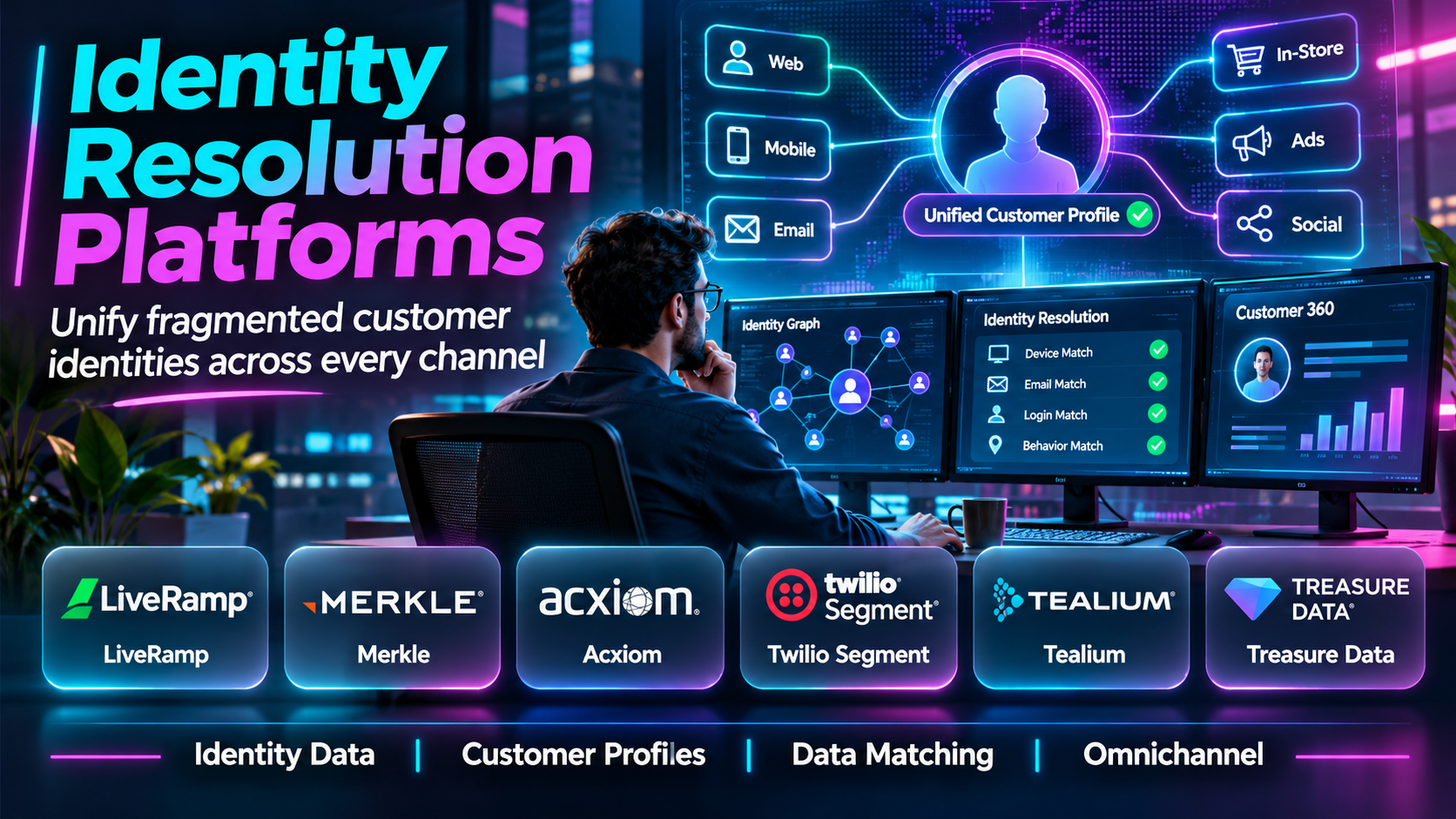
Customers interact with businesses through websites, mobile applications, email campaigns, physical stores, customer support channels, and advertising platforms. These interactions often generate separate records that do not automatically identify the same individual.
A customer might browse products anonymously, subscribe to a newsletter using an email address, purchase through a mobile application, and contact support using a telephone number. Without appropriate identity resolution, the organization may treat these activities as belonging to different customers.
Fragmented customer records make it difficult to understand customer journeys, maintain accurate profiles, evaluate marketing performance, and deliver consistent experiences.
Identity resolution platforms help organizations associate records and identifiers that are believed to represent the same person, household, account, or other defined entity.
These systems use identity graphs, matching rules, verified identifiers, and, in some cases, probabilistic techniques to connect eligible information across systems.
For example, a retailer may use an identity resolution platform to associate a customer’s loyalty account, e-commerce purchases, and customer service history. This can help authorized employees understand the customer’s relationship with the business.
Identity resolution is also relevant to advertising, customer data platforms, marketing analytics, fraud prevention, and enterprise data management.
However, identity resolution introduces important privacy and accuracy considerations. Incorrect matches can combine information belonging to different people, while missed matches can leave customer records fragmented.
Organizations must also distinguish between first-party identity resolution, advertising identity connectivity, account-based identification, and general-purpose entity resolution. These approaches solve related but different problems.
The best identity resolution platform depends on the organization’s data sources, identity requirements, customer relationships, privacy obligations, and technical architecture.
This guide compares ten identity resolution platforms, explains their features and limitations, and provides a practical framework for selecting and implementing an appropriate solution.
What Are Identity Resolution Platforms?
Identity resolution platforms are software solutions that connect records and identifiers associated with the same individual, household, business account, or other entity.
Their purpose is to help organizations establish more consistent representations of entities across disconnected systems.
For example, a business may maintain separate records for:
- Website visitors.
- Mobile application users.
- Email subscribers.
- E-commerce customers.
- Loyalty program members.
- Customer support contacts.
- CRM contacts.
- Advertising audiences.
- Business accounts.
- Offline purchasers.
Identity resolution attempts to determine which records can appropriately be associated.
How Identity Resolution Works
A typical identity resolution workflow includes several stages.
1. Data collection: The organization gathers eligible identifiers and records from approved sources.
2. Data standardization: Information is cleaned and normalized to improve matching quality.
3. Identifier analysis: The system evaluates available identifiers, such as customer IDs, verified email addresses, or other authorized signals.
4. Identity matching: Records are connected using deterministic rules, probabilistic methods, or a combination of approaches.
5. Identity graph construction: The platform creates or updates relationships among identifiers and entities.
6. Profile unification: Authorized applications may use resolved identities to create more consistent customer or account views.
7. Governance and monitoring: Teams review match accuracy, privacy requirements, permissions, and changes over time.
Deterministic Identity Resolution
Deterministic matching connects records using identifiers or relationships that provide relatively strong evidence of a shared identity.
For example, two records containing the same verified customer account identifier may be connected.
Deterministic matching is often easier to explain and audit.
However, even apparently strong identifiers can be shared, reassigned, entered incorrectly, or associated with multiple people.
Probabilistic Identity Resolution
Probabilistic matching uses statistical techniques to estimate whether records belong to the same entity.
It may consider combinations of available signals rather than relying on one exact identifier.
This approach can increase matching coverage, but it also introduces uncertainty.
Organizations should evaluate confidence thresholds, false-positive rates, and the consequences of incorrect associations.
Identity Graphs
An identity graph represents relationships between identifiers, records, and entities.
For example, a graph may connect a verified customer account with eligible website and application identifiers.
The quality of the graph depends on the underlying evidence and the rules used to establish relationships.
Major Applications
- Customer profile unification.
- Cross-channel marketing analytics.
- Customer journey analysis.
- Advertising audience connectivity.
- Customer data platform enrichment.
- CRM record management.
- Account-based marketing.
- E-commerce personalization.
- Customer service continuity.
- Enterprise entity resolution.
Benefits of Identity Resolution
Identity resolution can improve data consistency, reduce duplicate records, support more coherent customer experiences, and strengthen cross-channel analytics.
It can also help organizations coordinate information across authorized business systems.
However, benefits depend on accurate matching, clear identity definitions, appropriate permissions, and ongoing data quality management.
Top 10 Identity Resolution Platforms
1. LiveRamp
Short Description
LiveRamp provides identity connectivity and data collaboration capabilities used across advertising, marketing, and customer data environments.
Its offerings help organizations connect eligible customer information across participating systems and partners.
LiveRamp is particularly relevant to enterprises operating complex advertising and customer data ecosystems.
For example, a retailer may want to connect authorized customer records with approved advertising measurement and audience activation workflows.
LiveRamp’s identity infrastructure can support relevant connectivity between participating environments.
Its capabilities are especially useful when organizations need to coordinate identity across multiple marketing platforms.
However, the availability and permitted use of identifiers depend on the relevant products, agreements, jurisdictions, and privacy requirements.
Organizations should evaluate matching methodology, partner coverage, governance, and identity accuracy before implementation.
Key Features
- Identity Connectivity: Supports association of eligible identifiers across participating systems.
- Identity Graph Capabilities: Provides relevant identity relationships for approved workflows.
- First-Party Data Applications: Supports permitted uses of customer information.
- Audience Connectivity: Helps coordinate eligible marketing audiences.
- Advertising Measurement: Supports relevant identity-enabled analytical workflows.
- Data Collaboration: Connects with applicable partner collaboration environments.
- Partner Integrations: Supports participating marketing and advertising platforms.
- Privacy and Governance Controls: Provides relevant controls for authorized data use.
- Enterprise Identity Workflows: Supports complex marketing data environments.
Benefits
- Supports cross-platform identity connectivity.
- Helps coordinate marketing audiences.
- Enables selected first-party data applications.
- Supports identity-enabled measurement.
- Connects participating advertising partners.
- Improves consistency across eligible systems.
- Supports enterprise data collaboration.
Pros
- Identity connectivity specialization.
- Established marketing ecosystem applications.
- Broad partner collaboration relevance.
- Audience and measurement capabilities.
- First-party data applications.
- Enterprise-oriented infrastructure.
Cons
- Commercial costs require evaluation.
- Identity matching is not always complete.
- Integration requirements can be complex.
- Privacy obligations remain with participating organizations.
- Capabilities depend on product configuration and permitted uses.
Use Cases
Retail Audience Connectivity: A retailer coordinates eligible customer information with approved advertising partners.
Cross-Channel Measurement: A marketing team investigates authorized customer interactions across platforms.
First-Party Data Activation: An enterprise supports permitted audience workflows.
Data Collaboration: Organizations connect identity-enabled analytical processes.
Best For
Large advertisers, retailers, publishers, agencies, and enterprises requiring identity connectivity across marketing ecosystems.
2. TransUnion TruAudience
Short Description
TransUnion TruAudience is a marketing identity and audience solution associated with TransUnion’s broader data and identity capabilities.
It is relevant to organizations seeking identity-enabled audience understanding, marketing connectivity, and measurement.
TruAudience can support marketing use cases involving eligible consumer identity information and audience relationships.
For example, a consumer brand may want to improve the consistency of customer audience information across approved marketing channels.
Identity connectivity can help support these workflows.
The platform is particularly relevant to organizations operating at substantial scale.
However, identity products involving consumer information require careful evaluation of permitted uses, data provenance, contractual restrictions, and applicable privacy laws.
Organizations should also verify the current product offering and available integrations.
Key Features
- Marketing Identity Capabilities: Supports relevant consumer identity applications.
- Audience Connectivity: Helps associate eligible audience information.
- Identity Graph Applications: Supports selected identity relationships.
- Cross-Channel Marketing: Enables relevant audience workflows.
- Audience Insights: Supports approved customer analysis.
- Data Connectivity: Connects with applicable marketing systems.
- Measurement Applications: Supports selected identity-enabled reporting.
- Enterprise Integration: Fits complex organizational environments.
- Governance Requirements: Supports workflows subject to relevant permissions and restrictions.
Benefits
- Supports identity-enabled marketing.
- Helps coordinate customer audiences.
- Improves cross-channel connectivity.
- Supports selected measurement workflows.
- Provides enterprise-oriented applications.
- Helps analyze eligible audience relationships.
- Supports marketing data consistency.
Pros
- Marketing identity specialization.
- Enterprise audience applications.
- Cross-channel relevance.
- Identity graph capabilities.
- Data connectivity.
- Measurement use cases.
Cons
- Commercial terms require consultation.
- Data use restrictions may be significant.
- Matching quality varies.
- Implementation requires governance.
- Current product capabilities should be verified.
Use Cases
Consumer Audience Connectivity: A brand coordinates eligible customer segments.
Marketing Measurement: An organization evaluates approved identity-enabled reporting.
Audience Analysis: A company investigates relevant consumer populations.
Enterprise Marketing Operations: Teams coordinate identity across supported platforms.
Best For
Large consumer brands, advertising organizations, agencies, and enterprises requiring marketing identity capabilities.
3. Experian Identity Resolution
Short Description
Experian provides identity resolution and marketing data capabilities through its broader identity and data solutions.
Its offerings are relevant to organizations seeking to connect eligible customer records and improve identity consistency.
Experian is particularly associated with large-scale consumer data and marketing applications.
For example, a retailer may want to reconcile authorized customer information across multiple business systems.
Identity resolution can help identify records that likely refer to the same customer.
Experian’s capabilities may also support selected audience and marketing workflows.
However, organizations must distinguish between identity resolution, identity verification, credit-related products, and advertising identity services.
These are different applications with different permissions and regulatory considerations.
Buyers should evaluate the specific Experian offering that matches their intended use case.
Key Features
- Customer Identity Resolution: Supports matching of eligible customer records.
- Identity Data Capabilities: Provides relevant identity information services.
- Record Matching: Helps associate records across approved sources.
- Audience Applications: Supports selected marketing use cases.
- Data Quality Support: Helps improve customer record consistency.
- Cross-System Connectivity: Supports relevant data integration workflows.
- Identity Enrichment: Provides applicable identity-related information.
- Enterprise Applications: Addresses large-scale customer data environments.
- Governance Requirements: Supports workflows subject to applicable restrictions.
Benefits
- Helps reduce fragmented customer records.
- Supports customer identity consistency.
- Enables relevant marketing applications.
- Improves selected matching workflows.
- Supports large-scale data operations.
- Helps coordinate customer information.
- Provides enterprise identity capabilities.
Pros
- Identity and data expertise.
- Customer record matching.
- Enterprise applications.
- Relevant marketing use cases.
- Data quality support.
- Cross-system identity workflows.
Cons
- Product selection can be complex.
- Data permissions require careful review.
- Commercial pricing varies.
- Matching errors remain possible.
- Regulatory requirements differ by application.
Use Cases
Customer Record Matching: A retailer associates eligible records across systems.
Marketing Data Quality: A business improves customer identity consistency.
Audience Applications: A brand supports permitted identity-enabled marketing.
Enterprise Customer Analytics: Analysts examine unified customer information.
Best For
Large enterprises, retailers, consumer brands, and organizations requiring customer identity and data quality capabilities.
4. Amperity
Short Description
Amperity is a customer data platform with identity resolution capabilities focused on unifying customer information across enterprise systems.
It is particularly relevant to consumer-facing organizations with fragmented customer records.
Retailers, hospitality businesses, and other customer-centric enterprises may maintain information across point-of-sale systems, loyalty programs, websites, and customer service platforms.
Amperity helps organizations associate eligible records and create more consistent customer profiles.
For example, a hospitality company may want to understand interactions across bookings, loyalty accounts, and customer service.
Identity resolution can help connect these records when sufficient evidence is available.
Amperity’s broader customer data capabilities can support analytics and marketing workflows built around unified profiles.
However, organizations must evaluate matching accuracy, governance, integration requirements, and the consequences of incorrect profile merging.
Key Features
- Customer Identity Resolution: Associates eligible customer records.
- Unified Customer Profiles: Supports consolidated customer views.
- Identity Graph Capabilities: Connects relevant customer identifiers.
- Data Integration: Combines information from supported systems.
- Customer Analytics: Supports analysis of unified customer information.
- Segmentation: Enables relevant customer grouping.
- Marketing Activation: Connects approved profiles with supported destinations.
- Data Quality Workflows: Helps improve customer information consistency.
- Enterprise Customer Data Management: Supports large-scale customer environments.
Benefits
- Reduces customer data fragmentation.
- Supports unified customer views.
- Improves cross-channel analytics.
- Helps coordinate customer engagement.
- Supports segmentation.
- Enables relevant marketing activation.
- Improves customer data consistency.
Pros
- Customer identity resolution focus.
- Enterprise CDP capabilities.
- Unified customer profiles.
- Cross-channel data integration.
- Customer analytics.
- Relevant to consumer brands.
Cons
- Implementation can be complex.
- Commercial pricing requires evaluation.
- Identity accuracy depends on data quality.
- Integration work may be substantial.
- Governance is essential for profile unification.
Use Cases
Retail Customer Unification: A retailer connects loyalty, store, and online records.
Hospitality Analytics: A business associates eligible booking and loyalty information.
Customer Segmentation: Marketers create audiences using unified profiles.
Cross-Channel Customer Experience: Teams coordinate authorized customer interactions.
Best For
Large retailers, hospitality companies, consumer brands, and enterprises requiring customer profile unification.
5. Tealium AudienceStream
Short Description
Tealium AudienceStream is a customer data platform that supports customer profile unification and audience management.
Its capabilities are relevant to organizations seeking to connect customer interactions across digital channels and business systems.
Tealium’s broader data collection and integration ecosystem can support identity-related workflows.
For example, an e-commerce company may want to associate eligible website events with known customer records after a user signs into an account.
AudienceStream can support profile stitching and audience creation according to configured identity rules.
Its value is particularly relevant to organizations requiring real-time or near-real-time customer data workflows.
However, identity stitching must be designed carefully to avoid merging unrelated users.
Shared devices, inconsistent identifiers, and inaccurate events can introduce errors.
Key Features
- Visitor Stitching: Supports association of eligible visitor profiles.
- Customer Profile Unification: Combines relevant customer information.
- Real-Time Data Processing: Supports timely customer event workflows.
- Audience Segmentation: Creates relevant customer groups.
- Data Collection Integration: Works with applicable Tealium capabilities.
- Identity Rules: Supports configured profile association logic.
- Marketing Activation: Connects audiences with supported destinations.
- Customer Journey Data: Organizes eligible interactions.
- Enterprise Data Governance: Supports relevant administrative controls.
Benefits
- Supports customer profile consistency.
- Enables timely audience updates.
- Connects digital interactions.
- Helps coordinate marketing activation.
- Supports customer segmentation.
- Reduces fragmented event information.
- Fits enterprise customer data environments.
Pros
- Visitor stitching capabilities.
- Real-time customer data applications.
- Audience segmentation.
- Broad integration relevance.
- Enterprise CDP functionality.
- Flexible customer data workflows.
Cons
- Configuration requires expertise.
- Incorrect identity rules can create false matches.
- Commercial pricing requires evaluation.
- Integration complexity varies.
- Privacy governance remains essential.
Use Cases
E-commerce Profile Stitching: A retailer connects eligible anonymous and authenticated activity.
Customer Segmentation: Marketers create audiences using associated events.
Cross-Channel Engagement: A company coordinates customer interactions.
Real-Time Marketing: Teams use updated customer information in supported workflows.
Best For
Enterprises, e-commerce organizations, marketing technology teams, and businesses requiring real-time customer profile unification.
6. Twilio Segment
Short Description
Twilio Segment is a customer data platform that collects, organizes, and routes customer event information.
Its identity-related capabilities support the association of eligible events and profiles across digital systems.
Segment is particularly relevant to organizations that need consistent event collection and customer data infrastructure.
For example, a subscription software company may collect product usage events from websites and applications.
When a user authenticates, the company may want to associate eligible earlier interactions with the known customer profile.
Segment provides identity and profile capabilities relevant to these workflows, with availability depending on the selected products and configuration.
Its broader integration ecosystem can also help distribute customer information to authorized destinations.
However, identity resolution depends on accurate event instrumentation and appropriately designed identifier rules.
Organizations should not assume that all profile stitching capabilities are included in every Segment plan.
Key Features
- Customer Event Collection: Captures configured digital interactions.
- Identity Association: Supports relevant user identification workflows.
- Profile Unification: Provides applicable identity resolution capabilities.
- Data Integration: Connects supported sources and destinations.
- Customer Profiles: Organizes relevant user information.
- Audience Management: Supports selected segmentation workflows.
- Event Standardization: Helps maintain consistent tracking.
- Data Routing: Sends approved information to connected systems.
- Developer Integration: Supports implementation through relevant SDKs and APIs.
Benefits
- Improves customer event consistency.
- Supports identity association.
- Reduces fragmented tracking.
- Connects marketing and product systems.
- Enables selected unified profiles.
- Supports audience workflows.
- Helps standardize customer data infrastructure.
Pros
- Broad integration ecosystem.
- Developer-oriented data collection.
- Identity-related capabilities.
- Customer profile functionality.
- Event standardization.
- Suitable for digital businesses.
Cons
- Advanced identity capabilities may require specific products.
- Tracking quality depends on implementation.
- Incorrect identifier rules can merge profiles.
- Costs may increase with usage.
- Privacy requirements remain significant.
Use Cases
SaaS Product Analytics: A company associates eligible product events with known users.
E-commerce Tracking: A retailer organizes customer interactions.
Customer Data Infrastructure: A business standardizes event collection.
Audience Management: Marketers build approved segments using customer profiles.
Best For
SaaS companies, digital product teams, developers, and organizations requiring integrated customer data infrastructure.
7. Adobe Real-Time CDP
Short Description
Adobe Real-Time Customer Data Platform is an enterprise customer data platform that supports identity management and profile unification.
It is relevant to organizations using Adobe’s customer experience ecosystem.
The platform can help connect eligible customer information from different sources into more consistent profiles.
For example, a large retailer may want to associate authenticated website activity, loyalty information, and customer transactions.
Adobe’s identity and profile capabilities can support these workflows within the applicable platform architecture.
Its integration with broader Adobe customer experience technologies may be valuable to enterprises seeking coordinated analytics and activation.
However, identity resolution requires careful configuration of identity namespaces, merge policies, and data governance.
Incorrect settings can lead to fragmented profiles or inappropriate associations.
Key Features
- Identity Service Integration: Supports association of relevant identifiers.
- Unified Customer Profiles: Combines eligible customer information.
- Identity Graph Capabilities: Represents relationships between identifiers.
- Data Ingestion: Connects supported customer information sources.
- Profile Merge Policies: Controls relevant profile combination behavior.
- Audience Segmentation: Supports customer grouping.
- Marketing Activation: Connects approved audiences with supported destinations.
- Enterprise Governance: Supports relevant data management controls.
- Adobe Ecosystem Integration: Fits supported customer experience workflows.
Benefits
- Supports enterprise customer profile unification.
- Connects cross-channel information.
- Enables identity graph applications.
- Supports segmentation and activation.
- Fits Adobe customer experience environments.
- Improves customer data consistency.
- Provides configurable identity management.
Pros
- Enterprise CDP capabilities.
- Identity graph functionality.
- Profile merge policies.
- Adobe ecosystem integration.
- Audience management.
- Cross-channel applications.
Cons
- Implementation can be complex.
- Requires identity architecture expertise.
- Commercial costs may be substantial.
- Merge policy errors can affect profiles.
- Governance and privacy review are necessary.
Use Cases
Enterprise Customer Profiles: A retailer associates eligible interactions.
Cross-Channel Personalization: A company coordinates authorized customer experiences.
Audience Segmentation: Marketers create relevant groups.
Customer Data Governance: Teams manage identity relationships within Adobe infrastructure.
Best For
Large enterprises, Adobe ecosystem users, customer experience teams, and organizations requiring sophisticated profile management.
8. Treasure Data CDP
Short Description
Treasure Data is an enterprise customer data platform offering capabilities for customer data integration, identity resolution, and profile unification.
It is particularly relevant to organizations with substantial customer information distributed across business systems.
For example, a consumer brand may maintain customer records in e-commerce, loyalty, marketing, and support platforms.
Treasure Data can help organize eligible information and support more consistent customer profiles.
Its broader analytical capabilities can support customer segmentation and marketing applications.
The platform is relevant to enterprises that need customer data infrastructure rather than a standalone advertising identity graph.
However, implementation requires careful identity rules, data quality management, and governance.
Organizations should evaluate how the platform handles uncertain matches and profile updates.
Key Features
- Customer Identity Resolution: Supports association of eligible records.
- Unified Customer Profiles: Combines customer information.
- Data Integration: Connects supported enterprise systems.
- Customer Analytics: Enables relevant customer analysis.
- Audience Segmentation: Supports customer grouping.
- Marketing Activation: Connects approved audiences with destinations.
- Data Processing: Supports enterprise customer data workflows.
- Profile Management: Organizes customer attributes and events.
- Governance Capabilities: Supports relevant data management requirements.
Benefits
- Reduces fragmented customer information.
- Supports unified profiles.
- Improves customer analytics.
- Enables segmentation.
- Helps coordinate marketing systems.
- Supports enterprise data integration.
- Improves customer data consistency.
Pros
- Enterprise CDP specialization.
- Identity resolution capabilities.
- Customer profile unification.
- Broad data integration applications.
- Analytics and segmentation.
- Marketing activation.
Cons
- Implementation requires planning.
- Matching quality depends on data.
- Commercial pricing requires consultation.
- Technical resources may be necessary.
- Privacy governance remains essential.
Use Cases
Consumer Customer Unification: A brand connects eligible records.
Retail Analytics: A business analyzes unified customer profiles.
Audience Segmentation: Marketers create approved customer groups.
Enterprise Data Integration: Teams consolidate customer information.
Best For
Large consumer brands, retail enterprises, marketing data teams, and organizations requiring comprehensive customer data platforms.
9. Reltio
Short Description
Reltio is a master data management and entity resolution platform designed to help organizations establish more consistent records across enterprise systems.
Unlike advertising-focused identity platforms, Reltio emphasizes broader enterprise data management.
It is relevant to organizations that need to resolve customer, supplier, organization, or other business entities.
For example, a multinational company may maintain customer records across sales, finance, support, and operational systems.
Reltio can help identify duplicate or related records and support a governed representation of important entities.
Its capabilities are particularly useful when identity resolution is part of an enterprise master data management strategy.
However, implementing entity resolution requires careful data modeling, matching rules, stewardship, and governance.
Reltio should not be treated as a direct replacement for advertising identity connectivity.
Key Features
- Entity Resolution: Supports matching and association of business records.
- Master Data Management: Helps maintain consistent enterprise entities.
- Record Matching: Identifies potential duplicates and relationships.
- Data Quality Management: Supports improvement of enterprise records.
- Golden Record Workflows: Helps establish governed master representations.
- Relationship Management: Supports relevant entity relationships.
- Data Integration: Connects enterprise systems.
- Data Stewardship: Supports review and correction workflows.
- Enterprise Governance: Helps manage critical business data.
Benefits
- Reduces duplicate enterprise records.
- Improves master data consistency.
- Supports entity relationship analysis.
- Enables governed record management.
- Helps coordinate enterprise systems.
- Supports data stewardship.
- Improves operational data quality.
Pros
- Enterprise entity resolution.
- Master data management.
- Record matching capabilities.
- Data stewardship workflows.
- Broad entity applications.
- Governance-oriented design.
Cons
- Not primarily an advertising identity platform.
- Implementation can be substantial.
- Data modeling requires expertise.
- Commercial costs require evaluation.
- Matching rules need ongoing maintenance.
Use Cases
Customer Master Data: An enterprise reconciles customer records.
Supplier Data Management: A company identifies duplicate supplier entities.
Enterprise CRM Integration: Teams improve consistency across systems.
Data Governance: An organization establishes governed master records.
Best For
Large enterprises, master data management teams, data governance departments, and organizations requiring general-purpose entity resolution.
10. FullContact
Short Description
FullContact provides identity resolution and identity graph capabilities relevant to marketing and customer data applications.
Its offerings are associated with connecting eligible identity signals and supporting customer recognition workflows.
FullContact is particularly relevant to organizations seeking identity connectivity across approved digital and customer data environments.
For example, a marketing organization may want to improve the consistency of eligible customer records across supported platforms.
Identity graph capabilities can help associate relevant identifiers.
The platform may support selected audience and customer data applications depending on its current products.
However, organizations should evaluate the provenance and permitted use of identity information.
They should also examine match confidence, integration coverage, privacy obligations, and current commercial availability.
Key Features
- Identity Resolution: Supports association of eligible identity records.
- Identity Graph Capabilities: Connects relevant identifiers.
- Customer Recognition Applications: Supports selected identity-related workflows.
- Data Connectivity: Connects supported information sources.
- Marketing Identity Applications: Supports relevant audience use cases.
- Identity Matching: Helps associate customer records.
- API Integration: Provides relevant developer connectivity.
- Identity Data Services: Supports applicable customer identity workflows.
- Enterprise Applications: Addresses selected large-scale identity needs.
Benefits
- Supports customer identity consistency.
- Helps associate eligible records.
- Provides identity graph applications.
- Enables relevant marketing workflows.
- Supports system integration.
- Improves selected customer recognition processes.
- Helps reduce fragmented identity information.
Pros
- Identity resolution specialization.
- Identity graph capabilities.
- Marketing applications.
- API-oriented integration.
- Customer recognition relevance.
- Enterprise use cases.
Cons
- Current product capabilities require verification.
- Matching accuracy varies.
- Data provenance must be assessed.
- Commercial pricing requires evaluation.
- Privacy requirements can restrict use cases.
Use Cases
Customer Identity Connectivity: A business associates eligible records.
Marketing Data Integration: A team coordinates identity across systems.
Audience Applications: An organization supports permitted customer recognition.
Identity Graph Research: Analysts examine relevant identity relationships.
Best For
Marketing technology teams, customer data organizations, and enterprises requiring identity graph capabilities.
Comparison Table: Top 10 Identity Resolution Platforms
| Platform | Primary Focus | Best For | Key Differentiator |
|---|---|---|---|
| LiveRamp | Marketing identity connectivity | Advertisers and retailers | Cross-platform identity applications |
| TransUnion TruAudience | Consumer marketing identity | Large consumer brands | Audience identity capabilities |
| Experian Identity Resolution | Customer identity and data quality | Enterprises | Customer record matching |
| Amperity | Customer profile unification | Retail and hospitality | Enterprise identity resolution |
| Tealium AudienceStream | Real-time profile stitching | Digital businesses | Customer event association |
| Twilio Segment | Customer data infrastructure | SaaS and product teams | Event and identity integration |
| Adobe Real-Time CDP | Enterprise customer profiles | Adobe ecosystem users | Identity graph and merge policies |
| Treasure Data CDP | Customer data unification | Consumer enterprises | Integrated customer data platform |
| Reltio | Enterprise entity resolution | MDM teams | Governed master records |
| FullContact | Identity graph applications | Marketing technology teams | Identity connectivity services |
These platforms address different identity problems. Advertising identity connectivity, customer data platform profile stitching, and enterprise entity resolution should be evaluated separately.
How to Choose the Best Identity Resolution Platform
1. Define the Identity Problem
Determine whether the organization needs to connect website users, unify customer profiles, coordinate advertising identities, or resolve enterprise master records.
The objective determines the appropriate platform category.
2. Identify the Entity Being Resolved
Specify whether the system should resolve individuals, households, business accounts, organizations, or another entity type.
Avoid mixing entity definitions without explicit rules.
3. Audit Available Identifiers
Review customer IDs, verified contact information, account identifiers, device-related signals, and other eligible data.
Determine which identifiers are reliable and permitted.
4. Evaluate Matching Methods
Compare deterministic, probabilistic, and hybrid approaches.
Understand how confidence is calculated and how ambiguous matches are handled.
5. Measure Matching Accuracy
Evaluate precision, recall, false-positive rates, and false-negative rates using an appropriate labeled dataset where possible.
A high match rate alone does not establish accuracy.
6. Examine Identity Graph Management
Determine how relationships are created, updated, separated, and deleted.
Review how the system handles shared identifiers and changing customer information.
7. Review Privacy and Consent Requirements
Identity resolution can increase the sensitivity of combined datasets.
Ensure that collection, association, retention, and use are appropriately authorized.
8. Assess Integrations
Review compatibility with CRM systems, customer data platforms, websites, applications, data warehouses, and marketing destinations.
9. Evaluate Governance and Auditability
Look for controls supporting access restrictions, match explanations, correction workflows, and deletion requirements.
10. Calculate Total Cost
Include licensing, implementation, data processing, technical resources, monitoring, and ongoing data stewardship.
Best Identity Resolution Platforms by User Type
| User Type | Recommended Platform | Reason |
|---|---|---|
| Large advertiser | LiveRamp | Marketing identity connectivity |
| Consumer marketing enterprise | TransUnion TruAudience | Audience identity applications |
| Enterprise customer data team | Experian | Customer identity and data quality |
| Large retailer | Amperity | Customer profile unification |
| Real-time marketing team | Tealium AudienceStream | Visitor stitching |
| SaaS product team | Twilio Segment | Customer event integration |
| Adobe enterprise | Adobe Real-Time CDP | Identity graph and unified profiles |
| Consumer brand | Treasure Data | Enterprise customer data unification |
| Master data management team | Reltio | Entity resolution and governance |
| Identity technology team | FullContact | Identity graph applications |
Practical Example: Implementing Identity Resolution for an Omnichannel Retailer
Consider a retailer operating physical stores, an e-commerce website, and a mobile application.
The company also maintains a loyalty program and customer service system.
Customer records are fragmented across these environments.
Step 1: Define the Business Objective
The retailer wants to create more consistent customer profiles for authorized service, analytics, and marketing workflows.
It identifies duplicate customer records as a major problem.
Step 2: Inventory Data Sources
The team reviews point-of-sale records, e-commerce accounts, loyalty information, CRM contacts, and application events.
It documents identifiers and data quality issues.
Step 3: Establish Identity Definitions
The organization defines what constitutes an individual customer.
It also establishes rules for households, shared devices, and business accounts.
Step 4: Review Privacy Requirements
Legal and privacy teams determine which records may be associated and for what purposes.
They establish retention and deletion requirements.
Step 5: Select a Platform
The retailer evaluates Amperity, Adobe Real-Time CDP, Tealium AudienceStream, and other relevant solutions.
It prioritizes profile unification, integration, matching accuracy, and governance.
Step 6: Standardize Customer Records
Data teams normalize eligible contact information and customer identifiers.
They remove invalid records and document missing values.
Step 7: Configure Matching Rules
The organization begins with strong deterministic identifiers.
It considers probabilistic methods only where justified and appropriately controlled.
Step 8: Validate Match Quality
The team reviews samples of matched and unmatched records.
It evaluates false positives and false negatives.
Incorrectly merging two customers is treated as a significant risk.
Step 9: Build Governed Customer Profiles
Approved identity relationships are used to create consistent customer views.
Access is restricted according to business purpose.
Step 10: Monitor Identity Changes
The retailer reviews matching performance, duplicate rates, and correction requests.
Identity rules are updated when data sources or customer behavior change.
Common Mistakes to Avoid
1. Maximizing Match Rate Without Measuring Accuracy
Aggressive matching may combine unrelated individuals.
2. Treating Email Addresses as Perfect Identifiers
Email addresses may be shared, reassigned, or entered incorrectly.
3. Ignoring Shared Devices
Multiple people may use the same browser, tablet, or household device.
4. Combining Records Without Appropriate Authorization
Identity resolution must follow applicable privacy and data use requirements.
5. Failing to Distinguish Individuals From Households
Household relationships should not automatically imply individual identity.
6. Overlooking Identity Graph Maintenance
Identifiers and relationships change over time.
7. Ignoring False-Positive Consequences
Incorrect matches can affect customer service, analytics, and privacy.
8. Treating Identity Resolution as a One-Time Project
Identity quality requires ongoing monitoring and governance.
Frequently Asked Questions
1. What is identity resolution?
Identity resolution is the process of associating records and identifiers believed to represent the same entity.
2. What is an identity resolution platform?
It is software that supports identity matching, relationship management, and related data workflows.
3. Why is identity resolution important?
It helps reduce fragmented records and supports more consistent customer or entity information.
4. What is deterministic identity matching?
It uses relatively strong identifiers or defined rules to associate records.
5. What is probabilistic identity matching?
It uses statistical evidence to estimate whether records belong to the same entity.
6. What is an identity graph?
An identity graph represents relationships among identifiers, records, and entities.
7. What is profile stitching?
Profile stitching associates eligible events or records with a common customer profile.
8. What is a unified customer profile?
It is a consolidated representation of customer information from relevant sources.
9. Can identity resolution connect online and offline data?
Yes, when appropriate identifiers, permissions, and integrations are available.
10. Can identity resolution work without cookies?
Some approaches use other eligible identifiers, but capabilities and privacy implications vary.
11. Is identity resolution the same as identity verification?
No. Identity verification assesses whether someone is who they claim to be, while identity resolution associates records believed to represent the same entity.
12. Is identity resolution the same as master data management?
No. Identity resolution can be a component of master data management, which addresses broader enterprise data consistency.
13. What is household identity resolution?
It associates eligible records at a household level rather than necessarily identifying one individual.
14. What is account-based identity resolution?
It associates relevant records and interactions with business accounts.
15. What causes duplicate customer records?
Duplicates can arise from disconnected systems, inconsistent identifiers, data entry errors, and changing customer information.
16. What is a false-positive identity match?
It occurs when records belonging to different entities are incorrectly associated.
17. What is a false-negative identity match?
It occurs when records belonging to the same entity are not successfully connected.
18. How is identity resolution accuracy measured?
Teams may evaluate precision, recall, and other matching quality metrics using appropriate reference data.
19. Can AI improve identity resolution?
Machine learning can support matching, but results still require validation and governance.
20. Does identity resolution improve marketing attribution?
It can improve eligible journey association, but it does not eliminate missing data or prove causal marketing impact.
21. Can identity resolution support personalization?
Yes, when customer information is appropriately associated and used for authorized purposes.
22. Does identity resolution guarantee privacy compliance?
No. Compliance depends on the complete data processing arrangement.
23. Can identity resolution increase privacy risks?
Yes. Combining information can create more detailed and sensitive profiles.
24. What is the difference between an identity graph and a customer data platform?
An identity graph represents identity relationships. A customer data platform provides broader customer data collection, profile management, segmentation, and activation capabilities.
25. Which identity resolution platform is best for retailers?
Amperity and enterprise CDP solutions are relevant options depending on the retailer’s requirements.
26. Which platform is best for advertising identity?
LiveRamp and other marketing identity providers are relevant options.
27. Which platform is best for enterprise master data?
Reltio is relevant to general-purpose entity resolution and master data management.
28. How long does identity resolution implementation take?
Time depends on data quality, integrations, identity complexity, and governance requirements.
29. What are the main limitations of identity resolution?
Limitations include missing identifiers, incorrect matches, incomplete coverage, privacy restrictions, and changing identity relationships.
30. How should businesses choose an identity resolution platform?
They should evaluate entity definitions, matching accuracy, data sources, privacy requirements, integrations, governance, and total cost.
Final Thoughts
Identity resolution platforms help organizations connect fragmented records and establish more consistent representations of customers, accounts, and other entities.
LiveRamp, TransUnion TruAudience, Experian, and FullContact are relevant to selected marketing identity and connectivity applications.
Amperity, Tealium AudienceStream, Twilio Segment, Adobe Real-Time CDP, and Treasure Data support customer data unification through broader customer data platform capabilities.
Reltio addresses enterprise entity resolution and master data management requirements.
The best solution depends on the identity problem being solved.
Organizations should distinguish between advertising identity connectivity, customer profile stitching, and enterprise master record management before selecting a platform.
Accurate matching is essential, but privacy and governance are equally important.
Incorrect identity associations can create misleading analytics, poor customer experiences, and inappropriate information sharing.
A reliable identity resolution strategy therefore requires clear entity definitions, appropriate identifiers, validated matching rules, access controls, and ongoing quality monitoring.
When implemented responsibly, identity resolution can improve data consistency and support more coherent customer experiences without treating every available data connection as automatically appropriate.
