Introduction
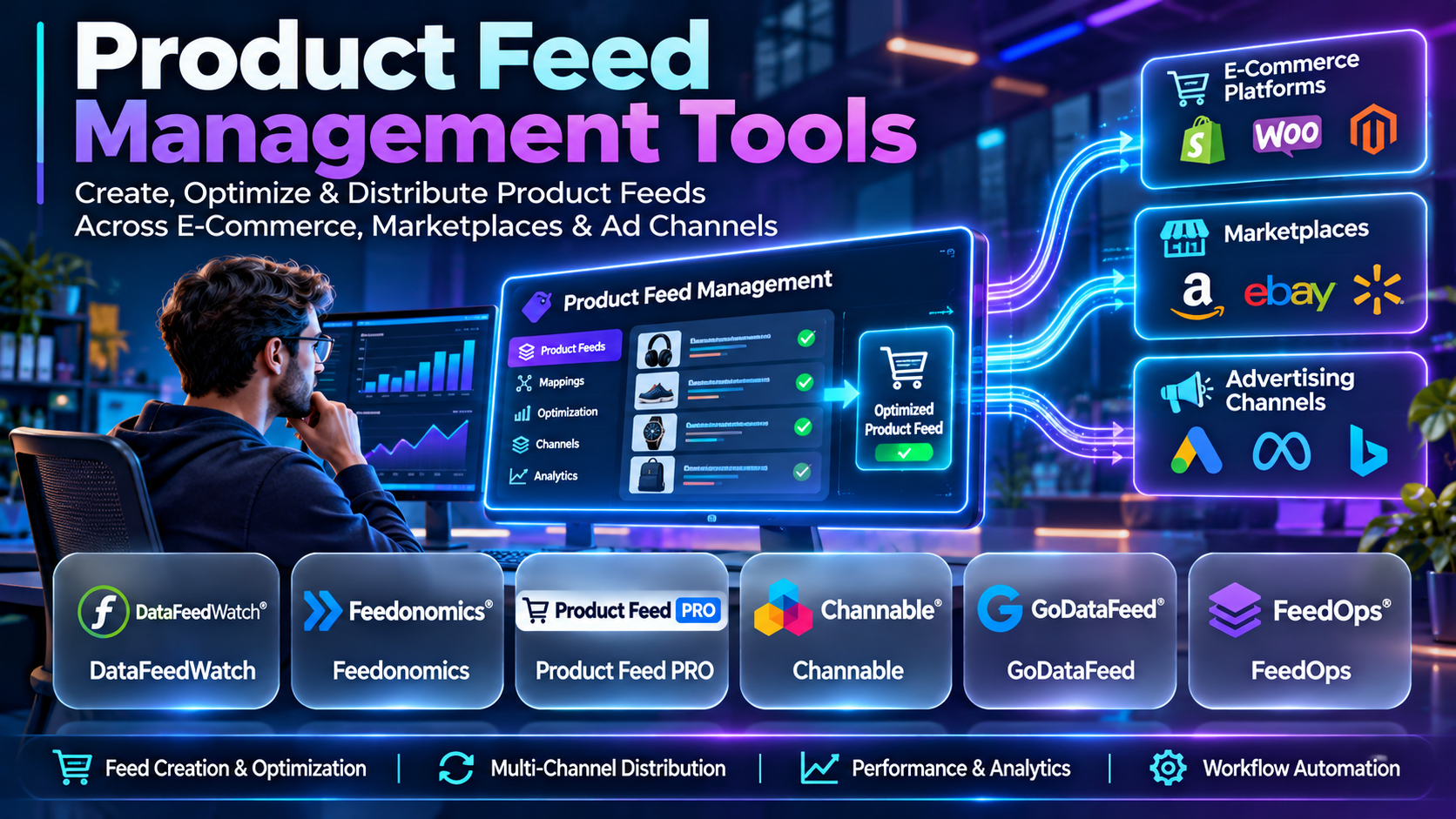
Product feed management tools help e-commerce businesses prepare, optimize, distribute, and monitor product data across shopping channels. These channels may include Google Shopping, online marketplaces, comparison shopping engines, advertising platforms, and social commerce destinations.
Every sales channel has specific requirements for product information. Product titles, descriptions, identifiers, categories, prices, availability, and images must be formatted correctly before products can appear in eligible listings or advertisements.
Managing these requirements manually becomes difficult when a retailer sells thousands of products across multiple destinations. Different channels may require different attributes, category mappings, feed formats, and update schedules.
Product feed management software addresses these challenges by connecting product data sources with destination-specific publishing workflows. It helps businesses transform product information, apply rules, validate records, and distribute updated feeds.
Some platforms focus on feed optimization for advertising performance, while others specialize in marketplace connectivity, product content syndication, or enterprise feed automation. The right solution depends on the business’s product catalog, advertising strategy, and integration requirements.
This guide compares ten product feed management tools, including their features, benefits, limitations, and ideal applications. It also provides comparison tables, recommendations by business type, a practical implementation workflow, and frequently asked questions.
What Are Product Feed Management Tools?
Product feed management tools are software applications that prepare and distribute structured product information to external commerce and advertising destinations.
A product feed typically contains information such as product identifiers, titles, descriptions, prices, availability, product categories, images, and destination-specific attributes. Different channels may require different formats or additional information.
Feed management platforms connect with source systems such as Shopify, WooCommerce, Magento or Adobe Commerce, ERP systems, and PIM platforms. They transform source records into destination-compatible feeds using configured rules and mappings.
A reliable feed process also helps identify rejected products, missing attributes, outdated prices, and synchronization failures. This improves operational consistency and helps advertising teams maintain accurate product information.
Common applications include:
- Google Shopping: Prepare product data for Google Merchant Center and eligible shopping advertisements.
- Marketplace Selling: Distribute listings and product information to supported marketplaces.
- Social Commerce: Supply product catalogs to supported social advertising and shopping environments.
- Dynamic Remarketing: Maintain accurate product information for relevant advertising campaigns.
- Price Comparison: Publish product data to comparison shopping destinations.
- International Commerce: Prepare country-specific feeds with appropriate currencies, languages, and attributes.
- Catalog Optimization: Improve product titles, categories, and attributes for channel requirements.
- Feed Monitoring: Identify errors and maintain reliable product data updates.
Top 10 Product Feed Management Tools
1. Channable
Short Description
Channable is a product feed management and e-commerce automation platform designed to help retailers optimize and distribute product data across supported marketing and commerce channels.
The platform combines product feed transformation, rule-based optimization, channel connections, and selected marketplace and advertising capabilities. This makes it relevant to merchants managing multiple destinations.
Its rule engine helps businesses modify product information without changing the original source catalog. For example, retailers can enrich product titles, exclude unavailable items, and assign categories according to channel requirements.
Channable is particularly useful for growing e-commerce businesses and agencies that need structured control over multiple product feeds. Pricing, channel coverage, and available modules should be verified before implementation.
Key Features
- Feed Import: Retrieves product information from supported commerce platforms, files, and integrations.
- Rule-Based Optimization: Transforms product fields using configurable conditions.
- Channel Templates: Supports feed preparation for selected advertising and marketplace destinations.
- Category Mapping: Helps align internal product categories with destination taxonomies.
- Product Filtering: Excludes products based on availability, price, or other configured conditions.
- Feed Validation: Helps identify incomplete or invalid product information.
- Marketplace Integrations: Supports selected marketplace listing and order workflows.
- Advertising Automation: Provides capabilities for supported product advertising processes.
- Performance Monitoring: Helps teams evaluate feed and channel-related results.
Benefits
- Reduces manual feed preparation.
- Supports multiple shopping channels.
- Improves product data consistency.
- Enables rule-based optimization.
- Helps manage large catalogs.
- Supports agency workflows.
- Simplifies channel expansion.
Pros
- Flexible rule engine.
- Broad feed management capabilities.
- Useful category mapping.
- Multiple channel connections.
- Relevant to agencies and retailers.
- Supports scalable workflows.
Cons
- Advanced configurations require training.
- Costs can increase with usage and modules.
- Connector capabilities vary by destination.
- Incorrect rules can affect many products.
- Not a complete replacement for PIM or ERP systems.
Use Cases
- Google Shopping Optimization: Prepare product titles and attributes for eligible Merchant Center listings.
- Multi-Channel Distribution: Generate different product feeds from one source catalog.
- Inventory Filtering: Exclude unavailable products from selected advertising destinations.
- International Campaigns: Prepare market-specific product information.
- Agency Feed Management: Maintain structured feeds for multiple retail clients.
- Marketplace Expansion: Prepare product data for supported marketplace connections.
Best For
- E-commerce retailers.
- Shopping advertising agencies.
- Multi-channel merchants.
- Performance marketing teams.
- Growing online stores.
- Feed optimization specialists.
2. DataFeedWatch
Short Description
DataFeedWatch is a product feed management platform focused on helping merchants optimize product information for shopping advertisements and supported commerce channels.
It is relevant to retailers and advertising agencies managing Google Shopping, social advertising catalogs, and other product-based marketing destinations. Users can transform product data using configurable rules.
A distinguishing advantage is its emphasis on feed optimization without requiring changes to the original commerce catalog. Businesses can maintain destination-specific titles, categories, and attributes while preserving their source records.
DataFeedWatch also supports monitoring and diagnostic workflows. Merchants should evaluate current channel coverage, product limits, and subscription requirements.
Key Features
- Product Feed Import: Connects with supported e-commerce platforms and data sources.
- Field Mapping: Maps source attributes to destination requirements.
- Optimization Rules: Modifies product information according to configured conditions.
- Title Optimization: Supports destination-specific product title construction.
- Category Mapping: Helps assign products to appropriate destination categories.
- Product Exclusions: Filters products based on business criteria.
- Feed Distribution: Publishes product information through supported connections.
- Error Diagnostics: Helps identify product data problems.
- Agency Management: Supports workflows relevant to multiple client accounts.
Benefits
- Improves feed flexibility.
- Reduces manual product edits.
- Supports shopping campaign preparation.
- Helps maintain channel-specific content.
- Provides structured data transformations.
- Supports multiple commerce sources.
- Improves feed maintenance efficiency.
Pros
- Strong feed optimization focus.
- Configurable product rules.
- Relevant to advertising teams.
- Supports multiple destinations.
- Useful for agency operations.
- Product data mapping capabilities.
Cons
- Pricing depends on product and usage requirements.
- Complex rules need careful testing.
- Some advanced operations require additional tools.
- Feed quality depends on source information.
- Destination requirements change over time.
Use Cases
- Google Merchant Center Preparation: Map required product attributes and validate records.
- Shopping Campaign Segmentation: Create feeds for selected product groups.
- Title Enrichment: Combine brand, product type, and relevant specifications.
- Social Catalog Management: Prepare product data for supported social advertising destinations.
- Agency Operations: Manage product feeds for several retail clients.
- Feed Troubleshooting: Investigate rejected or incomplete product records.
Best For
- Shopping advertising specialists.
- E-commerce agencies.
- Small and medium-sized retailers.
- Google Shopping advertisers.
- Social commerce marketers.
- Businesses needing flexible feed rules.
3. Feedonomics
Short Description
Feedonomics is a product feed management and marketplace integration platform focused on complex e-commerce data operations. It helps businesses prepare, optimize, and distribute product information across supported destinations.
The platform is relevant to established retailers, brands, and organizations managing large product catalogs. Its offering combines technology with managed service capabilities for selected workflows.
Feedonomics is particularly useful when businesses require substantial feed transformation, operational monitoring, and ongoing support. Complex product data can be prepared for different destination requirements through managed processes.
Its enterprise orientation makes it suitable for businesses with demanding channel operations. Buyers should verify service scope, integration coverage, and commercial arrangements before procurement.
Key Features
- Product Data Integration: Connects with supported commerce and enterprise sources.
- Feed Transformation: Converts source data into destination-compatible formats.
- Catalog Optimization: Supports improving product information for different channels.
- Channel Distribution: Sends approved feeds to eligible destinations.
- Marketplace Connectivity: Supports selected marketplace commerce workflows.
- Data Quality Monitoring: Helps identify missing or invalid information.
- Managed Services: Provides selected operational assistance depending on the agreement.
- Automation: Supports repeatable feed processing workflows.
- Enterprise Scalability: Accommodates complex product data operations.
Benefits
- Supports complex feed requirements.
- Reduces internal manual work.
- Provides managed service options.
- Improves channel data consistency.
- Helps coordinate large catalogs.
- Supports enterprise commerce operations.
- Simplifies multi-channel distribution.
Pros
- Enterprise-oriented capabilities.
- Managed service availability.
- Strong feed transformation focus.
- Relevant to large catalogs.
- Marketplace integration opportunities.
- Supports complex data requirements.
Cons
- Commercial pricing requires consultation.
- Smaller merchants may not need its scope.
- Implementation requires coordination.
- Managed services introduce external dependencies.
- Channel-specific limitations still apply.
Use Cases
- Enterprise Feed Distribution: Maintain product feeds across numerous channels.
- Large Catalog Transformation: Standardize complex product records.
- Managed Feed Operations: Obtain assistance with recurring feed maintenance.
- Marketplace Expansion: Prepare information for supported marketplace destinations.
- Feed Quality Improvement: Identify and resolve recurring data problems.
- International Retail: Coordinate product data requirements across regions.
Best For
- Enterprise retailers.
- Large consumer brands.
- Multi-channel commerce teams.
- Complex catalog operators.
- E-commerce agencies.
- Organizations seeking managed feed services.
4. Productsup
Short Description
Productsup is a product-to-consumer commerce platform providing capabilities for product data transformation, feed management, syndication, and related commerce operations.
The platform is relevant to brands, retailers, manufacturers, and enterprises that distribute product information across many destinations. Its workflows support complex product data exchange requirements.
A major advantage is its ability to coordinate transformations across different data sources and destination formats. This is useful when organizations maintain product information across several internal systems.
Productsup is generally more appropriate for businesses with substantial data complexity than for merchants managing a single simple feed. Implementation requirements and commercial arrangements should be evaluated carefully.
Key Features
- Product Data Aggregation: Collects information from supported sources.
- Data Transformation: Converts and enriches product records.
- Feed Management: Maintains destination-specific product data workflows.
- Channel Syndication: Distributes information to supported commerce destinations.
- Data Mapping: Aligns source fields with external requirements.
- Product Content Optimization: Supports improvements to selected attributes.
- Workflow Automation: Reduces repetitive processing tasks.
- Data Quality Controls: Helps identify problematic records.
- Enterprise Integration: Connects with relevant business systems.
Benefits
- Supports complex data transformations.
- Centralizes feed operations.
- Improves product data consistency.
- Reduces manual distribution work.
- Supports enterprise commerce.
- Helps coordinate multiple data sources.
- Enables scalable product syndication.
Pros
- Broad product data capabilities.
- Enterprise-focused architecture.
- Strong transformation workflows.
- Multi-channel distribution.
- Integration flexibility.
- Suitable for complex catalogs.
Cons
- Implementation may require specialists.
- Commercial costs can be substantial.
- Advanced features create a learning curve.
- Smaller businesses may prefer simpler tools.
- Source data governance remains necessary.
Use Cases
- Global Feed Management: Prepare market-specific product information.
- Complex Data Integration: Combine product records from several systems.
- Retail Content Distribution: Supply product information to supported partners.
- Channel Optimization: Apply destination-specific transformation rules.
- Enterprise Automation: Coordinate recurring feed processing.
- Data Quality Governance: Identify incomplete or inconsistent product information.
Best For
- Global retailers.
- Enterprise commerce teams.
- Manufacturers.
- Large consumer brands.
- Product data operations specialists.
- Organizations with complex integration requirements.
5. GoDataFeed
Short Description
GoDataFeed is a product feed management and multi-channel commerce solution designed to help retailers distribute product information across supported shopping and selling destinations.
The platform provides workflows for connecting product sources, transforming feed information, and managing channel-specific requirements. It is relevant to businesses expanding beyond a single online store.
GoDataFeed helps reduce repeated data entry by preparing destination feeds from centralized product information. Merchants can use configured rules and mappings to address differences between channels.
Its functionality also includes selected commerce and marketplace integration capabilities. Businesses should verify current destinations, available services, and pricing before adoption.
Key Features
- Product Source Integration: Imports information from supported commerce systems.
- Feed Mapping: Aligns product attributes with destination requirements.
- Data Transformation: Applies configured changes to product information.
- Channel Distribution: Publishes feeds to eligible destinations.
- Product Filtering: Excludes selected products from feeds.
- Category Mapping: Supports destination taxonomy requirements.
- Feed Monitoring: Helps identify relevant data problems.
- Marketplace Connections: Supports selected marketplace workflows.
- Automation: Reduces recurring feed administration.
Benefits
- Simplifies channel expansion.
- Reduces duplicate product administration.
- Supports destination-specific formatting.
- Improves feed consistency.
- Helps automate updates.
- Supports growing product catalogs.
- Provides centralized feed workflows.
Pros
- Multi-channel orientation.
- Product feed transformation.
- Commerce integration opportunities.
- Useful for growing retailers.
- Category mapping capabilities.
- Automated feed updates.
Cons
- Channel coverage requires verification.
- Pricing depends on requirements.
- Complex integrations need testing.
- Some marketplace functions vary.
- Data quality depends on source systems.
Use Cases
- Retail Feed Distribution: Publish products to supported shopping channels.
- Marketplace Preparation: Map attributes for eligible marketplace listings.
- Product Filtering: Exclude discontinued or unavailable items.
- Catalog Synchronization: Maintain updated product information.
- Shopping Advertising: Prepare destination-specific feeds.
- Multi-Channel Expansion: Add supported commerce destinations.
Best For
- Online retailers.
- Multi-channel sellers.
- Growing e-commerce businesses.
- Marketplace operations teams.
- Product feed specialists.
- Commerce integration managers.
6. WakeupData
Short Description
WakeupData is a product feed management and optimization platform designed to help e-commerce businesses improve product data used in shopping and advertising channels.
The platform supports feed transformation, enrichment, and related product data operations. It is relevant to retailers and marketing teams that need more control over product information before publication.
Its core value comes from allowing businesses to create channel-specific product feeds without repeatedly modifying source records. Teams can apply transformations and evaluate product information quality.
WakeupData also provides capabilities associated with feed optimization and performance workflows. Merchants should confirm current integrations, supported channels, and subscription conditions.
Key Features
- Feed Import: Retrieves product data from supported sources.
- Data Transformation: Applies configured modifications to product fields.
- Product Enrichment: Improves selected product attributes.
- Channel Mapping: Aligns data with destination requirements.
- Feed Optimization: Supports preparation for shopping campaigns.
- Product Filtering: Controls which records appear in specific feeds.
- Feed Distribution: Sends product information to supported destinations.
- Data Quality Checks: Helps identify incomplete records.
- Automation: Supports recurring feed processing.
Benefits
- Improves product data preparation.
- Reduces manual editing.
- Supports channel-specific content.
- Helps maintain feed consistency.
- Provides optimization flexibility.
- Supports recurring updates.
- Reduces repetitive administration.
Pros
- Feed optimization orientation.
- Data transformation capabilities.
- Relevant to shopping advertisers.
- Supports multiple data sources.
- Product enrichment workflows.
- Automation opportunities.
Cons
- Advanced rules require configuration.
- Channel compatibility must be checked.
- Pricing depends on selected plans.
- Complex operations may require expertise.
- Source catalog errors can persist.
Use Cases
- Shopping Feed Optimization: Improve product attributes for eligible campaigns.
- Product Title Construction: Combine relevant attributes into destination-specific titles.
- Channel-Specific Feeds: Prepare different data formats.
- Catalog Cleanup: Identify incomplete product records.
- Feed Automation: Schedule recurring processing.
- Performance Marketing: Maintain product information for supported advertising channels.
Best For
- E-commerce marketers.
- Shopping advertising teams.
- Product feed managers.
- Retail agencies.
- Growing online stores.
- Data optimization specialists.
7. Lengow
Short Description
Lengow is an e-commerce feed management and marketplace connectivity platform that helps merchants distribute product information across supported digital commerce destinations.
The platform is relevant to retailers and brands selling through marketplaces, shopping channels, and other online destinations. It helps businesses manage product information requirements across connected systems.
A distinguishing advantage is its combination of product feed distribution and marketplace-oriented commerce workflows. Merchants can use it to coordinate aspects of multi-channel selling.
Lengow also provides capabilities for transforming product data and managing relevant channel requirements. Buyers should verify supported marketplaces, integrations, and current commercial offerings.
Key Features
- Product Feed Management: Organizes product data distribution workflows.
- Marketplace Connectivity: Connects with supported marketplace destinations.
- Attribute Mapping: Aligns source fields with channel requirements.
- Data Transformation: Applies rules to product information.
- Category Mapping: Supports destination taxonomy requirements.
- Product Filtering: Controls feed eligibility.
- Order-Related Integrations: Supports selected marketplace commerce workflows.
- Performance Reporting: Provides relevant channel information.
- Automation: Reduces repetitive feed operations.
Benefits
- Supports marketplace expansion.
- Centralizes product feed distribution.
- Reduces duplicate product updates.
- Improves channel data consistency.
- Supports commerce integrations.
- Helps coordinate multi-channel operations.
- Provides structured automation.
Pros
- Marketplace-oriented capabilities.
- Feed management functionality.
- Multi-channel distribution.
- Product data mapping.
- Commerce integration opportunities.
- Relevant to established retailers.
Cons
- Channel capabilities vary.
- Commercial costs require evaluation.
- Integration complexity increases with scale.
- Not a complete ERP replacement.
- Marketplace requirements require ongoing maintenance.
Use Cases
- Marketplace Expansion: Prepare products for additional supported channels.
- Feed Transformation: Apply destination-specific attributes.
- Catalog Distribution: Publish product information from a central source.
- Multi-Channel Retail: Coordinate connected commerce operations.
- Product Data Validation: Investigate incomplete records.
- International Commerce: Prepare relevant market-specific feeds.
Best For
- Multi-channel retailers.
- Marketplace sellers.
- E-commerce brands.
- European retail businesses.
- Commerce operations teams.
- Product distribution managers.
8. AdNabu
Short Description
AdNabu provides product feed optimization and shopping advertising software, including solutions focused on Shopify merchants and Google Shopping-related workflows.
The platform is relevant to online retailers that want to improve product information used in shopping advertisements. Its capabilities help merchants prepare and optimize product data for supported destinations.
A major advantage is its focus on accessible product feed workflows for commerce teams. Merchants can work with product information from their stores and prepare it for relevant advertising environments.
AdNabu also offers selected product optimization and multi-channel feed capabilities. Businesses should verify current application features, platform support, and plan limits.
Key Features
- Product Feed Synchronization: Connects supported commerce product information with shopping destinations.
- Google Shopping Preparation: Helps organize product data for eligible Merchant Center workflows.
- Product Attribute Optimization: Supports improvements to selected product information.
- Feed Validation: Helps identify product data issues.
- Product Exclusions: Controls which items are included in supported feeds.
- Multi-Country Support: Provides relevant market-specific feed capabilities.
- Additional Channel Feeds: Supports selected commerce and advertising destinations.
- Automation: Reduces repetitive product feed updates.
- Performance Insights: Provides relevant optimization information.
Benefits
- Simplifies shopping feed preparation.
- Supports Shopify-focused workflows.
- Reduces manual product updates.
- Helps identify feed issues.
- Supports selected international feeds.
- Improves product data consistency.
- Provides accessible optimization tools.
Pros
- Relevant to Shopify merchants.
- Google Shopping orientation.
- Product feed synchronization.
- Optimization capabilities.
- Accessible commerce workflows.
- Supports selected additional channels.
Cons
- Best fit depends on supported commerce platforms.
- Advanced enterprise needs may exceed its scope.
- Pricing and limits vary by plan.
- Feed optimization still requires oversight.
- Channel coverage must be verified.
Use Cases
- Shopify Google Shopping: Prepare product data for Merchant Center.
- Product Attribute Cleanup: Improve missing or inconsistent information.
- Shopping Campaign Preparation: Maintain relevant product feeds.
- International Product Advertising: Prepare eligible market-specific data.
- Feed Synchronization: Keep product information updated.
- Small Retail Optimization: Reduce manual feed administration.
Best For
- Shopify merchants.
- Google Shopping advertisers.
- Small online retailers.
- E-commerce marketers.
- Growing product brands.
- Businesses seeking straightforward feed workflows.
9. Rithum
Short Description
Rithum provides commerce connectivity and marketplace technology for brands, retailers, and other digital commerce participants. Its offerings include capabilities associated with product data distribution and marketplace operations.
The platform is relevant to established businesses managing complex marketplace relationships. Organizations can use supported solutions to coordinate product information and commerce processes across multiple destinations.
Its main advantage is enterprise-oriented commerce connectivity rather than basic feed optimization alone. Businesses with substantial channel requirements may benefit from integrated product distribution and operational workflows.
Rithum offers different products and services depending on the organization’s needs. Buyers should confirm which capabilities are included in the proposed solution.
Key Features
- Marketplace Connectivity: Supports connections with eligible commerce destinations.
- Product Data Distribution: Helps publish product information through supported workflows.
- Attribute Mapping: Supports destination-specific product requirements.
- Catalog Management: Organizes relevant product data operations.
- Commerce Automation: Reduces repetitive processes.
- Order Workflow Integration: Supports selected marketplace transaction processes.
- Inventory Data Exchange: Helps maintain relevant availability information.
- Performance Reporting: Provides selected commerce insights.
- Enterprise Integration: Connects with supported business systems.
Benefits
- Supports enterprise commerce distribution.
- Connects multiple marketplace destinations.
- Reduces manual channel administration.
- Improves product data coordination.
- Supports complex integrations.
- Provides operational automation.
- Helps manage channel expansion.
Pros
- Enterprise commerce orientation.
- Broad connectivity capabilities.
- Product data distribution.
- Integration opportunities.
- Suitable for large catalogs.
- Supports complex operations.
Cons
- May exceed small-business needs.
- Commercial pricing requires consultation.
- Implementation can be demanding.
- Exact features depend on the solution.
- Not solely focused on shopping feed optimization.
Use Cases
- Enterprise Marketplace Distribution: Publish products to supported marketplaces.
- Large Catalog Management: Coordinate extensive product information.
- Retail Partner Integration: Exchange data with supported partners.
- Multi-Channel Expansion: Add commerce destinations.
- Product Data Governance: Maintain consistent distribution processes.
- Commerce Operations: Coordinate relevant product and order workflows.
Best For
- Enterprise retailers.
- Large consumer brands.
- Marketplace operations teams.
- Product distribution specialists.
- Multi-channel commerce organizations.
- Businesses with complex integrations.
10. Shopify Marketplace Connect
Short Description
Shopify Marketplace Connect is an application for connecting Shopify merchants with supported marketplaces. It helps businesses manage selected product listings and marketplace commerce workflows from their Shopify environment.
The application is relevant to retailers that already use Shopify as their central commerce platform. It can reduce the need to maintain separate product information manually across connected marketplaces.
Its distinguishing advantage is its relationship with Shopify’s existing product catalog and commerce administration. Merchants can coordinate marketplace activity while continuing to use their established store operations.
Shopify Marketplace Connect is not a universal feed optimization system for every advertising destination. Businesses should verify supported marketplaces, application availability, and current functionality before implementation.
Key Features
- Marketplace Connections: Connects Shopify with supported selling destinations.
- Product Listing Management: Helps publish and maintain eligible marketplace listings.
- Product Data Mapping: Supports relevant marketplace information requirements.
- Inventory Synchronization: Helps coordinate available stock across supported channels.
- Order Integration: Connects selected marketplace order activity with Shopify.
- Pricing Controls: Supports relevant marketplace pricing workflows.
- Catalog Administration: Uses Shopify product information as a central source.
- Commerce Automation: Reduces selected repetitive tasks.
- Channel Management: Helps merchants coordinate marketplace selling.
Benefits
- Simplifies marketplace selling for Shopify merchants.
- Reduces duplicate listing administration.
- Supports inventory consistency.
- Connects marketplace orders with store operations.
- Uses an existing product catalog.
- Supports channel expansion.
- Reduces manual commerce work.
Pros
- Shopify integration.
- Marketplace listing workflows.
- Inventory synchronization.
- Relevant to existing Shopify merchants.
- Centralized commerce administration.
- Supports selected order connections.
Cons
- Marketplace coverage is limited to supported channels.
- Not a full advertising feed optimization suite.
- Feature availability varies by destination.
- Channel-specific requirements remain.
- Costs and eligibility require verification.
Use Cases
- Shopify Marketplace Expansion: Add supported marketplaces to an existing store.
- Product Listing Distribution: Publish eligible products to connected destinations.
- Inventory Synchronization: Maintain stock consistency.
- Order Coordination: Bring supported marketplace activity into Shopify workflows.
- Marketplace Pricing: Configure relevant channel pricing.
- Multi-Channel Retail: Reduce duplicate product administration.
Best For
- Shopify retailers.
- Marketplace sellers.
- Small and medium-sized merchants.
- Multi-channel store managers.
- Businesses expanding from Shopify.
- Retail operations teams.
Comparison Table: Top 10 Product Feed Management Tools
| Tool Name | Best For | Platform(s) | Standout Feature | Pricing |
|---|---|---|---|---|
| Channable | Multi-channel feed optimization | Web, integrations | Rule-based product transformation | Paid plans |
| DataFeedWatch | Shopping advertising feeds | Web, integrations | Flexible feed mapping | Paid plans |
| Feedonomics | Enterprise feed operations | Web, managed services | Managed feed optimization | Custom pricing |
| Productsup | Complex product data distribution | Web, enterprise integrations | Enterprise data transformation | Custom pricing |
| GoDataFeed | Multi-channel commerce | Web, integrations | Feed and channel connectivity | Paid plans |
| WakeupData | Feed enrichment | Web, integrations | Product data optimization | Paid plans |
| Lengow | Marketplace feed management | Web, integrations | Marketplace-oriented distribution | Commercial pricing |
| AdNabu | Shopify shopping feeds | Shopify, web integrations | Google Shopping optimization | Free or paid offerings; verify plans |
| Rithum | Enterprise commerce connectivity | Web, enterprise integrations | Marketplace distribution | Custom pricing |
| Shopify Marketplace Connect | Shopify marketplace listings | Shopify, supported marketplaces | Store-connected marketplace management | App terms vary |
Note: Pricing, licensing, supported platforms, and available features can change. Check official vendor websites for current plans, regional availability, and supported integrations.
Which Product Feed Management Tool Is Right for You?
Product feed management software should be selected according to the destinations a business uses and the complexity of its product data.
A retailer running Google Shopping campaigns may need advanced attribute optimization. A marketplace seller may prioritize listing synchronization, while an enterprise brand may require large-scale data transformation and managed distribution.
For Beginners: AdNabu and DataFeedWatch
AdNabu is relevant to Shopify merchants seeking accessible shopping feed workflows. Its orientation toward product feed preparation can help smaller teams begin optimizing product information.
DataFeedWatch offers flexible transformation rules for shopping feeds. It is suitable for businesses that need more detailed control over destination-specific attributes.
Choose AdNabu for Shopify-centered workflows and DataFeedWatch for flexible feed optimization.
For Advertising Agencies: Channable and DataFeedWatch
Channable provides rule-based feed management across supported destinations. Agencies can use structured processes to maintain client product information.
DataFeedWatch emphasizes shopping feed optimization and mapping. It can support teams managing multiple advertising accounts.
Both require consistent naming conventions, rule documentation, and regular quality checks.
For Enterprise Retailers: Feedonomics and Productsup
Feedonomics combines feed management technology with selected managed services. This can reduce the internal operational burden associated with complex feeds.
Productsup supports extensive product data transformation and distribution. It is relevant to organizations managing many sources and destinations.
Evaluate implementation responsibilities, service levels, and integration architecture before procurement.
For Marketplace Sellers: Lengow and Rithum
Lengow supports marketplace-oriented product feed distribution and commerce workflows. It can help retailers coordinate supported destinations.
Rithum provides enterprise commerce connectivity and related product data capabilities. It is more appropriate for organizations with substantial channel complexity.
The right choice depends on marketplace coverage and operational scale.
For Shopify Merchants: AdNabu and Shopify Marketplace Connect
AdNabu is relevant to shopping feed optimization and supported advertising destinations. Shopify Marketplace Connect focuses on connecting Shopify products with eligible marketplaces.
The products address different requirements. Choose AdNabu for shopping feed preparation and Shopify Marketplace Connect for supported marketplace selling workflows.
For International Retail: Productsup and Channable
Productsup supports complex transformations across data sources and destinations. It can help global organizations manage market-specific requirements.
Channable provides configurable rules and channel mappings. Retailers can use these capabilities to prepare different feeds from a shared catalog.
Both require accurate regional pricing, language, and availability information.
For Managed Feed Operations: Feedonomics and GoDataFeed
Feedonomics is relevant to businesses seeking enterprise feed technology and managed service options. It can support complex recurring operational requirements.
GoDataFeed provides product feed management and channel connectivity. It may suit businesses wanting to maintain more direct operational control.
Evaluate internal staffing, support requirements, and total service costs.
For Growing Retailers: Channable and Lengow
Channable helps businesses expand across advertising and commerce destinations using feed rules. It is useful when product information must be transformed repeatedly.
Lengow emphasizes marketplace and multi-channel distribution. It is relevant to merchants expanding their selling operations.
Choose according to whether advertising feed optimization or marketplace connectivity is the stronger priority.
Best Product Feed Management Tools for Different Users
| User Type | Recommended Software | Why? |
|---|---|---|
| Multi-channel advertiser | Channable | Rule-based feed optimization |
| Shopping advertising agency | DataFeedWatch | Flexible attribute mapping |
| Enterprise feed team | Feedonomics | Managed feed operations |
| Global commerce enterprise | Productsup | Complex data transformation |
| Growing online retailer | GoDataFeed | Multi-channel distribution |
| Feed enrichment specialist | WakeupData | Product data optimization |
| Marketplace retailer | Lengow | Marketplace-oriented feeds |
| Shopify Google Shopping advertiser | AdNabu | Shopify-focused feed workflows |
| Enterprise marketplace team | Rithum | Commerce connectivity |
| Shopify marketplace seller | Shopify Marketplace Connect | Store-connected listings |
Practical Example: Optimizing a Product Feed for Google Shopping
Consider an online retailer selling 2,500 clothing products through Shopify. The retailer wants to improve product data quality before expanding its Google Shopping advertising campaigns.
The business chooses a feed management tool such as Channable or DataFeedWatch to prepare destination-specific product information.
Step 1: Audit the Existing Catalog
Export product records from Shopify and review required fields. Identify missing identifiers, incomplete descriptions, incorrect availability values, and inconsistent product titles.
Group errors by product category and severity. Prioritize problems that prevent products from being accepted by the destination.
Step 2: Connect the Product Source
Connect Shopify through an approved integration or supported feed import. Verify that product identifiers and variant relationships are preserved.
Import a limited sample first. Confirm that pricing, images, and stock information match the source catalog.
Step 3: Map Required Attributes
Map internal product fields to the relevant Google Merchant Center attributes. Review current destination requirements for the retailer’s country and product categories.
For clothing products, check relevant attributes such as brand, size, color, gender, and age group where applicable.
Avoid supplying unsupported or invented information.
Step 4: Create Optimization Rules
Configure rules that improve product titles using accurate attributes. For example, a title may combine brand, product type, material, and color when relevant.
Exclude discontinued products and items that should not be advertised. Ensure that rules do not accidentally remove profitable products.
Document every transformation and its intended purpose.
Step 5: Validate the Feed
Generate a test feed and review product data errors. Investigate missing fields, invalid categories, incorrect image links, and price mismatches.
Resolve problems in the appropriate source system whenever possible. Use feed transformations for legitimate destination-specific requirements.
Step 6: Publish and Monitor
Connect the approved feed to the relevant Merchant Center destination. Confirm that eligible products are processed correctly.
Monitor product approval status and investigate new disapprovals. Check whether scheduled updates are running successfully.
Do not assume that successful feed submission guarantees advertising eligibility.
Step 7: Evaluate Commercial Performance
Review product-level impressions, clicks, conversions, advertising costs, and profitability using available reports.
Compare results before and after optimization while accounting for other campaign changes. Identify product groups requiring further improvement.
Create a recurring review process for feed quality and commercial performance.
This workflow helps the retailer maintain accurate product information and improve its ability to manage shopping campaigns.
Frequently Asked Questions (FAQs)
1. What is product feed management software?
Product feed management software prepares, transforms, and distributes structured product information to external commerce and advertising destinations.
It helps businesses meet channel-specific requirements while reducing repetitive manual updates.
2. What is a product feed?
A product feed is a structured collection of product records containing attributes such as identifiers, titles, descriptions, prices, images, and availability.
Destinations use this information to create eligible product listings or advertising experiences.
3. Which product feed management tool is best for beginners?
AdNabu may be practical for Shopify merchants, while DataFeedWatch is relevant to businesses seeking configurable shopping feed optimization.
Beginners should prioritize reliable data imports, clear validation, and manageable pricing.
4. Are free product feed management tools available?
Some providers offer limited free plans or introductory access. Merchants can also use native export capabilities or supported commerce integrations.
Free options may have limits on products, channels, or optimization features.
5. How does feed management improve Google Shopping campaigns?
Feed management helps ensure that product information meets destination requirements and accurately describes merchandise.
Better data quality can reduce preventable errors and support more relevant product presentation, although it does not guarantee improved advertising results.
6. What is product feed optimization?
Product feed optimization involves improving product information for specific destinations. This may include title construction, attribute mapping, category assignment, and data validation.
All changes should preserve factual accuracy and comply with channel policies.
7. Can one feed be used for every marketplace?
Not always. Marketplaces and advertising platforms often have different field requirements, categories, formats, and validation rules.
Feed management tools help create destination-specific outputs from a shared product source.
8. What is the difference between PIM and feed management?
PIM manages structured product information at its source. Feed management transforms and distributes that information to external destinations.
Many businesses use both systems together.
9. How frequently should product feeds update?
Update frequency depends on product availability, pricing changes, channel requirements, and integration capabilities.
Businesses with rapidly changing stock should prioritize reliable synchronization and monitoring.
10. What causes product feed disapprovals?
Common causes include missing identifiers, incorrect prices, invalid images, policy violations, and mismatched availability.
The exact reasons depend on the destination’s current requirements.
11. Can feed management software support international advertising?
Many platforms support market-specific product feeds. Businesses may need different languages, currencies, tax information, and destination attributes.
Regional eligibility and legal requirements must also be considered.
12. What is product category mapping?
Category mapping connects internal product categories with the classification system required by an external destination.
Accurate mapping helps platforms understand the type of merchandise being submitted.
13. Can feed management software change product prices?
Some tools can transform or distribute pricing information according to configured rules. However, the displayed price must remain accurate and consistent with applicable destination requirements.
Businesses should avoid configurations that create mismatches between advertisements and checkout pages.
14. What is a supplemental feed?
A supplemental feed provides additional product information that can be associated with an existing primary product source where the destination supports this approach.
It may help enrich records without replacing the primary catalog.
15. How should agencies evaluate feed management software?
Agencies should examine account separation, rule management, destination coverage, reporting, access controls, and total costs.
They should also test whether the platform supports repeatable workflows across clients.
16. Can feed management tools support marketplaces?
Yes. Some platforms provide marketplace feed distribution, listing integration, and related commerce workflows.
Marketplace capabilities vary considerably, so sellers should verify the exact functions available for each destination.
17. How do feed rules work?
Feed rules apply configured transformations to product data. They may combine fields, replace values, exclude products, or map categories.
Rules should be tested against representative records before publication.
18. What is the difference between feed management and inventory management?
Feed management prepares product information for external channels. Inventory management tracks stock availability and related operational information.
Feed systems may distribute inventory data, but they do not necessarily serve as the authoritative stock management system.
19. How can businesses measure feed quality?
Businesses can track missing attributes, rejected products, incorrect values, synchronization failures, and time required to resolve errors.
Commercial performance should be measured separately using verified advertising and sales data.
20. Which feed management platforms suit enterprises?
Feedonomics, Productsup, and Rithum are relevant to different enterprise commerce requirements.
The best choice depends on data complexity, destination coverage, integration architecture, and support needs.
Final Thoughts
Product feed management tools help businesses distribute accurate product information across shopping, advertising, and marketplace destinations. They reduce manual administration and support consistent channel-specific product data.
Channable and DataFeedWatch offer flexible feed optimization capabilities. Feedonomics and Productsup address more complex enterprise requirements, while GoDataFeed, WakeupData, and Lengow support different multi-channel workflows.
AdNabu is relevant to Shopify-focused shopping feed optimization, while Shopify Marketplace Connect supports selected marketplace listing workflows. Rithum provides broader enterprise commerce connectivity.
The right platform depends on catalog size, destination requirements, advertising objectives, and available technical resources. Businesses should test product mappings, automation rules, and synchronization behavior before expanding.
Reliable product feeds begin with accurate source data. Combining strong catalog governance with careful feed optimization provides a sustainable foundation for multi-channel commerce.
