Introduction
Pricing is one of the most important decisions in retail and e-commerce. A product’s price influences customer demand, competitive positioning, profit margins, inventory movement, and overall business performance.
However, setting effective prices becomes increasingly difficult when competitors change their prices frequently, marketplaces contain numerous sellers, and customers compare products across several websites before purchasing.
A retailer managing hundreds or thousands of products cannot efficiently monitor every competing offer manually. Prices, discounts, shipping charges, availability, and promotional campaigns can change throughout the day.
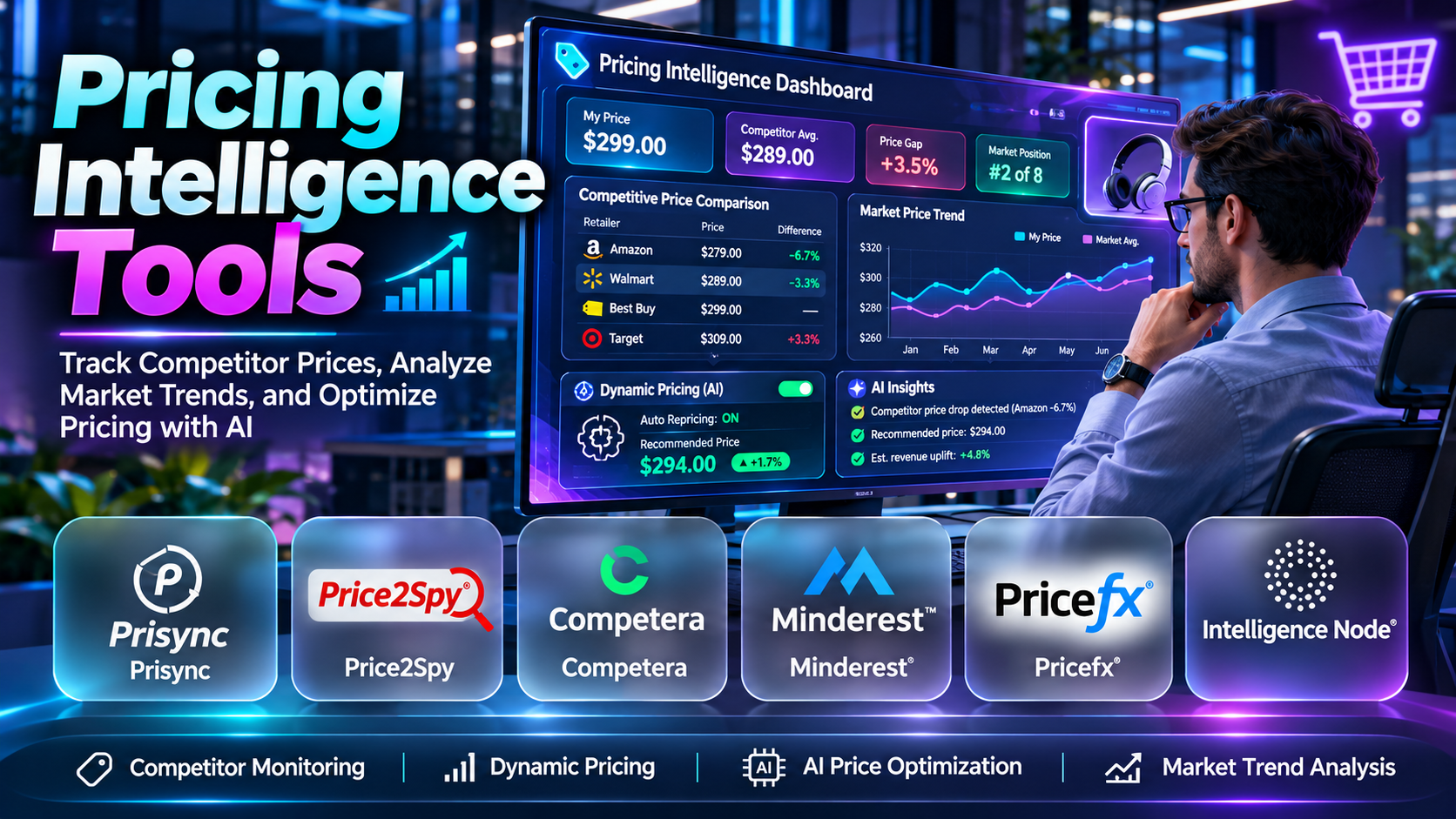
Pricing intelligence tools help businesses collect and analyze relevant market pricing information. These platforms monitor competitor prices, compare matching products, track pricing trends, and provide insights that support informed pricing decisions.
Some solutions focus on competitor price monitoring and alerts. Others combine pricing intelligence with automated repricing, price optimization, marketplace analytics, or enterprise revenue management.
The right platform depends on a company’s business model, product catalog, competitive environment, and pricing objectives. A small online retailer may need straightforward competitor monitoring, while a large enterprise may require advanced analytics and automated pricing workflows.
This guide compares ten pricing intelligence tools, including their features, benefits, advantages, limitations, and practical applications. It also provides comparison tables, selection guidance, a step-by-step implementation example, and detailed frequently asked questions.
What Are Pricing Intelligence Tools?
Pricing intelligence tools are software platforms that collect, organize, and analyze pricing information from relevant competitors, marketplaces, retailers, and other market sources.
Their primary purpose is to help businesses understand how their prices compare with the market and how competitive conditions change over time.
Pricing intelligence platforms may collect information about advertised prices, discounts, stock availability, product variants, shipping costs, and promotional activity.
The collected information is then organized into reports, dashboards, alerts, and pricing recommendations.
Some platforms also support automated repricing. These systems can adjust prices according to configured rules, business objectives, and permitted data sources.
How Pricing Intelligence Works
A typical pricing intelligence workflow includes several stages.
First, the business identifies the products and competitors it wants to monitor. The software then collects relevant pricing information from supported sources.
Next, the platform attempts to match competitor listings with the business’s own products. Accurate product matching is important because different sizes, bundles, configurations, and product generations may have different prices.
The platform organizes the results into comparable records. Pricing teams can then review competitor movements, price gaps, availability changes, and historical trends.
Finally, businesses use these insights to make pricing decisions manually or through approved automation.
Common Applications
- Competitor Price Monitoring: Track relevant competing product prices.
- Marketplace Price Intelligence: Analyze pricing across supported online marketplaces.
- Dynamic Pricing: Adjust prices according to approved rules and market conditions.
- Price Optimization: Evaluate pricing decisions against business objectives.
- MAP Monitoring: Identify potential violations of minimum advertised price policies.
- Promotion Analysis: Compare competitor discounts and promotional activity.
- Product Matching: Identify equivalent products across different retailers.
- Margin Protection: Apply pricing safeguards that account for business costs.
- Historical Analysis: Study how market prices change over time.
- Pricing Alerts: Notify teams when relevant price changes occur.
Top 10 Pricing Intelligence Tools
1. Prisync
Short Description
Prisync is a competitor price tracking and dynamic pricing platform designed primarily for e-commerce retailers. It helps businesses monitor competing product prices and use market information to inform their pricing strategies.
The platform is particularly relevant to online merchants selling products that customers can easily compare across several stores. Retailers can use it to understand whether their prices are above, below, or aligned with selected competitors.
Prisync provides competitor price monitoring, reporting, alerts, and dynamic pricing capabilities. Its workflows can help businesses reduce the manual work involved in checking competitor websites.
The platform is useful for small and medium-sized retailers that want practical pricing intelligence without implementing a large enterprise pricing system. Businesses should verify current integrations, product limits, and subscription requirements.
Key Features
- Competitor Price Tracking: Monitors prices for selected competing products.
- Product Matching: Associates relevant competitor listings with corresponding catalog items.
- Price Change Alerts: Notifies users about significant competitor price movements.
- Historical Price Data: Helps businesses examine changes over time.
- Dynamic Pricing: Supports rule-based pricing adjustments through eligible workflows.
- Stock Availability Monitoring: Tracks relevant competitor availability information.
- Pricing Reports: Organizes market pricing data into usable comparisons.
- Commerce Integrations: Connects with supported e-commerce environments.
- Competitive Position Analysis: Helps identify products priced above or below selected competitors.
Benefits
- Reduces manual competitor monitoring.
- Supports informed pricing decisions.
- Provides visibility into market changes.
- Helps identify pricing opportunities.
- Supports automated pricing workflows.
- Improves competitive reporting.
- Helps pricing teams respond consistently.
Pros
- E-commerce-focused functionality.
- Competitor price monitoring.
- Dynamic pricing capabilities.
- Historical pricing information.
- Relevant to growing retailers.
- Practical reporting workflows.
Cons
- Pricing depends on product and usage requirements.
- Product matching requires validation.
- Automation rules need margin safeguards.
- Competitor coverage varies by source.
- Market prices alone do not determine profitability.
Use Cases
- Electronics Retail: Monitor prices for identical devices sold by competing stores.
- Competitive Price Alerts: Identify products with significant market price changes.
- Dynamic Repricing: Apply approved pricing rules within defined limits.
- Promotion Monitoring: Track competitor discounts during major campaigns.
- Margin Management: Review price changes before reducing margins.
- Retail Reporting: Provide recurring competitive pricing summaries.
Best For
- Small and medium-sized retailers.
- E-commerce pricing teams.
- Electronics stores.
- Multi-brand online merchants.
- Competitive intelligence specialists.
- Businesses introducing dynamic pricing.
2. Price2Spy
Short Description
Price2Spy is a competitor price monitoring and pricing intelligence platform designed for retailers, brands, and other businesses that need visibility into market pricing.
The platform helps organizations monitor competitor prices, analyze pricing differences, and receive notifications about relevant market changes.
Price2Spy is particularly useful for businesses with extensive product catalogs or multiple competitors. Its reporting capabilities can support pricing teams that need consistent information rather than occasional manual checks.
The platform also provides selected repricing and pricing automation capabilities. Businesses should evaluate source coverage, product matching requirements, and integration options before implementation.
Key Features
- Competitor Monitoring: Tracks prices from selected online sources.
- Price Change Alerts: Reports relevant competitor price movements.
- Historical Price Analysis: Maintains information for trend evaluation.
- Product Matching: Supports comparison of equivalent products.
- Pricing Reports: Organizes market pricing information.
- Repricing Capabilities: Supports selected automated pricing workflows.
- Stock Monitoring: Provides relevant availability information.
- Integration Options: Connects with supported commerce and data systems.
- Competitive Analysis: Helps identify pricing differences and market positioning.
Benefits
- Improves competitor price visibility.
- Reduces repetitive monitoring.
- Supports large product comparisons.
- Helps identify unusual price movements.
- Provides historical context.
- Supports structured pricing reviews.
- Enables selected automation workflows.
Pros
- Dedicated pricing intelligence capabilities.
- Historical monitoring.
- Configurable alerts.
- Relevant to retailers and brands.
- Product matching functionality.
- Repricing options.
Cons
- Complex monitoring setups require planning.
- Data quality depends on source accessibility.
- Matching errors can affect comparisons.
- Advanced integrations may require technical work.
- Pricing must be evaluated against catalog scale.
Use Cases
- Retail Price Monitoring: Track selected competitor offers.
- Brand Price Analysis: Review how authorized sellers advertise products.
- Price Change Detection: Identify relevant competitor movements.
- Historical Trend Reporting: Study market pricing patterns.
- Repricing Workflows: Apply approved adjustments to eligible products.
- Market Research: Compare pricing across selected retail destinations.
Best For
- Online retailers.
- Consumer brands.
- Pricing analysts.
- Competitive intelligence teams.
- Multi-category merchants.
- Businesses requiring historical pricing data.
3. Competera
Short Description
Competera is a pricing platform focused on helping retailers make data-driven pricing decisions through pricing intelligence and optimization capabilities.
The platform is particularly relevant to medium-sized and enterprise retailers managing complex product assortments. These businesses may need to balance competitive positioning, customer demand, profitability, and category-level objectives.
Competera combines market information with analytical pricing workflows. Its optimization capabilities can help businesses evaluate pricing decisions using relevant business constraints and data.
The platform is more sophisticated than basic competitor price tracking software. Implementation typically requires reliable product data, commercial objectives, and coordination between pricing and technology teams.
Key Features
- Competitive Pricing Intelligence: Provides relevant market price information.
- Price Optimization: Supports analytical pricing recommendations.
- Pricing Analytics: Evaluates relevant pricing performance indicators.
- Product Segmentation: Supports different strategies across product groups.
- Business Constraints: Incorporates selected pricing rules and limits.
- Pricing Recommendations: Helps teams evaluate potential price adjustments.
- Data Integration: Connects with supported retail data systems.
- Pricing Workflows: Supports structured pricing decision processes.
- Performance Evaluation: Provides relevant information for pricing analysis.
Benefits
- Supports data-driven pricing.
- Connects market information with business objectives.
- Helps manage complex assortments.
- Reduces reliance on manual decisions.
- Supports pricing governance.
- Provides analytical recommendations.
- Helps evaluate profitability considerations.
Pros
- Advanced pricing optimization.
- Retail-focused analytics.
- Relevant to large assortments.
- Supports pricing constraints.
- Enterprise-oriented workflows.
- Data integration capabilities.
Cons
- Implementation can be demanding.
- Requires reliable business data.
- Commercial pricing requires consultation.
- Optimization results need monitoring.
- Smaller merchants may not need advanced capabilities.
Use Cases
- Retail Price Optimization: Evaluate prices across large assortments.
- Category Pricing: Apply different strategies to product groups.
- Margin Management: Consider profitability constraints.
- Competitive Positioning: Incorporate relevant competitor information.
- Pricing Governance: Standardize decision workflows.
- Enterprise Analytics: Support pricing teams with structured recommendations.
Best For
- Enterprise retailers.
- Grocery and general merchandise businesses.
- Retail pricing departments.
- Revenue optimization teams.
- Large assortment managers.
- Data-driven commerce organizations.
4. Minderest
Short Description
Minderest is a pricing intelligence platform that helps retailers and brands monitor competitor prices, product availability, and relevant market information.
The platform is useful for organizations that need structured competitive monitoring across multiple products and online destinations.
Minderest provides capabilities associated with price tracking, product matching, and market analysis. These functions can help pricing teams identify changes in competitive positioning.
It is also relevant to brands monitoring advertised prices across distribution channels. Businesses should verify current marketplace coverage, MAP monitoring functionality, and commercial terms.
Key Features
- Competitor Price Monitoring: Tracks relevant competing product prices.
- Product Matching: Associates comparable product listings.
- Market Price Analysis: Provides structured competitive comparisons.
- Historical Monitoring: Supports analysis of previous pricing movements.
- Availability Tracking: Monitors relevant competitor stock information.
- MAP Monitoring: Supports selected advertised-price compliance workflows.
- Pricing Alerts: Identifies relevant market changes.
- Reporting: Organizes pricing information for analysis.
- Enterprise Data Integration: Connects with supported business systems.
Benefits
- Improves market visibility.
- Supports brand price monitoring.
- Reduces manual competitor research.
- Helps identify pricing changes.
- Provides historical context.
- Supports pricing governance.
- Improves reporting consistency.
Pros
- Retail and brand applications.
- Competitive price monitoring.
- Product matching capabilities.
- Relevant to MAP monitoring.
- Historical price information.
- Enterprise reporting orientation.
Cons
- Commercial costs require evaluation.
- Data coverage varies by market.
- Product matching requires quality checks.
- Complex deployments need coordination.
- Monitoring does not replace pricing strategy.
Use Cases
- Retail Competitor Analysis: Compare prices across selected stores.
- Brand MAP Monitoring: Identify potentially noncompliant advertised prices.
- Marketplace Research: Track relevant product listings.
- Historical Price Analysis: Study market pricing patterns.
- Availability Monitoring: Observe competitor stock changes.
- Pricing Reporting: Support category and commercial teams.
Best For
- Retail chains.
- Consumer brands.
- Pricing intelligence teams.
- MAP compliance managers.
- E-commerce businesses.
- Enterprise retail analysts.
5. Pricefx
Short Description
Pricefx is a pricing software platform offering price management, optimization, and analytics capabilities for businesses with complex pricing requirements.
The platform is relevant to manufacturers, distributors, and enterprise organizations that need to manage pricing across products, customers, regions, and commercial agreements.
Unlike tools focused mainly on competitor website monitoring, Pricefx addresses broader pricing processes. It can help businesses organize pricing decisions, analyze profitability, and manage structured pricing workflows.
Pricefx is particularly useful when pricing intelligence must connect with enterprise pricing governance. Buyers should evaluate which capabilities and modules address their specific requirements.
Key Features
- Price Management: Supports structured pricing administration.
- Price Optimization: Provides analytical pricing capabilities.
- Pricing Analytics: Helps evaluate pricing performance.
- Price List Management: Supports relevant price list workflows.
- Margin Analysis: Incorporates profitability information.
- Pricing Rules: Applies selected business conditions.
- Enterprise Integrations: Connects with supported ERP and business systems.
- Approval Workflows: Supports structured pricing governance.
- Commercial Pricing Insights: Helps teams evaluate relevant pricing decisions.
Benefits
- Centralizes pricing processes.
- Supports complex commercial pricing.
- Improves pricing governance.
- Connects analytics with decisions.
- Helps evaluate profitability.
- Reduces spreadsheet dependence.
- Supports enterprise integration.
Pros
- Broad pricing management capabilities.
- Enterprise optimization tools.
- Pricing analytics.
- Relevant to B2B pricing.
- Integration opportunities.
- Structured governance workflows.
Cons
- Not primarily a simple competitor monitoring tool.
- Implementation requires planning.
- Enterprise pricing can be substantial.
- Data preparation is important.
- Advanced capabilities require training.
Use Cases
- B2B Pricing: Manage prices across customers and commercial agreements.
- Manufacturing Pricing: Support structured product pricing decisions.
- Distributor Pricing: Coordinate price lists and margin requirements.
- Price Optimization: Evaluate analytical recommendations.
- Pricing Governance: Establish approval and review workflows.
- Enterprise Reporting: Analyze pricing performance across business units.
Best For
- Manufacturers.
- Distributors.
- B2B enterprises.
- Enterprise pricing teams.
- Revenue management departments.
- Organizations requiring pricing governance.
6. Intelligence Node
Short Description
Intelligence Node is a retail pricing and product intelligence technology provider that helps businesses analyze competitive pricing and product information.
The platform is relevant to retailers and brands that need to understand market positioning across extensive product catalogs.
Its capabilities include product matching, competitor pricing intelligence, and related retail analytics. Accurate product identification is particularly important when comparing listings from different sellers.
Intelligence Node can support businesses operating in competitive product categories where pricing and assortment information change frequently.
Key Features
- Competitive Price Intelligence: Monitors relevant market pricing information.
- Product Matching: Identifies comparable products across sources.
- Catalog Intelligence: Provides relevant product and assortment information.
- Market Monitoring: Tracks selected competitor activity.
- Price Comparison: Helps evaluate competitive positioning.
- Data Analytics: Organizes market information into useful insights.
- Retail Integrations: Connects with supported business workflows.
- Reporting: Provides competitive pricing summaries.
- Automation: Reduces repetitive market data processing.
Benefits
- Supports competitive pricing analysis.
- Improves product comparison workflows.
- Reduces manual research.
- Helps manage large catalogs.
- Provides market visibility.
- Supports assortment analysis.
- Improves data-driven decisions.
Pros
- Retail intelligence specialization.
- Product matching capabilities.
- Pricing and assortment insights.
- Enterprise relevance.
- Automated monitoring.
- Large-catalog applications.
Cons
- Commercial pricing requires consultation.
- Source coverage needs evaluation.
- Matching accuracy varies by product type.
- Implementation requires data preparation.
- Pricing decisions still need business context.
Use Cases
- Large Catalog Monitoring: Compare extensive retail assortments.
- Product Matching: Identify equivalent competitor listings.
- Assortment Intelligence: Evaluate competitor product availability.
- Pricing Analysis: Review competitive price differences.
- Retail Strategy: Support category-level decisions.
- Market Reporting: Provide recurring competitive insights.
Best For
- Enterprise retailers.
- Large e-commerce businesses.
- Category managers.
- Retail analytics teams.
- Competitive intelligence departments.
- Consumer brands.
7. Omnia Retail
Short Description
Omnia Retail is a pricing automation and pricing intelligence platform designed for retailers seeking to manage competitive pricing decisions at scale.
The platform combines market information with rule-based pricing automation. This makes it relevant to businesses that want to respond systematically to competitor prices while maintaining business controls.
Omnia Retail supports pricing strategies that consider relevant commercial conditions. Retailers can use configured rules to manage eligible price changes.
Its capabilities are especially useful for businesses with large product catalogs and frequent pricing decisions. Implementation should include clear margin limits and approval procedures.
Key Features
- Competitor Price Monitoring: Collects relevant competitive pricing information.
- Dynamic Pricing: Supports automated price adjustments.
- Pricing Rules: Applies configurable business conditions.
- Margin Safeguards: Supports relevant pricing constraints.
- Product Segmentation: Allows different pricing approaches by product group.
- Pricing Analytics: Provides information about pricing performance.
- Market Monitoring: Tracks relevant competitor activity.
- Commerce Integrations: Connects with supported retail systems.
- Automation Controls: Helps govern recurring pricing changes.
Benefits
- Reduces manual repricing.
- Supports consistent pricing strategies.
- Improves competitive responsiveness.
- Helps maintain pricing safeguards.
- Supports large product assortments.
- Provides market information.
- Improves pricing workflow efficiency.
Pros
- Pricing automation focus.
- Competitive monitoring.
- Configurable rules.
- Relevant to large retailers.
- Margin-aware workflows.
- Structured pricing administration.
Cons
- Automation requires careful testing.
- Commercial costs vary.
- Product matching needs validation.
- Pricing rules require ongoing review.
- Competitor prices alone may be misleading.
Use Cases
- Automated Retail Repricing: Adjust eligible prices under approved rules.
- Competitive Positioning: Maintain selected price relationships.
- Category Pricing: Apply different strategies to product groups.
- Margin Protection: Prevent inappropriate price reductions.
- Market Monitoring: Track relevant competitive changes.
- Retail Operations: Reduce repetitive pricing administration.
Best For
- Online retailers.
- Omnichannel retail businesses.
- Pricing automation teams.
- Large catalog merchants.
- Retail category managers.
- Businesses requiring dynamic pricing.
8. Wiser Solutions
Short Description
Wiser Solutions provides retail intelligence technology for brands and retailers, including capabilities associated with pricing, market visibility, and retail execution.
The platform is relevant to businesses that want to understand competitive market conditions across online and selected retail environments.
Wiser’s capabilities can support competitor price monitoring, promotional analysis, and other retail intelligence workflows. The exact functionality depends on the selected product or service.
The platform is particularly useful for organizations that need broader retail visibility rather than only a basic competitor price tracker.
Key Features
- Price Intelligence: Provides relevant competitive pricing information.
- Market Monitoring: Tracks selected retail market conditions.
- Promotion Analysis: Supports evaluation of competitor promotional activity.
- Product Matching: Helps identify comparable product listings.
- Retail Analytics: Organizes market information into reports.
- Availability Insights: Supports relevant product availability analysis.
- Brand Monitoring: Provides selected retail visibility capabilities.
- Reporting: Helps teams evaluate market trends.
- Enterprise Workflows: Supports relevant business integration requirements.
Benefits
- Improves competitive market visibility.
- Supports retail decision-making.
- Provides pricing and promotional insights.
- Reduces manual market research.
- Helps brands monitor distribution.
- Supports enterprise reporting.
- Connects pricing with broader retail intelligence.
Pros
- Broad retail intelligence capabilities.
- Pricing monitoring applications.
- Promotional analysis.
- Relevant to brands and retailers.
- Enterprise reporting.
- Market visibility orientation.
Cons
- Exact features depend on the selected offering.
- Commercial pricing requires consultation.
- Implementation needs clear objectives.
- Data coverage varies by source.
- May exceed basic price monitoring needs.
Use Cases
- Brand Price Monitoring: Review advertised product prices.
- Retail Competitor Analysis: Compare relevant market offers.
- Promotion Tracking: Evaluate competitor discount activity.
- Market Visibility: Understand selected retail conditions.
- Category Analysis: Support pricing and assortment decisions.
- Enterprise Reporting: Provide recurring market intelligence.
Best For
- Consumer brands.
- Enterprise retailers.
- Retail analytics teams.
- Category managers.
- Competitive intelligence departments.
- Commercial strategy teams.
9. Dealavo
Short Description
Dealavo is a pricing intelligence and price monitoring platform designed to help e-commerce businesses and brands analyze competitor pricing.
The platform supports market monitoring, pricing comparisons, and related analytical workflows. It is relevant to merchants seeking visibility into competing offers.
Dealavo also provides selected dynamic pricing capabilities. These can help businesses automate eligible pricing decisions according to configured rules.
Its combination of competitor monitoring and pricing automation makes it useful for retailers operating in price-sensitive markets.
Key Features
- Competitor Price Monitoring: Tracks selected competing offers.
- Product Matching: Supports relevant product comparisons.
- Price Change Alerts: Identifies significant market movements.
- Historical Pricing: Helps evaluate price trends.
- Dynamic Pricing: Supports selected automated pricing workflows.
- Market Analysis: Organizes competitive pricing information.
- Availability Monitoring: Tracks relevant stock information.
- Reporting: Provides pricing dashboards and summaries.
- Integration Options: Connects with supported commerce systems.
Benefits
- Improves competitive visibility.
- Reduces manual monitoring.
- Supports pricing automation.
- Provides historical context.
- Helps identify market opportunities.
- Supports pricing analysis.
- Improves operational efficiency.
Pros
- Competitor monitoring.
- Dynamic pricing capabilities.
- Historical analysis.
- Product comparison workflows.
- Relevant to e-commerce.
- Pricing alerts.
Cons
- Integration capabilities require verification.
- Automation needs safeguards.
- Data coverage varies.
- Pricing depends on requirements.
- Matching errors can affect decisions.
Use Cases
- Online Retail Monitoring: Track competitor prices.
- Dynamic Repricing: Apply approved pricing rules.
- Marketplace Comparison: Review competing offers.
- Price Trend Analysis: Evaluate historical movements.
- Promotion Monitoring: Identify competitor discounts.
- Category Reporting: Support pricing decisions across product groups.
Best For
- E-commerce retailers.
- Pricing analysts.
- Multi-brand merchants.
- Dynamic pricing teams.
- Competitive intelligence specialists.
- Businesses monitoring online marketplaces.
10. Skuuudle
Short Description
Skuuudle is a competitive pricing and product intelligence platform focused on helping retailers and brands understand market pricing and product assortment information.
The platform provides capabilities for competitor price monitoring, product matching, and related market analysis.
Skuuudle is particularly relevant to businesses that need to compare products across several retail destinations. Its product matching capabilities can help teams organize comparable offers.
The platform can support pricing, merchandising, and category management decisions. Businesses should verify current data coverage, integrations, and commercial requirements.
Key Features
- Competitor Price Monitoring: Tracks relevant market prices.
- Product Matching: Associates comparable products across retailers.
- Assortment Intelligence: Provides information about competing product ranges.
- Price Comparison: Identifies relevant pricing differences.
- Market Analysis: Supports competitive research.
- Historical Monitoring: Helps evaluate market changes.
- Reporting: Organizes pricing information.
- Data Integration: Supports relevant business workflows.
- Competitive Alerts: Identifies selected market movements.
Benefits
- Improves competitive pricing visibility.
- Supports product matching.
- Reduces manual market research.
- Helps analyze competitor assortments.
- Provides structured reporting.
- Supports category decisions.
- Improves market intelligence.
Pros
- Pricing and product intelligence.
- Product matching capabilities.
- Assortment analysis.
- Relevant to retailers and brands.
- Competitive reporting.
- Large-catalog applications.
Cons
- Commercial pricing requires evaluation.
- Source coverage must be confirmed.
- Product matching requires validation.
- Advanced integration may require technical work.
- Not a complete enterprise pricing management system.
Use Cases
- Competitor Price Comparison: Review equivalent product offers.
- Assortment Monitoring: Analyze competitor product ranges.
- Category Management: Support pricing and merchandising decisions.
- Retail Market Research: Identify relevant pricing patterns.
- Product Matching: Compare listings across sources.
- Competitive Reporting: Provide structured market intelligence.
Best For
- Retailers.
- Consumer brands.
- Category managers.
- Competitive intelligence teams.
- Pricing analysts.
- Product assortment specialists.
Comparison Table: Top 10 Pricing Intelligence Tools
| Tool Name | Best For | Platform(s) | Standout Feature | Pricing |
|---|---|---|---|---|
| Prisync | E-commerce price monitoring | Web, commerce integrations | Competitor tracking and dynamic pricing | Paid plans |
| Price2Spy | Detailed competitor monitoring | Web, integrations | Historical pricing and alerts | Paid plans |
| Competera | Retail price optimization | Web, enterprise integrations | Analytical pricing recommendations | Custom pricing |
| Minderest | Retail and brand monitoring | Web, enterprise integrations | Competitive pricing and MAP monitoring | Custom pricing |
| Pricefx | Enterprise pricing management | Web, enterprise systems | Pricing optimization and governance | Custom pricing |
| Intelligence Node | Retail product intelligence | Web, enterprise integrations | Product matching and market analysis | Custom pricing |
| Omnia Retail | Automated retail pricing | Web, commerce integrations | Rule-based dynamic pricing | Commercial pricing |
| Wiser Solutions | Broad retail intelligence | Web, enterprise integrations | Pricing and promotional insights | Custom pricing |
| Dealavo | E-commerce price intelligence | Web, integrations | Competitor tracking and repricing | Commercial pricing |
| Skuuudle | Pricing and assortment analysis | Web, enterprise integrations | Competitive product matching | Custom pricing |
Note: Pricing, licensing, integrations, and feature availability can change. Check official vendor information for current commercial terms and supported capabilities.
Which Pricing Intelligence Tool Is Right for You?
Choosing pricing intelligence software requires understanding whether the business needs competitor monitoring, pricing automation, optimization, or broader retail intelligence.
A retailer with a small catalog may need straightforward competitor tracking. A large enterprise may require analytical pricing recommendations and integration with existing pricing systems.
For Beginners: Prisync and Price2Spy
Prisync is relevant to online retailers seeking competitor price monitoring and selected dynamic pricing capabilities.
Price2Spy provides structured competitor monitoring, historical analysis, and alerts.
Both can help businesses replace manual competitor research with repeatable workflows.
For Enterprise Retailers: Competera and Omnia Retail
Competera emphasizes analytical pricing optimization for complex retail assortments.
Omnia Retail combines competitive monitoring with pricing automation.
Choose according to whether analytical recommendations or rule-based automated execution is the stronger requirement.
For Brands Monitoring Retailers: Minderest and Wiser Solutions
Minderest supports competitor and advertised-price monitoring workflows.
Wiser Solutions provides broader retail intelligence capabilities that may include pricing and promotional analysis.
Brands should evaluate source coverage, retailer visibility, and compliance reporting requirements.
For B2B Pricing: Pricefx and Competera
Pricefx is particularly relevant to manufacturers and distributors managing complex commercial pricing.
Competera is more closely associated with retail pricing optimization.
Businesses should prioritize solutions designed for their specific pricing structure and commercial relationships.
For Product Matching: Intelligence Node and Skuuudle
Intelligence Node supports product matching and competitive retail intelligence.
Skuuudle combines pricing comparisons with assortment analysis.
Both are relevant when equivalent products appear under different listings across retailers.
For Dynamic Pricing: Omnia Retail and Dealavo
Omnia Retail provides rule-based pricing automation capabilities.
Dealavo combines competitor monitoring with selected dynamic pricing workflows.
Both require margin safeguards, product matching validation, and regular performance reviews.
For Market Intelligence: Wiser Solutions and Intelligence Node
Wiser Solutions addresses broader retail market visibility.
Intelligence Node emphasizes product and pricing intelligence.
Choose based on whether the organization needs wider retail insights or product-level competitive analysis.
For Growing E-commerce Retailers: Prisync and Dealavo
Prisync provides competitor monitoring and dynamic pricing capabilities.
Dealavo supports pricing intelligence and selected automated repricing.
Both can help growing merchants manage increasingly complex competitive pricing requirements.
Best Pricing Intelligence Tools for Different Users
| User Type | Recommended Software | Why? |
|---|---|---|
| Small online retailer | Prisync | Accessible competitor monitoring |
| Competitive pricing analyst | Price2Spy | Historical tracking and alerts |
| Enterprise retail pricing team | Competera | Pricing optimization |
| Brand compliance manager | Minderest | Advertised-price monitoring |
| B2B pricing department | Pricefx | Enterprise pricing management |
| Product intelligence team | Intelligence Node | Product matching and market insights |
| Dynamic pricing retailer | Omnia Retail | Rule-based price automation |
| Retail market research team | Wiser Solutions | Broad market intelligence |
| Growing e-commerce merchant | Dealavo | Monitoring and repricing |
| Category management team | Skuuudle | Pricing and assortment analysis |
Practical Example: Building a Competitor Price Monitoring Workflow
Consider an online electronics retailer selling 1,500 products. The business competes with several established online stores and wants to improve pricing decisions without sacrificing profitability.
The retailer selects a pricing intelligence platform such as Prisync or Price2Spy.
Step 1: Define Pricing Objectives
Determine whether the primary goal is competitive positioning, margin protection, inventory movement, or improved pricing efficiency.
Create measurable indicators such as price competitiveness, gross margin, product-level profitability, and frequency of pricing exceptions.
Avoid treating the lowest market price as the default objective.
Step 2: Select Products and Competitors
Identify the products that are most important to monitor.
Prioritize high-volume products, price-sensitive categories, and merchandise frequently compared by customers.
Select relevant competitors based on product overlap, market presence, and customer alternatives.
Step 3: Validate Product Matching
Match each monitored product with equivalent competitor listings.
Check model numbers, storage capacity, color, configuration, warranty terms, and product condition.
Incorrect matches can produce misleading pricing comparisons.
Step 4: Establish Pricing Safeguards
Calculate relevant costs, including product acquisition, shipping, payment processing, marketplace fees, and other variable expenses.
Define minimum acceptable prices or margins where appropriate.
Document which products can be repriced automatically and which require approval.
Step 5: Configure Monitoring and Alerts
Set up competitor monitoring for selected products.
Create alerts for significant price movements, unusual discounts, and relevant availability changes.
Avoid excessive notifications that overwhelm the pricing team.
Step 6: Test Pricing Rules
If dynamic pricing is required, begin with a limited product group.
Test rules using realistic competitor data and business constraints.
Confirm that the system does not create unexpected discounts or pricing loops.
Step 7: Review Pricing Performance
Evaluate competitor price differences, sales activity, margins, and inventory changes.
Compare results against a suitable baseline. Consider advertising activity, seasonality, and product demand when interpreting changes.
Do not assume that every sales increase resulted from pricing changes.
Step 8: Expand Carefully
After validating the initial workflow, expand monitoring to additional products and categories.
Maintain regular checks for product matching errors, source data changes, and pricing rule conflicts.
Review pricing strategy periodically as market conditions and business objectives evolve.
This approach helps the retailer improve competitive visibility while maintaining control over profitability.
Common Mistakes to Avoid When Using Pricing Intelligence Tools
1. Matching Different Products
Comparing products with different specifications, conditions, or bundle contents can lead to incorrect pricing decisions.
Validate product identifiers and relevant attributes before using competitor prices.
2. Ignoring Profit Margins
A price reduction may improve competitive positioning while reducing profitability.
Include relevant costs and margin safeguards in pricing workflows.
3. Monitoring Irrelevant Competitors
Not every seller competes for the same customers.
Prioritize businesses with meaningful product overlap and comparable purchasing conditions.
4. Automating Prices Without Testing
Poorly configured repricing rules can produce unexpected results.
Test automation on a limited catalog before expanding.
5. Overlooking Shipping and Other Costs
A competitor’s advertised product price may not represent the total customer cost.
Consider shipping, taxes where relevant, service terms, and product conditions when comparing offers.
6. Reacting to Every Price Change
Frequent reactive price changes can create instability.
Establish strategic thresholds and review procedures rather than following every competitor movement.
7. Treating Competitive Prices as the Only Input
Effective pricing also depends on demand, inventory, brand positioning, costs, and customer value.
Use competitor data as one input within a broader pricing strategy.
8. Neglecting Data Quality
Incorrect product matches, outdated information, and incomplete records can undermine pricing analysis.
Implement recurring validation and exception management.
Frequently Asked Questions (FAQs)
1. What are pricing intelligence tools?
Pricing intelligence tools collect and analyze market pricing information to help businesses understand competitive conditions.
They may provide competitor monitoring, historical analysis, alerts, and pricing automation.
2. What is competitor price monitoring?
Competitor price monitoring involves tracking the advertised prices of comparable products sold by competing businesses.
It helps retailers identify pricing differences and market changes.
3. Which pricing intelligence tool is best for beginners?
Prisync and Price2Spy are relevant to businesses seeking dedicated competitor monitoring.
The best choice depends on catalog size, required sources, integrations, and budget.
4. What is dynamic pricing?
Dynamic pricing involves adjusting prices according to changing conditions and defined business rules.
These conditions may include competitor prices, demand, inventory, and other relevant factors.
5. Is dynamic pricing the same as price optimization?
No. Dynamic pricing describes prices changing over time according to rules or models.
Price optimization focuses on identifying prices that best support specified business objectives and constraints.
6. Can pricing intelligence software automatically change prices?
Some platforms support automated repricing through eligible integrations.
Businesses should configure approval processes and safeguards before enabling automatic changes.
7. What is product matching?
Product matching identifies equivalent products across different retailers or marketplaces.
Accurate matching is essential for meaningful price comparisons.
8. Can pricing intelligence tools monitor marketplaces?
Many platforms support selected marketplace monitoring.
Coverage depends on the vendor, destination, data accessibility, and applicable requirements.
9. What is MAP monitoring?
MAP monitoring involves checking advertised prices against a brand’s minimum advertised price policy.
Businesses should obtain appropriate legal guidance when establishing or enforcing pricing policies, as competition laws vary by jurisdiction.
10. How frequently should competitor prices be monitored?
Monitoring frequency depends on the product category, competitive activity, and business requirements.
Fast-moving categories may require more frequent updates than products with stable pricing.
11. Are free pricing intelligence tools available?
Some providers may offer trials or limited introductory access.
Businesses can also perform basic manual competitor research, although this becomes difficult at scale.
12. Can pricing intelligence improve profit margins?
Pricing intelligence can help identify pricing opportunities and support more informed decisions.
Actual profitability depends on costs, customer demand, pricing strategy, and execution.
13. What is price elasticity?
Price elasticity describes how demand changes in response to price changes.
Estimating elasticity requires suitable data and careful analysis of other factors affecting demand.
14. Can pricing intelligence tools track competitor stock availability?
Some platforms provide competitor availability information.
The accuracy and frequency of this information depend on supported sources.
15. What is the difference between pricing intelligence and competitive intelligence?
Pricing intelligence focuses on market prices and related commercial information.
Competitive intelligence covers a broader range of competitor activities, including products, marketing, strategy, and market positioning.
16. How do retailers use historical pricing data?
Historical pricing data helps teams understand previous market movements, promotional patterns, and price volatility.
It can also provide context for future pricing decisions.
17. Can pricing intelligence tools support international retailers?
Some platforms support monitoring across multiple countries and markets.
Businesses should consider currencies, taxes, shipping, product availability, and regional differences.
18. What are the risks of automated repricing?
Risks include incorrect product matching, unexpected discounts, margin erosion, and unstable pricing behavior.
Clear rules, testing, monitoring, and approval controls help reduce these risks.
19. How should businesses measure pricing intelligence performance?
Useful indicators include pricing accuracy, monitoring coverage, gross margin, revenue, pricing exceptions, and operational time saved.
Businesses should evaluate commercial outcomes rather than relying only on competitor price differences.
20. Can pricing intelligence software integrate with ERP systems?
Some enterprise platforms support ERP and other business system integrations.
Integration capabilities vary by vendor and product.
21. What is competitive price positioning?
Competitive price positioning describes how a business’s prices compare with relevant alternatives.
A company may choose premium, market-aligned, or value-oriented positioning according to its strategy.
22. How can businesses avoid price wars?
Businesses can establish pricing floors, differentiate their offerings, and avoid automatically matching every competitor reduction.
Pricing decisions should consider customer value and profitability.
23. Are competitor prices always accurate?
No. Collected information may be outdated, incorrectly matched, or missing relevant purchasing conditions.
Businesses should validate important observations before making significant decisions.
24. Which pricing intelligence tools are suitable for enterprises?
Competera, Pricefx, Minderest, Intelligence Node, Omnia Retail, and Wiser Solutions address different enterprise pricing requirements.
The right choice depends on the organization’s pricing model and technology architecture.
25. How should businesses choose pricing intelligence software?
Evaluate source coverage, product matching accuracy, historical data, alerts, automation controls, integrations, reporting, and total costs.
Test the platform using representative products and competitors before committing to a broader deployment.
Final Thoughts
Pricing intelligence tools help businesses understand competitive pricing conditions and make more informed commercial decisions.
Prisync and Price2Spy provide dedicated competitor monitoring capabilities. Competera and Omnia Retail support more advanced retail pricing workflows, while Minderest and Wiser Solutions offer relevant market intelligence capabilities.
Pricefx addresses broader enterprise pricing management requirements. Intelligence Node and Skuuudle provide product matching and competitive analysis, while Dealavo combines price monitoring with selected repricing capabilities.
The best solution depends on catalog complexity, pricing objectives, automation requirements, and available resources.
Businesses should prioritize accurate product matching, reliable data, margin safeguards, and consistent pricing governance.
Competitive intelligence is most valuable when combined with a clear pricing strategy. The goal is not simply to offer the lowest price, but to make pricing decisions that support customer value, commercial performance, and sustainable profitability.
