Introduction
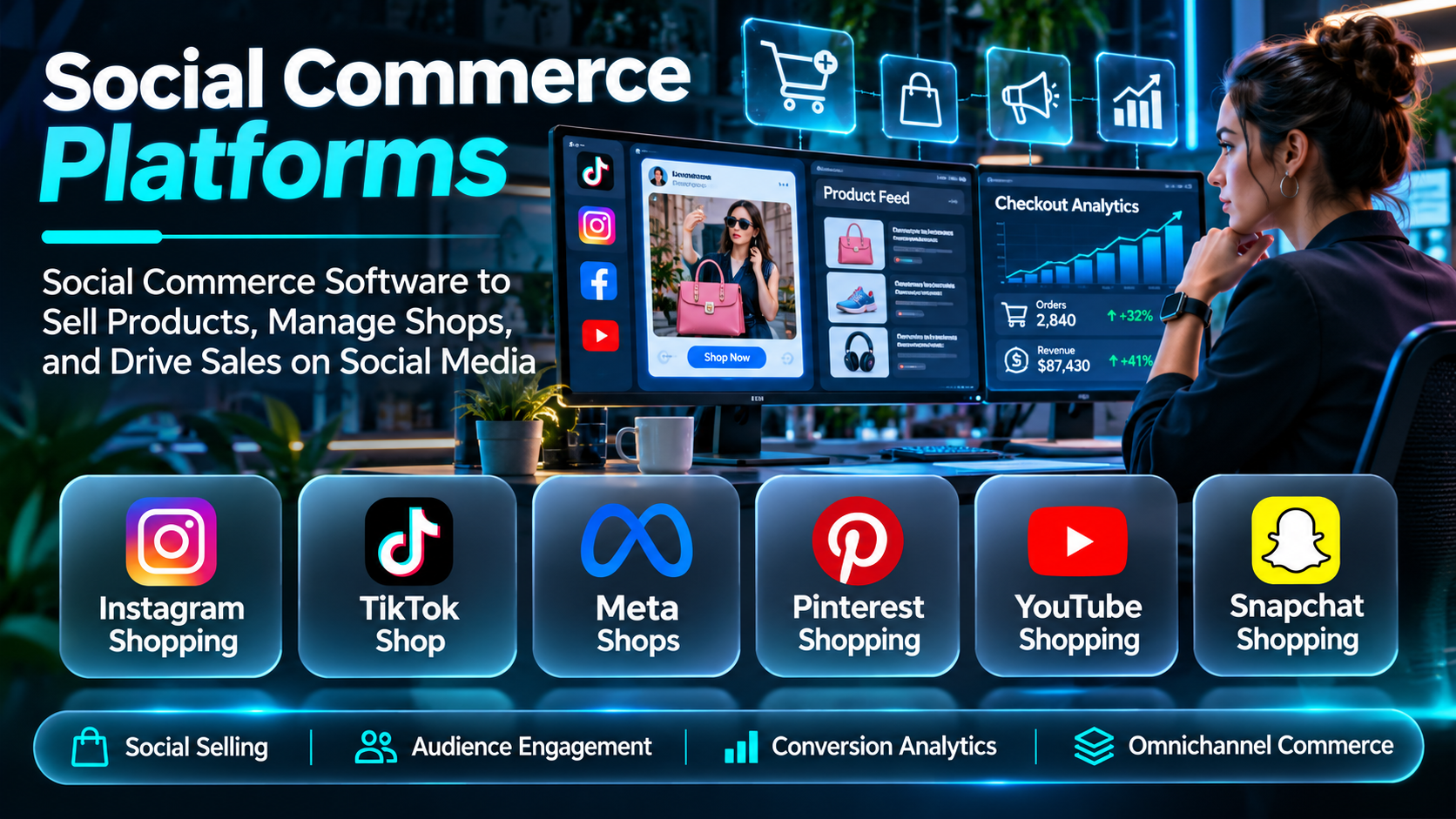
Social commerce platforms help businesses promote, showcase, and sell products through social media networks, creator communities, messaging applications, and interactive shopping experiences. These platforms are particularly important for retailers, direct-to-consumer brands, creators, and businesses that want to connect product discovery with customer purchasing decisions.
Traditional e-commerce typically requires customers to discover products through advertisements or search engines before visiting a separate online store. This approach can introduce additional steps between product interest and purchase, increasing the likelihood that potential customers abandon the buying process.
Modern social commerce platforms combine product catalogs, shoppable content, creator partnerships, live shopping, customer messaging, analytics, and commerce integrations. Some support purchases directly within their applications, while others direct customers to external storefronts to complete transactions.
Selecting the right platform requires understanding how customers discover products, interact with brands, and complete purchases. A platform with strong content discovery capabilities may not provide the same checkout, inventory synchronization, or customer service functionality as a dedicated commerce system.
A small fashion boutique may prioritize Instagram product discovery, creator collaborations, and mobile-friendly shopping experiences. A large international retailer may require centralized catalog management, inventory synchronization, multi-channel reporting, regional compliance, and integration with enterprise commerce infrastructure.
This guide examines ten social commerce platforms, their features, benefits, limitations, and practical applications. It also includes detailed comparison tables, recommendations for different business types, a seven-step implementation workflow, and sixteen frequently asked questions.
What Is a Social Commerce Platform?
A social commerce platform is a digital environment or software solution that connects social interaction with commercial activity. It enables businesses to use social content, creator recommendations, community engagement, and messaging to influence product discovery and purchasing.
Social commerce can occur through native shopping features, product-tagged content, livestream demonstrations, social storefronts, or messaging-based sales conversations. The exact purchasing process depends on the platform, geographic market, merchant eligibility, and available checkout functionality.
Consider a clothing retailer promoting a new jacket through a short-form video. A customer watches the demonstration, opens the associated product information, reviews the available options, and completes a purchase through an eligible checkout experience or the retailer’s connected website.
This process brings product discovery and shopping closer together while providing businesses with additional engagement opportunities. It can also help marketers evaluate which content formats, creators, and customer interactions contribute to sales.
Common applications of social commerce platforms include:
- Fashion and Apparel: Clothing retailers use shoppable posts, creator demonstrations, and product collections to introduce new styles. Customers can discover outfits and access relevant product pages directly from social content.
- Beauty and Cosmetics: Beauty brands use tutorials, livestreams, and creator recommendations to demonstrate products. Teams connect product discovery with eligible shopping experiences and conversion reporting.
- Consumer Electronics: Electronics retailers publish demonstrations, comparisons, and product explanations. Customers can evaluate features before following shopping links or using available native purchase options.
- Home and Furniture: Home decor brands showcase products through lifestyle photography, videos, and curated collections. Shoppers can discover products in realistic settings and navigate to purchase options.
- Food and Beverage: Consumer brands use recipes, demonstrations, and community content to introduce products. Businesses can connect relevant content with product information and ordering channels.
- Handmade Products: Independent sellers showcase handcrafted items through visual storytelling and creator communities. Social commerce tools help connect interested audiences with product listings and purchase channels.
- Fitness and Wellness: Fitness brands demonstrate equipment and accessories through instructional content. Customers can explore product features and make informed purchasing decisions.
- Digital Products: Creators and businesses promote courses, templates, and digital resources through social content. Customers can access product information and complete purchases through supported commerce systems.
Top 10 Social Commerce Platforms
1. TikTok Shop
Short Description
TikTok Shop is a social commerce service within the TikTok ecosystem that connects product discovery with shopping experiences. It allows eligible merchants and creators to promote products through supported shopping features associated with short-form videos, livestreams, and product listings.
The platform is particularly relevant to consumer brands selling visually demonstrable products. Beauty, fashion, accessories, home goods, and lifestyle retailers can use creator-led content to introduce products to interested audiences.
A major advantage is the relationship between entertainment-oriented content discovery and commercial activity. Customers can encounter products through demonstrations or creator recommendations rather than beginning with a conventional product search.
TikTok Shop also provides seller and creator commerce workflows in supported markets. Businesses must verify regional availability, merchant eligibility, product restrictions, fulfillment obligations, and applicable fees before launching.
Key Features
- Shoppable Videos: Allows eligible creators and merchants to associate products with video content. Viewers can access relevant product information while engaging with demonstrations or recommendations.
- Live Shopping: Supports eligible shopping experiences during livestreams. Merchants can demonstrate products and respond to customer questions in real time.
- Product Listings: Provides product information within supported shopping environments. Accurate titles, descriptions, images, and variants help customers make informed decisions.
- Creator Affiliate Programs: Supports performance-oriented relationships between eligible sellers and creators. Businesses can compensate creators according to applicable program rules.
- Seller Management: Provides tools for managing supported commerce operations. Merchants can organize listings, orders, and relevant operational activities.
- Order Management: Supports processing and monitoring eligible customer orders. Sellers must comply with fulfillment and customer service requirements.
- Promotional Campaigns: Provides opportunities to connect content and product promotions. Teams should evaluate commercial results rather than relying only on content views.
- Commerce Analytics: Supplies information about relevant sales and shopping activity. Businesses can use available data to assess product and creator performance.
- Platform Integrations: Supports selected connections with commerce and operational systems. Integration availability depends on region and supported services.
Benefits
- Connects product discovery with short-form content.
- Supports creator-led shopping experiences.
- Enables live product demonstrations.
- Provides eligible native commerce functionality.
- Helps merchants measure product performance.
- Encourages interactive customer engagement.
- Supports content-driven product launches.
Pros
- Strong short-form video discovery environment.
- Live shopping functionality.
- Creator affiliate opportunities.
- Product-focused content experiences.
- Integrated seller operations in supported markets.
- Suitable for demonstrable consumer products.
Cons
- Merchant availability varies by country.
- Product and content policies require careful review.
- Performance can depend heavily on content quality.
- Fulfillment and return obligations may be demanding.
- Platform fees and program rules can change.
Use Cases
- Beauty Product Demonstration: Publish short tutorials featuring eligible products. Track purchases associated with supported shopping experiences.
- Fashion Launch: Introduce a new clothing collection through creator videos. Compare product interest and sales.
- Live Product Showcase: Demonstrate products during a livestream. Respond to customer questions while presenting available purchase options.
- Creator Affiliate Campaign: Collaborate with eligible creators promoting store products. Measure approved sales and commission expenses.
- Home Accessories Promotion: Show products in realistic home settings. Connect demonstrations with product listings.
- Seasonal Retail Campaign: Coordinate promotional content around a shopping event. Monitor order volume, fulfillment, and returns.
Best For
- Consumer product brands.
- Beauty retailers.
- Fashion merchants.
- Creator-led commerce teams.
- Livestream sellers.
- Businesses operating in supported TikTok Shop markets.
2. Instagram Shopping
Short Description
Instagram Shopping refers to commerce-related features within Instagram that help eligible businesses present products through their profiles and content. These capabilities are part of Meta’s broader commerce ecosystem and depend on current regional and account eligibility.
The platform is relevant to visually oriented brands that use photography, short-form video, and creator collaborations. Fashion, beauty, home decor, and lifestyle businesses can connect product storytelling with shopping destinations.
Its main advantage is the ability to present products within an established visual content environment. Businesses can introduce products through posts and reels while maintaining a consistent brand presentation.
Instagram’s shopping and checkout capabilities have changed over time, and some purchasing experiences direct customers to external websites. Merchants should verify current product tagging, shop availability, checkout behavior, and commerce policies before implementation.
Key Features
- Product Tagging: Allows eligible businesses to associate products with supported content. Customers can access product details from relevant posts or reels.
- Commerce Catalogs: Uses supported product catalogs to organize commerce information. Accurate catalog data helps maintain consistent product presentation.
- Business Profiles: Provides a branded environment for customer engagement. Businesses can combine product content with company information and communication options.
- Reels Commerce: Supports product discovery through short-form video content where shopping features are available. Demonstrations can help customers understand products before purchasing.
- Creator Collaborations: Enables businesses to work with creators on promotional content. Commercial relationships should be disclosed according to applicable rules.
- Customer Messaging: Supports communication through Instagram messaging features. Teams can answer product questions and provide purchasing guidance.
- Advertising Integration: Connects with relevant Meta advertising capabilities. Businesses can evaluate paid promotion alongside organic product discovery.
- Performance Insights: Provides available account and content analytics. Merchants can review engagement and shopping-related activity.
Benefits
- Connects visual storytelling with product discovery.
- Supports product-tagged content.
- Encourages creator collaboration.
- Provides customer messaging opportunities.
- Helps maintain consistent brand presentation.
- Supports organic and paid promotional workflows.
- Offers commerce-related performance insights.
Pros
- Strong visual content environment.
- Relevant to lifestyle products.
- Product tagging capabilities.
- Creator collaboration opportunities.
- Business messaging features.
- Integration with Meta commerce systems.
Cons
- Shopping features vary by market and account.
- Native checkout availability is limited or changing.
- Catalog approval requirements can affect setup.
- Organic reach is not guaranteed.
- External checkout may introduce additional purchase steps.
Use Cases
- Fashion Lookbook: Publish outfit photography with eligible product tags. Help customers find the clothing shown.
- Beauty Tutorials: Demonstrate skincare routines through reels. Connect featured products with available shopping information.
- Home Decor Showcase: Present furniture in styled interiors. Allow interested viewers to explore product details.
- Creator Collaboration: Work with creators demonstrating products. Evaluate content engagement and eligible shopping activity.
- Customer Support: Answer product questions through direct messages. Guide customers toward accurate product information.
- New Collection Launch: Coordinate visual posts and short-form videos. Monitor product interest and website traffic.
Best For
- Fashion brands.
- Beauty businesses.
- Lifestyle retailers.
- Visual content marketers.
- Small consumer brands.
- Creator collaboration teams.
3. Facebook Shops
Short Description
Facebook Shops refers to storefront and product discovery capabilities within Meta’s commerce environment. It helps eligible businesses present product catalogs and connect customers with available purchasing options.
The platform is relevant to retailers maintaining a Facebook business presence and customer community. Merchants can use commerce features alongside business pages, promotional content, and customer communication.
A distinguishing advantage is the relationship between product discovery and Facebook’s established business and community features. This can support retailers whose customers already engage with their pages and content.
Commerce functionality, checkout arrangements, and regional availability have evolved over time. Businesses should confirm current eligibility, catalog requirements, and supported customer purchase journeys.
Key Features
- Product Catalogs: Organizes supported product information for commerce experiences. Merchants can maintain titles, descriptions, images, and relevant product attributes.
- Storefront Presentation: Provides eligible product discovery experiences within the Meta ecosystem. Businesses can present collections and available merchandise.
- Business Page Integration: Connects commerce activity with an existing Facebook business presence. This helps maintain consistent customer information.
- Customer Messaging: Supports communication through available Meta messaging channels. Teams can answer questions and assist shoppers.
- Product Collections: Groups related products where supported. Collections can simplify browsing for customers interested in specific categories.
- Advertising Compatibility: Connects commerce information with relevant Meta advertising tools. Businesses can promote products using supported campaign formats.
- Commerce Management: Uses available Meta commerce administration capabilities. Teams can manage product information and applicable commerce settings.
- Performance Insights: Provides relevant business and commerce analytics. Merchants can evaluate product discovery and customer interactions.
Benefits
- Connects product catalogs with social engagement.
- Supports established Facebook business audiences.
- Helps organize product discovery.
- Provides customer communication options.
- Integrates with Meta advertising workflows.
- Supports selected commerce administration tasks.
- Improves visibility into social shopping activity.
Pros
- Familiar business page environment.
- Catalog-based product presentation.
- Customer messaging opportunities.
- Meta advertising integration.
- Suitable for community-oriented retailers.
- Relevant to businesses with existing Facebook audiences.
Cons
- Feature availability varies by region.
- Checkout arrangements can change.
- Catalog approval requirements apply.
- Organic product discovery is not guaranteed.
- Commerce operations may depend on external storefront systems.
Use Cases
- Local Retail Store: Present available products to existing Facebook followers. Direct interested customers to supported purchase options.
- Community Commerce: Introduce products through business page content. Respond to questions from interested shoppers.
- Seasonal Collection: Organize products into relevant categories. Promote selected items through supported campaigns.
- Customer Service: Answer availability and product questions through messaging. Provide accurate ordering instructions.
- Retail Advertising: Use product catalog information in eligible advertising campaigns. Compare engagement and conversion outcomes.
- Small Business Storefront: Maintain a social product presence alongside an online store. Keep product information synchronized.
Best For
- Small retailers.
- Facebook business page operators.
- Community-based brands.
- Local commerce businesses.
- Consumer product marketers.
- Merchants using Meta commerce tools.
4. Pinterest Shopping
Short Description
Pinterest Shopping refers to commerce and product discovery features available within Pinterest. The platform helps users discover products through visual search, curated inspiration, and shopping-related content.
It is particularly relevant to fashion, home decor, furniture, beauty, crafts, and lifestyle businesses. These categories often benefit from customers exploring ideas before deciding which products to purchase.
Its principal advantage is the relationship between visual inspiration and purchase consideration. A customer planning a room redesign or seasonal wardrobe may discover relevant products while researching ideas.
Pinterest also supports eligible product catalogs, shopping-related advertising, and merchant integrations. Businesses should confirm current feature availability, merchant requirements, and supported purchasing destinations.
Key Features
- Product Pins: Presents product information through supported shopping content. Customers can explore relevant items while browsing ideas.
- Visual Discovery: Helps users discover products through images and related content. This can introduce merchandise during early purchase research.
- Product Catalogs: Supports eligible merchant product feeds. Accurate product information helps maintain relevant shopping experiences.
- Shopping Ads: Provides promotional formats associated with product discovery. Businesses can evaluate paid shopping activity against acquisition costs.
- Collections and Boards: Allows users to organize visual ideas and product inspiration. Brands can create content relevant to customer interests.
- Merchant Integrations: Connects with supported commerce systems and catalog services. Merchants should verify feed requirements.
- Analytics: Provides information about content and shopping-related activity. Teams can evaluate engagement and traffic.
- Product Discovery Content: Supports visual guides and product-focused inspiration. Businesses can connect useful content with relevant merchandise.
Benefits
- Supports inspiration-driven shopping.
- Helps products appear during purchase research.
- Connects visual content with commerce.
- Supports catalog-based product discovery.
- Provides shopping advertising options.
- Encourages longer-term content discovery.
- Offers performance measurement tools.
Pros
- Strong visual discovery orientation.
- Suitable for home and lifestyle products.
- Product catalog functionality.
- Shopping-related advertising.
- Relevant to planning-oriented customers.
- Useful for product inspiration content.
Cons
- Purchase completion may occur externally.
- Results depend on product imagery quality.
- Some categories fit better than others.
- Catalog maintenance requires accurate data.
- Traffic does not automatically translate into sales.
Use Cases
- Home Decor Inspiration: Publish room designs featuring relevant products. Help customers explore furniture and accessories.
- Wedding Products: Showcase themed decorations and accessories. Connect planning inspiration with product information.
- Fashion Collections: Present outfit ideas using available merchandise. Monitor product discovery and traffic.
- Craft Supplies: Demonstrate projects involving specific materials. Guide interested customers toward product listings.
- Beauty Inspiration: Share product combinations and visual tutorials. Evaluate shopping interest.
- Seasonal Retail: Publish relevant seasonal product guides. Track traffic and conversion behavior.
Best For
- Home decor retailers.
- Furniture brands.
- Fashion merchants.
- Craft businesses.
- Lifestyle marketers.
- Inspiration-driven product categories.
5. YouTube Shopping
Short Description
YouTube Shopping includes commerce-related features that connect eligible products with video content and creator activity on YouTube. It supports product discovery through demonstrations, reviews, tutorials, and other video formats.
The platform is relevant to brands and creators whose products benefit from detailed explanations. Consumer electronics, beauty, home equipment, and other demonstrable product categories can use video content to support informed purchasing.
A significant advantage is the ability to connect shopping information with longer-form educational or review content. Customers can learn about product characteristics before deciding whether to purchase.
YouTube Shopping functionality depends on creator eligibility, merchant integrations, geographic availability, and current program requirements. Businesses should verify supported product tagging and purchasing arrangements before planning campaigns.
Key Features
- Product Tagging: Allows eligible creators to associate products with supported videos. Viewers can access relevant product information while watching.
- Video Demonstrations: Supports detailed product explanations through video content. This can help customers understand features and limitations.
- Creator Affiliate Opportunities: Enables eligible creator commerce relationships under supported programs. Brands should review applicable participation rules.
- Live Shopping Features: Supports selected commerce experiences associated with live content. Availability depends on current platform functionality.
- Merchant Integrations: Connects eligible product information with supported commerce services. Businesses should verify catalog synchronization requirements.
- Shopping Analytics: Provides relevant performance information where available. Teams can evaluate product interactions and commercial outcomes.
- Content Discovery: Allows product information to appear alongside searchable video content. Educational videos may support purchase consideration over time.
- Creator Partnerships: Supports collaborations between brands and video creators. Clear disclosure and compensation agreements remain important.
Benefits
- Connects product education with shopping.
- Supports detailed demonstrations.
- Encourages creator-led product discovery.
- Provides relevant product tagging.
- Helps customers evaluate complex products.
- Supports long-form and short-form video strategies.
- Offers performance measurement opportunities.
Pros
- Strong video education environment.
- Suitable for product reviews.
- Creator commerce capabilities.
- Relevant to complex product categories.
- Product tagging opportunities.
- Supports ongoing content discovery.
Cons
- Shopping eligibility varies.
- Product tagging options depend on program access.
- Video production can require substantial resources.
- Checkout may involve external destinations.
- Attribution can be affected by delayed purchases.
Use Cases
- Electronics Review: Demonstrate product capabilities through detailed videos. Connect eligible products with shopping information.
- Beauty Tutorial: Show product application and results. Help viewers identify featured items.
- Home Equipment Demonstration: Explain installation and usage. Provide relevant product details.
- Creator Affiliate Campaign: Work with eligible video creators promoting products. Evaluate attributed sales.
- Product Comparison: Compare several products using factual demonstrations. Help customers understand differences.
- Educational Commerce: Publish tutorials that incorporate relevant products. Monitor product interest and conversion activity.
Best For
- Technology retailers.
- Product review creators.
- Educational commerce teams.
- Consumer electronics brands.
- Beauty tutorial creators.
- Businesses selling demonstrable products.
6. WhatsApp Business Platform
Short Description
The WhatsApp Business Platform provides business messaging capabilities through the WhatsApp ecosystem. It supports customer communication and selected commerce-related interactions through approved business messaging workflows.
The platform is relevant to businesses that sell through conversations, provide personalized product recommendations, or coordinate purchases through customer messaging. Retailers, service providers, and customer support teams can use it to manage eligible business conversations.
Its main advantage is conversational commerce rather than content-feed-based shopping. Customers can ask questions, receive product information, and continue purchasing processes through supported messaging experiences.
The WhatsApp Business Platform commonly requires integration through approved technical arrangements or service providers. Businesses should review messaging rules, customer consent requirements, pricing, and regional commerce functionality.
Key Features
- Business Messaging: Supports structured communication between businesses and customers. Teams can respond to product questions and service requests.
- Messaging APIs: Provides application programming interface capabilities for approved business messaging workflows. Organizations can connect messaging with internal systems.
- Automated Responses: Supports automation through configured business workflows. This can reduce repetitive customer service tasks.
- Customer Notifications: Enables eligible transactional and service communications. Businesses must follow applicable messaging policies.
- Conversation Management: Supports customer interactions through integrated tools. Teams can organize communication according to operational requirements.
- Commerce-Related Messaging: Helps businesses share product information and purchasing guidance. Available transaction functionality depends on the market and integration.
- CRM Integration: Connects messaging activity with supported customer relationship management systems. This can improve continuity across customer interactions.
- Customer Engagement: Supports personalized assistance during purchase consideration. Businesses can answer questions that may otherwise prevent conversion.
Benefits
- Supports conversational product discovery.
- Helps answer customer questions.
- Enables selected messaging automation.
- Connects communication with business systems.
- Supports personalized purchase assistance.
- Reduces repetitive support tasks.
- Improves customer interaction continuity.
Pros
- Familiar messaging environment.
- Business communication capabilities.
- API integration opportunities.
- Automation support.
- Relevant to service-oriented commerce.
- Suitable for conversational sales.
Cons
- Requires compliance with messaging policies.
- Platform access may require technical integration.
- Messaging charges can affect operating costs.
- Not a complete storefront replacement.
- Commerce functionality varies by region.
Use Cases
- Personalized Shopping Assistance: Answer customer questions about product options. Guide shoppers toward appropriate purchase channels.
- Order Communication: Send eligible order-related notifications. Provide accurate delivery or service information.
- Product Consultation: Help customers compare available products. Maintain conversation context where permitted.
- Retail Customer Support: Resolve questions before and after purchases. Connect relevant information with support systems.
- Appointment-Based Commerce: Coordinate service bookings through messaging. Confirm details using approved workflows.
- Conversational Sales: Assist customers who prefer messaging over browsing extensive catalogs. Track outcomes through connected business systems.
Best For
- Conversational commerce businesses.
- Customer support teams.
- Service-oriented retailers.
- Messaging automation specialists.
- Businesses with consultative sales.
- Companies integrating messaging with CRM systems.
7. CommentSold
Short Description
CommentSold is a commerce technology platform focused on live selling and social commerce operations. It helps retailers coordinate interactive product selling experiences through supported channels and commerce workflows.
The platform is relevant to boutiques, apparel retailers, and businesses that sell products through live demonstrations and social engagement. Merchants can use live selling to introduce products and interact with customers during shopping sessions.
Its distinguishing strength is its focus on operational workflows associated with interactive retail selling. This can help merchants coordinate products, orders, and customer engagement during live commerce activities.
CommentSold also provides commerce administration and integration capabilities depending on the selected offering. Businesses should verify current channel support, pricing, and operational requirements before adoption.
Key Features
- Live Selling: Supports interactive product demonstrations through eligible selling experiences. Merchants can present products and answer questions during sessions.
- Social Commerce Workflows: Connects social engagement with relevant shopping activity. Businesses can organize customer interest around available products.
- Product Management: Helps merchants organize merchandise for selling events. Accurate product information supports reliable transactions.
- Order Administration: Supports relevant order management workflows. Retailers can coordinate purchases and fulfillment.
- Inventory Management: Provides functionality related to available merchandise. Accurate stock records help reduce overselling.
- Customer Engagement: Supports interaction during social selling activities. Teams can answer questions and explain product options.
- Commerce Reporting: Provides information about relevant selling activity. Merchants can evaluate product and session performance.
- Operational Integrations: Connects with supported commerce systems and services. Compatibility should be tested before deployment.
Benefits
- Supports interactive live commerce.
- Helps organize social selling operations.
- Connects product demonstrations with purchases.
- Improves merchandise administration.
- Supports customer engagement.
- Reduces fragmented selling workflows.
- Provides relevant sales reporting.
Pros
- Live selling specialization.
- Retail operations orientation.
- Product and order management capabilities.
- Suitable for boutiques.
- Interactive shopping support.
- Commerce workflow integration.
Cons
- Less suitable for businesses avoiding live selling.
- Requires consistent content production.
- Channel availability can change.
- Operational setup may require training.
- Costs depend on selected services and commercial terms.
Use Cases
- Boutique Live Sale: Demonstrate clothing during scheduled sessions. Manage eligible customer purchases.
- Seasonal Collection: Introduce new merchandise through interactive broadcasts. Answer sizing and product questions.
- Product Demonstration: Show product details in real time. Help customers evaluate options.
- Community Retail: Engage repeat customers through social selling events. Monitor participation and sales.
- Inventory Promotion: Present selected available merchandise. Coordinate inventory accuracy.
- Live Commerce Reporting: Compare products and selling sessions. Use results to improve future events.
Best For
- Fashion boutiques.
- Live selling merchants.
- Social retail operators.
- Apparel businesses.
- Interactive commerce teams.
- Retailers managing recurring live events.
8. Bambuser
Short Description
Bambuser is a video commerce technology provider offering solutions associated with interactive shopping and live video experiences. Its capabilities help brands connect video content with product discovery and commerce activity.
The platform is relevant to retailers seeking interactive video shopping experiences within their digital commerce strategies. Beauty, fashion, luxury, and lifestyle brands can use video to demonstrate products and provide additional purchasing context.
Its main advantage is its focus on video commerce infrastructure rather than relying exclusively on native social network shopping features. Businesses can evaluate it for branded shopping experiences connected to their own commerce environments.
Bambuser also supports integration-oriented workflows for relevant commerce systems. Organizations should confirm current product offerings, technical requirements, and commercial arrangements before implementation.
Key Features
- Live Video Commerce: Supports interactive product presentations through video experiences. Brands can demonstrate products while providing shopping information.
- Shoppable Video: Connects eligible video content with relevant product information. Customers can explore merchandise while viewing demonstrations.
- Branded Experiences: Supports commerce experiences aligned with a retailer’s digital presentation. This can help maintain consistency across customer touchpoints.
- Product Integration: Connects video experiences with supported product information systems. Accurate catalog data is important for reliable shopping.
- Interactive Engagement: Supports selected customer interactions during video experiences. Businesses can address product questions and provide context.
- Commerce Connections: Integrates with relevant digital commerce workflows. Teams should test purchasing and inventory behavior.
- Performance Measurement: Provides information about video shopping activity. Marketers can evaluate engagement and commercial outcomes.
- Campaign Management: Helps coordinate video commerce initiatives. Teams can plan demonstrations around products and customer interests.
Benefits
- Supports branded video shopping.
- Connects product demonstrations with commerce.
- Encourages interactive engagement.
- Provides video commerce infrastructure.
- Helps maintain consistent shopping experiences.
- Supports product discovery through video.
- Offers relevant performance reporting.
Pros
- Video commerce specialization.
- Branded shopping experiences.
- Relevant to premium retail.
- Interactive demonstration capabilities.
- Commerce integration opportunities.
- Suitable for structured video campaigns.
Cons
- Implementation may require technical resources.
- Commercial pricing can exceed small-business budgets.
- Video production requires operational investment.
- Not a complete inventory management system.
- Integration compatibility requires verification.
Use Cases
- Luxury Product Demonstration: Present detailed product features through branded video. Connect interested viewers with purchase options.
- Beauty Consultation: Demonstrate cosmetics and skincare products. Provide relevant product information.
- Fashion Collection Launch: Introduce seasonal merchandise through interactive video. Monitor shopping engagement.
- Product Education: Explain complex product characteristics. Help customers make informed decisions.
- Branded Live Event: Host a product-focused shopping session. Coordinate engagement with commerce workflows.
- Video Commerce Optimization: Compare engagement and conversion performance across sessions. Refine content and product selection.
Best For
- Enterprise retailers.
- Luxury brands.
- Beauty companies.
- Video commerce teams.
- Digital experience managers.
- Brands investing in interactive shopping.
9. Shopify
Short Description
Shopify is a commerce platform that helps businesses create online stores, manage products, process orders, and connect with supported sales channels. It can serve as the central commerce system behind social selling experiences.
The platform is relevant to retailers that want to manage inventory, orders, and customer information while promoting products across social networks. Merchants can use supported channel integrations to connect commerce operations with eligible social shopping features.
Its primary advantage is centralized commerce management rather than being a social network itself. Businesses can maintain a consistent product catalog and order workflow while using social channels for customer acquisition.
Shopify also provides an ecosystem of applications and integrations supporting different marketing and commerce requirements. Merchants should verify the availability of each social sales channel, supported checkout behavior, and relevant subscription costs.
Key Features
- Online Storefront: Provides tools for creating and managing a digital store. Businesses can present products and process eligible customer orders.
- Product Catalog: Organizes merchandise, variants, and product information. Accurate records support connected sales channels.
- Inventory Management: Tracks available stock through supported workflows. This can reduce overselling across channels.
- Order Management: Centralizes eligible customer order activity. Merchants can coordinate fulfillment and customer service.
- Social Channel Integrations: Connects with supported social commerce environments. Availability depends on regional and platform requirements.
- Application Ecosystem: Provides access to additional commerce and marketing functionality. Merchants should evaluate integration quality and total costs.
- Customer Management: Maintains relevant customer and order information. Teams can use this data to support service and retention workflows.
- Analytics: Provides commerce performance reporting. Businesses can compare sales and acquisition activity across supported channels.
Benefits
- Centralizes commerce operations.
- Supports multi-channel selling.
- Organizes product and inventory data.
- Reduces disconnected order management.
- Provides storefront infrastructure.
- Supports commerce integrations.
- Improves operational reporting.
Pros
- Comprehensive commerce functionality.
- Extensive integration ecosystem.
- Product and inventory management.
- Order administration.
- Suitable for growing retailers.
- Supports multiple sales channels.
Cons
- Not a native social content discovery platform.
- Social commerce features depend on integrations.
- Subscription and application costs can accumulate.
- Advanced customization may require development.
- Regional channel availability varies.
Use Cases
- Multi-Channel Retail: Maintain one product catalog for an online store and supported social channels. Reduce duplicate product administration.
- Social Product Launch: Promote products through eligible social integrations. Track resulting store orders.
- Inventory Synchronization: Coordinate stock availability across supported channels. Reduce overselling.
- Creator Campaign: Connect creator-driven traffic with store purchases. Evaluate relevant conversion data.
- Customer Service: Manage orders generated through different acquisition channels. Maintain consistent fulfillment processes.
- Retail Reporting: Compare commerce performance across supported sales sources. Identify profitable channels.
Best For
- Online retailers.
- Multi-channel merchants.
- Direct-to-consumer brands.
- Commerce operations teams.
- Growing product businesses.
- Merchants connecting stores with social channels.
10. Sprinklr
Short Description
Sprinklr is an enterprise customer experience management platform that includes social media management and related digital engagement capabilities. It helps large organizations coordinate social interactions, publishing, customer service, and performance measurement.
The platform is relevant to enterprises managing multiple social accounts, regions, brands, and customer communication teams. Organizations can use its social management capabilities to support the engagement and service aspects of social commerce.
Its main advantage is centralized governance and coordination across complex social operations. This can be valuable when social selling activity generates customer inquiries that require structured responses and escalation.
Sprinklr is not primarily a native shopping checkout or product catalog platform. Businesses should evaluate it as complementary social engagement infrastructure rather than a replacement for dedicated commerce software.
Key Features
- Social Publishing: Supports coordinated content management across eligible channels. Teams can organize promotional and product-related communications.
- Social Engagement: Helps businesses manage customer interactions. This supports responses to product questions and service requests.
- Customer Care Workflows: Organizes social customer service activity. Teams can route inquiries to appropriate support personnel.
- Analytics: Provides social performance and engagement reporting. Businesses can evaluate customer interaction trends.
- Enterprise Governance: Supports structured administration across teams. Organizations can apply relevant approval and access controls.
- Multi-Brand Management: Helps enterprises coordinate social operations for multiple brands. This can improve consistency.
- Social Listening: Supports monitoring relevant conversations and customer feedback. Teams can identify product concerns and emerging interests.
- Integration Capabilities: Connects social operations with supported enterprise systems. Businesses should validate required commerce and customer service data flows.
Benefits
- Centralizes enterprise social operations.
- Supports customer engagement management.
- Improves cross-team coordination.
- Provides social analytics.
- Helps organize customer service workflows.
- Supports multi-brand governance.
- Connects social activity with customer experience.
Pros
- Enterprise social management capabilities.
- Structured governance workflows.
- Customer service integration potential.
- Multi-brand administration.
- Social analytics.
- Suitable for large organizations.
Cons
- Not a dedicated social checkout platform.
- Implementation can be complex.
- Commercial costs may be substantial.
- Requires staff training.
- Commerce functionality depends on other systems.
Use Cases
- Enterprise Social Customer Service: Manage product questions across multiple social channels. Route complex issues to support teams.
- Multi-Brand Retail: Coordinate social content across several brands. Maintain consistent operational standards.
- Social Commerce Support: Respond to customer inquiries generated by shopping campaigns. Connect service workflows with commerce systems.
- Product Feedback Monitoring: Analyze social conversations about products. Identify recurring customer concerns.
- Campaign Governance: Apply structured approval processes to social content. Coordinate multiple departments.
- Customer Experience Reporting: Compare engagement and service performance across channels. Use findings to improve customer support.
Best For
- Enterprise social media teams.
- Large retail organizations.
- Customer experience managers.
- Multi-brand businesses.
- Social customer service teams.
- Organizations requiring centralized governance.
Comparison Table: Top 10 Social Commerce Platforms
| Tool Name | Best For | Platform(s) | Standout Feature | Pricing |
|---|---|---|---|---|
| TikTok Shop | Short-form video commerce | TikTok, supported seller tools | Shoppable video and live commerce | Seller fees and applicable charges |
| Instagram Shopping | Visual product discovery | Instagram, Meta commerce tools | Product-tagged visual content | Free eligible features; advertising costs extra |
| Facebook Shops | Social storefront discovery | Facebook, Meta commerce tools | Catalog-based social shopping | Free eligible features; advertising costs extra |
| Pinterest Shopping | Inspiration-driven shopping | Pinterest, merchant integrations | Product discovery through visual search | Free eligible features; advertising costs extra |
| YouTube Shopping | Video product education | YouTube, merchant integrations | Product tagging in videos | Eligibility and commercial terms vary |
| WhatsApp Business Platform | Conversational commerce | WhatsApp, API integrations | Business messaging workflows | Usage-based messaging charges |
| CommentSold | Live social selling | Web, supported commerce channels | Live selling operations | Paid subscription or commercial pricing |
| Bambuser | Branded video commerce | Web, commerce integrations | Interactive shoppable video | Custom pricing |
| Shopify | Multi-channel commerce operations | Web, mobile, integrations | Centralized catalog and orders | Paid subscription |
| Sprinklr | Enterprise social engagement | Web, enterprise integrations | Unified social customer operations | Custom pricing |
Note: Pricing, licensing, supported platforms, and available features can change. Check the official vendor websites for current plans, educational access, and regional availability.
Which Social Commerce Platform Tool Is Right for You?
Social commerce platforms differ in how they support product discovery, customer communication, checkout, and commerce operations. A business selling through livestreams has different requirements from one relying on visual inspiration or personalized messaging.
Before selecting a platform, identify where customers discover products and how they prefer to complete purchases. Evaluate regional eligibility, catalog compatibility, fulfillment requirements, analytics, advertising costs, and customer service capacity.
For Beginners: Instagram Shopping and Shopify
Instagram Shopping is relevant to small brands that already create visual product content. Eligible product tagging and commerce features can connect audience engagement with shopping destinations.
Shopify provides the underlying storefront and order management infrastructure. It can help merchants maintain product records while connecting with supported social channels.
Both serve different parts of the commerce process. Choose Instagram Shopping for visual product discovery; choose Shopify for centralized selling and fulfillment operations.
For Fashion Brands: Instagram Shopping and TikTok Shop
Instagram Shopping supports visual presentation through photographs, reels, and creator collaborations. Fashion retailers can use these formats to showcase outfits and collections.
TikTok Shop is relevant to eligible merchants using short-form demonstrations and live shopping. Its commerce experiences can connect entertaining content with product purchases.
The best option depends on audience behavior and market availability. Choose Instagram Shopping for visual brand presentation; choose TikTok Shop for eligible video-driven commerce programs.
For Home Decor Businesses: Pinterest Shopping and Instagram Shopping
Pinterest Shopping is particularly relevant when customers research decorating ideas and product combinations. Visual discovery can introduce products during longer planning processes.
Instagram Shopping supports product presentation through lifestyle photography and video. Brands can use it to demonstrate products in finished spaces.
Both require strong product imagery and accurate catalog information. Choose Pinterest Shopping for inspiration-driven discovery; choose Instagram Shopping for ongoing visual community engagement.
For Live Shopping: CommentSold and Bambuser
CommentSold is relevant to retailers organizing recurring live selling events. Its commerce operations focus can help coordinate merchandise and orders.
Bambuser supports branded interactive video commerce experiences. This may suit larger brands that want video shopping integrated with their digital properties.
Both require reliable product availability and trained presenters. Choose CommentSold for retail live selling operations; choose Bambuser for branded video commerce infrastructure.
For Creator Commerce: TikTok Shop and YouTube Shopping
TikTok Shop is relevant to eligible merchants using creator-led short-form content and live shopping. Product demonstrations can connect with supported purchase experiences.
YouTube Shopping is suitable for eligible creators and merchants whose products benefit from detailed explanations. Reviews and tutorials can support customers who need more information before purchasing.
The content strategy should determine the choice. Choose TikTok Shop for eligible short-form shopping campaigns; choose YouTube Shopping for product education through video.
For Conversational Sales: WhatsApp Business Platform and Facebook Shops
WhatsApp Business Platform supports customer conversations and messaging automation. It is useful when customers need assistance before completing a purchase.
Facebook Shops provides eligible catalog-based product discovery within Meta’s commerce environment. It can complement business pages and customer messaging.
These tools address different stages of the shopping process. Choose WhatsApp Business Platform for personalized messaging; choose Facebook Shops for eligible social catalog presentation.
For Multi-Channel Retailers: Shopify and TikTok Shop
Shopify provides centralized product, inventory, and order management. This is valuable when businesses sell through several supported channels.
TikTok Shop provides eligible commerce opportunities within a social content environment. It may function as an additional acquisition and sales channel.
Retailers should avoid treating social channels as replacements for inventory governance. Choose Shopify for central commerce operations; choose TikTok Shop for eligible video-driven sales.
For Enterprise Teams: Sprinklr and Shopify
Sprinklr is relevant to enterprises managing social engagement, customer service, and governance across multiple teams. It helps organize interactions associated with commerce campaigns.
Shopify provides commerce infrastructure for businesses that require product catalogs, orders, and supported sales channel integrations. Larger organizations should evaluate the appropriate Shopify offering against their operational requirements.
The platforms serve complementary functions. Choose Sprinklr for enterprise social customer operations; choose Shopify for commerce infrastructure and multi-channel selling.
Best Social Commerce Platforms for Different Users
| User Type | Recommended Software | Why? |
|---|---|---|
| Short-form video seller | TikTok Shop | Video-led product discovery |
| Fashion content marketer | Instagram Shopping | Visual product presentation |
| Community-based retailer | Facebook Shops | Social catalog discovery |
| Home decor business | Pinterest Shopping | Inspiration-driven shopping |
| Product review creator | YouTube Shopping | Detailed video product education |
| Conversational sales team | WhatsApp Business Platform | Customer messaging workflows |
| Live selling boutique | CommentSold | Interactive retail operations |
| Enterprise video commerce team | Bambuser | Branded shoppable video |
| Multi-channel retailer | Shopify | Centralized catalog and orders |
| Enterprise social service team | Sprinklr | Social engagement governance |
Practical Example: Launching a Social Commerce Campaign for a Fashion Retailer
Consider a fashion retailer launching a collection of casual jackets through social content. The business wants customers to discover products through videos and photographs while maintaining accurate inventory and order processing.
Shopify can serve as the central commerce system, while Instagram Shopping and TikTok Shop can provide eligible social discovery and selling opportunities. The exact channel combination depends on merchant eligibility and regional functionality.
The retailer’s goal is to generate profitable sales while maintaining consistent product information across channels. It will evaluate traffic, eligible purchases, fulfillment performance, and customer acquisition costs.
Step 1: Define the Campaign Objectives
Begin by identifying the target audience, product collection, campaign duration, and financial objectives. Establish a realistic sales target based on available inventory and marketing resources.
For example, the retailer might aim to sell 150 jackets during a 30-day campaign. It should calculate expected contribution margins before setting discounts or advertising budgets.
Document the campaign’s success criteria and reporting requirements. Include sales, conversion rates, acquisition costs, refunds, and inventory accuracy.
Step 2: Prepare the Product Catalog
Create accurate product records in Shopify or the selected central commerce system. Include product titles, descriptions, prices, variants, images, and available inventory.
Use consistent product identifiers across connected channels. This helps prevent mismatched listings and supports order reconciliation.
Review every product for accuracy before publishing. Verify sizing, material descriptions, return policies, and any claims that require substantiation.
Step 3: Connect Eligible Social Channels
Review the current commerce requirements for Instagram Shopping and TikTok Shop. Confirm that the retailer’s country, account, products, and business documentation meet applicable eligibility conditions.
Connect supported channels through approved integration workflows. Synchronize product information and verify that eligible listings appear correctly.
Test product links and purchasing destinations before launching promotions. Confirm whether customers complete checkout natively or through the retailer’s website.
Step 4: Create Social Commerce Content
Produce short videos showing how the jackets fit, move, and coordinate with other clothing. Use clear lighting and realistic demonstrations so customers can evaluate product characteristics.
Create complementary photographs for visual product discovery. Avoid misleading edits that distort color, fit, or material appearance.
Prepare a content schedule covering product demonstrations, styling examples, customer questions, and promotional announcements. Ensure commercial collaborations are disclosed where required.
Step 5: Launch and Monitor Customer Activity
Publish approved content across the selected social channels. Verify that product tags, links, and shopping destinations function correctly after publication.
Monitor product views, clicks, shopping activity, and completed orders using available analytics. Compare channel performance without assuming that every content interaction represents a sale.
Review customer questions and respond with accurate product information. Common questions about sizing or delivery may reveal improvements needed in product descriptions.
Step 6: Manage Orders and Customer Service
Monitor orders through the central commerce system and any applicable channel-specific seller interfaces. Verify that inventory updates accurately reflect completed transactions.
Coordinate fulfillment, shipping notifications, returns, and customer inquiries according to the retailer’s documented policies. Investigate discrepancies between channel records and central inventory.
Maintain a clear process for handling canceled orders and refunds. Accurate records are necessary for financial reporting and customer service.
Step 7: Evaluate Campaign Performance
At the end of the campaign, calculate sales revenue, product costs, discounts, advertising expenses, platform fees, and fulfillment expenses. Compare these figures with the campaign’s original profitability targets.
Review which content formats and channels generated qualified customer activity. Evaluate both immediate sales and the operational effort required to maintain each channel.
Prepare a final report identifying successful products, recurring customer questions, and opportunities for improvement. Use these findings to refine the next social commerce campaign.
The completed workflow connects product information, social discovery, customer purchasing, and order fulfillment. It creates a repeatable process for evaluating social commerce as part of a broader retail strategy.
Frequently Asked Questions (FAQs)
1. What is a social commerce platform?
A social commerce platform connects social interaction with product discovery or purchasing. It may support product-tagged content, native shopping, creator recommendations, live commerce, or messaging-based sales.
The exact functionality differs by platform and market. Some platforms process purchases directly, while others direct customers to external storefronts.
2. Which social commerce platform is best for beginners?
Instagram Shopping and Shopify can be a practical combination for businesses already creating visual content. Eligible merchants can use Instagram for discovery while Shopify manages products and orders.
Beginners should prioritize accurate product information and reliable checkout. Expanding across too many channels before establishing operational processes can create unnecessary complexity.
3. Are free social commerce platforms available?
Some social networks provide eligible business and product discovery features without a separate subscription charge. However, advertising, transaction processing, integrations, and seller services may create additional expenses.
Free access does not guarantee full shopping functionality. Businesses should verify eligibility and calculate total operating costs before launching.
4. How does social commerce differ from traditional e-commerce?
Traditional e-commerce generally centers on a dedicated storefront where customers browse and purchase products. Social commerce introduces shopping through social content, communities, creators, or conversations.
The two models often operate together. A social platform may generate customer interest while a separate e-commerce system processes orders and manages inventory.
5. Which platform is best for fashion businesses?
Instagram Shopping, TikTok Shop, and Pinterest Shopping are relevant to different fashion discovery strategies. Their usefulness depends on audience behavior, regional eligibility, and content resources.
Fashion brands should evaluate visual presentation, creator collaboration opportunities, and purchasing workflows. Accurate sizing information and return policies remain essential regardless of platform.
6. Which platform is suitable for live shopping?
CommentSold and Bambuser are relevant to businesses investing in interactive video commerce. TikTok Shop also provides live shopping opportunities for eligible merchants in supported markets.
The best choice depends on whether the business wants social-network-native selling or branded video experiences. Merchants should test inventory synchronization and customer checkout before running large events.
7. Can social commerce platforms integrate with online stores?
Many social commerce environments support integrations with selected commerce systems. These connections can synchronize product catalogs, inventory, and relevant order information.
Integration capabilities vary by channel and region. Businesses should test product variants, pricing, availability, refunds, and order synchronization.
8. What is the difference between UGC, DTC, and social commerce?
User-generated content (UGC) refers to content created by customers or other users rather than directly by a brand. Direct-to-consumer (DTC) describes a business model in which brands sell directly to end customers.
Social commerce describes shopping-related activity occurring through social environments. A DTC business may use UGC within its social commerce strategy, but the concepts are not interchangeable.
9. How does social commerce attribution work?
Social commerce attribution attempts to connect customer actions with relevant social interactions or campaigns. Tracking may use product links, campaign identifiers, advertising data, or supported platform analytics.
Attribution is not always complete because customers may interact with several channels before purchasing. Businesses should compare available tracking data with verified order records.
10. Is native checkout better than external checkout?
Native checkout can reduce the number of steps required to complete a purchase within a supported platform. External checkout allows businesses to use their existing storefront and payment infrastructure.
Neither approach is automatically better for every merchant. Businesses should evaluate conversion rates, customer experience, payment costs, data access, and operational requirements.
11. Which platforms are suitable for creative product teams?
Instagram Shopping, Pinterest Shopping, and YouTube Shopping are relevant to businesses using visual storytelling and product education. Each supports different content formats and customer discovery behaviors.
Creative teams should prioritize accurate product representation and clear shopping information. Attractive content should not replace essential product details.
12. Can social commerce work across different industries?
Yes, social commerce is relevant to fashion, beauty, electronics, home goods, education, and other categories. The most effective format depends on how customers evaluate products and make purchasing decisions.
Some industries face restrictions on advertising claims, product categories, or transactions. Businesses should review platform policies and applicable regulations before launching.
13. What technical requirements do social commerce platforms have?
Most platforms provide browser-based or mobile administration tools. Merchants may also need supported commerce integrations, verified business accounts, product feeds, and payment configurations.
Technical requirements become more complex when multiple channels share inventory and order data. Businesses should test synchronization and access controls before scaling.
14. How should businesses choose a social commerce platform?
Start by identifying the target audience, product category, content capabilities, and preferred purchasing process. Then compare regional availability, commerce integrations, advertising costs, and operational requirements.
Run a limited campaign before expanding. Evaluate actual sales, customer acquisition costs, returns, and fulfillment performance rather than relying only on engagement metrics.
15. How does social commerce differ from social media management software?
Social commerce focuses on connecting social activity with product discovery and purchasing. Social media management software primarily helps businesses schedule content, manage engagement, and analyze social activity.
Some products support both functions, but they are not interchangeable. A social media management platform may not provide product catalogs, checkout, or order administration.
16. Which platforms are suitable for enterprise social commerce?
Shopify and Sprinklr can support different enterprise requirements, including commerce operations and social customer engagement. Bambuser may be relevant when an enterprise wants branded video commerce experiences.
Enterprises often need several complementary systems rather than one universal platform. Integration governance, regional compliance, inventory accuracy, and consistent reporting should guide procurement.
Final Thoughts
Social commerce platforms help businesses connect product discovery, customer interaction, and purchasing through digital social environments. Their value depends on how effectively they support customer needs while maintaining reliable commerce operations.
TikTok Shop is relevant to eligible short-form video and live shopping programs, while Instagram Shopping supports visual product discovery. Facebook Shops provides eligible social catalog experiences, and Pinterest Shopping emphasizes inspiration-driven product research.
YouTube Shopping connects product education with video content, while WhatsApp Business Platform supports conversational commerce. CommentSold focuses on live retail selling, and Bambuser provides branded video commerce infrastructure.
Shopify supports centralized multi-channel commerce operations, while Sprinklr helps enterprises coordinate social engagement and customer service. These platforms serve different purposes and may be most effective when used together.
The right choice depends on customer behavior, regional eligibility, integration requirements, budget, and operational resources. Businesses should test realistic shopping workflows and measure verified commercial outcomes before expanding their social commerce investment.
