Introduction
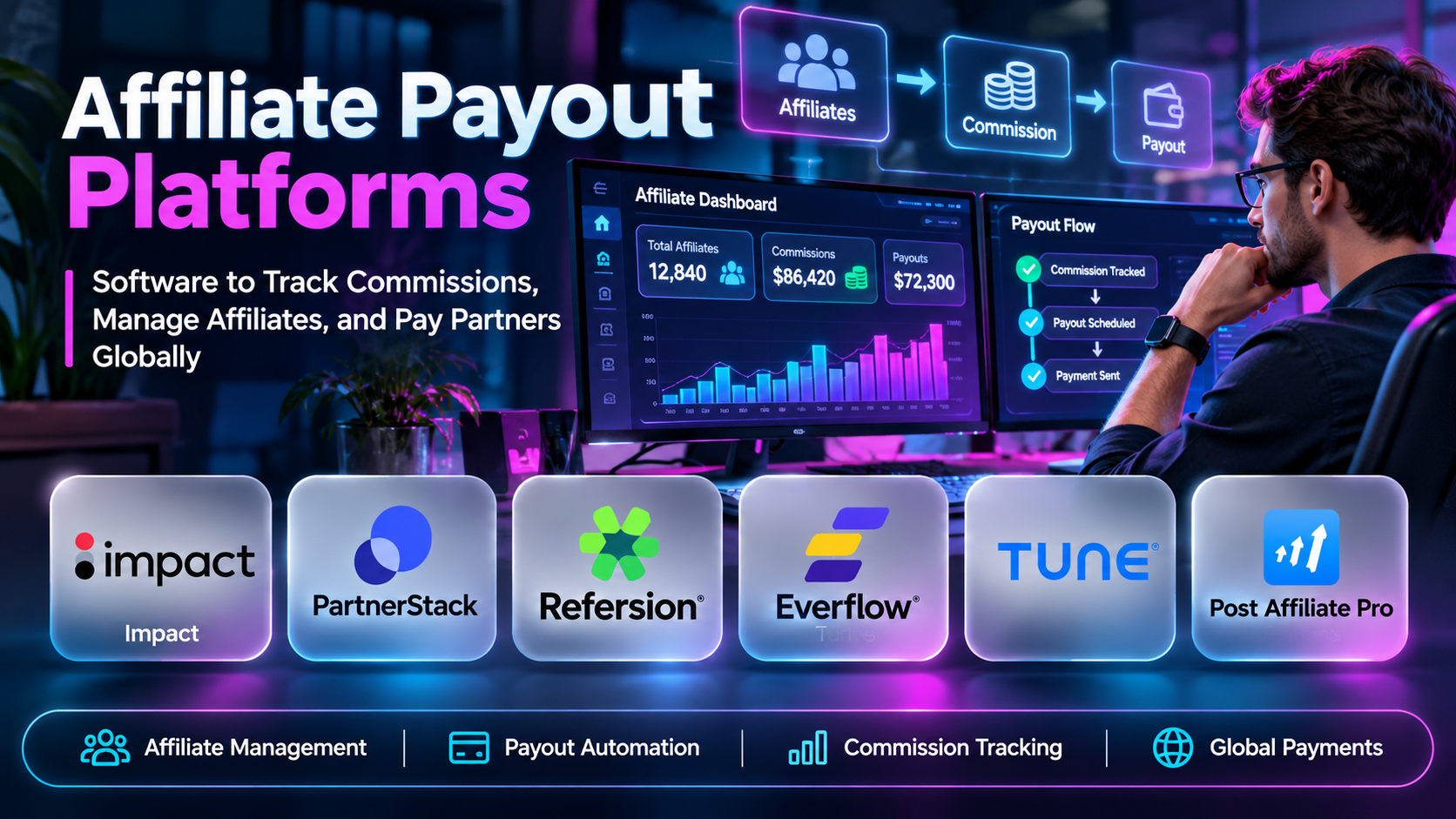
Affiliate payout platforms help businesses calculate, approve, and distribute commissions to affiliates, publishers, creators, and other marketing partners. They play an important role in e-commerce, software subscriptions, digital services, and performance-based marketing programs where payments depend on measurable results.
Traditional affiliate payment methods often involve exporting spreadsheets, manually checking conversions, calculating commissions, and sending individual payments. These processes become expensive and error-prone as partner networks grow, particularly when businesses operate across currencies and tax jurisdictions.
Modern affiliate payout platforms combine automated commission calculations, payment scheduling, partner onboarding, fraud controls, financial reporting, and integration capabilities. Some platforms also provide affiliate tracking, partner recruitment, tax documentation, and payment reconciliation within a broader partner management environment.
Choosing the right solution requires understanding the difference between affiliate tracking software, affiliate management platforms, and dedicated payout infrastructure. A platform that accurately tracks conversions may not necessarily provide the international payment methods or compliance controls needed to pay every partner.
A small online retailer managing 20 affiliates may need basic commission approval and batch payments. An international software company working with thousands of partners may require multi-currency settlements, automated tax documentation, payment status tracking, and application programming interface integrations.
This guide examines ten affiliate payout platforms, their capabilities, benefits, limitations, and suitable applications. It also includes a comparison table, selection recommendations for different business types, a practical seven-step payout workflow, and detailed answers to common questions.
What Is an Affiliate Payout Platform?
An affiliate payout platform is software that helps businesses compensate partners for eligible sales, leads, subscriptions, or other agreed performance outcomes. It connects commission records with approval processes and payment execution, either directly or through integrated financial services.
Affiliate payouts typically begin when a tracking system records an eligible conversion and associates it with a partner. The business then calculates the commission, applies refund or fraud restrictions, approves the payable balance, and transfers the funds through an available payment method.
For example, a software company might pay affiliates 20% of the first qualifying subscription payment generated by each referred customer. Its affiliate system records the subscription, calculates the commission, waits until the refund period ends, and releases the approved amount during the next payment cycle.
This approach reduces repetitive financial administration while improving transparency for both businesses and partners. It also creates records that finance teams can use for reconciliation, compliance reviews, and analysis of partner acquisition costs.
Common applications of affiliate payout platforms include:
- E-commerce: Online retailers pay affiliates commissions for completed customer purchases. Teams adjust payable amounts when orders are refunded, canceled, or found to be ineligible.
- Software as a Service: Subscription companies compensate partners for paid registrations, qualified customers, or recurring subscriptions. Finance teams reconcile commissions against subscription invoices and actual payments.
- Influencer Marketing: Brands pay creators based on tracked sales, approved leads, or contracted promotional milestones. Campaign managers compare payouts with attributable revenue and campaign budgets.
- Digital Products: Course providers and software vendors distribute commissions for eligible digital purchases. They can apply different commission rates to products, bundles, or promotional campaigns.
- Financial Services: Eligible organizations compensate approved partners for qualifying customer acquisition activities. Programs must apply applicable advertising, licensing, privacy, and financial regulations.
- Travel and Hospitality: Travel companies reward partners for completed bookings or eligible reservations. Payout systems can delay commissions until cancellations and refund windows have passed.
- Business-to-Business Partnerships: Companies pay referral partners after qualified leads become paying customers. Sales and finance teams coordinate approvals using customer relationship management records.
- Affiliate Networks: Performance marketing networks distribute earnings across large publisher populations. They require payment reconciliation, partner identity verification, and scalable financial reporting.
Top 10 Affiliate Payout Platforms
1. Tipalti
Short Description
Tipalti is a finance automation platform developed by Tipalti that provides accounts payable, mass payments, supplier onboarding, and tax compliance functionality. Its mass payment capabilities are relevant to businesses distributing commissions to large populations of affiliates and digital partners.
The platform is particularly useful for affiliate networks, digital marketplaces, software companies, and organizations operating internationally. Finance teams can use it to manage payment approvals, partner information, payment methods, and financial reconciliation.
A significant advantage is its emphasis on financial operations rather than only affiliate campaign management. Businesses can combine partner payout execution with tax documentation, payment controls, and accounting workflows.
Tipalti also supports integration with external business systems and enterprise financial processes. Organizations should evaluate implementation complexity, payment coverage, commercial terms, and the availability of specific capabilities in their region.
Key Features
- Mass Payments: Supports payment processing for large groups of eligible recipients. Businesses can reduce the effort involved in preparing and executing individual partner transfers.
- Partner Onboarding: Provides structured collection of payee information. This helps finance teams gather the details required before issuing payments.
- Tax Documentation: Supports tax information collection and related compliance workflows. Organizations remain responsible for determining their actual legal reporting obligations.
- Multiple Payment Methods: Offers different payout methods depending on recipient location and service availability. Finance teams should verify the methods and currencies supported in each target country.
- Payment Approvals: Supports controlled financial approval processes. This helps prevent unauthorized or premature commission payments.
- Payment Status Tracking: Provides visibility into payment processing outcomes. Teams can investigate rejected, pending, or completed transfers.
- Accounting Integrations: Connects payment activity with supported financial systems. This can reduce duplicate entry and improve reconciliation.
- Financial Reporting: Provides records of payment activity and related financial data. Businesses can use these records to support audits and operational reviews.
- Payment Controls: Supports safeguards around financial transactions and recipient information. Businesses should still establish internal fraud prevention and access management policies.
Benefits
- Automates large-scale partner payment administration.
- Reduces repetitive finance team workloads.
- Supports international payout operations.
- Improves visibility into payment status.
- Helps organize tax documentation.
- Connects payouts with accounting workflows.
- Provides structured approval and reconciliation processes.
Pros
- Strong finance automation capabilities.
- Suitable for high-volume payment operations.
- International payment functionality.
- Structured payee onboarding.
- Tax documentation support.
- Integration with enterprise financial workflows.
Cons
- May be unnecessarily complex for small affiliate programs.
- Implementation can require finance and technical resources.
- Pricing generally requires a commercial evaluation.
- Not a complete affiliate recruitment and tracking solution.
- Payment methods and coverage vary by jurisdiction.
Use Cases
- Global Affiliate Network: Distribute approved commissions to partners in multiple countries. Maintain centralized records of payment status and reconciliation.
- SaaS Partner Program: Pay approved referral commissions generated through subscription sales. Coordinate payment batches with accounting records.
- Creator Marketplace: Process earnings for a large population of eligible creators. Collect payment details through structured onboarding.
- Digital Publisher Network: Distribute commissions to publishers based on approved performance records. Investigate failed transfers without rebuilding payment files manually.
- Enterprise Partner Operations: Apply financial approvals before releasing substantial commission balances. Maintain an auditable record of authorization.
- International Marketing Program: Support cross-border affiliate payments where available. Review currency conversion costs and regional payment restrictions.
Best For
- Enterprise finance teams.
- International affiliate networks.
- Large SaaS companies.
- Digital marketplaces.
- High-volume payout administrators.
- Businesses requiring structured tax workflows.
2. Trolley
Short Description
Trolley is a payout operations platform that helps businesses distribute money to recipients such as creators, freelancers, affiliates, and marketplace participants. It provides payment infrastructure and related workflows for organizations managing distributed earnings.
The platform is relevant to businesses that already calculate partner earnings through affiliate software or internal systems. Finance and operations teams can use Trolley to manage recipient onboarding, payment execution, and payout records.
Its main advantage is its focus on recipient payments and associated operational requirements. This makes it useful when affiliate commission tracking is handled separately from the financial payout process.
Trolley also offers integration capabilities for businesses building automated payment workflows. Companies should evaluate the current availability of supported payment methods, tax functionality, and regional services before implementation.
Key Features
- Global Payouts: Supports payments to eligible recipients across supported countries. Businesses should verify destination coverage and available currencies.
- Recipient Management: Maintains structured recipient profiles and payment information. This reduces repetitive data collection across payout cycles.
- Batch Payments: Enables businesses to process multiple approved payments together. This is useful for recurring affiliate settlement periods.
- Tax Workflows: Supports collection and management of relevant recipient tax information. Businesses must determine which documents and reporting rules apply to their operations.
- Payout API: Provides integration capabilities for connecting payment operations with internal software. Development teams can automate approved payout requests.
- Payment Tracking: Helps businesses monitor payment outcomes. Finance teams can identify transfers requiring additional attention.
- Recipient Experience: Provides workflows for collecting payout information from recipients. Clear onboarding can reduce incomplete payment profiles.
- Reconciliation Data: Supplies payment records that can support financial reconciliation. Teams can compare approved commissions with executed transfers.
Benefits
- Simplifies distributed partner payments.
- Supports international recipient operations.
- Reduces manual payment preparation.
- Provides integration opportunities.
- Helps organize recipient information.
- Improves payment status visibility.
- Supports repeatable settlement workflows.
Pros
- Dedicated payout infrastructure.
- Suitable for creators and affiliates.
- Batch payment functionality.
- API-based automation potential.
- Recipient onboarding support.
- International payout orientation.
Cons
- Affiliate attribution must generally be handled separately.
- Payment coverage depends on supported regions.
- Integration may require developer involvement.
- Financial compliance responsibilities remain with the business.
- Commercial costs depend on service configuration and volume.
Use Cases
- Affiliate Program Settlement: Import approved commission balances from an affiliate system. Distribute payments through supported methods.
- Creator Payments: Pay creators after contracted performance milestones are approved. Track payment completion.
- Digital Marketplace: Distribute earnings to eligible marketplace participants. Maintain recipient payment profiles.
- Subscription Partnerships: Pay recurring partner commissions after subscription revenue is verified. Reconcile settlement amounts.
- International Campaign: Process payments across supported destinations. Review currency and transfer charges before approval.
- Automated Finance Workflow: Connect an internal commission database to payout operations. Apply approval controls before payment requests are submitted.
Best For
- Affiliate operations teams.
- Creator platforms.
- Digital marketplaces.
- SaaS finance teams.
- Businesses with custom commission systems.
- International payout administrators.
3. impact.com
Short Description
impact.com is a partnership management platform that supports affiliate marketing, creator partnerships, and other performance-based relationships. Its capabilities include partner tracking, commission management, reporting, and payment-related workflows.
The platform is relevant to brands and agencies operating structured affiliate programs. Marketing teams can manage partner relationships while finance teams coordinate approved commission payments.
Its principal advantage is the connection between partnership performance and financial compensation. Businesses can manage eligible partner activity without treating conversion tracking and commission administration as entirely separate processes.
impact.com also supports broader partnership management workflows and integrations. Organizations should evaluate current contract terms, supported payout arrangements, and implementation requirements for their particular program.
Key Features
- Partner Tracking: Associates eligible customer actions with participating partners. This supports commission attribution and performance measurement.
- Commission Rules: Allows businesses to define compensation conditions for qualifying actions. Different partners or campaigns may require different terms.
- Partner Management: Organizes affiliate relationships and program participation. Teams can maintain structured records of active partners.
- Payment Workflows: Supports commission settlement processes within its partnership environment. Actual payment arrangements depend on the program configuration.
- Performance Reporting: Provides information about partner-generated outcomes. Marketers can evaluate acquisition efficiency.
- Fraud and Quality Controls: Helps teams review potentially invalid partner activity. Businesses should maintain explicit policies for rejected conversions.
- Integrations: Connects partnership operations with supported business systems. Technical teams should verify the required data flows.
- Partner Communication: Supports coordination between businesses and their partners. Clear communication reduces disputes over commission eligibility.
- Campaign Management: Organizes partner programs and related performance activity. This can help teams coordinate multiple campaigns.
Benefits
- Combines affiliate tracking and commission management.
- Supports structured partner relationships.
- Improves attribution visibility.
- Helps administer performance-based compensation.
- Provides partnership analytics.
- Reduces fragmented program operations.
- Supports sophisticated affiliate programs.
Pros
- Comprehensive partnership management.
- Affiliate performance tracking.
- Configurable commission structures.
- Established partner ecosystem.
- Reporting and integration capabilities.
- Suitable for complex programs.
Cons
- May exceed small-program requirements.
- Commercial pricing requires evaluation.
- Configuration can involve a learning curve.
- Payment processes depend on program arrangements.
- Advanced integrations require technical planning.
Use Cases
- Retail Affiliate Program: Track publisher-generated purchases. Approve commissions after validating eligible orders.
- SaaS Partnerships: Manage referral partners with negotiated commission terms. Connect qualifying subscriptions to partner records.
- Creator Campaigns: Track eligible creator-driven sales. Coordinate compensation with campaign performance.
- Agency Management: Oversee multiple partnership initiatives. Maintain consistent performance reporting.
- International Affiliate Program: Coordinate partner commissions across markets. Confirm supported settlement arrangements.
- Performance Optimization: Compare partner revenue with commission expenses. Adjust compensation rules where appropriate.
Best For
- Established affiliate programs.
- Enterprise marketing teams.
- Partnership managers.
- Performance marketing agencies.
- E-commerce brands.
- Businesses managing diverse partner types.
4. PartnerStack
Short Description
PartnerStack is a partner ecosystem platform focused on business-to-business software companies. It supports partner recruitment, relationship management, referral tracking, commission programs, and partner reward workflows.
The platform is particularly relevant to software companies managing affiliates, referral partners, and resellers. Partnership teams can organize partner activity and connect eligible customer acquisition outcomes to compensation.
A major advantage is its orientation toward software partner ecosystems and recurring business relationships. This is useful when partner compensation depends on subscription sales, qualified referrals, or ongoing revenue.
PartnerStack also provides tools for partner-facing experiences and program administration. Companies should confirm current payout capabilities, supported payment arrangements, and integration compatibility before selection.
Key Features
- Partner Recruitment: Supports discovery and onboarding of eligible partners. Businesses can expand programs through structured recruitment workflows.
- Referral Tracking: Associates partner introductions with qualifying customer activity. This helps determine commission eligibility.
- Commission Management: Supports reward rules for eligible partner outcomes. Teams can configure compensation according to their program structure.
- Partner Portals: Provides partners with access to relevant program information. This improves visibility into participation and earnings.
- Recurring Revenue Workflows: Supports partnership models associated with subscription businesses. Businesses can evaluate compensation based on eligible customer revenue events.
- Partner Communication: Helps companies share program information and updates. Consistent communication reduces operational confusion.
- Integrations: Connects partner activity with supported business systems. Accurate synchronization is important for commission calculations.
- Reporting: Provides information about partner activity and program outcomes. Teams can compare partner contributions.
- Reward Operations: Helps administer eligible partner rewards. Businesses should verify how payouts are processed under their selected arrangements.
Benefits
- Supports software partner ecosystems.
- Helps manage recurring commission models.
- Organizes partner onboarding.
- Provides partner-facing visibility.
- Connects referrals with revenue events.
- Reduces manual partner administration.
- Supports structured partnership growth.
Pros
- Strong business software orientation.
- Partner recruitment capabilities.
- Referral and affiliate management.
- Subscription-related workflows.
- Partner portal functionality.
- Commission management features.
Cons
- Less suitable for simple consumer coupon programs.
- Commercial plans may require significant budgets.
- Complex subscription attribution needs careful configuration.
- Payout options require verification.
- Implementation depends on software integration quality.
Use Cases
- B2B SaaS Affiliate Program: Reward partners for eligible paid customer subscriptions. Track partner-sourced revenue.
- Referral Partnerships: Register customer introductions from professional partners. Approve rewards after qualification.
- Recurring Commission Program: Calculate eligible rewards from subscription activity. Apply cancellation and refund rules.
- Software Reseller Ecosystem: Manage partner relationships and program incentives. Coordinate compensation policies.
- Partner Recruitment: Expand an existing partner network. Measure activation and revenue contribution.
- Agency Referral Program: Reward agencies introducing new software customers. Maintain transparent partner records.
Best For
- B2B SaaS companies.
- Software partnership managers.
- Recurring revenue businesses.
- Referral partner programs.
- Technology ecosystems.
- Partner operations teams.
5. Everflow
Short Description
Everflow is a partner marketing and performance tracking platform designed to manage affiliate, partner, and marketing channel activity. It supports conversion tracking, partner management, analytics, and commission-related workflows.
The platform is relevant to performance marketing agencies, affiliate networks, and brands that require detailed attribution. Teams can manage partner campaigns and determine eligible compensation from tracked performance.
Its distinguishing strength is its focus on performance data and flexible tracking workflows. This can be valuable when organizations manage multiple acquisition channels, conversion events, and commission arrangements.
Everflow can connect with external business systems and payment workflows depending on the implementation. Businesses should verify whether their intended payout process is native, integrated, or requires separate financial infrastructure.
Key Features
- Conversion Tracking: Records eligible customer actions generated by partners. This supports attribution and commission calculations.
- Partner Management: Organizes affiliates and related campaign relationships. Teams can monitor participation and performance.
- Commission Configuration: Supports compensation rules associated with qualifying events. Businesses can structure payouts around approved performance.
- Campaign Analytics: Provides detailed performance information. Marketers can identify profitable channels and underperforming partners.
- Tracking Integrations: Supports connections with relevant marketing and business systems. Technical validation helps maintain data accuracy.
- Fraud Monitoring: Helps teams investigate suspicious conversion activity. Invalid transactions should be excluded according to documented rules.
- Reporting: Provides partner and campaign performance records. Finance teams can use approved data for settlement calculations.
- Automation: Supports repeatable partner operations. This reduces manual coordination across campaigns.
Benefits
- Improves performance attribution.
- Supports complex partner programs.
- Helps calculate eligible commissions.
- Provides detailed marketing analytics.
- Reduces manual tracking.
- Supports campaign optimization.
- Connects partner activity with financial workflows.
Pros
- Performance marketing specialization.
- Detailed tracking capabilities.
- Flexible campaign structures.
- Partner management functionality.
- Analytical reporting.
- Integration opportunities.
Cons
- Requires careful tracking configuration.
- Dedicated payment infrastructure may still be needed.
- Complex reporting can require training.
- Commercial pricing must be evaluated.
- Data quality depends on implementation accuracy.
Use Cases
- Affiliate Network: Track conversions from multiple publishers. Generate approved commission records.
- Performance Agency: Manage partner campaigns across advertisers. Compare revenue and commission costs.
- E-commerce Acquisition: Attribute eligible purchases to affiliates. Exclude refunded transactions.
- Lead Generation: Track approved leads from marketing partners. Apply qualification rules before compensation.
- Multi-Channel Marketing: Compare affiliate performance with other acquisition sources. Identify profitable partnerships.
- Custom Payout Integration: Export or synchronize approved earnings with a payment service. Reconcile executed transfers.
Best For
- Performance marketing agencies.
- Affiliate networks.
- Data-focused marketing teams.
- Lead generation businesses.
- Multi-channel advertisers.
- Partner operations specialists.
6. Refersion
Short Description
Refersion is an affiliate marketing platform focused on helping e-commerce businesses manage affiliate relationships and track referral-driven sales. It supports affiliate registration, commission calculation, and related program operations.
The platform is useful for online retailers seeking to establish or expand performance-based marketing programs. Merchants can associate eligible customer purchases with affiliates and determine the commissions owed.
Its main advantage is its commerce-oriented approach to affiliate management. Businesses can connect affiliate activity with supported storefront order information rather than maintaining separate manual sales records.
Refersion also supports affiliate-facing workflows and integrations with commerce systems. Merchants should confirm current payment functionality, available payout integrations, and plan-specific features before adoption.
Key Features
- Affiliate Registration: Supports onboarding of participating marketing partners. Businesses can organize program applications and approvals.
- Conversion Tracking: Associates eligible purchases with affiliates. This supports accurate commission records.
- Commission Rules: Allows merchants to establish compensation conditions. Different products or partners may have different arrangements.
- Affiliate Dashboard: Provides partners with relevant performance information. This can reduce requests for manual earnings updates.
- Commerce Integrations: Connects with supported e-commerce systems. Merchants should test order synchronization.
- Coupon Attribution: Supports promotional tracking approaches where available. Businesses should validate attribution behavior for overlapping offers.
- Commission Reporting: Displays earned and approved commission information. Finance teams can use this data for payout preparation.
- Payout Workflows: Supports payment-related administration and available integrations. Businesses should confirm how funds are actually disbursed.
Benefits
- Simplifies e-commerce affiliate administration.
- Helps calculate purchase-based commissions.
- Organizes affiliate relationships.
- Provides partner performance visibility.
- Reduces spreadsheet dependence.
- Supports storefront integrations.
- Improves commission reporting.
Pros
- E-commerce-focused workflows.
- Affiliate onboarding capabilities.
- Purchase attribution.
- Commission configuration.
- Partner dashboard.
- Suitable for growing retail programs.
Cons
- Not a dedicated international payment processor.
- Advanced configurations may require additional integrations.
- Payment methods depend on current service options.
- Tracking requires accurate storefront data.
- Complex enterprise programs may need broader capabilities.
Use Cases
- Online Clothing Store: Pay affiliates for eligible product sales. Review refunds before approving commissions.
- Beauty Retail: Track creator discount codes and referral purchases. Compare campaign profitability.
- Specialty E-commerce: Recruit niche publishers as affiliates. Measure sales from each partner.
- Product Launch: Offer commission incentives for selected products. Track eligible orders.
- Retail Ambassador Program: Manage approved ambassadors and their sales. Provide transparent earnings records.
- Commerce Reporting: Export approved commissions for finance reconciliation. Match totals against order records.
Best For
- Online retailers.
- Direct-to-consumer brands.
- E-commerce affiliate managers.
- Product marketing teams.
- Retail ambassador programs.
- Growing commerce businesses.
7. Tapfiliate
Short Description
Tapfiliate is affiliate tracking and management software used by online businesses to organize referral partnerships. It provides affiliate tracking, commission configuration, partner management, and reporting functionality.
The platform is relevant to e-commerce businesses, software providers, and subscription services. Marketing teams can use it to manage affiliates and calculate earnings from qualifying customer activity.
A notable advantage is its flexibility across different online business models. Companies can evaluate it for both purchase-based and subscription-oriented affiliate programs.
Tapfiliate also offers integration options that help connect tracking with existing applications. Businesses should distinguish between its commission management features and the external services required for particular payment methods.
Key Features
- Affiliate Tracking: Associates customer conversions with partner activity. This supports commission attribution.
- Commission Structures: Enables businesses to configure eligible partner earnings. Compensation can reflect the program’s commercial terms.
- Affiliate Portals: Provides partners with program information and performance visibility. This reduces administrative communication.
- Referral Links: Generates tracking links for participating affiliates. Businesses can use them across approved promotional channels.
- Coupon Tracking: Supports attribution through promotional codes where configured. Merchants should test conflicting attribution scenarios.
- Integrations: Connects with supported commerce and software services. Technical teams should verify event accuracy.
- Automation: Supports recurring affiliate administration tasks. This can reduce manual reporting effort.
- Reporting: Provides conversion and commission information. Teams can evaluate partner performance and prepare settlements.
Benefits
- Supports multiple online business models.
- Automates commission calculations.
- Organizes affiliate participation.
- Provides partner reporting.
- Reduces manual attribution.
- Supports integration-driven workflows.
- Helps manage performance-based campaigns.
Pros
- Flexible affiliate program structures.
- Suitable for digital businesses.
- Affiliate portal functionality.
- Commission configuration.
- Integration options.
- Accessible program management.
Cons
- Some payout methods require external services.
- Advanced integrations may require technical work.
- Attribution rules need careful testing.
- Subscription costs affect smaller businesses.
- Not a complete accounts payable system.
Use Cases
- SaaS Affiliate Program: Track eligible paid registrations. Calculate commissions using configured rules.
- E-commerce Partnerships: Reward affiliates for approved orders. Reconcile commissions with refunds.
- Digital Course Sales: Track partner-generated purchases. Apply product-specific commission terms.
- Subscription Service: Manage affiliates introducing paying subscribers. Monitor recurring commission eligibility.
- Agency Referrals: Reward partners for eligible customer conversions. Maintain partner performance records.
- Online Product Launch: Create affiliate campaigns for new offerings. Evaluate sales and commission expenses.
Best For
- SaaS startups.
- Digital product businesses.
- E-commerce merchants.
- Affiliate program managers.
- Subscription companies.
- Small and mid-sized online businesses.
8. Rewardful
Short Description
Rewardful is affiliate and referral management software designed primarily for subscription and software businesses. It helps companies track partner-generated customers and manage commissions associated with subscription payments.
The platform is relevant to software businesses using compatible subscription billing systems. Founders and growth teams can create affiliate programs without developing a complete custom tracking and commission engine.
Its distinctive advantage is its emphasis on subscription billing events. This is useful when commission eligibility depends on paid invoices, recurring revenue, cancellations, or refunds.
Rewardful also provides affiliate-facing workflows and commission administration tools. Companies should confirm supported billing integrations, payout options, and current plan restrictions before adoption.
Key Features
- Subscription Attribution: Associates eligible subscriptions with affiliates. This helps businesses determine which partners generated paying customers.
- Recurring Commissions: Supports commission structures related to subscription payments. Businesses can define compensation periods and eligibility.
- Billing Integrations: Connects with supported subscription payment systems. Accurate invoice synchronization is essential.
- Affiliate Dashboard: Gives partners visibility into relevant performance and earnings. This reduces manual status inquiries.
- Referral Links: Provides tracking links for affiliate promotions. These identify the partner associated with qualifying conversions.
- Commission Management: Calculates eligible affiliate earnings. Teams can review amounts before settlement.
- Refund Handling: Uses relevant billing events to inform commission eligibility. Businesses should verify how adjustments are processed.
- Payout Administration: Supports workflows for organizing partner payments. Available payment execution methods should be confirmed.
Benefits
- Simplifies subscription affiliate management.
- Supports recurring commission models.
- Connects earnings with billing events.
- Reduces manual invoice reconciliation.
- Provides affiliate performance visibility.
- Helps organize payout preparation.
- Supports software growth programs.
Pros
- Subscription business specialization.
- Recurring commission capabilities.
- Billing integration orientation.
- Affiliate dashboard.
- Relatively focused feature set.
- Suitable for software startups.
Cons
- Billing system compatibility is important.
- Not intended as broad international payout infrastructure.
- Complex enterprise programs may need additional tools.
- Commission policies require careful configuration.
- Payment execution options depend on supported arrangements.
Use Cases
- Monthly SaaS Subscription: Pay affiliates for eligible recurring invoices. Stop commissions when qualifying subscriptions end.
- Annual Software Plan: Reward partners after annual subscription payments. Apply refund policies.
- Product-Led Growth: Encourage users to introduce paying customers. Track conversion from referral to subscription.
- Founder-Led Affiliate Program: Launch a manageable program with limited administrative resources. Review commissions each month.
- Subscription Upgrade: Apply agreed compensation rules to eligible upgrades. Avoid paying for excluded transactions.
- Affiliate Finance Review: Reconcile commissions with billing records. Investigate unexpected earnings changes.
Best For
- SaaS startups.
- Subscription software businesses.
- Founder-led growth teams.
- Recurring revenue programs.
- Digital subscription services.
- Small software marketing teams.
9. FirstPromoter
Short Description
FirstPromoter is affiliate and referral tracking software designed for subscription-oriented businesses. It helps companies manage partner programs, calculate commissions, and track eligible customer payments.
The platform is relevant to SaaS businesses and other digital subscription providers. Teams can use it to organize affiliates, manage commission rules, and monitor revenue generated through referrals.
Its main strength is its focus on subscription-related affiliate workflows. This can simplify the administration of recurring commissions and other compensation arrangements connected to customer billing.
FirstPromoter also provides partner-facing experiences and reporting capabilities. Organizations should confirm current integration support, payout arrangements, and available automation features before implementation.
Key Features
- Affiliate Tracking: Records eligible conversions associated with partners. This establishes the basis for commission calculations.
- Recurring Commission Rules: Supports compensation linked to subscription revenue. Businesses can configure eligible payment periods.
- Partner Dashboard: Provides affiliates with performance and earnings information. This supports transparent program communication.
- Subscription Integrations: Connects with supported billing services. Accurate payment events are important for commission validity.
- Commission Management: Calculates partner earnings according to program rules. Finance teams can review payable balances.
- Referral Links: Generates affiliate tracking links. These connect customer acquisition activity to participating partners.
- Program Customization: Supports configuration of affiliate experiences and program conditions. Teams can align the program with their commercial model.
- Reporting: Provides information about referrals, revenue, and commissions. Businesses can compare partner performance.
Benefits
- Supports subscription affiliate programs.
- Automates recurring commission calculations.
- Improves partner earnings visibility.
- Reduces manual billing reconciliation.
- Organizes affiliate relationships.
- Provides performance reporting.
- Supports structured payout preparation.
Pros
- SaaS-focused workflows.
- Recurring commission functionality.
- Partner reporting.
- Billing integration options.
- Configurable affiliate programs.
- Suitable for subscription businesses.
Cons
- Not a general-purpose payment processor.
- Billing compatibility must be verified.
- Complex programs require careful setup.
- Some workflows may depend on external integrations.
- International payment execution may need additional services.
Use Cases
- Subscription Referral Program: Reward affiliates for paid customer acquisition. Calculate commissions from eligible billing events.
- Recurring Revenue Partnership: Pay partners for approved subscription periods. Apply cancellation conditions.
- Digital Software Launch: Recruit affiliates to promote a new application. Monitor paid conversions.
- Agency Affiliate Program: Reward agencies introducing software customers. Maintain transparent earnings records.
- Commission Review: Compare affiliate balances with subscription revenue. Investigate discrepancies before payment.
- Partner Reporting: Give affiliates visibility into qualifying customer activity. Reduce manual earnings inquiries.
Best For
- SaaS companies.
- Subscription marketers.
- Software affiliate managers.
- Digital product founders.
- Recurring revenue businesses.
- Technology partnership teams.
10. Payoneer
Short Description
Payoneer is a financial technology platform providing cross-border payment and business payment services. It is relevant to affiliate payout operations when businesses need to transfer approved earnings to eligible international recipients.
The platform serves businesses, freelancers, marketplaces, and other organizations involved in international commerce. Affiliate program operators may use supported payment services to distribute commissions calculated through separate tracking software.
Its principal advantage is its international payments orientation rather than specialized affiliate attribution. Businesses can evaluate it as part of their payout infrastructure when recipients operate across different markets.
Payoneer should not be treated as a complete affiliate management system. Organizations must separately manage referral tracking, commission eligibility, and any required approval processes unless those functions are supplied through integrated services.
Key Features
- Cross-Border Payments: Supports international business payment workflows in eligible markets. Businesses should verify destination restrictions and transfer options.
- Recipient Payments: Provides services for transferring funds to eligible payees. Recipient account and verification requirements may apply.
- Multi-Currency Services: Supports selected currency-related business payment operations. Available currencies and conversion terms depend on the service.
- Business Accounts: Provides account services for eligible business customers. Features depend on location and account approval.
- Payment Records: Maintains transaction information for supported payments. Finance teams can use these records for reconciliation.
- Marketplace Payment Support: Provides payment capabilities relevant to certain marketplace arrangements. Businesses should verify product availability for their model.
- Compliance Verification: Applies relevant account verification and financial compliance processes. Businesses remain responsible for their own legal obligations.
- Financial Integrations: Offers integration options for supported business payment workflows. Technical and commercial eligibility should be confirmed.
Benefits
- Supports international business payments.
- Helps distribute approved partner earnings.
- Provides transaction records.
- Supports selected multi-currency operations.
- Reduces dependence on individual manual transfers.
- Offers payment infrastructure for eligible businesses.
- Complements affiliate tracking software.
Pros
- International payment orientation.
- Business payment services.
- Multi-currency capabilities.
- Established cross-border use cases.
- Recipient payment functionality.
- Useful alongside affiliate platforms.
Cons
- Does not independently provide complete affiliate tracking.
- Account availability varies by region.
- Verification requirements can affect onboarding.
- Currency conversion and transaction fees require review.
- Affiliate commission calculations need another system.
Use Cases
- International Affiliate Payments: Transfer approved commissions to eligible overseas partners. Reconcile payment confirmations with commission records.
- Marketplace Partner Earnings: Pay eligible marketplace participants. Maintain separate records of earned and approved balances.
- Digital Service Referrals: Settle commissions generated by a separate affiliate platform. Verify recipient payment information.
- Agency Partnerships: Transfer approved earnings to international agencies. Review transaction costs before payment.
- Creator Compensation: Pay eligible creators after campaign deliverables are approved. Track financial settlement.
- Cross-Border Finance: Consolidate selected international payment operations. Match completed transactions with accounting entries.
Best For
- International businesses.
- Cross-border affiliate programs.
- Digital marketplaces.
- Finance operations teams.
- Global partner administrators.
- Businesses needing complementary payment infrastructure.
Comparison Table: Top 10 Affiliate Payout Platforms
| Tool Name | Best For | Platform(s) | Standout Feature | Pricing |
|---|---|---|---|---|
| Tipalti | Enterprise mass payments | Web, API, integrations | Global payee and tax workflows | Custom pricing and transaction fees |
| Trolley | Global partner payouts | Web, API | Recipient payout infrastructure | Usage-based or custom pricing |
| impact.com | Enterprise affiliate programs | Web, integrations | Partner tracking and commission management | Custom pricing |
| PartnerStack | B2B SaaS partnerships | Web, integrations | Software partner ecosystem management | Custom pricing |
| Everflow | Performance marketing | Web, API, integrations | Detailed conversion attribution | Paid subscription |
| Refersion | E-commerce affiliates | Web, commerce integrations | Storefront-linked affiliate tracking | Paid subscription |
| Tapfiliate | Digital business affiliates | Web, integrations | Flexible commission configuration | Paid subscription |
| Rewardful | Subscription businesses | Web, billing integrations | Recurring commission tracking | Paid subscription |
| FirstPromoter | SaaS affiliate programs | Web, billing integrations | Subscription affiliate management | Paid subscription |
| Payoneer | International payment transfers | Web, payment integrations | Cross-border payment services | Transaction and service fees |
Note: Pricing, licensing, supported platforms, and available features can change. Check the official vendor websites for current plans, educational access, and regional availability.
Which Affiliate Payout Platform Tool Is Right for You?
Different affiliate programs have different operational requirements because commission calculation and payment execution are separate processes. Some businesses need a complete affiliate management environment, while others already have tracking software and only need dependable payment infrastructure.
The most important selection factors include partner count, payment geography, commission complexity, tax obligations, and accounting integration. Businesses should also determine whether payouts are triggered by purchases, approved leads, subscription invoices, or other contractual milestones.
For Beginners: Rewardful and Tapfiliate
Rewardful is relevant to subscription software businesses seeking a focused affiliate program. Its billing-oriented approach can help founders organize recurring commission calculations.
Tapfiliate supports a wider range of online business models and referral structures. This can be useful for companies selling digital products or operating multiple promotional campaigns.
Both require businesses to establish clear commission policies before launch. Choose Rewardful if subscription billing drives affiliate earnings; choose Tapfiliate if flexible affiliate tracking is more important.
For Small E-commerce Businesses: Refersion and Tapfiliate
Refersion is suitable for merchants who want affiliate activity connected to storefront orders. Purchase-based tracking can simplify commission administration.
Tapfiliate is worth considering when a retailer also sells digital products or requires flexible partner campaign structures. Its integration options may support different acquisition workflows.
Both should be tested against the store’s refund and discount processes. Choose Refersion for commerce-centered affiliate management; choose Tapfiliate for broader campaign flexibility.
For SaaS Companies: PartnerStack and FirstPromoter
PartnerStack is relevant to software companies building larger partner ecosystems. Its features support recruitment, relationship management, and structured partner compensation.
FirstPromoter focuses more narrowly on subscription affiliate tracking and commission administration. This can be appropriate for businesses that do not need extensive partner ecosystem management.
The choice depends on the complexity of the partner program. Choose PartnerStack for broader software partnerships; choose FirstPromoter for focused subscription affiliate operations.
For International Payments: Tipalti and Trolley
Tipalti is suitable for businesses needing large-scale financial automation, payee onboarding, and tax-related workflows. It can support complex finance operations involving many international recipients.
Trolley is relevant to companies seeking payout infrastructure for affiliates, creators, and marketplace participants. Its integration approach can help businesses connect custom earnings systems with payment execution.
Both require regional payment and compliance checks. Choose Tipalti for extensive finance automation; choose Trolley for dedicated recipient payout operations.
For Enterprise Affiliate Programs: impact.com and Tipalti
impact.com provides broad partnership management capabilities, including performance tracking and commission workflows. It is relevant to enterprises coordinating multiple affiliate and partner relationships.
Tipalti focuses on financial payment administration and related controls. Enterprises may evaluate it when partner commissions are already calculated elsewhere but require structured settlement.
These platforms address overlapping but different responsibilities. Choose impact.com for partnership management; choose Tipalti for enterprise-scale payout and financial operations.
For Performance Marketing Agencies: Everflow and impact.com
Everflow is relevant to agencies that prioritize detailed conversion tracking and campaign performance analysis. Its capabilities can support multiple partner campaigns and compensation arrangements.
impact.com provides a broader partnership management environment. Agencies and brands can use it to coordinate partner relationships alongside performance measurement.
The appropriate option depends on whether campaign analytics or partner ecosystem management is the primary requirement. Choose Everflow for tracking-focused operations; choose impact.com for comprehensive partnership administration.
For Subscription Commission Programs: Rewardful and FirstPromoter
Rewardful is suitable for businesses that want affiliate earnings connected to eligible subscription payments. This can simplify recurring commission calculations.
FirstPromoter also supports subscription affiliate management and partner performance reporting. Businesses should compare billing integration compatibility and commission configuration requirements.
Both should be tested using renewals, cancellations, refunds, and upgrades. Choose Rewardful if its billing workflow fits your application; choose FirstPromoter if its program controls better match your commission policy.
For Cross-Border Business Payments: Payoneer and Trolley
Payoneer is relevant to businesses seeking supported international payment services. It can complement affiliate software that already calculates and approves commissions.
Trolley provides payout operations designed around paying populations of recipients. Its onboarding and integration capabilities can be useful for recurring partner settlements.
Neither should be selected solely on the number of advertised payment destinations. Choose Payoneer for suitable international business transfers; choose Trolley for a structured recipient payout workflow.
Best Affiliate Payout Platforms for Different Users
| User Type | Recommended Software | Why? |
|---|---|---|
| SaaS startup | Rewardful | Subscription-oriented commission tracking |
| B2B software enterprise | PartnerStack | Partner ecosystem management |
| Small online retailer | Refersion | Commerce-linked affiliate operations |
| Digital product seller | Tapfiliate | Flexible affiliate program structures |
| Enterprise finance team | Tipalti | Mass payment and tax workflows |
| Global creator platform | Trolley | Recipient payment infrastructure |
| Performance marketing agency | Everflow | Detailed conversion tracking |
| Enterprise affiliate manager | impact.com | Comprehensive partnership management |
| Subscription affiliate manager | FirstPromoter | Recurring commission administration |
| Cross-border finance team | Payoneer | International business payment services |
Practical Example: Processing Monthly Affiliate Commissions for a SaaS Company
Consider a software company selling a subscription for $100 per month. It pays eligible affiliates 20% of qualifying subscription revenue for the first twelve paid months of each referred customer.
The company uses Rewardful or FirstPromoter to track subscriptions and calculate commissions. It may use Tipalti or Trolley for payment execution if its partner volume and financial requirements justify dedicated payout infrastructure.
The company wants to process commissions monthly while avoiding payments for refunded invoices, duplicate referrals, or canceled subscriptions. It also needs an auditable record connecting each approved commission to a valid customer payment.
Step 1: Define the Commission Policy
Begin by documenting exactly which customer events generate affiliate earnings. The policy should identify eligible subscription products, commission percentages, payment periods, and excluded transactions.
For this example, affiliates receive 20% of qualifying subscription payments during the first twelve paid months. A $100 eligible invoice generates a $20 commission, provided the payment is successful and all program conditions are satisfied.
Create a written commission policy covering:
- Eligible subscription products.
- Commission percentage.
- Maximum commission duration.
- Refund and cancellation handling.
- Minimum payout threshold.
- Payment schedule.
- Currency conversion policy.
- Dispute resolution procedure.
Step 2: Connect Subscription Billing
Connect Rewardful or FirstPromoter to the supported subscription billing system. Verify that the integration receives successful payments, subscription changes, refunds, and cancellations.
Create a test affiliate and a test customer account. Complete a simulated subscription purchase and inspect whether the system records the correct affiliate attribution and commission amount.
Repeat the test for failed payments, canceled subscriptions, and refunded invoices. The system should not approve commissions for transactions excluded by the documented policy.
Step 3: Verify Affiliate Eligibility
Review the affiliate account associated with each payable commission. Confirm that the partner is approved, the referral is legitimate, and the customer meets program eligibility requirements.
Check for duplicate accounts, self-referrals, suspicious conversion patterns, and conflicting attribution claims. Hold questionable transactions for investigation rather than automatically issuing rewards.
Document all manual adjustments with an explanation and approval record. This helps finance teams distinguish legitimate corrections from unauthorized commission changes.
Step 4: Calculate Monthly Commissions
At the end of the settlement period, generate a commission report from the affiliate platform. Include affiliate identifiers, customer references, eligible invoice amounts, commission rates, adjustments, and payable balances.
For example, an affiliate with ten qualifying $100 subscription payments at a 20% rate earns $200 before any applicable adjustments. If one invoice is refunded and excluded, the payable amount becomes $180.
Compare the report against the subscription billing ledger. Investigate discrepancies before approving the final payment batch.
Step 5: Prepare the Payout Batch
Export or synchronize approved commission balances with the selected payout service. Tipalti and Trolley are potential options when their payment capabilities match the business’s needs.
Verify each recipient’s payment details, currency, eligibility, and required documentation. Apply internal approval controls so the person preparing the batch is not the only person authorizing its release.
Use a structured payout record containing:
- Affiliate identifier.
- Settlement period.
- Approved amount.
- Payment currency.
- Recipient identifier.
- Payment method.
- Approval status.
- Transaction reference.
Step 6: Execute and Reconcile Payments
Submit the approved payout batch through the configured payment process. Monitor transaction statuses and identify payments that fail because of invalid recipient information or regional restrictions.
Match completed transfers against the approved commission report. Any rejected payment should remain outstanding until the issue is resolved or the balance is handled according to the program’s documented policy.
Record payment fees and currency conversion adjustments separately where appropriate. This helps finance teams distinguish affiliate earnings from the costs of transferring funds.
Step 7: Audit and Optimize the Program
After settlement, review total affiliate revenue, approved commissions, payment fees, refunds, and outstanding liabilities. Compare partner acquisition costs with customer revenue and expected retention.
Identify affiliates generating high-quality customers rather than evaluating partners only by conversion volume. A partner producing fewer customers with stronger retention may contribute more value than one producing large numbers of short-lived subscriptions.
Prepare a monthly report covering approved commissions, completed payments, failed transfers, and partner profitability. Use these findings to refine commission policies and operational controls.
The completed workflow connects customer acquisition, verified subscription revenue, commission approval, and financial settlement. It produces a repeatable payment process with documented controls and traceable financial records.
Frequently Asked Questions (FAQs)
1. What is an affiliate payout platform?
An affiliate payout platform helps businesses distribute approved commissions to partners who generate eligible commercial outcomes. It may provide payment execution, recipient onboarding, reporting, and related financial controls.
Some affiliate platforms combine tracking and payout administration, while dedicated payment services focus on transferring funds. Businesses should determine which functions are included before selecting a product.
2. Which affiliate payout platform is best for beginners?
Rewardful and FirstPromoter are relevant to subscription businesses starting affiliate programs. Refersion and Tapfiliate are alternatives for businesses operating commerce or digital product campaigns.
Beginners should prioritize straightforward commission rules and accurate conversion tracking. Payment execution should be added through a supported method that matches the business’s actual partner requirements.
3. Are free or open-source affiliate payout solutions available?
Some affiliate tracking tools offer trials or limited entry-level plans, but dedicated payout services commonly charge transaction or service fees. Free software does not eliminate banking charges, tax obligations, or financial compliance requirements.
Businesses can also develop custom commission tracking using internal databases and payment integrations. However, maintaining accurate financial controls and secure recipient data can require substantial engineering resources.
4. How do affiliate payout platforms differ from manual payments?
Manual payouts require employees to calculate commissions, validate balances, collect recipient details, and initiate transfers. This approach becomes increasingly difficult as partner numbers and transaction volumes grow.
Affiliate payout systems automate selected steps and maintain structured financial records. They can reduce errors while improving payment status visibility and reconciliation.
5. Which platform is suitable for SaaS affiliate commissions?
Rewardful, FirstPromoter, and PartnerStack are relevant to different subscription partnership requirements. Rewardful and FirstPromoter focus on affiliate tracking, while PartnerStack supports broader software partner ecosystems.
The best choice depends on billing integrations, recurring commission rules, and partner program complexity. Businesses should test renewal, refund, and cancellation scenarios before committing.
6. Which platform is suitable for global affiliate networks?
Tipalti and Trolley are relevant to businesses managing payments to large populations of international recipients. Their suitability depends on supported countries, payment methods, tax workflows, and commercial arrangements.
Affiliate networks also need accurate conversion tracking and commission approval systems. Dedicated payout infrastructure may need to operate alongside a separate affiliate management platform.
7. Can affiliate payout platforms integrate with accounting software?
Many payout and partnership platforms offer integrations or data export capabilities for accounting systems. These connections can help finance teams reconcile approved commissions with executed payments.
Businesses should verify the specific accounting integration and data fields available. Payment reconciliation should distinguish commission liabilities, transfer fees, taxes, and currency adjustments.
8. What is the difference between CPA, CPL, and revenue share?
Cost per acquisition (CPA) pays a defined amount when an eligible acquisition occurs. Cost per lead (CPL) compensates partners for qualified leads, while revenue share calculates commissions as a percentage of eligible revenue.
These models have different financial risks and validation requirements. Revenue share requires accurate sales data, while lead-based compensation needs clear qualification rules.
9. How are affiliate commissions calculated?
Commission calculations begin with an eligible conversion and the applicable compensation rule. A business may pay a fixed amount, a percentage of revenue, or a recurring percentage of qualifying subscription payments.
The calculated amount may then be adjusted for refunds, cancellations, exclusions, or contractual limits. Only approved balances should enter the payment process.
10. What is the difference between automatic and manual affiliate payouts?
Automatic payouts use configured workflows to process eligible balances with limited intervention. Manual payouts require an authorized employee to review or initiate each payment cycle.
Automation can reduce administrative effort but requires dependable validation rules. Manual approvals remain useful for unusual transactions, high-value commissions, and programs with elevated fraud risk.
11. Which platforms are suitable for influencer affiliate programs?
impact.com, Refersion, and Tapfiliate can support different forms of creator-driven affiliate activity. Their suitability depends on conversion tracking, commission rules, and creator onboarding requirements.
Businesses paying creators fixed campaign fees may also need separate payment infrastructure. Performance commissions and contracted content payments should be recorded distinctly.
12. Can affiliate payout platforms support multiple industries?
Yes, affiliate compensation is used in retail, software, digital education, travel, and professional services. The qualifying event and commission policy vary by industry.
Regulated sectors may face additional restrictions on referral compensation. Businesses should review applicable legal requirements before implementing incentive programs.
13. What technical requirements do affiliate payout platforms have?
Most modern platforms provide browser-based administration interfaces and supported integrations. Some require application programming interface connections, billing system access, or financial account verification.
Technical teams should verify authentication, data synchronization, and payment status handling. Sensitive recipient information should be protected through appropriate access controls and secure processing.
14. How should businesses select an affiliate payout platform?
Start by identifying partner volume, payment countries, commission models, and required integrations. Then compare tracking functionality, financial controls, reporting, recipient onboarding, and total costs.
Test the complete workflow from conversion through settlement. A platform should be selected only after the business verifies both commission accuracy and practical payment execution.
15. How does affiliate payout software differ from affiliate tracking software?
Affiliate tracking software identifies eligible partner-generated actions and calculates commissions. Affiliate payout software focuses on approving, processing, and reconciling the money owed to those partners.
Some products combine both categories, while others specialize in one area. Businesses with complex programs may need an integrated architecture involving several systems.
16. Which affiliate payout platforms are suitable for enterprise operations?
Tipalti and Trolley are relevant to enterprises requiring structured recipient payments and financial controls. impact.com and PartnerStack are relevant when enterprise requirements also include partnership management and commission administration.
The final choice should reflect the organization’s operating model rather than the size of its feature list. Enterprise buyers should test security, integrations, tax workflows, reporting, and regional payment coverage before deployment.
Final Thoughts
Affiliate payout platforms help businesses convert approved partner performance into accurate, traceable financial compensation. They reduce repetitive administrative work while supporting more consistent commission policies and payment records.
Tipalti is suitable for enterprise financial automation, while Trolley focuses on recipient payout infrastructure. impact.com supports comprehensive partnership management, and PartnerStack is particularly relevant to business software partner ecosystems.
Everflow emphasizes performance tracking, while Refersion supports commerce-oriented affiliate programs. Tapfiliate provides flexible affiliate management for digital businesses, and Rewardful focuses on subscription-related commissions.
FirstPromoter supports recurring affiliate programs for software companies, while Payoneer provides complementary international payment services. These products address different parts of the affiliate compensation process and should not be treated as identical alternatives.
Before selecting a platform, evaluate commission rules, partner locations, integration requirements, payment fees, and compliance obligations. Test the full workflow using realistic transactions and confirm that approved earnings can be reconciled with completed payments.
