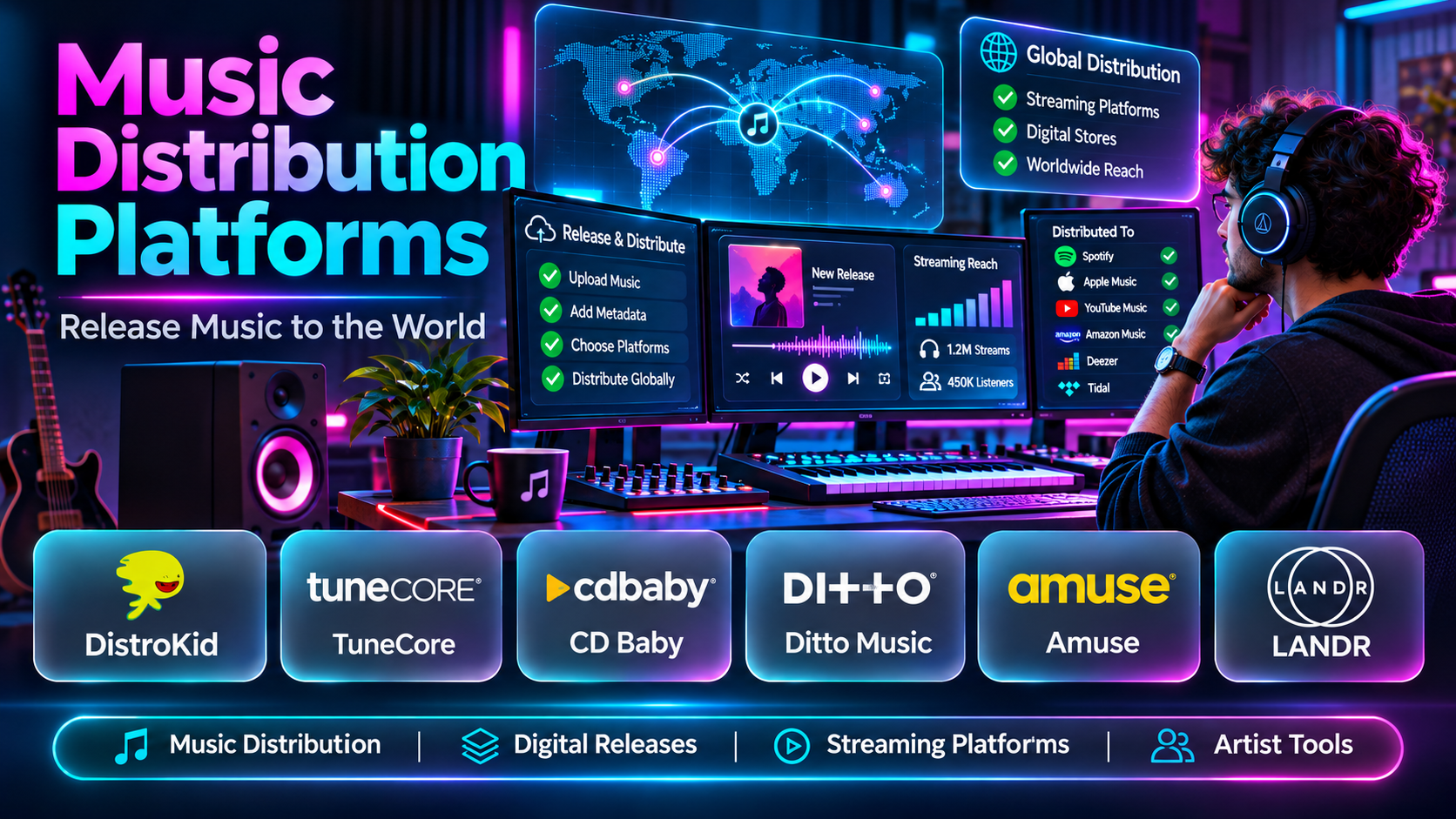
Introduction
Releasing music independently has become more accessible, but distributing a recording to streaming services involves more than uploading an audio file.
Artists and record labels must prepare accurate metadata, manage recording identifiers, deliver audio and artwork, establish release dates, monitor distribution status, and collect revenue from supported digital services.
Music distribution platforms help manage these activities by delivering recordings to streaming services and digital stores through established distribution relationships.
However, distributors differ significantly in their business models. Some charge annual subscriptions, others collect commissions, and certain services combine distribution with marketing, publishing administration, analytics, or label services.
A low-cost distributor is not automatically the best option. Artists must consider catalog ownership, release frequency, payment policies, customer support, content restrictions, and what happens when a subscription ends.
This guide compares ten music distribution platforms, explains their features and limitations, and provides a practical framework for selecting the right service.
What Are Music Distribution Platforms?
Music distribution platforms are services that deliver recorded music and associated metadata to supported digital streaming platforms, download stores, and other distribution channels.
They act as intermediaries between rights holders and digital music services.
How Digital Music Distribution Works
An artist or label uploads an eligible recording, artwork, and release information.
The distributor checks the submission against technical and content requirements.
Once approved, the distributor delivers the release to supported platforms.
Those platforms process the recording according to their own review and availability procedures.
When revenue becomes reportable and payable, the distributor receives relevant accounting information and allocates earnings according to its agreements.
Distribution vs. Publishing Administration
Music distribution primarily concerns sound recordings.
Publishing administration concerns musical compositions and related rights.
A distributor may offer additional publishing services, but distributing a recording does not automatically ensure collection of every royalty associated with the underlying composition.
Artists should understand these separate revenue streams.
Top 10 Music Distribution Platforms
1. DistroKid
Short Description
DistroKid is a digital music distribution service widely used by independent artists and labels.
Its business model emphasizes subscription-based distribution, allowing eligible users to release music through supported digital services according to their selected plan.
DistroKid is particularly relevant to artists releasing music frequently who prefer predictable subscription costs. However, users should review renewal requirements, optional service fees, and policies affecting releases when an account or subscription changes.
Key Features
- Digital distribution: Delivers recordings to supported streaming services and stores.
- Subscription-based plans: Provides distribution access through paid memberships.
- Release management: Supports singles, EPs, and albums.
- Royalty reporting: Displays reported earnings.
- Payment administration: Supports withdrawals according to applicable policies.
- Collaborator splits: Offers supported revenue-sharing workflows.
- Release metadata: Manages titles, credits, and other information.
- Additional services: Provides optional distribution-related features.
- Catalog dashboard: Centralizes release information.
Benefits
DistroKid can simplify repeated releases for independent musicians.
Pros
- Suitable for frequent releases.
- Subscription-oriented pricing.
- Straightforward release workflows.
- Revenue-sharing options.
- Broad digital distribution focus.
Cons
- Ongoing subscription obligations.
- Optional features may cost extra.
- Support experience depends on circumstances.
- Artists must review catalog continuity policies.
- Not a complete publishing administration solution by default.
Use Cases
- Releasing frequent singles.
- Managing an independent artist catalog.
- Distributing collaborative recordings.
Best For: Independent artists releasing music regularly.
2. TuneCore
Short Description
TuneCore provides digital music distribution and related artist services.
It helps musicians deliver recordings to supported streaming platforms while managing releases and reported earnings.
TuneCore is relevant to artists who want distribution combined with access to additional music business services, depending on their selected plan and eligibility.
Key Features
- Music distribution: Delivers recordings to supported platforms.
- Release management: Organizes singles and albums.
- Royalty reporting: Provides earnings information.
- Artist dashboard: Centralizes catalog administration.
- Metadata management: Supports release information.
- Distribution plans: Offers commercial options according to current terms.
- Additional artist services: Provides selected music business capabilities.
- Payment administration: Supports eligible earnings withdrawals.
- Catalog management: Maintains distributed release records.
Benefits
TuneCore can provide a structured distribution environment for independent artists developing a professional release strategy.
Pros
- Established independent distribution service.
- Broad release management.
- Artist-oriented reporting.
- Additional service options.
- Suitable for growing catalogs.
Cons
- Plan terms require careful review.
- Additional services may have separate fees.
- Revenue reporting depends on platform statements.
- Distribution does not guarantee promotion.
Use Cases
- Launching independent albums.
- Managing multiple releases.
- Coordinating distribution with artist services.
Best For: Independent musicians seeking distribution and related business tools.
3. CD Baby
Short Description
CD Baby provides music distribution services for independent musicians.
Its commercial model has historically emphasized release-based payments rather than requiring every artist to maintain a conventional annual distribution subscription.
CD Baby is particularly relevant to artists who release music less frequently and prefer evaluating costs on a per-release basis. Current fees, commissions, and service terms should be checked before purchasing.
Key Features
- Digital distribution: Delivers recordings to supported services.
- Release-based services: Supports individual release submissions.
- Royalty reporting: Provides earnings information.
- Catalog administration: Organizes distributed recordings.
- Metadata processing: Supports release information.
- Payment management: Administers eligible earnings.
- Artist resources: Provides relevant distribution guidance.
- Additional royalty services: Offers selected rights-related capabilities according to current terms.
Benefits
CD Baby can suit artists who want to release music without relying exclusively on an annual unlimited-release subscription model.
Pros
- Established independent distributor.
- Suitable for occasional releases.
- Release-oriented business model.
- Additional music rights services.
- Accessible to independent artists.
Cons
- Commissions and fees require evaluation.
- Less economical for some high-volume release patterns.
- Service options vary.
- Distribution timelines are not guaranteed.
Use Cases
- Releasing an independent album.
- Distributing occasional singles.
- Managing a small catalog.
Best For: Artists with relatively infrequent releases.
4. Ditto Music
Short Description
Ditto Music provides digital music distribution and artist services.
Its platform helps independent musicians and labels deliver releases to supported streaming services and manage their catalogs.
Ditto is relevant to artists seeking subscription-based distribution with additional music business features, subject to the selected plan.
Key Features
- Digital delivery: Distributes recordings to supported services.
- Release dashboard: Organizes singles and albums.
- Catalog management: Maintains release information.
- Royalty reporting: Displays reported earnings.
- Artist accounts: Supports relevant account management.
- Label-oriented options: Provides applicable multi-artist workflows.
- Metadata management: Supports release credits and identifiers.
- Additional services: Offers selected artist-related capabilities.
Benefits
Ditto can provide a centralized distribution environment for independent artists and small labels.
Pros
- Independent artist focus.
- Subscription-based options.
- Catalog management.
- Label-related services.
- Broad distribution orientation.
Cons
- Subscription terms require review.
- Additional services vary by plan.
- Support requirements should be tested.
- Not every artist needs its broader features.
Use Cases
- Releasing independent singles.
- Managing a small label catalog.
- Coordinating multiple artist releases.
Best For: Independent musicians and emerging labels.
5. Amuse
Short Description
Amuse provides digital music distribution and artist services.
Its platform is relevant to independent artists seeking a streamlined release workflow with commercial plan options.
Amuse has also operated artist services and label-related activities, but eligibility for additional support should not be assumed from basic distribution access.
Key Features
- Music distribution: Delivers releases to supported services.
- Release management: Supports singles and albums.
- Catalog dashboard: Organizes recordings.
- Royalty reporting: Provides earnings information.
- Artist account management: Supports release administration.
- Plan-based services: Offers features according to current commercial terms.
- Metadata handling: Manages relevant release information.
- Payment workflows: Supports eligible royalty withdrawals.
Benefits
Amuse can help independent musicians manage digital releases through a relatively focused distribution experience.
Pros
- Artist-oriented platform.
- Streamlined distribution workflows.
- Catalog management.
- Commercial plan options.
Cons
- Plan availability changes.
- Some services have eligibility requirements.
- Release approval depends on platform policies.
- Marketing support is not guaranteed.
Use Cases
- Releasing debut singles.
- Managing independent releases.
- Testing a digital distribution workflow.
Best For: Independent artists seeking a focused distribution service.
6. LANDR Distribution
Short Description
LANDR offers digital music distribution alongside a broader music creation ecosystem.
Its services are relevant to artists who want distribution connected with production-related tools and other creative workflows.
LANDR is especially attractive to musicians who already use its music production services, although the value of bundled offerings depends on individual needs.
Key Features
- Digital distribution: Delivers music to supported platforms.
- Release management: Organizes music submissions.
- Royalty reporting: Provides relevant earnings information.
- Music production ecosystem: Connects distribution with selected creative services.
- Metadata management: Supports release information.
- Catalog administration: Organizes distributed music.
- Plan-based features: Provides options according to subscription terms.
- Artist workflows: Supports selected music creation and release activities.
Benefits
LANDR can reduce fragmentation for artists who use both production and distribution services.
Pros
- Connected music production ecosystem.
- Digital distribution.
- Useful for independent creators.
- Centralized release management.
Cons
- Bundled services may be unnecessary.
- Subscription terms require evaluation.
- Not a complete label management system.
- Distribution alone does not guarantee audience growth.
Use Cases
- Producing and distributing independent music.
- Managing home-studio releases.
- Combining creative tools with distribution.
Best For: Independent producers and recording artists.
7. ONErpm
Short Description
ONErpm provides music distribution and broader music business services.
Its offerings can include distribution, analytics, marketing-related services, and label-oriented support, depending on the artist or business relationship.
ONErpm is relevant to artists and labels seeking a distribution partner that may offer additional commercial support beyond basic delivery.
Key Features
- Digital distribution: Delivers music to supported platforms.
- Catalog management: Organizes releases.
- Royalty reporting: Provides earnings visibility.
- Analytics: Supports performance evaluation.
- Artist services: Offers selected business support.
- Label services: Supports relevant label workflows.
- Revenue administration: Manages eligible earnings.
- Marketing-related capabilities: Provides applicable promotional services.
Benefits
ONErpm can support artists and labels seeking a broader business relationship with a distributor.
Pros
- Distribution and services orientation.
- Label relevance.
- Analytics capabilities.
- Artist development potential.
- Suitable for varied catalog sizes.
Cons
- Service eligibility varies.
- Contract terms require careful review.
- Additional support is not universal.
- Commercial arrangements may differ by artist.
Use Cases
- Growing independent label operations.
- Managing artist catalogs.
- Seeking distribution with additional services.
Best For: Artists and labels exploring broader distribution partnerships.
8. Symphonic Distribution
Short Description
Symphonic Distribution provides digital music distribution and services for independent artists, labels, and music businesses.
Its offerings include distribution-related workflows and additional services depending on eligibility and commercial arrangements.
Symphonic is particularly relevant to organizations that want professional catalog management and potentially more specialized support.
Key Features
- Digital distribution: Delivers releases to supported services.
- Catalog administration: Organizes music assets.
- Royalty reporting: Provides earnings information.
- Label workflows: Supports relevant multi-artist operations.
- Metadata management: Maintains release information.
- Additional music services: Offers selected business capabilities.
- Analytics: Supports release performance review.
- Rights-related services: Provides applicable administration options.
Benefits
Symphonic can help artists and labels manage distribution as part of a broader music business operation.
Pros
- Independent music industry focus.
- Label-oriented capabilities.
- Additional service options.
- Catalog management.
- Professional distribution workflows.
Cons
- Eligibility may vary.
- Commercial terms require review.
- Additional services may involve separate arrangements.
- Not every feature is available to every account.
Use Cases
- Managing label catalogs.
- Distributing independent releases.
- Coordinating distribution and music business services.
Best For: Independent labels and established artists.
9. RouteNote
Short Description
RouteNote provides digital music distribution services with different commercial options.
Its model has included arrangements allowing artists to choose between different upfront-cost and revenue-sharing structures.
RouteNote is particularly relevant to musicians who want to compare the tradeoff between initial distribution expenses and retained revenue.
Key Features
- Digital distribution: Delivers recordings to supported platforms.
- Release submission: Supports singles and albums.
- Catalog management: Organizes releases.
- Royalty reporting: Displays reported earnings.
- Commercial plan options: Provides different distribution arrangements.
- Metadata management: Supports release information.
- Payment administration: Manages eligible earnings.
- Artist dashboard: Centralizes account activity.
Benefits
RouteNote can offer flexibility for artists with different budgets and release strategies.
Pros
- Multiple commercial approaches.
- Independent artist accessibility.
- Catalog management.
- Broad digital distribution focus.
Cons
- Revenue-sharing arrangements require evaluation.
- Review and support times may vary.
- Platform policies apply.
- Additional services may have separate conditions.
Use Cases
- Releasing music with limited upfront budget.
- Comparing distribution fee structures.
- Managing independent recordings.
Best For: Budget-conscious independent artists.
10. UnitedMasters
Short Description
UnitedMasters provides music distribution and artist-oriented business services.
Its platform is relevant to independent musicians who want distribution connected with opportunities for broader artist development and commercial engagement.
The availability of additional opportunities depends on eligibility, commercial agreements, and specific programs.
Key Features
- Digital distribution: Delivers releases to supported services.
- Artist dashboard: Organizes releases and account information.
- Royalty reporting: Provides earnings visibility.
- Catalog management: Maintains distributed recordings.
- Artist services: Offers selected business capabilities.
- Commercial opportunities: Provides applicable programs.
- Metadata management: Supports release administration.
- Performance information: Helps artists evaluate reported activity.
Benefits
UnitedMasters can help artists combine distribution with selected business development opportunities.
Pros
- Independent artist orientation.
- Distribution services.
- Artist development focus.
- Relevant commercial opportunities.
- Catalog reporting.
Cons
- Opportunities are not guaranteed.
- Plan terms require review.
- Additional services may have eligibility conditions.
- Not suitable for every label workflow.
Use Cases
- Releasing independent music.
- Exploring artist business opportunities.
- Managing a developing catalog.
Best For: Independent artists seeking distribution with additional commercial possibilities.
Music Distribution Platforms Comparison Table
| Platform | Business Model Orientation | Primary Strength | Main Consideration | Best For |
|---|---|---|---|---|
| DistroKid | Subscription | Frequent releases | Renewal terms | Active independent artists |
| TuneCore | Plan-based | Distribution and services | Plan comparison | Growing artists |
| CD Baby | Release-based | Occasional releases | Fees and commissions | Infrequent releases |
| Ditto Music | Subscription | Artist and label workflows | Plan terms | Independent labels |
| Amuse | Plan-based | Streamlined releases | Feature availability | Emerging artists |
| LANDR | Subscription ecosystem | Production integration | Bundled value | Producers |
| ONErpm | Distribution/services | Broader business support | Contract terms | Labels and artists |
| Symphonic | Distribution/services | Professional catalog management | Eligibility | Established artists |
| RouteNote | Multiple commercial options | Budget flexibility | Revenue sharing | Budget-conscious artists |
| UnitedMasters | Artist-oriented plans | Commercial opportunities | Eligibility | Independent artists |
How to Choose the Right Music Distribution Platform
1. Define the Release Strategy
Determine how many singles, EPs, and albums you expect to release.
A subscription model may suit frequent releases, while a release-based arrangement may suit occasional projects.
2. Compare Total Costs
Review subscriptions, per-release charges, commissions, optional features, payment fees, and renewal conditions.
3. Understand Revenue Ownership
Confirm who owns the recordings and which rights the distributor receives under its agreement.
Distribution should not be confused with transferring copyright ownership.
4. Review Catalog Continuity
Determine what happens to distributed releases if a subscription ends or the artist changes distributors.
5. Check Supported Stores
Verify delivery to the streaming and download services important to the intended audience.
6. Evaluate Metadata Controls
Accurate titles, artist names, identifiers, credits, and release information are essential.
7. Assess Payment Reporting
Compare statement clarity, reporting schedules, withdrawal conditions, and supported payment methods.
8. Review Collaboration Features
Artists working with producers, featured performers, and collaborators may need revenue-sharing tools.
9. Consider Customer Support
Release problems can affect important promotional schedules.
Evaluate support channels and escalation procedures.
10. Test With a Small Release
Use a lower-risk release to evaluate delivery, reporting, corrections, and support before migrating a large catalog.
Best Music Distribution Platforms by User Type
| User Type | Recommended Platform | Why It Fits |
|---|---|---|
| Frequent independent artist | DistroKid | Subscription release model |
| Growing independent artist | TuneCore | Distribution and related services |
| Occasional album artist | CD Baby | Release-based approach |
| Small independent label | Ditto Music | Label-oriented options |
| Emerging artist | Amuse | Focused distribution |
| Home-studio producer | LANDR | Production ecosystem |
| Artist seeking broader services | ONErpm | Distribution and business support |
| Established independent label | Symphonic | Catalog and label services |
| Budget-conscious musician | RouteNote | Commercial flexibility |
| Artist exploring business opportunities | UnitedMasters | Artist-oriented services |
Practical Step-by-Step Example: Releasing an Independent Single
An independent artist plans to release a new single across major streaming services.
Step 1: Finalize the Recording
Prepare the approved master audio in a format accepted by the distributor.
Step 2: Confirm Rights
Verify ownership, collaborator agreements, samples, and any necessary permissions.
Step 3: Prepare Artwork
Create artwork that meets technical and content requirements.
Step 4: Organize Metadata
Confirm artist names, track titles, credits, language information, and release identifiers.
Step 5: Compare Distributors
Evaluate pricing, store coverage, reporting, and catalog continuity.
Step 6: Upload the Release
Submit the audio, artwork, and metadata.
Step 7: Choose a Release Date
Allow sufficient time for review, delivery, and promotional preparation.
Step 8: Verify Store Availability
Check the release on supported platforms after delivery.
Step 9: Promote the Recording
Coordinate announcements, artist profiles, audience communication, and appropriate marketing.
Step 10: Review Earnings and Performance
Monitor reported activity, reconcile earnings, and plan future releases.
A successful release depends on accurate preparation and audience engagement, not simply choosing a distributor.
Common Mistakes and How to Avoid Them
1. Selecting Only by Advertised Price
Optional fees and commissions can affect total cost.
Compare complete commercial terms.
2. Ignoring Subscription Cancellation Policies
Catalog availability may depend on the agreement.
Review continuity before subscribing.
3. Uploading Incorrect Metadata
Errors can create delays and attribution problems.
Review every field carefully.
4. Using Unauthorized Samples
Distribution approval does not automatically establish copyright permission.
Secure necessary rights.
5. Assuming Distribution Includes Promotion
Most basic distribution services do not guarantee audience growth.
Develop a separate marketing strategy.
6. Confusing Recording and Publishing Royalties
These are different rights and revenue streams.
Understand applicable collection arrangements.
7. Changing Distributors Without Planning
Poorly coordinated transfers can create duplicate releases or identifier problems.
Preserve metadata and follow migration procedures.
8. Expecting Immediate Royalty Payments
Streaming services and distributors use reporting and payment cycles.
Plan finances accordingly.
Frequently Asked Questions
1. What is a music distribution platform?
It delivers recordings to supported streaming services and digital stores.
2. Can independent artists distribute music?
Yes. Many distributors serve independent musicians.
3. Is a record label required?
No. Artists can distribute recordings independently.
4. Are music distributors free?
Some offer low-upfront-cost arrangements, while others charge subscriptions, fees, or commissions.
5. What is a distribution commission?
It is a share of eligible revenue retained under the distributor’s agreement.
6. Can artists keep their copyrights?
Many distribution agreements allow artists to retain ownership, but contract terms must be reviewed.
7. Does distribution guarantee Spotify placement?
No. Delivery and availability depend on platform policies and processing.
8. How long does distribution take?
Timelines vary by distributor, store, and submission.
9. What is an ISRC?
It is an identifier used for sound recordings and music videos.
10. What is a UPC?
It is a product identifier commonly used for commercial releases.
11. Can artists change distributors?
Often yes, subject to contractual and migration requirements.
12. Will streams disappear during migration?
Poorly managed transfers can create disruption. Preserving identifiers and metadata helps reduce risk.
13. Do distributors collect publishing royalties?
Some offer related services, but basic distribution does not automatically cover all publishing income.
14. Can artists split royalties with collaborators?
Some platforms support payment splits.
15. Can distributors release cover songs?
Many support eligible cover releases, but licensing requirements must be satisfied.
16. Are samples automatically cleared?
No. Necessary permissions must be obtained.
17. Can artists choose a future release date?
Many distributors support scheduled releases.
18. Can music be distributed worldwide?
Coverage depends on distributor agreements and territorial restrictions.
19. What happens when a subscription expires?
Consequences depend on the distributor’s terms and selected services.
20. How are streaming royalties calculated?
Payments depend on platform revenue allocation, agreements, territories, and other factors.
21. Can distributors guarantee playlist placement?
Legitimate distribution does not guarantee editorial playlist inclusion.
22. What is music metadata?
It is information describing recordings, artists, credits, and releases.
23. Can labels manage multiple artists?
Some distributors provide label-oriented accounts.
24. What is a royalty statement?
It reports relevant earnings and payment information.
25. Which distributor is best for beginners?
The best choice depends on release frequency, budget, rights requirements, and support needs.
26. Can distributors remove a release?
Removal procedures depend on contracts and platform rules.
27. Does a distributor promote music automatically?
Basic distribution and marketing are separate services.
28. Can artists distribute AI-generated music?
Eligibility depends on distributor policies, platform rules, and applicable rights.
29. What should artists verify before uploading?
Ownership, audio quality, artwork, metadata, release terms, and licensing.
30. What is the most important distribution decision?
Choose a service whose commercial terms and operational capabilities match the artist’s long-term release strategy.
Final Thoughts
Music distribution platforms help artists deliver recordings to digital services and manage associated release information and earnings.
DistroKid, TuneCore, CD Baby, Ditto Music, Amuse, LANDR, RouteNote, ONErpm, Symphonic, and UnitedMasters serve different artist and label needs.
The strongest choice depends on release frequency, total costs, revenue arrangements, catalog continuity, support quality, and the need for additional business services.
Independent musicians should prioritize clear contracts, accurate metadata, reliable distribution, and sustainable audience development rather than assuming that one platform guarantees commercial success.
