Introduction
Creators often assume that publishing a work online automatically provides every form of copyright protection they may need. Although copyright generally arises when an eligible original work is created and fixed in a tangible medium, formal registration can provide additional legal and administrative benefits in certain jurisdictions.
Copyright registration tools help creators, publishers, businesses, and rights managers organize information about protected works and submit applications through relevant registration systems.
However, copyright registration is fundamentally a legal process rather than a simple software feature. A private certificate, blockchain timestamp, or digital ownership record is not necessarily equivalent to registration with an official government authority.
This distinction is especially important for creators seeking legal remedies, managing international rights, or documenting ownership during disputes.
The most suitable registration workflow depends on the creator’s jurisdiction, type of work, ownership structure, filing requirements, and intended use of the resulting record.
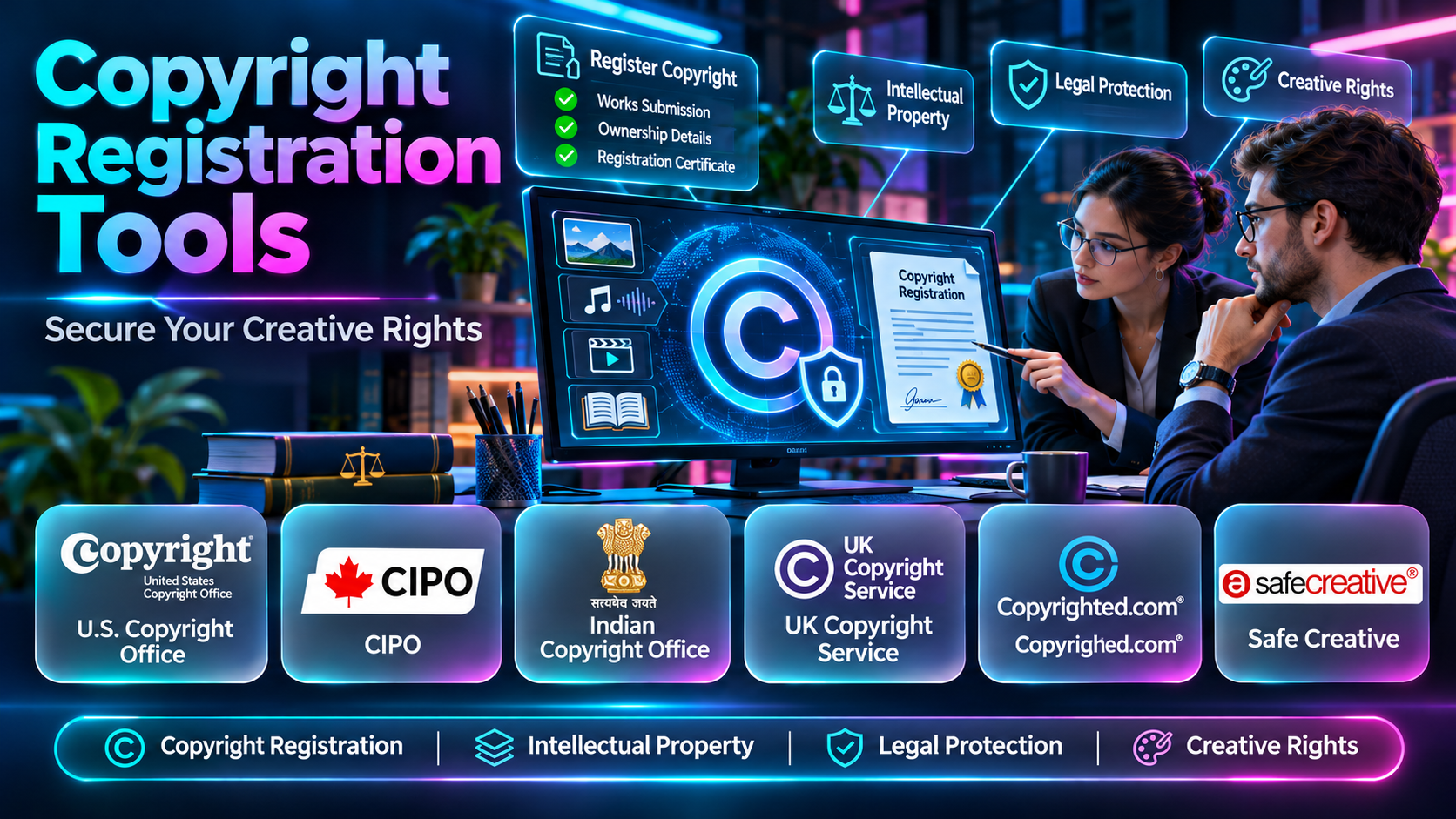
This guide examines ten official systems, registration services, and supporting tools that can help creators document or formally register copyright interests.
What Are Copyright Registration Tools?
Copyright registration tools are online systems, services, or software applications that assist with preparing, submitting, tracking, or documenting copyright claims.
They may provide official government registration, application preparation, ownership records, or supporting evidence.
Copyright Protection vs. Registration
In many jurisdictions, copyright protection arises automatically when an eligible original work is created.
Registration may provide additional benefits, including official records, evidentiary advantages, or access to particular legal remedies.
The rules vary by country.
For example, registration with the United States Copyright Office can have important consequences for infringement litigation and eligibility for certain remedies. Timing and other statutory requirements matter.
A private registration service cannot independently confer the same legal status as an official government registration.
Common Registration Workflows
A typical copyright registration process includes identifying the work, confirming authorship and ownership, selecting the appropriate work category, preparing the application, supplying required deposits or supporting material, paying applicable fees, and tracking the application.
Creators should distinguish official registration from voluntary recordkeeping services.
Top 10 Copyright Registration Tools and Services
1. U.S. Copyright Office Electronic Registration System
Short Description
The United States Copyright Office provides the official federal copyright registration process for eligible works under U.S. law.
Its electronic registration services allow applicants to submit information about authorship, ownership, work categories, and required deposits.
This is the appropriate official route for creators seeking U.S. federal copyright registration, subject to eligibility and applicable procedures.
Key Features
- Official registration: Submits applications to the federal copyright authority.
- Work classification: Supports registration categories for eligible works.
- Application forms: Collects legally relevant authorship and ownership details.
- Electronic submission: Enables online filing for supported applications.
- Deposit handling: Supports required deposit procedures.
- Fee processing: Collects applicable government filing fees.
- Application tracking: Provides relevant submission information.
- Official records: Supports the creation of federal registration records after approval.
Benefits
Official registration can provide legal advantages under applicable U.S. copyright law.
Pros
- Government-authorized process.
- Direct official filing.
- Supports multiple work categories.
- Avoids unnecessary intermediary services.
- Creates official records when registration is granted.
Cons
- Legal terminology can be confusing.
- Processing times vary.
- Application errors can create delays.
- Filing fees apply.
- Some cases require specialized legal advice.
Use Cases
- Registering a literary work.
- Registering eligible musical compositions or sound recordings.
- Registering original visual artwork.
Best For: Creators and businesses seeking official U.S. copyright registration.
2. Copyright.gov Public Records and Registration Resources
Short Description
Copyright.gov provides public resources, guidance, and copyright record access associated with the U.S. Copyright Office.
Although it is not a separate registration authority from the official system above, its public-facing resources are useful for researching procedures and checking registration information.
Creators can use these resources to understand registration categories, application requirements, and available records before filing.
Key Features
- Registration guidance: Explains official filing procedures.
- Work-type information: Helps applicants identify relevant categories.
- Public record resources: Supports research into available copyright records.
- Circulars and guidance: Provides official explanatory materials.
- Fee information: Publishes applicable government fee schedules.
- Application resources: Directs users to relevant filing processes.
- Copyright education: Explains important legal concepts.
- Official updates: Provides information about changes in procedures.
Benefits
Official guidance reduces the risk of relying on inaccurate third-party explanations.
Pros
- Authoritative government information.
- Useful registration instructions.
- Public record research.
- Relevant legal resources.
Cons
- Not a distinct registration service.
- Some materials require legal interpretation.
- Public record coverage varies.
- Does not provide personalized legal advice.
Use Cases
- Researching registration requirements.
- Checking available public records.
- Preparing for an official filing.
Best For: Applicants researching U.S. copyright registration.
3. Canadian Intellectual Property Office Copyright Registration
Short Description
The Canadian Intellectual Property Office administers copyright registration in Canada.
Its official services allow eligible applicants to register copyright interests under Canadian procedures.
Registration is voluntary in Canada, and copyright generally exists independently of registration when statutory requirements are satisfied.
Key Features
- Official Canadian registration: Provides the authorized registration process.
- Application submission: Collects required information.
- Ownership information: Records relevant applicant and ownership details.
- Work identification: Supports descriptions of protected works.
- Fee processing: Handles applicable filing charges.
- Registration records: Maintains official registration information.
- Public information: Provides registration guidance.
- Administrative processing: Supports application review.
Benefits
Canadian registration can provide an official record useful in applicable copyright disputes.
Pros
- Government-authorized process.
- Relevant to Canadian copyright law.
- Official registration records.
- Clear jurisdictional authority.
Cons
- Canadian legal scope.
- Filing fees.
- Does not establish worldwide registration.
- Complex ownership cases may require legal advice.
Use Cases
- Registering Canadian creative works.
- Documenting copyright ownership.
- Supporting copyright administration.
Best For: Applicants seeking official Canadian registration.
4. Intellectual Property Office of India Copyright Registration
Short Description
India provides official copyright registration through its government copyright administration.
Eligible creators and rights holders can submit applications according to the applicable Indian Copyright Act and procedural rules.
Copyright protection in India generally does not depend on registration, but registration may provide useful official evidence in disputes.
Key Features
- Official copyright applications: Supports registration under Indian procedures.
- Work categories: Accommodates eligible copyright works.
- Applicant information: Records authorship and ownership details.
- Application submission: Supports relevant filing procedures.
- Fee payment: Processes applicable government fees.
- Application status: Provides available tracking information.
- Official records: Maintains registration information.
- Administrative review: Processes applications under relevant rules.
Benefits
The official system provides a recognized route for documenting copyright claims in India.
Pros
- Government registration process.
- Relevant to Indian copyright law.
- Official records.
- Supports different creative work categories.
Cons
- Processing and objections may require attention.
- Application requirements vary.
- Filing fees apply.
- Complex cases may need legal assistance.
Use Cases
- Registering literary works.
- Registering artistic works.
- Registering eligible music and software works.
Best For: Creators seeking official Indian copyright registration.
5. UK Copyright Service
Short Description
UK Copyright Service is a private copyright registration and evidence-recording service.
The United Kingdom does not operate a general government copyright registration system equivalent to the U.S. Copyright Office.
Private services can help document when a work was submitted or deposited, but they do not create copyright or provide an official government registration.
Key Features
- Work deposit: Stores submitted creative material.
- Submission records: Documents selected deposit information.
- Registration certificates: Provides private service records.
- Evidence preservation: Supports documentation of work existence.
- Online submission: Enables supported digital deposits.
- Account management: Organizes registered works.
- Record retrieval: Supports access to stored information.
- Documentation support: Helps creators maintain evidence.
Benefits
Private records may supplement other evidence of creation and ownership.
Pros
- Accessible evidence-recording process.
- Useful document organization.
- Supports creative work deposits.
- May assist recordkeeping.
Cons
- Not government copyright registration.
- Does not create copyright.
- Legal evidentiary value depends on circumstances.
- Service costs may apply.
Use Cases
- Documenting creative work deposits.
- Organizing ownership evidence.
- Maintaining supplementary records.
Best For: UK creators seeking private evidence preservation.
6. WIPO PROOF — Historical Service
Short Description
WIPO PROOF was a digital timestamping service offered by the World Intellectual Property Organization to help establish evidence that a digital file existed at a particular time.
The service was discontinued and should not be recommended as a current registration product.
Its inclusion is useful for understanding the distinction between timestamping and official copyright registration.
Key Features and Historical Capabilities
- Digital timestamping: Recorded evidence associated with digital files.
- File fingerprinting: Used cryptographic representations.
- Evidence documentation: Supported proof-of-existence records.
- Digital workflows: Operated without conventional physical deposits.
- Verification concepts: Supported examination of timestamp evidence.
- Intellectual property context: Addressed digital evidence needs.
- International organization origin: Was provided by WIPO.
Benefits
The service illustrated how cryptographic timestamps can supplement intellectual property documentation.
Pros
- Useful historical evidence model.
- Demonstrated digital timestamping.
- Relevant to rights documentation.
Cons
- Discontinued.
- Not available for new registrations.
- Was not an official copyright registration system.
- Did not independently prove ownership.
Use Cases
- Understanding historical timestamping approaches.
- Comparing evidence preservation methods.
- Evaluating alternative current services.
Best For: Historical reference only, not current procurement.
7. Copyrighted.com
Short Description
Copyrighted.com provides digital copyright protection and registration-related recordkeeping services.
Its offerings are designed to help creators document works and organize copyright-related information.
Private records should be understood as supplementary documentation rather than equivalent to government registration.
Key Features
- Work records: Organizes protected creative assets.
- Submission documentation: Maintains information about registered materials.
- Copyright-related records: Supports creator recordkeeping.
- Digital workflows: Enables online management.
- Evidence organization: Helps preserve relevant information.
- Account-based access: Supports management of submissions.
- Protection-related services: Offers selected copyright support.
- Record retrieval: Helps users access documented information.
Benefits
Copyrighted.com can provide a convenient place to maintain supplementary copyright records.
Pros
- Creator-oriented service.
- Digital recordkeeping.
- Useful organization.
- Accessible online workflows.
Cons
- Private registration is not government registration.
- Does not independently establish legal ownership.
- Commercial terms require review.
- Official filings may still be necessary.
Use Cases
- Maintaining creative work records.
- Documenting publication information.
- Organizing supporting copyright evidence.
Best For: Creators needing supplementary documentation.
8. Safe Creative
Short Description
Safe Creative provides online intellectual property registration and evidence-recording services for creative works.
Its platform helps creators document works and maintain information associated with authorship and rights.
As with other private registration services, its records should not be confused with official government copyright registration.
Key Features
- Creative work registration: Documents submitted works.
- Timestamp-related records: Supports evidence of submission timing.
- Authorship information: Organizes creator details.
- Rights declarations: Records relevant rights information.
- Digital certificates: Provides supporting documentation.
- Online management: Organizes registered materials.
- Work identification: Helps describe protected content.
- Evidence retrieval: Supports access to stored records.
Benefits
Safe Creative can help creators maintain structured records of creative work and related rights information.
Pros
- Focus on creative works.
- Digital evidence records.
- Authorship documentation.
- Online management.
Cons
- Not a universal government registry.
- Does not independently prove originality.
- Legal significance varies by jurisdiction.
- Service plans require evaluation.
Use Cases
- Documenting photographs.
- Maintaining music creation records.
- Organizing writing and artwork evidence.
Best For: Creators seeking private rights documentation.
9. Songtrust
Short Description
Songtrust is a music publishing administration service that helps songwriters and publishers manage composition rights and royalty collection.
It is not a government copyright registration service. Its relevance comes from registering musical works with applicable collection societies and administering publishing rights.
This distinction is important because registering a song with a performance rights organization does not necessarily constitute copyright registration with a government authority.
Key Features
- Song catalog management: Organizes musical compositions.
- Publishing administration: Supports songwriter rights management.
- Society registrations: Helps register works with applicable collection organizations.
- Royalty collection: Supports collection of eligible publishing income.
- Ownership splits: Records songwriter and publisher interests.
- Catalog metadata: Maintains composition information.
- Royalty reporting: Provides relevant earnings information.
- International administration: Supports applicable cross-border collection arrangements.
Benefits
Songtrust can help songwriters administer publishing rights and royalty collection.
Pros
- Music publishing specialization.
- Composition catalog management.
- Royalty administration.
- Relevant international collection workflows.
Cons
- Not government copyright registration.
- Service fees and commissions may apply.
- Requires accurate ownership metadata.
- Not suitable for nonmusic works.
Use Cases
- Registering compositions with collection societies.
- Managing songwriting splits.
- Collecting publishing royalties.
Best For: Songwriters and music publishers.
10. Rightsify
Short Description
Rightsify operates in music licensing and rights-related services, making it relevant to broader music rights management rather than official copyright registration.
Its inclusion illustrates the difference between documenting rights, licensing content, and registering copyright with a government.
Creators considering rights management services should verify current product capabilities and avoid assuming that licensing administration constitutes formal registration.
Key Features and Relevant Capabilities
- Music rights management: Supports selected rights-related workflows.
- Licensing operations: Addresses authorized music usage.
- Catalog administration: Organizes music assets.
- Rights information: Maintains relevant ownership data.
- Commercial licensing: Supports applicable music licensing activities.
- Content identification: Helps organize relevant music information.
- Business workflows: Connects rights information with commercial use.
Benefits
Music rights administration can help creators organize licensing and commercial exploitation of protected works.
Pros
- Music rights orientation.
- Relevant licensing workflows.
- Catalog-related functionality.
- Commercial rights context.
Cons
- Not an official registration authority.
- Not a general copyright registration tool.
- Current services require verification.
- Limited relevance outside music.
Use Cases
- Managing music licensing information.
- Organizing rights-related records.
- Supporting commercial music usage.
Best For: Music businesses evaluating licensing and rights administration.
Copyright Registration Tools Comparison Table
| Tool or Service | Type | Official Registration? | Main Purpose |
|---|---|---|---|
| U.S. Copyright Office | Government | Yes | U.S. registration |
| Copyright.gov resources | Government resources | Through official filing system | Guidance and records |
| Canadian Intellectual Property Office | Government | Yes | Canadian registration |
| Indian copyright administration | Government | Yes | Indian registration |
| UK Copyright Service | Private | No | Evidence recording |
| WIPO PROOF | Discontinued | No | Historical timestamping |
| Copyrighted.com | Private | No | Rights documentation |
| Safe Creative | Private | No | Creative work records |
| Songtrust | Publishing administrator | No | Composition administration |
| Rightsify | Music rights business | No | Licensing and rights management |
How to Choose the Right Copyright Registration Tool
Determine the Relevant Jurisdiction
Copyright registration requirements vary by country. Identify the legal system relevant to the intended registration or enforcement.
Distinguish Official and Private Services
Official government registration and private evidence preservation serve different purposes.
Do not pay for a private certificate under the mistaken assumption that it automatically provides statutory registration benefits.
Identify the Work Category
Literary works, sound recordings, compositions, photographs, software, and audiovisual works may have different application requirements.
Verify Ownership
Confirm authorship, employment arrangements, assignments, and collaboration agreements.
Review Filing Requirements
Check forms, deposits, publication information, fees, and applicable deadlines.
Consider Registration Timing
In some jurisdictions, filing timing affects available legal remedies.
Maintain Independent Records
Preserve drafts, source files, contracts, publication dates, and relevant correspondence.
Evaluate Legal Complexity
Joint authorship, work-for-hire arrangements, international rights, and ownership disputes may require qualified legal advice.
Best Copyright Registration Options by User Type
| User Type | Suitable Option | Reason |
|---|---|---|
| U.S. creator | U.S. Copyright Office | Official federal registration |
| U.S. researcher | Copyright.gov | Official guidance |
| Canadian creator | Canadian Intellectual Property Office | Official Canadian registration |
| Indian creator | Indian copyright administration | Official Indian registration |
| UK creator seeking evidence records | UK Copyright Service | Private documentation |
| Creator seeking timestamp evidence | Current verified timestamping service | Supplementary evidence |
| Digital creator | Copyrighted.com | Recordkeeping |
| Artist documenting works | Safe Creative | Private work records |
| Songwriter managing publishing | Songtrust | Society registrations |
| Music licensing business | Rightsify | Rights administration |
Practical Step-by-Step Example: Registering a Creative Work
A photographer wants to register a collection of original photographs.
Step 1: Identify the jurisdiction and relevant legal requirements.
Step 2: Confirm ownership of each photograph.
Step 3: Determine whether the works qualify for an available group registration procedure.
Step 4: Gather accurate titles, creation dates, and publication information.
Step 5: Select the official government filing system.
Step 6: Complete the applicable application.
Step 7: Prepare and submit required deposits.
Step 8: Pay the official filing fee.
Step 9: Retain confirmation and application records.
Step 10: Track the application and preserve the final registration documentation.
Common Mistakes and How to Avoid Them
1. Assuming Copyright Requires Registration Everywhere
Copyright often arises automatically.
Understand the distinction between protection and registration.
2. Confusing Private Certificates With Official Registration
Private records do not necessarily provide government registration benefits.
Verify the issuing authority.
3. Registering the Wrong Work Category
Incorrect classification may complicate an application.
Review official guidance.
4. Providing Inaccurate Ownership Information
Ownership errors can create serious problems.
Review contracts and assignments.
5. Ignoring Filing Timing
Some legal benefits depend on when registration occurs.
Plan appropriately.
6. Losing Original Files
Registration does not eliminate the need for evidence.
Maintain reliable archives.
7. Assuming Registration Is Worldwide
National registration systems generally have jurisdiction-specific effects.
Evaluate international protection separately.
Frequently Asked Questions
1. What is copyright registration?
It is a process for recording a copyright claim with an appropriate authority or service.
2. Does copyright exist without registration?
In many jurisdictions, eligible works receive protection automatically.
3. Is copyright registration mandatory?
Requirements depend on jurisdiction and intended legal remedies.
4. What is the official U.S. copyright registration authority?
The United States Copyright Office.
5. Does the UK have a general government copyright registry?
No.
6. Can a private service create copyright?
No. Copyright arises according to applicable law.
7. Is a timestamp proof of ownership?
Not by itself.
8. Can photographs be registered?
Eligible photographs may be registered under applicable procedures.
9. Can software be copyrighted?
Original copyrightable software expression may receive protection.
10. Can musical works be registered?
Yes, subject to the relevant jurisdiction and work category.
11. Are compositions and sound recordings the same?
No. They involve distinct copyright interests.
12. Can multiple creators own a work?
Yes, depending on authorship and contractual arrangements.
13. What is work made for hire?
It is a legal concept affecting authorship and ownership under applicable law.
14. Does registering with a music society register copyright?
Not necessarily.
15. Can copyright registration prevent copying?
Registration does not technically prevent unauthorized copying.
16. How much does registration cost?
Fees vary by jurisdiction and application type.
17. How long does registration take?
Processing times depend on the authority and application.
18. Can registration be refused?
Yes, if applicable requirements are not satisfied.
19. Can an unpublished work be registered?
Some jurisdictions and procedures allow registration of unpublished works.
20. What evidence should creators preserve?
Original files, drafts, contracts, correspondence, and publication records.
21. Is blockchain registration legally equivalent to government registration?
Not automatically.
22. Does copyright registration protect ideas?
Copyright generally protects qualifying expression rather than abstract ideas.
23. Can registration cover international rights?
The effect of registration depends on applicable national laws and international arrangements.
24. Should businesses register every asset?
Prioritize according to legal requirements, value, enforcement needs, and cost.
25. When should a creator consult a lawyer?
Complex ownership, disputes, licensing, and significant enforcement matters may justify legal advice.
Final Thoughts
Copyright registration tools serve different purposes, and choosing the correct category is essential.
Official government systems provide legally recognized registration procedures. Private services may help preserve evidence, while music rights administrators support licensing and royalty-related workflows.
Creators should identify their jurisdiction, confirm ownership, understand filing requirements, and distinguish official registration from supplementary documentation.
Reliable copyright management begins with accurate records and a clear understanding of the legal process.
