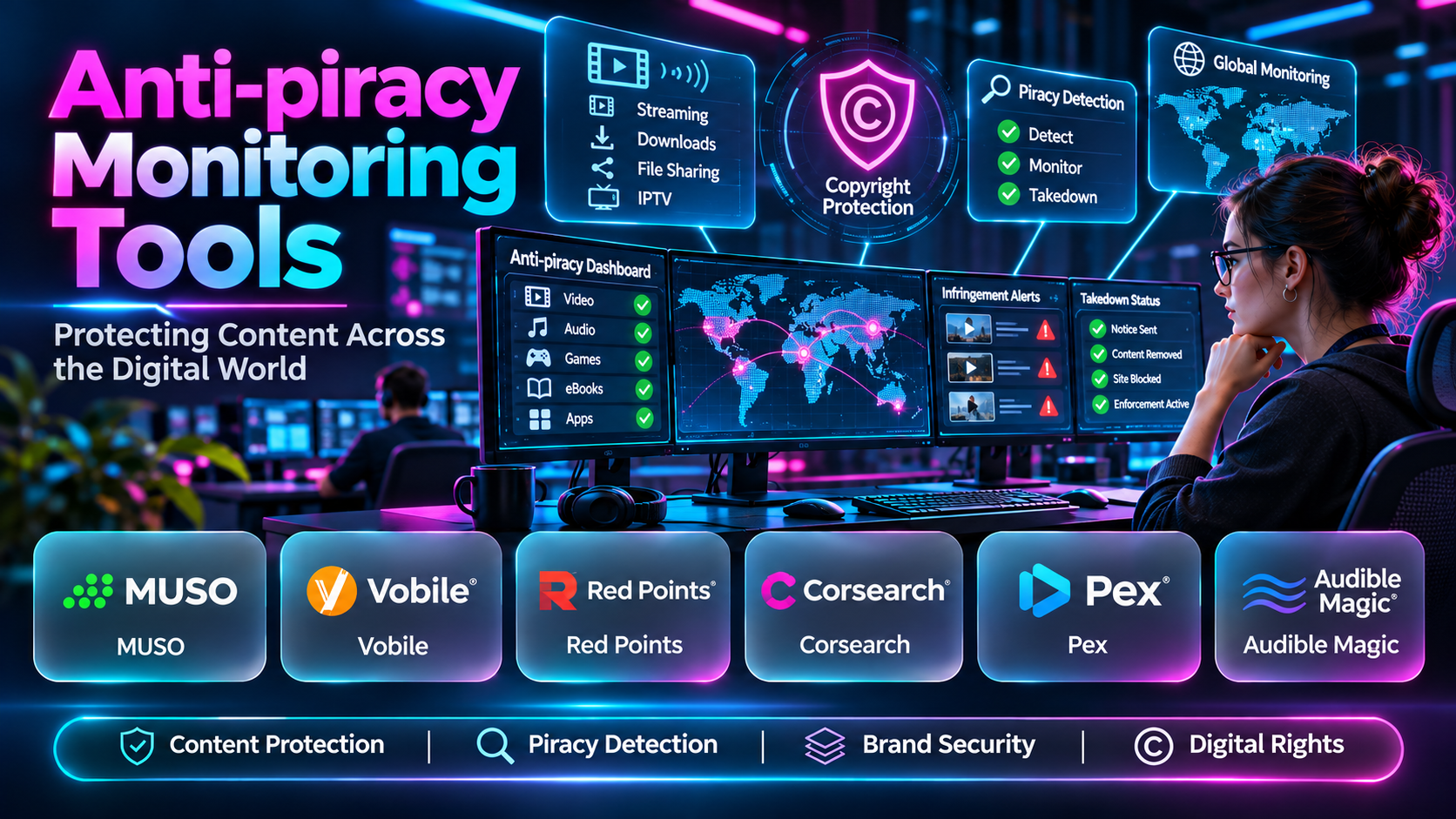
Introduction
Unauthorized distribution of digital content can create significant problems for publishers, musicians, filmmakers, software developers, and other rights holders. Copies of copyrighted material may appear on unauthorized streaming websites, file-sharing networks, social platforms, search engines, and commercial marketplaces.
Identifying these copies manually is difficult. Content can be reposted across multiple websites, modified to evade detection, or distributed through networks that change frequently.
Anti-piracy monitoring tools help rights holders discover suspected infringements, investigate distribution patterns, document evidence, and coordinate appropriate enforcement actions.
However, detecting a matching file does not automatically establish copyright infringement. Authorized licenses, exceptions, public-domain status, and other legal considerations can affect whether particular uses are permitted.
Organizations therefore need systems that combine reliable detection with careful ownership verification, accurate evidence, and proportionate enforcement.
This guide compares ten anti-piracy monitoring tools and services, explains their capabilities, and provides a practical framework for protecting digital intellectual property.
What Are Anti-piracy Monitoring Tools?
Anti-piracy monitoring tools are technologies and services that help copyright owners identify potentially unauthorized distribution or use of protected content.
They may search websites, social media platforms, video-sharing services, file-sharing networks, and other digital channels.
How Anti-piracy Monitoring Works
A typical workflow includes several stages.
Content identification: The rights holder supplies reference files, titles, fingerprints, ownership information, or other identifying data.
Discovery: Monitoring systems search supported channels for matching or potentially infringing material.
Verification: Suspected matches are evaluated to determine whether the content belongs to the rights holder and whether the use is unauthorized.
Evidence collection: Relevant URLs, timestamps, screenshots, and other information are documented.
Enforcement: The rights holder may submit a platform complaint, takedown notice, or other appropriate request.
Follow-up: The system checks whether the content remains accessible or reappears elsewhere.
Anti-piracy Monitoring vs. Copyright Enforcement
Monitoring identifies possible infringement. Enforcement involves requesting removal, restricting access, pursuing licensing discussions, or taking legal action.
These activities are connected but not identical.
A monitoring platform may provide automated discovery without comprehensive legal support. Another vendor may offer managed investigations and enforcement services.
Top 10 Anti-piracy Monitoring Tools
1. MUSO
Short Description
MUSO provides digital piracy intelligence and anti-piracy services for entertainment and media organizations. Its technology helps rights holders understand unauthorized distribution patterns and identify potential infringement across supported online channels.
MUSO is particularly relevant to businesses that want both monitoring and insights into how content circulates outside authorized distribution channels.
Its piracy intelligence orientation can also support commercial analysis. Rights holders may use distribution patterns to understand audience demand, release exposure, or geographic trends, while recognizing that piracy activity does not directly equal lost sales.
Key Features
- Piracy discovery: Identifies suspected unauthorized content distribution.
- Online monitoring: Tracks relevant digital channels.
- Content identification: Uses supported matching and identification methods.
- Piracy intelligence: Provides information about distribution patterns.
- Reporting dashboards: Helps teams review monitoring findings.
- Enforcement support: Supports appropriate anti-piracy responses.
- Trend analysis: Helps identify changes in unauthorized distribution.
- Rights-holder workflows: Organizes relevant content protection activities.
Benefits
MUSO can help organizations understand piracy exposure and prioritize enforcement resources.
Pros
- Entertainment industry specialization.
- Piracy intelligence capabilities.
- Monitoring and reporting.
- Relevant to large content catalogs.
- Supports data-informed decisions.
Cons
- Commercial arrangements require evaluation.
- Monitoring coverage is not universal.
- Detection does not establish infringement by itself.
- Smaller creators may need simpler services.
Use Cases
- Monitoring film distribution.
- Analyzing unauthorized television content.
- Investigating piracy trends for media catalogs.
Best For: Media companies seeking piracy monitoring and market intelligence.
2. Vobile
Short Description
Vobile provides digital content protection and rights management technology for media and entertainment organizations.
Its services are relevant to rights holders managing substantial audiovisual catalogs across digital distribution environments.
Vobile is particularly suitable for organizations requiring automated content identification and broader rights protection operations.
Key Features
- Content identification: Supports matching protected audiovisual material.
- Piracy monitoring: Detects suspected unauthorized distribution.
- Rights management: Supports content ownership workflows.
- Automated analysis: Reduces repetitive discovery work.
- Enforcement support: Helps coordinate protection actions.
- Platform monitoring: Covers supported digital distribution channels.
- Reporting: Provides visibility into protection activity.
- Catalog management: Supports large collections of protected assets.
Benefits
Vobile can help media businesses manage content protection at catalog scale.
Pros
- Audiovisual rights specialization.
- Automated identification capabilities.
- Suitable for substantial media catalogs.
- Supports structured protection workflows.
Cons
- Enterprise-oriented procurement.
- Integration complexity.
- Service scope depends on agreements.
- Requires accurate ownership information.
Use Cases
- Protecting film libraries.
- Monitoring television content.
- Supporting enterprise media rights operations.
Best For: Film studios, broadcasters, and large media rights holders.
3. Red Points
Short Description
Red Points provides online brand and intellectual property protection technology. Its services help organizations identify suspected infringement and coordinate enforcement across supported digital channels.
Although it is not limited to audiovisual piracy, its intellectual property protection capabilities are relevant to businesses confronting unauthorized distribution and misuse of protected assets.
Red Points is particularly useful where copyright infringement overlaps with brand misuse, unauthorized listings, and digital marketplace activity.
Key Features
- Online monitoring: Searches supported digital channels.
- Infringement detection: Identifies potentially unauthorized uses.
- Automated workflows: Supports repetitive protection activities.
- Takedown management: Helps coordinate removal requests.
- Evidence organization: Maintains relevant case information.
- Marketplace monitoring: Supports applicable marketplace protection.
- Reporting dashboards: Summarizes enforcement activity.
- Case tracking: Helps monitor outstanding issues.
Benefits
Red Points can consolidate intellectual property monitoring and enforcement coordination.
Pros
- Broad IP protection focus.
- Automated monitoring.
- Takedown workflow support.
- Useful reporting.
- Relevant to multiple industries.
Cons
- Not exclusively focused on media piracy.
- Commercial costs.
- Platform coverage varies.
- Legal review may still be required.
Use Cases
- Monitoring unauthorized digital products.
- Protecting copyrighted creative assets.
- Coordinating online infringement complaints.
Best For: Businesses with mixed copyright and brand protection needs.
4. Corsearch
Short Description
Corsearch provides intellectual property protection services, including online brand protection and anti-piracy capabilities.
Its offerings are relevant to organizations requiring monitoring, investigation, and enforcement support across complex online environments.
Corsearch is particularly suitable for established businesses managing multiple types of intellectual property.
Key Features
- Online infringement monitoring: Identifies suspected unauthorized uses.
- Anti-piracy services: Supports content protection.
- Brand protection: Addresses relevant trademark and brand misuse.
- Investigation support: Helps examine suspected violations.
- Enforcement workflows: Coordinates appropriate actions.
- Evidence management: Organizes supporting information.
- Reporting: Tracks protection activity.
- Portfolio support: Addresses multiple protected assets.
Benefits
Corsearch can help organizations coordinate copyright protection with broader intellectual property management.
Pros
- Broad IP expertise.
- Monitoring and enforcement support.
- Suitable for complex portfolios.
- Relevant to enterprise rights teams.
Cons
- Enterprise-oriented service scope.
- Procurement and implementation complexity.
- Not all services suit individual creators.
- Requires accurate rights documentation.
Use Cases
- Protecting media catalogs.
- Monitoring copyright and brand misuse.
- Coordinating international IP enforcement.
Best For: Enterprises managing complex intellectual property portfolios.
5. Pex
Short Description
Pex provides technology for identifying and understanding the use of copyrighted content across supported digital environments.
Its content identification and rights-related capabilities are relevant to music, video, and other media workflows.
Pex is particularly useful when organizations need to recognize content matches and evaluate how protected works appear across online platforms.
Key Features
- Content identification: Matches supported reference material.
- Audio analysis: Supports identification of relevant audio content.
- Video analysis: Supports applicable audiovisual matching.
- Rights information: Helps connect content with ownership data.
- Automated matching: Reduces manual identification effort.
- Platform integration: Connects supported identification workflows.
- Content tracking: Helps understand content usage.
- Reporting: Supports rights-related analysis.
Benefits
Pex can help organizations identify copyrighted material and support rights-aware platform workflows.
Pros
- Content identification specialization.
- Audio and video relevance.
- Suitable for platform integrations.
- Useful rights-related technology.
Cons
- Not every matching use is infringing.
- Commercial availability requires evaluation.
- Implementation may require technical resources.
- Enforcement workflows may need separate systems.
Use Cases
- Identifying music in user-generated content.
- Detecting audiovisual matches.
- Supporting rights management systems.
Best For: Media platforms and rights holders requiring content identification.
6. Audible Magic
Short Description
Audible Magic provides automated content identification and rights management technology used in digital media environments.
Its audio and video recognition capabilities help platforms and rights holders identify protected material.
Audible Magic is particularly relevant to organizations that need content recognition embedded within upload or distribution workflows.
Key Features
- Audio fingerprinting: Identifies matching audio content.
- Video recognition: Supports applicable video identification.
- Reference matching: Compares content against registered material.
- Rights management integration: Supports copyright-related workflows.
- Automated identification: Reduces manual matching.
- Platform integration: Connects with supported digital services.
- Content policy support: Helps applications apply rights-related rules.
- Identification reporting: Provides information about detected matches.
Benefits
Audible Magic can help digital platforms recognize copyrighted content before or after publication.
Pros
- Established content identification technology.
- Audio recognition specialization.
- Relevant to upload platforms.
- Supports automated workflows.
Cons
- Recognition does not establish legal infringement.
- Reference coverage affects detection.
- Commercial integration may be complex.
- Not a complete legal enforcement service.
Use Cases
- Identifying copyrighted audio uploads.
- Supporting media-sharing platform policies.
- Monitoring matching audiovisual content.
Best For: Platforms needing automated content recognition.
7. Friend MTS
Short Description
Friend MTS specializes in content protection technology for broadcasters, streaming services, and premium video distributors.
Its capabilities include services relevant to detecting and addressing unauthorized video distribution.
The platform is especially appropriate for organizations concerned about live sports, premium television, and other high-value streaming content.
Key Features
- Piracy monitoring: Identifies suspected unauthorized streams.
- Video content protection: Supports premium media protection.
- Content identification: Helps recognize protected streams.
- Forensic watermarking: Supports applicable source identification workflows.
- Live monitoring: Addresses time-sensitive distribution.
- Enforcement support: Helps coordinate appropriate responses.
- Operational reporting: Tracks protection activity.
- Streaming integration: Supports relevant distribution environments.
Benefits
Friend MTS can help broadcasters respond to piracy during time-sensitive events.
Pros
- Premium video specialization.
- Live-streaming relevance.
- Watermarking capabilities.
- Suitable for broadcasters.
Cons
- Specialized enterprise focus.
- Commercial implementation requirements.
- Not designed for general website copyright monitoring.
- Requires coordinated content protection processes.
Use Cases
- Protecting live sports broadcasts.
- Monitoring unauthorized premium streams.
- Investigating leaked distribution sources.
Best For: Broadcasters and premium video services.
8. MarkMonitor
Short Description
MarkMonitor provides brand protection and domain-related services, including capabilities relevant to online intellectual property enforcement.
Its monitoring and protection offerings can help organizations investigate digital misuse of protected brands and assets.
It is more broadly oriented toward online brand protection than exclusively toward film or music piracy.
Key Features
- Online monitoring: Identifies selected misuse across digital channels.
- Brand protection: Supports investigation of unauthorized brand use.
- Infringement detection: Helps identify suspected violations.
- Enforcement coordination: Supports protection workflows.
- Domain-related protection: Addresses relevant online domain risks.
- Case management: Organizes investigation activity.
- Reporting: Provides protection insights.
- Portfolio oversight: Supports multiple protected assets.
Benefits
MarkMonitor can help enterprises address copyright-related misuse within broader digital brand protection programs.
Pros
- Enterprise IP protection orientation.
- Brand and domain expertise.
- Structured monitoring.
- Useful for complex portfolios.
Cons
- Not a dedicated audiovisual piracy detector.
- Enterprise procurement.
- Service coverage depends on agreements.
- Specialized media protection may require additional tools.
Use Cases
- Monitoring digital brand misuse.
- Protecting copyrighted marketing assets.
- Coordinating online IP investigations.
Best For: Enterprises combining copyright and brand protection.
9. BranditScan
Short Description
BranditScan provides online content protection and removal services, with particular relevance to creators concerned about unauthorized redistribution.
Its services can help identify and address copies of protected content appearing on supported websites and search results.
It is especially relevant to individual creators and smaller digital businesses that may not maintain dedicated legal enforcement teams.
Key Features
- Content monitoring: Searches supported online sources.
- Unauthorized copy detection: Identifies suspected redistributed content.
- Removal workflows: Supports appropriate takedown requests.
- Search result protection: Addresses relevant indexed infringement.
- Creator-focused services: Supports individual rights holders.
- Case tracking: Helps monitor protection activity.
- Reporting: Provides visibility into findings.
- Ongoing monitoring: Supports repeated checks for reuploads.
Benefits
BranditScan can make copyright protection more accessible to creators managing their own content.
Pros
- Creator-oriented approach.
- Monitoring and removal support.
- Relevant to repeated redistribution.
- Reduces manual searching.
Cons
- Coverage varies by source.
- Removal is not guaranteed.
- Commercial service costs.
- Ownership verification remains necessary.
Use Cases
- Monitoring unauthorized creator content.
- Addressing repeated reposts.
- Coordinating copyright removal requests.
Best For: Independent digital creators.
10. DMCA.com
Short Description
DMCA.com provides copyright protection and takedown-related services intended to help rights holders address unauthorized online use of their content.
Its offerings are relevant to website owners, publishers, and creators seeking assistance with copyright complaints.
DMCA.com is more focused on protection and removal processes than on the sophisticated audiovisual fingerprinting associated with specialist media technology providers.
Key Features
- Copyright protection services: Supports online rights protection.
- Takedown assistance: Helps prepare or coordinate removal requests.
- Website protection options: Provides relevant site-oriented services.
- Infringement reporting: Supports documentation of suspected misuse.
- Case management: Helps organize enforcement activity.
- Copyright-related guidance: Provides information about protection processes.
- Online content protection: Addresses unauthorized website copying.
- Service-based support: Offers assistance according to selected arrangements.
Benefits
DMCA.com can help smaller rights holders navigate selected online copyright removal processes.
Pros
- Copyright-focused services.
- Relevant to website publishers.
- Takedown assistance.
- Accessible to smaller organizations.
Cons
- Not a comprehensive media fingerprinting platform.
- Removal outcomes depend on circumstances.
- Service fees may apply.
- Legal disputes may require qualified counsel.
Use Cases
- Addressing copied website articles.
- Requesting removal of unauthorized photographs.
- Managing copyright complaints.
Best For: Publishers and smaller rights holders seeking takedown assistance.
Anti-piracy Monitoring Tools Comparison Table
| Tool | Primary Focus | Main Strength | Limitation | Best For |
|---|---|---|---|---|
| MUSO | Media piracy intelligence | Distribution insights | Commercial scope | Entertainment companies |
| Vobile | Audiovisual protection | Content identification | Enterprise complexity | Studios |
| Red Points | IP protection | Automated enforcement | Broad rather than media-specific | Brands |
| Corsearch | IP protection | Portfolio management | Enterprise orientation | Rights teams |
| Pex | Content identification | Audio/video matching | Enforcement may be separate | Media platforms |
| Audible Magic | Content recognition | Fingerprinting | Reference dependency | Upload platforms |
| Friend MTS | Streaming protection | Live piracy monitoring | Video specialization | Broadcasters |
| MarkMonitor | Online brand protection | Enterprise oversight | Less media-specific | Enterprises |
| BranditScan | Creator protection | Removal assistance | Coverage limits | Independent creators |
| DMCA.com | Copyright takedowns | Accessible enforcement support | Limited fingerprinting | Publishers |
How to Choose the Right Anti-piracy Monitoring Tools
Identify the Protected Content
Determine whether the organization needs to protect music, video, software, photographs, written material, or several content types.
Define Monitoring Channels
List the websites, marketplaces, social networks, streaming services, and file-sharing environments that matter most.
Evaluate Detection Methods
Compare fingerprinting, watermarking, URL discovery, metadata matching, and other supported approaches.
Verify Rights Ownership
Maintain accurate records of ownership, licensing, authorized distribution, and permitted third-party use.
Assess Enforcement Workflows
Determine whether the provider only identifies content or also supports notices, follow-up, and evidence management.
Review Accuracy
Test whether the system can distinguish genuine matches from unrelated or authorized uses.
Evaluate Geographic Coverage
Copyright rules, platform processes, and enforcement mechanisms vary by jurisdiction.
Consider Reporting
Useful reports should distinguish detected matches, verified infringements, submitted notices, successful removals, and recurring copies.
Calculate Total Cost
Include software, managed services, legal review, internal staffing, and ongoing monitoring.
Test Real Cases
Run a pilot against a representative content catalog before expanding coverage.
Best Anti-piracy Monitoring Tools by User Type
| User Type | Recommended Option | Reason |
|---|---|---|
| Entertainment company | MUSO | Piracy intelligence |
| Film studio | Vobile | Audiovisual protection |
| Brand owner | Red Points | Online IP enforcement |
| Enterprise rights team | Corsearch | Broad IP protection |
| Media platform | Pex | Content identification |
| Upload platform | Audible Magic | Fingerprinting |
| Live broadcaster | Friend MTS | Streaming protection |
| Enterprise brand team | MarkMonitor | Online brand monitoring |
| Independent creator | BranditScan | Creator protection |
| Website publisher | DMCA.com | Takedown assistance |
Practical Step-by-Step Example: Protecting a Film Release
A film distributor discovers unauthorized copies appearing shortly after release.
Step 1: Confirm ownership and distribution rights.
Step 2: Register accurate reference information and content identifiers.
Step 3: Identify high-priority monitoring channels.
Step 4: Configure detection and matching rules.
Step 5: Review suspected copies for accuracy and authorization.
Step 6: Preserve relevant evidence and URLs.
Step 7: Submit appropriate notices through authorized channels.
Step 8: Track responses and removal outcomes.
Step 9: Monitor recurring uploads and new distribution sources.
Step 10: Evaluate detection quality, enforcement costs, and remaining exposure.
The distributor should measure verified infringement and effective response rather than assuming every matching file represents lost revenue.
Common Mistakes and How to Avoid Them
1. Treating Every Match as Infringement
A matching work may be licensed or otherwise lawfully used.
Verify authorization and relevant exceptions.
2. Sending Notices Without Ownership Evidence
Incorrect claims can create legal and reputational risks.
Maintain reliable rights documentation.
3. Monitoring Too Few Channels
Piracy can shift between distribution environments.
Review monitoring coverage regularly.
4. Ignoring Reuploads
A removed file may reappear.
Use ongoing monitoring.
5. Measuring Only Takedown Volume
High notice counts do not necessarily demonstrate effective protection.
Track verified cases and meaningful outcomes.
6. Neglecting International Differences
Enforcement procedures vary by country.
Use jurisdiction-appropriate processes.
7. Overlooking False Positives
Incorrect enforcement can affect legitimate users.
Include review and correction procedures.
Frequently Asked Questions
1. What are anti-piracy monitoring tools?
They help rights holders identify suspected unauthorized digital distribution.
2. How do they detect pirated content?
They may use fingerprints, metadata, search discovery, or other matching methods.
3. Can anti-piracy software remove content automatically?
Some services support automated enforcement workflows, but removal depends on platform procedures and legal circumstances.
4. What is digital fingerprinting?
It creates identifying characteristics that can help recognize matching content.
5. What is forensic watermarking?
It embeds or associates identifying information that can help trace distribution sources.
6. Are all matching files copyright infringements?
No. Authorization and legal exceptions matter.
7. Can tools monitor social media?
Some support selected social platforms.
8. Can they monitor streaming websites?
Specialist providers offer streaming-related monitoring.
9. Do independent musicians need anti-piracy tools?
Their needs depend on distribution scale and infringement exposure.
10. What is a copyright takedown notice?
It is a request seeking removal or restriction of allegedly infringing material under an applicable process.
11. Is DMCA enforcement available everywhere?
The DMCA is United States legislation; other jurisdictions have different legal frameworks.
12. Can tools detect modified copies?
Some matching technologies can identify certain alterations, but accuracy varies.
13. Can piracy be eliminated completely?
No. Monitoring and enforcement can reduce exposure but cannot guarantee elimination.
14. What is a false positive?
It is an incorrect identification of content as infringing.
15. Why is ownership verification important?
It helps prevent wrongful claims and supports legitimate enforcement.
16. Can software monitor live sports piracy?
Specialist video protection providers offer relevant capabilities.
17. Are anti-piracy tools expensive?
Costs vary by service scope, catalog size, and monitoring requirements.
18. What is piracy intelligence?
It is information about unauthorized distribution patterns and related activity.
19. Can monitoring identify the original uploader?
Some technologies may provide source-related evidence, but identification is not guaranteed.
20. Should every detected copy receive a takedown?
No. Rights holders should evaluate authorization, context, and legal considerations.
21. What is a repeat infringement?
It involves recurring unauthorized activity after previous incidents.
22. Can anti-piracy tools protect software?
Some IP protection services address software distribution, though specialist software licensing controls may also be needed.
23. What metrics should organizations track?
Verified infringements, response times, removal outcomes, recurring copies, and operational costs.
24. Can anti-piracy monitoring support licensing?
Identification data may help rights holders discover potential licensing opportunities.
25. What is the most important selection factor?
Reliable detection combined with accurate rights verification and appropriate enforcement.
Final Thoughts
Anti-piracy monitoring tools help rights holders understand where protected material appears and respond to suspected unauthorized distribution.
MUSO, Vobile, Pex, Audible Magic, and Friend MTS address different aspects of media identification and protection. Red Points, Corsearch, and MarkMonitor support broader intellectual property workflows, while BranditScan and DMCA.com provide services relevant to creators and publishers.
The strongest protection strategy combines accurate content identification, reliable ownership records, proportionate enforcement, and continuous monitoring.
Technology can improve efficiency, but copyright decisions still require careful legal and factual judgment.
