Introduction
Healthy routines often depend on small actions repeated consistently. Drinking water, taking breaks, moving regularly, and maintaining a sleep schedule can be difficult to manage alongside daily responsibilities.
Wellness habit tracking apps help people organize recurring goals and record progress. Some use simple checklists, while others include reminders, journals, statistics, or motivational features.
Different users need different levels of structure. A basic tracker may be more effective than a complex dashboard when the goal is to build a few sustainable habits.
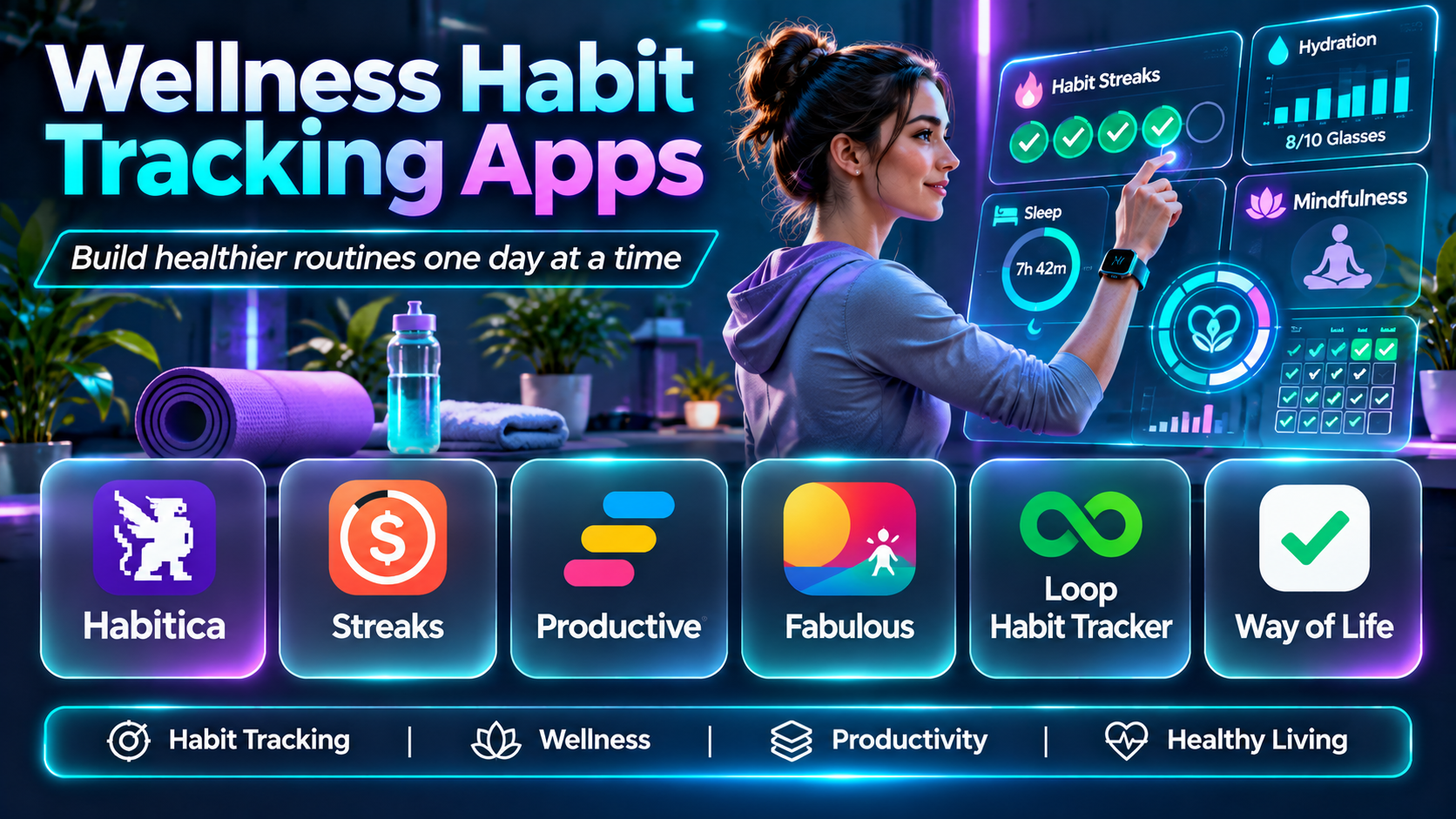
This guide compares ten wellness habit tracking apps and explains their features, limitations, and suitable uses.
What Are Wellness Habit Tracking Apps?
Wellness habit tracking apps are digital tools for organizing and monitoring recurring personal activities.
They may help users set daily or weekly goals, receive reminders, record completed actions, and review progress over time.
Some focus on general habit building. Others emphasize self-care, mindfulness, routines, or behavior change.
Habit tracking should support well-being rather than create pressure to maintain perfect records. Missed entries are normal, and a tracking streak is not a medical measure of health.
Top 10 Wellness Habit Tracking Apps
1. Habitica
Detailed Description
Habitica is a gamified habit and task management app that presents personal goals through role-playing game mechanics.
Users can create habits, daily tasks, and to-do items. Completing activities contributes to an in-app progression system, making routine tasks feel more interactive.
This approach can be useful for people who find ordinary checklists uninteresting. The game structure introduces rewards and visible progress that may encourage regular participation.
Habitica also includes social and collaborative elements. These can support accountability for users who enjoy shared challenges.
However, the game interface may distract people who prefer minimal tracking. Users should also avoid treating missed habits as personal failure simply because the app uses penalties or streak-like mechanics.
Key Features
- Gamified habit tracking
- Daily tasks
- To-do lists
- Rewards
- Progression mechanics
- Social features
Pros
- Engaging game-based experience
- Supports multiple task types
- Encourages participation
- Useful for people who enjoy rewards
Cons
- Can feel complicated
- Game mechanics may distract
- Not a clinical wellness tool
- Some features may require payment
Best For: Users motivated by games, challenges, and interactive rewards.
2. Streaks
Detailed Description
Streaks is a habit tracking app designed around repeating selected activities and maintaining consistency.
Its interface emphasizes a manageable number of recurring goals. Users can create habits, mark them complete, and review their progress.
This makes Streaks relevant to people who want a focused routine tracker without extensive project management features.
A practical example involves tracking daily walking, reading, and evening preparation. The app provides a simple record of whether each action was completed.
Its main limitation is the psychological emphasis on uninterrupted streaks. Users should interpret streaks as optional motivation rather than a measure of personal worth or overall health.
Key Features
- Recurring habits
- Completion tracking
- Reminders
- Progress visualization
- Custom schedules
- Device integrations
Pros
- Focused interface
- Easy daily tracking
- Clear progress visibility
- Suitable for simple routines
Cons
- Platform availability is limited
- Streak emphasis may not suit everyone
- Fewer advanced coaching features
- Some integrations depend on device compatibility
Best For: Apple ecosystem users who prefer a streamlined habit tracker.
3. HabitNow
Detailed Description
HabitNow combines habit tracking with task and routine management. It is designed for users who want to organize recurring habits alongside daily responsibilities.
The platform supports scheduled activities, reminders, and progress records. This can help users distinguish recurring wellness goals from one-time tasks.
For example, a user may track daily stretching while also maintaining a list of appointments and household responsibilities.
HabitNow can be useful when several routines need different schedules. Its organization features provide more structure than a basic yes-or-no checklist.
However, users seeking advanced health analysis or professional coaching will need other services. HabitNow primarily helps organize personal activities.
Key Features
- Habit tracking
- Task lists
- Recurring schedules
- Reminders
- Progress statistics
- Routine organization
Pros
- Combines tasks and habits
- Flexible scheduling
- Useful progress views
- Suitable for structured routines
Cons
- Not a medical tracking system
- Feature availability depends on platform
- Setup takes some effort
- Advanced coaching is limited
Best For: Users managing habits and everyday tasks together.
4. Loop Habit Tracker
Detailed Description
Loop Habit Tracker is an open-source Android habit tracking application focused on simplicity and long-term progress.
Users can create recurring habits, record completion, and review historical patterns. Its design avoids many of the social and commercial features found in broader wellness platforms.
Loop is particularly relevant to people who prefer a lightweight tracking experience. It can support a small number of recurring goals without requiring extensive personal information.
The app’s charts and statistics help users understand consistency over time. However, users should avoid interpreting numerical scores as direct measures of health outcomes.
Loop’s platform limitations matter for households using different operating systems. Users should also review backup and data export options before relying on it for long-term records.
Key Features
- Habit tracking
- Recurring schedules
- Progress charts
- Reminders
- Open-source software
- Local data-oriented workflows
Pros
- Lightweight design
- Open-source approach
- No unnecessary social features
- Suitable for basic tracking
Cons
- Android-focused
- Limited cross-platform synchronization
- No professional coaching
- Minimal advanced integrations
Best For: Android users seeking a simple, open-source habit tracker.
5. Fabulous
Detailed Description
Fabulous is a routine-building and wellness application designed to guide users through structured daily activities.
Its approach emphasizes behavior change through guided routines, educational content, and motivational prompts.
Instead of simply recording completed habits, Fabulous encourages users to develop sequences of activities. For example, a morning routine might include hydration, movement, and planning.
This structure can help people who struggle to decide where to begin. Guided programs reduce the need to design every routine independently.
However, the app may feel overly directed for users who already know which habits they want to track. Subscription costs and the amount of guided content should be evaluated before purchase.
Key Features
- Guided routines
- Habit building
- Motivational content
- Daily reminders
- Wellness programs
- Progress tracking
Pros
- Structured onboarding
- Guided habit development
- Wellness-oriented content
- Suitable for beginners
Cons
- Subscription costs may apply
- Less flexible than basic trackers
- Motivational style may not suit everyone
- Not personalized clinical care
Best For: Beginners who want guided wellness routines.
6. Productive
Detailed Description
Productive is a habit tracking app designed to help users organize recurring personal goals and monitor consistency.
Its interface supports habit creation, reminders, and progress review. The app is relevant to people who prefer visually organized daily routines.
Users can track activities such as reading, exercise, hydration, or personal reflection. Custom schedules make it possible to manage habits that do not occur every day.
Productive may appeal to users who enjoy structured goals and visible progress. It is less suitable for people seeking clinical health measurements or professional wellness coaching.
Before subscribing, users should review current feature limits, pricing, and data export options.
Key Features
- Habit schedules
- Reminders
- Progress statistics
- Goal organization
- Habit categories
- Routine tracking
Pros
- Visually organized
- Flexible recurring goals
- Progress feedback
- Straightforward daily use
Cons
- Premium features may require payment
- Not a clinical health platform
- Limited professional guidance
- Streak tracking may create pressure
Best For: Users who want a polished general-purpose habit tracker.
7. Habitify
Detailed Description
Habitify is a habit tracking platform focused on helping users build routines through reminders, progress records, and performance statistics.
It supports recurring habits across different areas of daily life. Users can organize activities and review how consistently they complete them.
Habitify is relevant to people who use multiple devices and want habit information available across their digital environment, subject to supported integrations.
A user might maintain separate morning, workday, and evening routines. The platform helps keep these activities organized without treating them as conventional project tasks.
Its main limitation is that detailed tracking can become an activity in itself. Users should choose a manageable number of habits and review whether tracking actually improves their routines.
Key Features
- Habit schedules
- Reminders
- Progress charts
- Routine categories
- Cross-device options
- Goal monitoring
Pros
- Structured organization
- Progress visibility
- Suitable for multiple routines
- Cross-platform orientation
Cons
- Subscription limits may apply
- Advanced analytics may be unnecessary
- Requires regular input
- No clinical interpretation
Best For: Users who want organized habit tracking across devices.
8. Finch
Detailed Description
Finch is a self-care application that combines daily goals with a virtual companion experience.
Users can complete personal activities and interact with a character that develops as they participate. This creates a gentle motivational framework around everyday self-care.
The app is particularly relevant to people who prefer encouragement and a playful interface over charts and productivity scores.
Finch can support activities such as taking breaks, practicing gratitude, or maintaining simple routines. It also provides reflection-oriented features that may help users establish regular check-ins.
However, Finch is not a replacement for professional mental health treatment. Users should evaluate whether the character-based experience supports their needs or becomes distracting.
Key Features
- Self-care goals
- Virtual companion
- Daily check-ins
- Reflection activities
- Habit reminders
- Motivational rewards
Pros
- Encouraging interface
- Gentle self-care focus
- Interactive motivation
- Suitable for simple routines
Cons
- Gamification may not appeal to everyone
- Not a therapy service
- Advanced features may require payment
- Limited clinical tracking
Best For: People who enjoy playful, supportive self-care routines.
9. Way of Life
Detailed Description
Way of Life is a habit tracking app designed to help users record behaviors and observe patterns over time.
Its approach emphasizes straightforward daily logging. Users can identify habits they want to encourage or reduce and record their progress.
The app is useful for people who prefer a clear overview of recurring behaviors. Its visual reporting can help users reflect on consistency without managing complex programs.
For example, someone may track whether they followed a planned bedtime routine or completed a short walk.
Way of Life does not provide individualized healthcare advice. Its value comes from organized personal observation and regular review.
Key Features
- Habit logging
- Positive and negative habit tracking
- Progress charts
- Notes
- Reminders
- Historical records
Pros
- Simple daily recording
- Useful visual history
- Supports different habit types
- Minimal coaching complexity
Cons
- Limited advanced integrations
- Manual logging required
- No professional guidance
- Platform capabilities vary
Best For: Users who prefer visual habit logs and simple behavior tracking.
10. Done
Detailed Description
Done is a habit tracking application designed around setting recurring goals and reviewing completion.
The app allows users to establish targets for activities they want to repeat or reduce. This makes it relevant to both positive routine building and behavior awareness.
A user may create goals for exercise, reading, or other recurring activities. The platform then provides a structured record of progress.
Done is suitable for people who want a dedicated habit tracker without a broader project management environment.
However, its current availability, subscription arrangements, and platform support should be verified. Users should also avoid treating numerical goals as universally appropriate wellness recommendations.
Key Features
- Habit goals
- Recurring targets
- Progress tracking
- Reminders
- Activity history
- Goal customization
Pros
- Focused habit management
- Flexible targets
- Clear progress records
- Suitable for recurring routines
Cons
- Current availability requires checking
- Subscription terms may vary
- Limited professional guidance
- Manual tracking is necessary
Best For: Users seeking customizable habit goals.
Comparison of the Top 10 Wellness Habit Tracking Apps
| App | Main Approach | Best For | Main Limitation |
|---|---|---|---|
| Habitica | Gamification | Game-motivated users | Complexity |
| Streaks | Consistency tracking | Simple routines | Streak pressure |
| HabitNow | Habits and tasks | Structured daily planning | Setup |
| Loop | Open-source tracking | Android users | Platform limitation |
| Fabulous | Guided routines | Beginners | Subscription |
| Productive | Visual habit tracking | General routines | Premium features |
| Habitify | Organized tracking | Multi-device users | Tracking overhead |
| Finch | Companion-based self-care | Gentle motivation | Gamification |
| Way of Life | Behavior logging | Pattern review | Manual input |
| Done | Custom habit goals | Flexible tracking | Availability |
Which Wellness Habit Tracking App Should You Choose?
Choose based on motivation and preferred complexity.
Habitica and Finch are relevant to people who enjoy playful rewards. Streaks, Loop, and Way of Life suit users seeking simpler records.
Fabulous provides guided routines, while HabitNow supports people who want habits and tasks in one place.
Practical example: Someone starting a morning routine may prefer Fabulous. An Android user tracking three straightforward habits may choose Loop. Someone who finds checklists boring may enjoy Habitica or Finch.
Seven Steps to Build a Habit Tracking System
Step 1: Choose a Small Number of Goals
- Start with one to three habits.
- Select realistic actions.
- Avoid overly ambitious targets.
Step 2: Define Each Habit Clearly
- Specify what counts as completion.
- Choose a suitable frequency.
- Keep expectations manageable.
Step 3: Select an App
- Compare interface complexity.
- Review reminders.
- Check platform compatibility.
Step 4: Configure Notifications
- Schedule reminders at useful times.
- Avoid excessive alerts.
- Test notification delivery.
Step 5: Track Consistently
- Record completed activities.
- Allow for missed days.
- Avoid inaccurate entries.
Step 6: Review Progress
- Look for practical patterns.
- Identify barriers.
- Adjust unrealistic goals.
Step 7: Simplify Over Time
- Remove unnecessary tracking.
- Keep useful routines.
- Focus on sustainable behavior.
Common Challenges
Tracking fatigue: Recording too many activities can become burdensome.
Streak pressure: A missed day may feel discouraging when apps emphasize uninterrupted progress.
Unrealistic goals: Habits should fit the user’s circumstances rather than arbitrary app targets.
Notification overload: Too many reminders may become easy to ignore.
Privacy: Personal routines and wellness information should be handled appropriately.
Frequently Asked Questions
1. What is a wellness habit tracking app?
It helps users organize recurring personal goals and record completion.
2. Can habit apps improve consistency?
They may support routines through reminders and progress visibility.
3. Are habit trackers medical tools?
Most are general wellness applications, not medical devices.
4. Should users track many habits?
Starting with a small number is often easier to maintain.
5. Are habit tracking apps free?
Some are free, while others offer subscriptions or paid versions.
6. Can users track weekly habits?
Many support flexible schedules.
7. What is gamified habit tracking?
It uses rewards, characters, or game mechanics to encourage participation.
8. Can habit trackers support sleep routines?
They can track behaviors, but they do not diagnose sleep disorders.
9. Do habit trackers integrate with wearables?
Some offer integrations, depending on platform and device.
10. Are streaks necessary?
No. Streaks are optional motivational tools.
11. Can users track habits they want to reduce?
Some apps support reduction-oriented goals.
12. Can these apps replace coaching?
They can support accountability but do not provide equivalent professional guidance.
13. What happens when a habit is missed?
Users can resume their routine and adjust goals as needed.
14. Can habit data be exported?
Export options vary.
15. Which app is best for beginners?
Simple trackers or guided routine apps may be easiest to start with.
16. How should users measure success?
Focus on sustainable routines and meaningful outcomes, not only app scores.
Final Thoughts
Wellness habit tracking apps can help people create structure around recurring goals. Their usefulness depends on simplicity, motivation, and realistic expectations.
Habitica and Finch use playful engagement. Streaks, Loop, and Way of Life provide more direct tracking.
Fabulous emphasizes guided routines, while HabitNow and Habitify offer structured organization.
The best habit tracker is one that supports daily life without creating unnecessary pressure. Consistency matters more than maintaining a perfect streak.
