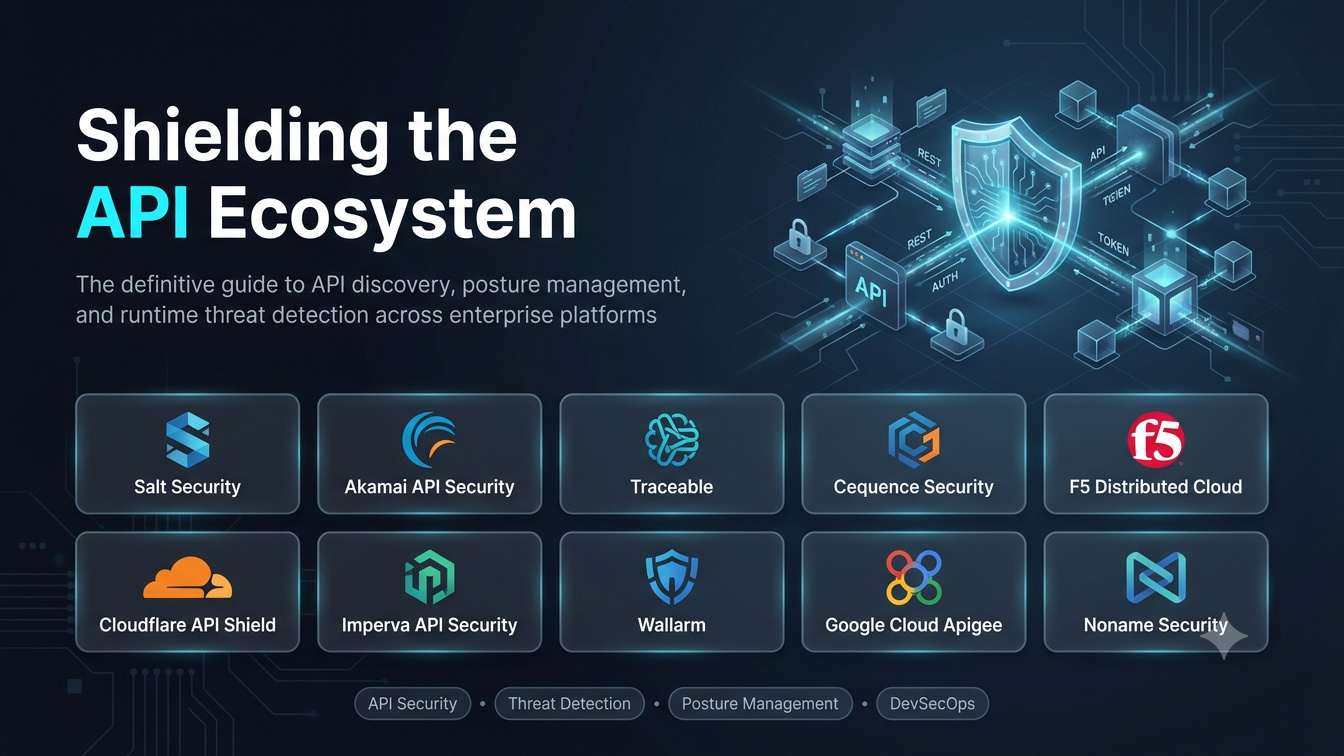
Introduction
Application Programming Interface (API) security platforms help organizations discover, monitor, assess, and protect application interfaces against security vulnerabilities and unauthorized activities. These platforms provide visibility into API environments while supporting threat detection, vulnerability management, and security policy enforcement.
Modern organizations increasingly depend on APIs to connect applications, cloud services, mobile platforms, business partners, and distributed infrastructure. As API ecosystems expand, undocumented interfaces, insecure authentication mechanisms, excessive data exposure, and authorization weaknesses can introduce significant security risks.
Traditional application security approaches frequently rely on perimeter protection, periodic vulnerability assessments, and manually maintained API inventories. Although these controls remain important, they may provide insufficient visibility into rapidly changing API environments and application-specific business logic.
Modern API security platforms combine automated API discovery, behavioral analytics, security posture assessment, sensitive data identification, runtime threat detection, and vulnerability testing. Advanced solutions also support automated remediation workflows, security policy management, and integration with enterprise security infrastructure.
Selecting an appropriate API security platform requires evaluating discovery coverage, deployment architecture, threat detection accuracy, supported API protocols, testing capabilities, and integration functionality. Organizations should also consider scalability, data privacy, operational complexity, and total ownership costs.
This guide examines ten API security platforms, including their features, benefits, advantages, limitations, and practical applications. It also provides comparison tables, software selection recommendations, a practical implementation example, common mistakes, and frequently asked questions.
What Are API Security Platforms?
API security platforms are software solutions designed to identify and reduce security risks associated with application programming interfaces. They help organizations understand their API environments, identify vulnerabilities, monitor suspicious activities, and implement appropriate security controls.
These platforms collect information from supported sources such as API gateways, application traffic, cloud infrastructure, software repositories, and application monitoring systems. The collected information helps security teams identify active APIs, assess security configurations, and investigate potentially unauthorized behavior.
API security differs from conventional perimeter security because many API vulnerabilities involve application-specific authorization, business logic, authentication, and data handling. Effective protection requires understanding how applications communicate and how users interact with exposed interfaces.
API security platforms form an important component of Application Security (AppSec), Development, Security, and Operations (DevSecOps), cloud security, and enterprise cybersecurity programs. Their effectiveness depends on appropriate deployment, accurate API inventories, secure application development, and continuous vulnerability remediation.
Common applications of API security platforms include:
- API Discovery: Security platforms identify supported APIs across monitored application environments. Automated discovery helps organizations investigate undocumented and unmanaged interfaces.
- API Inventory Management: Centralized inventories organize API endpoints, ownership information, and security characteristics. Organizations can use these inventories to improve governance and accountability.
- API Vulnerability Assessment: Supported testing capabilities identify selected authentication, authorization, configuration, and data exposure weaknesses. Security teams can coordinate corrective actions with application developers.
- Runtime Threat Detection: Behavioral monitoring identifies supported suspicious API activities and unusual interaction patterns. Security teams can investigate potentially malicious behavior using available contextual information.
- Sensitive Data Protection: Compatible platforms identify selected categories of sensitive information transmitted through APIs. Organizations can investigate unnecessary exposure and improve data handling practices.
- API Security Policy Enforcement: Supported controls establish authentication, traffic management, and security requirements. Enforcement capabilities depend on platform architecture and deployment configuration.
- Software Development Security: API testing tools integrate with supported development pipelines and application testing environments. This helps developers identify vulnerabilities before production deployment.
- Compliance and Security Governance: API security reporting supports selected organizational and regulatory requirements. Automated findings provide supporting evidence but do not independently establish compliance.
Top 10 API Security Platforms in 2026
The following selection includes dedicated API security platforms, integrated web application and API protection solutions, and developer-oriented API security testing tools. The numbering represents an editorial selection rather than an independently benchmarked performance ranking.
1. Salt Security
Short Description
Salt Security is an API security platform designed to provide API discovery, security posture management, runtime threat detection, and contextual vulnerability assessment. It helps organizations understand security risks across distributed API environments.
The platform is suitable for enterprise application security departments, cloud security teams, financial institutions, and organizations operating extensive API ecosystems. Its architecture supports monitoring through compatible application infrastructure and traffic integrations.
Its technical strength is using API interaction information and behavioral analytics to investigate potentially suspicious activities. This approach helps security teams identify risks that may not be visible through conventional perimeter controls.
Salt Security also supports API inventory management, sensitive data identification, security posture assessment, and enterprise security integrations. Organizations should evaluate supported deployment methods, traffic visibility, and available commercial features.
Key Features
- Automated API Discovery: Identifies supported APIs through monitored application environments. Discovery helps organizations investigate undocumented interfaces.
- API Inventory Management: Maintains information about discovered API endpoints and associated characteristics. Security teams can establish more consistent API governance.
- Behavioral Analytics: Evaluates supported API interaction patterns for suspicious behavior. Contextual analysis helps investigate unusual activities.
- Runtime Threat Detection: Identifies selected potentially malicious API activities. Security findings provide information supporting incident investigation.
- Sensitive Data Identification: Detects supported categories of sensitive information within monitored API traffic. Organizations can investigate potential data exposure.
- API Security Posture Management: Evaluates selected API security characteristics and configuration risks. Findings support vulnerability prioritization.
- Attack Investigation: Provides contextual information about detected API security events. Analysts can investigate affected endpoints and related activities.
- Enterprise Integrations: Connects with supported gateways, cloud infrastructure, and security systems. Integration coverage depends on deployment architecture.
- Centralized Reporting: Organizes API security findings within management interfaces. Teams can monitor security posture and remediation activities.
Benefits
- Improves enterprise API visibility.
- Identifies potentially unmanaged interfaces.
- Supports contextual threat investigation.
- Enhances sensitive data governance.
- Facilitates API vulnerability prioritization.
- Reduces fragmented security monitoring.
- Supports continuous API security management.
Pros
- Dedicated API security architecture.
- Automated API discovery.
- Behavioral threat analytics.
- Contextual security findings.
- Enterprise integration capabilities.
- Centralized API posture management.
Cons
- Commercial licensing requires budget planning.
- Effective monitoring depends on traffic visibility.
- Initial integration may require technical expertise.
- Behavioral findings require validation.
- Data collection requires privacy assessment.
Use Cases
- Enterprise API Discovery: Identify supported APIs across distributed application environments.
- API Threat Monitoring: Investigate suspicious interaction patterns.
- Sensitive Data Assessment: Identify selected API-related information exposure.
- API Security Governance: Maintain centralized API security inventories.
- Financial Application Security: Monitor supported transaction-related API environments.
- Incident Investigation: Analyze contextual API security findings.
Best For
- Enterprise application security departments.
- Financial services organizations.
- Cloud security teams.
- API security architects.
- Distributed application operators.
- Organizations requiring behavioral API monitoring.
2. Akamai API Security
Short Description
Akamai API Security incorporates dedicated API security technology associated with Akamai’s acquisition of Noname Security. It provides API discovery, posture assessment, runtime security monitoring, and supported security testing capabilities.
The platform is suitable for enterprise security departments, cloud-native organizations, application infrastructure teams, and businesses operating extensive API portfolios. Its architecture supports integrations with compatible application environments.
Its technical strength is combining API asset visibility with security posture management and contextual threat detection. This helps organizations investigate API vulnerabilities and suspicious application activities.
Akamai API Security complements Akamai’s broader application and infrastructure protection portfolio. Organizations should verify current product packaging, supported deployment methods, and available testing and enforcement capabilities.
Key Features
- API Asset Discovery: Identifies supported API endpoints across monitored environments. Organizations can investigate undocumented interfaces.
- API Inventory: Organizes discovered API assets and security characteristics. This supports enterprise API governance.
- Security Posture Assessment: Identifies selected API configuration and security weaknesses. Teams can prioritize corrective activities.
- Runtime Threat Monitoring: Evaluates supported API behavior for suspicious activities. Findings assist security investigations.
- API Security Testing: Applicable capabilities assess selected API vulnerabilities within authorized environments. Testing coverage depends on product configuration.
- Sensitive Data Monitoring: Identifies supported sensitive information categories within monitored API interactions. Organizations can investigate exposure risks.
- Cloud Infrastructure Integration: Connects with compatible cloud and application infrastructure. This supports distributed API monitoring.
- Security Workflow Integration: Supported integrations communicate findings to enterprise security systems. Teams can coordinate remediation.
- Centralized Analytics: Management interfaces organize API security information. Administrators can monitor security posture across applications.
Benefits
- Improves API asset visibility.
- Supports proactive security assessment.
- Identifies potentially vulnerable interfaces.
- Enhances runtime threat monitoring.
- Facilitates enterprise vulnerability remediation.
- Supports distributed application environments.
- Strengthens API security governance.
Pros
- Comprehensive API security capabilities.
- Automated discovery and inventory.
- Supported API security testing.
- Runtime security monitoring.
- Established enterprise security ecosystem.
- Broad integration potential.
Cons
- Commercial licensing requires evaluation.
- Product packaging may evolve.
- Deployment complexity varies by infrastructure.
- Monitoring depends on available traffic information.
- Advanced capabilities require configuration and validation.
Use Cases
- Enterprise API Inventory: Discover and organize supported API assets.
- API Posture Management: Investigate configuration and security weaknesses.
- Development Security Testing: Assess supported APIs before deployment.
- Runtime Threat Investigation: Monitor potentially suspicious API activities.
- Cloud Application Security: Assess APIs across compatible cloud environments.
- Enterprise Security Integration: Coordinate findings with existing security workflows.
Best For
- Large enterprises.
- Existing Akamai customers.
- API security specialists.
- Cloud-native organizations.
- Enterprise security operations teams.
- Organizations requiring comprehensive API security assessment.
3. Traceable
Short Description
Traceable is an API security technology platform providing API discovery, application context, security posture assessment, runtime threat detection, and supported API protection capabilities. Traceable became part of Harness following their announced combination in 2025.
The platform is suitable for application security departments, DevSecOps engineers, cloud-native development organizations, and businesses operating distributed application architectures.
Its technical strength is connecting API security information with application interaction context. This helps organizations understand relationships between application services, API endpoints, and potentially suspicious activities.
Traceable also provides supported API security testing and vulnerability management capabilities. Organizations should verify current Harness product branding, commercial arrangements, integrations, and deployment requirements.
Key Features
- Continuous API Discovery: Identifies supported API endpoints through application telemetry. Discovery helps maintain API inventories.
- Application Context Mapping: Provides information about supported relationships between application services. Security teams can investigate affected components.
- API Security Posture Assessment: Evaluates selected API security characteristics. Findings support vulnerability management.
- Runtime Threat Detection: Identifies supported suspicious API activities. Contextual information assists incident investigation.
- API Security Testing: Compatible capabilities assess selected vulnerabilities within authorized environments. Organizations can integrate testing into development workflows.
- Sensitive Data Identification: Detects supported categories of sensitive API information. This helps investigate unnecessary exposure.
- Behavioral Analysis: Evaluates supported application interaction patterns. Security teams can investigate unusual behavior.
- API Protection: Compatible deployment configurations support selected prevention mechanisms. Enforcement functionality requires validation.
- Development Integrations: Supported integrations connect API findings with development workflows. Teams can coordinate corrective activities.
Benefits
- Improves distributed API visibility.
- Connects security findings with application context.
- Supports continuous vulnerability assessment.
- Enhances runtime threat investigation.
- Facilitates DevSecOps integration.
- Improves sensitive data visibility.
- Supports coordinated application security management.
Pros
- Dedicated API security capabilities.
- Application-context security analysis.
- Supported security testing functionality.
- Runtime threat monitoring.
- Relevant cloud-native integrations.
- Development security workflow support.
Cons
- Commercial licensing requires evaluation.
- Product branding and packaging may change.
- Telemetry integration requires planning.
- Application compatibility varies.
- Runtime enforcement requires careful validation.
Use Cases
- Microservices Security: Investigate API interactions across distributed services.
- API Vulnerability Management: Assess supported API security weaknesses.
- Runtime Security Monitoring: Identify potentially suspicious application behavior.
- Development Pipeline Security: Integrate supported API testing workflows.
- Sensitive Data Governance: Investigate API-related data exposure.
- Application Security Investigation: Correlate API findings with application context.
Best For
- Cloud-native development teams.
- Application security engineers.
- DevSecOps departments.
- Microservices operators.
- Existing Harness customers.
- Organizations requiring contextual API security.
4. Cequence Security
Short Description
Cequence Security provides API security and application protection capabilities designed to address API discovery, security posture management, automated abuse, and runtime threats. Its Unified API Protection approach combines multiple API security functions.
The platform is suitable for enterprise security departments, financial institutions, e-commerce businesses, and organizations operating customer-facing APIs.
Its technical strength is combining API security assessment with behavioral detection and supported protection against automated application abuse. This helps organizations investigate suspicious interactions that may resemble legitimate application traffic.
Cequence also supports API inventory management, security testing, and configurable mitigation capabilities. Organizations should evaluate supported deployment architecture and available enforcement options.
Key Features
- API Discovery: Identifies supported APIs within monitored application environments. This improves visibility into unmanaged interfaces.
- API Inventory Management: Organizes discovered endpoints and associated characteristics. Administrators can coordinate API governance.
- API Posture Assessment: Identifies selected configuration and security weaknesses. Findings support remediation planning.
- Behavioral Threat Detection: Evaluates supported interaction patterns for suspicious behavior. Analysts can investigate potentially malicious activities.
- Automated Abuse Protection: Identifies selected automated application abuse patterns. Supported mitigation controls depend on configuration.
- API Security Testing: Applicable capabilities assess selected API security weaknesses. Testing should occur within authorized environments.
- Runtime Protection: Compatible controls mitigate supported API threats. Enforcement policies require operational validation.
- Sensitive Data Monitoring: Identifies supported categories of sensitive API information. Organizations can investigate potential exposure.
- Centralized Security Management: Organizes API security findings and protection policies. Teams can coordinate enterprise security activities.
Benefits
- Improves customer-facing API protection.
- Supports automated abuse detection.
- Enhances API asset visibility.
- Facilitates security posture assessment.
- Supports configurable threat mitigation.
- Improves vulnerability management workflows.
- Strengthens enterprise application security.
Pros
- Unified API protection approach.
- Automated abuse detection capabilities.
- Dedicated API discovery.
- Supported runtime mitigation.
- Relevant e-commerce security functionality.
- Centralized security management.
Cons
- Commercial licensing may be substantial.
- Deployment requires architecture assessment.
- Behavioral policies require tuning.
- Mitigation controls may affect legitimate users.
- Advanced functionality depends on product configuration.
Use Cases
- E-Commerce API Security: Monitor customer-facing application interfaces.
- Automated Abuse Detection: Investigate suspicious automated interactions.
- Financial Application Protection: Assess supported transaction-related APIs.
- API Inventory Management: Identify unmanaged application interfaces.
- Runtime Threat Mitigation: Apply supported protection controls.
- Application Security Governance: Coordinate API security assessment activities.
Best For
- E-commerce organizations.
- Financial institutions.
- Enterprise security teams.
- Fraud prevention departments.
- Customer-facing API operators.
- Organizations requiring API and automated abuse protection.
5. F5 Distributed Cloud API Security
Short Description
F5 Distributed Cloud API Security provides API discovery, security assessment, and protection capabilities within F5’s distributed application security ecosystem. It complements broader Web Application and API Protection (WAAP) services.
The platform is suitable for enterprise infrastructure departments, application security teams, cloud operations engineers, and organizations operating applications across multiple environments.
Its technical strength is integrating API security with distributed application delivery and protection capabilities. This supports organizations requiring centralized security controls across compatible application infrastructure.
F5’s broader portfolio includes web application protection, bot management, application delivery, and related security services. Organizations should verify applicable API security modules and commercial entitlements.
Key Features
- API Discovery: Identifies supported API endpoints from monitored application environments. Organizations can investigate unmanaged interfaces.
- API Inventory: Maintains information about discovered application interfaces. This supports centralized governance.
- API Security Assessment: Evaluates selected API security characteristics and potential weaknesses. Findings assist remediation planning.
- Schema Validation: Supported controls evaluate API requests against applicable specifications. This helps enforce defined interface requirements.
- Runtime API Protection: Compatible security policies mitigate supported malicious activities. Enforcement behavior depends on configuration.
- Web Application Firewall Integration: Complementary capabilities provide application-layer traffic protection. Organizations can coordinate multiple security controls.
- Bot Management Integration: Applicable services identify selected automated traffic patterns. This supports protection against automated abuse.
- Distributed Deployment: Supports compatible application environments across cloud and enterprise infrastructure. Deployment requirements vary.
- Centralized Policy Management: Administrators configure supported security policies through management interfaces. This facilitates consistent application protection.
Benefits
- Centralizes distributed application protection.
- Improves API security visibility.
- Supports configurable security enforcement.
- Enhances multi-cloud application security.
- Facilitates coordinated traffic protection.
- Supports automated abuse mitigation.
- Reduces fragmented application security administration.
Pros
- Established enterprise application security ecosystem.
- Integrated WAAP capabilities.
- Distributed deployment architecture.
- Centralized security policy management.
- Supported API discovery.
- Complementary application delivery functionality.
Cons
- Commercial licensing requires planning.
- Enterprise architecture can be complex.
- Advanced functionality may require additional modules.
- Security policies require ongoing maintenance.
- Deployment and enforcement require technical expertise.
Use Cases
- Multi-Cloud API Protection: Secure supported distributed application interfaces.
- Enterprise WAAP Deployment: Coordinate web application and API security controls.
- API Schema Enforcement: Validate supported application requests.
- Automated Abuse Mitigation: Investigate selected suspicious traffic patterns.
- Application Delivery Security: Integrate API protection with application infrastructure.
- Centralized Security Governance: Maintain consistent application security policies.
Best For
- Large enterprises.
- Existing F5 customers.
- Cloud infrastructure teams.
- Application delivery engineers.
- Enterprise security architects.
- Organizations requiring integrated WAAP capabilities.
6. Cloudflare API Shield
Short Description
Cloudflare API Shield provides API discovery, security monitoring, schema validation, and supported protection capabilities within Cloudflare’s application security ecosystem. It helps organizations secure APIs operating through compatible Cloudflare infrastructure.
The platform is suitable for cloud-native businesses, software development teams, application security departments, and organizations operating internet-facing APIs.
Its technical strength is integrating API protection with Cloudflare’s distributed network and application-layer security controls. Organizations can implement supported API policies alongside traffic management and web application protection.
Cloudflare API Shield also supports applicable authentication-related controls, endpoint management, and API security analytics. Available features depend on subscription plans and application configuration.
Key Features
- API Discovery: Identifies supported API endpoints from observed traffic. Organizations can investigate undocumented interfaces.
- Endpoint Management: Organizes discovered API endpoints and associated characteristics. This supports API security administration.
- Schema Validation: Evaluates supported API requests against configured specifications. Invalid requests can be handled according to applicable policies.
- Mutual Transport Layer Security: Supported mutual Transport Layer Security (mTLS) configurations authenticate compatible client connections. Certificate management remains necessary.
- JSON Web Token Validation: Applicable controls validate supported JSON Web Tokens (JWTs). Organizations must configure appropriate authentication requirements.
- Sequence Analytics: Supported capabilities investigate patterns of API endpoint interactions. This can assist analysis of unusual application behavior.
- Rate Limiting Integration: Compatible controls restrict excessive API traffic according to configured policies. Limits should reflect legitimate application requirements.
- Application Firewall Integration: Complementary Cloudflare security services provide application-layer protection. Organizations can coordinate multiple defensive controls.
- API Security Analytics: Management interfaces provide supported API traffic and security information. Teams can investigate relevant security events.
Benefits
- Improves internet-facing API protection.
- Supports automated endpoint discovery.
- Enhances API request validation.
- Facilitates centralized security enforcement.
- Supports authentication-related security controls.
- Improves visibility into API traffic.
- Reduces separate infrastructure management requirements.
Pros
- Integrated distributed network architecture.
- Supported schema validation.
- Complementary application security services.
- API discovery capabilities.
- Configurable traffic protection.
- Relevant cloud-native deployment model.
Cons
- Protection depends on compatible Cloudflare traffic routing.
- Advanced features may require commercial subscriptions.
- API schemas require maintenance.
- Authentication controls require careful configuration.
- Does not replace comprehensive business logic testing.
Use Cases
- Public API Protection: Secure supported internet-facing APIs.
- Schema-Based Security: Enforce approved API request structures.
- Client Authentication: Apply compatible certificate-based authentication controls.
- API Traffic Management: Configure supported rate-limiting policies.
- Cloud-Native Application Security: Integrate API security with distributed applications.
- Endpoint Governance: Monitor discovered API interfaces.
Best For
- Existing Cloudflare customers.
- Cloud-native development teams.
- Internet-facing API operators.
- Software-as-a-Service businesses.
- Application security engineers.
- Organizations requiring edge-based API protection.
7. Imperva API Security
Short Description
Imperva API Security provides API discovery, security assessment, and supported protection capabilities within the Imperva application security portfolio, now part of Thales. It helps organizations investigate API risks and coordinate application protection.
The platform is suitable for enterprise security departments, financial institutions, application infrastructure teams, and organizations requiring integrated web application and API security.
Its technical strength is combining API visibility with application-layer security controls and contextual security assessment. This helps organizations investigate potentially vulnerable interfaces and suspicious application activities.
Imperva API Security complements broader web application protection and data security capabilities. Organizations should verify current Thales and Imperva product packaging, deployment options, and commercial entitlements.
Key Features
- API Discovery: Identifies supported API endpoints across monitored environments. Organizations can investigate unmanaged interfaces.
- API Classification: Organizes discovered APIs according to available characteristics. Classification supports security governance.
- API Security Assessment: Evaluates selected API-related vulnerabilities and configuration risks. Findings assist remediation activities.
- Sensitive Data Identification: Detects supported categories of sensitive information within API interactions. Security teams can investigate exposure.
- Runtime API Protection: Compatible security controls address supported malicious activities. Enforcement depends on deployment configuration.
- Application Firewall Integration: Complementary web application protection capabilities evaluate supported application traffic. This provides layered security coverage.
- API Specification Management: Applicable capabilities use supported API definitions to inform security assessment. Specifications require accurate maintenance.
- Security Event Monitoring: Provides information about detected application security events. Analysts can investigate relevant findings.
- Centralized Reporting: Management interfaces organize supported security information. Organizations can coordinate enterprise security activities.
Benefits
- Improves enterprise API visibility.
- Supports layered application protection.
- Enhances sensitive data monitoring.
- Facilitates API vulnerability assessment.
- Supports centralized security governance.
- Improves security incident investigation.
- Reduces fragmented application protection workflows.
Pros
- Established enterprise security portfolio.
- Integrated web application protection.
- Dedicated API security capabilities.
- Supported sensitive data identification.
- Enterprise security integrations.
- Centralized management functionality.
Cons
- Commercial licensing requires evaluation.
- Product packaging may evolve.
- Monitoring depends on application visibility.
- Security policies require maintenance.
- Advanced deployment requires technical expertise.
Use Cases
- Enterprise API Security: Monitor supported application interfaces.
- Financial Application Protection: Assess APIs processing sensitive information.
- Integrated WAAP: Coordinate web application and API security controls.
- Sensitive Data Governance: Investigate selected information exposure risks.
- API Vulnerability Assessment: Identify supported security weaknesses.
- Enterprise Incident Investigation: Analyze API-related security events.
Best For
- Existing Imperva customers.
- Enterprise application security teams.
- Financial services organizations.
- Security governance departments.
- Application infrastructure engineers.
- Organizations requiring integrated application protection.
8. Wallarm
Short Description
Wallarm is an application and API security platform providing API discovery, vulnerability assessment, runtime protection, and application security monitoring. It supports organizations operating modern cloud-native and distributed applications.
The platform is suitable for DevSecOps engineers, cloud security departments, application developers, and organizations managing extensive API environments.
Its technical strength is combining API security visibility with supported runtime protection and vulnerability assessment capabilities. Compatible deployment options support different application infrastructure arrangements.
Wallarm also provides security event analysis, sensitive data identification, and integrations with development and operational systems. Organizations should verify supported API protocols, deployment requirements, and subscription features.
Key Features
- API Discovery: Identifies supported application interfaces through monitored traffic. Discovery improves API asset visibility.
- API Inventory Management: Organizes discovered API endpoints and related information. Teams can investigate unmanaged interfaces.
- Runtime API Protection: Supported security controls detect and mitigate selected application threats. Policies require appropriate configuration.
- API Vulnerability Assessment: Identifies supported security weaknesses affecting application interfaces. Findings assist remediation planning.
- Sensitive Data Detection: Evaluates supported API traffic for selected sensitive information categories. Organizations can investigate potential exposure.
- Cloud-Native Deployment: Compatible deployment arrangements support modern application infrastructure. Integration requirements vary by environment.
- API Protocol Support: Supports selected API technologies and communication protocols. Exact coverage should be verified.
- Security Event Analytics: Management interfaces organize detected security activities. Analysts can investigate relevant application behavior.
- DevSecOps Integrations: Supported integrations communicate findings to development and operational workflows. This facilitates coordinated remediation.
Benefits
- Improves cloud-native API protection.
- Supports automated API discovery.
- Enhances runtime threat visibility.
- Facilitates vulnerability remediation.
- Supports distributed application environments.
- Improves sensitive data governance.
- Strengthens development security integration.
Pros
- Dedicated API security functionality.
- Cloud-native deployment options.
- Supported runtime protection.
- Automated API inventory capabilities.
- Relevant development integrations.
- Centralized security monitoring.
Cons
- Commercial licensing requires planning.
- Deployment architecture requires evaluation.
- Security policies may require tuning.
- Supported protocols and features vary.
- Runtime protection requires operational testing.
Use Cases
- Cloud-Native API Security: Protect supported distributed application interfaces.
- Microservices Monitoring: Investigate API interactions across application services.
- API Vulnerability Assessment: Identify selected interface security weaknesses.
- Runtime Threat Prevention: Apply supported security controls.
- Development Security Integration: Coordinate API findings with development teams.
- Sensitive Data Assessment: Investigate supported API information exposure.
Best For
- Cloud-native organizations.
- DevSecOps engineers.
- API security specialists.
- Microservices development teams.
- Application security departments.
- Organizations requiring flexible API protection deployment.
9. 42Crunch
Short Description
42Crunch is an API security platform focused on API design assessment, security testing, and supported runtime protection. It helps organizations introduce API security requirements throughout the software development lifecycle.
The platform is suitable for API developers, application security engineers, software architects, and organizations adopting specification-driven API development.
Its technical strength is evaluating OpenAPI specifications and using defined API contracts to support security assessment and enforcement. This helps developers identify selected security weaknesses before application deployment.
42Crunch also provides supported dynamic testing, development environment integrations, and API security policy capabilities. Organizations should evaluate current product packaging and supported API specification formats.
Key Features
- API Security Audit: Evaluates supported OpenAPI specifications for security weaknesses. Developers can investigate insecure design characteristics.
- Specification-Based Assessment: Uses API definitions to evaluate supported security requirements. Accurate specifications improve assessment relevance.
- Dynamic API Testing: Compatible capabilities assess selected vulnerabilities in authorized running APIs. Testing coverage depends on application configuration.
- API Security Scoring: Provides applicable assessment scores and findings. Teams can use these results to prioritize investigation.
- Development Environment Integration: Supported integrations communicate findings within development tools. This enables earlier security feedback.
- CI/CD Integration: Compatible assessment workflows operate within development pipelines. Organizations can introduce automated API security checks.
- API Contract Enforcement: Supported protection capabilities evaluate application requests against defined API requirements. Enforcement depends on deployment configuration.
- Security Policy Management: Administrators establish supported API security assessment requirements. This facilitates consistent development practices.
- Centralized Reporting: Management interfaces organize API assessment findings. Teams can monitor security improvements across projects.
Benefits
- Identifies API security weaknesses earlier.
- Improves API design quality.
- Supports specification-driven security.
- Facilitates automated development testing.
- Enhances API contract governance.
- Reduces late-stage vulnerability remediation.
- Supports consistent API security standards.
Pros
- Strong API design security focus.
- OpenAPI specification assessment.
- Supported dynamic API testing.
- Development workflow integrations.
- Relevant contract enforcement capabilities.
- Suitable for shift-left security programs.
Cons
- Effective assessment depends on accurate API specifications.
- Commercial capabilities require applicable licensing.
- Unsupported API technologies may require complementary tools.
- Runtime deployment requires compatibility assessment.
- Business logic vulnerabilities may require manual testing.
Use Cases
- API Design Security: Evaluate API specifications during development.
- OpenAPI Governance: Establish consistent API definition requirements.
- Automated API Testing: Integrate supported assessments into development pipelines.
- API Contract Validation: Evaluate application requests against approved specifications.
- Developer Security Training: Improve understanding of secure API design.
- Enterprise API Standards: Coordinate specification-based security governance.
Best For
- API developers.
- Software architects.
- Application security engineers.
- DevSecOps departments.
- Specification-driven development teams.
- Organizations prioritizing shift-left API security.
10. StackHawk
Short Description
StackHawk is a developer-oriented application security testing platform that provides dynamic assessment capabilities for web applications and supported APIs. It focuses on integrating security testing into software development workflows.
The platform is suitable for software developers, DevSecOps engineers, application security departments, and organizations requiring automated API vulnerability assessment.
Its technical strength is enabling repeatable dynamic application security testing within compatible development and CI/CD environments. Developers can investigate findings before releasing application changes.
StackHawk primarily addresses application and API security testing rather than comprehensive production runtime API protection. Organizations requiring continuous API discovery and runtime threat prevention should evaluate complementary security platforms.
Key Features
- Dynamic Application Security Testing: Assesses supported running applications for selected security vulnerabilities. Testing requires authorized application access.
- API Security Testing: Evaluates compatible API interfaces for supported weaknesses. Coverage depends on application definitions and configuration.
- OpenAPI Integration: Supported API specifications inform application discovery and testing. Accurate definitions improve assessment coverage.
- GraphQL Testing: Compatible capabilities assess selected GraphQL application interfaces. Configuration requirements depend on application architecture.
- CI/CD Automation: Integrates supported security assessments into software delivery pipelines. Developers receive security feedback during development.
- Authenticated Testing: Compatible configurations assess approved protected application functionality. Authentication workflows require maintenance.
- Developer Remediation Guidance: Findings provide applicable vulnerability explanations. Developers can investigate appropriate corrective changes.
- Centralized Findings Management: Organizes supported security findings across applications. Teams can coordinate vulnerability remediation.
- Repeatable Scan Configuration: Supports configuration-driven assessment workflows. Organizations can establish consistent application testing practices.
Benefits
- Improves early API vulnerability detection.
- Supports automated dynamic security testing.
- Facilitates developer remediation workflows.
- Enhances software release security.
- Enables repeatable API assessments.
- Reduces manual testing administration.
- Supports integrated DevSecOps practices.
Pros
- Developer-oriented security testing.
- Strong CI/CD integration focus.
- Supported API assessment capabilities.
- Repeatable scan configurations.
- Relevant authenticated testing functionality.
- Suitable for automated development security.
Cons
- Not a comprehensive runtime API protection platform.
- Dynamic testing requires running applications.
- Complex authentication requires configuration.
- Automated findings require validation.
- Commercial costs depend on applicable plans.
Use Cases
- API Development Security: Assess supported APIs before deployment.
- Automated Dynamic Testing: Integrate scans into development pipelines.
- GraphQL Security Assessment: Evaluate compatible GraphQL applications.
- Authenticated API Testing: Assess approved protected application functionality.
- Software Release Validation: Identify selected vulnerabilities before release.
- Continuous Vulnerability Remediation: Coordinate developer investigation and corrective activities.
Best For
- Software development teams.
- DevSecOps engineers.
- API developers.
- Application security departments.
- Cloud-native software organizations.
- Businesses requiring automated API security testing.
Comparison Table: Top 10 API Security Platforms
| Tool Name | Best For | Platform(s) | Standout Feature | Pricing |
|---|---|---|---|---|
| Salt Security | Enterprise API discovery and monitoring | Cloud and supported application integrations | Behavioral API threat analytics | Commercial |
| Akamai API Security | Comprehensive enterprise API security | Cloud and supported enterprise environments | API discovery, posture management, and testing | Commercial |
| Traceable | Contextual cloud-native API security | Supported cloud and distributed application environments | Application-context API security analysis | Commercial |
| Cequence Security | API security and automated abuse prevention | Supported cloud and enterprise deployments | Unified API protection and abuse detection | Commercial |
| F5 Distributed Cloud API Security | Distributed application protection | Multi-cloud and supported enterprise infrastructure | Integrated WAAP and API security | Commercial |
| Cloudflare API Shield | Internet-facing API protection | Cloudflare network and compatible applications | Schema validation and edge-based API protection | Plan-dependent |
| Imperva API Security | Enterprise application and API protection | Supported cloud and enterprise environments | Integrated API and web application security | Commercial |
| Wallarm | Cloud-native runtime API protection | Cloud, containers, and supported application infrastructure | API discovery and runtime protection | Commercial |
| 42Crunch | API design and development security | IDEs, CI/CD, and supported runtime environments | OpenAPI specification security assessment | Free and commercial options, subject to availability |
| StackHawk | Automated API vulnerability testing | CI/CD and supported application testing environments | Developer-oriented dynamic API testing | Commercial and applicable evaluation options |
Note: Pricing, licensing, supported platforms, and available features can change. Check the official vendor websites for current plans, educational access, and regional availability.
Which API Security Platform Is Right for You?
Organizations require different combinations of API discovery, security posture assessment, runtime protection, vulnerability testing, and centralized governance. A small development team may prioritize automated API testing, whereas a large enterprise may require continuous security monitoring across thousands of application interfaces.
Selection should consider application architecture, API protocols, deployment environments, security objectives, development workflows, and available technical resources. Organizations should distinguish dedicated runtime API security platforms from development-focused testing solutions and integrated application protection services.
For Large Enterprises: Salt Security and Akamai API Security
Salt Security provides API discovery, behavioral analytics, and contextual runtime threat monitoring. Its capabilities are relevant to organizations managing extensive API portfolios.
Akamai API Security combines API discovery, security posture management, runtime monitoring, and supported security testing. It also complements Akamai’s broader application security ecosystem.
Choose Salt Security if behavioral API monitoring and contextual threat investigation are priorities. Choose Akamai API Security if comprehensive API lifecycle security and broader enterprise integration are required.
For Cloud-Native Applications: Traceable and Wallarm
Traceable connects API security information with application interaction context. Its architecture is relevant to organizations operating distributed services and microservices.
Wallarm combines API discovery, vulnerability assessment, and supported runtime protection. Its deployment options are relevant to modern cloud-native infrastructure.
Choose Traceable if application-context security analysis is essential. Choose Wallarm if flexible deployment and runtime API protection are primary requirements.
For E-Commerce Organizations: Cequence Security and Cloudflare API Shield
Cequence Security combines API protection with supported automated abuse detection. Its capabilities are relevant to customer-facing applications experiencing suspicious automated interactions.
Cloudflare API Shield provides edge-based API security, schema validation, and complementary traffic protection. It is particularly relevant to organizations already using Cloudflare infrastructure.
Choose Cequence Security if automated application abuse is a major concern. Choose Cloudflare API Shield if integrated edge security and API request validation are priorities.
For Multi-Cloud Infrastructure: F5 and Imperva
F5 Distributed Cloud API Security provides integrated application and API protection across compatible distributed environments. It supports organizations requiring centralized application security policies.
Imperva API Security combines API assessment with complementary web application protection and enterprise security capabilities. It is relevant to organizations operating established application security infrastructure.
Choose F5 if distributed application delivery and multi-cloud protection are central requirements. Choose Imperva if integration with an existing Imperva application security ecosystem is preferred.
For API Developers: 42Crunch and StackHawk
42Crunch provides specification-driven API security assessment and supported testing capabilities. Developers can identify selected security weaknesses during API design.
StackHawk provides dynamic application and API security testing within compatible development workflows. It helps developers investigate vulnerabilities affecting running applications.
Choose 42Crunch if API design security and OpenAPI governance are priorities. Choose StackHawk if automated dynamic API testing is more important.
For DevSecOps Teams: StackHawk and Traceable
StackHawk integrates repeatable application security assessments into supported software delivery pipelines. Its developer-oriented architecture supports early vulnerability remediation.
Traceable provides API discovery, application context, and supported testing and runtime monitoring capabilities. It connects development security with operational API security requirements.
Choose StackHawk if development pipeline security testing is your primary requirement. Choose Traceable if broader API lifecycle security and runtime context are necessary.
For Financial Services Organizations: Salt Security and Cequence Security
Salt Security provides behavioral API monitoring and sensitive data identification. These capabilities support investigation of security risks affecting financial application interfaces.
Cequence Security combines API protection with supported automated abuse detection and mitigation. Its capabilities are relevant to customer-facing financial services.
Choose Salt Security if API visibility and contextual threat investigation are priorities. Choose Cequence Security if automated abuse prevention and runtime mitigation are essential.
For Integrated Web Application and API Protection: F5 and Cloudflare
F5 Distributed Cloud API Security combines API security with complementary application delivery and protection services. Its architecture is relevant to complex enterprise infrastructure.
Cloudflare API Shield integrates API security controls with Cloudflare’s distributed network and application protection ecosystem. It supports compatible internet-facing application environments.
Choose F5 if complex distributed application infrastructure requires centralized security management. Choose Cloudflare if edge-based application protection aligns with your existing architecture.
Best API Security Platforms for Different Users
| User Type | Recommended Software | Why? |
|---|---|---|
| Enterprise security manager | Salt Security | API discovery and behavioral threat analytics |
| Enterprise API security architect | Akamai API Security | Comprehensive API lifecycle security capabilities |
| Microservices security engineer | Traceable | Application-context API security monitoring |
| E-commerce security specialist | Cequence Security | API protection and automated abuse detection |
| Multi-cloud infrastructure administrator | F5 Distributed Cloud API Security | Integrated distributed application protection |
| Internet-facing API operator | Cloudflare API Shield | Edge-based security and schema validation |
| Existing Imperva customer | Imperva API Security | Integration with broader application security capabilities |
| Cloud-native security engineer | Wallarm | Flexible deployment and runtime API protection |
| API software architect | 42Crunch | Specification-driven API security assessment |
| DevSecOps engineer | StackHawk | Automated dynamic API security testing |
Practical Example: Implementing API Security Across an Enterprise
Consider a digital financial services organization operating mobile banking applications, customer portals, payment services, partner integrations, and internal microservices. These applications communicate through numerous APIs processing sensitive customer and transaction information.
The organization experiences incomplete API inventories, inconsistent authentication requirements, undocumented application interfaces, and recurring vulnerability findings. Salt Security, 42Crunch, and Cloudflare API Shield represent complementary tools for API discovery, development-stage security assessment, and supported edge-based protection.
The organization establishes a phased API security implementation workflow covering asset discovery, security requirements, tool integration, vulnerability assessment, controlled protection, remediation, and continuous improvement. Implementation prioritizes application availability, customer privacy, and accurate security findings.
Step 1: Discover and Document Existing APIs
Establish an initial API inventory using application documentation, gateway configurations, software repositories, and supported discovery capabilities. Identify customer-facing, internal, partner-facing, and administrative APIs.
Compare documented interfaces with observed API activity to identify potential inventory gaps. Assign application ownership and record relevant business functions, data sensitivity, authentication requirements, and deployment environments.
Assessment checklist:
- Public API endpoints.
- Internal application interfaces.
- Partner integration APIs.
- Administrative interfaces.
- API ownership information.
- Application dependencies.
- Supported API protocols.
- Authentication mechanisms.
- Authorization requirements.
- Sensitive data processing activities.
- Deployment environments.
- Deprecated API versions.
Step 2: Establish API Security Requirements
Define organizational API security requirements according to application criticality, information sensitivity, and business functionality. Establish standards for authentication, authorization, input validation, data minimization, and secure application communication.
Review relevant API security risks and existing application development standards. Ensure that API requirements address business logic and access control rather than relying exclusively on perimeter security.
| Security Requirement | Purpose |
|---|---|
| API inventory management | Maintain visibility into active application interfaces |
| Authentication | Verify the identity of authorized API clients |
| Authorization | Restrict access according to approved permissions |
| Schema validation | Evaluate supported requests against approved API definitions |
| Sensitive data protection | Reduce unnecessary information exposure |
| Traffic management | Control excessive or inappropriate API usage |
| Security testing | Identify supported vulnerabilities before deployment |
| Incident monitoring | Investigate potentially suspicious API activities |
Security requirements should be documented and communicated to application owners. Exceptions should have defined approval procedures, responsible owners, and review dates.
Step 3: Select and Integrate API Security Platforms
Evaluate Salt Security for supported API discovery and runtime threat monitoring. Assess 42Crunch for specification-driven security assessment and Cloudflare API Shield for compatible internet-facing API protection.
Determine which applications require each security capability to avoid unnecessary duplication. Review traffic collection methods, sensitive data handling, deployment compatibility, and integration requirements.
| Platform | Implementation Role |
|---|---|
| Salt Security | API discovery, inventory, and behavioral monitoring |
| 42Crunch | API specification assessment and development security testing |
| Cloudflare API Shield | Supported schema validation and edge-based API protection |
Organizations should verify whether the selected platforms support the required application technologies and security controls. Integration architecture should minimize operational disruption and unnecessary sensitive data collection.
Step 4: Integrate API Security Into Development Workflows
Introduce API specification assessment during application design and development. Developers should investigate security findings before deploying new API versions.
Configure supported security testing within existing software delivery pipelines. Dynamic assessments should operate against authorized testing environments with representative application functionality.
| Development Stage | Security Activity | Expected Outcome |
|---|---|---|
| API design | Specification security assessment | Identification of selected design weaknesses |
| Code development | Secure coding and authorization review | Improved application security |
| Application build | Automated security assessment | Early vulnerability findings |
| Staging deployment | Authorized API security testing | Running application security findings |
| Release review | Evaluate verified security risks | Approved deployment decision |
| Production deployment | Apply validated security controls | Controlled application protection |
| Ongoing operation | Monitor API behavior and inventory | Updated security visibility |
Development teams should maintain accurate API definitions as application functionality changes. Automated security gates should be introduced only after findings and operational effects have been evaluated.
Step 5: Introduce Runtime API Monitoring and Protection
Deploy compatible API monitoring capabilities to establish visibility into application interactions. Review discovered endpoints, suspicious activities, and sensitive data findings with application owners.
Introduce supported protection policies progressively after validating legitimate application behavior. Monitor customer-facing functionality, application response times, and security event accuracy during implementation.
| Security Control | Initial Approach | Target Approach |
|---|---|---|
| API discovery | Observe supported traffic | Maintain continuously updated inventories |
| Schema validation | Review validation findings | Enforce approved schemas where appropriate |
| Authentication validation | Assess existing configurations | Apply verified authentication controls |
| Behavioral monitoring | Investigate suspicious activities | Establish contextual response procedures |
| Traffic management | Measure legitimate usage | Apply appropriate rate limits |
| Sensitive data monitoring | Identify potential exposure | Remediate unnecessary information disclosure |
Runtime protection should complement secure application design and development. Security teams must maintain rollback procedures for enforcement policies that interfere with legitimate application activity.
Step 6: Validate Findings and Coordinate Remediation
Investigate API security findings to determine affected application interfaces, underlying weaknesses, and potential business impact. Prioritize remediation according to verified risk, information sensitivity, exposure, and application criticality.
Assign corrective activities to responsible application owners. Developers should address underlying authorization, authentication, data handling, and application logic weaknesses rather than relying exclusively on temporary protection controls.
Remediation checklist:
- Confirm the affected API endpoint.
- Identify the responsible application owner.
- Validate the reported security weakness.
- Assess affected information and functionality.
- Determine potential business impact.
- Establish remediation priority.
- Apply appropriate temporary safeguards.
- Correct underlying application weaknesses.
- Update relevant API specifications.
- Execute functional and security tests.
- Verify remediation effectiveness.
- Update API security inventory records.
Organizations should correlate related findings from multiple security platforms. Duplicate findings should be associated with existing remediation activities rather than generating unnecessary corrective tasks.
Step 7: Monitor and Improve API Security
Compare post-implementation security measurements with the original API security baseline. Evaluate inventory coverage, unresolved vulnerabilities, remediation duration, security event accuracy, and operational performance.
Review API security policies whenever application architecture, authentication mechanisms, API specifications, or business functionality changes. Update monitoring integrations and security testing configurations as necessary.
Establish recurring communication between application developers, security operations teams, infrastructure administrators, and governance departments. Use verified security findings to improve secure development standards and application protection procedures.
This workflow establishes a layered API security strategy covering discovery, secure design, vulnerability testing, runtime monitoring, controlled enforcement, and continuous remediation. Organizations can improve API security while maintaining application reliability and customer experience.
Eight Common API Security Implementation Mistakes
- Maintaining Incomplete API Inventories: Undocumented and unmanaged APIs may remain outside established security controls. Combine automated discovery with application documentation and ownership reviews.
- Confusing Authentication With Authorization: Verifying a client’s identity does not establish permission to access every application resource. Implement appropriate authorization checks within application logic.
- Relying Exclusively on API Gateways: API gateways provide important traffic management and security functions but may not identify every application-specific vulnerability. Combine gateway controls with security testing and contextual monitoring.
- Ignoring Sensitive Data Exposure: APIs may return more information than required for legitimate application functionality. Review data handling practices and minimize unnecessary information disclosure.
- Enabling Protection Without Testing: Incorrect security policies may disrupt legitimate API interactions. Introduce enforcement progressively after representative testing and operational validation.
- Neglecting Deprecated API Versions: Older API versions may remain accessible after newer interfaces are deployed. Maintain retirement procedures and verify that obsolete interfaces are appropriately disabled.
- Ignoring Business Logic Vulnerabilities: Automated scanners cannot identify every application-specific authorization or business logic weakness. Combine automated testing with authorized manual security assessment.
- Failing to Verify Remediation: Closing vulnerability findings without repeat assessment may leave underlying weaknesses unresolved. Validate corrective changes and update relevant API security records.
Frequently Asked Questions (FAQs)
1. What are API security platforms?
API security platforms are software solutions designed to discover, assess, monitor, and protect application programming interfaces. They help organizations identify API-related vulnerabilities and investigate suspicious application activities.
Available capabilities vary between products. Some platforms focus on runtime protection, while others specialize in development-stage testing or API security posture management.
2. Which API security platforms are suitable for beginners?
42Crunch and StackHawk provide developer-oriented approaches to API security assessment. Cloudflare API Shield may also be accessible to organizations already using compatible Cloudflare services.
Beginners should establish accurate API documentation and understand authentication, authorization, and secure development principles. Security tools are most effective when supported by these foundational practices.
3. Are free API security tools available?
Some commercial API security platforms provide limited free tools, evaluation arrangements, or community-oriented capabilities. Open-source dynamic testing tools such as ZAP can also support selected API security assessments.
Organizations should verify current licensing and functionality. Free tools may require additional infrastructure, configuration, maintenance, and reporting systems.
4. How do API security platforms differ from traditional security tools?
Traditional security tools frequently focus on network traffic, infrastructure vulnerabilities, or general application security weaknesses. They may provide limited understanding of individual API endpoints and application-specific interactions.
API security platforms focus on interface discovery, API behavior, authentication characteristics, authorization risks, and related vulnerabilities. These capabilities complement broader enterprise security controls.
5. Which API security platforms are suitable for enterprises?
Salt Security, Akamai API Security, Traceable, Cequence Security, F5, Imperva, and Wallarm provide relevant enterprise API security capabilities. Their suitability depends on application architecture and security requirements.
Enterprise organizations should evaluate discovery coverage, supported protocols, deployment arrangements, security integrations, and operational costs. Representative testing should precede procurement.
6. Do API security platforms support cloud-native applications?
Many API security platforms support compatible cloud-native applications, microservices, containerized workloads, and distributed infrastructure. Traceable and Wallarm are particularly relevant to cloud-native security evaluation.
Actual compatibility depends on supported integrations and deployment architecture. Organizations should verify coverage across their application environments.
7. Can API security platforms integrate with CI/CD pipelines?
Platforms such as 42Crunch and StackHawk provide supported development pipeline integrations. Other comprehensive API security platforms may also offer development-stage testing capabilities.
These integrations help developers identify selected vulnerabilities before deployment. Security findings should be validated before mandatory release restrictions are introduced.
8. What does API stand for?
API stands for Application Programming Interface. It defines mechanisms through which software components communicate and exchange information.
APIs support integrations between applications, services, devices, and external systems. Security controls help ensure that these interactions occur according to approved requirements.
9. How does API security work?
API security combines authentication, authorization, input validation, secure communication, traffic management, monitoring, and vulnerability assessment. Specialized platforms provide visibility into supported API interactions and security risks.
Effective API security also requires secure application logic and appropriate data handling. No individual platform can independently eliminate every API-related vulnerability.
10. What is the difference between API security and API management?
API management focuses on publishing, organizing, monitoring, and administering application interfaces. It commonly includes gateway functionality, developer access, traffic management, and API lifecycle administration.
API security focuses on identifying and reducing security risks associated with those interfaces. Both disciplines complement each other within enterprise API governance programs.
11. Can API security platforms protect microservices?
Compatible API security platforms can monitor and assess interactions between distributed application services. Application context helps security teams investigate vulnerabilities affecting microservices architectures.
Coverage depends on telemetry availability, supported communication protocols, and deployment arrangements. Internal service communication may require additional monitoring integrations.
12. Can API security be used across different industries?
API security is relevant to financial services, healthcare, retail, telecommunications, government, manufacturing, education, and technology organizations. Any organization exchanging information through application interfaces can benefit from appropriate security controls.
Industry-specific requirements influence authentication, privacy, data retention, and reporting procedures. Automated API security platforms do not independently establish regulatory compliance.
13. What are the system requirements for API security platforms?
Requirements vary according to deployment architecture, API traffic volume, supported application technologies, and integration methods. Some platforms operate through cloud services, while others require compatible agents, gateways, or traffic integrations.
Organizations should evaluate computing resources, network connectivity, access permissions, and data handling requirements. Current vendor documentation should guide implementation planning.
14. How should organizations select an API security platform?
Begin by documenting API environments, application architecture, security objectives, and existing infrastructure. Determine whether discovery, vulnerability testing, runtime monitoring, protection, or a combination of these capabilities is required.
Evaluate shortlisted platforms using representative applications and approved security assessment scenarios. Compare coverage, detection accuracy, operational impact, integration requirements, and total operating costs.
15. What is the difference between API security and a Web Application Firewall?
A Web Application Firewall (WAF) evaluates supported application-layer traffic and applies security policies. It commonly protects web applications against selected malicious request patterns.
Dedicated API security platforms may provide additional API discovery, endpoint classification, behavioral analysis, and application-specific security assessment. Combining both approaches can improve application protection.
16. What is the OWASP API Security Top 10?
The Open Worldwide Application Security Project (OWASP) API Security Top 10 is an awareness resource describing significant API security risk categories. It includes concerns related to authorization, authentication, resource consumption, and other application security weaknesses.
Organizations can use the resource to inform security requirements and assessment activities. It does not represent a complete inventory of every possible API vulnerability.
17. What are shadow APIs?
Shadow APIs are application interfaces operating without appropriate organizational visibility, documentation, or governance. They may exist outside established security assessment and management processes.
Automated API discovery can help identify potentially unmanaged interfaces. Organizations should validate discovered assets and assign appropriate ownership.
18. What are zombie APIs?
Zombie APIs are obsolete or deprecated application interfaces that remain accessible despite no longer being intended for active use. These interfaces may retain outdated security controls or vulnerable functionality.
Organizations should maintain API retirement procedures and verify that obsolete interfaces are appropriately disabled. Continuous discovery can help identify potentially forgotten endpoints.
19. What is Broken Object Level Authorization?
Broken Object Level Authorization (BOLA) occurs when an API fails to enforce appropriate access permissions for individual application objects. This can result in unauthorized access to information or functionality.
Preventing BOLA requires appropriate server-side authorization checks. Automated security tools can support detection, but application-specific authorization testing remains important.
20. Can API security platforms automatically block attacks?
Some API security platforms provide supported runtime enforcement and automated threat mitigation capabilities. Other platforms focus primarily on monitoring, assessment, and reporting.
Organizations should verify available protection functionality and deployment requirements. Automated blocking should be introduced after appropriate testing and policy validation.
21. What is API security posture management?
API Security Posture Management refers to identifying, assessing, and managing security risks associated with API assets and configurations. It commonly includes API discovery, inventory management, risk classification, and vulnerability prioritization.
Posture management helps organizations understand existing API security weaknesses. It complements runtime monitoring and secure development practices.
22. Can API security platforms identify sensitive information?
Many platforms identify supported categories of sensitive information within monitored API interactions. These capabilities can help organizations investigate potential exposure of personal, financial, or other confidential data.
Detection accuracy depends on available traffic information and classification mechanisms. Organizations must also protect sensitive information collected by security monitoring systems.
23. How frequently should APIs undergo security testing?
API security testing should occur during development, before significant releases, and according to recurring assessment schedules. Testing frequency should reflect application criticality, exposure, and change frequency.
Organizations should also reassess APIs following significant security incidents or architectural changes. Continuous monitoring complements scheduled security testing.
24. Do API security platforms support GraphQL and gRPC?
Some API security platforms support GraphQL and Google Remote Procedure Call (gRPC) interfaces in addition to Representational State Transfer (REST) APIs. Supported discovery, testing, and protection capabilities vary substantially.
Organizations should verify protocol-specific functionality before selecting a platform. Support for one API protocol does not guarantee equivalent coverage for another.
25. Are API security platforms necessary for small businesses?
Small businesses operating customer-facing applications, software integrations, or sensitive information services can benefit from appropriate API security controls. However, a comprehensive enterprise platform may not be necessary for every organization.
Small teams should prioritize secure API development, authentication, authorization, accurate documentation, and appropriate vulnerability testing. Specialized security platforms can be introduced according to verified risks and available resources.
Final Thoughts
API security platforms help organizations improve application interface visibility, identify security vulnerabilities, investigate suspicious activities, and establish consistent security governance. Effective implementation requires accurate API inventories, secure application development, contextual monitoring, and continuous vulnerability remediation.
Salt Security and Akamai API Security provide comprehensive API discovery, security assessment, and runtime monitoring capabilities. Traceable connects API security with application context, while Cequence Security combines API protection with supported automated abuse detection.
F5 Distributed Cloud API Security and Imperva API Security provide integrated enterprise application protection capabilities. Cloudflare API Shield supports compatible edge-based API security, while Wallarm provides relevant cloud-native API discovery and runtime protection functionality.
42Crunch focuses on specification-driven API design security and supported assessment workflows, while StackHawk provides developer-oriented dynamic application and API security testing. These solutions help organizations identify selected vulnerabilities earlier in the software development lifecycle.
Before selecting an API security platform, evaluate supported API protocols, discovery coverage, vulnerability assessment capabilities, runtime protection, deployment architecture, security integrations, privacy requirements, and total operating costs. Combine specialized API security tools with secure application design, authorization controls, appropriate testing, and continuous remediation to establish a comprehensive API security program.
