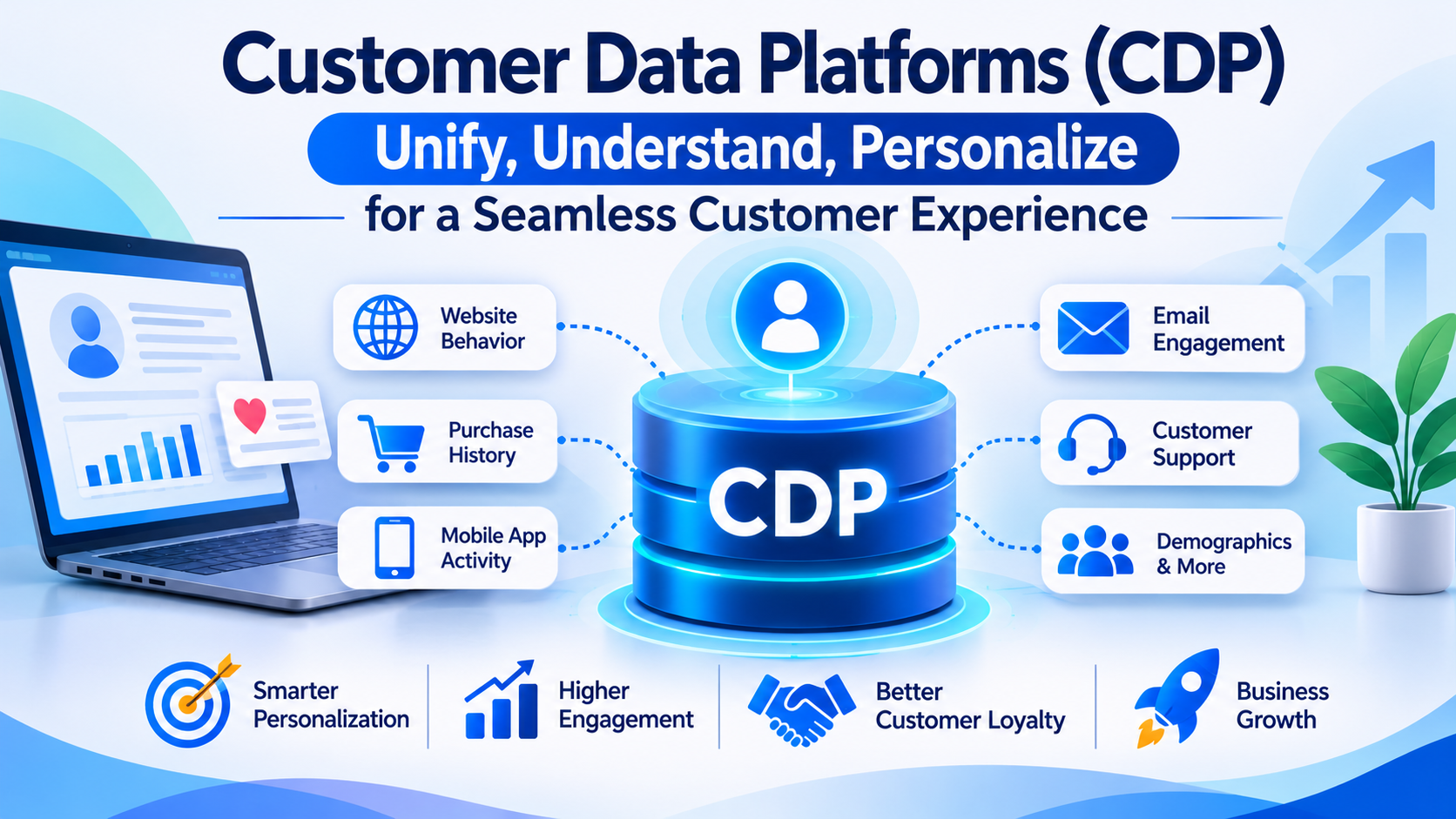
Organizations collect customer touchpoints across an expanding array of channels—mobile applications, websites, customer support tickets, email interactions, and point-of-sale terminals. Yet, despite storing massive volumes of data, data silos persist between marketing, sales, and product engineering teams. Customer Data Platforms (CDPs) solve this fragmentation by ingesting, cleaning, and resolving disparate event streams into a single, unified customer profile.
Selecting a customer data platform requires evaluating identity resolution accuracy, real-time event streaming capacity, data governance controls, and the distinction between packaged SaaS CDPs and warehouse-native architectures. This guide examines leading customer data platforms, analyzing their architectural strengths, data plumbing models, and enterprise deployment trade-offs.
Core Evaluation Criteria for CDP Architecture
Deploying a customer data platform involves balancing real-time activation speed against data security governance and storage costs.
- Identity Resolution Engine: The deterministic and probabilistic matching algorithms used to stitch anonymous browsing sessions and authenticated user IDs across devices into a single consolidated customer profile.
- Event Ingestion and Streaming Latency: The speed at which incoming telemetry from SDKs and webhooks is processed, transformed, and synced to downstream destinations (such as advertising platforms and email tools).
- Data Governance and Privacy Compliance: Built-in compliance mechanisms for managing user consent preferences, data masking, and right-to-be-forgotten requests under GDPR and CCPA.
- Warehouse-Native vs. SaaS Storage Model: Evaluating whether the CDP stores data in its own proprietary cloud database or operates directly on top of the organization’s existing cloud data warehouse (Snowflake, BigQuery, Databricks).
Leading Customer Data Platforms Compared
Different enterprise scales, data maturity levels, and engineering workflows demand distinct architectural approaches. Below is an examination of six prominent customer data platform solutions.
Twilio Segment
- Primary Focus: Real-time customer data collection, API-first event routing, and identity resolution.
- Deployment Model: Cloud SaaS.
- Technical Strengths: Massive library of pre-built source and destination connectors, robust event streaming architecture (Protocols), and reliable SDK management for mobile and web applications.
- Considerations: Costs scale heavily based on monthly tracked users (MTUs) and event volumes, which can become expensive for high-traffic consumer properties.
Teads / Adobe Real-Time CDP
- Primary Focus: Enterprise customer journey orchestration and data governance within the Adobe ecosystem.
- Deployment Model: Adobe Experience Cloud SaaS.
- Technical Strengths: Deep integration with enterprise marketing tools, robust B2B and B2C account-based marketing (ABM) profiles, and advanced enterprise-grade consent management.
- Considerations: Highly complex implementation requirements that demand specialized technical administrators and significant software licensing investments.
Hightouch
- Primary Focus: Warehouse-native reverse ETL and audience activation.
- Deployment Model: Direct integration with cloud data warehouses.
- Technical Strengths: Eliminates data duplication by building customer profiles directly inside Snowflake, BigQuery, or Redshift, synchronizing segments to operational tools via Reverse ETL.
- Considerations: Requires an existing, well-maintained data warehouse infrastructure and basic SQL knowledge to define user traits and audience models.
Census
- Primary Focus: Operational analytics and warehouse-native customer data activation.
- Deployment Model: Cloud SaaS connected to data warehouses.
- Technical Strengths: Exceptional developer experience, robust version control for audience definitions (Syncs-as-Code), and seamless integration with modern data stack tools.
- Considerations: Focuses primarily on activating data stored in the warehouse rather than real-time client-side event collection and SDK tracking.
RudderStack
- Primary Focus: Developer-first, warehouse-native customer data pipeline and event streaming.
- Deployment Model: Self-hosted (Kubernetes) or Cloud-managed.
- Technical Strengths: Complete data ownership, ability to run pipelines within private cloud infrastructure to satisfy strict security mandates, and open-source foundation.
- Considerations: Requires internal DevOps resources to deploy and maintain self-hosted pipeline components.
Treasure Data
- Primary Focus: Massive-scale enterprise customer data integration and offline data unification.
- Deployment Model: Cloud SaaS.
- Technical Strengths: Exceptional capacity for handling petabyte-scale batch data processing, uniting offline retail data with online digital behaviors.
- Considerations: Interface and querying workflows can feel less agile compared to modern event-streaming SaaS alternatives.
Comparative Technical Overview
| Platform | Primary Architecture | Data Storage Approach | Identity Resolution | Best Suited For |
| Twilio Segment | API-first event router | Segment Cloud | Deterministic & Algorithmic | Product and marketing teams needing fast event routing |
| Adobe Real-Time CDP | Enterprise marketing suite | Adobe Cloud | Advanced B2C/B2B profiles | Large enterprises deeply invested in Adobe tools |
| Hightouch | Warehouse-native Reverse ETL | Data Warehouse (Snowflake/BQ) | SQL-defined models | Data-mature teams centralizing data in warehouses |
| Census | Reverse ETL & data activation | Data Warehouse | SQL-driven segmentation | Analytics engineers activating warehouse data |
| RudderStack | Developer pipeline & CDP | Warehouse or Cloud SaaS | Configurable identity stitching | Engineering teams wanting open-source data control |
| Treasure Data | Enterprise batch & stream CDP | Treasure Data Cloud | Massive-scale profile merging | Enterprises combining massive offline and online datasets |
Architectural Implementation and Privacy Considerations
Deploying a CDP requires addressing complex data hygiene, identity merging, and regulatory compliance challenges.
- Identity Resolution Conflicts: Merging anonymous browser sessions with known user profiles can lead to accidental profile pollution if two different users share a device. Implement strict validation rules for identity stitching.
- Data Minimization: Avoid flooding the CDP with raw, unformatted event logs. Clean and filter telemetry at the ingestion layer to prevent accumulating low-value data that inflates monthly platform costs.
- Privacy and Consent Enforcement: Ensure the CDP integrates directly with Consent Management Platforms (CMP) to automatically drop tracking events or withhold user profiles if consent is revoked.
Summary and Selection Framework
Choosing the right customer data platform depends heavily on your data infrastructure maturity, engineering resources, and security posture.
- Choose Twilio Segment when product and marketing teams need rapid, out-of-the-box event collection and instant routing to hundreds of SaaS marketing destinations.
- Choose Hightouch or Census when an organization has already invested in a cloud data warehouse (Snowflake, BigQuery) and prefers a warehouse-native approach that avoids data duplication.
- Choose RudderStack when engineering teams require open-source flexibility and the ability to host event pipelines within private cloud infrastructure.
- Choose Adobe Real-Time CDP when operating within a complex enterprise ecosystem requiring advanced B2B account structures and deep marketing suite integration.
Evaluate your data storage strategy, engineering bandwidth, and privacy mandates before committing to a customer data platform architecture.
