Corporate training has long suffered from an attention deficit. For decades, the default mechanism for professional development was the multi-hour seminar or the sprawling, compliance-heavy e-learning module. Employees were expected to sit through forty-five minutes of unskippable video, absorb complex product specs or regulatory policies in a single sitting, and retain that information long enough to pass a multiple-choice quiz.
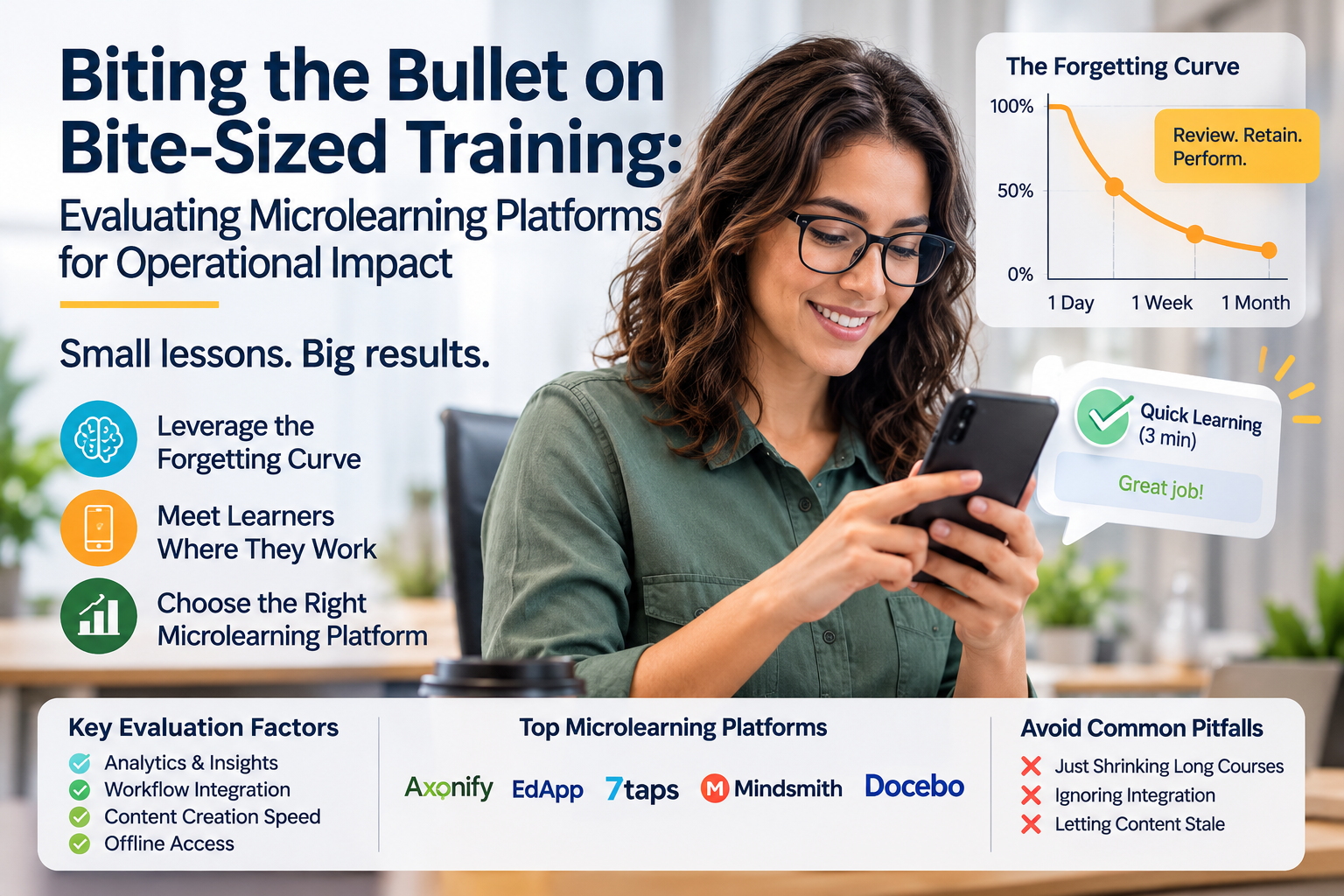
In practice, human memory rarely works that way. By the end of the week, the vast majority of that transferred knowledge is forgotten—a psychological phenomenon known as the forgetting curve.
When organizations realize that traditional, heavy-format training fails to drive actual behavioral change or retention, they frequently pivot toward microlearning platforms. These systems deliver targeted, bite-sized educational content—usually in units lasting three to five minutes—designed to fit naturally into the flow of daily work.
Yet, adopting a microlearning platform requires more than just breaking long PDF manuals into shorter paragraphs. Choosing the right software requires understanding how cognitive science, mobile delivery architecture, and content authoring workflows intersect.
The Cognitive Mechanics of Bite-Sized Training
To understand why microlearning platforms have gained traction, one must look at how modern professionals consume information. Knowledge workers and frontline employees alike are constantly interrupted by notifications, messages, and urgent operational demands. Asking them to block out two hours for formal training is a recipe for low completion rates and superficial engagement.
Microlearning respects operational constraints by leveraging three proven psychological principles:
- Spaced Repetition: Instead of cramming information into a single annual session, microlearning platforms use algorithmic scheduling to push brief reinforcement quizzes or refreshers to an employee over weeks and months, anchoring concepts in long-term memory.
- Cognitive Load Reduction: By isolating a single concept per learning unit (e.g., explaining a single security protocol or a new product pricing tier in a three-minute interaction), the brain processes and stores the information without cognitive fatigue.
- Just-in-Time Access: Employees can search a mobile-optimized microlearning repository to find an immediate answer to a specific problem right when they need it on the sales floor or at their desk.
The Architectural Divide in Microlearning Software
The microlearning software market generally splits into three distinct operational philosophies:
1. Mobile-First Reinforcement and Gamified Apps
These platforms are engineered specifically for smartphones and tablets, prioritizing high daily engagement through gamification, streak counters, leaderboards, and rapid-fire quiz formats. They are exceptionally effective for retail staff, field service crews, and distributed sales teams.
- The Trade-Off: Excellent for habit-building and trivia retention, but less suited for deep, complex technical training or multi-chapter academic courses.
- Representative Examples: Axonify, EdApp, 7taps.
2. Comprehensive Learning Experience Platforms (LXPs) with Micro Modules
Enterprise platforms that combine broad learning management capabilities with robust microlearning authoring tools. They allow organizations to curate both bite-sized content and longer formal courses within a single ecosystem.
- The Trade-Off: More robust enterprise reporting and compliance tracking, but can lack the hyper-focused, consumer-grade mobile simplicity of dedicated microlearning apps.
- Representative Examples: Docebo, Degreed.
3. AI-Powered Content Creation and Micro-Authoring Tools
Specialized platforms designed to help instructional designers or subject matter experts spin up bite-sized modules in minutes using artificial intelligence prompts and modular templates.
- The Trade-Off: Incredibly fast content generation, but rely on third-party distribution or LMS integration to deliver the actual learning experience to end users.
- Representative Examples: 7taps, Mindsmith.
5 Leading Microlearning Platforms Compared
| Platform | Primary Specialization | Standout Operational Advantage | Core Limitation |
| Axonify | Frontline workforce training & knowledge retention | Powerful blend of daily microlearning, task management, and communication tailored for deskless workers | Enterprise-focused pricing and configuration require dedicated administrative setup |
| EdApp | Mobile-first gamified microlearning | Extensive free template library, intuitive authoring, and built-in gamification that drives high completion rates | Advanced custom graphic design and complex branching logic require additional effort |
| 7taps | Rapid AI-powered micro-content creation | Allows anyone to turn existing documents or prompts into mobile-friendly micro-courses in minutes | Focused primarily on content creation; lacks heavy enterprise compliance management features |
| Mindsmith | Collaborative AI-authored microlearning | Excellent browser-based authoring with strong focus on collaborative team editing and AI assistance | Smaller ecosystem and integration catalog compared to legacy enterprise platforms |
| Docebo | Enterprise LXP with microlearning support | Bridges formal LMS compliance tracking with modern microlearning and content curation workflows | Higher total cost of ownership and steeper implementation curve for smaller businesses |
Critical Evaluation Factors Beyond the Mobile App
When evaluating microlearning vendors, buyers are often hypnotized by slick mobile interfaces and gamified animations. Experienced learning and development leaders look deeper into structural mechanics:
- Completion and Analytics Granularity: Do you only track whether an employee clicked “finish,” or does the platform provide actionable analytics showing which specific concepts or questions employees struggle with most across teams?
- Integration With Daily Workflow Tools: The most successful microlearning tools live where employees already work—whether that is integrated directly into Slack, Microsoft Teams, or a mobile point-of-sale terminal.
- Content Creation Velocity: How easily can your internal subject matter experts update bite-sized lessons? If updating a two-minute product update requires hiring an external instructional designer, your training program will quickly become stale.
- Offline Accessibility for Frontline Teams: For retail workers, delivery drivers, or manufacturing crews with intermittent Wi-Fi, offline caching on mobile devices is mandatory for consistent participation.
Common Implementation Mistakes to Avoid
Rolling out a microlearning platform without an underlying content strategy leads to expensive digital noise. Watch out for these common missteps:
- Shrinking Long Courses Without Redesigning Them: Simply taking a boring, thirty-minute compliance video and chopping it into ten three-minute clips does not make it microlearning. Bite-sized content requires a distinct instructional design approach optimized for rapid comprehension.
- Treating Microlearning as a Standalone Silo: If microlearning is completely disconnected from your core performance management or onboarding workflows, employees will view it as an optional distraction rather than an operational resource.
- Ignoring Content Maintenance: The primary advantage of microlearning is agility. If product specifications or company policies change and your micro-modules are not updated immediately, employees will lose trust in the platform’s accuracy.
Making the Final Decision
Choosing a microlearning platform requires evaluating your audience’s daily environment and your training objectives.
If your organization manages a large, deskless frontline workforce in retail, logistics, or hospitality that needs rapid daily reinforcement and high engagement, a mobile-first platform like Axonify or EdApp is exceptionally effective. If your primary challenge is empowering internal subject matter experts to rapidly spin out bite-sized, AI-assisted training content without friction, an agile authoring tool like 7taps or Mindsmith provides an immediate solution.
Begin by auditing your training bottlenecks: determine whether your teams struggle with long-form attention spans, slow access to operational knowledge, or poor retention of critical procedures, and select the platform built to deliver clarity in minutes rather than hours.
