Introduction
Deciding what to cook every day can become a surprisingly demanding household task. Meal planning involves selecting recipes, considering schedules, checking available ingredients, and preparing shopping lists.
Without an organized system, households may repeatedly purchase the same ingredients, forget planned meals, or rely on last-minute decisions.
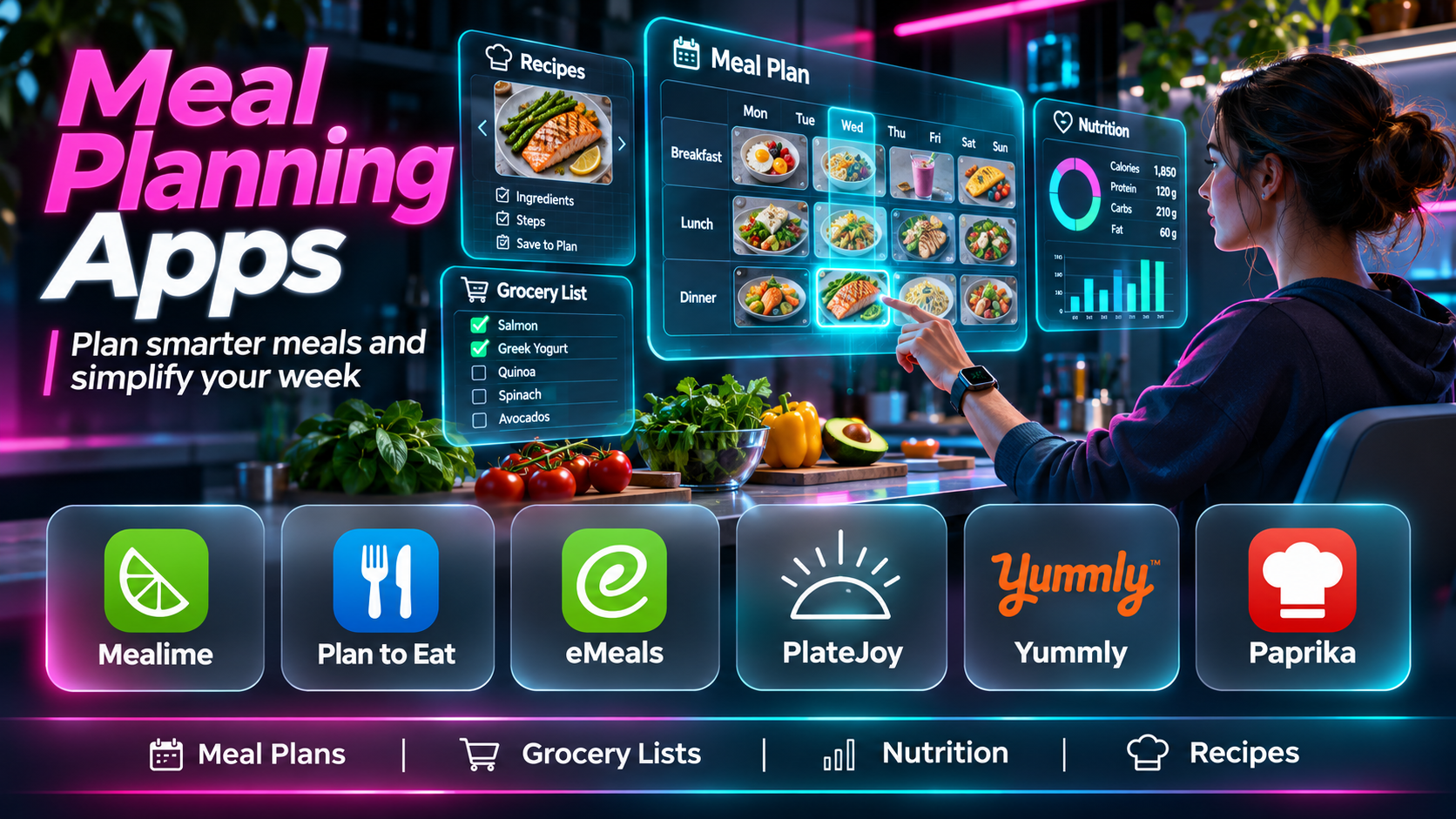
Meal planning apps bring these activities together. They help users schedule meals, discover recipes, create grocery lists, and maintain reusable plans.
Some applications specialize in personalized menus, while others emphasize household collaboration or recipe-based grocery planning.
The best meal planning software should reduce everyday decision-making while remaining flexible enough for changing schedules, food preferences, and budgets.
This guide compares ten meal planning applications, their strengths and limitations, and the situations in which each is most useful.
What Are Meal Planning Apps?
Meal planning apps are digital applications that help individuals and households organize meals over a defined period.
They may provide meal calendars, recipe collections, ingredient lists, shopping tools, and personalized recommendations.
Some platforms automatically suggest meals based on preferences. Others let users build plans manually from saved recipes.
Typical capabilities include:
- Weekly and monthly meal calendars.
- Recipe discovery and storage.
- Grocery list generation.
- Household collaboration.
- Dietary preference settings.
- Serving-size adjustments.
- Ingredient organization.
- Meal plan templates.
- Nutrition estimates.
- Budget-conscious meal selection.
- Reusable menus.
- Shopping list synchronization.
Meal planning apps are not necessarily nutrition counseling services. Their recommendations should be evaluated according to individual circumstances.
Top 10 Meal Planning Apps
1. Mealime
Short Description
Mealime is a meal planning application designed to simplify the process of choosing meals and shopping for ingredients.
It is particularly relevant to people who want an organized weekly cooking plan without manually assembling every recipe and grocery list.
The application allows users to select meals based on supported preferences and generates shopping information for the chosen recipes.
A busy professional might use Mealime to choose several dinners, review the ingredients, and complete grocery shopping before the workweek begins.
Its strength is the connection between meal selection and practical preparation. Instead of functioning only as a recipe discovery platform, Mealime helps users move from deciding what to cook to obtaining the necessary ingredients.
The application is especially useful for beginners who prefer guided planning.
However, users who want complete control over a large personal recipe archive may find its workflow less flexible than dedicated recipe organizers. Available recipes and premium capabilities should also be reviewed.
Key Features
- Personalized Meal Selection: Offers recipes based on supported preferences.
- Meal Planning: Helps organize meals for upcoming days.
- Grocery Lists: Combines ingredients from selected recipes.
- Recipe Instructions: Provides preparation guidance.
- Serving Adjustments: Supports different household sizes.
- Dietary Preferences: Offers relevant recipe filtering.
- Meal Variety: Helps users explore different dishes.
- Shopping Workflow: Connects plans with grocery preparation.
- Mobile Access: Supports planning from a smartphone.
Benefits
Mealime reduces the effort involved in choosing recipes and preparing grocery lists.
Pros
- Beginner-friendly.
- Convenient shopping lists.
- Structured meal selection.
- Clear recipes.
- Useful preference settings.
Cons
- Less flexible for extensive custom recipe libraries.
- Premium features may require payment.
- Recipe selection depends on the platform.
- Dietary suitability requires individual review.
Use Cases
Weekly dinner planning, grocery preparation, and everyday home cooking.
Best For: Beginners who want guided meal planning.
2. Plan to Eat
Short Description
Plan to Eat combines personal recipe management, a meal calendar, and grocery list creation.
It is particularly suitable for households that already have favorite recipes and want to organize them into repeatable plans.
Users can import recipes, place them on a calendar, and generate shopping lists from the selected meals.
For example, a family might create a rotating collection of weekday dinners and schedule those recipes around work and school commitments.
The platform is valuable because it preserves control over recipe selection rather than relying primarily on algorithmic recommendations.
However, the initial process of collecting recipes requires time. Its subscription model should also be considered.
Key Features
- Recipe importing.
- Meal calendar.
- Drag-and-drop planning.
- Grocery list generation.
- Recipe collections.
- Ingredient management.
- Reusable meal plans.
- Recipe search.
- Household planning support.
Benefits
Plan to Eat creates a repeatable system for cooking from favorite recipes.
Pros
- Strong recipe-to-calendar workflow.
- Useful grocery planning.
- Reusable recipes.
- Flexible meal selection.
- Household-friendly.
Cons
- Subscription required.
- Initial setup takes effort.
- Less focused on automatic recommendations.
- Grocery entries may need adjustment.
Use Cases
Family meal schedules, personal recipe planning, and recurring grocery preparation.
Best For: Households planning from their own recipes.
3. Eat This Much
Short Description
Eat This Much is an automated meal planning platform that generates meal suggestions around user-defined nutritional preferences and targets.
It is relevant to users who prefer algorithmic assistance when building meal plans.
The application can organize meals around available dietary settings and generate corresponding grocery information.
A person following a nutrition plan developed with a qualified professional might use Eat This Much to explore meals that fit specified requirements.
Its automation can reduce the time required to assemble menus manually.
However, generated plans may include unfamiliar ingredients, impractical recipes, or nutritional targets that are not appropriate for every user.
Automated recommendations should therefore be treated as planning suggestions rather than individualized clinical advice.
Key Features
- Automated meal generation.
- Nutrition target settings.
- Dietary preferences.
- Recipe suggestions.
- Meal schedule creation.
- Grocery lists.
- Serving adjustments.
- Meal replacement options.
- Planning automation.
Benefits
Eat This Much helps users generate structured menus with less manual selection.
Pros
- Automated planning.
- Nutrition-oriented customization.
- Flexible meal substitutions.
- Grocery integration.
- Useful for structured workflows.
Cons
- Recommendations require review.
- Some recipes may be impractical.
- Premium functionality.
- Not a replacement for a dietitian.
Use Cases
Automated weekly menus, structured meal preparation, and nutrition-oriented planning.
Best For: Users seeking automatically generated meal plans.
4. eMeals
Short Description
eMeals is a meal planning service that provides organized recipe selections and shopping-related workflows.
It is particularly relevant to families that prefer choosing from prepared menus rather than creating every plan independently.
Users can select recipes from available meal plans and organize shopping around those choices.
A household may use eMeals to simplify the recurring process of deciding what to prepare for dinner.
Its planning approach can reduce repetitive decision-making and make grocery preparation more predictable.
However, recipe suitability, retail integrations, and available plan categories depend on the service and region.
Users should verify whether its shopping options match the stores they regularly use.
Key Features
- Prepared meal plans.
- Recipe selections.
- Grocery list generation.
- Meal plan categories.
- Shopping integrations where supported.
- Family-oriented planning.
- Recipe instructions.
- Menu variety.
- Mobile meal access.
Benefits
eMeals reduces the time needed to assemble a weekly menu.
Pros
- Ready-made plans.
- Family-friendly.
- Grocery planning.
- Recipe variety.
- Convenient weekly structure.
Cons
- Subscription costs.
- Regional shopping limitations.
- Less control over recommendations.
- Recipe preferences vary.
Use Cases
Family dinner planning and recurring grocery shopping.
Best For: Families preferring prepared meal plans.
5. Samsung Food
Short Description
Samsung Food combines recipe discovery, saving, meal planning, and shopping-related functionality.
It is relevant to people who want to discover new dishes while maintaining an organized meal calendar.
Users can collect recipes from supported sources and build plans around meals they want to prepare.
For example, someone exploring international cuisines may save recipes and schedule them throughout the week.
Its discovery capabilities are useful for people who become bored with repeatedly preparing the same dishes.
However, recommendations are not always aligned with available ingredients, cooking skills, or local grocery options.
Users should also review feature availability and subscription requirements.
Key Features
- Recipe discovery.
- Recipe saving.
- Meal planning.
- Shopping lists.
- Recipe collections.
- Personalization features.
- Recipe sharing.
- Ingredient-related tools.
- Supported ecosystem integrations.
Benefits
Samsung Food combines cooking inspiration with practical planning.
Pros
- Broad recipe discovery.
- Integrated planning.
- Collection management.
- Shopping features.
- Modern interface.
Cons
- Recommendations vary.
- Some advanced features may be paid.
- Regional differences.
- Imported recipes require checking.
Use Cases
Recipe discovery, weekly menus, and meal inspiration.
Best For: Users who enjoy discovering new meals.
6. AnyList
Short Description
AnyList is a grocery list application with integrated recipe and meal-planning features.
It is particularly useful for households where multiple people participate in shopping and cooking.
A family may save recipes, schedule meals, and maintain a shared grocery list that updates as members add or remove items.
This collaborative workflow can reduce duplicate purchases and confusion about what ingredients are needed.
AnyList’s greatest strength is practical household coordination rather than sophisticated nutritional recommendations.
Users seeking automatically generated dietary plans may prefer another platform.
Key Features
- Shared grocery lists.
- Recipe collections.
- Recipe importing.
- Meal calendar.
- Ingredient-to-list conversion.
- Household synchronization.
- Shopping categories.
- Recipe organization.
- Supported device access.
Benefits
AnyList connects meal decisions with collaborative grocery shopping.
Pros
- Strong shared lists.
- Household coordination.
- Recipe integration.
- Simple shopping workflows.
- Convenient synchronization.
Cons
- Some features are premium.
- Limited automatic meal generation.
- Less detailed nutrient analysis.
- Household-focused design.
Use Cases
Shared grocery planning and family meal coordination.
Best For: Households with multiple shoppers.
7. Paprika Recipe Manager
Short Description
Paprika Recipe Manager is a recipe organization application that includes meal-planning and grocery-list functionality.
It is relevant to people who prefer planning meals around recipes they have already collected.
A home cook may import recipes from favorite websites, organize them into categories, and schedule meals using the built-in planning tools.
The application also supports ingredient scaling and shopping preparation.
Paprika’s value lies in creating a durable personal cookbook that supports meal planning without depending heavily on external recipe recommendations.
However, its interface is primarily designed for recipe management, and users seeking automatic weekly menus may find it less suitable.
Key Features
- Recipe importing.
- Recipe categories.
- Meal planning.
- Grocery lists.
- Ingredient scaling.
- Cooking timers.
- Recipe search.
- Personal notes.
- Supported synchronization.
Benefits
Paprika turns a personal recipe library into a practical meal-planning resource.
Pros
- Strong recipe storage.
- Useful meal calendar.
- Grocery integration.
- Ingredient scaling.
- Personal customization.
Cons
- Platform purchasing considerations.
- Limited automated recommendations.
- Recipe setup requires effort.
- Less collaborative than shared-list specialists.
Use Cases
Planning from favorite recipes and maintaining household cooking routines.
Best For: Experienced home cooks with established recipe collections.
8. PlateJoy
Short Description
PlateJoy is a personalized meal-planning service oriented toward helping users build menus around preferences and lifestyle requirements.
Its approach emphasizes guided meal selection rather than purely manual scheduling.
Users may configure available preferences and review meal suggestions intended to fit those settings.
For example, a household looking to organize dinners around ingredient preferences may use a personalized plan as a starting point.
The platform’s structured planning model can help people who struggle with meal selection.
However, users should verify current service availability, subscription conditions, and supported integrations before committing.
Personalized menus are also not substitutes for professional nutrition advice when medical dietary requirements are involved.
Key Features
- Personalized meal planning.
- Dietary preference settings.
- Recipe suggestions.
- Shopping list support.
- Serving adjustments.
- Meal selection workflows.
- Menu organization.
- Ingredient planning.
- Guided meal preparation.
Benefits
PlateJoy supports users who prefer guided, preference-based menu creation.
Pros
- Personalized approach.
- Meal selection assistance.
- Shopping support.
- Structured menus.
- Useful for planning beginners.
Cons
- Subscription considerations.
- Availability should be checked.
- Limited suitability for complex clinical needs.
- Recommendations may need modification.
Use Cases
Personalized weekly menus and household meal organization.
Best For: Users wanting guided meal recommendations.
9. MealBoard
Short Description
MealBoard is a meal-planning application that combines recipe storage, grocery lists, and pantry-related organization.
It is particularly relevant to users who want a structured approach to meal planning and ingredient management.
A household may maintain a collection of recipes, assign dishes to a calendar, and use shopping lists to prepare for upcoming meals.
Its pantry-related capabilities can also help users think about ingredients already available at home.
This makes MealBoard appealing to organized cooks who want to coordinate recipes and groceries in one workflow.
However, users should confirm platform compatibility and synchronization options before choosing it.
Key Features
- Meal calendar.
- Recipe storage.
- Recipe importing.
- Grocery lists.
- Pantry management.
- Ingredient organization.
- Recipe categorization.
- Meal planning.
- Shopping preparation.
Benefits
MealBoard connects recipes, pantry information, and grocery planning.
Pros
- Pantry-related functionality.
- Integrated meal calendar.
- Recipe organization.
- Shopping lists.
- Useful household planning.
Cons
- Platform limitations.
- Initial setup effort.
- Less emphasis on recipe discovery.
- Synchronization features may vary.
Use Cases
Pantry-aware meal planning and structured grocery preparation.
Best For: Organized households managing recipes and ingredients.
10. Cooklist
Short Description
Cooklist is a food inventory and meal-planning application designed to help users organize groceries and plan meals around available ingredients.
Its emphasis on household food inventory distinguishes it from traditional recipe calendar applications.
A user may review available ingredients, explore compatible recipes, and identify groceries needed for upcoming meals.
This can be particularly useful for households trying to reduce forgotten ingredients or repeated purchases.
Cooklist’s value depends on maintaining reasonably accurate inventory information.
If users do not update pantry records, meal suggestions may be based on ingredients that are no longer available.
Key Features
- Pantry inventory tracking.
- Recipe suggestions.
- Meal planning.
- Grocery lists.
- Ingredient organization.
- Food inventory management.
- Shopping workflows.
- Recipe discovery.
- Household planning support.
Benefits
Cooklist connects meal decisions with available food inventory.
Pros
- Pantry-focused planning.
- Ingredient awareness.
- Grocery organization.
- Recipe suggestions.
- Useful for reducing duplicate purchases.
Cons
- Inventory requires maintenance.
- Availability of integrations varies.
- Recommendations depend on accurate records.
- Some functionality may be paid.
Use Cases
Pantry management, ingredient-based cooking, and grocery planning.
Best For: Households planning meals around available ingredients.
Meal Planning Apps Comparison Table
| App | Primary Strength | Best For | Main Limitation |
|---|---|---|---|
| Mealime | Guided meal planning | Beginners | Limited custom-library emphasis |
| Plan to Eat | Recipe-based calendar | Families | Subscription |
| Eat This Much | Automated menus | Structured planners | Recommendations need review |
| eMeals | Prepared meal plans | Busy households | Regional shopping support |
| Samsung Food | Recipe discovery | Explorers | Variable recommendations |
| AnyList | Shared grocery planning | Families | Premium features |
| Paprika | Personal cookbook planning | Home cooks | Limited automation |
| PlateJoy | Personalized menus | Guided planners | Availability and subscription |
| MealBoard | Pantry and recipe planning | Organized cooks | Platform limitations |
| Cooklist | Inventory-based planning | Pantry-focused households | Inventory maintenance |
How to Choose the Right Meal Planning App
1. Decide How Much Automation You Need
Some people want automatic suggestions, while others prefer complete control over their menus.
2. Evaluate Household Size
Choose tools that support appropriate serving quantities and shared planning.
3. Consider Existing Recipes
If you already have a large recipe collection, prioritize importing and reusable calendars.
4. Review Grocery List Features
Look for ingredient consolidation, quantities, and convenient shopping organization.
5. Assess Dietary Preferences
Confirm that filters and suggestions are relevant without treating them as individualized medical guidance.
6. Consider Food Inventory
Pantry tracking may be valuable if reducing duplicate purchases is a priority.
7. Examine Recipe Practicality
A useful plan should reflect cooking skills, available equipment, and realistic preparation times.
8. Check Collaboration
Shared calendars and grocery lists can reduce household coordination problems.
9. Compare Pricing
Review subscriptions, free features, and device restrictions.
10. Test a Complete Planning Cycle
Choose several meals, generate a shopping list, cook the recipes, and assess whether the workflow saves time.
Best Meal Planning App by User Type
| User Type | Recommended App | Reason |
|---|---|---|
| Beginner | Mealime | Guided planning |
| Family with saved recipes | Plan to Eat | Recipe-based scheduling |
| Automated planner | Eat This Much | Generated menus |
| Busy family | eMeals | Prepared plans |
| Recipe explorer | Samsung Food | Discovery |
| Shared household | AnyList | Collaborative shopping |
| Dedicated home cook | Paprika | Personal recipe library |
| Guided-plan user | PlateJoy | Preference-based menus |
| Pantry organizer | MealBoard | Inventory-related tools |
| Ingredient-focused cook | Cooklist | Pantry-based suggestions |
Practical Example: Planning One Week of Family Dinners
Step 1: Identify how many meals need planning.
Step 2: Review the household schedule and note evenings with limited cooking time.
Step 3: Check ingredients already available.
Step 4: Select a meal-planning application.
Step 5: Choose a mixture of familiar and new recipes.
Step 6: Confirm serving sizes and ingredient requirements.
Step 7: Schedule meals around available preparation time.
Step 8: Generate a combined grocery list.
Step 9: Remove ingredients already in the pantry.
Step 10: Complete shopping and prepare ingredients where practical.
Step 11: Adjust the plan if schedules change.
Step 12: Save successful meals for future weeks.
Frequently Asked Questions
1. What is a meal planning app?
Software for organizing upcoming meals and related shopping.
2. Can meal planning apps generate menus?
Some can generate suggestions automatically.
3. Do they include recipes?
Most provide recipes or support recipe importing.
4. Can they create grocery lists?
Many generate lists from selected meals.
5. Can families share meal plans?
Some support shared planning and shopping.
6. Are meal planning apps free?
Some offer free features; others require payment.
7. Can I reuse a weekly menu?
Many platforms support reusable plans.
8. Do apps support dietary preferences?
Several offer preference settings.
9. Can apps plan vegetarian meals?
Many provide vegetarian recipes and filters.
10. Are meal plans medically personalized?
Not necessarily.
11. What is automatic meal planning?
Generating meal suggestions based on selected criteria.
12. Can meal apps track pantry items?
Some offer inventory functionality.
13. Can meal planning reduce food waste?
It may help when plans reflect actual ingredients and consumption.
14. Can I plan only dinners?
Yes, many apps support flexible meal schedules.
15. Do apps calculate serving sizes?
Some adjust recipe quantities.
16. Can I import recipes?
Many support importing from websites.
17. What is a meal calendar?
A schedule showing planned meals.
18. Can I change meals after planning?
Most applications allow adjustments.
19. Are grocery lists automatically accurate?
They may need manual review.
20. Do apps support regional cuisines?
Coverage varies by platform.
21. Can I plan around leftovers?
Yes, manually or through supported planning features.
22. What is batch cooking?
Preparing multiple portions or ingredients in advance.
23. Can meal apps help with batch cooking?
They can help organize recipes and shopping.
24. Do meal planners require nutrition tracking?
No.
25. Can I share grocery lists?
Some applications support collaborative lists.
26. What is pantry-aware planning?
Choosing meals using ingredients already available.
27. Are recipe recommendations always suitable?
No. Users should review them.
28. Can apps connect with grocery retailers?
Some support selected integrations.
29. How often should meal plans be updated?
As often as household schedules and preferences require.
30. Which meal planning app is best?
The best option depends on household needs, recipe preferences, and desired automation.
Final Thoughts
Meal planning apps can reduce the effort involved in choosing recipes and preparing groceries.
Mealime and eMeals offer guided approaches, while Plan to Eat and Paprika emphasize personal recipe collections. Eat This Much provides automated planning, and AnyList supports shared shopping.
Samsung Food offers discovery, PlateJoy emphasizes personalized menus, and MealBoard and Cooklist connect meal decisions with ingredient organization.
The best platform is the one that makes planning easier while allowing enough flexibility for real household schedules.
