Introduction
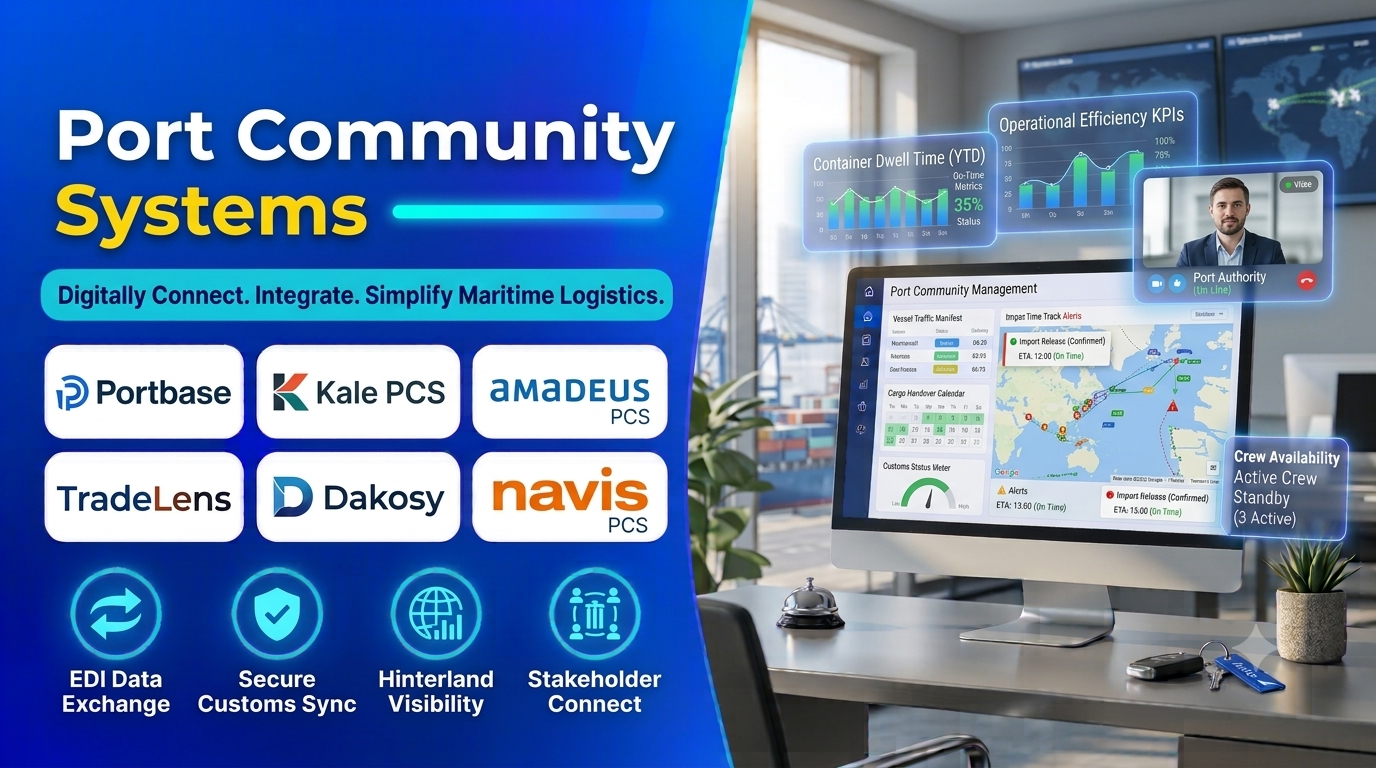
Port Community Systems play an important role across major industries in 2026 and what these tools help professionals achieve. Modern international seaports, marine logistics hubs, port authorities, and multimodal transport operators rely heavily on these digital platforms to manage multi-stakeholder data exchange, streamline customs clearances, and optimize port call coordination. Organizations across port operations, customs brokerage, maritime freight forwarding, and terminal management depend on these solutions to maintain seamless, paperless trade environments.
The limitations and costs of traditional or manual methods compared to using Port Community Systems platforms are substantial. Fragmented email threads, paper manifests, duplicate data entry across disparate systems, and uncoordinated truck queues often result in extended vessel turnaround times, heavy port congestion, and costly demurrage penalties. These legacy approaches create administrative bottlenecks and leave port communities reacting to supply chain friction rather than operating with transparent efficiency.
Modern capabilities offered by Port Community Systems extend far beyond basic electronic data interchange messaging. Contemporary platforms feature centralized national single-window integration, real-time cargo tracking visibility, secure role-based document exchange, and predictive port call optimization tools. These capabilities enable port ecosystems to transition from isolated paper-based handoffs to fully synchronized digital collaboration.
Why choosing the right tool matters for both beginners and experienced professionals cannot be overstated. Selecting a platform that aligns with internal technical proficiency ensures high user adoption and minimizes deployment delays. An intuitive system empowers freight forwarders to submit customs declarations quickly while giving port authorities deep analytical visibility.
Key selection factors include port cargo volume, budget constraints, technical skill level, and national customs integration needs. A mid-sized emerging port requires a lightweight, rapid-deployment modular community platform, whereas a massive global port ecosystem needs deep terminal operating system integration, multi-agency single-window compliance, and advanced API connectivity. Evaluating these parameters carefully prevents costly software migrations and ensures long-term operational success.
This guide provides a comprehensive overview of everything covered in this resource, including detailed tool breakdowns, a comparative evaluation table, and practical selection frameworks. Readers will also find a step-by-step operational workflow demonstration, extensive frequently asked questions, and closing recommendations. Every section is designed to give technical and managerial professionals actionable insights into modern port community technology.
What Is a Port Community System?
A Port Community System (PCS) is a neutral, open electronic platform that enables intelligent and secure information exchange between public and private stakeholders in a seaport community. It functions by compiling customs declarations, vessel arrival notices, cargo manifests, manifest releases, and transport orders into a single accessible interface. This digital framework replaces fragmented communication channels with structured, auditable community data exchange.
How it works conceptually involves allowing parties involved in trade and transport—such as shipping lines, freight forwarders, terminal operators, customs authorities, and hauliers—to input standardized information at a single entry point. When data is submitted, the system automatically validates customs declarations, distributes cargo release messages to terminal operating systems, and coordinates landside gate appointments without requiring redundant manual paperwork.
A concrete step-by-step example of a professional using a Port Community System involves a customs broker submitting an electronic cargo manifest for an incoming container vessel through a single-window portal. The system automatically verifies customs compliance, issues a digital cargo release message to the terminal operator, and notifies the drayage trucking company that the container is ready for gate pickup—all within minutes and without a single paper document.
How this improves efficiency is by eliminating redundant data entry, accelerating vessel and truck turnaround times, and providing absolute transparency across the supply chain. Port authorities gain instant visibility into cargo dwell times, terminal congestion trends, and trade velocity through real-time analytics dashboards. This data-driven approach reduces operational expenses and ensures strict compliance with national trade regulations.
Common applications of Port Community Systems include:
- National & Regional Seaports: Unifying public and private maritime stakeholders within a single trusted trade facilitation platform.
- Customs & Regulatory Compliance: Automating electronic customs declarations, manifest processing, and regulatory approvals.
- Terminal & Berth Coordination: Managing vessel scheduling, berth planning, and pilotage/towage service requests.
- Landside & Gate Logistics: Coordinating truck appointment systems, gate-in/gate-out notifications, and container drayage workflows.
- Freight Forwarding & Logistics: Exchanging bills of lading, delivery orders, and cargo release statuses securely among supply chain partners.
- Maritime Trade Facilitation: Supporting paperless trade initiatives and digital port governance across import, export, and transit workflows.
Top 10 Port Community Systems in 2026
1. Portbase
Portbase is developed by Portbase and operates as the premier, highly mature national port community platform connecting the Dutch ports of Rotterdam and Amsterdam. Its core purpose is to provide national port ecosystems with a unified digital data exchange infrastructure that aligns terminal operators, shipping lines, freight forwarders, customs authorities, and hinterland transport networks. The software sets the global standard for national port community collaboration.
Target users include port authorities, customs agencies, container terminal operators, shipping agents, and multimodal transport providers. Primary workflows involve managing port call optimizations, submitting digital customs documentation, and coordinating hinterland container transport. Teams use its platform to govern national port logistics.
Its standout technical advantage is its mature event-led orchestration and data reuse model that allows stakeholders to input trade data once and reuse it across multiple public and private workflows without redundant re-keying, backed by robust API connectivity.
Collaboration, ecosystem, and scalability strengths make Portbase ideal for mature national port ecosystems, large container ports, and multi-stakeholder trade communities. The platform offers open application programming interfaces, standardized message formats, and secure role-based access control. Portbase provides structured community governance and expert support.
– National Port Community Data Exchange: Unifies public and private maritime stakeholders across major national seaports. – Event-Led Operational Orchestration: Coordinates inbound and outbound operational updates synchronously across supply chain participants.– Digital Customs and Regulatory Alignment: Streamlines electronic customs declarations and manifest clearance workflows.
- Hinterland Transport Coordination: Connects port terminals smoothly with rail, barge, and road haulage providers.
- Secure Role-Based Access Control: Restricts data viewing and submission privileges securely based on stakeholder organizational roles.
- Reusable Data Architecture: Eliminates duplicate data entry by allowing trade documents to populate multiple systems.
- Advanced API Ecosystem Connectivity: Connects port community services smoothly with enterprise logistics platforms.
- Comprehensive Port Performance Reporting: Generates operational analytics tracking trade velocity and turnaround efficiencies.
– Establishes absolute national port community cohesion with a mature, data-reuse exchange model.– Minimizes mismatched operational updates and cargo handoff delays through event-led orchestration. – Accelerates customs clearance and regulatory submissions with standardized electronic messaging.
- Enhances hinterland transport fluidity by coordinating barge, rail, and truck movements proactively.
- Backed by decades of Dutch port digitization expertise and robust community governance.
- Scales effectively to support massive national container throughput volumes and diverse trade participants.
– Mature national port community data exchange and data reuse model. – Event-led operational orchestration reducing cross-stakeholder friction. – Comprehensive customs and hinterland transport connectivity.
- Secure role-based access governance.
- Advanced API ecosystem integration framework.
- Proven high-volume reliability.
– Tailored specifically for mature national port ecosystems, making its out-of-the-box templates deeply tied to European trade models. – Implementation requires structured community alignment across diverse private and public stakeholders. – Ongoing operational pricing models reflect national infrastructure standards.
- Heavy reliance on community-wide data sharing compliance for maximum utility.
- Custom non-standard port modifications require specialized integration planning.
- National Port Ecosystem (Rotterdam/Amsterdam): Managing multi-stakeholder trade data exchange and customs clearance.
- Container Terminal Operations: Coordinating vessel arrivals, gate moves, and hinterland transport handoffs.
- Customs and Regulatory Authority: Processing electronic manifests and trade declarations securely.
- Multimodal Transport Hub: Synchronizing barge, rail, and trucking connections for seamless cargo flow.
- Freight Forwarding Network: Exchanging bills of lading and cargo release orders across supply chain partners.
- Port Authority Operations Desk: Overseeing berth planning and port call efficiency metrics.
- Port Authority Executives
- National Customs Officials
- Container Terminal Operations Managers
- Shipping Line Agents
- Freight Forwarding Directors
- Multimodal Transport Logistics Leads
2. Kale Logistics Port Community System
Kale Logistics Port Community System is developed by Kale Logistics Solutions and operates as a cloud-based, multi-award-winning trade facilitation and port community platform. Its core purpose is to digitize maritime trade ecosystems in emerging and established markets, connecting government authorities, port terminals, customs, and logistics providers into a single cloud-native window. The software brings modular trade agility to global ports.
Target users include port authorities, customs agencies, terminal operators, freight forwarders, and shipping lines. Primary workflows involve managing B2G, G2B, and B2B trade documentation, processing electronic customs declarations, and coordinating cargo gate movements. Teams use its cloud platform to drive rapid port digitization.
Its standout technical advantage is its highly modular, cloud-native architecture combined with comprehensive B2G (Business-to-Government), G2B (Government-to-Business), and B2B stakeholder exchange capabilities that can be deployed rapidly across diverse international trade corridors.
Collaboration, ecosystem, and scalability strengths make Kale Logistics PCS ideal for emerging market ports, ambitious port authorities, and digital-first trade communities seeking modular deployment. The platform offers open application programming interfaces, mobile-responsive portals, and secure electronic payment modules. Kale Logistics provides structured implementation consulting and 24/7 global support.
– Cloud-Native Modular Architecture: Deploys trade facilitation and port community modules rapidly on scalable cloud infrastructure. – Comprehensive B2G, G2B, and B2B Exchange: Connects government regulators, businesses, and logistics providers in a unified workspace. – Single-Window Trade Facilitation: Simplifies import, export, and transit regulatory compliance via single-entry points.
- Electronic Customs Declarations: Automates data exchange between private traders and national customs authorities.
- Terminal Operating System (TOS) Integration: Connects port community messaging smoothly with diverse terminal systems.
- Secure Electronic Payments: Processes port fees, customs duties, and terminal charges via integrated payment gateways.
- Mobile-Responsive Portals: Permits stakeholders to manage cargo documentation and approvals via mobile devices.
- Global Country Scalability: Configures regional tax, trade, and language requirements smoothly across international borders.
– Accelerates port digital transformation rapidly with cloud-native modular deployment. – Bridges the gap between government authorities and private logistics providers with comprehensive B2G/B2B exchange. – Simplifies trade compliance and customs declarations through centralized single-window portals.
- Enhances cargo visibility and supply chain velocity across multi-modal transport legs.
- Backed by recognized international trade facilitation awards and agile implementation consulting.
- Scales effectively from regional ports to national multi-country trade ecosystems.
– Cloud-native modular design enabling rapid deployment.– Comprehensive B2G, G2B, and B2B stakeholder exchange coverage. – Single-window trade facilitation simplifying regulatory compliance.
- Seamless Terminal Operating System (TOS) integration.
- Secure electronic payments and billing modules.
- Responsive implementation support.
– Ongoing subscription and transaction pricing require careful budgeting for smaller port authorities. – Implementation of national single-window projects requires structured stakeholder alignment workshops.
- Heavy reliance on cloud connectivity for centralized portal access.
- Custom national customs system integrations require specialized API development.
- Heavy competition in specific European markets from established regional incumbents.
- Emerging Market Port Authority: Digitizing trade documentation and customs clearance for national economic growth.
- Multi-Terminal Port Community: Unifying disparate terminal operating systems under a single cloud community roof.
- National Customs Agency: Automating electronic manifest processing and trade revenue collection.
- Freight Forwarding Association: Exchanging shipping instructions and bills of lading electronically across members.
- Inland Container Depot (ICD): Coordinating gate-in/gate-out logistics and customs holds.
- Port Logistics Corridor: Facilitating seamless multi-modal cargo transit from sea to hinterland.
- Port Authority Digital Leaders
- National Customs Directors
- Terminal Operations Managers
- Freight Forwarding Executives
- Maritime Trade Facilitation VPs
- Logistics Solution Architects
3. DAKOSY Port Community System
DAKOSY Port Community System is developed by DAKOSY and operates as the premier, highly secure logistics and customs data exchange platform connecting the Port of Hamburg and broader European transport networks. Its core purpose is to provide connected logistics communities with standardized electronic messaging, customs clearance automation, and port call optimization tools that accelerate cargo throughput across major European gateways. The software sets the German standard for port and customs connectivity.
Target users include port authorities, customs agencies, freight forwarders, shipping lines, and terminal operators. Primary workflows involve executing digital customs declarations, managing import/export cargo releases, and coordinating hinterland transport logistics. Teams use its platform to govern secure European trade execution.
Its standout technical advantage is its exceptionally deep integration with European customs authorities and enterprise freight forwarding platforms, providing lightning-fast message exchange via EDIFACT and modern APIs with uncompromising security and compliance auditing.
Collaboration, ecosystem, and scalability strengths make DAKOSY ideal for European ports, logistics hubs, and import/export communities demanding rigorous regulatory compliance. The platform offers open application programming interfaces, standardized Electronic Data Interchange (EDI) messaging, and robust audit trail coverage. DAKOSY provides 24/7 technical support and expert consulting.
– European Customs and Regulatory Connectivity: Connects trade workflows directly with European customs clearance systems. – Standardized EDI and API Messaging: Translates diverse proprietary stakeholder formats into unified electronic messages. – Import, Export, and Transit Workflows: Manages comprehensive cargo lifecycle documentation across maritime and landside legs.
- Terminal and Carrier Integration: Synchronizes data smoothly with terminal operating systems and shipping line portals.
- Uncompromising Data Security: Adheres strictly to European data protection standards and cybersecurity protocols.
- Audit Trail Compliance Architecture: Records all system interactions and document submissions for immutable traceability.
- Fast-Response Technical Helpdesk: Maintained by experienced maritime and customs IT support specialists.
- Multimodal Transport Support: Extends port community data exchange smoothly into rail and trucking hinterlands.
– Accelerates European customs clearance and regulatory submissions with deep institutional connectivity. – Eliminates manual data translation errors by standardizing diverse EDI and API messaging formats. – Secures trade data exchanges with uncompromising European cybersecurity and audit compliance architecture.
- Enhances cargo throughput across major European port and hinterland transport corridors.
- Backed by decades of Hamburg port IT leadership and reliable operational stability.
- Scales effectively to support high-volume container import/export communities.
– Deep European customs and regulatory connectivity. – Standardized EDI and API messaging excellence. – Rigorous data security and audit trail compliance architecture.
- Comprehensive import, export, and transit workflow coverage.
- Reliable technical support helpdesk.
- Proven high-volume reliability in major European gateways.
– Heavily anchored in European customs and trade regulations, requiring adaptation for non-European trade zones. – Enterprise software pricing and fee structures are tailored for commercial European logistics hubs.
- Implementation requires structured onboarding and EDI message mapping.
- Heavy reliance on electronic message stability for real-time cargo release workflows.
- Custom non-standard port modifications require engineering coordination.
- Port of Hamburg Community: Managing high-volume import/export customs clearance and port logistics.
- European Freight Forwarding Network: Executing electronic customs filings and cargo release orders.
- Terminal Operating Company: Receiving advance cargo data and customs release status updates.
- Carrier Shipping Agency: Submitting electronic manifests and vessel clearance documents.
- Hinterland Rail Operator: Coordinating container pickup clearances from seaport terminals.
- European Customs Brokerage: Managing multi-country trade documentation and regulatory filings.
- European Customs Managers
- Port Operations Directors
- Freight Forwarding Executives
- Terminal Operations Supervisors
- Shipping Line Agents
- Logistics IT Specialists
4. MCP Destin8
MCP Destin8 is developed by Maritime Cargo Processing (MCP) and operates as the trusted, high-volume port and customs-connected community system serving major ports across the United Kingdom. Its core purpose is to provide UK port communities with secure cargo tracking, electronic customs release, and trade document exchange that keeps British maritime commerce flowing efficiently. The software serves as the technological backbone of UK port trade execution.
Target users include UK port authorities, customs brokers, freight forwarders, shipping lines, and container terminal operators. Primary workflows involve managing cargo release processes, submitting electronic customs manifests, and tracking container movements. Teams use its platform to govern UK import/export trade.
Its standout technical advantage is its high-volume cargo and customs data processing engine optimized specifically for UK customs and port authority frameworks, ensuring instantaneous cargo release messaging and seamless port-to-hinterland handoffs.
Collaboration, ecosystem, and scalability strengths make MCP Destin8 ideal for UK-centric port communities, British terminal operators, and UK import/export supply chains. The platform offers open application programming interfaces, robust system interfaces, and dedicated UK-based customer support. MCP provides structured onboarding and regulatory compliance training.
– UK Customs and Port Connectivity: Integrates trade workflows directly with UK customs and port authority systems. – High-Volume Cargo Data Processing: Manages massive container import/export volumes with lightning-fast processing speeds. – Streamlined Cargo Release Processes: Automates cargo release messaging between shipping lines, customs, and terminals.
- Electronic Manifest Submission: Processes sea and air freight manifests securely prior to vessel arrival.
- Multi-Stakeholder Collaboration Portals: Connects freight forwarders, hauliers, and terminal operators in a unified workspace.
- Audit-Ready Compliance Logging: Retains immutable historical trade records for government compliance reviews.
- Dedicated UK Helpdesk Support: Maintained by British maritime and customs IT support professionals.
- Robust API Integration Framework: Connects port community messaging smoothly with external enterprise logistics tools.
– Streamlines UK import/export trade operations with dedicated British customs and port connectivity. – Accelerates cargo release processes and container handoffs across UK port terminals. – Handles high-volume cargo data processing reliably without system latency.
- Enhances stakeholder collaboration between UK freight forwarders, shipping lines, and terminal operators.
- Backed by decades of UK maritime trade expertise and responsive local customer support.
- Scales effectively across major British port gateways and inland clearance depots.
– Dedicated UK customs and port authority connectivity.– High-volume cargo data processing performance. – Streamlined cargo release and manifest workflows.
- Robust audit-ready compliance logging.
- Responsive UK-based helpdesk support.
- Proven reliability across British maritime gateways.
– Specifically tailored for UK customs and trade regulations, making it specialized rather than globally universal. – Ongoing subscription and transaction fees are structured for UK commercial shipping budgets.
- Implementation requires alignment with UK port community operating standards.
- Heavy reliance on UK customs system message exchanges for live cargo release.
- Custom non-UK modifications require specialized integration planning.
- Major UK Port Gateway: Managing high-volume container import/export customs clearance and cargo release.
- UK Freight Forwarding House: Submitting electronic manifests and tracking container clearance statuses.
- British Container Terminal: Receiving automated customs release messages and coordinating gate pickups.
- UK Shipping Line Agency: Managing vessel clearance documents and cargo discharge workflows.
- Inland Clearance Depot (UK): Coordinating container transport logistics and customs holds.
- UK Customs Brokerage: Managing import declarations and port documentation.
- UK Customs Managers
- British Port Operations Directors
- Freight Forwarding Executives
- Terminal Operations Supervisors
- UK Shipping Line Agents
- Logistics IT Specialists
5. Portnet
Portnet is developed as a national trade facilitation and port community platform designed to connect government agencies, port authorities, and commercial logistics providers into a single national window. Its core purpose is to modernize national trade corridors, paperless customs clearance, and port governance across sovereign trade economies. The software brings national single-window digital transformation to sovereign maritime states.
Target users include national government trade ministries, customs agencies, port authorities, importers/exporters, and logistics providers. Primary workflows involve coordinating public-private trade documentation, executing national single-window customs clearances, and monitoring port community analytics. Teams use its national platform to govern sovereign trade corridors.
Its standout technical advantage is its public-private national trade architecture that unifies government regulatory agencies (customs, immigration, quarantine) with private maritime operators (terminals, shipping agents, forwarders) in a single sovereign platform, establishing complete national trade transparency.
Collaboration, ecosystem, and scalability strengths make Portnet ideal for national port authorities, government trade ministries, and sovereign economic zones seeking unified single-window digital infrastructure. The platform offers open application programming interfaces, multi-agency workflow orchestration, and secure national database encryption. Portnet provides government-grade deployment consulting and support.
– National Single-Window Trade Facilitation: Unifies government agencies and private logistics providers in a sovereign portal. – Public-Private Partnership Architecture: Bridges government regulatory compliance seamlessly with commercial port operations. – Comprehensive Customs and Border Coordination: Automates manifest processing across customs, immigration, and health authorities.
- Importers and Exporters Portal: Simplifies trade submission documentation for commercial cargo owners.
- Port Authority Governance Tools: Oversees national port call efficiency, vessel clearances, and berth utilization.
- Secure Government-Grade Encryption: Protects sovereign trade data and customs records with advanced security protocols.
- National Analytics Dashboards: Generates macroeconomic trade velocity and port productivity reports for government policy planning.
- Multi-Agency Workflow Orchestration: Routes trade documents through required government inspection approvals automatically.
– Transforms national trade corridors into paperless, efficient digital ecosystems. – Bridges government regulatory oversight seamlessly with private commercial port operations. – Accelerates sovereign trade velocity by automating multi-agency customs, immigration, and quarantine approvals.
- Enhances national economic visibility with macroeconomic trade analytics dashboards for government planners.
- Backed by government-grade security and robust public-private partnership governance.
- Scales effectively across national seaport networks and sovereign economic zones.
– National single-window architecture unifying government and private stakeholders. – Comprehensive customs, immigration, and border agency coordination. – Government-grade security and data encryption standards.
- Port authority governance and berth optimization tools.
- Macroeconomic trade analytics and reporting suites.
- Proven public-private partnership alignment.
– National infrastructure projects require long-term government stakeholder commitment and multi-year implementation funding. – Custom government agency workflow integrations require extensive bureaucratic and technical coordination.
- Ongoing operational pricing is structured for sovereign national deployment budgets.
- Heavy reliance on government policy enforcement for community-wide user adoption.
- Complex multi-agency policy changes require administrative coordination.
- Sovereign National Trade Corridor: Governing single-window customs clearance and port community logistics.
- National Customs and Border Ministry: Processing electronic trade manifests and border security clearances.
- National Port Authority Network: Overseeing multi-port call efficiency, vessel clearances, and national maritime statistics.
- Importers and Exporters Association: Submitting unified trade documentation to government authorities.
- National Logistics Federation: Coordinating freight forwarding and transport documentation workflows.
- Government Economic Planning Board: Analyzing national trade velocity and port productivity metrics.
- National Trade Ministers
- Customs and Border Control Directors
- National Port Authority Executives
- Importers and Exporters Association Leads
- Government IT Architects
- Maritime Policy Analysts
6. Envision Port Community System
Envision Port Community System is developed by Envision Enterprise Solutions and operates as a configurable, modern cloud-based port community and smart port ecosystem platform. Its core purpose is to provide ports with a neutral, highly configurable electronic platform that seamlessly connects operational, regulatory, and logistics stakeholders into a single high-performance information exchange environment. The software brings smart port digital twin readiness and cloud agility to port communities.
Target users include port authorities, container terminal operators, shipping lines, freight forwarders, and hinterland transport providers. Primary workflows involve managing vessel/voyage coordination, executing customs declarations, and tracking terminal/landside container movements. Teams use its platform to drive intelligent port collaboration.
Its standout technical advantage is its highly configurable, neutral architecture designed to integrate disparate terminal operating systems, port management systems, and national customs platforms into a unified digital twin-ready operational data layer.
Collaboration, ecosystem, and scalability strengths make Envision PCS ideal for modernizing ports, smart port initiatives, and multi-system port communities seeking flexible deployment. The platform offers open application programming interfaces, deployment flexibility (on-premises or cloud/SaaS), and advanced smart port analytics. Envision provides 24/7 global support and modular implementation consulting.
– Neutral Port Stakeholder Collaboration: Unifies operational, regulatory, and logistics participants in a shared workspace.– Smart Port Digital Twin Readiness: Integrates real-time operational intelligence and predictive port analytics.– Flexible Deployment Options: Operates securely on-premises or across major cloud providers (Azure, AWS, GCP, SAP BTP).
- Comprehensive Vessel and Voyage Coordination: Manages arrival/departure notices, berth requests, and ETAs.
- Automated Customs Declarations: Streamlines electronic manifest exchange and cargo releases with customs authorities.
- Terminal and Landside Gate Control: Coordinates yard status, truck appointments, and gate-in/gate-out workflows.
- Open API and EDI Integration: Standardizes diverse proprietary messaging formats into unified electronic exchanges.
- 24/7 Global Enterprise Support: Maintained by dedicated L1-L3 technical engineering support teams.
– Future-proofs port digital transformation with smart port digital twin readiness and real-time operational intelligence.– Offers ultimate deployment flexibility, operating on-premises or across preferred cloud infrastructure (Azure, AWS).– Eliminates manual paperwork and email coordination with structured digital workflows across all port stakeholders.
- Maximizes resource utilization and vessel turnaround times with advanced planning and scheduling functions.
- Standardizes diverse proprietary messaging formats into unified electronic Data Interchange (EDI) exchanges.
- Backed by 24/7 global technical support and robust security patch management.
– Smart port digital twin readiness and real-time operational intelligence.– Flexible on-premises or multi-cloud deployment (Azure, AWS, GCP).– Neutral platform design for seamless stakeholder collaboration.
- Comprehensive vessel, customs, terminal, and landside gate workflows.
- 24/7 global enterprise support infrastructure.
- Robust open API and EDI message standardization.
– Newer market footprint compared to vintage European legacy PCS veterans like Portbase or DAKOSY. – Implementation of smart port digital twin modules requires structured initial data modelling. – Ongoing SaaS subscription pricing is tailored for commercial port and terminal budgets.
- Heavy reliance on API connectivity for disparate terminal operating system integrations.
- Custom national customs system integrations require specialized mapping.
- Modernizing Seaport Community: Upgrading fragmented port communication to an intelligent cloud PCS.
- Smart Port Initiative: Implementing digital twin operational intelligence and predictive analytics.
- Container Terminal Operator: Unifying gate scheduling, yard status, and customs releases.
- Port Authority Digital Transformation: Automating marine services requests and berth planning.
- Hinterland Rail and Barge Hub: Synchronizing transport logistics with port arrival milestones.
- Global Shipping Line Agency: Exchanging advance cargo data and electronic manifests across ports.
- Port Digital Transformation Directors
- Smart Port Project Managers
- Container Terminal Operations Managers
- Port Authority IT Leads
- Maritime Logistics Solution Architects
- Port Operations Supervisors
7. NxtPort
NxtPort is developed by NxtPort and operates as an innovative, data-sharing port ecosystem platform originally pioneered in the Port of Antwerp. Its core purpose is to break down data silos within port communities by providing a secure, neutral data utility where logistics participants can share data under strict governance models to unlock new operational efficiencies, supply chain visibility, and digital innovation. The software brings secure data-trust utility to modern port ecosystems.
Target users include port data officers, terminal operators, shipping lines, freight forwarders, logistics startups, and port authorities. Primary workflows involve sharing encrypted supply chain data streams, building third-party logistics applications via APIs, and executing controlled data access models. Teams use its platform to drive ecosystem-wide data monetization and visibility.
Its standout technical advantage is its secure data-trust and API-driven platform model that enables fine-grained data ownership and consent management, allowing competing supply chain stakeholders to share operational data securely without exposing proprietary commercial secrets.
Collaboration, ecosystem, and scalability strengths make NxtPort ideal for advanced port communities, data-driven logistics hubs, and ports seeking to foster developer innovation ecosystems. The platform offers open application programming interfaces, microservices, and strict data governance frameworks. NxtPort provides developer support and platform consulting.
– Secure Port Data-Trust Utility: Enables controlled, consent-based data sharing among competing logistics participants. – API-Driven Ecosystem Connectivity: Exposes secure data services for third-party application developers and logistics innovators. – Fine-Grained Data Governance: Enforces strict data ownership, permissioning, and privacy controls across data streams.
- Supply Chain Visibility Tools: Aggregates multi-party shipping data to provide end-to-end cargo tracking transparency.
- Terminal and Carrier Data Integration: Connects operational feeds smoothly from terminal operating systems and shipping lines.
- Digital Innovation Marketplace: Fosters a developer ecosystem for building bespoke port logistics apps and micro-services.
- Cloud-Native Scalability: Operates on secure cloud infrastructure ensuring high-performance data exchange.
- Audit-Ready Compliance Logging: Tracks data access requests and sharing consents for absolute transparency.
– Unlocks new operational efficiencies and supply chain visibility through secure, multi-party data sharing. – Fosters digital innovation by providing a developer-friendly API marketplace for port logistics applications. – Protects commercial confidentiality with fine-grained data governance, consent management, and encryption.
- Bridges data silos between competing terminal operators, shipping lines, and freight forwarders.
- Backed by Antwerp port digital innovation heritage and robust cloud-native architecture.
- Scales effectively across advanced port ecosystems and digital trade clusters.
– Innovative data-trust utility and consent-based sharing model. – Developer-friendly API marketplace and microservices architecture. – Strict data governance and privacy controls protecting commercial secrets.
- Comprehensive supply chain visibility and tracking tools.
- Cloud-native scalability.
- Proven heritage in advanced port digital innovation.
– Focused primarily on data sharing, API marketplaces, and ecosystem innovation rather than traditional monolithic customs clearance workflows. – Requires active data-sharing participation from local port stakeholders to maximize network effects.
- Ongoing subscription and API transaction pricing models apply.
- Heavy reliance on cloud connectivity and secure token authentication.
- Custom application development requires software engineering expertise.
- Advanced Port Ecosystem (Antwerp): Fostering multi-party data sharing and logistics innovation apps.
- Port Digital Innovation Hub: Building third-party micro-services on top of secure port data feeds.
- Collaborative Container Terminal: Sharing secure yard and gate status data with authorized transport partners.
- Freight Forwarding Collaborative Network: Aggregating multi-carrier shipment visibility via secure APIs.
- Maritime Logistics Startup: Developing bespoke supply chain visibility tools utilizing NxtPort data services.
- Port Authority Data Strategy Group: Governing data-trust utilities and privacy compliance.
- Port Data Officers
- Port Digital Innovation Leads
- Terminal Operations Managers
- Supply Chain Solution Architects
- Maritime Logistics Developers
- Port Authority Executives
8. dbh Port Community System
dbh Port Community System is developed by dbh Logistics IT AG and operates as an established German maritime logistics and customs communication platform. Its core purpose is to provide port communities, import/export traders, and logistics service providers with seamless electronic data interchange, customs processing, and transport management system integration. The software brings robust German logistics IT reliability to seaport and inland trade communities.
Target users include port authorities, customs brokers, freight forwarders, terminal operators, and transport companies. Primary workflows involve managing electronic customs declarations, coordinating hinterland transport orders, and exchanging EDI/API messages across supply chain partners. Teams use its platform to govern secure port and transport workflows.
Its standout technical advantage is its comprehensive integration between seaport port community workflows and European inland transport/customs systems, ensuring that cargo moving from vessel to rail or truck maintains unbroken electronic data continuity.
Collaboration, ecosystem, and scalability strengths make dbh PCS ideal for German and European ports, multimodal logistics hubs, and enterprises requiring robust customs and transport integration. The platform offers open application programming interfaces, standardized EDI messaging, and secure cloud hosting. dbh provides dedicated technical support and professional consulting.
– Integrated Seaport and Inland Transport IT: Bridges maritime port community workflows smoothly with European rail and road logistics. – Advanced European Customs Processing: Automates import, export, and transit customs declarations securely. – Standardized EDI and API Messaging: Connects diverse freight forwarding and terminal systems via robust message exchange.
- Cargo and Container Clearance: Coordinates release processes between customs, port terminals, and transport operators.
- Secure Cloud Hosting: Operates on protected European cloud infrastructure ensuring high data privacy compliance.
- Audit Trail Compliance Logging: Retains immutable historical transaction logs for regulatory compliance reviews.
- Multi-Stakeholder Collaboration Portals: Connects shippers, forwarders, and carriers in a unified workspace.
- Responsive Professional Support: Maintained by experienced European logistics IT specialists.
– Seamlessly bridges seaport maritime workflows with European inland transport and rail logistics. – Accelerates European customs clearance and transit declarations with deep regulatory connectivity. – Eliminates manual data re-entry across multimodal transport legs using standardized EDI and API messaging.
- Enhances cargo release visibility and transport coordination between terminals and hauliers.
- Backed by decades of German logistics IT expertise and reliable cloud hosting standards.
- Scales effectively across European commercial ports and multimodal transport corridors.
– Deep integration connecting seaport maritime workflows with European inland transport. – Advanced European customs processing and transit declaration automation. – Standardized EDI and API messaging architecture.
- Secure European cloud hosting and data privacy compliance.
- Robust audit trail logging.
- Responsive professional customer support.
– Heavily anchored in German and European customs regulations, making it specialized for European trade corridors. – Implementation requires structured onboarding and EDI message mapping with local partners.
- Ongoing subscription pricing is tailored for commercial European logistics budgets.
- Heavy reliance on electronic message stability for real-time transport coordination.
- Custom non-European modifications require specialized integration planning.
- European Seaport Community: Managing integrated customs clearance and multimodal transport coordination.
- German Freight Forwarding House: Executing electronic customs filings and hinterland transport orders.
- Multimodal Transport Operator: Coordinating container pickup from seaport terminals to inland rail hubs.
- Port Terminal Operating Company: Receiving advance cargo data and managing gate release statuses.
- Carrier Shipping Agency: Submitting electronic manifests and clearance documents.
- European Customs Brokerage: Managing multi-country trade documentation and regulatory filings.
- European Customs Managers
- Port Logistics Directors
- Freight Forwarding Executives
- Terminal Operations Supervisors
- Multimodal Transport Managers
- Logistics IT Specialists
9. 1-Stop Connections
1-Stop Connections is developed by 1-Stop and operates as a leading Australian-born, global port community and container logistics optimization platform. Its core purpose is to connect landside transport operators, container terminals, and port authorities with advanced truck appointment systems (TAS), container visibility tools, and port community messaging. The software is renowned for solving landside truck congestion and streamlining container supply chain logistics.
Target users include container terminal operators, drayage trucking companies, freight forwarders, port authorities, and importers/exporters. Primary workflows involve managing truck appointment slots, tracking container milestones, coordinating gate-in/gate-out logistics, and sharing port community data. Teams use its platform to eliminate landside truck queues.
Its standout technical advantage is its industry-leading Truck Appointment System (TAS) and landside container logistics optimization engine that eliminates long truck queues outside port gates by smoothing vehicle arrival curves and synchronizing terminal yard capacity with transport company schedules.
Collaboration, ecosystem, and scalability strengths make 1-Stop ideal for container ports, busy maritime terminals, and drayage transport communities seeking landside congestion relief. The platform offers open application programming interfaces, mobile driver apps, and real-time operational dashboards. 1-Stop provides dedicated customer success and professional deployment consulting.
– Industry-Leading Truck Appointment System (TAS): Smooths landside vehicle arrival curves and eliminates port gate truck queues. – Comprehensive Container Visibility Tools: Tracks container milestones from terminal discharge through gate release to final delivery. – Terminal Operating System (TOS) Integration: Connects landside transport data smoothly with terminal yard management systems.
- Transport Company Portals: Provides dedicated scheduling tools for drayage trucking fleets and independent hauliers.
- Real-Time Operational Dashboards: Displays gate congestion, truck turnaround times, and terminal yard metrics live.
- Mobile Driver Applications: Permits truck drivers to manage gate appointments and container receipts via smartphones.
- Open API Ecosystem Connectivity: Connects port community messaging smoothly with enterprise logistics platforms.
- Global Port Deployment Experience: Proven across major Australian, Asian, and international container gateways.
– Eliminates notorious port landside truck queues and gate congestion with advanced Truck Appointment Systems (TAS). – Maximizes container terminal gate productivity by smoothing vehicle arrival curves evenly throughout the day. – Enhances end-to-end container visibility for drayage trucking companies, freight forwarders, and cargo owners.
- Unifies terminal operating systems (TOS) with transport company booking platforms seamlessly.
- Backed by decades of container terminal logistics expertise and robust mobile driver apps.
- Scales effectively across high-volume container ports and regional freight hubs.
– Industry-leading Truck Appointment System (TAS) solving landside port truck congestion. – Comprehensive container visibility and milestone tracking. – Seamless terminal operating system (TOS) integration.
- Dedicated transport company booking portals.
- Robust mobile driver applications.
- Proven high-volume container port reliability.
– Focused primarily on container terminals, truck appointment systems, and landside drayage logistics rather than bulk cargo or cruise vessel port calls. – Ongoing subscription and transaction pricing models apply for transport operators.
- Heavy reliance on trucking company adoption for effective TAS arrival smoothing.
- Custom TOS integrations require structured API planning.
- Implementation requires stakeholder alignment between terminals and drayage hauliers.
- High-Volume Container Port Terminal: Eliminating truck queues and managing gate appointment slots.
- Drayage Trucking Fleet: Booking terminal appointment slots and tracking container pickup clearances.
- Port Container Depot: Coordinating empty container returns and gate-in/gate-out traffic.
- Freight Forwarding House: Monitoring container release statuses and transport delivery schedules.
- Port Authority Landside Operations: Overseeing truck turnaround efficiency and road congestion metrics.
- Importer/Exporter Supply Chain Team: Tracking inbound container delivery milestones from terminal to warehouse.
- Container Terminal Operations Directors
- Drayage Trucking Fleet Managers
- Landside Logistics Supervisors
- Port Gate Operations Leads
- Freight Forwarding Executives
- Transport IT Specialists
10. Portall PCS
Portall PCS is developed by Portall and operates as a modern, highly configurable cloud-based port community and trade workflow automation platform. Its core purpose is to accelerate port digitization, automate trade documentation, and streamline customs and operational data flows for progressive maritime communities. The software brings agile cloud modernization to port authorities and logistics providers.
Target users include port authorities, container terminal operators, customs brokers, freight forwarders, and shipping lines. Primary workflows involve managing trade documentation, automating customs workflow handoffs, and coordinating port operational data. Teams use its platform to drive agile trade digitization.
Its standout technical advantage is its highly configurable workflow automation engine and modern cloud user interface that allows port authorities and logistics communities to deploy bespoke trade documentation and customs workflows without heavy legacy software overhead.
Collaboration, ecosystem, and scalability strengths make Portall ideal for port authorities, digital-first logistics communities, and ports seeking rapid trade workflow automation. The platform offers open application programming interfaces, custom workflow configuration builders, and secure cloud hosting. Portall provides responsive customer support and rapid deployment consulting.
– Configurable Trade Workflow Automation: Tailors customs and port documentation workflows easily to match local regulatory rules. – Modern Cloud-Native Architecture: Operates on secure cloud infrastructure delivering fast browser performance and zero installation friction. – Customs and Regulatory Integration: Connects trade documentation smoothly with national customs clearance systems.
- Terminal Operating System (TOS) Connectivity: Synchronizes data feeds across diverse terminal operating platforms.
- Multi-Stakeholder Collaboration Portals: Unifies shipping lines, freight forwarders, and port authorities in a unified workspace.
- Secure Document Exchange: Transmits trade documents, bills of lading, and manifests securely with audit trail logging.
- Enterprise Reporting Dashboards: Delivers visual analytics tracking trade documentation processing speed and port efficiency.
- Rapid Deployment Methodology: Implements across port communities quickly within optimized project timelines.
– Accelerates port community digitization and trade workflow automation with modern cloud architecture. – Tailor-fits custom customs and port documentation workflows easily without rigid legacy software constraints. – Unifies shipping lines, freight forwarders, and port authorities in secure, responsive collaboration portals.
- Simplifies multi-agency compliance by connecting trade documentation smoothly with national customs systems.
- Backed by agile cloud development teams and responsive deployment support.
- Scales effectively across growing port communities and digital trade corridors.
– Highly configurable trade workflow automation engine. – Modern, responsive cloud-native user interface design.– Seamless customs and terminal operating system connectivity.
- Secure document exchange and audit logging.
- Rapid deployment methodology.
- Comprehensive executive reporting dashboards.
– Newer market footprint compared to vintage European legacy PCS veterans like Portbase or DAKOSY. – Implementation requires structured workflow mapping for custom port regulations.
- Ongoing subscription pricing is tailored for commercial port and logistics budgets.
- Heavy reliance on cloud connectivity for real-time document processing.
- Custom national customs system integrations require specialized API mapping.
- Progressive Port Authority: Automating trade documentation and port community workflows in the cloud.
- Digital-First Freight Forwarder: Submitting electronic trade documents and managing customs workflows.
- Container Terminal Operator: Receiving advance cargo documentation and coordinating gate releases.
- Shipping Line Agency: Managing vessel clearance paperwork and manifest submissions.
- Regional Trade Corridor: Unifying customs and logistics data flows across port stakeholders.
- Maritime Logistics Startup: Deploying agile trade facilitation tools with zero legacy IT baggage.
- Port Digital Transformation Leads
- Customs Brokerage Managers
- Freight Forwarding Executives
- Terminal Operations Supervisors
- Port Authority IT Directors
- Trade Workflow Specialists
Comparison Table: Top 10 Port Community Systems
| Tool Name | Best For | Platform(s) | Standout Feature | Pricing |
| Portbase | Mature national port community data exchange and data reuse | Web / API | Large-scale national data exchange model eliminating redundant data entry | Custom community pricing |
| Kale Logistics PCS | Cloud-based PCS and single-window trade facilitation projects | Cloud / Web | Comprehensive B2G, G2B, and B2B multi-stakeholder trade exchange | Cloud subscription tier |
| DAKOSY | European logistics, customs clearance, and EDI/API messaging | Cloud / Web | Deep European customs connectivity and standardized EDI message translation | Tiered commercial subscription |
| MCP Destin8 | UK port and customs-connected high-volume trade workflows | Web / Hosted | High-volume cargo data processing optimized specifically for UK customs | UK commercial pricing model |
| Portnet | National trade facilitation and public-private port governance | Cloud / Web | Sovereign single-window trade architecture unifying government and private entities | Government institutional quote |
| Envision Port Community System | Configurable PCS implementation and smart port digital twin readiness | Cloud / On-Prem | Neutral collaboration platform with on-prem or multi-cloud flexibility | Modular subscription |
| NxtPort | Secure multi-party data sharing and API innovation marketplace | Cloud / API | Secure data-trust utility enabling consent-based sharing and developer APIs | API transaction / platform tier |
| dbh Port Community System | Seaport maritime workflows integrated with European inland transport | Cloud / Web | Deep integration bridging seaport workflows with European rail and road logistics | Commercial subscription tier |
| 1-Stop Connections | Container terminals and drayage transport landside congestion relief | Cloud / Mobile | Industry-leading Truck Appointment System (TAS) smoothing vehicle arrivals | Tiered logistics subscription |
| Portall PCS | Agile port digitization and configurable trade workflow automation | Cloud / Web | Highly configurable trade workflow automation engine for customs and port docs | Agile cloud subscription |
Note: Pricing, licensing, supported platforms, and available features can change. Check the official vendor websites for current plans, educational access, and regional availability.
Which Port Community System Is Right for You?
Selecting the ideal port community system depends heavily on your port cargo volume, national customs integration needs, deployment preference (cloud versus on-premises), and stakeholder complexity. A mature national port ecosystem requiring large-scale data reuse has vastly different software needs than an emerging port wanting cloud-native single-window trade facilitation, a UK gateway processing high-volume British customs manifests, a German port bridging maritime workflows with European rail, a container port solving landside truck queues with appointment systems, or a progressive port authority deploying configurable trade workflows. Evaluating these core operational parameters ensures that your software investment drives immediate stakeholder collaboration and trade velocity gains.
Matching software capabilities to customs broker proficiency and existing terminal operating system (TOS) interfaces prevents common implementation pitfalls and guarantees high operational adoption across your port community. Cloud-native PCS platforms offer rapid deployment and agile workflow configuration, whereas national single-window platforms provide sovereign government regulatory integration. Assessing your team’s readiness for smart port digital twins or multi-party data-trust utilities will further refine your selection process.
For Mature National Port Data Exchange: Portbase
National port authorities, mature European gateway ports, and multi-stakeholder trade communities requiring a large-scale national data exchange model that eliminates redundant data entry and orchestrates event-driven workflows across public and private participants choose Portbase.
Its national data reuse model is mature. Choose Portbase if your primary objective is mature national port community data exchange and trade facilitation. Choose Kale Logistics PCS instead if you are an emerging market port wanting rapid cloud single-window deployment.
For Cloud-Based Single-Window Trade Facilitation: Kale Logistics Port Community System
Emerging market ports, ambitious port authorities, and digital-first trade communities seeking a cloud-native platform that connects government authorities, port terminals, customs, and logistics providers into a single window choose Kale Logistics PCS.
Its cloud modularity is agile. Choose Kale Logistics PCS if you want rapid cloud deployment across B2G, G2B, and B2B trade corridors. Choose Portbase instead if you operate within a mature national port data exchange framework.
For European Customs and EDI Messaging: DAKOSY Port Community System
European ports, import/export logistics hubs, and trade communities demanding deep institutional connectivity with European customs clearance systems and standardized EDI/API message translation choose DAKOSY.
Its European customs depth is exceptional. Choose DAKOSY if your trade operations require deep integration with European customs and standardized EDI exchanges. Choose Portbase instead if you operate within the Dutch port ecosystem.
For UK Port and Customs Trade Workflows: MCP Destin8
UK port authorities, British customs brokers, freight forwarders, and container terminal operators processing high-volume UK import/export cargo manifests and customs release workflows choose MCP Destin8.
Its UK regulatory alignment is dedicated. Choose MCP Destin8 if your port operations center around British customs and port connectivity. Choose DAKOSY instead if your trade corridors are anchored in continental Europe.
For Sovereign National Trade Corridors: Portnet
National government trade ministries, sovereign customs agencies, and national port authorities implementing public-private partnership single-window trade corridors across sovereign economies choose Portnet.
Its sovereign governance is comprehensive. Choose Portnet if your project is a government-led national single-window trade platform. Choose Kale Logistics PCS instead if you are a commercial port authority seeking cloud software deployment.
For Smart Port Digital Twin Readiness: Envision Port Community System
Modernizing seaports, smart port initiatives, and multi-system port communities wanting a neutral collaboration platform with flexible deployment options (on-premises or across major clouds like Azure/AWS) choose Envision PCS.
Its smart port readiness is future-proof. Choose Envision PCS if your port is investing in smart port digital twin operational intelligence. Choose Portall PCS instead if your priority is agile, highly configurable trade document workflows.
For Secure Multi-Party Data Sharing: NxtPort
Advanced port communities, data-driven logistics hubs, and ports wanting to foster digital innovation by providing a secure data-trust utility and API developer marketplace choose NxtPort.
Its data-trust utility is innovative. Choose NxtPort if your port community focuses on consent-based data sharing and third-party developer APIs. Choose Portbase instead if your focus is traditional port call and customs messaging.
For Seaport Integration with European Inland Transport: dbh Port Community System
Seaport communities, multimodal transport operators, and European logistics hubs wanting robust electronic data interchange that bridges seaport maritime workflows smoothly with European rail and road logistics choose dbh PCS.
Its multimodal bridge is robust. Choose dbh PCS if your port cargo moves extensively via European hinterland rail and road corridors. Choose DAKOSY instead for general European customs and freight forwarding workflows.
For Landside Container Logistics and Truck Congestion Relief: 1-Stop Connections
Container terminal operators, drayage trucking companies, and busy maritime ports wanting an industry-leading Truck Appointment System (TAS) that smooths landside vehicle arrival curves and eliminates port gate truck queues choose 1-Stop Connections.
Its landside congestion relief is premier. Choose 1-Stop Connections if your port struggles with landside truck queues and terminal gate bottlenecks. Choose Portbase instead if you need a comprehensive national maritime community exchange.
For Agile Port Digitization and Configurable Workflows: Portall PCS
Progressive port authorities, digital-first freight forwarders, and logistics communities wanting a modern cloud-native platform with a highly configurable trade workflow automation engine choose Portall PCS.
Its workflow configuration is flexible. Choose Portall PCS if you want to tailor customs and port documentation workflows easily without legacy software constraints. Choose Envision PCS instead if your focus is smart port digital twin integration.
| User Type | Recommended Software | Why? |
| Mature National Port Authority | Portbase | Large-scale national data exchange model eliminating redundant data entry. |
| Emerging Market / Cloud Single-Window Port | Kale Logistics PCS | Comprehensive B2G, G2B, and B2B multi-stakeholder trade exchange in the cloud. |
| European Customs & EDI Hub | DAKOSY | Deep European customs connectivity and standardized EDI message translation. |
| UK Port / High-Volume Customs Broker | MCP Destin8 | High-volume cargo data processing optimized specifically for UK customs. |
| Government Trade Ministry / Sovereign Port | Portnet | Sovereign single-window trade architecture unifying government and private entities. |
| Smart Port / Digital Twin Authority | Envision Port Community System | Neutral collaboration platform with on-prem or multi-cloud flexibility. |
| Data-Driven Port / API Developer Hub | NxtPort | Secure data-trust utility enabling consent-based sharing and developer APIs. |
| Multimodal Seaport / Hinterland Hub | dbh Port Community System | Deep integration bridging seaport workflows with European rail and road logistics. |
| Container Terminal / Drayage Manager | 1-Stop Connections | Industry-leading Truck Appointment System (TAS) smoothing vehicle arrivals. |
| Progressive Port / Custom Workflow Buyer | Portall PCS | Highly configurable trade workflow automation engine for customs and port docs. |
Practical Example: Implementing a Port Community System Using Portbase
Implementing a structured Port Community System is essential for transforming fragmented email threads, paper manifests, and long truck queues into a synchronized, secure, and highly transparent digital port ecosystem. Ports often struggle with duplicate data entry across disparate systems, delayed customs clearances, and severe landside gate congestion. Utilizing an enterprise-grade platform like Portbase or Kale Logistics PCS allows port authorities, customs agencies, and terminal operators to deploy single-window data exchange, automate manifest releases, and streamline landside transport.
This practical workflow demonstrates how an operations team establishes a professional Port Community System for a major regional container port. By following a systematic seven-step process, port digital leaders can configure master single-window portals, provision stakeholder access, and empower freight forwarders. This standardized process ensures maximized cargo throughput and seamless trade facilitation.
Step 1: Stakeholder Audit and Single-Window Data Mapping The port digital transformation director begins by conducting a comprehensive audit of all public and private stakeholders (customs authorities, terminal operators, shipping lines, freight forwarders, and trucking companies), mapping required data exchanges and establishing standardized message formats within the Portbase master database.
Step 2: Platform Provisioning and Role-Based Security Setup The technical administrator deploys the cloud-based Port Community System and establishes granular role-based access security controls, ensuring that shipping agents, customs brokers, and hauliers only access authorized trade documentation.
Step 3: Connecting National Customs and Border Agencies The integration engineer connects the Port Community System directly with national customs clearance systems, automating electronic manifest submissions and pre-arrival cargo risk assessments.
Step 4: Integrating Terminal Operating Systems (TOS) The port IT lead establishes robust API and EDI message interfaces between the community platform and diverse terminal operating systems (TOS), ensuring instantaneous transfer of cargo release and gate pass statuses.
Step 5: Publishing Stakeholder Portals and Truck Appointment Systems The port operations team publishes secure web portals and mobile applications for freight forwarders and drayage trucking companies, enabling digital cargo bookings, bill of lading exchanges, and truck appointment slot reservations.
Step 6: Executing Live Cargo Clearance and Gate Release During active port operations, shipping lines submit electronic manifests, customs clears cargo digitally, and the system automatically dispatches release messages to terminals and truck drivers, facilitating rapid gate-in/gate-out vehicle flows.
Step 7: Monitoring Trade Velocity and Port Performance Analytics At the conclusion of each monthly trade cycle, port authorities access comprehensive analytics dashboards evaluating container dwell times, vessel turnaround speeds, and customs clearance velocity to optimize future port governance.
This structured seven-step workflow transforms an abstract port community concept into a repeatable, auditable operational process that drives trade facilitation, supply chain transparency, and port economic growth.
Frequently Asked Questions (FAQs)
- What is a Port Community System (PCS)?
- Which port community system option is best for emerging market ports wanting cloud single-window deployment?
- Are there free or open-source port community software solutions available?
- What is the core difference between a Port Community System (PCS) and a Terminal Operating System (TOS)?
- What is the best platform for mature national port data exchange and data reuse?
- Which tool is best suited for UK port communities and British customs-connected trade workflows?
- How well do modern port community systems handle multi-agency single-window customs declarations?
- What is the difference between a Truck Appointment System (TAS) and general port community messaging?
- What is the #1 core methodology in port community system software?
- How do cloud-native PCS platforms differ from legacy on-premise EDI message hubs?
- What is the best option for smart port digital twin integration and multi-cloud flexibility?
- Are these software platforms applicable across different container, bulk, cruise, and multimodal transport verticals?
- What are the typical EDI and API integrations required for port community deployment?
- What is the step-by-step criteria for choosing the right port community system?
- What is the difference between public-private partnership national trade platforms and commercial terminal systems?
- Which software is best for secure multi-party data sharing and API innovation marketplaces?
Final Thoughts
Port Community Systems remain an essential pillar of maritime trade facilitation, supply chain visibility, and port ecosystem governance across modern global transport environments in 2026. These digital platforms empower port authorities, customs agencies, and logistics providers to transition from fragmented paper manifests and landside gate queues to synchronized single-window digital collaboration, protecting trade velocity and ensuring absolute regulatory compliance.
Portbase provides a mature national port data exchange model eliminating redundant data entry for Dutch ports. Kale Logistics PCS offers cloud-based single-window trade facilitation across B2G, G2B, and B2B corridors. DAKOSY delivers deep European customs connectivity and standardized EDI message translation for German gateways. MCP Destin8 specializes in UK port and customs-connected high-volume trade workflows. Portnet governs sovereign national trade corridors through public-private partnership single-window architecture. Envision PCS provides a neutral collaboration platform with smart port digital twin readiness and multi-cloud flexibility. NxtPort supplies a secure data-trust utility enabling consent-based data sharing and developer APIs. dbh PCS bridges seaport maritime workflows smoothly with European inland transport and rail logistics. 1-Stop Connections offers an industry-leading Truck Appointment System (TAS) solving landside port truck congestion. Portall PCS delivers a highly configurable trade workflow automation engine for customs and port documentation.
Evaluating your port cargo volume, national customs integration needs, deployment preference, and stakeholder complexity is essential before committing. Taking advantage of trial editions and software demonstrations allows your team to validate operational performance firsthand. Selecting the right port community system today ensures long-term trade resilience, reduced dwell times, and port operational excellence.
