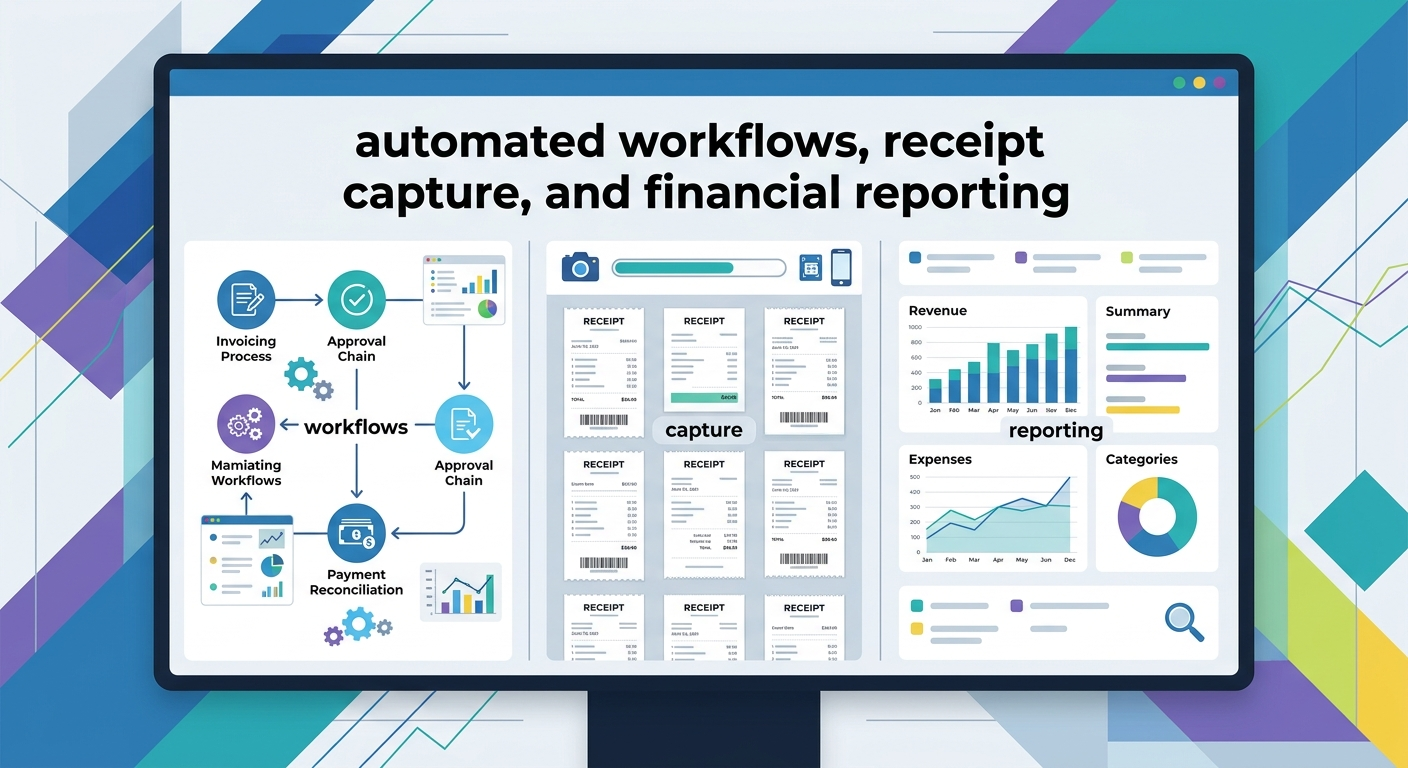
Full accounting systems provide the double-entry general ledger, yet keeping that ledger clean every week still buries founders, bookkeepers, and accounting firms in repetitive mechanical chores: chasing missing receipts, categorizing hundreds of bank and credit card feed lines, matching e-commerce payouts against marketplace fees, and reconciling clearing accounts at month-end.
Modern bookkeeping tools automate the transaction-ingestion, categorization, reconciliation, and month-end close workflow—sitting either as AI-first automated bookkeeping platforms, e-commerce and payment reconciliation bridges, or accounting-firm close management workbenches. Understanding which bottleneck you are solving prevents paying for an overlapping tool when a targeted automation layer saves ten hours a week.
Five Core Capabilities of Modern Bookkeeping Tools
When evaluating bookkeeping automation software for small businesses, e-commerce operators, or multi-client bookkeeping practices, inspect five operational engines:
- AI Transaction Categorization and Vendor Rule Learning: Automatically coding incoming bank, credit card, and payment-gateway transactions to the right GL account, department, and tax code based on merchant intelligence, historical patterns, and line-item receipt OCR—routing only low-confidence anomalies for human review.
- Automated Document Capture and Receipt Matching: Extracting vendor names, dates, tax amounts, and line items from emailed PDFs, mobile camera snaps, and supplier portals—matching documents automatically to bank feed transactions so every expense has audit-ready substantiation attached.
- Payout Clearing and Multi-Channel Settlement Reconciliation: Breaking down lump-sum deposits from Shopify, Amazon, Stripe, Square, and PayPal into gross sales, refunds, gift cards, sales tax collected, shipping income, and processor fees—posting balanced journal entries so bank deposits match clearing accounts to the penny.
- Month-End Close Checklists and Flux/Variance Detection: Providing structured close task lists, automated bank-statement reconciliation checks, and AI-assisted anomaly scans that flag unusual expense spikes, uncategorized suspense balances, or duplicate vendor charges before financial statements are published.
- Multi-Client Practice Dashboards and Client Communication Portals: For external bookkeepers and fractional CFO firms, surfacing health scores across dozens of client ledgers in one screen and letting clients answer transaction questions (“Was this $420 Amazon charge office supplies or client hardware?”) in one click without messy email chains.
Leading Bookkeeping Tools Across Workflow Categories
Puzzle and Digits (AI-Native Startup & Modern Accounting Ledgers)
For venture-backed startups and modern service businesses frustrated by legacy rule-based accounting interfaces, Puzzle and Digits reimagine bookkeeping around real-time AI automation:
- Puzzle combines a modern double-entry general ledger with autonomous transaction categorization, native Stripe/Ramp/Brex/Gusto integrations, automated prepaid expense and fixed-asset schedules, and instant real-time startup metrics (burn rate, runway, cash vs. accrual views) built specifically for founders and startup accountants.
- Digits pairs an AI-native autonomous general ledger with live visual financial dashboards, automated bill pay/invoicing, and real-time anomaly detection—designed to eliminate manual transaction coding and give business owners continuous financial visibility without waiting for month-end close.
Dext Prepare and Hubdoc (Receipt OCR & Document Extraction)
When a business already runs QuickBooks Online, Xero, or Sage—and the biggest time sink is gathering and coding receipts and supplier bills—dedicated capture tools eliminate manual data entry:
- Dext Prepare excels at high-accuracy OCR extraction from mobile receipt photos, forwarded emails, and automated supplier invoice fetches (logging into utility and vendor portals automatically), applying line-item tax rules and publishing directly into QuickBooks or Xero.
- Hubdoc (included free with standard Xero plans) provides straightforward receipt capture, bank-statement fetching, and source-document archiving linked directly to Xero transactions.
A2X and Synder (E-Commerce & Payment Payout Reconciliation)
Standard bank feeds fail on e-commerce sellers because Amazon or Shopify deposits a single net payout every two weeks that blends two different calendar months, returns, FBA fees, and marketplace-collected sales taxes:
- A2X is the gold standard for e-commerce payout accounting—fetching settlement data from Amazon, Shopify, Walmart, eBay, and Etsy and posting accrual-accurate summary journals split cleanly across month boundaries into QuickBooks Online, Xero, or NetSuite.
- Synder handles both high-volume e-commerce and SaaS payment gateways (Stripe, Square, PayPal, Shopify, Amazon), offering flexible sync modes (either granular per-transaction sync or clean daily batch summaries) with strong multi-currency support.
Keeper and Financial Cents (Bookkeeping Practice & Month-End Close Management)
For bookkeeping firms, fractional CFOs, and internal accounting teams managing structured month-end closes across multiple entities:
- Keeper connects directly to QuickBooks Online and Xero to run automated file reviews (flagging uncategorized transactions, negative asset balances, and vendor coding inconsistencies) alongside an embedded client portal where business owners answer transaction questions in seconds.
- Financial Cents (alongside Karbon and Canopy) provides structured recurring close checklists, client document-request automation, and team capacity tracking for multi-client bookkeeping practices.
Pilot, Bench-Style Managed Services, and Kick (Hybrid AI + Human Bookkeeping)
For founders who want software automation backed by human review without hiring an in-house bookkeeper, Kick offers self-serve AI-automated bookkeeping for sole proprietors and small LLCs, while Pilot pairs proprietary software pipelines with dedicated finance specialists for VC-backed startups needing accrual GAAP books and R&D tax credit prep.
Bookkeeping Tools Comparison
| Tool | Primary Role | Core Automation Strength | Target Ledger Ecosystem | Pricing Model | Best Fit |
|---|---|---|---|---|---|
| Puzzle / Digits | AI-native general ledger & automated bookkeeping | Autonomous categorization, real-time metrics & accrual schedules | Standalone modern GL (integrates with Stripe, Ramp, Gusto) | Tiered monthly SaaS (based on monthly expenses) | Startups & modern SMBs wanting an AI-native alternative to QBO |
| Dext Prepare | Receipt, bill & supplier-statement OCR capture | High-accuracy line-item OCR + automated supplier invoice fetching | QuickBooks Online, Xero, Sage, NetSuite | Tiered monthly plans (by client/document volume) | SMBs & accounting firms drowning in paper/PDF receipts & bills |
| A2X / Synder | E-commerce & payment-gateway settlement sync | Accrual payout splitting (A2X) / multi-gateway sync (Synder) | QuickBooks Online, Xero, NetSuite, Sage Intacct | Tiered by monthly order/transaction volume | E-commerce sellers & high-volume Stripe/Square/PayPal businesses |
| Keeper | Bookkeeping quality review & client Q&A portal | Automated ledger anomaly checks + 1-click client coding responses | QuickBooks Online & Xero | Per-client monthly SaaS pricing | External bookkeeping firms & multi-entity internal teams |
| Kick | Automated AI bookkeeping for solo/small LLCs | Automated bank-feed categorization, tax-ready P&L & entity separation | Standalone cloud bookkeeping app | Low flat monthly subscription | Freelancers, creators & single-member LLCs |
Common Bookkeeping Automation Pitfalls to Avoid
- Blindly Auto-Approving AI Bank Rules Without Periodic Audits: An overly broad rule like “categorize all Amazon.com charges to Office Supplies” will silently miscategorize $3,500 laptops (which must be capitalized as fixed assets) and personal owner purchases as deductible office supplies. Always require receipts above a dollar threshold (such as $75 or $250) and review high-value transactions manually.
- Connecting Both Raw Stripe/Shopify Feeds and Bank Feeds Without a Clearing Account: Syncing individual Stripe sales directly into income while also categorizing the lump-sum Stripe bank deposit as “Sales” double-counts revenue instantly. Route all payment-processor activity through a dedicated Clearing Account that zeroes out upon bank settlement.
- Mixing Personal and Business Spend on Shared Cards: No AI bookkeeping tool can cleanly separate personal groceries from business travel on a single personal card without constant manual intervention. Maintain strict dedicated business bank and card accounts from day one.
Selecting the Right Bookkeeping Tool
Build your bookkeeping stack around your existing general ledger and transaction volume:
- If You Are a Solo Founder or Freelancer: Use Kick (or Wave) for clean automated bank categorization without hiring a bookkeeper.
- If You Run QuickBooks Online or Xero: Add Dext Prepare to eliminate receipt/bill data entry, A2X or Synder if you sell via Shopify/Amazon/Stripe, and Keeper if you manage multiple entities or client books.
- If You Are Launching a Venture-Backed Startup: Evaluate Puzzle or Digits for real-time accrual automation, burn/runway visibility, and clean startup integrations out of the box.
