Introduction
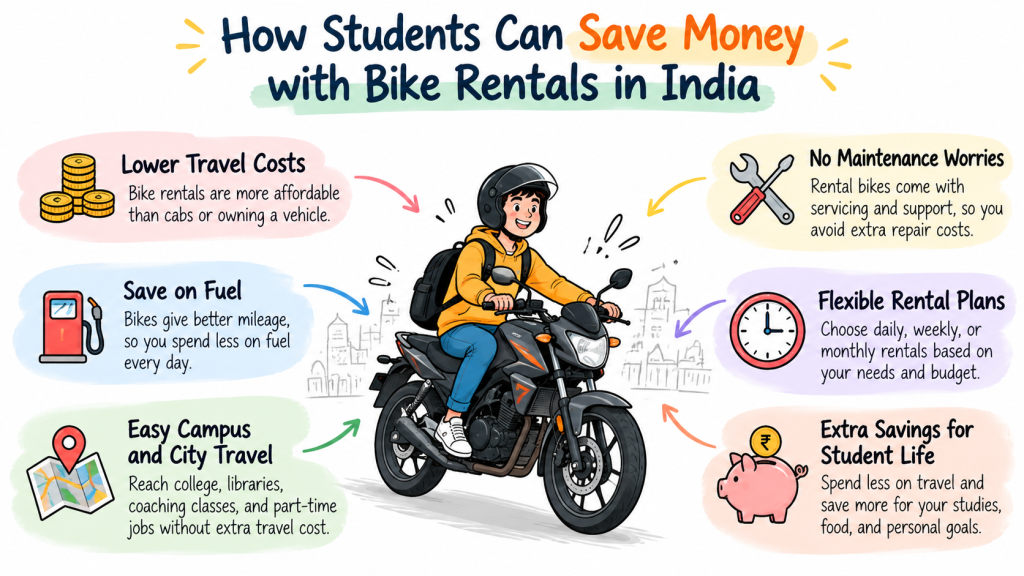
Student life often means managing a tight budget. Between college fees, hostel expenses, food, books, and daily travel, transportation can take up a large part of your monthly spending. Students who live away from home may also need affordable ways to explore a new city, visit friends, or travel during holidays.
Owning a bike can seem like a convenient solution. However, buying one requires a large upfront payment. Students must also consider fuel, insurance, servicing, repairs, and parking. These expenses can make vehicle ownership difficult for people who only need a bike occasionally.
Bike rentals offer another option. Students can rent a scooter or motorcycle for a few hours, a day, a weekend, or a longer period, depending on the rental provider. This approach helps them pay for transportation only when they need it.
With bike rental in India, students can travel to college, attend internships, explore nearby attractions, and manage personal errands without buying a vehicle. Renting may also help tourists and young professionals control their travel budgets.
motoshare.in available at motoshare.in, provides a platform for exploring vehicle rental and sharing options. Students can use the platform to look for suitable vehicles and compare available rental choices.
In this guide, you will learn how bike rentals can reduce transportation costs, how to choose the right vehicle, what documents you may need, and how to rent and ride safely in India.
Why Renting a Bike in India Is a Smart Choice
Bike rentals can help students balance convenience and affordability. Instead of paying for a vehicle throughout the year, they can rent one whenever their schedule requires it.
Avoid the High Cost of Buying a Bike
Buying a motorcycle involves more than its purchase price. Students may need to pay for registration, insurance, servicing, repairs, and other ownership expenses.
Renting removes the need for a large purchase. You can use your money for education, accommodation, food, and other important needs.
For example, a student living in Pune may need a bike only during an internship. Renting for that period can be more practical than purchasing a motorcycle for a temporary requirement.
Spend Money Only When You Need Transportation
Students often follow changing schedules. They may attend college during weekdays, work remotely on some days, and travel during weekends.
Renting gives them the option to book a vehicle when public transport does not suit their plans. They can avoid paying for a bike that remains unused for much of the month.
However, compare the total rental cost with public transport before booking. Daily rentals can become expensive when you need a bike every day for several months.
Reduce Dependence on Expensive Rides
Frequent taxi or app-based ride bookings can increase transportation expenses. A rental scooter or commuter motorcycle may cost less for a full day of local travel, especially when you make several stops.
For instance, students in Bangalore may need to visit a college, a library, a supermarket, and a friend’s home on the same day. A rental bike can make this journey easier to manage.
Remember to include fuel, parking, rental charges, and any additional fees when comparing costs.
Explore More Places on a Student Budget
A bike can help students visit places that public transport does not serve directly. It also gives them more control over departure times and stops.
Students in Goa can explore beaches and nearby markets. Those in Jaipur can plan visits to attractions around the city. In Hyderabad, a rental bike can help with local sightseeing and visits to food markets.
This flexibility makes affordable bike rental in India useful for both everyday needs and short trips.
Who Should Rent a Bike in India?
Bike rentals can suit several types of travelers and students.
- College students: Travel between hostels, campuses, coaching centers, libraries, and part-time jobs.
- Interns and trainees: Reach offices during temporary work placements without buying a vehicle.
- Outstation students: Explore a new city during weekends and semester breaks.
- Budget travelers: Visit several attractions without booking separate taxi rides for every stop.
- Backpackers: Travel independently while keeping their itinerary flexible.
- Working professionals: Handle errands, short commutes, and temporary transportation needs.
- Tourists: Discover local neighborhoods and nearby attractions at their own pace.
A bike rental for tourists can be especially helpful when the destination has many spread-out attractions. However, riders should check local traffic rules, parking restrictions, and route conditions before starting.
Benefits of Renting a Bike for First-Time Travelers
First-time travelers may find an unfamiliar city confusing. A rental bike can make local travel easier when the rider has the right documents, suitable riding skills, and a clear route.
Greater Travel Flexibility
Public transport follows fixed routes and schedules. A rental bike lets you choose your departure time and travel between multiple destinations more freely.
For example, a student visiting Delhi can plan a day around selected markets, cafés, and cultural attractions. The rider can adjust the route as needed, while still following local traffic and parking rules.
Better Control Over Travel Spending
Renting lets you choose a vehicle based on your budget and trip duration. A basic scooter may suit short local trips, while a commuter motorcycle may be more appropriate for longer journeys.
Before booking, calculate the full cost rather than focusing only on the advertised rental price.
A Convenient Way to Learn a New City
Traveling by bike helps visitors discover local shops, neighborhoods, and food spots along the way.
Students visiting Chennai or Kolkata can use rentals for suitable local journeys. However, heavy traffic, limited parking, and road conditions may make public transport a better choice in some areas.
Less Long-Term Responsibility
A rental generally avoids the long-term ownership responsibilities of a purchased vehicle. You do not need to arrange regular servicing for a bike you own when your rental agreement places maintenance responsibilities elsewhere.
You must still follow the agreement, protect the vehicle, report problems, and return it on time.
Types of Bikes You Can Rent in India
The right vehicle depends on your budget, experience, travel distance, and destination.
Scooters
Scooters suit short city trips, shopping, college visits, and local sightseeing. Their automatic transmission makes them convenient for riders who prefer not to change gears.
Students can consider a scooter for everyday errands or a weekend visit to nearby attractions. Check the seat height, storage space, and vehicle condition before booking.
Commuter Bikes
Commuter motorcycles generally suit regular city travel and longer daily journeys. They may offer a practical balance of fuel economy, comfort, and rental cost.
Students traveling between a hostel and an internship location may find this category useful.
Sports Bikes
Sports bikes appeal to experienced riders who enjoy performance-oriented motorcycles. However, they may cost more to rent and may require greater riding skill.
Students should choose one only when they have suitable experience, a valid licence for the vehicle class, and enough money for the full rental expense.
Adventure Bikes
Adventure motorcycles suit riders planning longer road trips or routes with varied road conditions. Their riding position and design may help on suitable journeys.
These bikes often have higher rental costs. Check the permitted routes, luggage arrangements, insurance conditions, and maintenance support before booking.
Cruiser Motorcycles
Cruisers often offer a relaxed riding position and appeal to riders planning leisurely journeys.
They can suit experienced riders on appropriate routes. Consider the motorcycle’s weight and handling before selecting one, particularly if you are renting for the first time.
Electric Bikes
Electric two-wheelers may work well for short city journeys. Charging access, battery range, and charging time matter when planning your trip.
Confirm whether the vehicle is an electric scooter or motorcycle and check its actual range under typical riding conditions.
How to Choose the Right Bike for Your Trip
Choosing a suitable vehicle helps you avoid unnecessary expenses and travel problems.
Follow these steps before you book:
- Set a budget: Decide how much you can spend on the rental, fuel or charging, parking, and other fees.
- Estimate your distance: A scooter may suit short city trips, while a commuter bike may be better for longer daily journeys.
- Consider your experience: Choose a vehicle you can handle comfortably. Avoid powerful motorcycles if you lack experience.
- Check the destination: Review traffic, parking, road quality, weather, and charging access where relevant.
- Compare rental periods: Check hourly, daily, weekend, and longer-term prices. A longer booking is not automatically cheaper.
- Review the rental terms: Confirm deposit rules, cancellation charges, mileage limits, insurance conditions, and late-return fees.
- Check availability: Confirm that the vehicle is available for your dates and that the pickup and return arrangements suit your plans.
This first-time bike rental guide can help you make a more informed choice before paying for a booking.
Documents Usually Needed to Rent a Bike in India
Rental providers set their own eligibility and documentation rules. Check the requirements before making a reservation.
Valid Driving Licence
You generally need a valid driving licence that authorizes you to ride the selected vehicle class.
A learner’s licence does not automatically allow you to rent and ride every type of motorcycle. Confirm the applicable legal requirements and the rental provider’s policy.
Government ID Proof
Providers may request an accepted government-issued identity document to verify your details.
Check which documents the provider accepts. Do not assume that every form of identification is valid for every rental.
Address Proof, If Applicable
Some providers may request address details or additional verification documents. Requirements can vary by location and customer category.
Ask about these requirements before arriving for pickup.
Security Deposit Requirements
Many rental providers collect a refundable security deposit. The amount and refund conditions depend on the vehicle and agreement.
Confirm the deposit amount, permitted payment methods, deductions, and expected refund process. Keep your payment receipt and a copy of the rental agreement.
International visitors should also confirm their driving eligibility and accepted documents before booking.
Things to Check Before Renting a Bike
A few minutes of inspection can help prevent unexpected costs later.
Vehicle Condition
Inspect the bike before leaving the pickup location.
- Check the tyres, brakes, lights, indicators, mirrors, and horn.
- Test the ignition and other basic controls.
- Look for visible scratches, dents, and damaged parts.
- Check the fuel level or battery charge.
- Photograph existing damage and share it with the provider.
Ask for help if anything appears unsafe.
Fuel Policy
Some rentals include fuel, while others require you to collect and return the bike with a specified fuel level.
Confirm the rules before starting your trip. For electric vehicles, check the battery level and charging arrangements.
Insurance Coverage
Ask what insurance coverage applies to the vehicle and rental period. Understand any exclusions, deductibles, and responsibilities for damage or theft.
Do not assume that insurance covers every accident, rider, or type of loss.
Mileage Limits
Some providers set a daily distance limit and charge extra for additional kilometres.
Estimate your route and compare the limit with your travel plans. This is particularly important for weekend trips outside the city.
Helmet Availability
Confirm whether the rental includes a suitable helmet and whether a passenger helmet is available when needed.
Wear a properly fitted helmet that meets applicable safety standards. Never begin a ride without the required protective equipment.
Rental Agreement Terms
Read the agreement carefully. Check the return time, permitted travel area, cancellation policy, late fees, breakdown support, and damage procedures.
Keep the provider’s contact details available throughout the rental period.
Safety Tips for Riding a Rental Bike in India
Saving money should never mean compromising safety.
Follow Traffic Rules
Obey traffic signals, road signs, speed limits, and local parking rules. Carry the required documents and avoid using your phone while riding.
Wear a Helmet
Wear a properly fitted helmet on every ride. If you carry a passenger, ensure they have suitable protection too.
Avoid Overspeeding
Choose a speed that matches the road, traffic, weather, and your riding ability. Leave enough distance between your bike and other vehicles.
Check Weather and Road Conditions
Rain can reduce tyre grip and visibility. Check weather forecasts and road conditions before longer trips.
Avoid routes that exceed your experience or the rental agreement’s permitted travel area.
Keep Emergency Contacts Handy
Save the rental provider’s number and relevant emergency contacts. Ask about roadside assistance before you depart.
If the bike develops a fault, stop in a safe place and contact the provider. Do not attempt risky repairs on a busy road.
Cost of Bike Rental in India
Bike rental prices vary by city, season, vehicle model, rental duration, and provider. Premium motorcycles generally cost more than basic scooters.
The following figures are illustrative planning estimates, not verified live prices or MotoShare India quotations. Actual prices may differ substantially.
| Vehicle type | Estimated rental cost | Suitable for |
|---|---|---|
| Scooters | ₹300–₹800 per day | Short city trips and errands |
| Commuter bikes | ₹400–₹1,000 per day | Daily travel and local exploration |
| Premium bikes | ₹1,000–₹3,000+ per day | Experienced riders and special trips |
| Adventure bikes | ₹1,500–₹4,000+ per day | Longer rides and selected road trips |
Electric two-wheeler rates also vary by model, battery range, charging arrangements, and location.
Example: Estimating a Student’s Rental Budget
Suppose a student rents a scooter for two days at an assumed rate of ₹500 per day.
- Two-day rental: ₹1,000
- Estimated fuel expense: ₹300
- Estimated parking expense: ₹100
- Total estimated cost: ₹1,400
This example excludes deposits, optional insurance charges, additional kilometres, and other fees. It also assumes the rental rate and expenses shown above.
If four students share suitable travel expenses, they may reduce the cost per person on some trips. However, only the authorized rider should operate the bike, and passenger limits must always follow the law and vehicle specifications.
How Students Can Reduce Rental Costs
Try these practical money-saving methods:
- Compare several suitable vehicles before booking.
- Travel during less busy periods when rates may be lower.
- Choose a bike that matches your actual needs rather than its appearance.
- Avoid unnecessary mileage and late returns.
- Check whether the quoted price includes taxes and other fees.
- Read cancellation and deposit rules before paying.
- Compare rental costs with buses, metro services, and other transport options.
For frequent daily commuting, a monthly public transport pass may cost less than renting a bike every day. Choose the option that best matches your routine.
Common Mistakes First-Time Travelers Should Avoid
First-time renters sometimes focus only on the vehicle or headline price. This can lead to avoidable expenses.
Avoid these common mistakes:
- Booking without comparing prices: Different models and providers may offer different rates.
- Ignoring extra charges: Fuel, mileage, deposits, and late fees can increase the total cost.
- Skipping the inspection: Existing damage should be documented before the trip.
- Choosing the wrong bike: A heavy or powerful motorcycle may be difficult for an inexperienced rider.
- Ignoring insurance terms: Understand your responsibilities before accepting the vehicle.
- Riding without the right documents: Confirm your legal eligibility and carry the required paperwork.
- Returning the bike late: Late fees may increase your total expense.
- Failing to plan the route: Traffic, weather, parking, and fuel stops can affect your budget.
- Assuming every city allows the same travel arrangements: Check the provider’s permitted operating area and any restrictions on taking the vehicle outside the city.
A little planning helps students avoid unnecessary spending and enjoy a smoother journey.
Bike Rental vs Public Transport vs Taxi
Students should compare all available transport options before deciding how to travel.
| Factor | Bike rental | Public transport | Taxi or app-based cab |
|---|---|---|---|
| Cost | Moderate; depends on duration, fuel, and fees | Often economical for regular routes | Can become expensive for repeated trips |
| Convenience | Flexible for multiple stops | Depends on routes and schedules | Convenient for direct trips |
| Flexibility | High within rental restrictions | Limited to available routes and services | High for point-to-point journeys |
| Comfort | Depends on weather, road conditions, and bike type | Varies by service and crowding | Often more comfortable for passengers |
| Travel experience | Offers independent local exploration | Provides access to established transport networks | Reduces the need to ride or find parking |
| Best use cases | City exploration, weekend trips, flexible errands | Daily commuting and busy urban areas | Airport transfers, luggage-heavy trips, and occasional rides |
Which Option Should Students Choose?
Choose a bike rental when you need flexible travel, plan several stops, and can legally and safely ride a two-wheeler.
Choose public transport when you commute frequently, travel along established routes, or want to keep daily expenses low.
Choose a taxi when you carry heavy luggage, travel with people who cannot ride, or need a direct journey without driving yourself.
For example, a student in Mumbai may find the local train or metro more practical during peak hours. A student in Goa may prefer a rental scooter for visiting several nearby beaches. In Delhi, a combination of metro travel and occasional bike rentals may work better than renting every day.
The cheapest option depends on your route, travel frequency, group size, and total expenses.
How MotoShare India Can Help Students and Travelers
MotoShare India is a vehicle rental and sharing platform at motoshare.in. Students and travelers can explore rental options based on their transportation needs.
Easy Online Booking
Online discovery can help you review available options before planning your trip. Check the vehicle details, pickup arrangements, rental period, and booking terms before confirming.
Always verify the final booking details and availability for your selected dates.
A Range of Vehicle Options
Different journeys require different vehicles. Students may prefer scooters for short city trips, while experienced riders may want commuter motorcycles or other suitable models.
MotoShare India’s vehicle rental offering can help users explore options based on their travel requirements. Actual availability depends on the platform’s listings and location.
Clear Pricing Information
Students need to understand the full cost before booking. Review the displayed rental charges and confirm any deposit, fuel expense, additional kilometre charge, tax, or late-return fee.
Do not make a booking based only on the lowest advertised price.
Vehicle Owner and Provider Checks
Review the available provider information and follow the platform’s verification and booking process. Before accepting a vehicle, confirm its condition, documents, insurance details, and rental terms.
Do not assume that every listing has identical verification standards or coverage.
Flexible Rental Options
Some journeys need only a few hours, while others require a full day or a weekend. Check the available rental periods and compare their total costs.
Students should select the shortest practical period that fits their itinerary while allowing enough time for pickup and return.
Explore Options Across Indian Cities
Students and travelers may need transport in different cities throughout the year. Popular destinations include Delhi, Mumbai, Bangalore, Goa, Jaipur, Pune, Hyderabad, Chennai, and Kolkata.
Before traveling, check which vehicles and rental arrangements are available at your destination. Do not assume that every model or rental period is available in every city.
For students planning a trip, internship, or weekend outing, MotoShare India can be a useful starting point for exploring vehicle rental in India.
Visit motoshare.in to explore available rental options and check the terms before booking.
Frequently Asked Questions
1. Can students rent a bike in India?
Yes. Students can rent a bike if they meet the provider’s age, identity, driving licence, and other eligibility requirements. Requirements vary by vehicle and rental provider.
2. Can tourists rent a bike in India?
Yes. Domestic tourists can rent bikes when they meet the applicable requirements. International tourists should confirm their driving eligibility, accepted documents, and rental provider policies before booking.
3. Is an international driving permit required?
The requirement depends on the rider’s nationality, licence, vehicle category, and applicable Indian rules. Foreign visitors should check the current legal requirements and confirm that their licence permits the intended riding activity.
4. How much does bike rental cost in India?
Illustrative daily estimates range from ₹300–₹800 for scooters, ₹400–₹1,000 for commuter bikes, ₹1,000–₹3,000 or more for premium bikes, and ₹1,500–₹4,000 or more for adventure bikes. Actual prices depend on the location, model, season, and rental terms.
5. Are helmets provided with rental bikes?
Some providers include helmets, while others may have different arrangements. Confirm helmet availability before booking and use a suitable helmet that meets applicable safety standards.
6. Can I rent a bike without a security deposit?
Some providers may offer different deposit arrangements, but many require a security deposit. Check the specific listing or rental agreement before making a payment.
7. What happens if the rental bike breaks down?
Stop in a safe location and contact the rental provider. Follow their instructions and check whether roadside assistance or replacement arrangements apply under your agreement.
8. Can I take a rental bike to another city?
That depends on the provider’s terms, the vehicle’s permitted operating area, and any applicable legal requirements. Obtain clear permission before taking a rental bike outside the approved area.
9. Can I rent a bike for just one day?
Many rental providers offer daily bookings. Confirm the available duration, pickup time, return deadline, and charges before reserving the vehicle.
10. Is a scooter better than a motorcycle for students?
A scooter may suit short city trips and riders who prefer automatic transmission. A commuter motorcycle may suit longer journeys or riders who prefer a geared vehicle. Choose according to your experience, comfort, budget, and route.
11. Can I rent a scooter in India for a Goa trip?
You may be able to rent a scooter if a suitable vehicle is available and you meet the rental requirements. Confirm the pickup location, permitted travel area, documents, insurance, and safety equipment before booking.
12. How can students save the most money on bike rentals?
Compare the total price across providers, select a suitable vehicle, avoid unnecessary mileage, return the bike on time, and check additional fees. For frequent commuting, compare rental costs with public transport passes.
13. Is self-drive bike rental suitable for beginners?
It can suit beginners who already meet the legal requirements and can ride safely. Choose an easy-to-handle vehicle, inspect it carefully, and practice only in a safe and appropriate location before entering busy traffic.
14. Why should I consider MotoShare India?
MotoShare India provides a platform for exploring vehicle rental and sharing options. You can review available listings, compare suitable choices, and check booking conditions at motoshare.in.
Conclusion
Managing a student budget requires smart decisions about everyday expenses. Transportation is one area where the right choice can make a noticeable difference.Bike rentals allow students to use a vehicle without buying one or taking on all the long-term costs of ownership. They can also provide more freedom for weekend trips, internships, errands, and local sightseeing.However, renting is not always the cheapest choice. Students who travel every day may save more with public transport, while occasional travelers may benefit from renting only when necessary. The best option depends on your schedule, destination, riding experience, and total travel costs.Before booking, compare rental prices, check the required documents, inspect the bike, understand the agreement, and follow all safety rules. These simple steps can help you avoid unnecessary expenses and travel with greater confidence.Whether you are studying in Pune, attending an internship in Bangalore, exploring Jaipur, or planning a budget trip to Goa, a suitable rental bike can make local travel more flexible.
