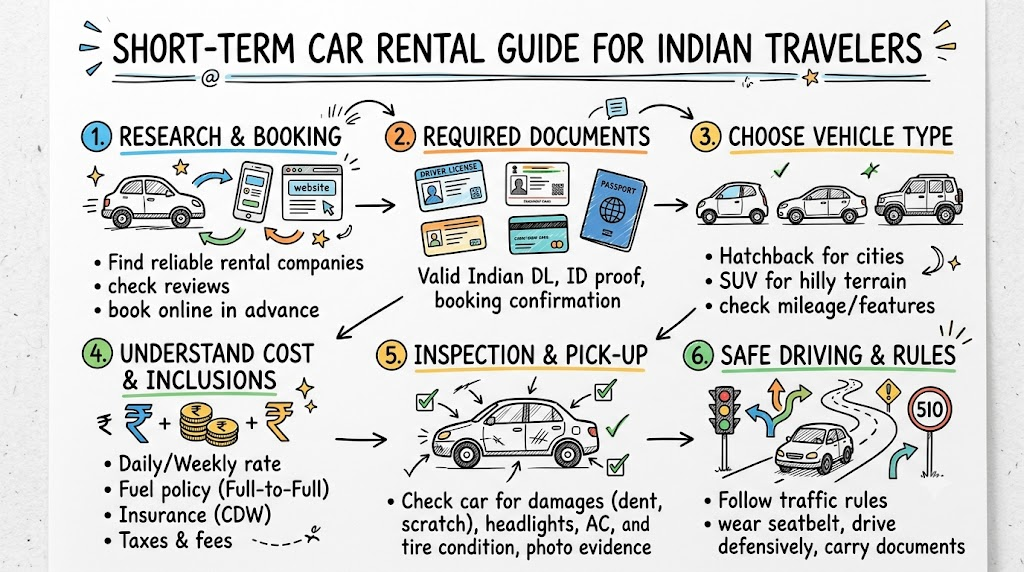
Introduction
Traveling around India can be an exciting experience, whether you are exploring historic monuments in Jaipur, enjoying the beaches of Goa, attending business meetings in Mumbai, or planning a weekend getaway from Bangalore. However, choosing the right mode of transportation can significantly affect your travel budget, comfort, and overall experience.
Public transport is useful in many cities, but it may not always take you directly to your destination or fit your schedule. Taxis offer convenience, although frequent rides can become expensive. Buying a vehicle for a short visit is rarely practical. This is where short-term car rental in India becomes a useful option.
Short-term rentals allow travelers to use a vehicle for a few hours, a day, a weekend, or several days, depending on the provider’s terms. They can be suitable for tourists, students, working professionals, families, and people visiting another city temporarily.
However, renting a car is not the only option. For solo travelers, couples, and people exploring busy urban neighborhoods, bike rental in India can offer greater flexibility and lower rental costs. Scooters and motorcycles can make it easier to navigate crowded streets, discover local attractions, and explore places that may be inconvenient to reach by car.
MotoShare India, associated with motoshare.in, operates in the vehicle-sharing and rental space, covering bikes, cars, self-drive rentals, and related mobility options. Understanding the differences between these options can help you choose the right vehicle for your journey.
This guide explains how short-term vehicle rentals work, what documents you may need, how to estimate costs, which safety checks matter, and when renting a car or bike makes the most sense for travel in India.
Why Renting a Bike in India Is a Smart Choice
Although cars are suitable for many journeys, two-wheelers are often a practical alternative for travelers who want to move around independently.
A rental scooter or motorcycle can make short urban journeys easier, particularly where traffic congestion and limited parking make car travel inconvenient.
More Affordable for Short Trips
Bike rentals generally cost less per day than car rentals, although the final price depends on the vehicle model, location, season, rental duration, and provider.
For a solo traveler visiting Goa or a student exploring Pune, renting a scooter may be more economical than paying for multiple taxi rides. A commuter motorcycle can also be useful for reaching workplaces, campuses, or local attractions.
Greater Flexibility
When you travel by bike, you can often change your route, stop at local markets, visit viewpoints, or explore smaller streets without arranging a separate ride for every destination.
This flexibility is especially valuable for travelers who enjoy discovering places beyond popular tourist areas.
Easier Parking and Urban Navigation
In busy cities such as Mumbai, Bangalore, Hyderabad, and Chennai, finding convenient parking can be difficult. A two-wheeler may be easier to park in permitted spaces and can be more manageable on short journeys.
However, riders must still follow local parking rules and avoid unsafe shortcuts.
A More Personal Travel Experience
Choosing to travel in India by bike can make the journey itself part of the experience. Travelers can explore coastal roads in Goa, heritage neighborhoods in Jaipur, scenic routes around Bangalore, or selected countryside destinations near Pune.
Always assess the route, road conditions, weather, and your riding experience before setting out.
Who Should Rent a Bike or Car in India?
Different travelers have different mobility requirements. The right rental depends on the number of passengers, luggage, distance, budget, and type of destination.
- First-time travelers: A scooter may suit short local trips if you already have the necessary riding experience and a valid license. A car may be preferable for longer journeys or when you are uncomfortable riding in unfamiliar traffic.
- Tourists: Bike rental for tourists can provide flexibility for sightseeing in Goa, Jaipur, or other destinations where two-wheelers are practical.
- Students: Students may find a scooter or commuter motorcycle useful for temporary transportation between accommodation, campuses, and nearby markets.
- Working professionals: A rental vehicle can help with temporary assignments, client meetings, or business travel.
- Backpackers and solo travelers: Two-wheelers may help reduce local transport costs, particularly when traveling light.
- Families and groups: Cars usually offer better passenger capacity, luggage space, and protection from rain and heat.
- Daily commuters: Short-term rentals can provide temporary mobility while waiting for a personal vehicle to be repaired or when visiting another city.
Before deciding, consider whether you genuinely need a car or whether a scooter, motorcycle, metro, or combination of transport options would serve you better.
Benefits of Renting a Bike for First-Time Travelers
For someone visiting an unfamiliar Indian city, renting a two-wheeler can provide independence without the long-term responsibilities of vehicle ownership.
Control Over Your Schedule
You can plan sightseeing around your own preferences instead of adjusting every stop to taxi availability or fixed transport schedules. This is useful for visiting multiple attractions in one day, provided you leave enough time for traffic and breaks.
Better Budget Management
Choosing an affordable bike rental in India can help you manage transportation expenses. Before booking, calculate the rental charge, fuel, parking, tolls where applicable, and any additional fees.
A low advertised rental price does not necessarily mean the lowest total cost.
Access to Local Experiences
A two-wheeler can make it easier to explore neighborhood cafés, local markets, smaller beaches, and other destinations that may be less convenient to reach by public transport.
For example, a traveler in Jaipur might use a scooter for local sightseeing, while someone staying in Goa could prefer a motorcycle for exploring nearby coastal areas. Both should check road conditions and applicable access restrictions before traveling.
Less Dependence on Multiple Bookings
Instead of arranging separate taxi rides for every stop, you can keep the same rental vehicle for the agreed period. This can be useful when your itinerary includes several nearby destinations.
Remember that a bike is not ideal for every traveler. Heavy luggage, extreme weather, long highway journeys, and limited riding experience can make a car or public transport a safer or more comfortable choice.
Types of Bikes You Can Rent in India
The Indian rental market includes several types of two-wheelers. Availability varies by city, rental operator, season, and local vehicle inventory.
Scooters
Scooters are popular for short urban trips because they are relatively easy to handle for riders with appropriate experience. They may suit sightseeing, shopping, campus travel, and commuting between nearby locations.
They are worth considering for:
- Exploring Goa’s accessible local routes.
- Visiting markets and attractions in Jaipur.
- Short trips around Pune or Hyderabad.
- Traveling between accommodation and nearby restaurants.
If you want to rent a scooter in India, check the seat height, braking condition, tire condition, and luggage capacity before accepting the vehicle.
Commuter Bikes
Commuter motorcycles are designed primarily for practical everyday travel. They can be a good option for people who need a little more flexibility for longer urban journeys or regular commuting.
A commuter bike may suit working professionals, students, and budget-conscious travelers who are comfortable riding a motorcycle.
Compare fuel efficiency, riding comfort, vehicle condition, and rental duration before booking.
Sports Bikes
Sports bikes may appeal to experienced riders who enjoy responsive handling and performance-oriented motorcycles. However, they are not necessarily the best choice for beginners or congested city streets.
Before selecting a sports bike, consider insurance restrictions, licensing requirements, riding experience, fuel consumption, and the higher potential cost of damage.
Adventure Bikes
Adventure motorcycles may suit experienced riders planning longer journeys or routes that include varied road surfaces. They generally have different ergonomics and capabilities from ordinary commuter motorcycles.
Do not assume that an adventure bike makes every road safe or suitable. Check the motorcycle’s condition, your ability to handle its weight, and the road conditions along your planned route.
Cruiser Motorcycles
Cruiser motorcycles emphasize relaxed riding positions and distinctive styling. They may be suitable for leisurely rides and selected scenic routes.
Because cruisers can be heavy, first-time riders should assess whether they can comfortably balance, maneuver, and park the motorcycle.
Electric Bikes
Electric two-wheelers can be practical for short urban journeys, depending on their range and charging arrangements.
Before booking an electric vehicle, confirm its actual usable range, battery condition, charging availability, and any charging responsibilities specified in the rental agreement.
How to Choose the Right Bike for Your Trip
Selecting the right bike involves more than comparing daily rental prices. Your destination, riding experience, passenger requirements, and travel plans all matter.
Match the Vehicle to Your Destination
For short city journeys in Mumbai, Chennai, or Bangalore, a scooter or commuter motorcycle may be sufficient. For selected scenic routes around Goa or Pune, an appropriate motorcycle may offer a more enjoyable experience.
For long-distance travel with several passengers or substantial luggage, a car may be more suitable.
Consider Your Riding Experience
A first-time bike rental guide should emphasize one important point: renting a vehicle does not replace the skills needed to operate it safely.
If you have never ridden a motorcycle, do not choose a powerful model simply because it looks appealing. Consider a suitable alternative transport option until you have the required training and experience.
Calculate Your Total Budget
Compare the full rental cost rather than the daily rate alone. Include:
- Base rental charges.
- Fuel or charging expenses.
- Security deposit.
- Delivery or pickup fees, if applicable.
- Additional-hour or late-return charges.
- Applicable tolls and parking fees.
- Charges arising from damage or agreement violations.
Check Passenger and Luggage Requirements
Scooters and motorcycles have practical limits on passenger capacity and luggage. Follow the manufacturer’s seating requirements and applicable laws. Never overload a two-wheeler or carry bags in a way that affects balance.
For families, groups, or travelers with large suitcases, a car may be the more sensible option.
Documents Usually Needed to Rent a Bike in India
Rental documentation varies between providers and vehicle categories. Confirm the exact requirements before paying or traveling to the pickup location.
Valid Driving License
Indian residents generally need an appropriate, valid driving license for the vehicle category they intend to operate. A license that does not cover the required vehicle class may not be sufficient.
Do not ride a motorcycle or scooter on public roads unless you are legally permitted to do so.
Government ID Proof
Rental providers may request identity verification through an accepted government-issued document. They may also check your name, contact details, and booking information.
Ask which documents are accepted and how your personal information will be handled.
Address Proof, If Applicable
Some providers may request address details or supporting documents as part of their verification process. Requirements may vary for residents, domestic visitors, and international travelers.
Requirements for International Tourists
International visitors should confirm whether their home-country driving license, an International Driving Permit (IDP), and any other documentation are required for the vehicle and jurisdiction concerned. An IDP is not a substitute for a valid underlying license.
Do not assume that a tourist visa alone authorizes you to drive or ride a motor vehicle in India.
Security Deposit Requirements
Some rental providers collect a refundable security deposit, while others may offer different arrangements. The amount, payment method, refund timeline, and possible deductions should be documented before the booking is confirmed.
Keep your payment receipt and a copy of the rental agreement.
Things to Check Before Renting a Bike
A careful inspection can help prevent disputes and reduce the risk of avoidable breakdowns.
Vehicle Condition
Inspect the vehicle before leaving the pickup location. Check:
- Tires, brakes, mirrors, and lights.
- Indicators, horn, and dashboard warnings.
- Visible damage, scratches, and dents.
- Fuel level or battery charge.
- Steering, suspension, and any unusual noises.
Take clear photographs or a short video of existing damage and share the record with the provider when appropriate.
Fuel Policy
Find out whether the vehicle must be returned with the same fuel level, a full tank, or according to another arrangement. For electric vehicles, understand the required battery level and charging procedure.
Insurance Coverage
Ask what insurance applies to the rental vehicle and what it covers. Confirm exclusions, deductibles, accident procedures, and your financial responsibility for damage.
Never assume that insurance covers every incident or that personal travel insurance automatically covers riding a rented motorcycle.
Mileage Limits
Some rentals include unlimited mileage, while others impose daily limits or charge for excess distance. This matters if you are planning a longer sightseeing route or a weekend trip.
Helmet Availability
For two-wheelers, confirm that suitable helmets are available for the rider and any permitted passenger. Inspect their condition and fit. Follow applicable helmet laws and never compromise on protective equipment.
Rental Agreement Terms
Read the agreement carefully before signing. Check pickup and return times, cancellation rules, extension procedures, permitted travel areas, breakdown assistance, accident reporting, and damage-related charges.
Ask for clarification about anything that is unclear.
Safety Tips for Riding a Rental Bike in India
India’s roads vary considerably, from congested city streets to highways, rural roads, and mountain routes. Defensive riding and preparation are essential.
Follow Traffic Rules
Obey traffic signals, speed limits, lane markings, and local restrictions. Never ride against traffic or use footpaths as shortcuts. Check whether your planned route includes roads where two-wheelers are restricted.
Wear a Properly Fitted Helmet
Wear an appropriate, correctly fastened helmet every time you ride. A helmet that does not fit properly may offer inadequate protection.
Use protective footwear and suitable clothing, and consider additional riding gear for longer journeys.
Avoid Overspeeding
Allow extra time for traffic, intersections, pedestrians, animals, and unexpected obstacles. Maintain a safe following distance and avoid sudden braking or risky overtaking.
Check Weather and Road Conditions
Heavy rain can reduce visibility and traction. Extreme heat can cause fatigue and dehydration, while unfamiliar roads may present potholes, construction, or poor lighting.
Check the forecast before leaving and postpone a journey if conditions make riding unsafe.
Keep Emergency Contacts Handy
Save the rental provider’s contact details, roadside assistance information, and local emergency numbers. Carry your license and other required documents.
If a breakdown occurs, move to a safe location when possible and contact the provider. Do not attempt repairs that could create additional damage or put you at risk.
Cost of Bike Rental in India
The cost of motorcycle rental in India depends on the city, model, booking duration, season, and rental terms. The following figures are illustrative budgeting ranges, not verified live quotes or guaranteed prices. Actual rates may fall outside these estimates.
| Vehicle category | Indicative daily rental range |
|---|---|
| Scooters | ₹300–₹800 |
| Commuter bikes | ₹400–₹1,000 |
| Premium bikes | ₹1,000–₹3,000 |
| Adventure bikes | ₹1,500–₹4,000 or more |
These ranges are intended to help with preliminary planning. Confirm the current price with the rental provider before making a decision.
What Affects Rental Prices?
Several factors influence the final price:
- City and demand: Tourist destinations and busy travel periods may have different rates from other locations.
- Vehicle model: Premium motorcycles generally cost more to rent than basic commuter bikes.
- Rental duration: Longer bookings may qualify for different rates, depending on the provider.
- Season: Holiday periods and peak tourist seasons can affect availability and pricing.
- Additional services: Delivery, accessories, extra mileage, and other services may increase the total.
How to Keep Rental Costs Under Control
Book in advance when possible, compare the total payable amount, and select a vehicle that matches your actual needs. Avoid paying for a high-performance motorcycle if an ordinary scooter can comfortably handle your itinerary.
For a short trip, also compare the cost of public transport and occasional taxis. Renting is not automatically the cheapest choice for every journey.
Common Mistakes First-Time Travelers Should Avoid
First-time renters can avoid unnecessary expenses and stress by preparing before pickup.
- Booking based only on price: Check the vehicle condition, included services, and full rental terms.
- Ignoring the license requirements: Verify that you are legally permitted to operate the selected vehicle.
- Skipping the inspection: Document existing damage and report problems before departure.
- Misunderstanding the deposit: Confirm the refund conditions and possible deductions.
- Overlooking mileage limits: Estimate your route and calculate any excess-distance charges.
- Failing to check insurance: Understand coverage limitations and accident procedures.
- Choosing the wrong vehicle: Consider road conditions, luggage, passenger requirements, and your experience.
- Returning the vehicle late: Understand the return window and request an extension in advance if needed.
- Ignoring local restrictions: Confirm whether interstate travel, specific routes, or certain destinations are permitted.
- Riding without suitable protective equipment: Never compromise on helmets or other essential safety precautions.
A little preparation can make the rental process easier and help you focus on the journey itself.
Bike Rental vs Public Transport vs Taxi vs Car Rental
Choosing the right transport option depends on your budget, itinerary, passenger count, and comfort requirements. A two-wheeler can be convenient for individual travelers, while cars and public transport may be more suitable for other journeys.
| Factor | Bike Rental | Public Transport | Taxi | Short-Term Car Rental |
|---|---|---|---|---|
| Cost | Often economical for individuals | Usually economical | Can become expensive with frequent rides | Higher rental and running costs |
| Convenience | High for suitable routes | Depends on routes and schedules | High for point-to-point travel | High for independent travel |
| Flexibility | High within rental terms | Limited by routes and schedules | Depends on availability | High within rental terms |
| Comfort | Exposed to weather and road conditions | Varies by service and crowding | Convenient for short trips | Good for families and groups |
| Travel Experience | Personal and flexible | Useful for experiencing local transport | Less responsibility for driving | Suitable for private road trips |
| Best Use Cases | Solo trips, couples, local exploration | City commuting and budget travel | Airport transfers and occasional rides | Family trips, luggage, group travel |
Which Option Should You Choose?
Choose bike rental when you are traveling alone or with one permitted passenger, have the necessary riding experience, and want to explore accessible local routes.
Choose public transport when your destination is well connected by metro, bus, or suburban rail and you want to keep travel expenses low.
Choose a taxi when you need door-to-door convenience, are carrying luggage, or prefer not to drive in unfamiliar traffic.
Choose short-term car rental when you need more passenger space, privacy, or the freedom to plan a road trip with family or friends.
For example, a solo visitor in Mumbai may find the metro and local trains useful for major journeys, with a rental scooter or taxi for suitable local trips. A family exploring Jaipur may prefer a car for multiple passengers and luggage. A traveler visiting Goa for a few days might consider a scooter for local sightseeing if the route and riding conditions are appropriate.
The most practical approach is to combine transport options instead of assuming that one vehicle will be ideal for every journey.
How MotoShare India Can Help Travelers
Finding suitable transportation is an important part of planning a trip. MotoShare India, associated with motoshare.in, focuses on vehicle rental and sharing options, including bikes and cars.
Travelers considering the platform can use the following points as a checklist when evaluating available vehicles and booking terms.
Easy Online Booking
Online booking can help travelers review vehicle options and plan transportation before reaching their destination. Check the vehicle’s availability, pickup arrangements, booking duration, and payment requirements before confirming a reservation.
A Range of Vehicle Options
Different journeys require different vehicles. A scooter may be suitable for local sightseeing, a commuter motorcycle for practical everyday travel, and a car for family outings or journeys involving more luggage.
When exploring MotoShare India’s available listings, select a vehicle based on your travel plans rather than appearance alone. Confirm the exact model and rental conditions before booking.
Transparent Pricing
Before confirming a vehicle, review the total amount payable, including rental charges, deposits, fuel costs, mileage restrictions, and any applicable additional fees.
Transparent pricing means understanding the full cost in advance rather than relying solely on an advertised starting rate.
Vehicle and Owner Verification
Vehicle verification and clear documentation are important considerations when choosing a rental service. Review the verification information available for the specific listing, confirm the vehicle’s registration and required documents, and ensure that the rental arrangement is properly documented.
Do not assume that every listing has identical verification or insurance arrangements.
Flexible Rental Options
Your transportation needs may range from a few hours of sightseeing to several days of travel. Check whether the particular vehicle supports your required duration and whether extensions, early returns, or changes to the booking are permitted.
Availability Across Indian Cities
Travelers often need transportation in destinations such as Delhi, Mumbai, Bangalore, Goa, Jaipur, Pune, Hyderabad, Chennai, and Kolkata. Actual vehicle availability, pickup locations, and permitted travel areas can differ by city and listing.
Check the current availability on MotoShare India’s platform rather than assuming that every vehicle category is offered in every location.
Choosing Between a Car and a Bike on MotoShare India
Before booking through MotoShare India, ask yourself three questions:
- How many people will travel, and how much luggage will they carry?
- Will most journeys be short city trips or longer road journeys?
- Am I legally qualified and sufficiently experienced to drive or ride the selected vehicle?
If you need space and weather protection, a car may be more appropriate. If you are traveling light and want flexible local transportation, a suitable two-wheeler may be a more economical alternative.
The goal is to choose a vehicle that matches your itinerary, budget, and safety requirements.
Frequently Asked Questions
1. Can tourists rent a bike in India?
Yes, tourists can rent a bike in India if they meet the applicable licensing, identity verification, age, and rental provider requirements. International visitors should confirm which driving documents they need before booking.
2. Is an International Driving Permit required to rent a bike in India?
Requirements depend on the visitor’s license, nationality, vehicle category, and applicable regulations. International tourists should verify whether an IDP and their valid home-country license are required. An IDP does not replace the underlying license.
3. How much does bike rental cost in India?
Indicative daily prices may range from ₹300 to ₹800 for scooters, ₹400 to ₹1,000 for commuter motorcycles, and ₹1,000 to ₹3,000 or more for premium bikes. These are illustrative estimates, not live quotes. Check the current rate and additional charges before booking.
4. Are helmets provided with rental bikes?
Some rental providers include helmets, while arrangements vary by listing. Confirm availability, condition, and suitability for the rider and permitted passenger before collecting the vehicle.
5. Can I rent a bike without a security deposit?
Deposit requirements vary by provider and vehicle. Some may require a refundable deposit, while others may offer different payment arrangements. Confirm the applicable policy before making a booking.
6. What happens if the rental bike breaks down?
Contact the rental provider or roadside assistance service specified in your agreement. Explain the problem, share your location, and follow the provider’s instructions. Clarify in advance who pays for recovery, repairs, and replacement transportation.
7. Can I take a rental bike to another city?
Not every rental permits interstate travel or unrestricted long-distance use. Check the agreement for geographic restrictions, mileage limits, documentation requirements, and any additional charges. Obtain the provider’s approval before changing your travel area.
8. Can I rent a scooter in India without previous riding experience?
You should not ride a scooter on public roads unless you can operate it safely and meet the legal licensing requirements. If you are inexperienced, consider appropriate training or alternative transport rather than learning on unfamiliar roads in traffic.
9. Is bike rental cheaper than taxi services?
It can be cheaper when you need transportation for several short journeys over a day or more. However, the total cost depends on rental charges, fuel, deposits, and other fees. For a single short trip, a taxi or public transport may cost less.
10. Can I rent a car for just one day in India?
Many rental services offer daily bookings, but minimum durations, vehicle availability, and pickup arrangements vary. Check the selected vehicle’s terms to confirm whether a one-day rental is possible.
11. Is self-drive bike rental available in India?
Self-drive two-wheeler rentals are offered by some providers and locations. Availability and eligibility requirements vary. Confirm that the particular vehicle can be rented for self-driving and that you have the appropriate license and documents.
12. What should I check before returning a rental vehicle?
Check the return time, fuel or battery requirements, cleanliness expectations, and agreed return location. Take photographs of the vehicle and its condition, retain the return confirmation, and ask about the expected security deposit refund timeline.
13. Should I rent a car or a bike for a Goa trip?
A bike or scooter may be suitable for solo travelers and couples exploring accessible local routes. A car is generally more practical for families, larger groups, and travelers carrying substantial luggage. Consider the weather, parking, road conditions, and your driving experience.
14. Can students and working professionals use short-term rentals?
Yes, short-term rentals can be useful for temporary commuting, campus visits, work assignments, and personal travel. Users must still meet the provider’s eligibility requirements and comply with the rental agreement.
Conclusion
Short-term car and bike rentals can make traveling around India more convenient by giving travelers greater control over their schedules and transportation choices. The best option depends on where you are going, how long you will stay, who is traveling with you, and how much you want to spend.
Cars can provide comfort, luggage space, and flexibility for families, groups, and longer journeys. Scooters and motorcycles can be practical alternatives for solo travelers, couples, students, and visitors who want to explore suitable local routes without the expense of a larger vehicle.
Before booking, compare the complete rental cost, check the required documents, inspect the vehicle, understand the insurance and deposit terms, and prioritize road safety. A well-planned rental can reduce transportation stress and leave you more time to enjoy your destination.
MotoShare India can be a starting point for exploring vehicle rental and sharing options for your next trip. Review the available listings, compare suitable vehicles, and confirm the terms that apply to your chosen rental.
